Understanding Blood Pressure Readings for Seniors: A Caregiver's
For families in our service areas
For families in our service areas, this guide explains caregiver support and how non-medical in-home caregiving can support care planning in East Idaho, Treasure Valley & Magic Valley, Northern Wasatch, North Central West Virginia & Southwestern Pennsylvania, and Northeast Ohio.
Why Blood Pressure Readings Matters
Understanding blood pressure readings is crucial for the health and well-being of seniors. Nearly 70% of individuals aged 60 and above grapple with hypertension, making it a significant concern. Caregivers play a vital role in monitoring and managing these readings, as they can greatly impact cardiovascular health and overall quality of life.
However, the complexities of interpreting blood pressure results can be daunting. Caregivers may wonder: how can they ensure they are providing the best care possible? This guide addresses these challenges, offering valuable insights and practical tips for navigating blood pressure management in elderly care.
Define Blood Pressure and Its Importance for Seniors
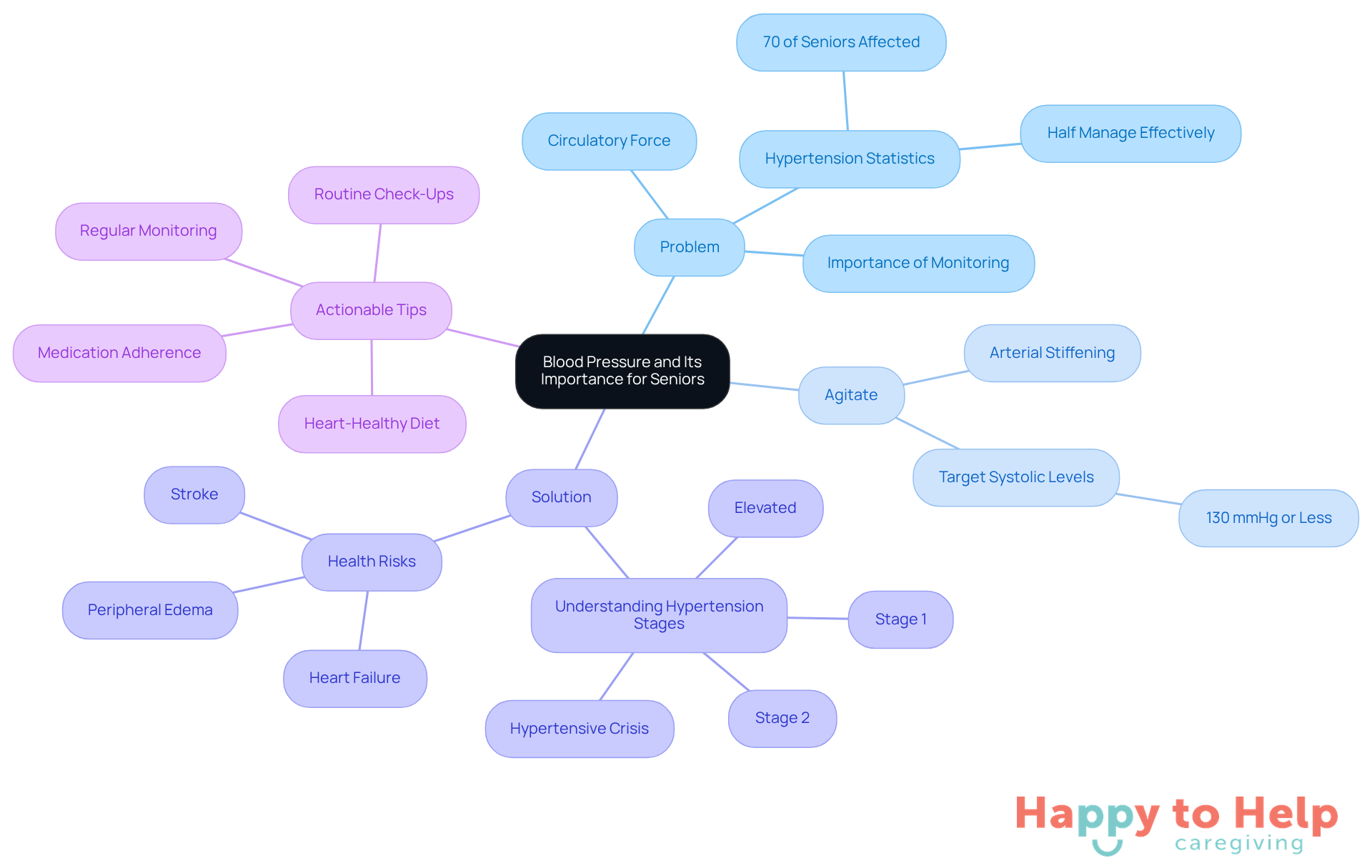
Problem: Circulatory force refers to the strength exerted by flowing fluid against vessel walls, measured in millimeters of mercury (mm Hg). It is represented as two figures: systolic force (the strength during heartbeats) over diastolic force (the strength between beats). For seniors, maintaining healthy circulation is crucial to ensure accurate blood pressure readings. Nearly 70% of individuals aged 60 and above experience hypertension, which is evident in blood pressure readings, with about half managing it effectively.
Agitate: This highlights the importance of not only monitoring but also controlling arterial levels. As people age, their arteries often stiffen, leading to elevated systolic readings. The target for systolic arterial readings is typically 130 mmHg or less for most fit older adults. Consistent monitoring of blood pressure is vital, as research indicates that managing systolic levels to this goal can significantly reduce the risk of cardiovascular incidents and improve overall health outcomes.
Solution: Caregivers must understand the dynamics of hypertension, including its stages: Elevated, Stage 1, Stage 2, and Hypertensive crisis. This knowledge is essential for effectively managing blood pressure for seniors' health. Additionally, elevated vascular levels can lead to serious health issues such as peripheral edema, pulmonary edema, vascular ulcers, heart failure, stroke, transient ischemic attacks (TIAs), dementia, and kidney complications.
Actionable Tips:
- Regularly monitor blood pressure levels.
- Educate clients about the importance of medication adherence.
- Encourage a heart-healthy diet and regular physical activity.
- Schedule routine check-ups with healthcare providers.
Establish Guidelines for Blood Pressure Monitoring in Seniors
Caregivers face a significant challenge when it comes to monitoring arterial levels consistently. Inconsistent checks can lead to missed opportunities for early intervention, especially for elderly individuals who may have underlying health issues.
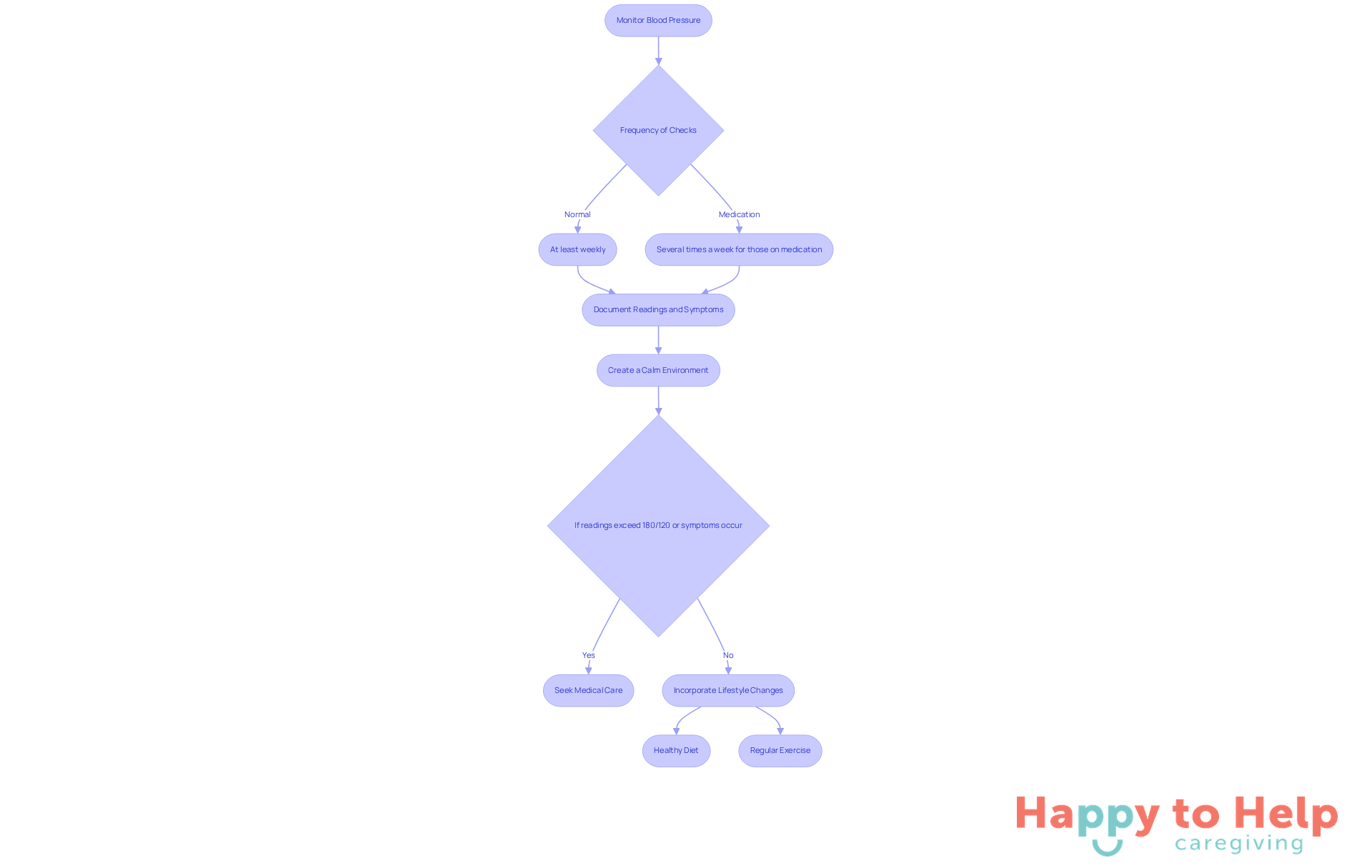
For elderly individuals, it is crucial to monitor blood pressure readings for seniors at least weekly, or more frequently if they have a history of hypertension or other heart-related concerns. Individuals on hypertension medication should monitor their blood pressure readings for seniors several times a week. Documenting these measurements and any symptoms encountered during assessments is vital. This information should be relayed to a doctor to ensure effective treatment and early detection of changes in arterial levels.
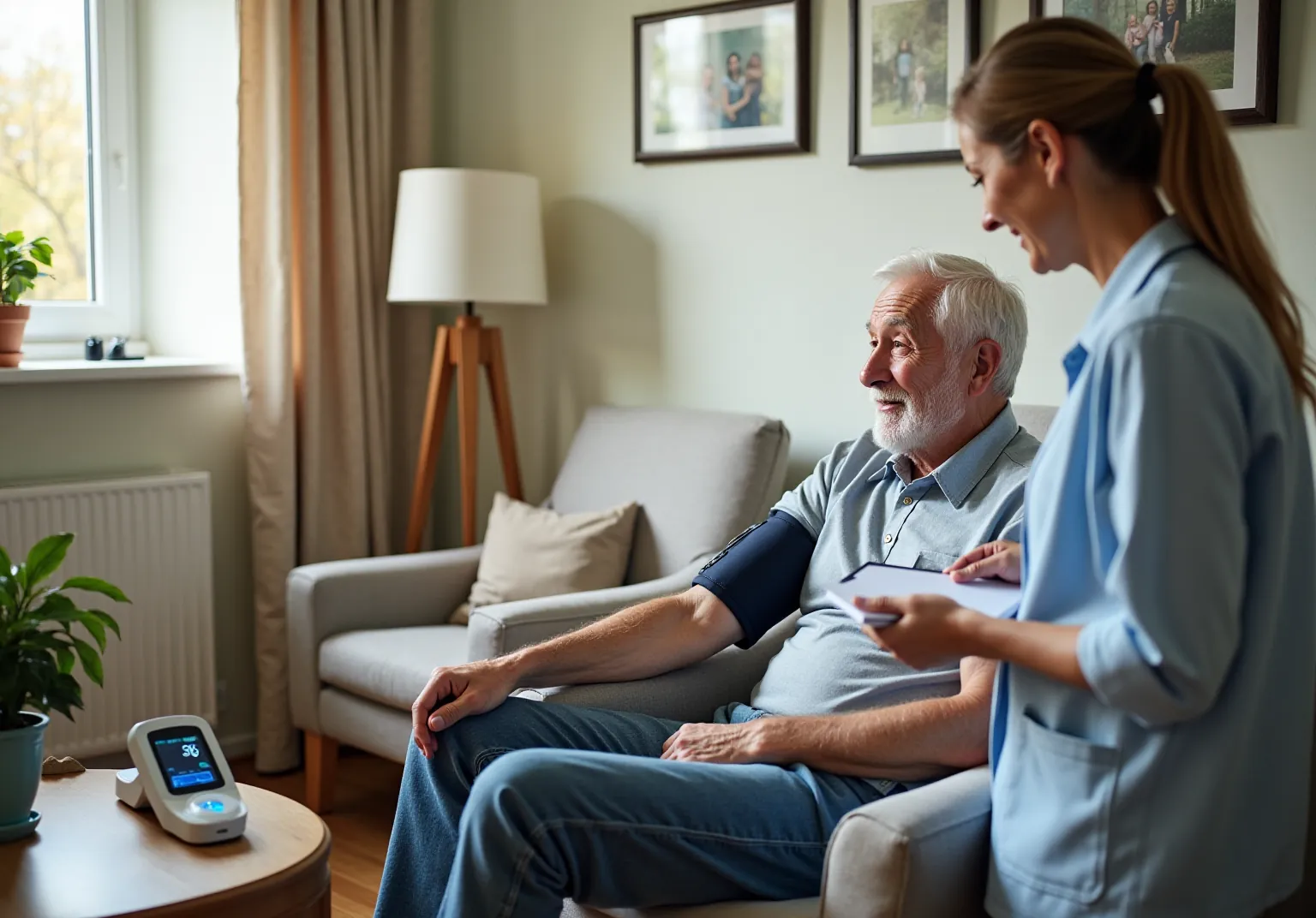
Creating a calm monitoring environment is essential. Ensure that the individual is seated comfortably with their arm supported at heart level to achieve accurate readings. Caregivers should also be vigilant; if blood pressure readings for seniors exceed 180/120 or if symptoms like sudden dizziness or chest pain occur, medical care should be sought immediately.
Incorporating lifestyle changes can significantly impact blood level management. A healthy diet and regular exercise are vital components of effective care. By implementing these strategies, caregivers can enhance the well-being of the elderly individuals they support.
Explain Blood Pressure Testing Methods and Expectations
Blood pressure measurement presents a significant challenge for caregivers, particularly when it comes to ensuring accuracy. Studies reveal that 60% of individuals make errors while measuring their blood pressure at home, which can lead to misdiagnosis and ineffective treatment for hypertension. With approximately 38,000 new cases of high blood pressure diagnosed each year in England, the need for reliable monitoring of blood pressure readings for seniors is critical.
To address this issue, caregivers can utilize several effective methods for measuring blood pressure:
-
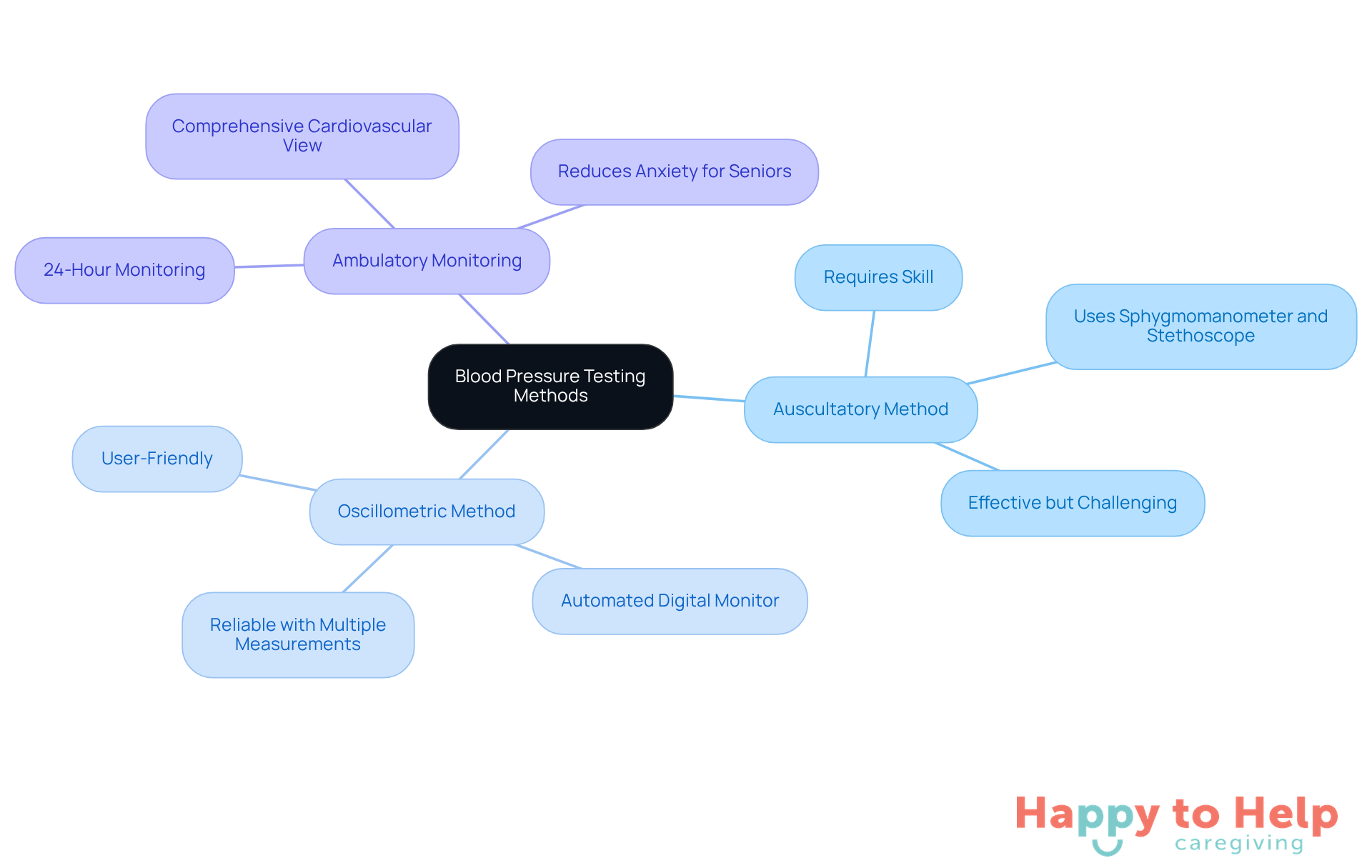
Auscultatory Method: This traditional approach uses a sphygmomanometer and a stethoscope. The caregiver inflates the cuff and listens for heartbeat sounds to determine systolic and diastolic levels. While this method is effective, it requires skill and can be challenging for some caregivers.
-
Oscillometric Method: This automated technique employs a digital monitor, allowing for measurements without a stethoscope. It is user-friendly and often preferred for home monitoring, especially among seniors who may find taking blood pressure readings using the manual method daunting. Recent studies show that oscillometric devices can provide reliable results, even in patients with conditions like atrial fibrillation, as long as multiple measurements are taken.
-
Ambulatory Monitoring: This technique involves using a portable device that measures arterial tension at regular intervals over a 24-hour period. It offers a comprehensive view of cardiovascular fluctuations, which is particularly useful for identifying hypertension and evaluating treatment effectiveness. To alleviate anxiety and ensure accurate blood pressure readings for seniors, caregivers should explain the process to them.
Understanding these techniques is essential for caregivers. By becoming familiar with these methods, they can offer improved assistance and ensure that elderly individuals receive appropriate care.
Interpret Blood Pressure Readings: Understanding Ranges and Implications
Blood pressure readings are classified into distinct categories that are crucial for managing the health of seniors:
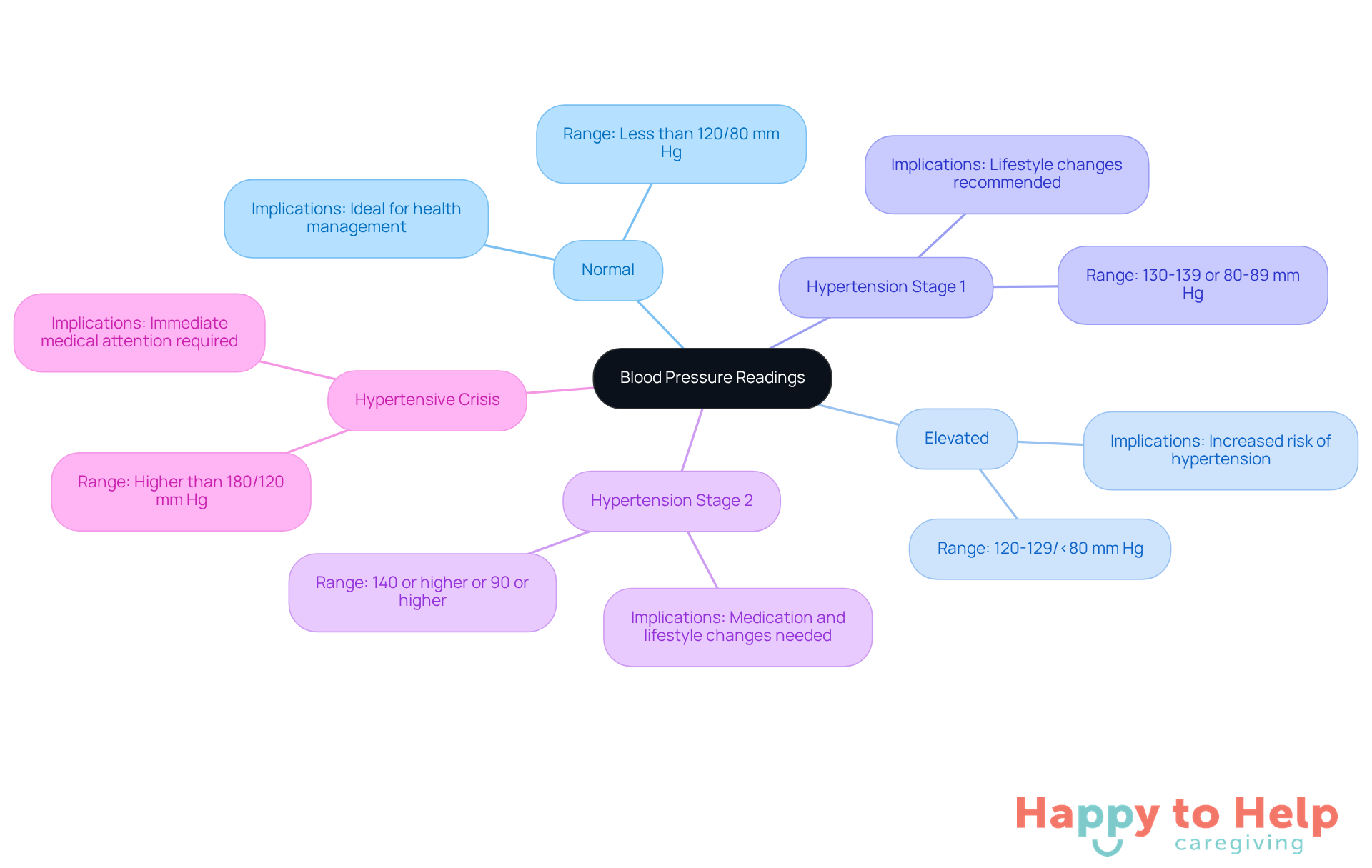
- Normal: Less than 120/80 mm Hg
- Elevated: 120-129/<80 mm Hg
- Hypertension Stage 1: 130-139 or 80-89 mm Hg
- Hypertension Stage 2: 140 or higher or 90 or higher
- Hypertensive Crisis: Higher than 180/120 mm Hg
For seniors, the problem is clear: maintaining a systolic reading below 130 mm Hg is vital to minimize the risk of cardiovascular events, including heart attacks and strokes. Nearly half of all older adults experience hypertension, which makes it essential for caregivers to monitor blood pressure readings for seniors closely. If circulation levels consistently fall into the elevated or hypertensive categories, it is crucial to consult healthcare professionals for further evaluation and management.
The implications of a hypertensive crisis are serious. Symptoms such as shortness of breath, chest pain, and changes in vision warrant immediate medical attention. Understanding these ranges of blood pressure readings for seniors not only aids in immediate care but also contributes to long-term health outcomes for elderly individuals.
The solution lies in vigilance. The American Heart Association emphasizes the importance of maintaining lower blood pressure to reduce health risks. Caregivers must be proactive in monitoring and managing blood pressure readings for seniors effectively, ensuring that they receive the care they need.
Taking the Next Steps
Understanding blood pressure readings is crucial for the health and well-being of seniors. Caregivers face the challenge of monitoring and managing these readings to reduce the risks associated with hypertension. Without proper oversight, seniors may experience serious health complications.
Regular monitoring of blood pressure is essential. Caregivers must understand the different blood pressure categories and the potential health risks linked to hypertension. To address these challenges, caregivers can adopt best practices such as:
- Conducting frequent checks
- Educating seniors about medication adherence
- Promoting a heart-healthy lifestyle
Utilizing appropriate testing methods and ensuring a calm environment for measurements can enhance accuracy and reliability. The responsibility of managing blood pressure in seniors is significant. By being proactive and vigilant, caregivers can improve health outcomes and quality of life for elderly individuals.
Emphasizing the importance of regular monitoring and informed care practices not only aids in immediate health management but also fosters long-term wellness in this vulnerable population.
https://iframe.tely.ai/cta/eyJhcnRpY2xlX2lkIjogIjY5MjI0ZjU2NGZjYWRhOTUwOGRlNDNiNSIsICJjb21wYW55X2lkIjogIjY4ZWU1ZGNhNzMxNzYyNTU3ZjNjOTVjMSIsICJpbmRleCI6IG51bGwsICJ0eXBlIjogImFydGljbGUifQ==Frequently Asked Questions
What is blood pressure and why is it important for seniors?
Blood pressure refers to the strength exerted by flowing blood against the walls of blood vessels, measured in millimeters of mercury (mm Hg). It is important for seniors because maintaining healthy circulation is crucial for accurate blood pressure readings and overall health.
What are the two figures represented in blood pressure readings?
Blood pressure readings are represented as two figures: systolic force (the strength during heartbeats) over diastolic force (the strength between beats).
What percentage of individuals aged 60 and above experience hypertension?
Nearly 70% of individuals aged 60 and above experience hypertension.
What are the target systolic arterial readings for fit older adults?
The target for systolic arterial readings is typically 130 mmHg or less for most fit older adults.
Why is consistent monitoring of blood pressure vital for seniors?
Consistent monitoring is vital because managing systolic levels to the target can significantly reduce the risk of cardiovascular incidents and improve overall health outcomes.
What are the stages of hypertension that caregivers should understand?
Caregivers should understand the stages of hypertension, which include Elevated, Stage 1, Stage 2, and Hypertensive crisis.
What serious health issues can elevated vascular levels lead to in seniors?
Elevated vascular levels can lead to serious health issues such as peripheral edema, pulmonary edema, vascular ulcers, heart failure, stroke, transient ischemic attacks (TIAs), dementia, and kidney complications.
What are some actionable tips for managing blood pressure in seniors?
Actionable tips include regularly monitoring blood pressure levels, educating clients about medication adherence, encouraging a heart-healthy diet and regular physical activity, and scheduling routine check-ups with healthcare providers.
List of Sources
- Define Blood Pressure and Its Importance for Seniors
- Seniors Benefit From Tight Blood Pressure Control (https://usnews.com/news/health-news/articles/2025-03-19/seniors-benefit-from-tight-blood-pressure-control)
- Basic Facts about High Blood Pressure (Hypertension) | Aging & Health A-Z | American Geriatrics Society | HealthInAging.org (https://healthinaging.org/a-z-topic/high-blood-pressure-hypertension/basic-facts)
- Study Finds Intensive Blood Pressure Control Reduces Risk of Cognitive Impairment (https://newsroom.wakehealth.edu/news-releases/2025/01/study-finds-intensive-blood-pressure-control-reduces-risk-of-cognitive-impairment)
- Lower Blood Pressure May Offer Benefits Even for the Very Elderly (https://medicine.yale.edu/news-article/lower-blood-pressure-may-offer-benefits-even-for-the-very-elderly)
- Establish Guidelines for Blood Pressure Monitoring in Seniors
- Normal Blood Pressure by Age for Healthy Aging (https://megawecare.com/wellness-we-care/healthy-aging/normal-blood-pressure-by-age)
- Normal Blood Pressure for Seniors: What Readings Mean (https://californiamobility.com/new-normal-blood-pressure-for-seniors)
- Many at-risk older adults aren’t checking blood pressure at home, or being encouraged to do so (https://michiganmedicine.org/health-lab/many-risk-older-adults-arent-checking-blood-pressure-home-or-being-encouraged-do-so)
- AHA/ACC Release New Blood Pressure Management Guideline (https://neurologyadvisor.com/news/aha-acc-release-new-blood-pressure-management-guideline)
- Explain Blood Pressure Testing Methods and Expectations
- Auscultatory versus oscillometric blood pressure measurement in patients with atrial fibrillation and arterial hypertension - PMC (https://pmc.ncbi.nlm.nih.gov/articles/PMC5364730)
- The future of blood pressure monitoring: Cuffless devices - Harvard Health (https://health.harvard.edu/heart-health/the-future-of-blood-pressure-monitoring-cuffless-devices)
- This simple innovation could change blood pressure testing forever (https://sciencedaily.com/releases/2025/10/251021083644.htm)
- AI helped older adults report accurate blood pressure readings at home (https://newsroom.heart.org/news/ai-helped-older-adults-report-accurate-blood-pressure-readings-at-home)
- New Home Blood Pressure Method May Simplify Hypertension Treatment (https://medschool.duke.edu/news/new-home-blood-pressure-method-may-simplify-hypertension-treatment)
- Interpret Blood Pressure Readings: Understanding Ranges and Implications
- Blood pressure readings: What they mean (https://medicalnewstoday.com/articles/327178)
- Under new guidelines, more Americans meet the criteria for high blood pressure (https://pbs.org/newshour/health/under-new-guidelines-more-americans-meet-the-criteria-for-high-blood-pressure)
- Blood Pressure Goal: 120/80 Is the Number Your Doctor Wants to See (https://yalemedicine.org/news/blood-pressure-goal-the-number-your-doctor-wants-to-see)
- New high blood pressure guideline emphasizes prevention, early treatment to reduce CVD risk (https://newsroom.heart.org/news/new-high-blood-pressure-guideline-emphasizes-prevention-early-treatment-to-reduce-cvd-risk)