

For families in our service areas
For families in our service areas, this guide explains caregiver support and how non-medical in-home caregiving can support care planning in East Idaho, Treasure Valley & Magic Valley, Northern Wasatch, North Central West Virginia, and Northeast Ohio.
What to Expect
The title "Understanding Caregiver Roles and Responsibilities for Families" shines a light on the vital functions and challenges that caregivers face while supporting those in need. Caregivers take on a multitude of tasks, from personal care and medication management to providing emotional support.
As the number of caregivers continues to rise, so do the significant challenges they encounter. Many experience emotional strain and financial burdens that can weigh heavily on their ability to provide effective care.
It's important to recognize these emotional challenges. Caregivers often feel overwhelmed, and it's crucial to amplify the understanding of their stress and burnout. But there is hope. Support services are available to help lighten their load, offering practical and emotional assistance.
We want caregivers to know they are not alone. There are compassionate resources ready to provide the help they need. By reaching out, caregivers can find the support that nurtures their well-being, allowing them to continue their essential roles with renewed strength.
In sharing personal stories and testimonials, we can highlight the compassionate care that makes a difference. These stories foster a deeper emotional connection, reminding caregivers of the impact they have on the lives of those they support.
As we navigate this journey together, let’s embrace the importance of self-care and community support. Caregivers deserve reassurance and encouragement, knowing that their efforts are valued and appreciated.
What You Need to Know About Caregiver Roles and Responsibilities
Understanding the complex roles and responsibilities of caregivers is crucial for families who are caring for aging or ill loved ones. With nearly 63 million Americans stepping into these vital positions, their contributions go far beyond just providing assistance. They offer emotional support, companionship, and help promote independence.
Yet, the challenges caregivers face can be overwhelming. From emotional strain to financial burdens, these unsung heroes often find themselves in difficult situations. This raises important questions:
- How can families effectively support their caregivers?
- What strategies can be employed to ensure that caregivers receive the recognition and resources they need to thrive while caring for others?
It's essential to acknowledge the emotional toll caregiving can take. Many caregivers experience feelings of stress and burnout, which can impact their well-being. By understanding these challenges, families can begin to explore ways to provide meaningful support.
Consider the stories of caregivers who have navigated these waters. Their experiences highlight the importance of compassion and understanding in caregiving. By sharing these personal journeys, we can foster a deeper emotional connection and inspire families to take action.
Ultimately, caregivers deserve recognition and support. By implementing strategies that prioritize their well-being, families can create an environment where caregivers feel valued and empowered. Together, we can ensure that those who give so much receive the care and resources they need.
Define Caregiver Roles and Responsibilities
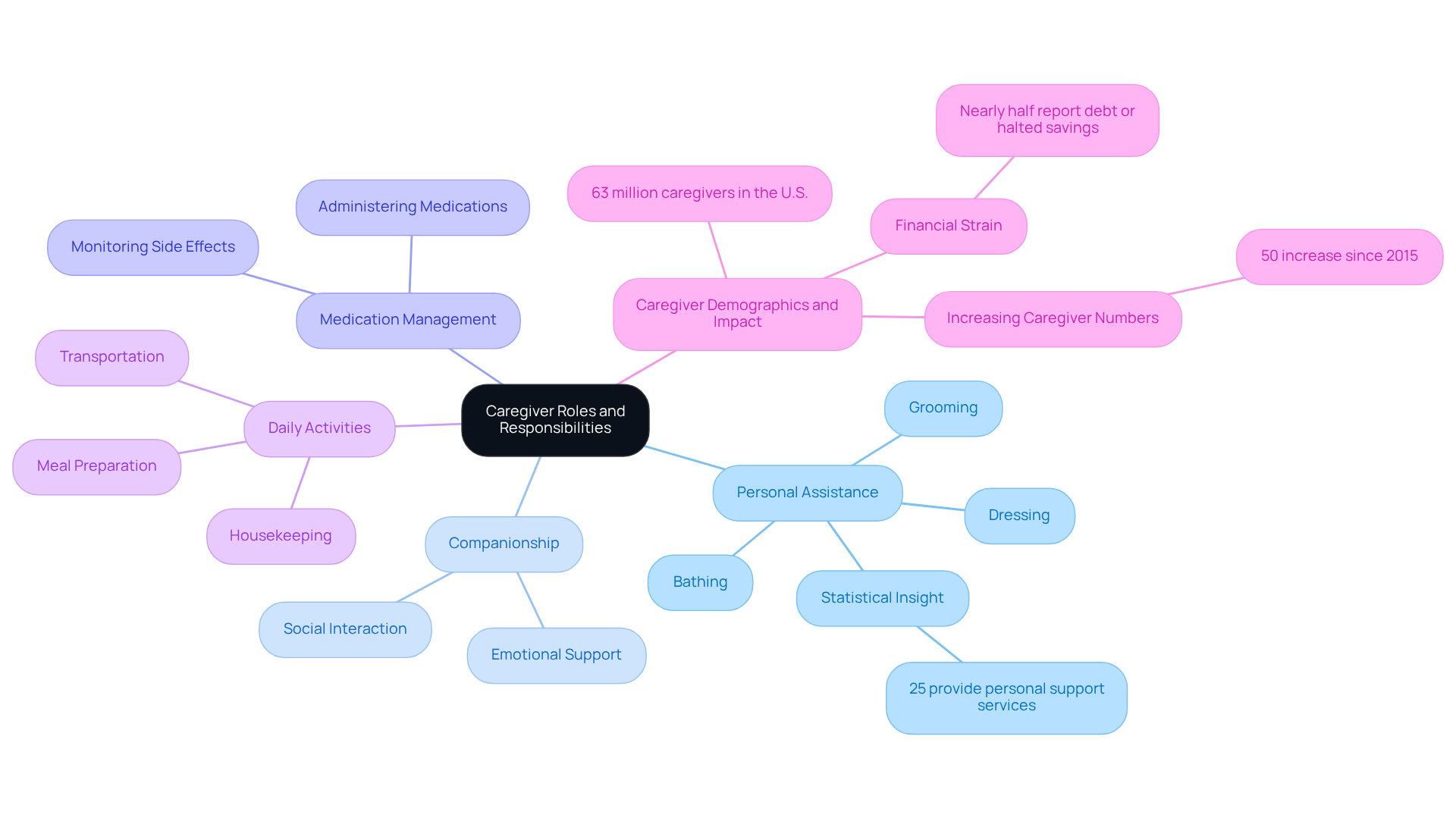
Caregiver roles and responsibilities encompass a wide range of tasks aimed at supporting individuals who need help due to age, illness, or disability. These tasks include:
- Personal assistance like bathing, dressing, and grooming
- Companionship
- Medication management
- Help with daily activities
Caregivers provide not just physical support but also emotional stability, creating a sense of companionship and security for their clients.
It's important to recognize that nearly 25% of caregivers deliver personal support services, and about 25% provide 40 hours or more of assistance each week. This highlights just how essential their work truly is.
Understanding caregiver roles and responsibilities is vital for families. It helps them appreciate the extensive nature of caregiving and ensures that loved ones receive the right level of support tailored to their unique needs. With the number of household caregivers rising to around 63 million in the U.S. — a nearly 50% increase since 2015 — acknowledging the caregiver roles and responsibilities in home care is more crucial than ever.
As we look ahead to 2025, focusing on caregiver roles and responsibilities will be key for families navigating the complexities of caregiving. It’s about finding the balance between providing necessary support and taking care of one’s own well-being. Jason Resendez, President and CEO of the National Alliance for Caregiving, notes, "These state-by-state disparities reveal how policy decisions affect whether households flourish or struggle under caregiving obligations."
Moreover, nearly half of caregivers report facing financial strain, such as incurring debt or halting savings due to their caregiving responsibilities. This underscores the broader impact of caregiving, extending beyond just the physical and emotional aspects.
Contextualize the Importance of Caregivers
Caregivers play a crucial role in today’s healthcare landscape, particularly as more seniors choose to receive care at home, which emphasizes the importance of caregiver roles and responsibilities. They serve as vital links between healthcare providers and families, ensuring that clients enjoy personalized care in the comfort of their own spaces. The presence of a supportive individual can significantly ease feelings of loneliness and isolation, which many seniors experience.
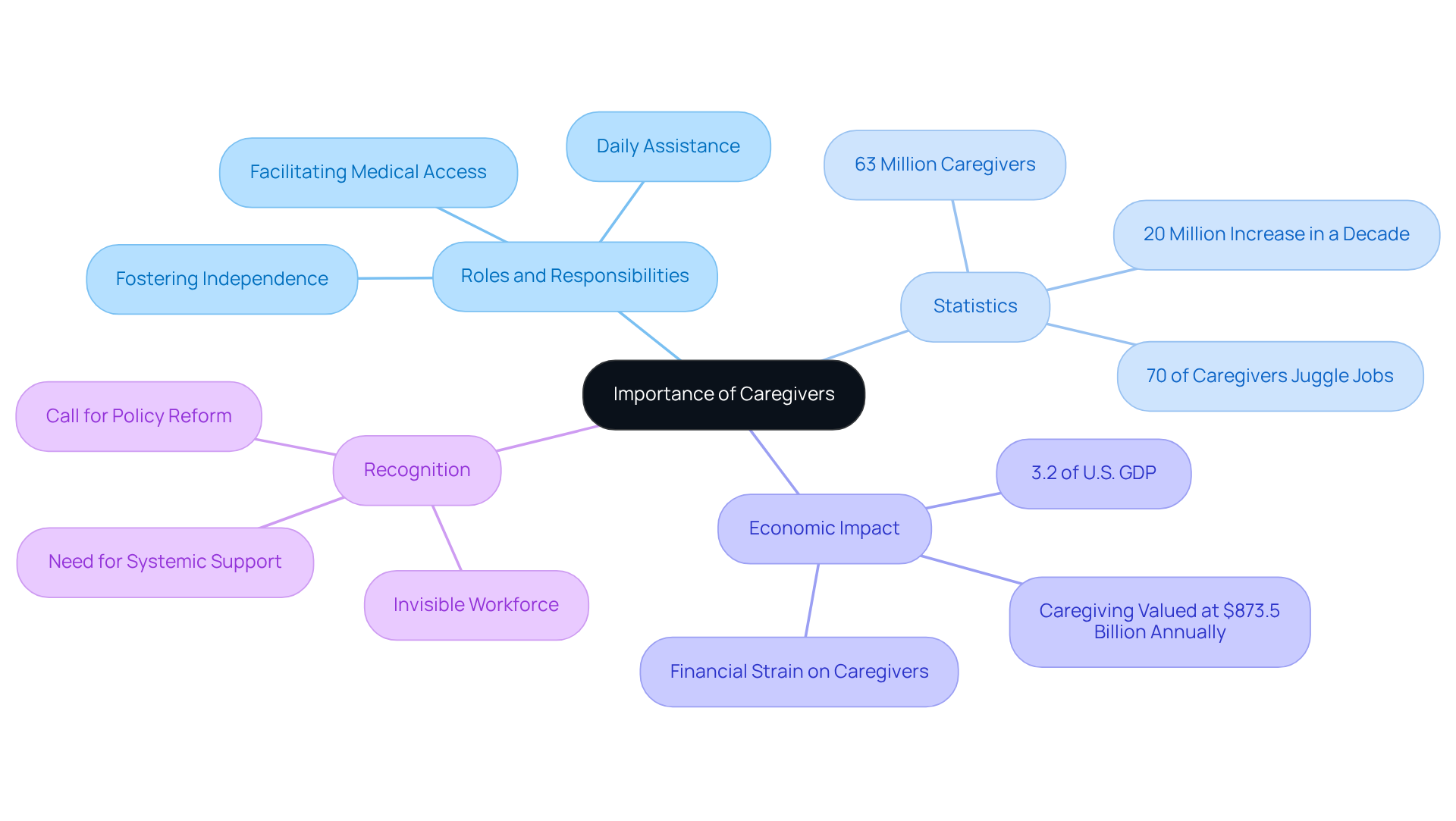
Currently, nearly 63 million Americans are caring for aging or ill relatives, with a remarkable increase of 20 million family support providers over the last decade. This trend underscores the growing reliance on family support. These caregiver roles and responsibilities involve not only assisting with daily tasks but also fostering independence and facilitating access to essential medical services. In fact, about 70% of individuals aged 18 to 64 juggle full- or part-time jobs alongside their caregiving responsibilities, showcasing the dual roles many of them manage.
Their contributions go beyond simple assistance; they truly enhance the quality of life for their clients, allowing individuals to flourish in familiar surroundings. Family caregiving represents 3.2% of the U.S. gross domestic product (GDP), highlighting its economic importance. As the need for home assistance continues to grow, the caregiver roles and responsibilities in supporting the health and well-being of seniors are more vital than ever.
Rita B. Choula, Senior Director of Caregiving at the AARP Public Policy Institute, reminds us, 'We have to stop thinking of family support providers as an invisible workforce.' This statement resonates deeply, urging us to recognize and appreciate the invaluable work of caregivers.
Detail Caregiver Duties and Activities
Caregiver roles and responsibilities encompass a wide range of duties tailored to meet the unique needs of each individual. These essential activities include:
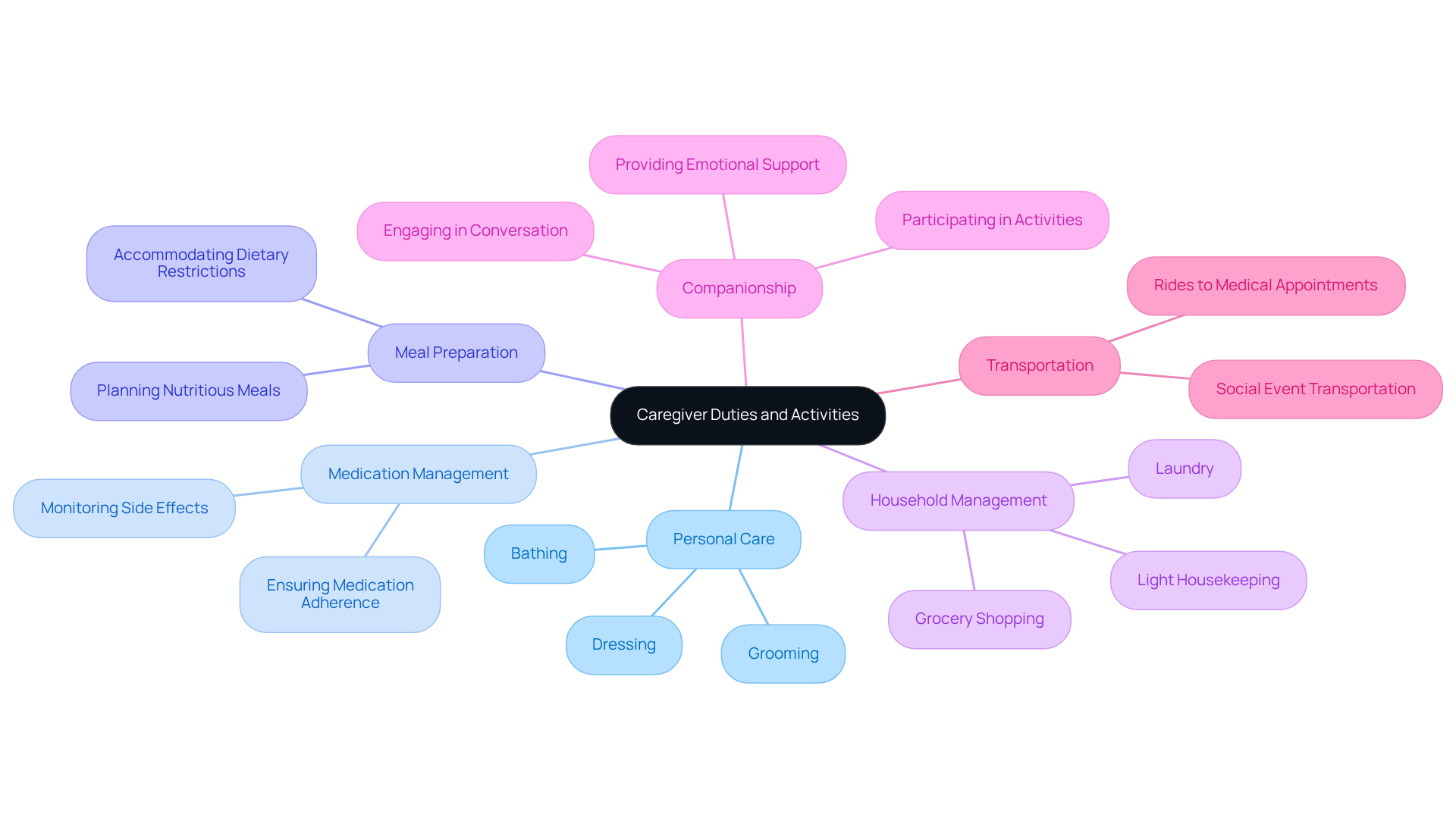
- Personal Care: Caregivers provide vital assistance with bathing, grooming, and dressing, which not only promotes physical health but also preserves dignity.
- Medication Management: Approximately 80% of caregivers are responsible for ensuring that individuals take their medications as prescribed, while also monitoring for any side effects. This highlights the crucial caregiver roles and responsibilities that play a significant part in managing health outcomes.
- Meal Preparation: Caregivers thoughtfully plan and prepare nutritious meals that accommodate specific dietary restrictions, enhancing well-being and fostering a sense of inclusion.
- Household Management: Light housekeeping, laundry, and grocery shopping are essential tasks that help maintain a safe and comfortable living environment.
- Companionship: Engaging individuals in conversation, activities, and outings is vital for promoting social interaction and alleviating feelings of isolation. As Candi Williams, AARP Alabama State Director, beautifully puts it, "When a loved one needs help, family members, friends, and neighbors step up, that’s what we do."
- Transportation: Caregivers often provide rides to medical appointments or social events, ensuring individuals stay connected to their communities.
These activities are designed to empower clients to maintain their independence while ensuring their safety and well-being. The caregiver roles and responsibilities extend beyond addressing physical needs; they also include nurturing emotional connections and enhancing the overall quality of life for those they support. However, caregivers often face financial challenges, with many expressing that their caregiving responsibilities can impact their ability to work full-time. Addressing these challenges is crucial for the well-being of both caregivers and those they care for.
Examine Challenges Faced by Caregivers
The multitude of challenges that caregivers face can deeply affect their caregiver roles and responsibilities, hindering their ability to provide the best care possible. These hurdles can feel overwhelming, but understanding them is the first step toward finding support and solutions.
-
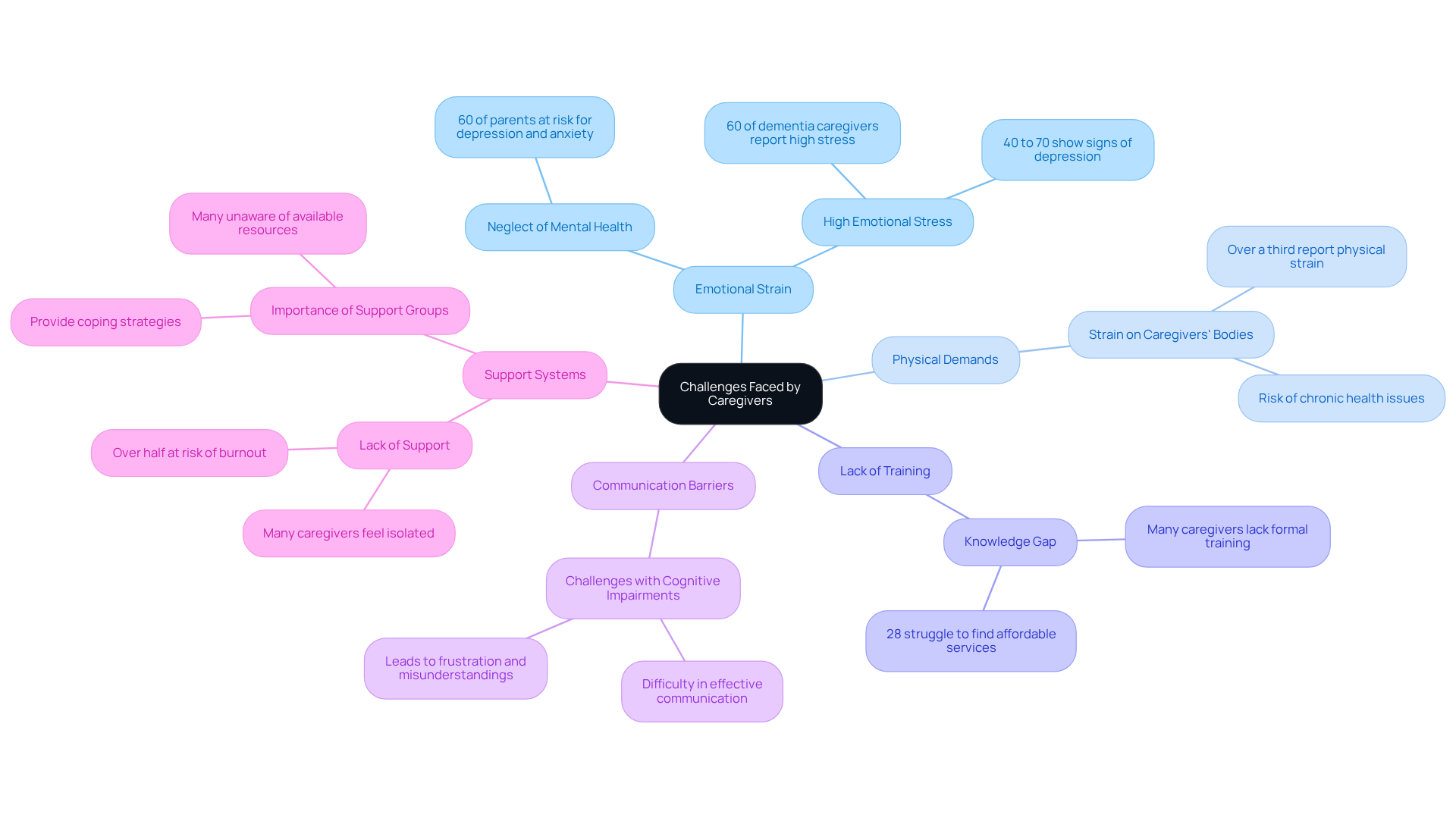
Emotional Strain: The emotional weight of caregiving can lead to burnout, stress, and feelings of isolation. It's heartbreaking to note that nearly 60% of individuals caring for dementia patients report high emotional stress, with 40% to 70% showing signs of depression. Additionally, 60% of parents and guardians surveyed are at a heightened risk for depression and anxiety. This emotional burden is often compounded by the fact that caregivers, due to their caregiver roles and responsibilities, frequently neglect their own mental health needs, resulting in increased anxiety and depression.
-
Physical Demands: The physical aspects of caregiving can be taxing, especially when assisting clients with mobility challenges. Many caregivers report feeling the strain on their bodies, with over a third acknowledging the toll their responsibilities take. If these physical demands aren't addressed, they can lead to chronic health issues.
-
A significant number of caregivers lack formal training in their caregiver roles and responsibilities, which can create uncertainty when managing specific medical needs. This knowledge gap can elevate stress levels and foster feelings of inadequacy. Moreover, 28% of family supporters have struggled to find affordable services for those they care for, highlighting the barriers they face in accessing essential training and resources necessary for fulfilling their caregiver roles and responsibilities.
-
Communication Barriers: Communicating with clients who have cognitive impairments can be particularly challenging. Effective communication is crucial for understanding and meeting the needs of those receiving care, yet many caregivers find this aspect difficult, leading to frustration and misunderstandings.
-
Support Systems: Often, caregivers lack sufficient support from family members or healthcare professionals, which only adds to the challenges they face in managing their caregiver roles and responsibilities. Many support providers report feeling isolated, with many not seeking help until they reach a critical point of exhaustion. More than half of adult caregivers and those in the sandwich generation are at risk of burnout as a result of their caregiver roles and responsibilities. Support groups can provide essential coping strategies and a sense of community, yet many caregivers remain unaware of these resources. The Caregiver Action Network (CAN) hotline is a valuable lifeline for those in need of emotional support, offering the recognition and empathy they often seek more than solutions.
Recognizing these challenges is crucial for families to provide the necessary support and resources to their caregivers. By doing so, we can ensure a more effective and compassionate caregiving experience.
Making the Right Choice
Understanding the roles and responsibilities of caregivers is crucial for families as they navigate the complexities of caring for loved ones. Caregivers are not just helpers; they embody a multifaceted role that includes emotional support, daily assistance, and essential connections to healthcare resources. Recognizing the depth of their contributions can create a more supportive environment for both caregivers and those they care for.
The article highlights several key aspects, including the wide range of tasks caregivers undertake—from personal care and medication management to companionship and household duties. It also points out the increasing number of caregivers in the U.S. and the significant economic impact of family caregiving, which represents a notable percentage of the national GDP. Moreover, the challenges faced by caregivers, such as emotional strain, physical demands, and lack of support, underscore the urgent need for greater recognition and resources to assist them in their vital roles.
Ultimately, acknowledging the importance of caregivers goes beyond mere appreciation; it calls for actionable support and systemic changes to ease the burdens they carry. Families are encouraged to seek resources, foster open communication, and advocate for policies that recognize the invaluable contributions caregivers make to the health and well-being of their loved ones. Embracing this understanding can lead to a more compassionate and effective caregiving experience, ensuring that both caregivers and care recipients flourish in their respective roles.
https://iframe.tely.ai/cta/eyJhcnRpY2xlX2lkIjogIjY5MDdmMGMzMjgwOGZmMDZiMWM5NTZiYyIsICJjb21wYW55X2lkIjogIjY4ZWU1ZGNhNzMxNzYyNTU3ZjNjOTVjMSIsICJpbmRleCI6IG51bGwsICJ0eXBlIjogImFydGljbGUifQ==Frequently Asked Questions
What are the main roles and responsibilities of caregivers?
Caregiver roles and responsibilities include personal assistance with bathing, dressing, and grooming, companionship, medication management, and help with daily activities.
How do caregivers provide emotional support?
Caregivers offer emotional stability by creating a sense of companionship and security for their clients, which is essential for their overall well-being.
What percentage of caregivers provide personal support services?
Nearly 25% of caregivers deliver personal support services.
How many hours do some caregivers provide assistance each week?
About 25% of caregivers provide 40 hours or more of assistance each week.
Why is understanding caregiver roles important for families?
Understanding caregiver roles helps families appreciate the extensive nature of caregiving and ensures that their loved ones receive the appropriate level of tailored support.
How many household caregivers are there in the U.S.?
There are around 63 million household caregivers in the U.S., which is a nearly 50% increase since 2015.
What challenges do caregivers face?
Nearly half of caregivers report facing financial strain, such as incurring debt or halting savings due to their caregiving responsibilities.
What will be key for families in navigating caregiving complexities by 2025?
Focusing on caregiver roles and responsibilities will be crucial for families as they navigate the complexities of caregiving while balancing necessary support and their own well-being.