Understanding Cares Home Services for Family Caregivers

For families in our service areas
For families in our service areas, this guide explains caregiver support and how non-medical in-home caregiving can support care planning in East Idaho, Treasure Valley & Magic Valley, Northern Wasatch, North Central West Virginia, and Northeast Ohio.
Why Cares Home Services Matters
As the population of seniors continues to grow, the demand for effective home care services has never been more critical. This situation presents a significant problem: nearly 40% of caregivers feel overwhelmed by the challenges of balancing their responsibilities. The implications are profound, as family caregivers struggle to ensure their loved ones receive the necessary care while maintaining their own well-being.
To address this issue, families can explore the diverse types of home care services available. These services not only provide essential support for daily living and healthcare needs but also offer a lifeline for caregivers. By discovering tailored solutions, families can enhance both the quality of life for seniors and the peace of mind for caregivers.
Defining Home Care Services
Residential support options present a significant solution for individuals needing assistance with daily living tasks and healthcare requirements. As more seniors choose to age in place, the reliance on cares home services has increased. In fact, by 2025, approximately 81% of older adults are expected to remain in their residences, highlighting a critical issue: how can caregivers effectively support their loved ones at home?
This trend towards aging in place reflects a broader societal shift, where many seniors prefer the comfort of their own homes over assisted living facilities. However, this preference can lead to feelings of loneliness and isolation, which can negatively impact mental and emotional health. Caregivers face the challenge of ensuring their loved ones maintain independence while receiving necessary support.
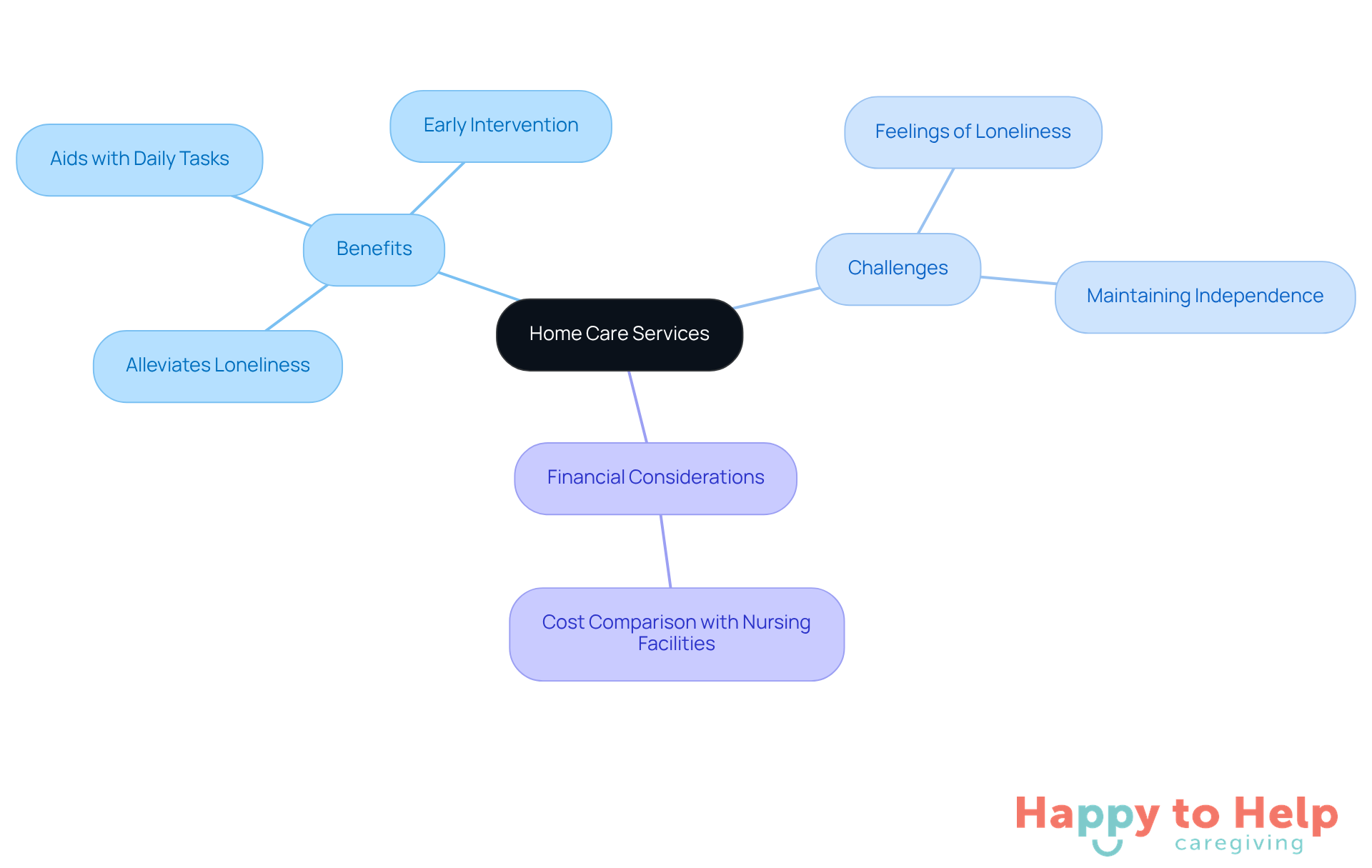
Fortunately, cares home services can be tailored to meet the unique needs of each individual, offering a flexible and personalized solution. The advantages of domestic assistance are considerable:
- It alleviates loneliness
- It aids with daily tasks
- It allows for earlier intervention in chronic conditions
Additionally, residential support minimizes the risk of falls and injuries by helping seniors with mobility and everyday activities, a vital concern for this demographic.
Moreover, at-home assistance options are often more economical than institutional care. For instance, the average monthly cost of a private nursing facility room in the US is $10,646. This financial context provides families with a viable alternative that supports both the health of their loved ones and their peace of mind. As the demand for cares home services continues to rise, it is increasingly recognized as a crucial component of the healthcare ecosystem, ensuring that seniors can live safely and comfortably in their own residences.
The Role of Home Care Services in Family Caregiving
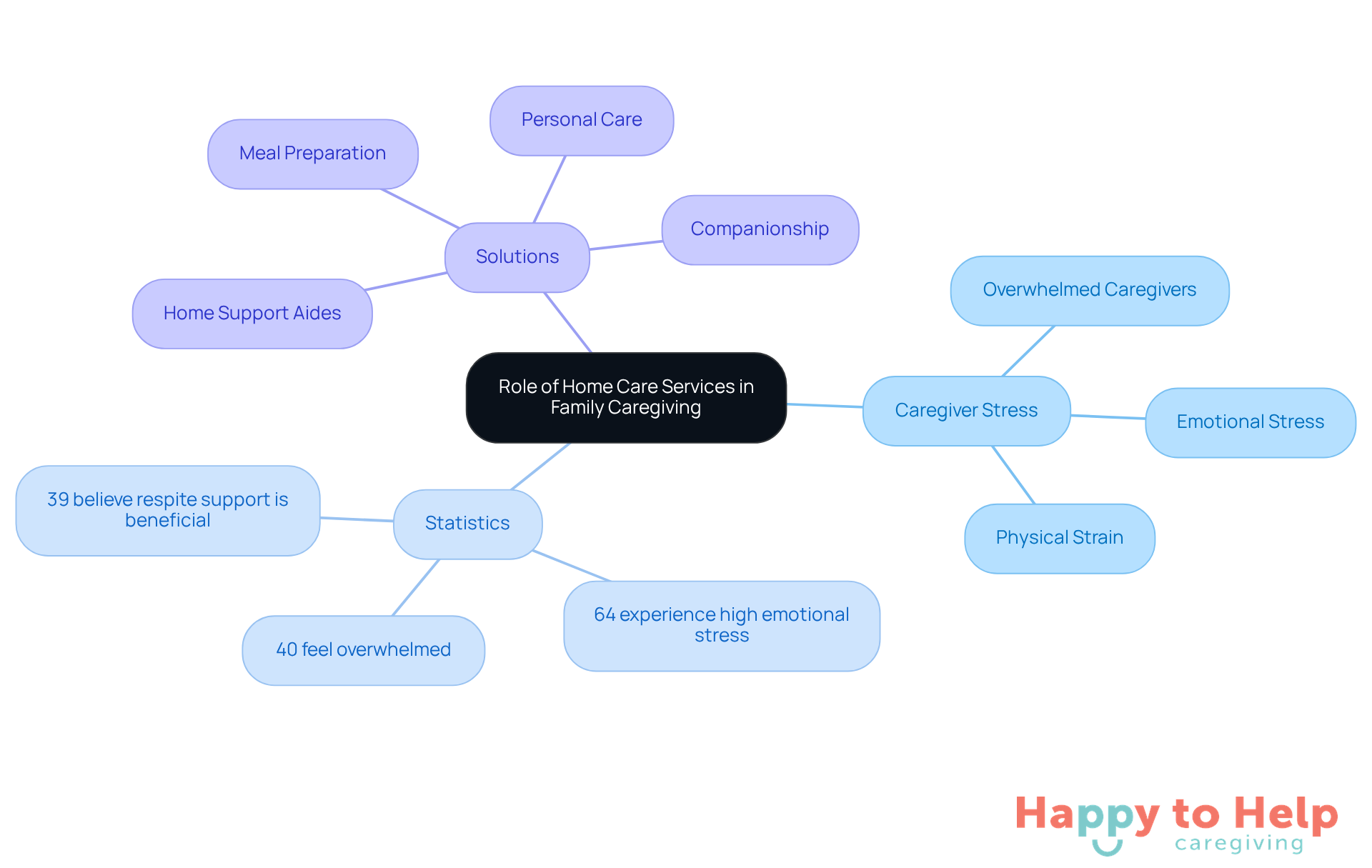
In-home assistance plays a crucial role in family support, addressing a significant problem: the overwhelming responsibilities faced by caregivers. Many family members struggle to balance caregiving duties with other life obligations, leading to increased stress and potential burnout. Research shows that nearly 40% of caregivers report feeling overwhelmed, with one in five rating their health as fair or poor. Additionally, 64% experience high emotional stress, and 45% face physical strain. This situation not only affects the caregivers but also the well-being of those they care for.
The implications of caregiver stress are profound. Without adequate support, caregivers may find it challenging to maintain their own health, which can jeopardize the quality of care they provide. A staggering 39% of caregivers believe that respite support would be beneficial, yet only 13% actually utilize it. This highlights a significant gap between the need for assistance and its availability.
So, what can be done? Incorporating cares home services can serve as a practical solution. Home support aides can assist with personal care, meal preparation, and companionship, allowing family caregivers to take essential breaks. This not only sustains the well-being of the recipient but also helps caregivers recharge, ensuring they can continue to provide support without compromising their health.
With over 63 million Americans acting as caregivers for family members with complex medical needs, the demand for assistance is on the rise. By embracing cares home services, families can create a healthier environment for both caregivers and those receiving care, ultimately benefiting everyone involved.
Types of Home Care Services Offered
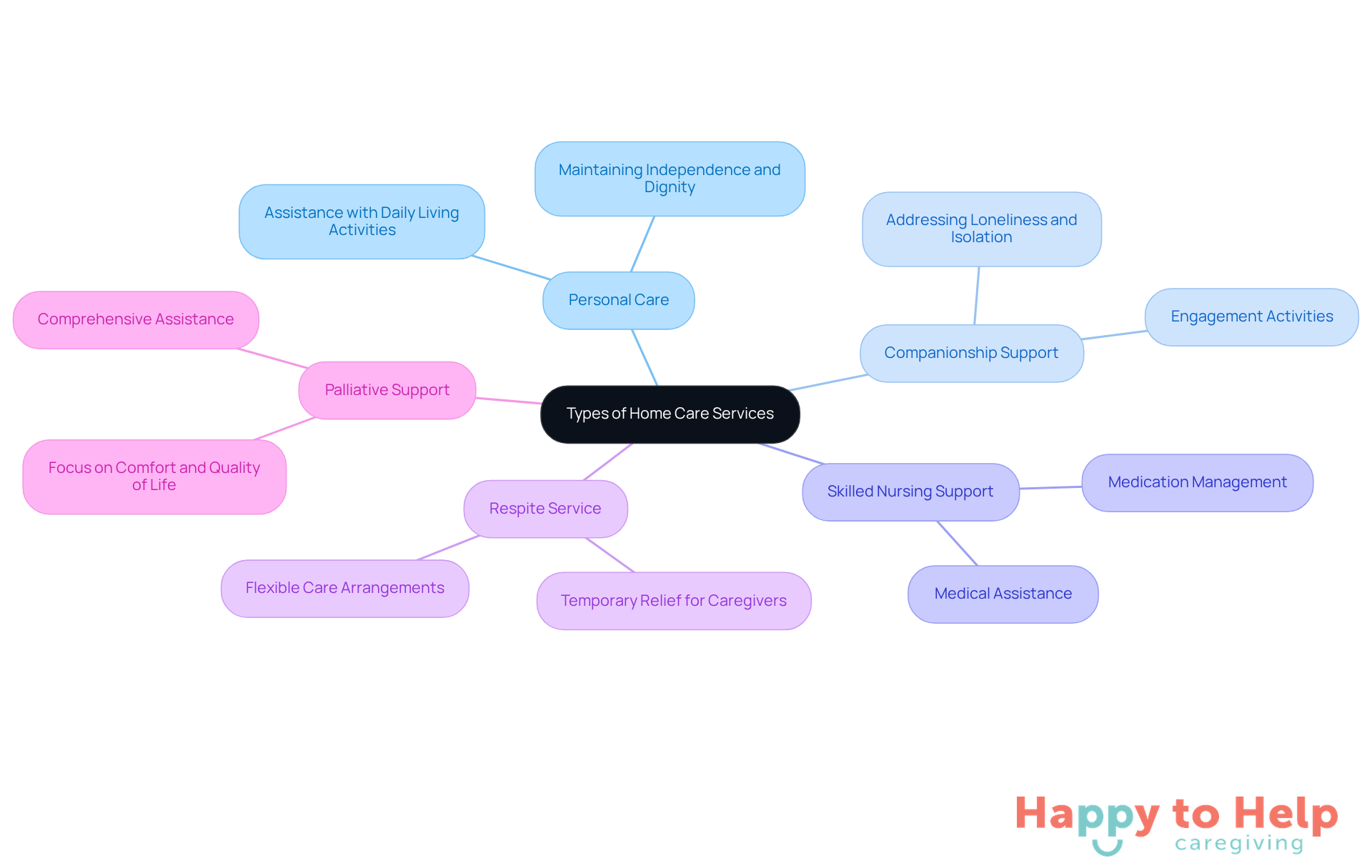
Home assistance options, including cares home services, encompass a variety of services designed to meet specific needs and enhance the quality of life for individuals. The growing demand for these services highlights a significant problem: by 2040, nearly two million people are expected to require assistance with daily living activities, underscoring the urgent need for personal support.
-
Personal Care is crucial for seniors who may struggle with daily tasks like bathing, dressing, grooming, and meal preparation due to physical limitations or health issues. This type of assistance is essential for maintaining independence and dignity.
-
Companionship Support addresses another pressing issue-loneliness and isolation. Approximately 70% of individuals aged 65 and older will need some form of assistance throughout their lives, as noted by the U.S. Department of Health and Human Services. Engaging in friendly conversation, playing games, and participating in light activities can significantly improve mental health and well-being.
-
Skilled Nursing Support is another vital service, provided by licensed professionals. This includes medical assistance such as medication management, wound care, and monitoring chronic conditions. Often recommended by doctors, this support may also be covered by Medicare, making it a critical option for those with complex health needs.
-
Respite Service offers temporary relief for family caregivers, allowing them to take necessary breaks while ensuring their loved ones receive quality care. Nearly 70% of family caregivers struggle to balance their jobs with caregiving responsibilities, highlighting the importance of respite support. These services can be arranged for a few hours or longer, depending on family needs.
-
Palliative Support focuses on individuals with serious illnesses, emphasizing comfort and quality of life. This support addresses physical, emotional, and spiritual needs, ensuring comprehensive assistance for patients and their families during difficult times.
The cares home services sector is expanding rapidly, driven by an aging population and the increasing demand for personal support. Customized support plans are essential, allowing caregivers to tailor services to the unique preferences and needs of each individual. It's also important to recognize that one in four adults over 65 experiences a fall each year, further emphasizing the need for in-home caregiver support to prevent such incidents. By understanding the various support options available, families can make informed decisions that best meet their loved ones' needs.
Key Characteristics of Effective Home Care Services
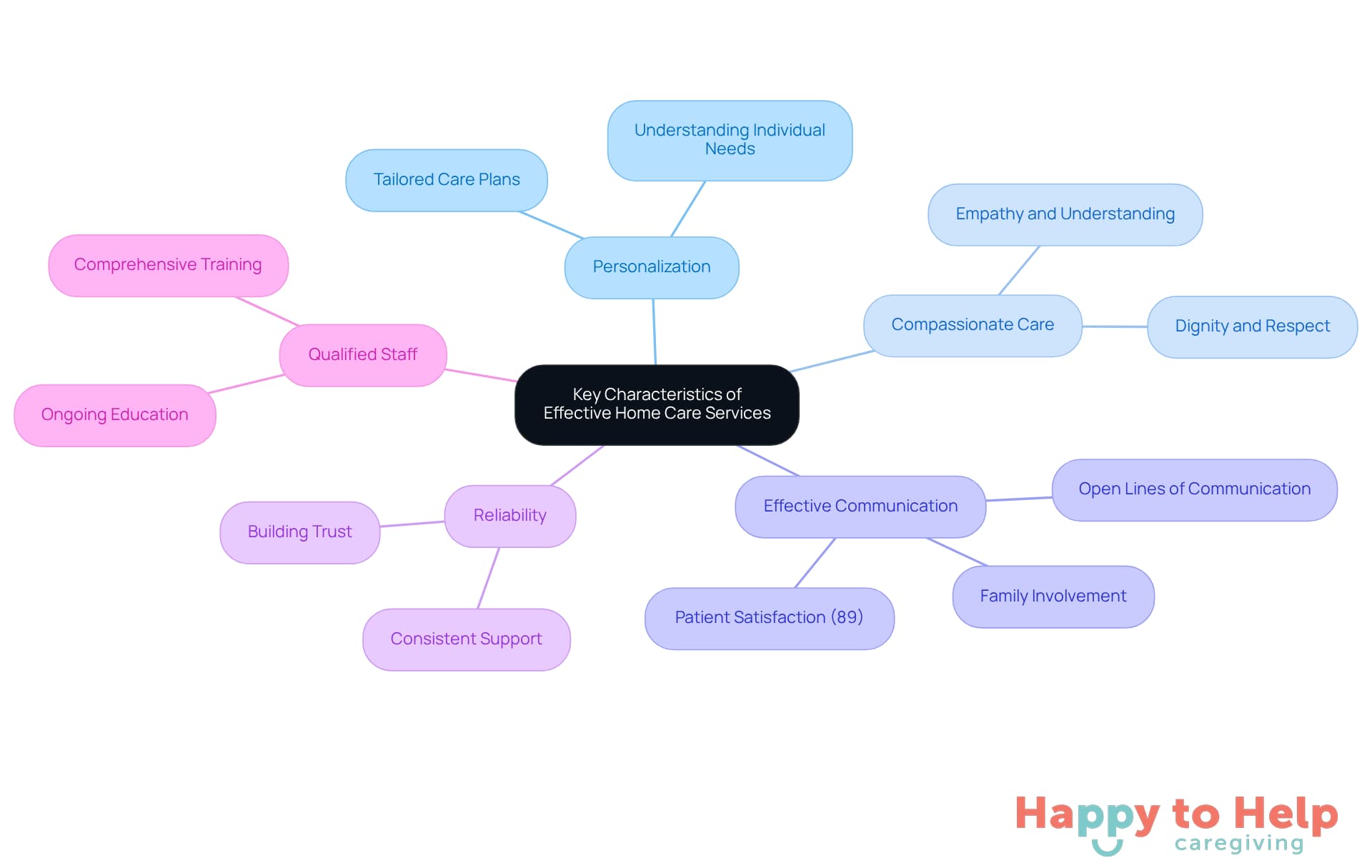
Effective cares home services face several challenges that can impact the quality of care provided. One significant issue is the lack of personalization in care plans. When care is not tailored to the unique needs and preferences of individuals, it can lead to dissatisfaction and ineffective support.
Another challenge is the absence of compassionate care. Caregivers must embody empathy and understanding, treating clients with dignity and respect. This approach is vital for fostering trust and emotional well-being, which are essential for effective caregiving.
Communication also plays a crucial role. Open lines of communication among caregivers, clients, and family members are necessary to ensure that support requirements are met. Research shows that effective communication greatly improves patient satisfaction, with 89% of patients expressing contentment with at-home healthcare.
Reliability is fundamental for establishing trust. Families need to feel assured that their loved ones are receiving consistent and dependable support. Without this assurance, anxiety and uncertainty can arise.
Lastly, having qualified staff is essential. Caregivers must be comprehensively trained and assessed to deliver safe and effective assistance. Ongoing education is necessary to adapt to the evolving needs of clients.
By addressing these challenges through personalization, compassionate care, effective communication, reliability, and qualified staff, cares home services can significantly elevate the quality of care. These characteristics not only improve health outcomes but also cultivate a positive relationship between caregivers and clients, ultimately enhancing the quality of life.
Making the Right Choice
The significance of care home services for family caregivers is profound. These services provide essential support, enabling individuals to age in place while receiving necessary assistance. Many seniors wish to remain in their homes, underscoring the need for tailored care solutions that enhance their quality of life and ease the burdens faced by family caregivers.
Family caregivers encounter numerous challenges, including physical and emotional strain. This growing demand for home care services highlights the importance of personalized solutions. Types of home care services available include:
- Personal care
- Companionship
- Skilled nursing
- Respite
- Palliative support
Each service addresses specific needs, fostering a healthier environment for both caregivers and their loved ones.
To tackle these challenges, families must recognize the benefits of care home services. By embracing these services, they can create a supportive framework that enhances seniors' well-being and empowers caregivers to maintain their health and resilience. The journey of caregiving is undoubtedly challenging, but with the right resources, it can lead to a more fulfilling and balanced experience for everyone involved.
https://iframe.tely.ai/cta/eyJhcnRpY2xlX2lkIjogIjY5MjI2NTAwNGZjYWRhOTUwOGRlNDQ0NCIsICJjb21wYW55X2lkIjogIjY4ZWU1ZGNhNzMxNzYyNTU3ZjNjOTVjMSIsICJpbmRleCI6IG51bGwsICJ0eXBlIjogImFydGljbGUifQ==Frequently Asked Questions
What are home care services?
Home care services provide residential support options for individuals needing assistance with daily living tasks and healthcare requirements, allowing them to age in place comfortably.
Why is there an increasing reliance on home care services?
As more seniors choose to age in place, the reliance on home care services has increased, with approximately 81% of older adults expected to remain in their residences by 2025.
What challenges do caregivers face when supporting seniors at home?
Caregivers must ensure their loved ones maintain independence while receiving necessary support, which can be challenging due to potential feelings of loneliness and isolation that seniors may experience.
How can home care services benefit seniors?
Home care services can alleviate loneliness, aid with daily tasks, allow for earlier intervention in chronic conditions, and minimize the risk of falls and injuries by assisting seniors with mobility and everyday activities.
Are home care services more economical than institutional care?
Yes, at-home assistance options are often more economical than institutional care; for example, the average monthly cost of a private nursing facility room in the US is $10,646.
Why are home care services considered important in the healthcare ecosystem?
Home care services are increasingly recognized as crucial for ensuring that seniors can live safely and comfortably in their own residences, providing necessary support while maintaining their independence.
List of Sources
- Defining Home Care Services
- The Enduring Significance of Home Care for Our Aging Population - Adoration Home Health & Hospice (https://adorationhealth.com/the-enduring-significance-of-home-care-for-our-aging-population)
- Families caring for older adults at home say aging in place should not be taken lightly, but may be worth it (https://cbsnews.com/newyork/news/aging-in-place-home-remodeling-cost-of-caregiving)
- The Future of Aging: Is In-Home Care the New Standard? - WorldHealth.net (https://worldhealth.net/news/future-of-aging-is-in-home-care-new-standard)
- Why Senior Home Care is More Important Than Ever (https://homeinstead.com/home-care/usa/la/carencro/347/news-and-media/senior-home-care-is-more-important-than-ever)
- How 3 Top Trends Have Shaped Home-Based Care This Year (https://homehealthcarenews.com/2025/08/how-3-top-trends-have-shaped-home-based-care-this-year)
- The Role of Home Care Services in Family Caregiving
- Only 32% of America’s 63 Million Family Caregivers Use Paid Help (https://homehealthcarenews.com/2025/07/only-32-of-americas-63-million-caregivers-use-paid-help)
- Improving Support for Family Caregivers (https://nationalacademies.org/news/2025/07/improving-support-for-family-caregivers)
- As Family Caregiving Grows, So Does the Need for Reform - Medicare Rights Center (https://medicarerights.org/medicare-watch/2025/08/14/as-family-caregiving-grows-so-does-the-need-for-reform)
- More Americans are family caregivers; states struggle to help them, report finds • Stateline (https://stateline.org/2025/07/25/more-americans-are-family-caregivers-states-struggle-to-help-them-report-finds)
- New Report Shows Nearly Half of U.S. States Are on the Threshold of a Caregiving Emergency | Otsuka US (https://otsuka-us.com/news/new-report-shows-nearly-half-us-states-are-threshold-caregiving-emergency)
- Types of Home Care Services Offered
- Home Care Industry Trends to Watch in 2025 (https://firstlighthomecare.com/blog/home-care-industry-trends)
- State of home care in 2025 (https://mcknightshomecare.com/state-of-home-care-in-2025)
- 2025 Home Care Statistics: Trends & Insights To Know (https://premierhcinc.com/blog/home-care-statistics)
- Types of Home Care Services in 2025 (https://websterhc.com/breaking-down-the-different-types-of-home-care-services-in-2025)
- The Future of Private Home Care: What to Expect in 2025 (https://anodyne-services.com/2024/08/14/the-future-of-private-home-care-what-to-expect-in-2025)
- Key Characteristics of Effective Home Care Services
- The Importance of Communication in Home Care Services - Anodyne (https://anodyne-services.com/2023/07/31/the-importance-of-communication-in-home-care-services)
- Home Care Statistics In 2025: Key Insights In Home Care (https://sagapixel.com/marketing/home-care-statistics)
- The Importance of Good Communication in Domiciliary Care | First City Nursing (https://firstcitynursing.co.uk/news/2025/01/the-importance-of-good-communication-in-domiciliary-care/96)
- Home Care Industry Statistics & Facts (https://h2hhc.com/blog/home-care-industry-statistics-facts)
- How to Improve Care Team Communication in Home Care (https://carevoyant.com/home-health-blog/how-to-improve-care-team-communication-in-home-care)