
For families in our service areas
For families in our service areas, this guide explains companion care and how non-medical in-home caregiving can support care planning in East Idaho, Treasure Valley & Magic Valley, Northern Wasatch, North Central West Virginia, and Northeast Ohio.
Companion Caregivers: Roles, Origins, at a Glance
Companion caregivers play a vital role in offering emotional support and companionship to seniors and individuals with disabilities. Their presence significantly enhances quality of life. These caregivers help combat loneliness, a feeling that can adversely affect health. As the aging population grows and many older adults live alone, the demand for such compassionate care is increasing.
In these challenging times, the emotional and practical support that caregivers provide is invaluable. They not only alleviate feelings of isolation but also foster a nurturing environment that promotes well-being. This service is essential in ensuring that our loved ones feel connected and valued.
With every interaction, companion caregivers create moments of joy and comfort, reminding us of the importance of human connection. Their dedication offers reassurance and encouragement, helping to ease the burdens of loneliness and stress. Together, we can celebrate the compassionate care they provide, making a meaningful difference in the lives of those they serve.
Understanding Companion Caregivers: Roles, Origins,
Companion caregivers have emerged as vital allies in the realm of elder care, responding to a heartfelt need for emotional support and social interaction among our cherished older adults. As loneliness quietly spreads like an epidemic, these devoted professionals not only assist with daily tasks but also nurture meaningful connections that significantly enhance the quality of life for their clients. Yet, we must ask ourselves: how can we, as a society, better acknowledge and support the invaluable role of companion caregivers in alleviating isolation and fostering mental well-being within our aging population?
Define Companion Caregiver
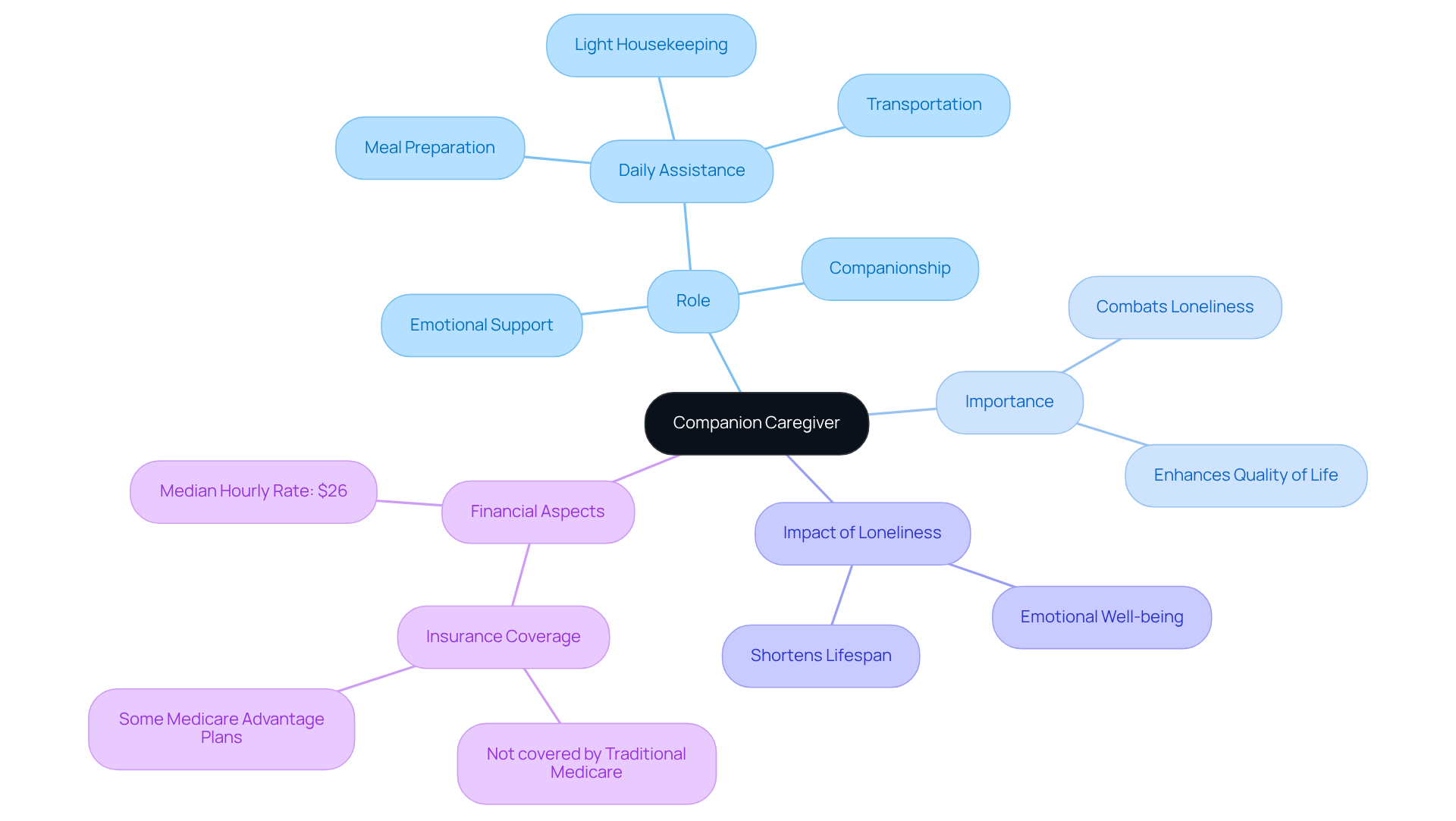
A companion caregiver is a non-medical expert dedicated to providing emotional support, companionship, and assistance with daily tasks for seniors and individuals with disabilities. Unlike personal care aides, who focus on medical duties, social support providers prioritize social engagement and emotional well-being. Their role is vital in combating loneliness, which can significantly affect health; research indicates that chronic loneliness may shorten lifespan even more than being overweight or inactive and is on par with the effects of smoking.
By fostering meaningful relationships and engaging clients in enjoyable activities, such as meal preparation and light housekeeping, companion caregivers enhance the quality of life for those they assist. This ensures that clients feel valued and connected in their daily routines. Expert opinions emphasize that the role of a companion caregiver is not merely a luxury but an essential aspect of life for older adults, as it directly influences their emotional health and overall happiness.
With nearly half of women aged 75 and older living alone, the becomes increasingly urgent. Moreover, the national median hourly rate for care companionship stands at $26, underscoring the financial worth of these indispensable services. In this light, the compassionate care provided by companion caregivers not only addresses practical needs but also nurtures the emotional landscape of those they serve.
Contextualize the Role of Companion Caregivers
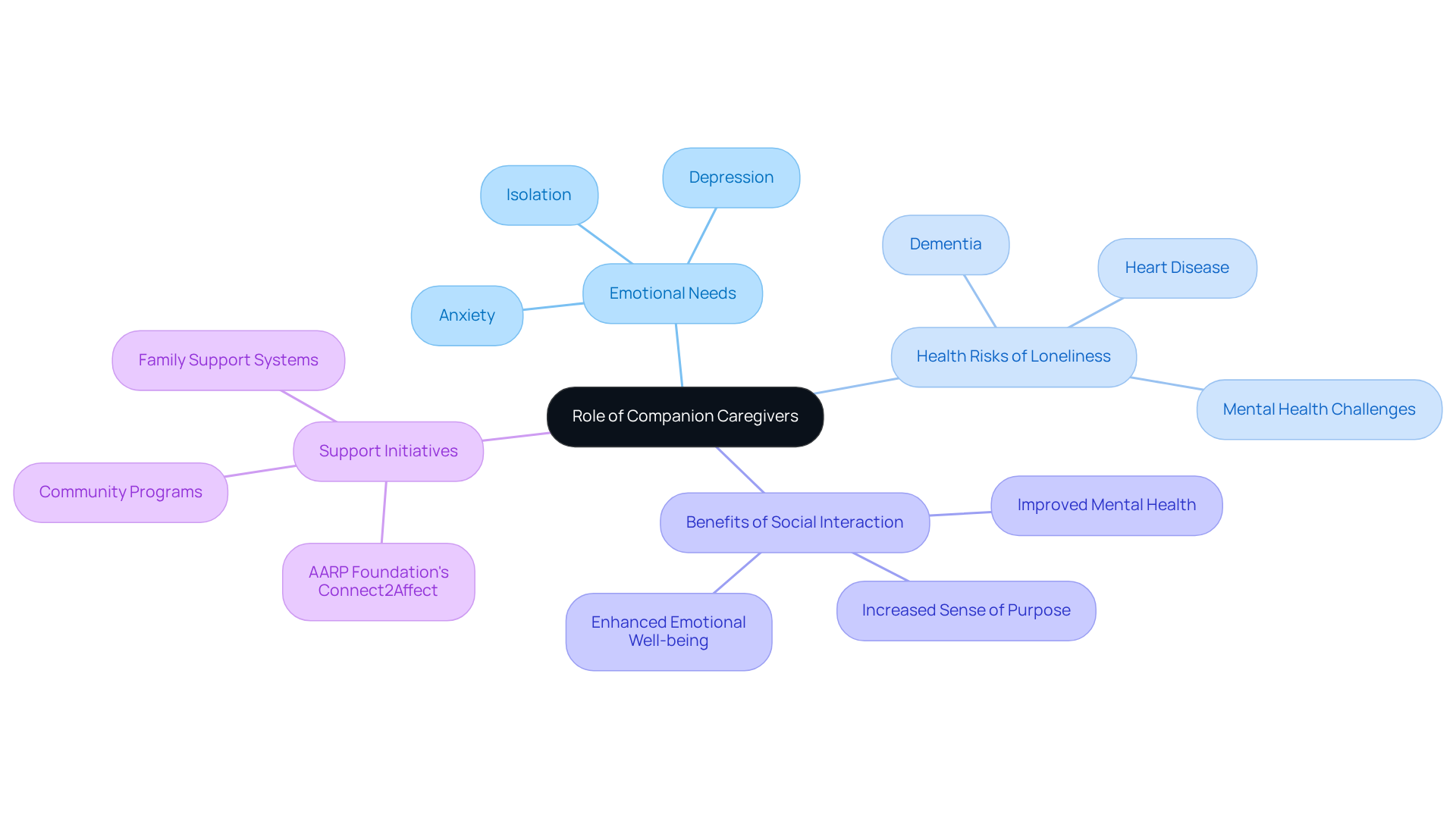
The significance of companion caregivers has grown in recent years, particularly as our aging population increases. Many older adults find themselves living alone, grappling with feelings of isolation and loneliness. These emotions can lead to mental health challenges, such as depression and anxiety. Companion caregivers are essential in alleviating these struggles by offering vital social interaction. They engage clients in meaningful conversations, activities, and outings, nurturing a sense of connection and purpose.
Research shows that regular social interaction is associated with improved mental health outcomes, helping to ease feelings of loneliness and enhance emotional well-being. Without consistent social interaction, seniors often experience abandonment or disconnection, and is linked to a heightened risk of dementia, heart disease, and depression. Additionally, the presence of supportive individuals not only lifts the spirits of elderly individuals but also provides families with much-needed relief and reassurance, knowing their loved ones are receiving compassionate assistance.
As Brad Massey from ComForCare Home Care shares, "With empathetic support providers committed to enhancing the quality of existence for your relatives, seniors can obtain the assistance and companionship they require to remain joyful and well." This holistic approach to caregiving underscores the profound impact that companion caregivers have on the mental well-being and overall quality of life for older adults.
Furthermore, initiatives like the AARP Foundation's Connect2Affect offer resources to help older adults combat social isolation and loneliness, further emphasizing the importance of care services. Together, we can foster a nurturing environment where older adults feel valued, connected, and supported.
Trace the Origins of Companion Caregiving
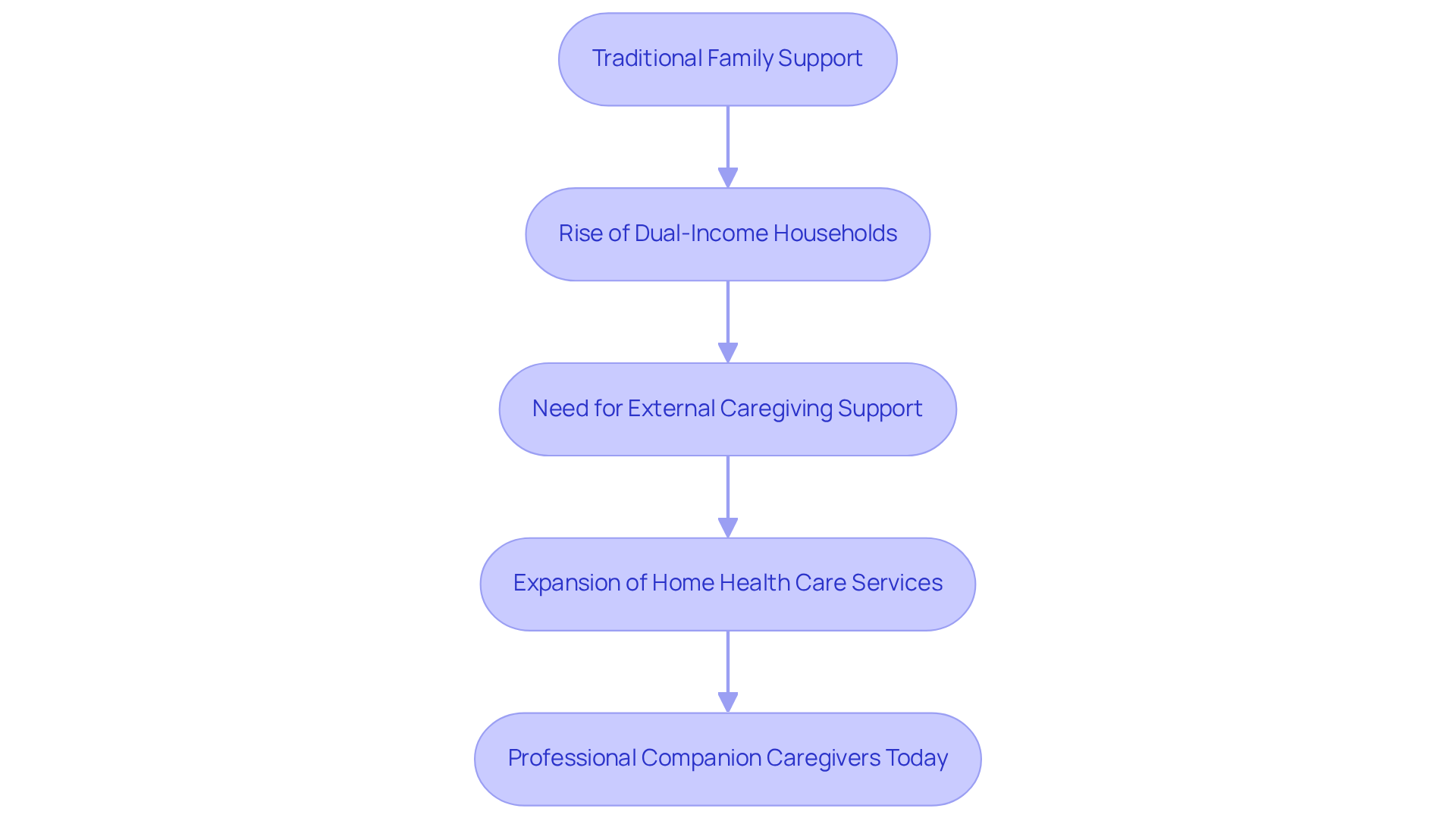
Companion caregivers have transformed significantly from the traditional model of family support for elderly relatives into a recognized professional service. As our society has evolved, particularly with the rise of dual-income households, the need for external caregiving support has grown. The late 20th century marked a crucial turning point with the expansion of home health care services, which established caregiving as a distinct and essential offering.
Today, companion caregivers play a . They provide important non-medical assistance that not only complements medical care but also enhances the quality of life for elderly individuals. This shift reflects broader societal changes, including the increasing acknowledgment of the importance of companion caregivers in alleviating loneliness and isolation among older adults.
According to the National Poll on Healthy Aging, one in three seniors report feelings of loneliness. This emotional struggle can shorten life expectancy even more than being overweight or sedentary. Such a statistic highlights the growing need for companion caregivers and underscores their essential role in the well-being of our aging population.
As Myechia Minter-Jordan, CEO of AARP, poignantly states, 'As our population ages, we must act boldly to support people providing this crucial source of care.' This call to action reminds us of the importance of nurturing connections and the profound impact that compassionate caregiving can have on those we serve.
Identify Key Characteristics and Responsibilities
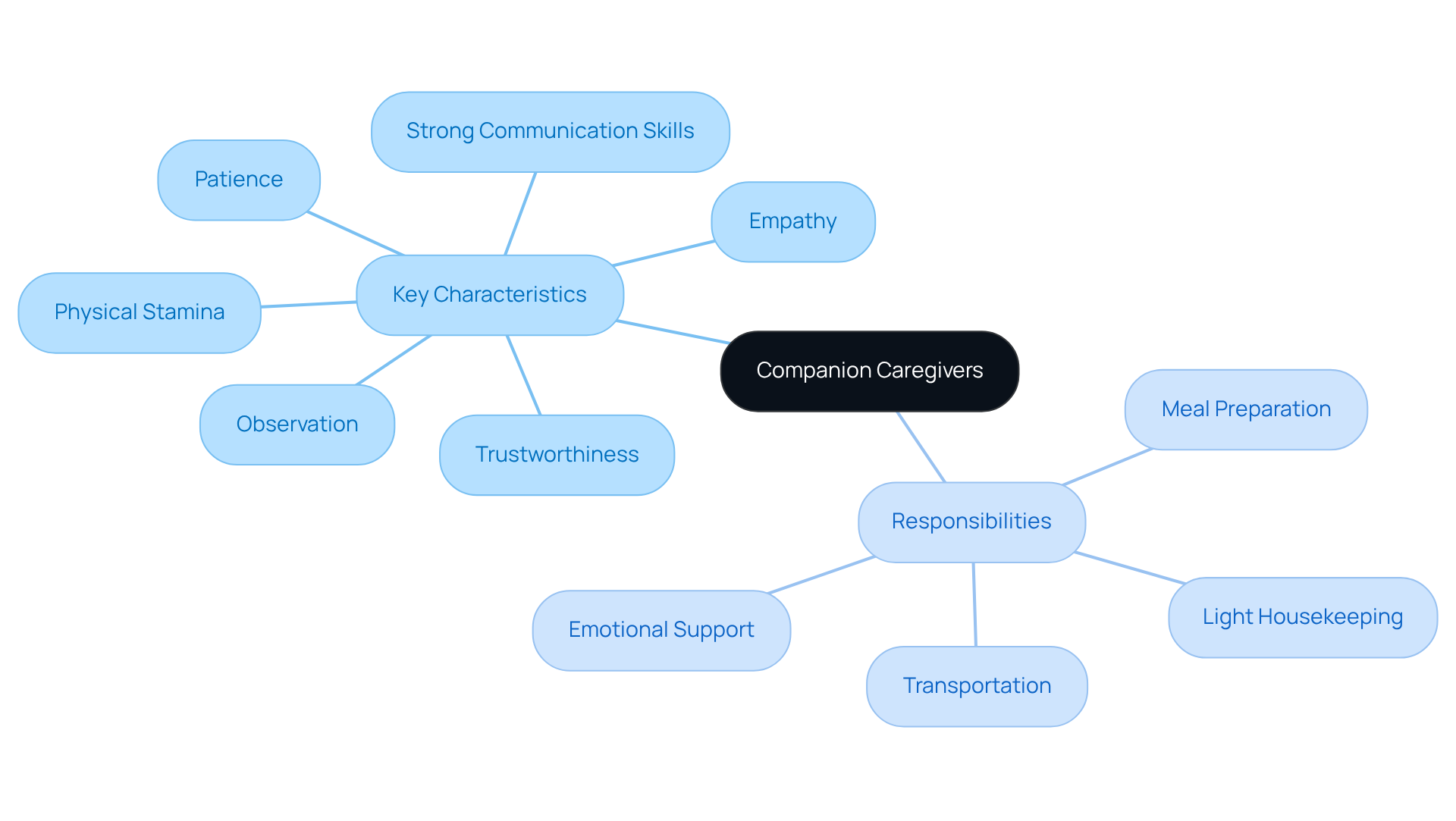
Effective companion caregivers embody key characteristics such as empathy, patience, and strong communication skills, all of which are crucial in understanding and addressing the emotional needs of their clients. They engage clients in meaningful activities, providing companionship that is both supportive and enriching. Their responsibilities typically include:
- Assisting with light housekeeping
- Meal preparation
- Transportation to appointments or social events
All aimed at enhancing the quality of life for those they care for.
Moreover, these dedicated individuals monitor the well-being of their clients, ensuring safety and comfort while fostering independence. Their keen observation abilities are essential for recognizing health changes, enabling them to respond swiftly to any issues that may arise. in the caregiver-client relationship, as it fosters a sense of security for families considering in-home care.
In addition to practical assistance, caregivers offer emotional support, helping clients navigate stress and anxiety, which significantly enhances their overall well-being. By nurturing trusting relationships, companion caregivers create a supportive atmosphere that encourages clients to maintain their dignity and quality of life.
Physical stamina is also vital, as many tasks involve assisting individuals with limited mobility. It's important to acknowledge that nearly 25% of family supporters experience health issues due to their caregiving duties, underscoring the need for efficient support systems.
Experts emphasize that the ability to adapt and respond to clients' needs is crucial for effective caregiving, as it allows caregivers to address both the physical and emotional challenges faced by older adults. This comprehensive approach not only elevates the quality of care but also enriches the lives of those they assist, offering reassurance and encouragement in their journey.
Explore the Impact of Companion Care on Quality of Life
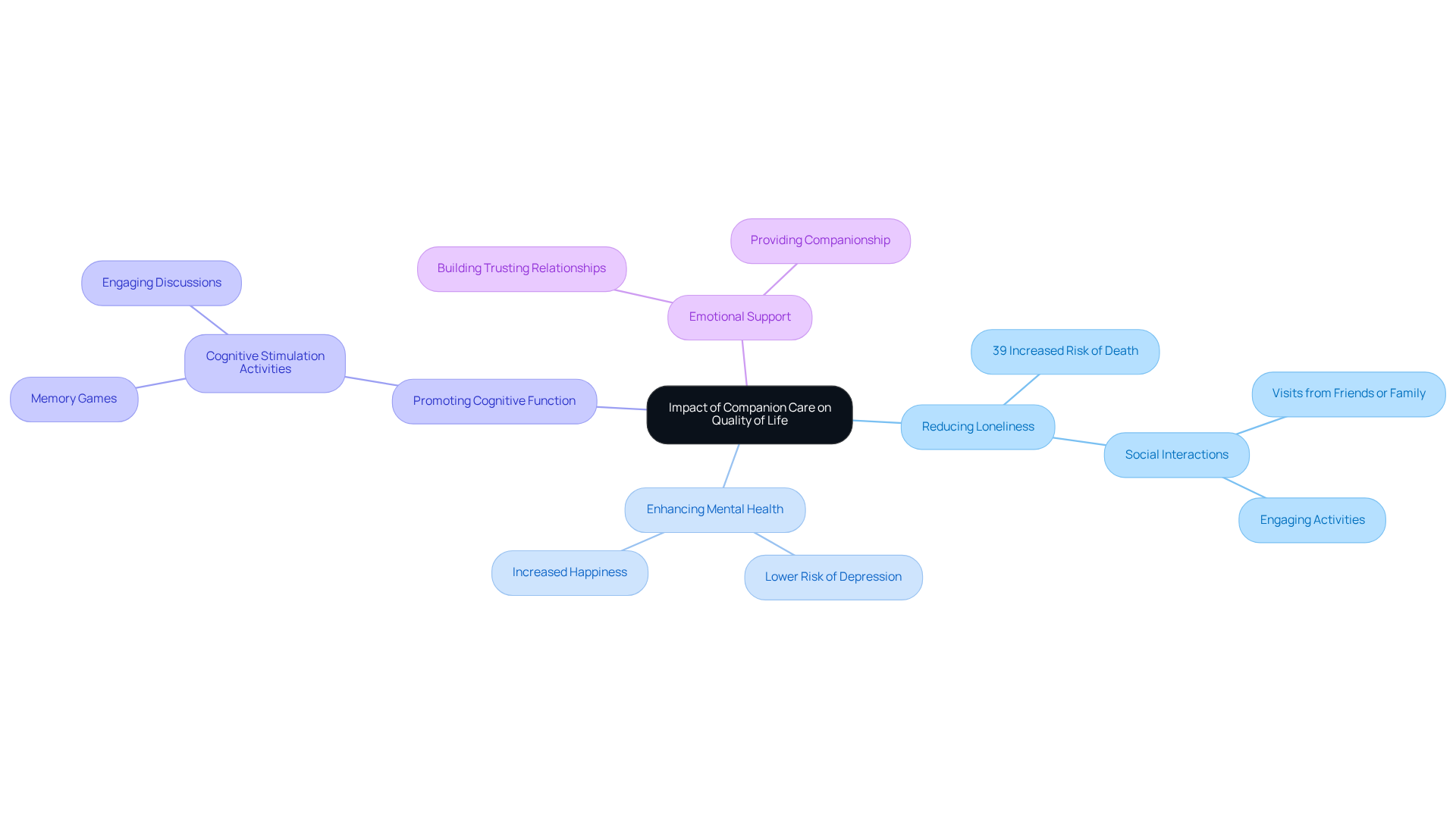
The impact of supportive care on the quality of life for older adults is truly significant. Research shows that consistent engagement with companion caregivers can greatly reduce feelings of loneliness and depression. In fact, individuals who have never been visited by friends or family face a 39% increased risk of death, highlighting the vital role of social interactions in alleviating loneliness among older adults.
Engaging in social activities and conversations not only enhances mental health but also promotes cognitive function and physical activity. For instance, older adults who partake in regular outings or hobbies with their caregivers often report higher levels of satisfaction and happiness. As Family Resource Home Care beautifully states, 'As the research confirms the importance of social interactions among seniors, companion caregivers arise as a fundamental aspect in tackling loneliness and enhancing the experiences of our elderly loved ones.'
This holistic approach to care underscores the in enriching the overall well-being of older adults, ultimately fostering a more fulfilling and connected life. By prioritizing these connections, we can ensure that our elderly loved ones experience the warmth and companionship they deserve.
Making the Right Choice
Companion caregivers represent a vital source of support for seniors and individuals with disabilities, emphasizing emotional well-being and social engagement over medical tasks. Their role is increasingly crucial in today's world, where many older adults grapple with isolation and loneliness—factors that can profoundly affect their health and quality of life. By offering companionship and assistance with daily activities, these caregivers cultivate a sense of belonging and purpose, demonstrating that their contributions are not merely beneficial but essential.
Throughout this article, we have highlighted the significance of companion caregivers through various insights. From their capacity to ease loneliness and enhance mental health to their transition from familial support to professional service, the importance of these caregivers is unmistakable. Research shows that regular social interaction can significantly boost the emotional and physical well-being of older adults, underscoring the vital role companion caregivers play in enriching lives and supporting families.
As our society continues to age, the need for compassionate caregiving will only increase. It is crucial to recognize and advocate for the invaluable services provided by companion caregivers, ensuring that older adults receive the emotional support and companionship they deserve. By prioritizing these connections, communities can create environments where every elderly individual feels valued, supported, and connected—ultimately enhancing their overall quality of life.
https://iframe.tely.ai/cta/eyJhcnRpY2xlX2lkIjogIjY4ZWVlNzdkMDljZTc3MTlkMWQ2ZGI4MiIsICJjb21wYW55X2lkIjogIjY4ZWU1ZGNhNzMxNzYyNTU3ZjNjOTVjMSIsICJpbmRleCI6IG51bGwsICJ0eXBlIjogImFydGljbGUifQ==Frequently Asked Questions
What is a companion caregiver?
A companion caregiver is a non-medical expert who provides emotional support, companionship, and assistance with daily tasks for seniors and individuals with disabilities. They focus on social engagement and emotional well-being rather than medical duties.
Why are companion caregivers important for seniors?
Companion caregivers are vital in combating loneliness, which can significantly affect health. Research indicates that chronic loneliness can shorten lifespan and is linked to mental health challenges. They enhance the quality of life by fostering meaningful relationships and engaging clients in enjoyable activities.
What kinds of tasks do companion caregivers assist with?
Companion caregivers assist with daily tasks such as meal preparation, light housekeeping, and engaging clients in meaningful conversations and activities.
How does loneliness affect older adults?
Loneliness can lead to mental health challenges like depression and anxiety, and prolonged loneliness is linked to a heightened risk of dementia, heart disease, and depression.
What is the national median hourly rate for companion caregiving services?
The national median hourly rate for care companionship is $26.
How do companion caregivers contribute to the emotional well-being of seniors?
They provide vital social interaction, which is associated with improved mental health outcomes, helping to ease feelings of loneliness and enhance emotional well-being.
What initiatives are in place to help combat social isolation among older adults?
Initiatives like the AARP Foundation's Connect2Affect offer resources aimed at helping older adults combat social isolation and loneliness, emphasizing the importance of care services.
What is the overall impact of companion caregivers on families?
The presence of companion caregivers not only lifts the spirits of elderly individuals but also provides families with relief and reassurance, knowing their loved ones are receiving compassionate assistance.