
For families in our service areas
For families in our service areas, this guide explains companion care and how non-medical in-home caregiving can support care planning in East Idaho, Treasure Valley & Magic Valley, Northern Wasatch, North Central West Virginia, and Northeast Ohio.
Understanding Your Options
This article delves into the importance of companionship care for elderly individuals, highlighting its vital role in offering emotional and social support that enhances their overall well-being. It recognizes the emotional challenges many elderly face, such as loneliness and isolation, and underscores how meaningful interactions and engaging activities can alleviate these feelings. By providing tailored services, companionship care not only helps to combat loneliness but also fosters better mental health and an improved quality of life. This makes companionship an essential aspect of elderly care, offering a nurturing presence that can truly make a difference in their lives.
The Importance of Companionship for Elderly People: A
Companionship for elderly individuals is more than just a service; it is a vital lifeline that addresses the emotional and social needs of seniors. This heartfelt approach not only combats loneliness but also enriches the lives of older adults, fostering connections that enhance their overall well-being.
As caregivers navigate the intricate landscape of elderly care, they often face significant emotional challenges. The stress and burnout that can accompany this role are real and can weigh heavily on those dedicated to providing care. Recognizing how companionship can significantly improve mental health and quality of life is essential in this journey.
What are the essential elements of effective companionship care? How can caregivers ensure they provide the support that truly matters? These are questions that deserve thoughtful consideration. By focusing on understanding and addressing the emotional needs of seniors, caregivers can create meaningful connections that make a difference.
In this article, we will explore the profound impact of companionship on the lives of elderly individuals and provide insights into how caregivers can foster these vital relationships.
Define Companionship Care for the Elderly
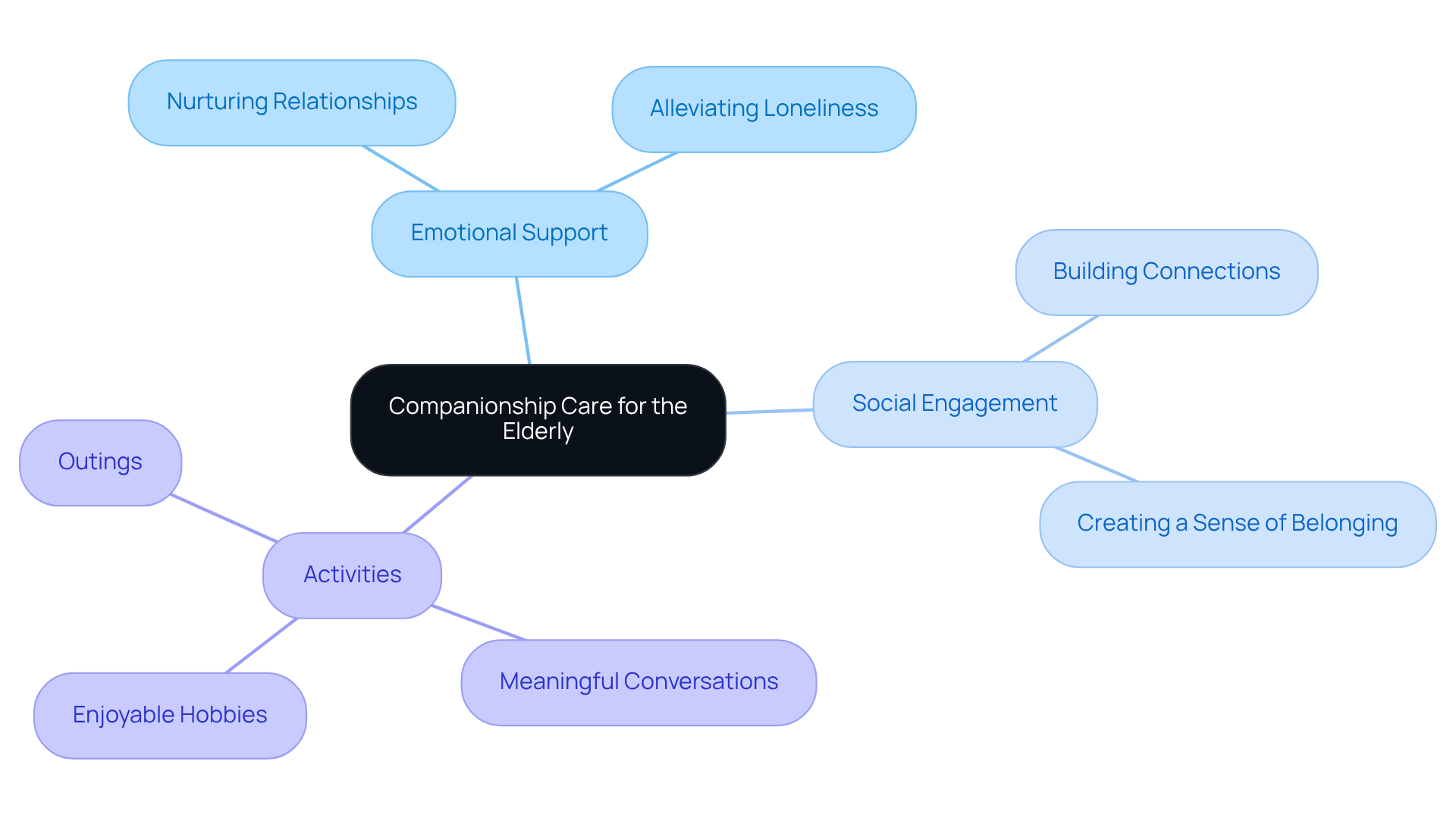
Companionship for elderly people is a heartfelt approach that focuses on providing emotional and social support to older adults. Unlike traditional caregiving, which often prioritizes physical assistance with daily tasks, companionship care is about nurturing relationships and fostering a sense of belonging. It involves:
- Engaging in meaningful conversations
- Participating in enjoyable hobbies
- Accompanying older adults on outings
All of these activities are designed to alleviate feelings of loneliness and isolation.
Understanding this definition is crucial for caregivers. It highlights the importance of emotional well-being in the overall care of elderly clients. By prioritizing companionship for elderly people, caregivers can significantly enhance their quality of life, ensuring that both their emotional and physical needs are met. This compassionate approach not only enriches the lives of older adults but also brings a sense of fulfillment to caregivers, creating a nurturing environment where everyone feels valued and connected.
Explore the Benefits of Companionship Care
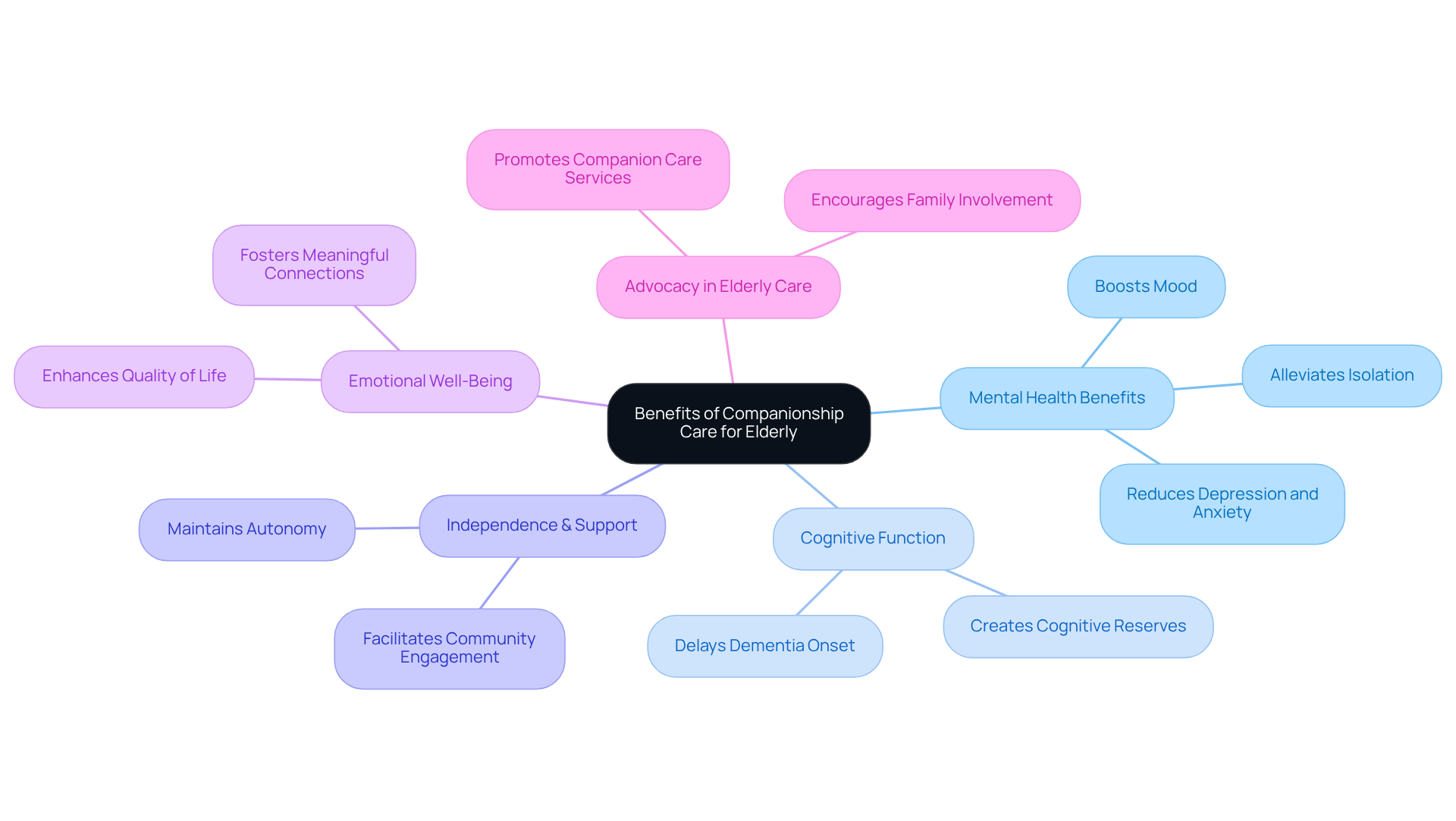
The benefits of companionship for elderly people profoundly influence their mental health and overall quality of life.
Regular interaction with a companion can significantly alleviate feelings of isolation, highlighting the importance of companionship for elderly people, which affects one in three seniors. This sense of community is vital, as isolation increases the risk of early death from all causes at rates comparable to smoking, obesity, and lack of physical activity.
Enhanced mental health can be promoted through companionship for elderly people, as engaging in communal activities and discussions not only uplifts mood but also boosts cognitive function, reducing the chances of depression and anxiety. Research indicates that loneliness may heighten the risk of developing dementia by 40%. In contrast, consistent interpersonal engagement can create cognitive reserves that delay or prevent the onset of dementia.
Companionship for elderly people allows older adults to maintain their independence while receiving essential support, enhancing their autonomy. Caregivers assist with transportation and community outings, empowering older adults to partake in activities that foster connections and enhance their well-being.
Enhanced Quality of Life: By participating in enjoyable activities and benefiting from companionship for elderly people, older adults often find a deeper sense of fulfillment and happiness. This emotional support is crucial; studies show that regular interpersonal interaction improves cardiovascular health markers and overall immune function.
Recognizing these advantages enables caregivers to advocate for companionship for elderly people as a fundamental aspect of elderly care strategies, ensuring that older adults receive the interaction necessary for their mental and emotional health. As one caregiver beautifully put it, "Meaningful human connection isn't a luxury for seniors—it's essential medicine.
Identify Types of Companionship Services Available
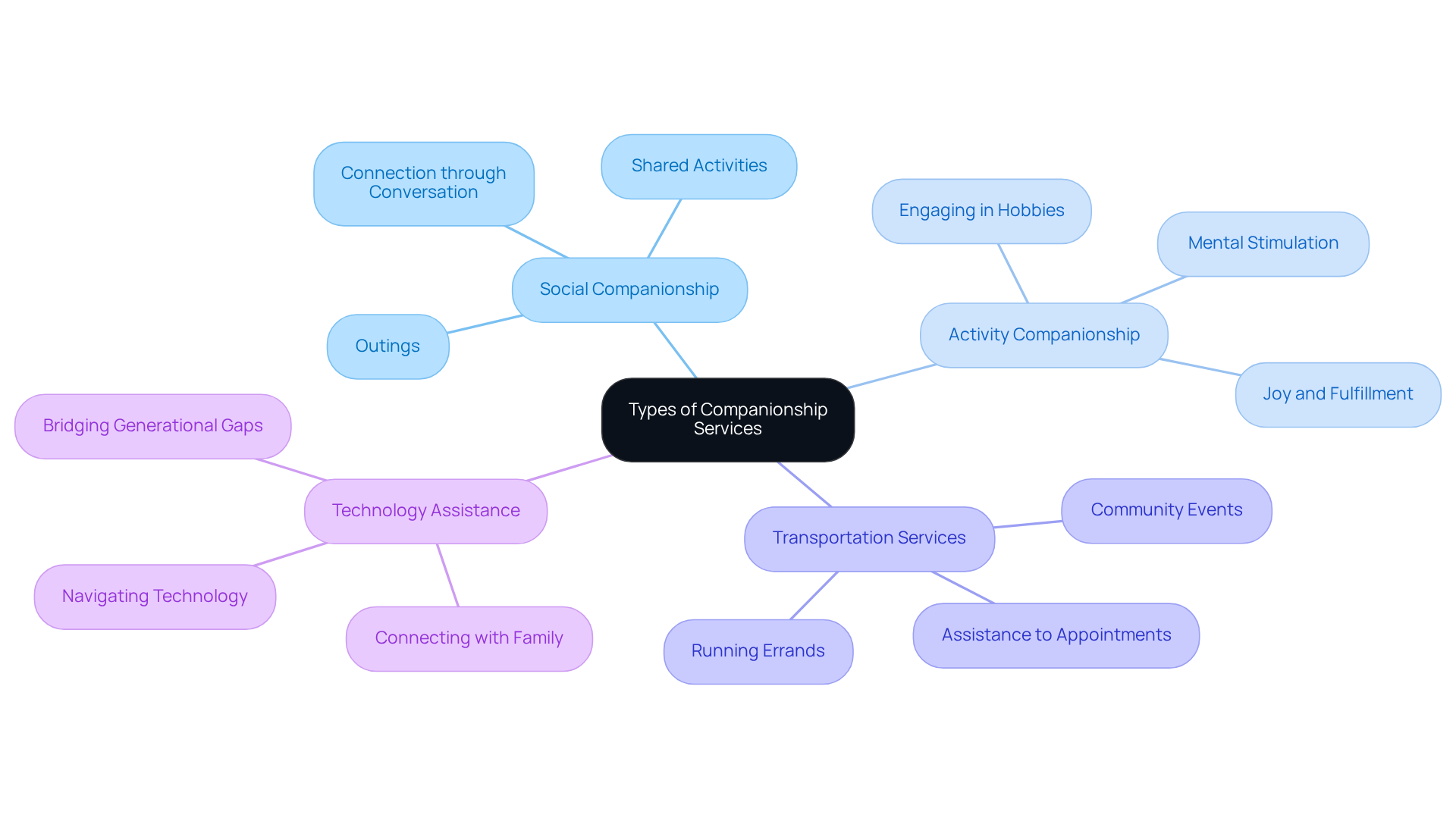
For elderly individuals, companionship services offer various types of support that cater to their emotional and practical needs:
-
Social Companionship: This service is all about connection. Through conversation, shared activities, and outings, caregivers foster companionship for elderly people, helping them feel less isolated and more engaged with the world around them.
-
Activity companionship for elderly people involves caregivers engaging in hobbies or interests with clients—be it gardening, crafts, or games. This not only promotes mental stimulation but also offers companionship for elderly people, bringing joy and fulfillment to their days.
-
Transportation services are enhanced by companionship for elderly people, as companions play a vital role in assisting older adults with transportation. Whether it’s getting to appointments, attending community events, or running errands, these services are vital for providing companionship for elderly people, ensuring they remain active participants in their neighborhoods.
-
Technology Assistance: In our increasingly digital world, some companionship services include helping seniors navigate technology. This support enables them to connect with family and friends through video calls or social media, bridging the gap between generations.
By identifying these types of services, providers can align their skills and resources more effectively with the specific needs of their clients, which includes fostering companionship for elderly people and creating a nurturing environment that promotes well-being.
Select the Right Companion Caregiver
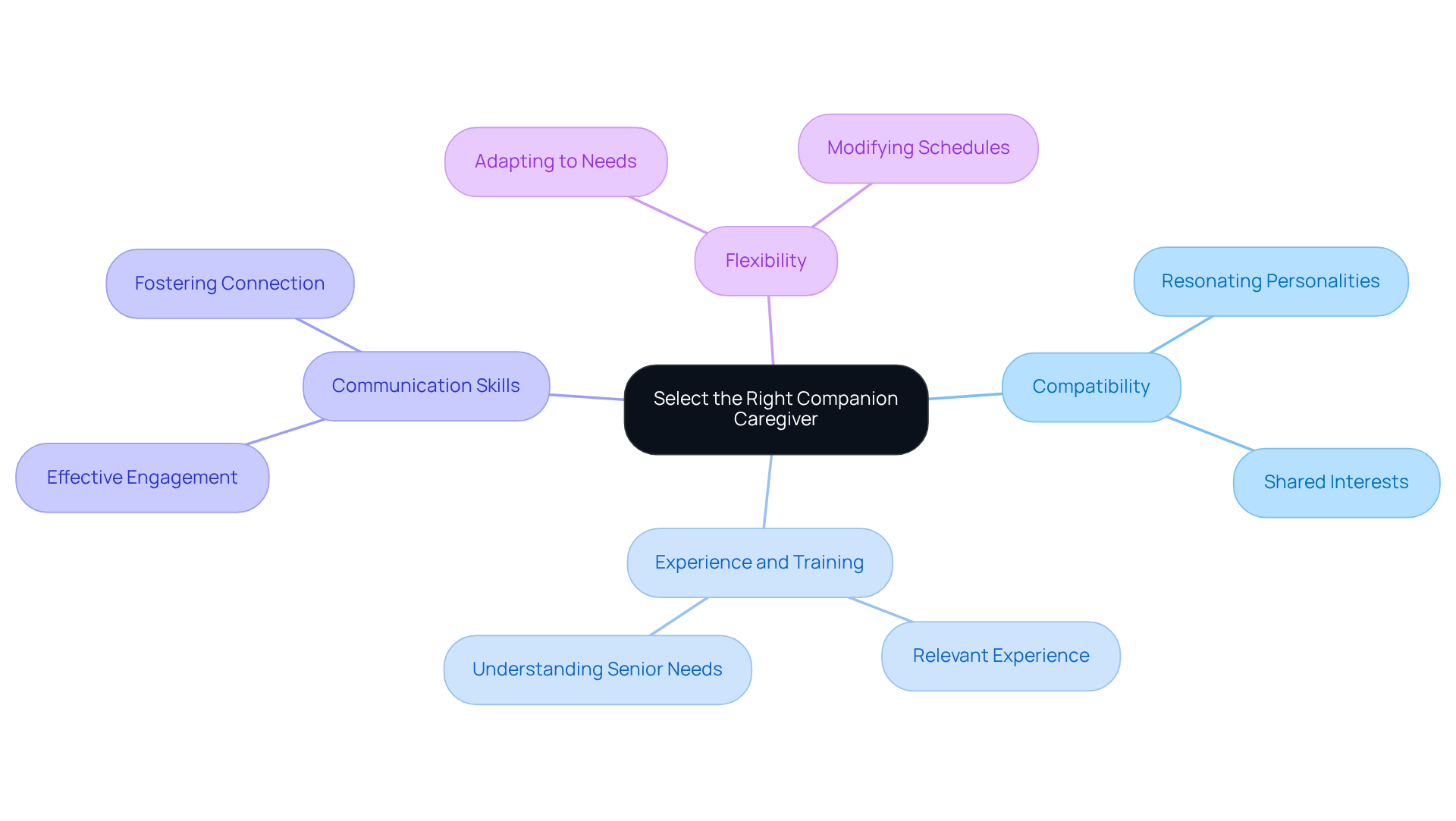
Selecting the right companion caregiver is crucial for ensuring companionship for elderly people, as it involves several important considerations that can truly impact the well-being of your loved ones.
-
Compatibility: It’s essential to find a caregiver whose personality and interests resonate with those of the elderly client. A harmonious match can significantly enhance the relationship experience, making each moment more enjoyable.
-
Experience and Training: Look for someone with relevant experience in providing companionship care. Understanding the unique needs of seniors is crucial, as it allows caregivers to offer the support that truly matters.
-
Communication Skills: A caregiver should possess strong communication skills. This ability enables them to engage effectively with the client, fostering understanding and connection, which are vital for emotional support.
-
Flexibility: Choose a provider who can adapt to the evolving requirements of the client. Whether it involves modifying schedules or activities, flexibility ensures that the caregiver can meet the changing needs of your loved one.
By focusing on these factors, families can select a companion caregiver who will provide meaningful support and companionship for elderly people. This thoughtful approach ultimately improves the quality of life for their loved ones, offering peace of mind to families during challenging times.
Taking the Next Steps
Companionship care for the elderly is an essential component of enhancing the quality of life for older adults. It addresses the emotional challenges faced by seniors, fostering nurturing relationships that alleviate feelings of loneliness and create a profound sense of belonging. Emotional well-being is just as critical as physical assistance in caregiving.
The numerous benefits of companionship for elderly individuals are significant. Improved mental health, enhanced cognitive function, and increased independence are just a few outcomes of regular interactions. These connections not only combat isolation but also promote a deeper sense of fulfillment and happiness. By understanding the various types of companionship services available, caregivers can tailor their support to meet the unique needs of older adults, ensuring a holistic approach to care.
Ultimately, prioritizing companionship care is not merely a luxury; it is a vital necessity for the well-being of seniors. As caregivers and families recognize the profound impact of meaningful human connection, they are encouraged to advocate for companionship as a fundamental aspect of elderly care. By doing so, they contribute to creating a supportive environment that enriches the lives of older adults, fostering both emotional health and a sense of community.
https://iframe.tely.ai/cta/eyJhcnRpY2xlX2lkIjogIjY4ZmQ2NTBmMjA0ZWNkYzVlMTM5MDQzYiIsICJjb21wYW55X2lkIjogIjY4ZWU1ZGNhNzMxNzYyNTU3ZjNjOTVjMSIsICJpbmRleCI6IG51bGwsICJ0eXBlIjogImFydGljbGUifQ==Frequently Asked Questions
What is companionship care for the elderly?
Companionship care for the elderly is an approach that focuses on providing emotional and social support to older adults, prioritizing nurturing relationships and fostering a sense of belonging.
How does companionship care differ from traditional caregiving?
Unlike traditional caregiving, which often emphasizes physical assistance with daily tasks, companionship care is centered around emotional well-being and social interaction.
What activities are included in companionship care?
Companionship care includes engaging in meaningful conversations, participating in enjoyable hobbies, and accompanying older adults on outings.
Why is companionship care important for elderly individuals?
Companionship care is important as it helps alleviate feelings of loneliness and isolation, significantly enhancing the quality of life for older adults by addressing their emotional and social needs.
How does prioritizing companionship benefit caregivers?
Prioritizing companionship not only enriches the lives of older adults but also brings a sense of fulfillment to caregivers, creating a nurturing environment where everyone feels valued and connected.