

For families in our service areas
For families in our service areas, this guide explains dementia care and how non-medical in-home caregiving can support care planning in East Idaho, Treasure Valley & Magic Valley, Northern Wasatch, North Central West Virginia, and Northeast Ohio.
Understanding Dementia Restlessness: Causes and
Dementia restlessness is a significant issue that affects both individuals living with the condition and their caregivers. This agitation, marked by an inability to remain still, often arises from various underlying factors, such as physical discomfort and environmental triggers. The implications of this restlessness can be profound, leading to increased stress for caregivers and a diminished quality of life for those affected.
What happens when the very environment meant to provide comfort becomes a source of distress? This paradox highlights the need for caregivers to understand the causes and manifestations of restlessness. By doing so, they can uncover effective strategies to enhance the quality of life for dementia patients.
To address this issue, caregivers can implement several practical solutions:
- Assess the environment: Identify and minimize potential triggers that may cause agitation.
- Provide comfort: Ensure that physical discomfort is addressed, whether through proper seating, temperature control, or pain management.
- Engage in calming activities: Introduce soothing routines or activities that can help reduce restlessness.
Understanding and addressing dementia restlessness is crucial for developing comprehensive support systems tailored to the unique needs of patients. By focusing on these strategies, caregivers can create a more supportive and peaceful environment.
Define Restlessness in Dementia
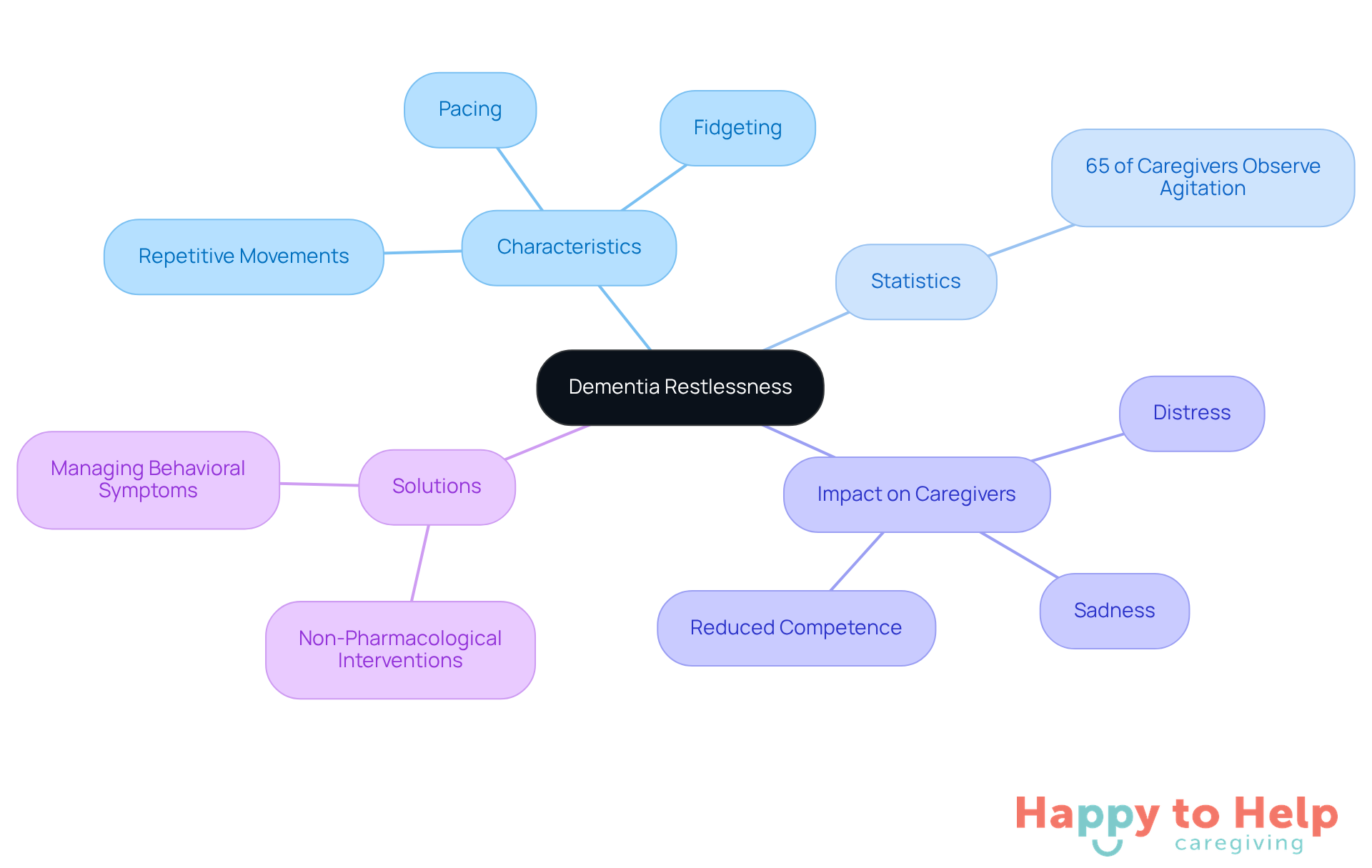
Dementia restlessness poses a significant challenge for caregivers, characterized by a state of disturbance or unease. This often manifests as repetitive movements, fidgeting, or an inability to remain still. Individuals may pace, tap their fingers, or engage in other uncontrolled motor activities. Such behaviors can be distressing for both the person experiencing them and their supporters, suggesting underlying discomfort or confusion.
Statistics reveal that around 65% of caregivers notice agitation in their care recipients, highlighting its prevalence among dementia patients. This agitation not only affects the individuals but also places increased strain on caregivers, leading to feelings of distress, sadness, and reduced competence in providing care. Understanding these indicators is crucial; early detection allows caregivers to implement effective strategies to mitigate dementia restlessness, ultimately enhancing the quality of life for those affected.
Practical solutions include non-pharmacological interventions, such as sensory stimulation products designed to assist individuals experiencing dementia restlessness. These approaches have been shown to provide comfort and reduce agitation. Additionally, managing behavioral symptoms can significantly lessen the burden on caregivers, improving their overall well-being. As one expert noted, addressing these symptoms is likely to reduce depression in caregivers, underscoring the importance of a proactive approach in dementia care.
Recognizing the connection between restlessness and pain can also deepen our understanding of the factors contributing to agitation. This reinforces the need for comprehensive care strategies that address both emotional and physical discomfort.
Identify Causes of Restlessness
Dementia restlessness in individuals presents a significant challenge for caregivers. This agitation, often associated with dementia restlessness, can stem from various factors, each contributing to the overall disturbance.
Key Causes of Restlessness:
-
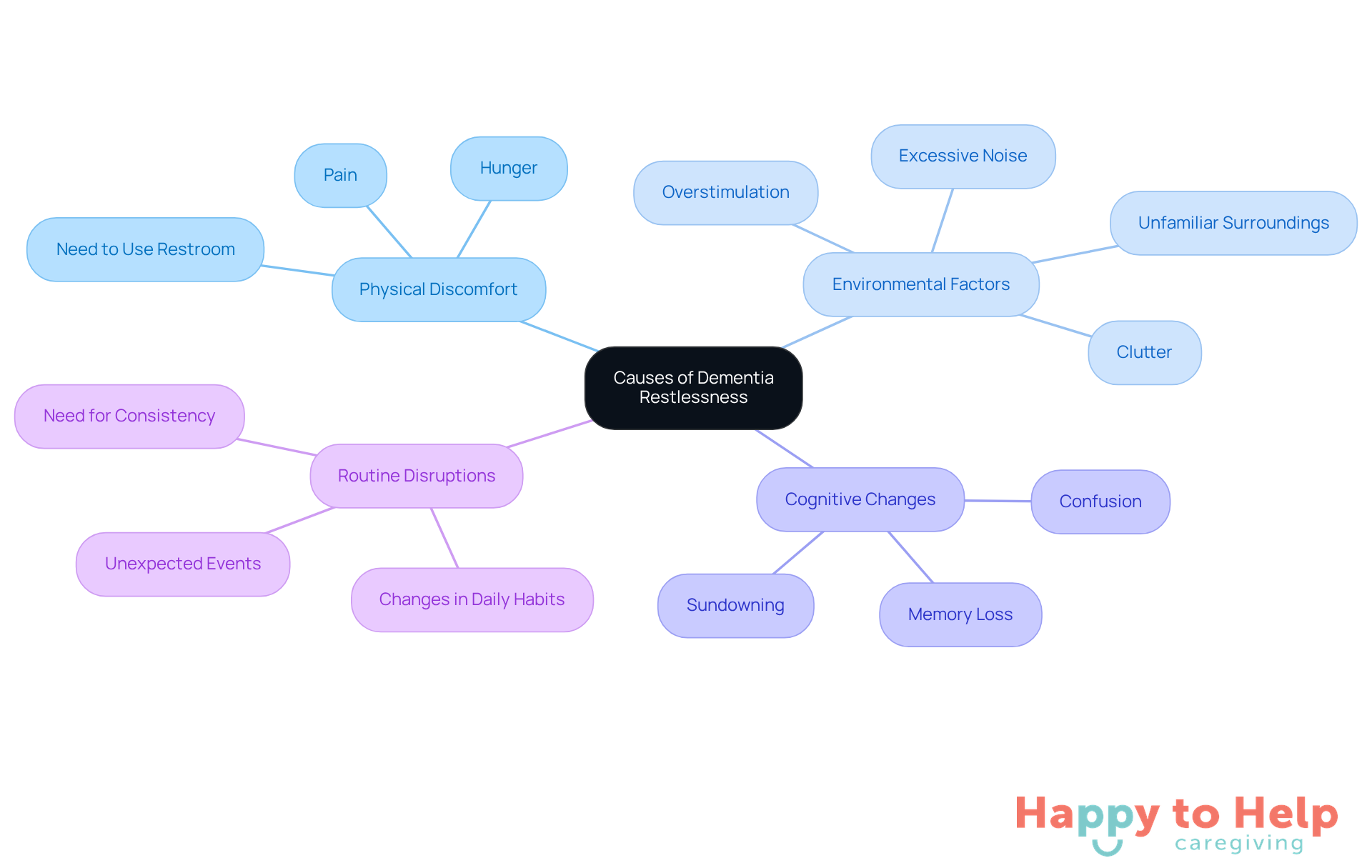
Physical Discomfort: Pain, hunger, or the need to use the restroom are major contributors to agitation. Research indicates that addressing these physical needs can significantly reduce unrest. Notably, 60% of patients with mild cognitive impairment and 76% of those with Alzheimer's disease report experiencing symptoms of dementia restlessness.
-
Environmental Factors: Overstimulation from excessive noise, clutter, or unfamiliar surroundings can provoke anxiety and unease. Creating a calm and familiar environment is essential to minimize triggers that can lead to dementia restlessness.
-
Cognitive Changes: Memory loss and confusion often lead to anxiety, especially during late afternoon or evening hours, a phenomenon known as 'sundowning.' This time can be particularly challenging, as cognitive decline may lead to dementia restlessness, heightening feelings of insecurity and agitation.
-
Routine Disruptions: Changes in daily habits or unexpected events can disturb individuals, causing unease. Consistency and predictability in daily activities are crucial for providing a sense of security.
For caregivers, recognizing these triggers is vital in managing dementia restlessness. By understanding the specific needs of each individual, caregivers can implement suitable support strategies. Furthermore, agitated patients often require more healthcare resources, including increased consultations and hospitalizations. Addressing restlessness effectively not only improves patient well-being but also optimizes healthcare utilization.
Create a Supportive Environment
Creating a supportive environment for individuals experiencing dementia restlessness presents several challenges for caregivers. A cluttered space can lead to distractions and confusion, making it difficult for individuals to feel at ease. Additionally, inadequate lighting can create shadows that contribute to anxiety and disorientation.
To address these issues, consider the following strategies:
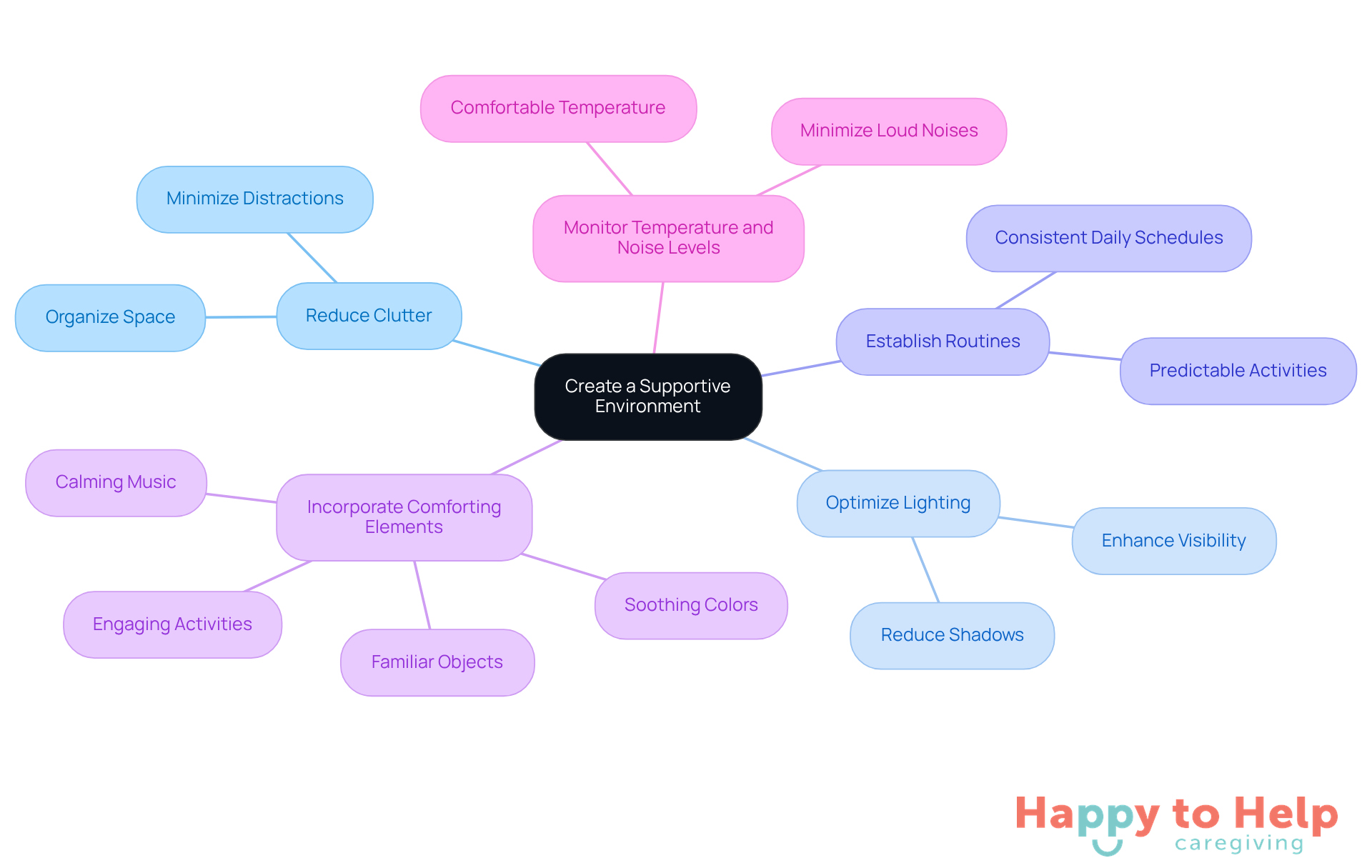
- Reduce Clutter: A tidy space minimizes distractions, helping individuals feel more comfortable and secure.
- Optimize Lighting: Ensure adequate lighting to enhance visibility and reduce shadows, which can help prevent confusion and anxiety.
- Establish Routines: Consistent daily schedules provide a sense of security and predictability, decreasing feelings of unrest.
- Incorporate Comforting Elements: Familiar objects, soothing colors, and calming music can create a comforting atmosphere. Engaging in familiar activities also helps ground individuals and reduces dementia restlessness.
- Monitor Temperature and Noise Levels: Ensure the environment is comfortable in terms of temperature and minimize loud noises that could contribute to agitation.
By implementing these strategies, caregivers can create a more supportive and calming environment for individuals with dementia.
Key Takeaways for Caregivers
Dementia restlessness poses a significant challenge for both individuals with dementia and their caregivers. This agitation can manifest through symptoms like repetitive movements and fidgeting, indicating deeper discomfort or confusion. Understanding these signs is crucial for caregivers, as it allows them to address the needs of those they support effectively.
Key factors contributing to dementia restlessness include:
- Physical discomfort
- Environmental triggers
- Cognitive changes
- Disruptions in routine
By recognizing these aspects, caregivers can implement non-pharmacological strategies to alleviate agitation. For instance, creating a calming environment and establishing consistent routines can greatly enhance the quality of life for individuals with dementia. Such supportive measures not only reduce distress for patients but also improve the well-being of caregivers, helping them feel less helpless and depressed.
The insights shared highlight the urgent need for proactive and comprehensive care strategies in managing dementia restlessness. Caregivers are encouraged to adopt practical solutions that foster a nurturing environment, ensuring individuals with dementia feel secure and understood. By prioritizing these approaches, the community can enhance the experiences of both patients and caregivers, ultimately leading to a more compassionate and effective dementia care landscape.
https://iframe.tely.ai/cta/eyJhcnRpY2xlX2lkIjogIjY5MjI0Zjg3NGZjYWRhOTUwOGRlNDQyZSIsICJjb21wYW55X2lkIjogIjY4ZWU1ZGNhNzMxNzYyNTU3ZjNjOTVjMSIsICJpbmRleCI6IG51bGwsICJ0eXBlIjogImFydGljbGUifQ==Frequently Asked Questions
What is dementia restlessness?
Dementia restlessness is characterized by a state of disturbance or unease in individuals with dementia, often manifesting as repetitive movements, fidgeting, or an inability to remain still.
What behaviors are associated with dementia restlessness?
Associated behaviors may include pacing, tapping fingers, or engaging in other uncontrolled motor activities.
How prevalent is agitation among dementia patients?
Statistics indicate that around 65% of caregivers observe agitation in their care recipients, highlighting its common occurrence among dementia patients.
What impact does dementia restlessness have on caregivers?
Dementia restlessness can lead to increased strain on caregivers, resulting in feelings of distress, sadness, and reduced competence in providing care.
Why is early detection of dementia restlessness important?
Early detection allows caregivers to implement effective strategies to mitigate restlessness, ultimately enhancing the quality of life for those affected.
What are some practical solutions for managing dementia restlessness?
Non-pharmacological interventions, such as sensory stimulation products, can provide comfort and reduce agitation in individuals experiencing dementia restlessness.
How does managing behavioral symptoms benefit caregivers?
Managing behavioral symptoms can significantly lessen the burden on caregivers, improving their overall well-being and potentially reducing depression.
What is the connection between restlessness and pain in dementia patients?
Recognizing the connection between restlessness and pain helps in understanding the factors contributing to agitation, reinforcing the need for comprehensive care strategies that address both emotional and physical discomfort.
List of Sources
- Define Restlessness in Dementia
- Dementia-related restlessness: Relationship to characteristics of persons with dementia and family caregivers | Request PDF (https://researchgate.net/publication/315612525\_Dementia-related\_restlessness\_Relationship\_to\_characteristics\_of\_persons\_with\_dementia\_and\_family\_caregivers)
- (PDF) Dimensions of Agitation Based on the Cohen-Mansfield Agitation Inventory in Patients with Dementia (https://researchgate.net/publication/269946164\_Dimensions\_of\_Agitation\_Based\_on\_the\_Cohen-Mansfield\_Agitation\_Inventory\_in\_Patients\_with\_Dementia)
- Restlessness and agitation in dementia (https://alzheimers.org.uk/about-dementia/stages-and-symptoms/dementia-symptoms/restlessness)
- Identify Causes of Restlessness
- Agitation in Dementia: Real-World Impact and Burden on Patients and the Healthcare System - PMC (https://pmc.ncbi.nlm.nih.gov/articles/PMC8461728)
- (https://belleviecare.co.uk/support-advice/dementia-quotes-to-lift-your-spirits)
- Clock changes and dementia: Tips for managing the challenge (https://deseret.com/family/2025/10/29/time-change-alzheimers-dementia-patients-caregivers-struggle-sundowning)
- Caregiver Dementia Quotes (Encouragement For Dementia Caregivers) (https://optoceutics.com/caregiver-dementia-quotes-encouragement-dementia-caregivers?srsltid=AfmBOoraniojyGarXoQwcDoRTdbwavgDyiJ8ft3l5A\_5Z0E\_7pOmv22v)