

For families in our service areas
For families in our service areas, this guide explains caregiving and how non-medical in-home caregiving can support care planning in East Idaho, Treasure Valley & Magic Valley, Northern Wasatch, North Central West Virginia, and Northeast Ohio.
Why Elder Concierge Services: Definition Matters
As the population ages, families face a growing challenge: the demand for tailored support systems for seniors is on the rise. This situation places immense pressure on family caregivers, who often struggle to balance their own lives while providing adequate care for their loved ones. The implications are significant, as caregivers may experience stress, burnout, and a sense of isolation.
Elder concierge services emerge as a vital solution to this pressing problem. These services offer personalized assistance that not only enhances the quality of life for older adults but also alleviates the burden on family caregivers. By providing tailored support, elder concierge services can help families navigate the complexities of caregiving, ensuring that seniors receive the care they need while allowing caregivers to maintain their own well-being.
Understanding the definition, benefits, and real-world applications of elder concierge services is crucial. These services can transform the lives of seniors and their families, providing peace of mind and improved quality of life. With so many options available, families can make informed decisions that best meet the unique needs of their loved ones.
Defining Elder Concierge Services
Elder assistance options address a significant challenge faced by many seniors: the need for support in daily activities. As individuals age, they often struggle with tasks that were once simple, leading to feelings of isolation and decreased quality of life. This situation can be distressing not only for seniors but also for their caregivers, who may feel overwhelmed by the demands of providing care.
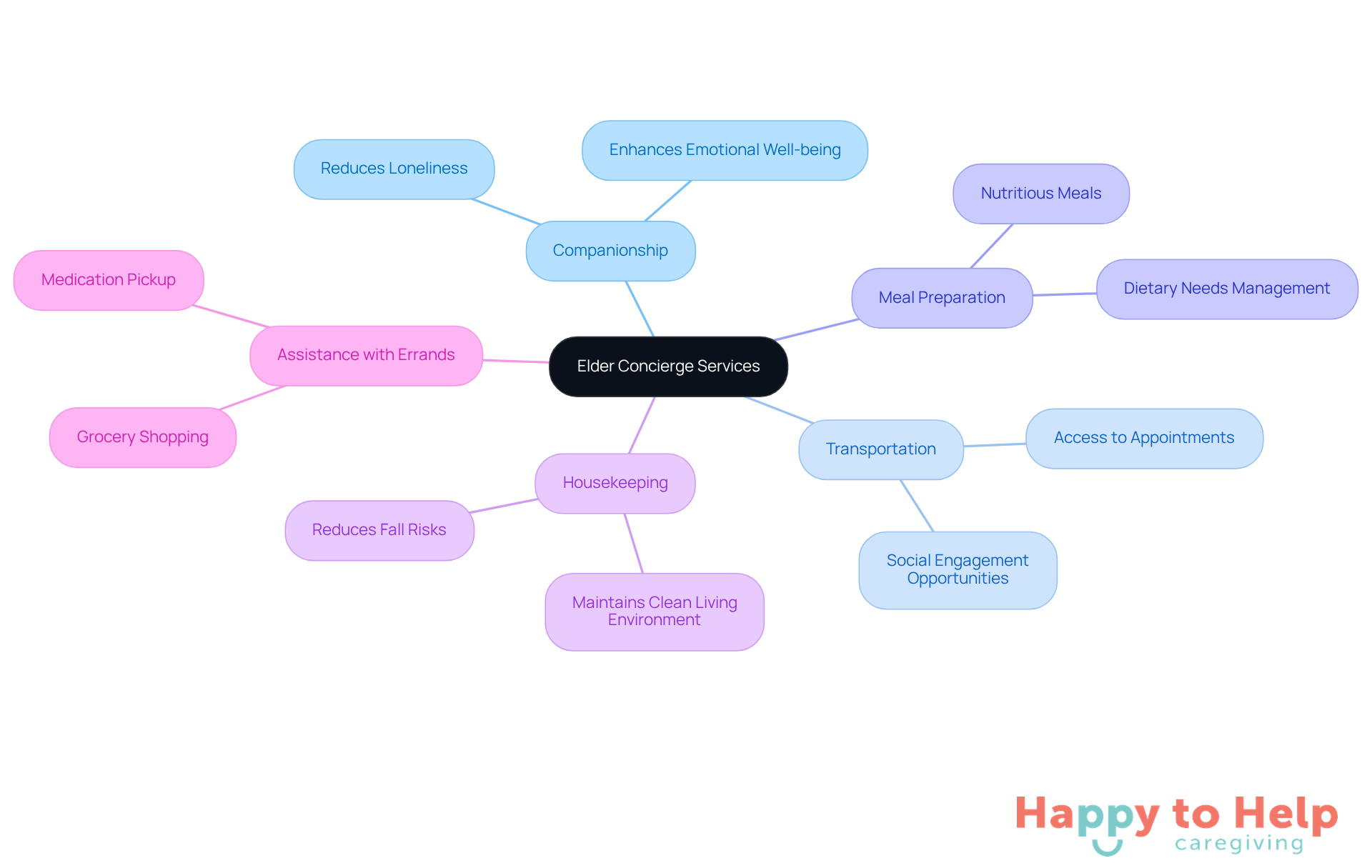
To tackle this issue, elder concierge services provide a variety of non-medical support resources designed to help seniors thrive. These services include:
- Companionship
- Transportation
- Meal preparation
- Housekeeping
- Assistance with errands
Unlike traditional caregiving, which often focuses on medical needs, these options promote a holistic approach that encourages independence and wellness.
By utilizing elder concierge services, older adults can remain in their homes, surrounded by familiar comforts, while receiving the help they need. This not only fosters a sense of security but also enhances their overall well-being. Caregivers can implement these solutions to ensure that their loved ones enjoy a higher quality of life, ultimately benefiting both parties.
Context and Importance of Elder Concierge Services
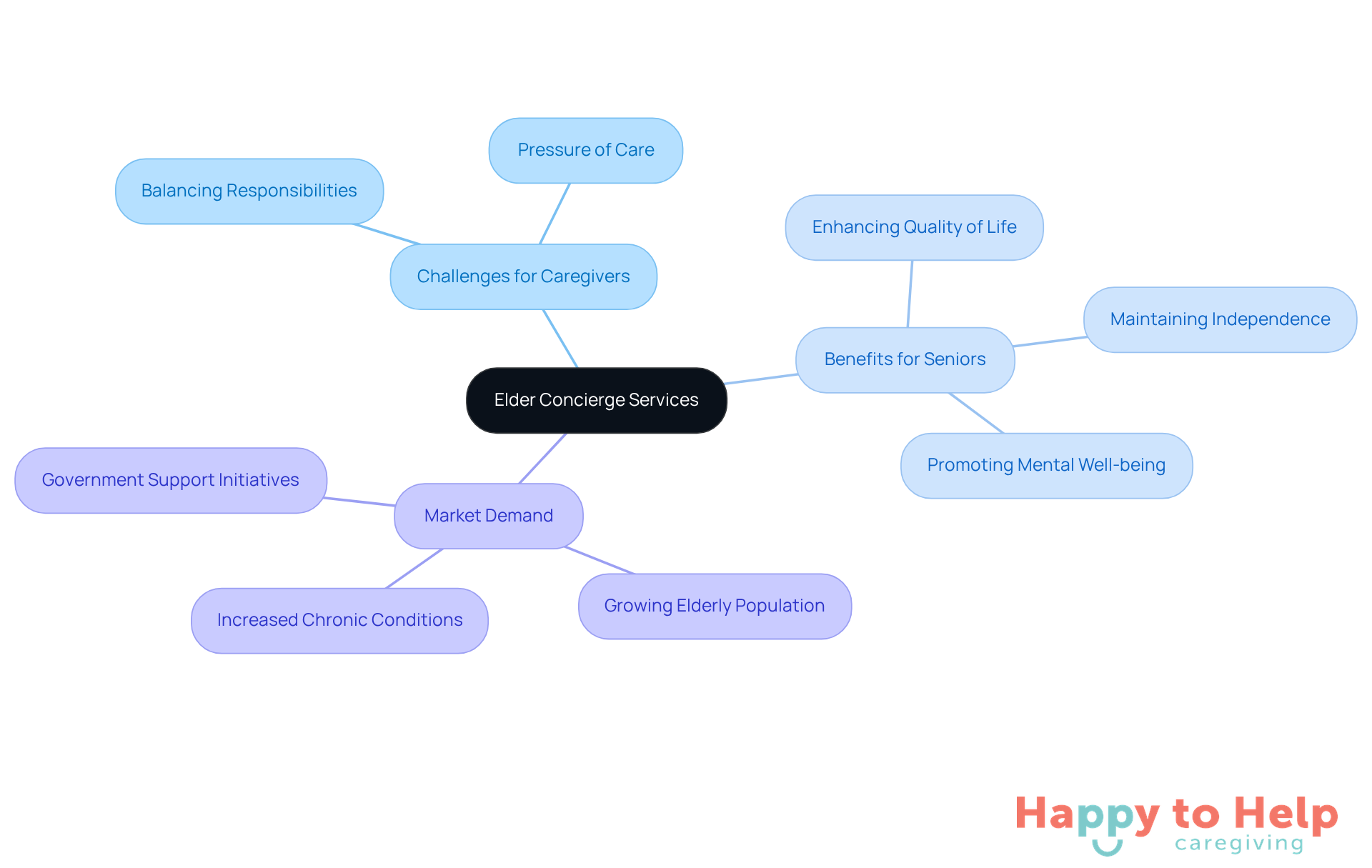
The expanding elderly demographic presents a significant challenge: the growing need for tailored care options. This situation places immense pressure on family caregivers, who often struggle to balance their responsibilities with the demands of caring for older adults. With nearly 93% of U.S. adults aged 65 and older living with at least one chronic condition, the importance of effective support systems cannot be overstated.
Elder assistance programs emerge as a vital solution in this context. These programs offer customized help that caters to the unique needs of older adults, enabling them to maintain their independence while receiving essential support. By assisting with daily tasks, elder concierge services enhance seniors' quality of life while alleviating the burden on family caregivers.
Moreover, these services play a crucial role in promoting mental and emotional well-being. They help reduce feelings of isolation and loneliness, which are common among seniors. Gerontologists stress that maintaining social connections and engaging in meaningful activities are essential for the mental health of older adults. This comprehensive approach is increasingly recognized as vital for improving overall quality of life, making elder assistance an invaluable resource for families navigating the complexities of caregiving.
As the elder care market continues to expand, the demand for such support will only grow. Addressing the challenges faced by family caregivers is essential, and elder assistance programs provide a practical solution that benefits both seniors and their families.
Historical Development of Elder Concierge Services
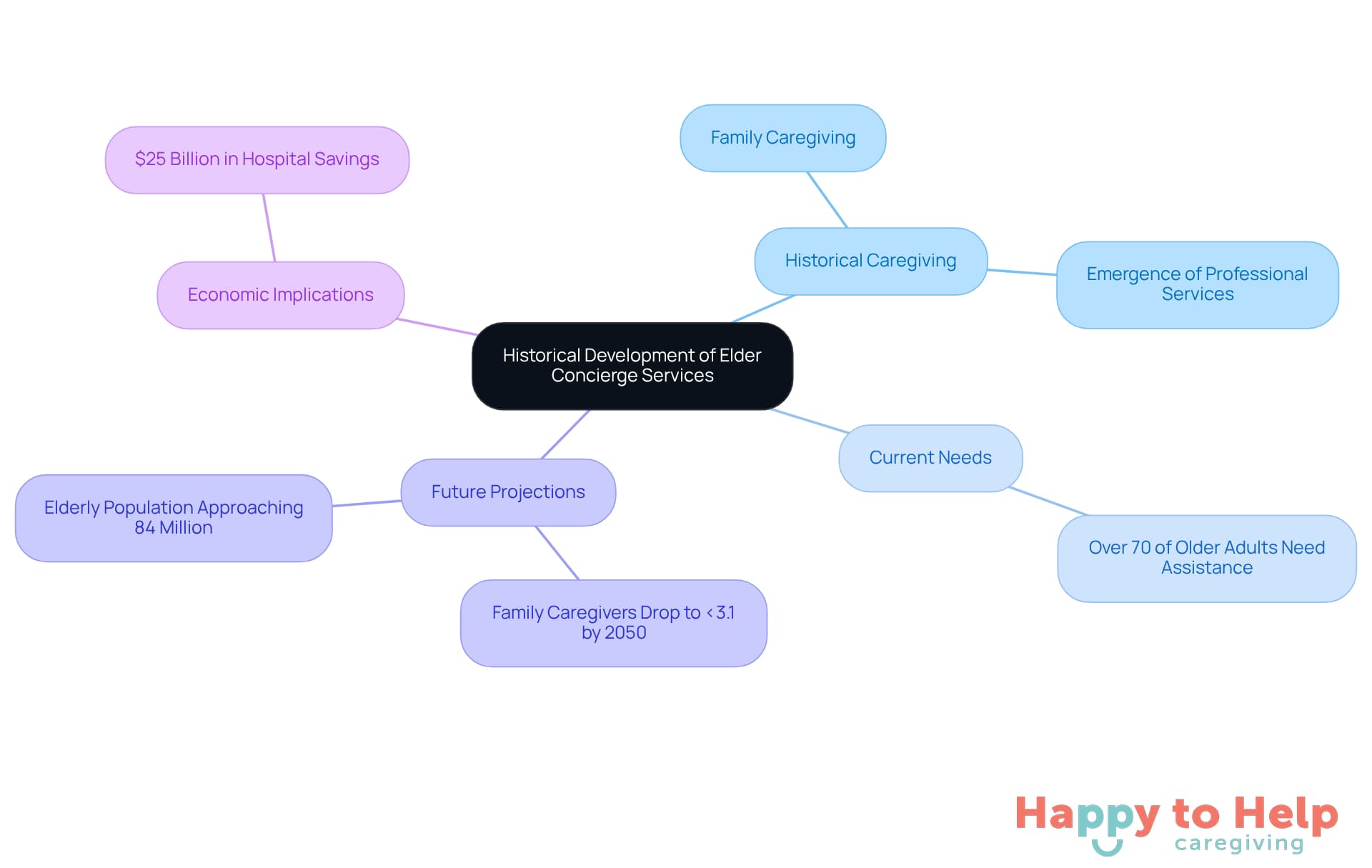
The evolution of elder care presents a significant challenge: as families become busier and more dual-income households emerge, the need for external caregiving support has surged. Historically, caregiving was primarily a family affair, with relatives stepping in to assist aging loved ones. However, this dynamic is changing, and the implications are profound. By the late 20th century, professional caregiving options began to surface, marking a pivotal shift in how care is delivered.
Today, elder concierge services have emerged as a tailored solution to meet the unique needs of older adults. These services not only address the varied requirements of seniors but also reflect the growing complexity of caregiving in our modern society. Experts highlight that over 70% of older adults will require assistance with daily living tasks as they age. This statistic underscores the urgency for comprehensive care solutions that extend beyond traditional family support.
Looking ahead, forecasts indicate that by 2050, the number of family members available to assist the elderly will drop to under 3.1%. Meanwhile, the U.S. Census Bureau projects that the population aged 65 and older will approach nearly 84 million. This growing demographic emphasizes the necessity for structured and effective elder care approaches.
Moreover, investing in elder care management and home care assistance can lead to significant financial savings, with estimates suggesting $25 billion in hospital savings attributed to professional caregiving. This highlights not only the importance of personalized care models but also the economic advantages they bring.
In summary, as the landscape of elder care continues to evolve, embracing elder concierge services and professional support is essential for meeting the needs of our aging population.
Key Characteristics of Elder Concierge Services
Elder concierge services address a significant problem faced by caregivers: the challenge of providing adequate support for elderly individuals. As families juggle work and caregiving duties, the stress and exhaustion can become overwhelming. This is where elder concierge services come into play, offering practical solutions to enhance the quality of life for older adults.
-
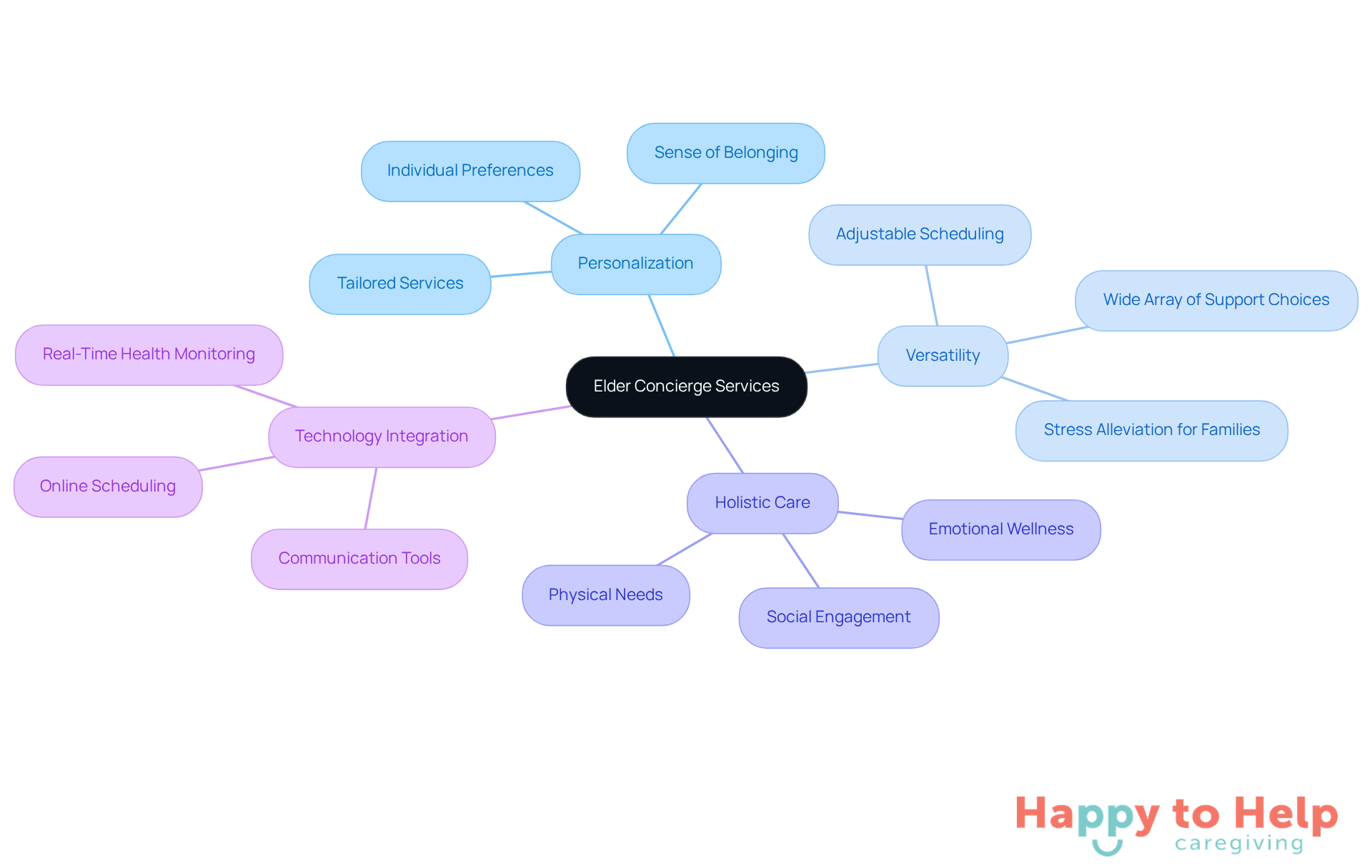
Personalization is a key feature of these offerings. Each service is meticulously tailored to meet the specific needs and preferences of individuals, ensuring that care is both relevant and effective. This customization fosters a sense of belonging and connection, which is vital for overall health.
-
Versatility is another important aspect. Elder concierge services offer adjustable scheduling and a wide array of support choices, allowing elderly individuals to select the level of assistance they require. This flexibility alleviates stress for families, ensuring that elderly individuals receive the attention they require when necessary. Moreover, elder concierge services help ease the significant strain on family caregivers, lowering stress and exhaustion while ensuring quality care.
-
Holistic care is also a hallmark of elder concierge services. They address not just physical needs but also emotional and social wellness, promoting a comprehensive approach to elder care. By tackling loneliness and isolation, support options assist seniors in maintaining an active lifestyle and enhancing their overall happiness.
-
Technology integration plays a crucial role as well. Many senior assistance programs utilize technology to facilitate communication and improve support delivery. Features like online scheduling, real-time health monitoring, and regular family updates ensure that caregivers and families remain connected, fostering trust and reassurance.
Current trends indicate that families are increasingly recognizing the importance of these resources, especially in complex health scenarios such as dementia care and post-surgery recovery. Real-world examples illustrate how personal assistance adapts to the unique requirements of each elderly individual, ensuring they receive suitable support while preserving their independence and dignity.
Examples of Elder Concierge Services in Practice
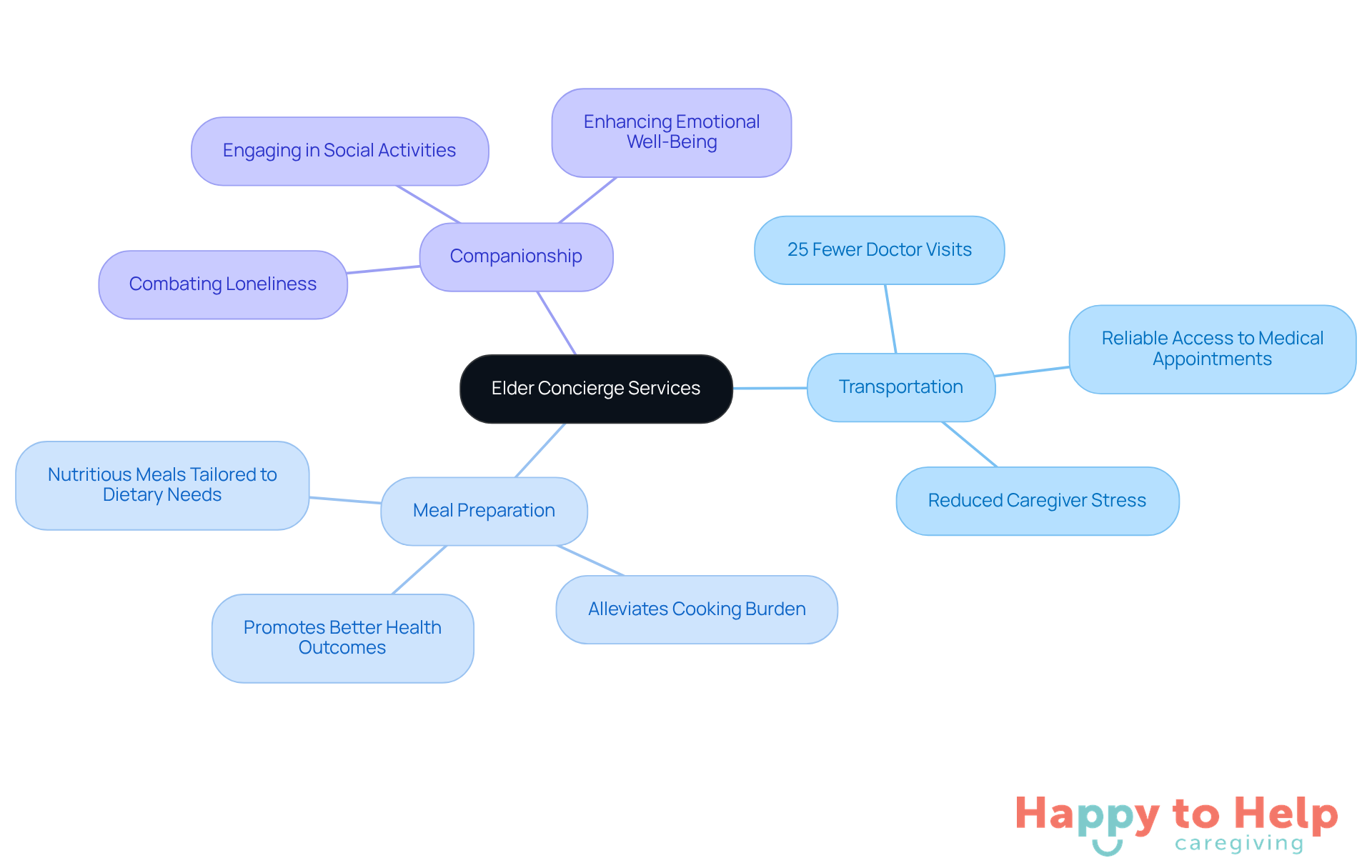
Elder concierge assistance addresses the unique needs of older adults, but many face significant challenges. One major issue is transportation. Without reliable options, elderly individuals struggle to attend medical appointments, leading to missed care and increased health risks. This not only adds stress for caregivers but also diminishes seniors' independence.
Statistics reveal that older adults utilizing home care report 25% fewer doctor visits annually, underscoring the importance of consistent transportation support. By ensuring timely access to medical care, elder concierge services enable seniors to manage their health proactively.
Meal preparation is another critical area where assistance can make a difference. Caregivers provide nutritious meals tailored to dietary restrictions, ensuring that elderly individuals receive essential nutrients without the burden of cooking. This support alleviates the stress of meal planning and preparation, promoting better health outcomes.
Companionship support also plays a vital role in combating loneliness. Engaging older adults in social activities or simply offering a listening ear can significantly enhance their emotional well-being. Caregivers often highlight the importance of these services, noting that they not only facilitate essential tasks but also improve clients' emotional health.
Case studies illustrate the profound impact of these offerings. For instance, an older adult who received regular transportation support maintained consistent medical care, leading to improved health outcomes. By addressing both practical and emotional needs, elder concierge services enable seniors to maintain their independence while receiving the necessary support.
Key Takeaways for Caregivers
Elder concierge services address a significant problem: the growing need for assistance among seniors as they age. This need can place immense pressure on family caregivers, who often struggle to balance their responsibilities while ensuring their loved ones receive the support they require.
The implications of this problem are profound. As the elderly population increases, caregivers face challenges in providing adequate care, which can lead to stress and burnout. This situation not only affects the caregivers but also impacts the quality of life for seniors, who may feel isolated or unsupported.
Elder concierge services offer a practical solution to these challenges. By providing non-medical support tailored to the unique needs of older adults, these services empower seniors to maintain their independence and enhance their overall quality of life. Key aspects of these services include:
- Personalized assistance in areas such as transportation
- Meal preparation
- Companionship
These aspects promote both physical and emotional well-being.
Moreover, the integration of technology in elder concierge services facilitates communication between caregivers and seniors, fostering trust and reassurance. As families navigate the complexities of caregiving, embracing these services becomes essential for creating a supportive environment that prioritizes the dignity and well-being of older adults.
In conclusion, elder concierge services not only meet the evolving needs of seniors but also provide families with a viable solution to the challenges of caregiving. By investing in these services, families can enrich the lives of their loved ones while alleviating the pressures they face.
https://iframe.tely.ai/cta/eyJhcnRpY2xlX2lkIjogIjY5NDBkZmJjMGI5MzA1N2JkYTZkOTBlZSIsICJjb21wYW55X2lkIjogIjY4ZWU1ZGNhNzMxNzYyNTU3ZjNjOTVjMSIsICJpbmRleCI6IG51bGwsICJ0eXBlIjogImFydGljbGUifQ==Frequently Asked Questions
What are elder concierge services?
Elder concierge services provide non-medical support resources designed to assist seniors with daily activities, promoting independence and wellness. Services include companionship, transportation, meal preparation, housekeeping, and assistance with errands.
How do elder concierge services differ from traditional caregiving?
Unlike traditional caregiving, which often focuses on medical needs, elder concierge services take a holistic approach that encourages seniors to maintain their independence while receiving support with daily tasks.
Why are elder concierge services important for seniors?
These services help seniors remain in their homes, surrounded by familiar comforts, enhancing their overall well-being and sense of security while reducing feelings of isolation and loneliness.
What challenges do family caregivers face when caring for older adults?
Family caregivers often struggle to balance their responsibilities with the demands of caring for older adults, especially as many seniors live with chronic conditions and require tailored care options.
How do elder concierge services benefit family caregivers?
By providing customized help for daily tasks, elder concierge services alleviate the burden on family caregivers, allowing them to ensure their loved ones enjoy a higher quality of life.
What role do elder concierge services play in mental and emotional well-being?
These services help reduce feelings of isolation and loneliness among seniors, promoting mental health through social connections and engagement in meaningful activities.
What is the future demand for elder concierge services?
As the elderly demographic continues to grow, the demand for elder concierge services is expected to increase, making them an essential resource for families navigating caregiving complexities.
List of Sources
- Defining Elder Concierge Services
- Elderly Care Market Size, Share & Trends | Growth Report [2032] (https://fortunebusinessinsights.com/elderly-care-market-111477)
- Concierge Home Care Companies Able To Weather The Storm (https://homehealthcarenews.com/2025/09/concierge-home-care-companies-able-to-weather-the-storm)
- As elder care only grows, more oversight needed (https://newsday.com/opinion/editorials/seniors-elder-care-new-york-xeb11ojr)
- A Better Solution Home Care (https://abs.care/Top-Benefits-of-Concierge-Care-for-Seniors-and-Families)
- Understanding Elder Care Concierge Services: Key Benefits for Families - Happy To Help (https://happytohelpcaregiving.com/understanding-elder-care-concierge-services-key-benefits-for-families)
- Context and Importance of Elder Concierge Services
- Elderly Care Market Size, Trends & YoY Growth Rate, 2032 (https://coherentmarketinsights.com/industry-reports/elderly-care-market)
- The senior population is booming. Caregiving is struggling to keep up (https://cnbc.com/2025/11/21/senior-caregiving-labor.html)
- Family caregivers prefer in-home care over senior living, new industry report finds (https://mcknightshomecare.com/news/family-caregivers-prefer-in-home-care-over-senior-living-new-industry-report-finds)
- The business of caring for older Americans is in a deepening crisis (https://washingtonpost.com/business/2025/12/04/elder-care-home-health-shortage)
- Historical Development of Elder Concierge Services
- The History of Elder Home Care Services | Seniors Home Care (https://seniorshomecare.com/blog/archives/2021/01/25/the-history-of-elder-home-care-services)
- The Evolution of Elder Care: Trends Shaping the Future - Bethesda Health Group (https://bethesdahealth.org/blog/the-evolution-of-elder-care-trends-shaping-the-future)
- What is the Evolution of Concierge Home Care Models? - Renaissance Home Care (https://renaissancehomehc.com/post/evolution-of-concierge-home-care-models)
- Key Characteristics of Elder Concierge Services
- Concierge Home Care Companies Able To Weather The Storm (https://homehealthcarenews.com/2025/09/concierge-home-care-companies-able-to-weather-the-storm)
- A Better Solution Home Care (https://abs.care/Top-Benefits-of-Concierge-Care-for-Seniors-and-Families)
- Understanding Elder Care Concierge Services: Key Benefits for Families - Happy To Help (https://happytohelpcaregiving.com/understanding-elder-care-concierge-services-key-benefits-for-families)
- Clearday Concierge Care Services Addresses the Care Puzzle (https://cbs42.com/business/press-releases/ein-presswire/833399150/clearday-concierge-care-services-addresses-the-care-puzzle)
- The Changing Landscape of Elder Care Solutions (https://homeinstead.com/home-care/usa/co/denver/148/news-and-media/introduction-to-the-changing-landscape-of-elder-care-solutions)
- Examples of Elder Concierge Services in Practice
- Understanding Elder Care Concierge Services: Key Benefits for Families - Happy To Help (https://happytohelpcaregiving.com/understanding-elder-care-concierge-services-key-benefits-for-families)
- Two elder care nurses start concierge health care company on the shoreline and CT River valley (https://ctinsider.com/shoreline/article/concierge-nursing-shoreline-ct-healthcare-21019826.php)
- PA Home Concierge Services for Seniors [Safer, Easier Moves] (https://brettfurman.com/pennsylvania-home-concierge-services-for-seniors)
- How Concierge Services Take the Stress Out of Everyday Tasks for Seniors (https://weprovidegoldencare.com/how-concierge-services-take-the-stress-out-of-everyday-tasks-for-seniors)
- Bay Area woman launches concierge service to help seniors find housing (https://nbcbayarea.com/video/news/local/making-it-in-the-bay/service-seniors-housing/3505940)