Understanding Elderly Caregiver Hourly Rates: Key Factors

For families in our service areas
For families in our service areas, this guide explains caregiver support and how non-medical in-home caregiving can support care planning in East Idaho, Treasure Valley & Magic Valley, Northern Wasatch, North Central West Virginia, and Northeast Ohio.
Understanding Elderly Caregiver Hourly Rates: Key
Understanding the financial landscape of elderly caregiving presents a significant challenge for families. The national median hourly rate for nonmedical in-home care is around $33, with state-specific rates ranging from $24 to $43. This creates substantial financial implications for families seeking quality care for their loved ones.
The complexities of caregiving costs can be overwhelming. Factors such as geographical disparities, the type of care required, and the experience of caregivers all contribute to these varying rates. Families often find themselves navigating a challenging environment, trying to balance quality support with financial constraints.
So, what can families do to manage these costs effectively? Here are some actionable strategies:
- Research local rates: Understanding the average costs in your area can help you budget more effectively.
- Explore alternative care options: Consider community resources or shared caregiving arrangements to reduce expenses.
- Negotiate rates: Don’t hesitate to discuss pricing with caregivers; some may be willing to adjust their fees.
By employing these strategies, families can ensure their elderly relatives receive the best possible care without compromising their financial stability.
Explore the Basics of Elderly Caregiver Compensation
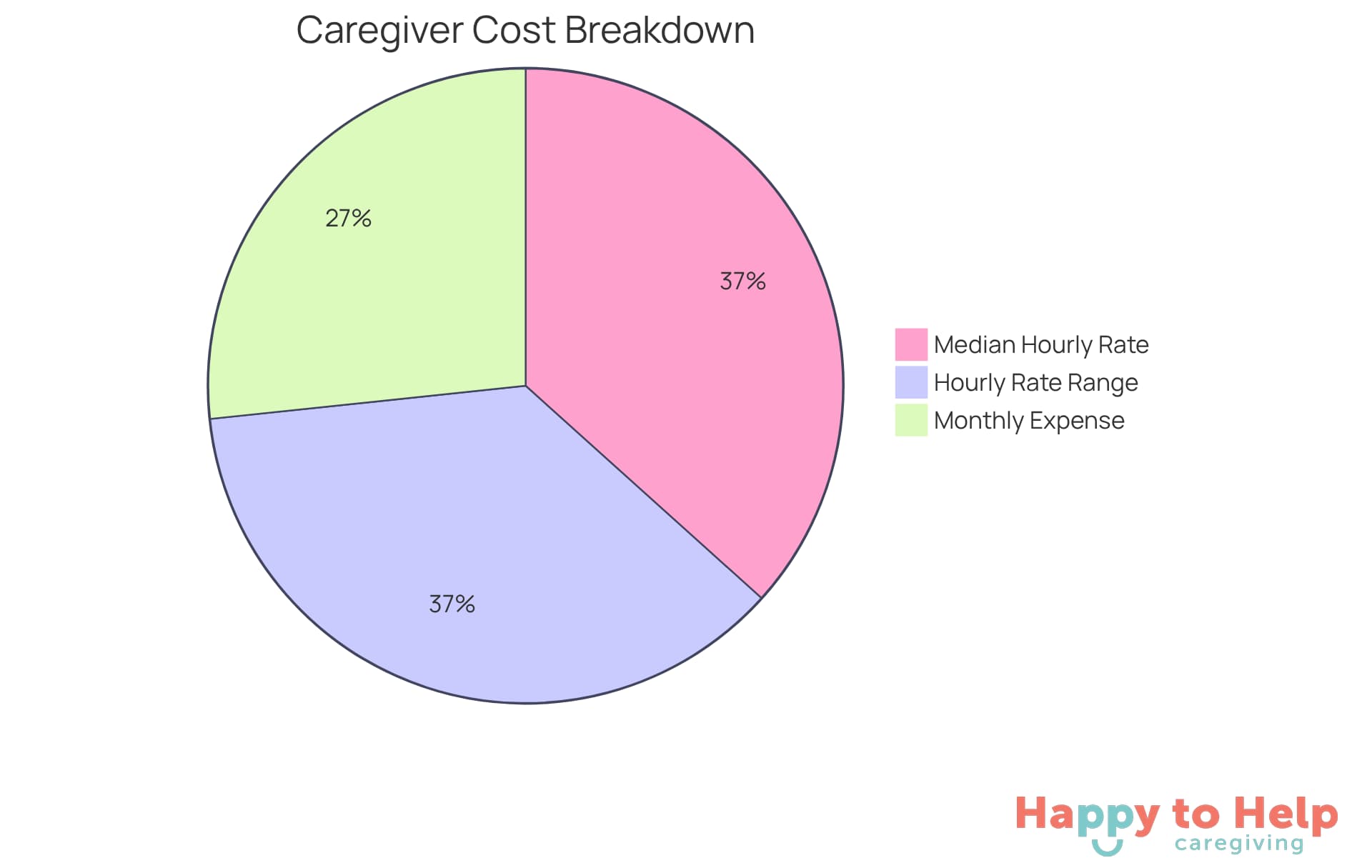
In 2025, families face a significant challenge: the national median expense for nonmedical in-home care is around $33 per hour, reflecting the elderly caregiver hourly rate, with state pricing ranging from $24 to $43 per hour. This variability can create financial strain, especially as the elderly caregiver hourly rate fluctuates based on location, experience, and the complexity of care required. For example, caregivers in urban areas often command higher rates due to increased demand and living costs.
The implications are stark. The national monthly median expense for 24-hour home care is approximately $24,000, underscoring the financial burden many families must navigate. Understanding these costs is crucial for families preparing for caregiving, as it ensures they can secure the necessary support for their loved ones.
Fortunately, there are solutions available. Public insurance initiatives like Medicare and Medicaid may cover certain home health care services, providing additional financial assistance for families managing these expenses. By exploring these options, families can alleviate some of the financial pressures associated with caregiving.
Identify Key Factors Influencing Caregiver Hourly Rates
Several key factors significantly influence the elderly caregiver hourly rate, presenting challenges for families seeking care. Understanding these factors can help families navigate the complexities of the elderly caregiver hourly rate compensation more effectively.
-
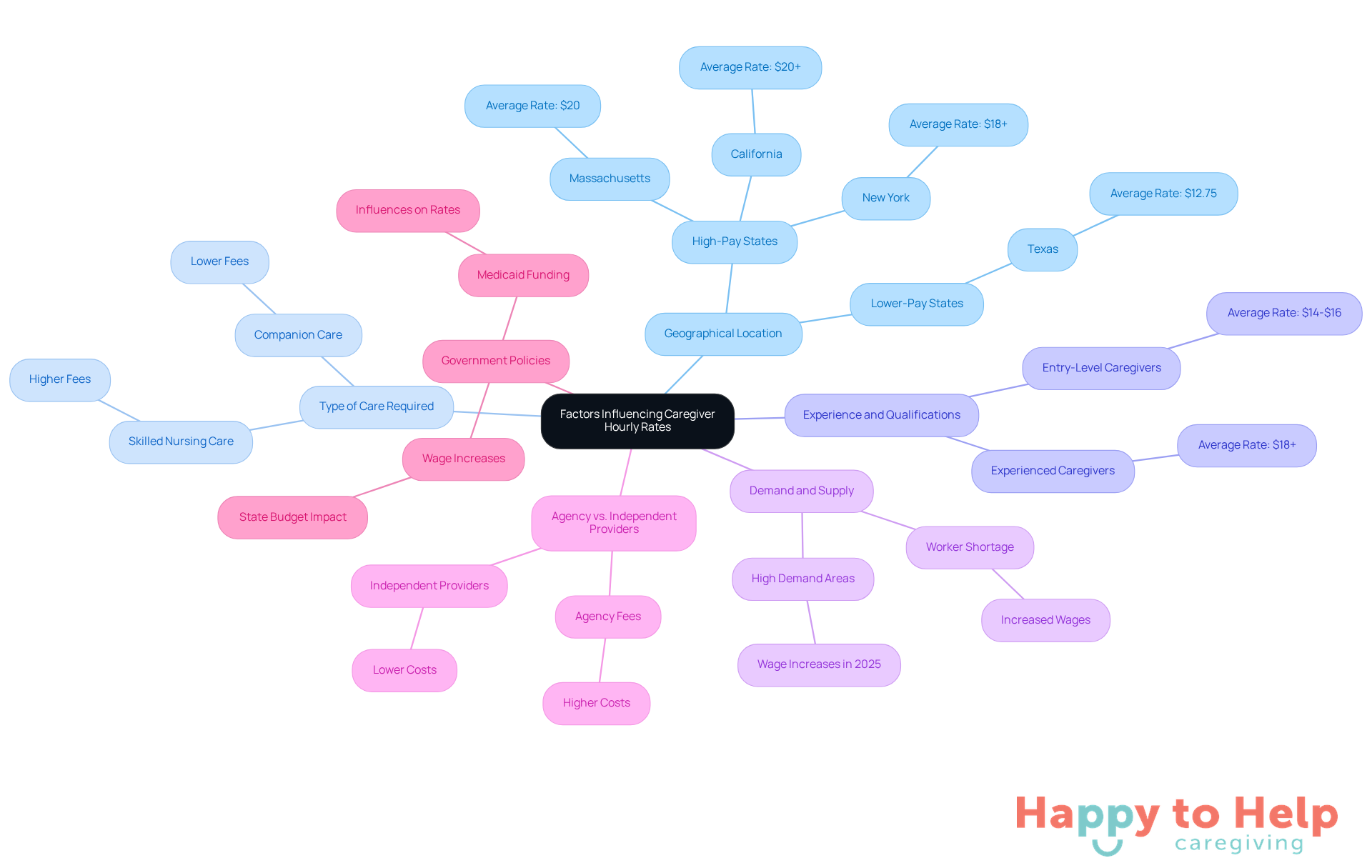
Geographical Location: Caregiver wages vary widely across the United States. States like California, Massachusetts, and New York offer some of the highest rates due to elevated living costs. For instance, caregivers in California can earn upwards of $20 per hour, while those in Texas may earn around $12.75. This disparity highlights how local economic conditions shape the elderly caregiver hourly rate.
-
Type of Care Required: The nature of care also affects pricing. Specialized services, such as skilled nursing care or support for individuals with intricate medical requirements, generally demand higher fees compared to basic caregiving. For example, skilled nursing care can be significantly more expensive than companion care, reflecting the advanced training and expertise required.
-
Experience and Qualifications: Caregivers with greater experience or specialized certifications often result in a higher elderly caregiver hourly rate. Entry-level support workers may begin at $14 to $16 per hour, while individuals with significant experience or specialized training can earn $18 or more, reflecting their capability to deliver higher-quality assistance.
-
Demand and Supply: In regions where the demand for personnel exceeds availability, the elderly caregiver hourly rate is likely to increase. The ongoing support worker shortage, exacerbated by an aging population, has led to increased competition for qualified professionals, driving up wages in many areas. In 2025, states such as California and Massachusetts have increased wages for those providing care to tackle these shortages, with Massachusetts averaging $20 per hour.
-
Agency vs. Independent Providers: Hiring through an agency may involve higher fees compared to employing an independent provider. However, agencies frequently offer extra advantages, such as background checks, training, and insurance, which can validate the higher price. Families should weigh these factors when deciding on their caregiving options.
-
Government Policies: Government policies at both federal and state levels significantly influence the salaries of those who provide care. In 2025, many states are raising wages to address worker shortages and rising living costs, with future increases dependent on state budgets and Medicaid funding.
By comprehending these elements, families can make informed choices that correspond with their financial abilities and care requirements.
Understand the Impact of Caregiver Experience on Rates
The elderly caregiver hourly rate is significantly influenced by caregiver experience, which presents a challenge for families seeking support. Seasoned professionals typically command higher wages, which can create a disparity in care options, particularly in relation to the elderly caregiver hourly rate. In 2025, while entry-level support staff earn an average of $15.50 per hour, those with several years of experience or specialized training can achieve an elderly caregiver hourly rate ranging from $22 to $25 per hour. This wage gap can impact the quality of care received.
The average salary for caregivers across the U.S. is approximately $29,253 annually, equating to just over $14 hourly. This broader context highlights the importance of evaluating specific support needs. Families should consider that employing an experienced assistant at an elderly caregiver hourly rate often leads to better outcomes and enhanced peace of mind. Skilled providers are adept at handling complex situations, which significantly improves the quality of care delivered.
Moreover, the demand for skilled support providers is rising, reflecting their critical role in delivering effective and compassionate assistance. However, this trend is complicated by labor shortages and challenges agencies face regarding reimbursement and hiring due to minimum wage hikes. Families must consider these factors when choosing a support worker to ensure they receive the best care possible.

Explore Additional Costs Beyond Hourly Rates
When planning for support services, families face a significant challenge: the elderly caregiver hourly rate only covers a portion of the total costs involved. This oversight can lead to unexpected financial burdens.
Additional Costs to Consider:
- Transportation Costs: Caregivers often travel to clients' homes, and families may need to reimburse these expenses. Average transportation costs for in-home assistants are about $0.56 per mile, which can accumulate quickly based on distance.
- Supplies and Equipment: Depending on specific care needs, families might have to invest in medical supplies or specialized equipment, further increasing total expenses.
- Agency Fees: Partnering with an agency typically incurs extra administrative charges, ranging from 10% to 20% of the worker's hourly wage. This covers the costs of matching workers with clients and overseeing services.
- Overtime Compensation: If providers exceed their scheduled hours, families may face additional fees, often at a rate of 1.5 times the regular hourly wage, significantly raising expenses.
By accounting for these additional costs, families can create a more accurate budget and reduce the risk of unexpected financial strain associated with in-home care. In 2025, the median cost of senior in-home care, reflecting the elderly caregiver hourly rate, ranges from $34 to $36 per hour, underscoring the necessity of understanding the full scope of expenses linked to caregiver services. As long-term care costs continue to rise, families should proactively budget to ensure they can meet their loved ones' care needs.

Your Path Forward
Understanding the factors that influence elderly caregiver hourly rates is essential for families seeking quality care for their loved ones. The problem lies in the variability of rates, which can stem from:
- Geographical location
- Type of care required
- Caregiver experience
- Market demand
This variability can create financial challenges for families trying to secure the best care.
The implications of these factors are significant. Families may face unexpected costs that strain their budgets. For instance, there is a notable disparity in wages across different states, and specialized care can further impact pricing. Additionally, caregiver experience plays a crucial role in determining hourly rates. It's important to consider not just the hourly rate but also additional costs such as:
- Transportation
- Supplies
- Agency fees
These can substantially affect the overall budget for caregiving services.
As the demand for skilled caregivers continues to rise amidst ongoing labor shortages, families must proactively explore their options. Budgeting effectively for the total costs of care is vital. Understanding caregiver compensation trends and the factors that influence rates will empower families to secure the best possible support for their elderly loved ones while navigating the financial landscape of in-home care.
https://iframe.tely.ai/cta/eyJhcnRpY2xlX2lkIjogIjY5MjY0MzVmZDdhYTIxYWI5OTE3NmUwMiIsICJjb21wYW55X2lkIjogIjY4ZWU1ZGNhNzMxNzYyNTU3ZjNjOTVjMSIsICJpbmRleCI6IG51bGwsICJ0eXBlIjogImFydGljbGUifQ==Frequently Asked Questions
What is the national median expense for nonmedical in-home care in 2025?
The national median expense for nonmedical in-home care in 2025 is around $33 per hour.
How does the hourly rate for elderly caregivers vary by location?
The elderly caregiver hourly rate varies by location, experience, and the complexity of care required, with state pricing ranging from $24 to $43 per hour.
Why do caregivers in urban areas typically charge higher rates?
Caregivers in urban areas often command higher rates due to increased demand and higher living costs.
What is the national monthly median expense for 24-hour home care?
The national monthly median expense for 24-hour home care is approximately $24,000.
Why is it important for families to understand the costs of caregiving?
Understanding these costs is crucial for families preparing for caregiving, as it ensures they can secure the necessary support for their loved ones.
Are there financial assistance options available for families managing caregiving expenses?
Yes, public insurance initiatives like Medicare and Medicaid may cover certain home health care services, providing additional financial assistance for families.
List of Sources
- Explore the Basics of Elderly Caregiver Compensation
- How Much Does 24/7 Home Care Cost? (https://aplaceformom.com/caregiver-resources/articles/24-hour-in-home-care)
- A New Labor Rule Could Push Caregivers to the Breaking Point | ACLU (https://aclu.org/news/womens-rights/a-new-labor-rule-could-push-caregivers-to-the-breaking-point)
- Average Senior In-Home Care Costs in 2025 (https://seniorliving.org/home-care/costs)
- Home Care Aides Receive 4.93% Pay Increase in 2025 (https://leadingage.org/home-care-aides-receive-4-93-pay-increase-in-2025)
- Home Care Costs in 2025: A State-by-State Guide (https://aplaceformom.com/caregiver-resources/articles/in-home-care-costs)
- Identify Key Factors Influencing Caregiver Hourly Rates
- At Home Care Pricing: Essential Industry Statistics for 2025 - Assisting Hands Rockford (https://assistinghands.com/100/illinois/rockford/blog/at-home-care-pricing-essential-industry-statistics-for-2025)
- Which States Increased Caregiver Hourly Rates in 2025? — Paid.Care (https://paid.care/guides/which-states-increased-caregiver-hourly-rates-in-2025)
- What Are the Average Caregiver Pay Rates in 2025? — Paid.Care (https://paid.care/guides/what-are-the-average-caregiver-pay-rates-in-2025)
- Home Care Costs in 2025: A State-by-State Guide (https://aplaceformom.com/caregiver-resources/articles/in-home-care-costs)
- Factors Affecting the Home Care Industry in 2025 (https://carearoundtheblock.com/post/factors-affecting-the-home-care-industry-in-2025)
- Understand the Impact of Caregiver Experience on Rates
- How Much Do Caregivers Make in 2025? | The Senior List (https://theseniorlist.com/caregiving/caregiver-pay)
- Caregiver Pay in 2025: Average Salary by State & Role (https://goinstacare.com/blogs/caregiver-salaries-2025-role-state-guide)
- The Impact of Caregiver Hourly Rates on Retention (https://axiscare.com/blog/rising-caregiver-wages)
- What Are the Average Caregiver Pay Rates in 2025? — Paid.Care (https://paid.care/guides/what-are-the-average-caregiver-pay-rates-in-2025)
- Report: Higher Pay For Caregivers - SEIU 775 (https://seiu775.org/hazardpayreport)
- Explore Additional Costs Beyond Hourly Rates
- At Home Care Pricing: Essential Industry Statistics for 2025 - Assisting Hands Rockford (https://assistinghands.com/100/illinois/rockford/blog/at-home-care-pricing-essential-industry-statistics-for-2025)
- Average Senior In-Home Care Costs in 2025 (https://seniorliving.org/home-care/costs)
- The Caregiving Landscape: Data & Insights on the Caregiver Experience in the U.S. (https://caregiveraction.org/caregiver-statistics)
- Elder care costs are outpacing inflation. Americans want a lifeline. (https://nbcnews.com/politics/2024-election/elder-care-costs-are-outpacing-inflation-americans-want-lifeline-rcna172950)
- 52 Eye-Opening Home Health Statistics: Insights for 2025 (https://boosthomehealth.com/home-health-statistics)