

For families in our service areas
For families in our service areas, this guide explains caregiving and how non-medical in-home caregiving can support care planning in East Idaho, Treasure Valley & Magic Valley, Northern Wasatch, North Central West Virginia, and Northeast Ohio.
Understanding Your Options
This article sheds light on the vital roles, significance, and challenges encountered by elderly caretakers, emphasizing their essential support in enhancing the quality of life for seniors. Caregivers carry a heavy burden, managing diverse responsibilities while facing an increasing demand for caregiving services. The emotional and physical challenges they encounter can often lead to feelings of stress and burnout.
It is crucial to recognize these struggles and the need for effective support systems that sustain both caregivers and the elderly population they serve. By providing emotional and practical support, we can help alleviate some of the pressures faced by these dedicated individuals.
Through compassionate care, caregivers not only improve the lives of seniors but also enrich their own experiences. Personal stories and testimonials from caregivers highlight the profound impact of their work, showcasing the nurturing relationships they build with those they care for.
As we explore this topic, let us remember the importance of fostering a supportive environment that acknowledges the challenges faced by caregivers while also celebrating their invaluable contributions. Together, we can create a community that uplifts both caregivers and the elderly, ensuring that everyone receives the care and compassion they deserve.
The Importance of Elderly Caretakers: Roles, Importance,
Elderly caretakers, often unsung heroes, offer vital support that enriches the lives of seniors, enabling them to retain their independence in the comfort of familiar surroundings. As the number of individuals stepping into caregiving roles is projected to reach 63 million by 2025, the importance of these caretakers in family dynamics and societal structures is profound.
However, the caregiving journey is not without its challenges. Caregivers face emotional strains and physical demands that raise crucial questions about how we can support those who dedicate themselves to this essential work.
How can we ensure that elderly caretakers receive the assistance they need while continuing to provide compassionate care? It is essential to recognize their struggles and amplify the need for support, fostering a community that nurtures both caregivers and those they care for.
Define Elderly Caretakers: Roles and Responsibilities
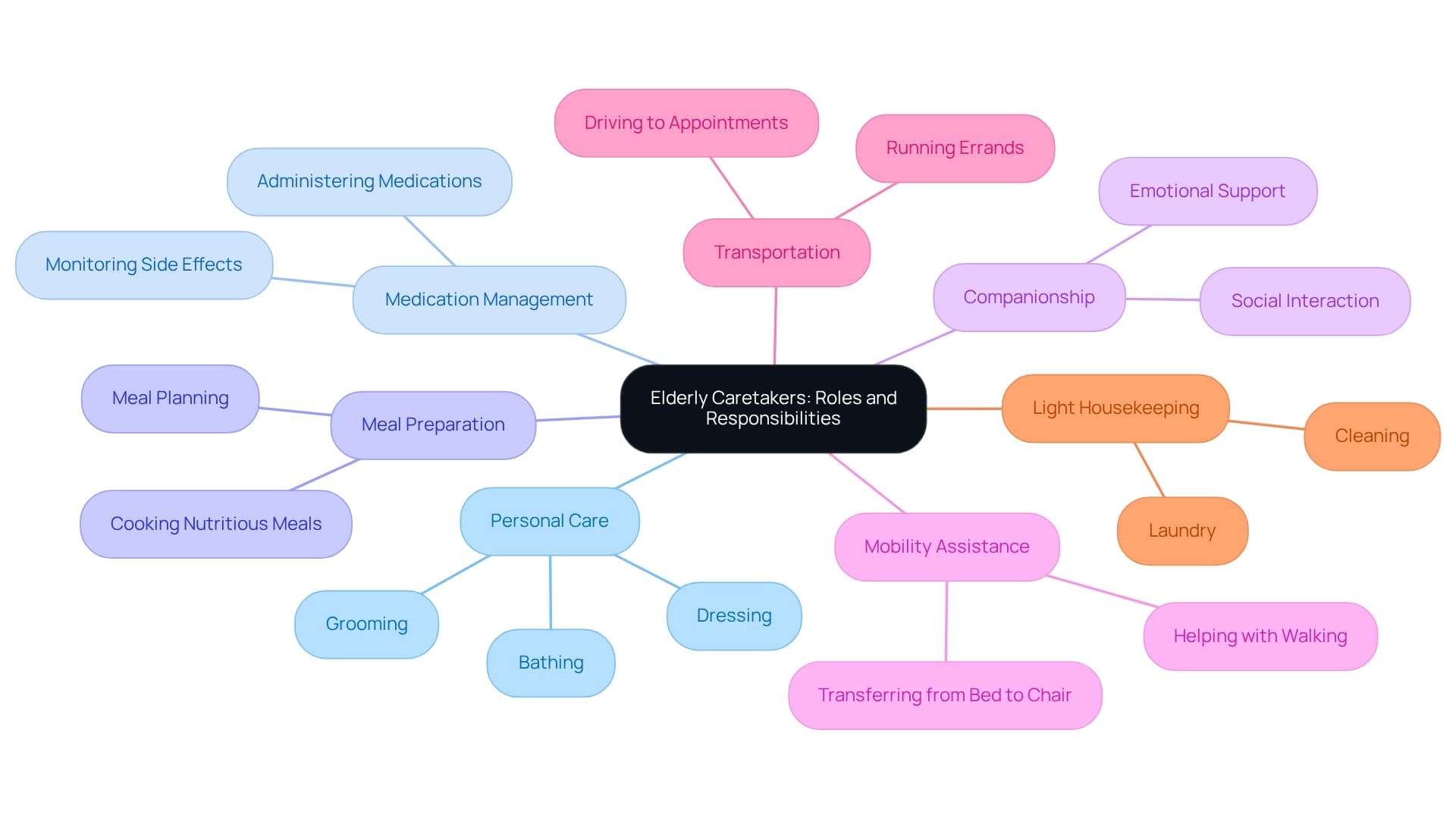
Elderly caretakers, commonly known as caregivers, are exceptional individuals who offer vital assistance and support to seniors in numerous aspects of daily living. Their responsibilities are diverse, encompassing:
- Personal care—such as bathing, dressing, and grooming
- Medication management
- Meal preparation
- Companionship
- Assistance with mobility
- Transportation to appointments
- Light housekeeping tasks
Ultimately, their primary goal is to enhance the quality of life for seniors, allowing them to maintain independence while receiving the crucial assistance needed to thrive in their own homes. This role transcends mere physical support; it includes emotional nurturing, fostering a sense of security and companionship for the elderly.
A striking statistic reveals that one in every four adults in the US engages in caregiving, highlighting the widespread nature of this vital service. Approximately 94% of elderly caretakers provide personal assistance to elderly individuals, which underscores the significance of their roles. Personal stories illustrate the profound impact that support providers have on their clients' lives. For instance, Jessica Guthrie, who stepped into the role of caregiver for her mother with early-onset Alzheimer's, faced considerable challenges but ultimately recognized the critical need for personal care assistance. Her journey reflects a broader trend, as the number of household supporters has surged from 18.2 million in 2011 to 24.1 million in 2022, showcasing an increasing acknowledgment of the importance of caregiving.
As we approach 2025, the demand for elderly caretakers is expected to rise significantly, particularly as the oldest baby boomers enter their 80s. It is projected that 63 million Americans will take on family caregiving roles by 2025, highlighting the necessity for ongoing assistance and training for elderly caretakers to effectively meet the complex needs of the elderly population. Additionally, it is essential to recognize the financial strain faced by caregivers, with 25% reporting they have incurred debt due to their caregiving responsibilities. The evolving landscape of support work highlights the indispensable role elderly caretakers play in enhancing the quality of life for seniors, making their contributions vital to the long-term assistance system.
Contextualize Elderly Caretakers: Importance in Family Dynamics
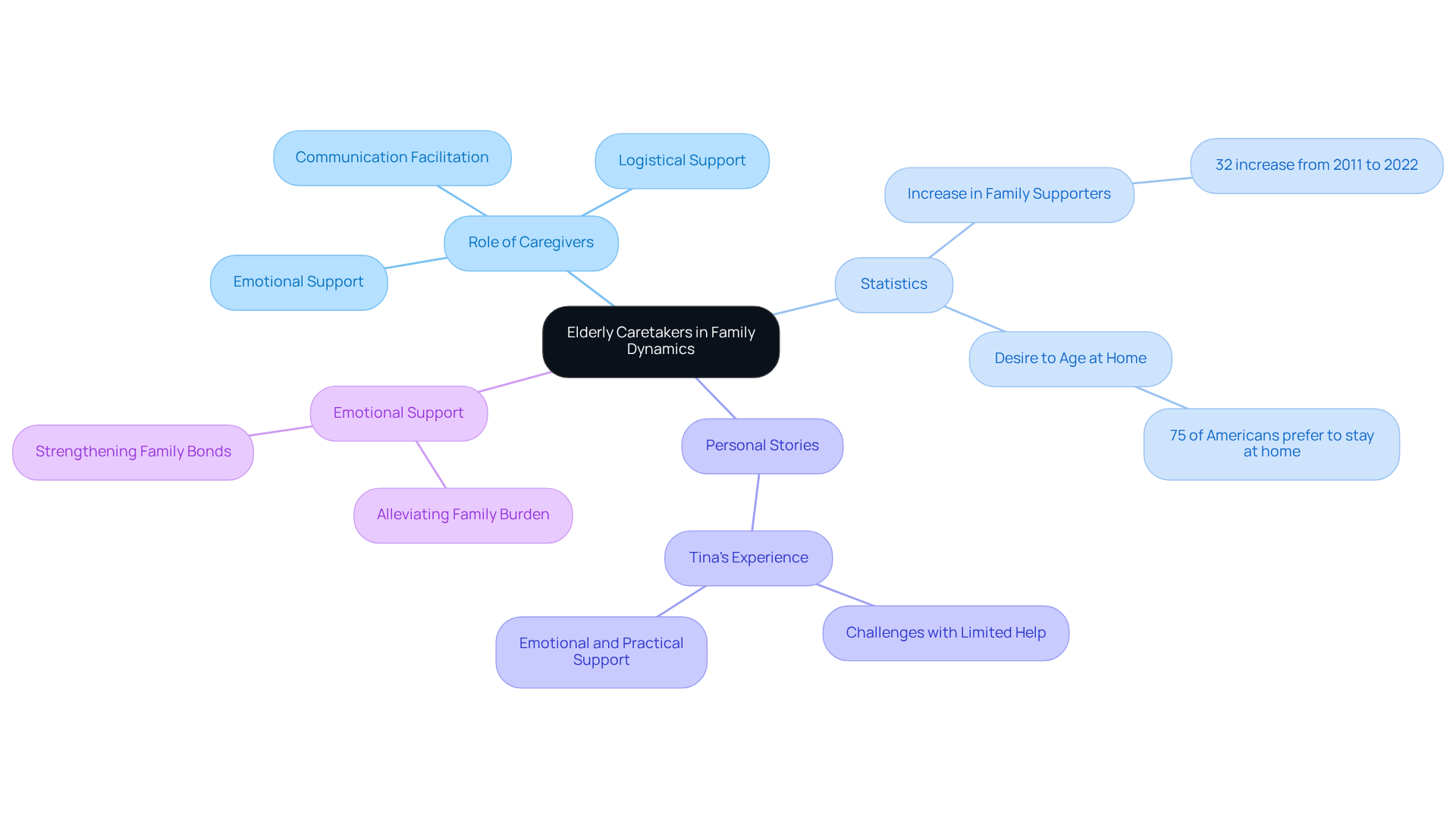
Elderly caretakers serve as a vital link between older adults and their families, often stepping in when relatives cannot provide the necessary support due to distance, work commitments, or other responsibilities. Their presence alleviates the emotional burden on families, allowing them to focus on meaningful moments with their loved ones rather than the logistics of care. Caregivers facilitate communication between seniors and their families, ensuring that everyone stays informed about the elder's health and well-being. This relationship nurtures a supportive atmosphere where relatives can feel assured that their loved ones are receiving the best possible care, ultimately strengthening bonds during difficult times.
Statistics reveal a significant increase in family supporters assisting older adults, rising by 32% from 18.2 million to 24.1 million between 2011 and 2022. This growth underscores the rising reliance on both professional and family support networks, particularly as caregivers help ease emotional strains. Furthermore, nearly 75% of Americans express a desire to remain in their homes if they require assistance, highlighting the crucial role of elderly caretakers in making this wish a reality and enabling seniors to age comfortably in their own surroundings.
Personal stories illustrate the profound impact caregivers have on family dynamics. For instance, Tina and her sister faced considerable challenges in managing their bedridden husband's care with limited outside help. The caregiver not only took on daily tasks but also provided emotional support, allowing family members to engage more fully during visits. This holistic approach to caregiving enhances the quality of life for seniors while fortifying the connections that bind loved ones together.
As AARP CEO Myechia Minter-Jordan poignantly states, family contributors are the backbone of our health and long-term support systems, often sacrificing their financial stability and well-being to provide essential help. This dedication reflects the nurturing spirit of caregiving, reminding us of the importance of compassion in every interaction.
Explore Types of Elderly Caretakers: From Companionship to Specialized Care
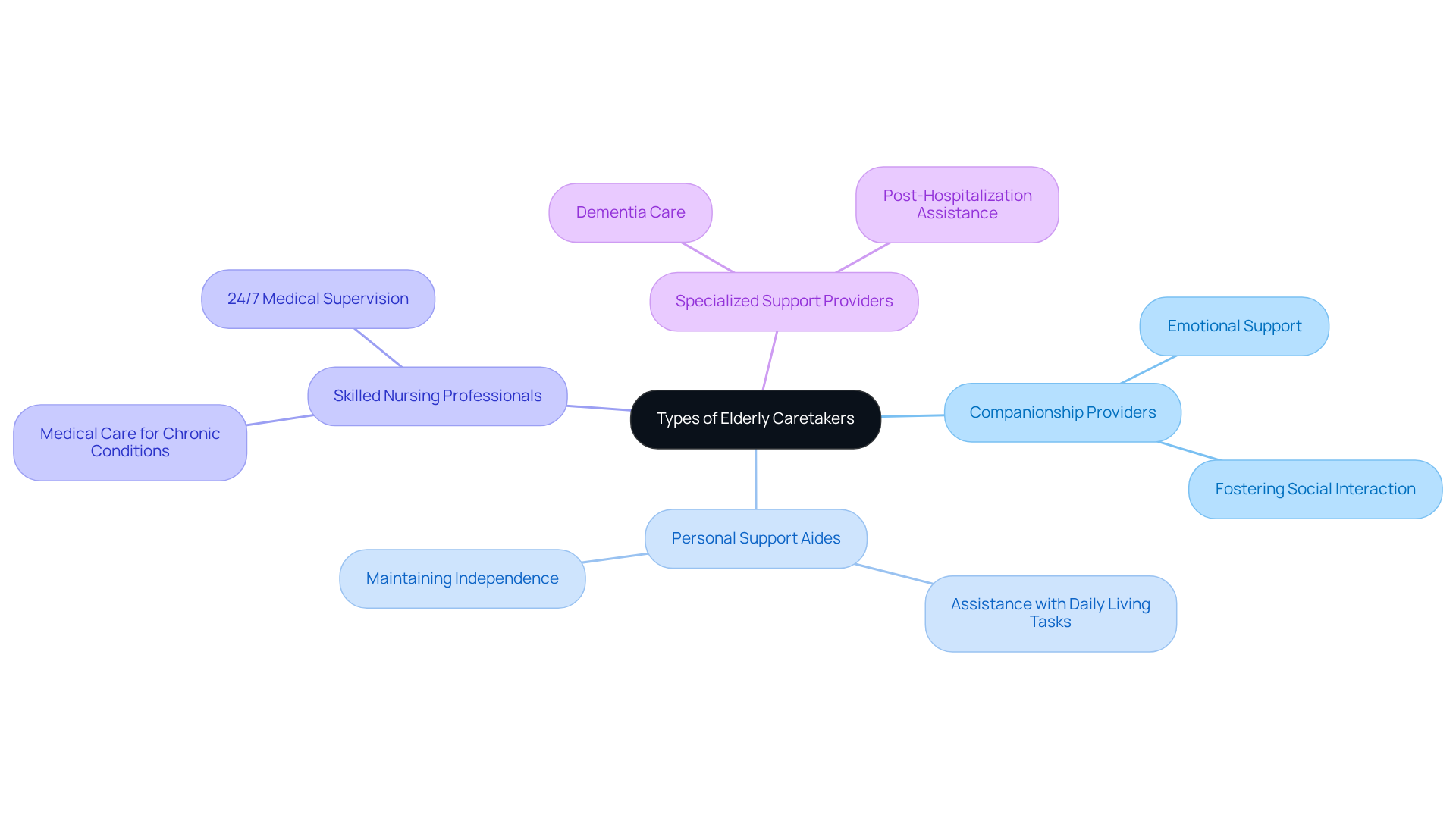
Elderly caretakers play a vital role in the lives of older adults, and they can be categorized based on the type and extent of assistance they provide.
- Companionship providers focus on emotional support and fostering social interaction, which are essential for alleviating feelings of loneliness and isolation among seniors.
- Personal support aides assist with daily living tasks, helping seniors maintain their independence in familiar surroundings.
- On the other hand, skilled nursing professionals deliver medical care and support for chronic conditions, addressing more complex health needs.
- Additionally, specialized support providers may cater to specific requirements, such as dementia care or assistance after hospital stays.
Elderly caretakers play a crucial role in ensuring that seniors receive personalized assistance tailored to their unique situations, which ultimately enhances their overall well-being and autonomy. It's heartening to note that research indicates nearly 75% of older adults prefer to age in their homes, highlighting the increasing demand for companionship and personal assistance services that allow them to remain in their residences while receiving necessary support.
Moreover, with nearly 1 in 4 Americans serving as family caregivers, understanding the dynamics of support for elderly caretakers becomes increasingly important, especially as demographic changes drive the need for home assistance services. The financial implications of caregiving cannot be overlooked either, as many individuals in this role face significant out-of-pocket expenses and potential lost income. This underscores the pressing need for support systems that can aid those who provide care.
Identify Challenges for Elderly Caretakers: Emotional and Physical Demands
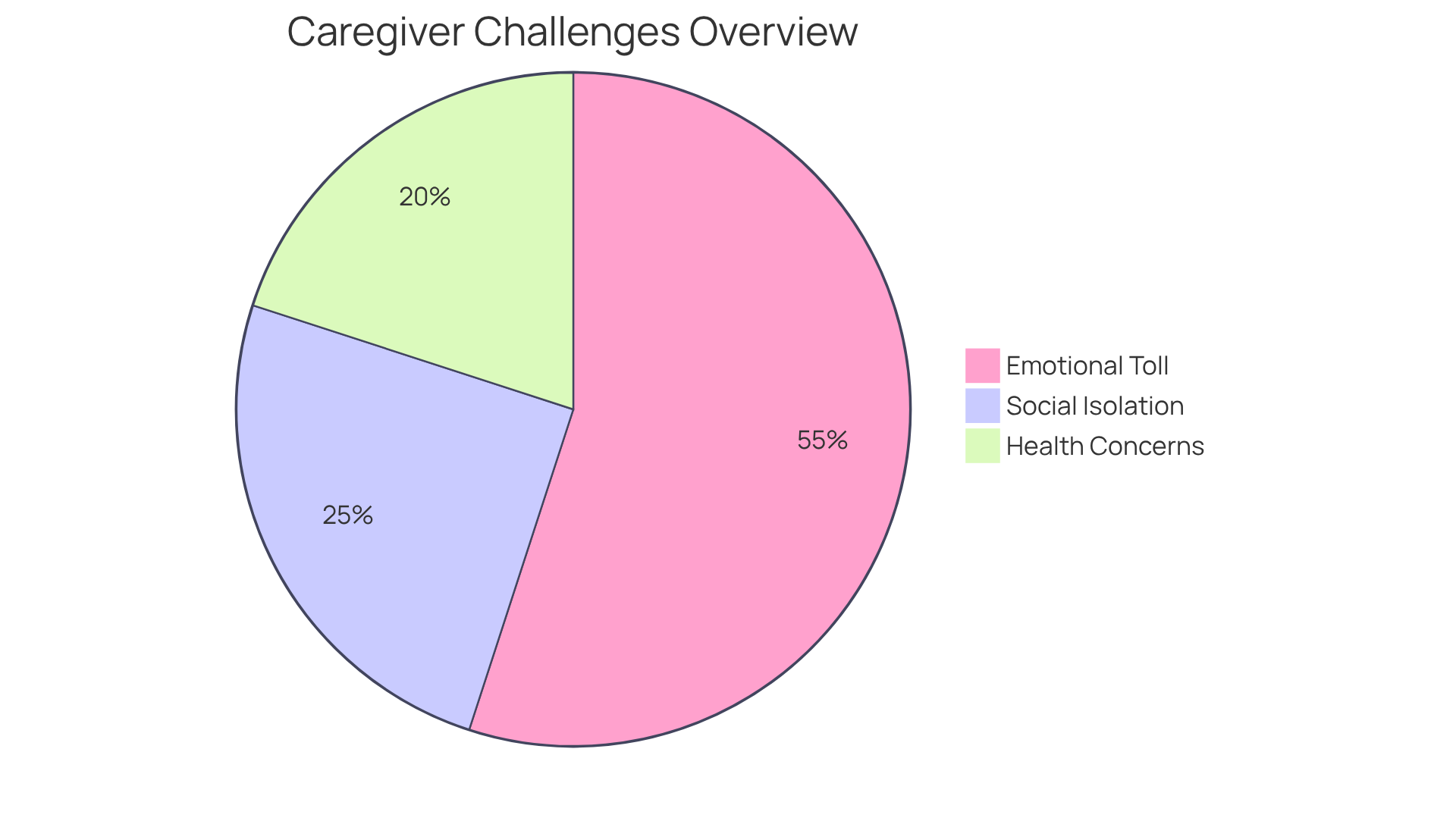
Elderly caretakers encounter significant emotional and physical challenges in their caregiving roles. Many individuals providing care experience significant stress and burnout, with nearly one in four reporting feelings of social isolation. This is especially true for those caring for individuals with complex health issues or cognitive decline, where the emotional toll can feel overwhelming.
The physical demands of caregiving are substantial; caregivers often engage in strenuous tasks such as lifting and transferring, leading to fatigue and potential injury. Alarmingly, 20% of those providing care rate their health as fair or poor, highlighting the physical impact of their responsibilities. Balancing caregiving with personal life can intensify feelings of guilt and inadequacy, as caregivers strive to meet the needs of their loved ones while also looking after their own well-being.
Recognizing these difficulties is crucial for creating effective support structures and resources that empower caregivers to maintain their health and deliver exceptional services to seniors. The number of caregivers in the U.S. has now reached 63 million, indicating a 45% increase since 2015. This surge underscores the critical need for extensive support, as many caregivers report financial pressures and health concerns arising from their duties.
Addressing these emotional and physical demands is vital to ensure that caregivers can continue to provide compassionate care without sacrificing their own health. Together, we can foster an environment of support and understanding, allowing caregivers to thrive while they care for those they love.
Your Path Forward
Elderly caretakers are vital pillars in the support system for seniors, embodying a role that extends far beyond basic assistance. They provide crucial emotional and physical support, ensuring that older adults can maintain their independence while enjoying a higher quality of life. The growing demand for caregivers, driven by demographic shifts and an increasing aging population, underscores the urgency of recognizing and valuing their contributions.
Throughout this article, we have shared key insights regarding the diverse responsibilities of elderly caretakers, the profound impact they have on family dynamics, and the challenges they face daily. From personal care and companionship to specialized medical assistance, caregivers play a multifaceted role that is integral to the well-being of seniors. The emotional and physical demands of caregiving highlight the need for robust support systems to empower these dedicated individuals, ensuring they can continue their vital work without sacrificing their own health and well-being.
Ultimately, the significance of elderly caretakers cannot be overstated. As society prepares for a future where the number of seniors continues to rise, it is imperative to advocate for better resources and support for caregivers. By fostering a culture of understanding and appreciation for their sacrifices, we can create an environment where both caregivers and the elderly they support can thrive together. Let us remember that the heart of caregiving lies in compassion, and together, we can build a brighter future for all.
https://iframe.tely.ai/cta/eyJhcnRpY2xlX2lkIjogIjY4ZjZjZDMyMTdmYjYxMDU5OGZlZmVkOCIsICJjb21wYW55X2lkIjogIjY4ZWU1ZGNhNzMxNzYyNTU3ZjNjOTVjMSIsICJpbmRleCI6IG51bGwsICJ0eXBlIjogImFydGljbGUifQ==Frequently Asked Questions
What are the primary roles and responsibilities of elderly caretakers?
Elderly caretakers, or caregivers, provide vital assistance in various areas, including personal care (bathing, dressing, grooming), medication management, meal preparation, companionship, assistance with mobility, transportation to appointments, and light housekeeping tasks.
What is the main goal of elderly caretakers?
The primary goal of elderly caretakers is to enhance the quality of life for seniors, allowing them to maintain independence while receiving the necessary support to thrive in their own homes.
How prevalent is caregiving among adults in the US?
Approximately one in every four adults in the US engages in caregiving, highlighting the widespread nature of this vital service.
What percentage of elderly caretakers provide personal assistance?
About 94% of elderly caretakers provide personal assistance to elderly individuals, underscoring the significance of their roles.
Can you provide an example of a personal story related to caregiving?
Jessica Guthrie became a caregiver for her mother with early-onset Alzheimer's. She faced considerable challenges but recognized the critical need for personal care assistance, illustrating the profound impact caregivers have on their clients' lives.
How has the number of household supporters changed over the years?
The number of household supporters has increased from 18.2 million in 2011 to 24.1 million in 2022, indicating a growing acknowledgment of the importance of caregiving.
What is the projected demand for elderly caretakers by 2025?
By 2025, it is projected that 63 million Americans will take on family caregiving roles, particularly as the oldest baby boomers enter their 80s, highlighting the need for ongoing assistance and training for elderly caretakers.
What financial challenges do caregivers face?
Approximately 25% of caregivers report incurring debt due to their caregiving responsibilities, indicating the financial strain associated with this role.
Why are elderly caretakers considered indispensable?
Elderly caretakers play an essential role in enhancing the quality of life for seniors, making their contributions vital to the long-term assistance system as the needs of the elderly population continue to evolve.