Understanding Hallucinations in the Elderly: Causes and Care
For families in our service areas
For families in our service areas, this guide explains caregiving and how non-medical in-home caregiving can support care planning in East Idaho, Treasure Valley & Magic Valley, Northern Wasatch, North Central West Virginia, and Northeast Ohio.
Understanding Hallucinations in the Elderly: Causes
Understanding hallucinations in the elderly presents a significant challenge for caregivers. These distressing sensory distortions can arise from various causes, such as cognitive decline and medication side effects. This complexity not only affects the elderly individuals but also places a heavy emotional and psychological burden on their caregivers.
How can caregivers effectively support their loved ones while managing this toll? The implications of hallucinations can be profound, leading to confusion, fear, and isolation for the elderly. Caregivers often find themselves navigating these turbulent waters without clear guidance.
To empower caregivers, it’s essential to explore effective care strategies. Here are some actionable tips:
- Educate Yourself: Understanding the types and causes of hallucinations can help caregivers respond appropriately.
- Create a Safe Environment: Ensure that the living space is calm and familiar, reducing potential triggers for hallucinations.
- Communicate Openly: Encourage dialogue about experiences, validating feelings without reinforcing the hallucinations.
By implementing these strategies, caregivers can foster a supportive atmosphere that promotes understanding and safety for the elderly experiencing hallucinations.
Define Hallucinations and Their Types in the Elderly
Illusions are sensory experiences that seem real but are generated by the mind. For caregivers, understanding these illusions is crucial, as they can significantly impact the well-being of elderly loved ones.
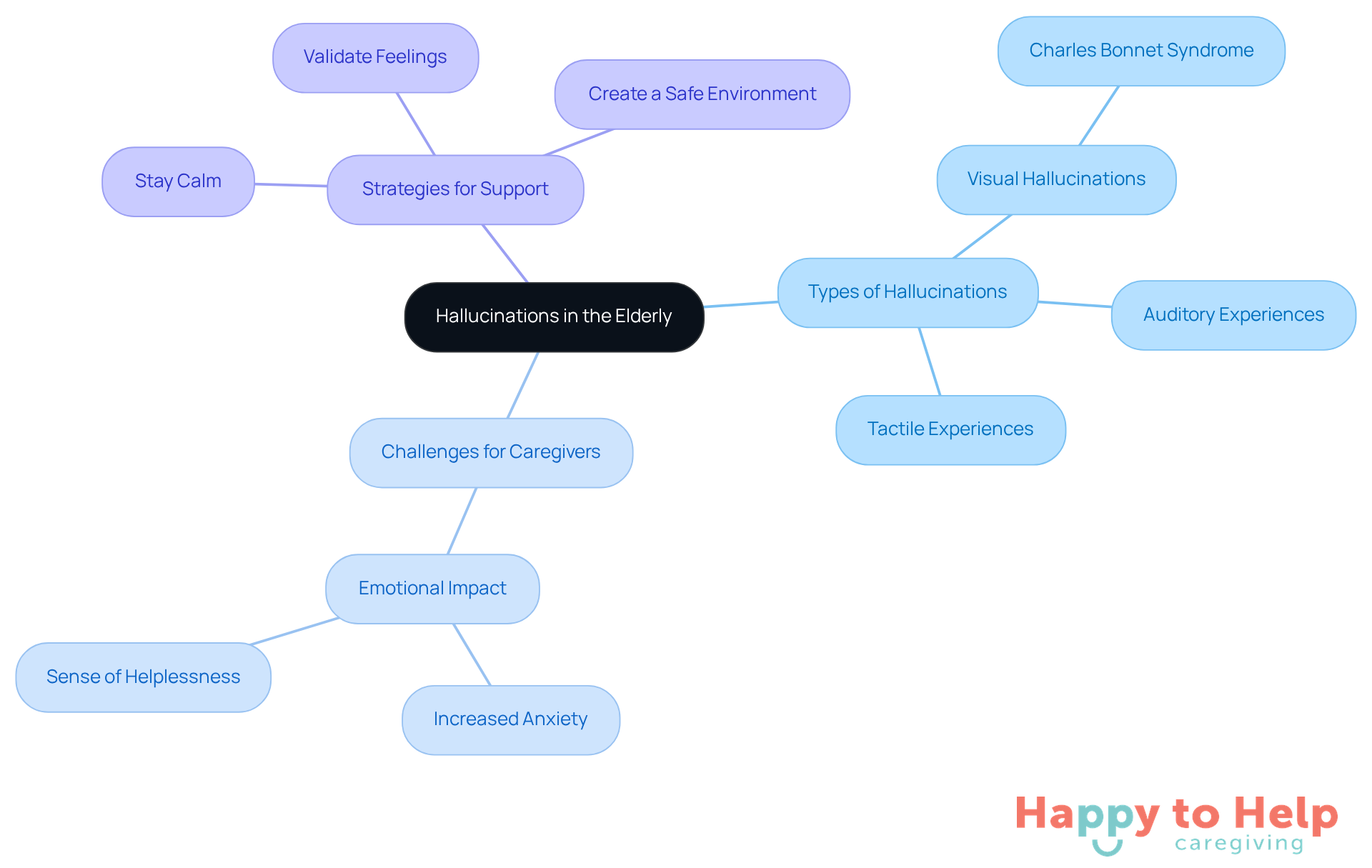
Problem: Hallucinations in the elderly can appear in various forms, leading to confusion and distress.
- Visual Hallucinations: Individuals may see things that aren't there, often linked to conditions like Charles Bonnet syndrome, where those with vision loss perceive images.
- Auditory Experiences: Hearing sounds or voices that do not exist can be particularly unsettling.
- Tactile Experiences: Some may feel sensations on their skin, such as bugs crawling, which can lead to heightened anxiety.
Agitate: These sensory distortions can create significant challenges for caregivers, who may struggle to understand and address the needs of their loved ones. The distress caused by hallucinations in the elderly can lead to increased anxiety and a sense of helplessness for both the elderly and their caregivers.
Solution: Comprehending these categories assists caregivers in recognizing and addressing the requirements of their loved ones undergoing sensory distortions. Here are some actionable tips:
- Stay Calm: Approach the situation with patience and understanding.
- Validate Feelings: Acknowledge the experiences of your loved one, even if they seem irrational.
- Create a Safe Environment: Ensure that the surroundings are comfortable and free from potential triggers.
By implementing these strategies, caregivers can better support their loved ones, fostering a sense of security and understanding.
Explore Causes of Hallucinations in Older Adults
Hallucinations in the elderly present a significant challenge for caregivers, stemming from various causes that can complicate care. Understanding these causes is crucial for effective management and support.
-
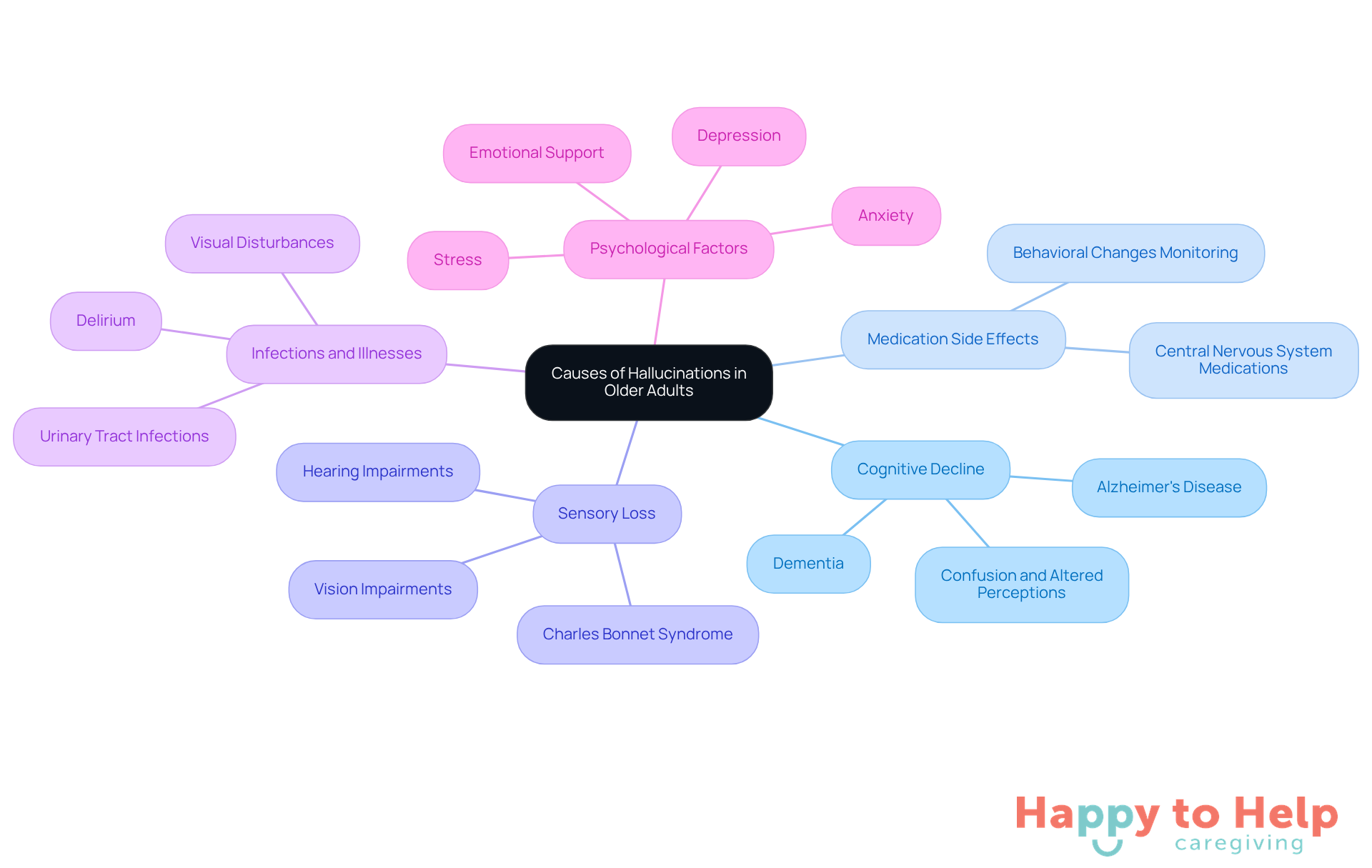
Cognitive Decline: Conditions like dementia and Alzheimer's disease are major contributors, often leading to confusion and altered perceptions. This cognitive decline can create distress not only for the individual but also for caregivers who may struggle to provide appropriate support.
-
Medication Side Effects: Certain medications, especially those affecting the central nervous system, can lead to perceptual disturbances. Caregivers should be vigilant about monitoring any changes in behavior or perception that may arise from medication adjustments.
-
Sensory Loss: Vision or hearing impairments can result in false perceptions. For instance, in Charles Bonnet syndrome, individuals with significant vision loss may experience intense visual distortions. Recognizing these symptoms can help caregivers respond effectively.
-
Infections and Illnesses: Conditions such as urinary tract infections or delirium can provoke visual disturbances, particularly in frail elderly individuals. Prompt medical attention can mitigate these effects and improve the individual's quality of life.
-
Psychological Factors: Anxiety, depression, and stress can exacerbate or trigger episodes of altered perception. Providing emotional support and creating a calming environment is essential for caregivers to help manage these challenges.
By understanding these causes, caregivers can better navigate the complexities of hallucinations in the elderly, ensuring they provide the necessary support and interventions.
Implement Strategies to Manage Hallucinations Effectively
Managing hallucinations can be a significant challenge for caregivers. These experiences can lead to distress not only for the individual but also for those providing care. Understanding how to effectively address these hallucinations is crucial for maintaining a supportive environment.
To tackle this issue, caregivers can implement several strategies:
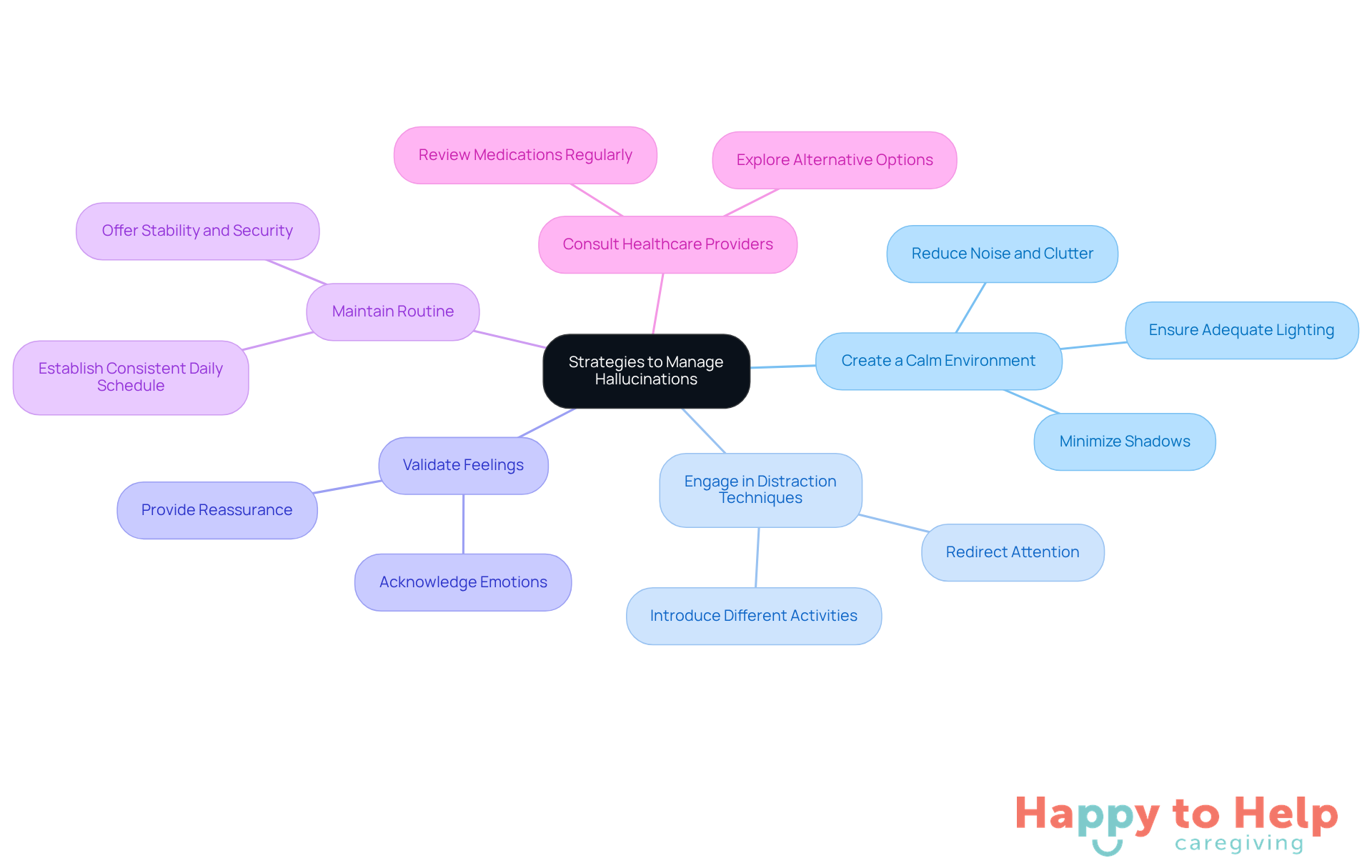
- Create a Calm Environment: Reducing noise and clutter, along with ensuring adequate lighting, can help minimize shadows that may trigger visual hallucinations.
- Engage in Distraction Techniques: Redirecting attention to a different activity or conversation can alleviate distress caused by sensory experiences.
- Validate Feelings: Acknowledging the person's emotions without endorsing the delusion itself is vital. For instance, saying, "I understand that you feel scared, but you are safe here," can provide reassurance.
- Maintain Routine: Establishing a consistent daily routine offers a sense of stability and security, which can reduce anxiety and confusion.
- Consult Healthcare Providers: Regularly reviewing medications with healthcare professionals is essential to identify any that may lead to false perceptions and to explore alternative options if necessary.
By implementing these strategies, caregivers can create a more supportive environment that addresses the complexities of hallucinations.
Recognize When to Seek Professional Help for Hallucinations
Caregivers should seek professional help when they encounter specific challenges related to hallucinations.
-
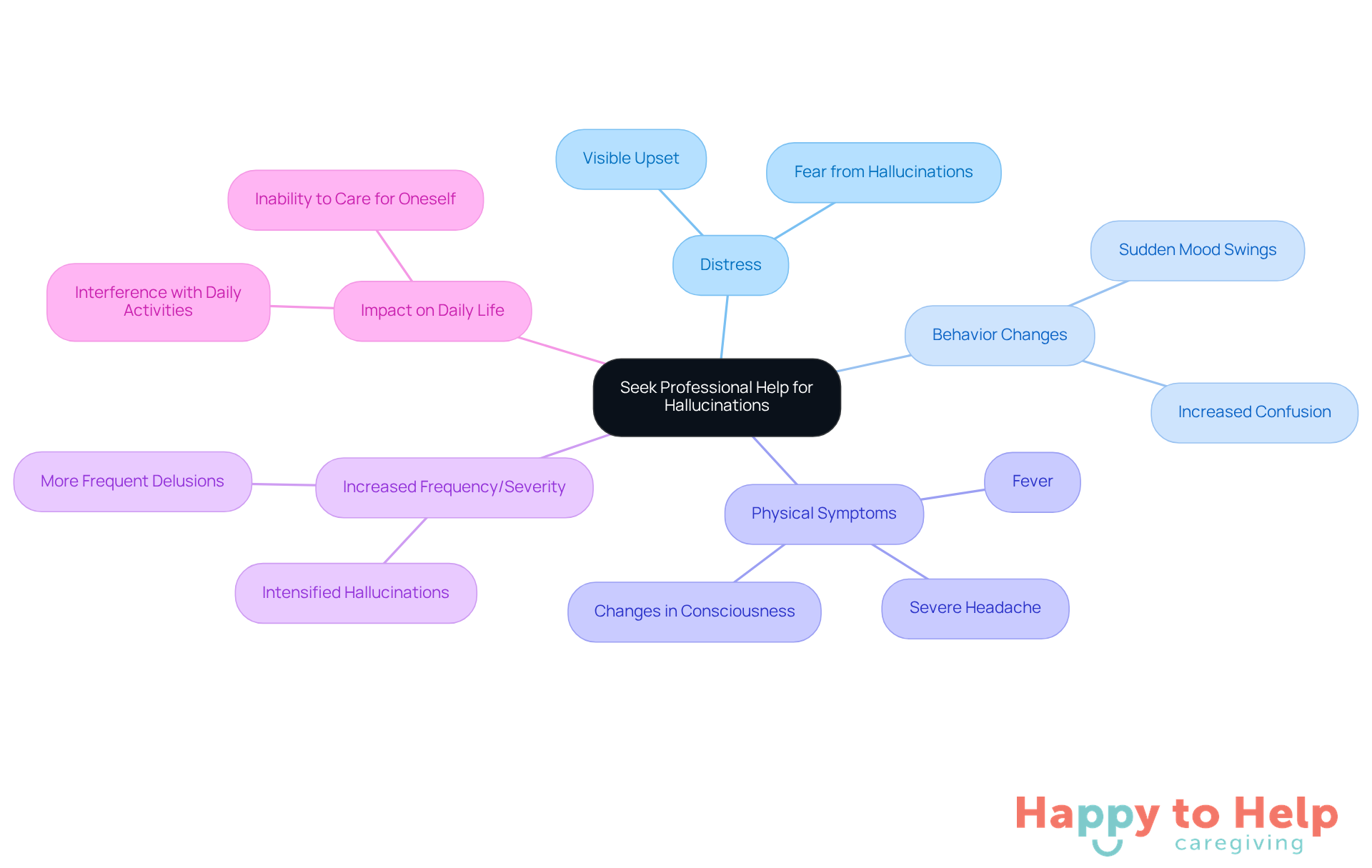
Hallucinations Cause Distress: When an individual is visibly upset or frightened by their hallucinations, it’s crucial to consult a healthcare provider. This distress can significantly impact their well-being and safety.
-
Changes in Behavior: Sudden shifts in behavior, mood swings, or increased confusion may indicate a need for medical evaluation. These changes can be alarming and often signal deeper issues that require attention.
-
Physical Symptoms: If false perceptions are accompanied by concerning symptoms such as fever, severe headache, or changes in consciousness, immediate medical attention is necessary. These physical signs can complicate the situation and must not be overlooked.
-
Increased Frequency or Severity: When delusions become more frequent or intense, it may signal an underlying health issue that requires professional assessment. Recognizing this escalation is vital for timely intervention.
-
Impact on Daily Life: If hallucinations in the elderly interfere with daily activities or the individual’s ability to care for themselves, professional intervention is crucial. Addressing these challenges can help restore a sense of normalcy and improve quality of life.
Moving Forward with Hallucinations in the Elderly: Causes
Understanding hallucinations in the elderly presents a significant challenge for caregivers. These sensory distortions - whether visual, auditory, or tactile - can lead to considerable distress for both the elderly and their caregivers. Recognizing the complexities of these experiences is crucial, as it allows caregivers to better address the needs of their loved ones, fostering a compassionate and understanding environment.
The causes of hallucinations are varied, including:
- Cognitive decline
- Medication side effects
- Sensory loss
- Infections
- Psychological factors
Caregivers must be aware of these underlying issues to effectively manage the situation. Practical strategies can help mitigate these challenges:
- Maintaining a calm environment
- Validating feelings
- Consulting healthcare providers
Additionally, knowing when to seek professional help is vital, as timely intervention can provide necessary support for those experiencing distressing hallucinations.
In light of these insights, caregivers are encouraged to remain vigilant and proactive. Understanding the nuances of hallucinations in older adults not only enhances the quality of care but also promotes a sense of security and well-being for both caregivers and their loved ones. By implementing the discussed strategies and being attentive to changes in behavior, caregivers can make a meaningful difference in the lives of those they support, ultimately leading to improved outcomes and a better quality of life.
https://iframe.tely.ai/cta/eyJhcnRpY2xlX2lkIjogIjY5MjEwYWFlY2E3OGI5ZDliYTJkYTUyYSIsICJjb21wYW55X2lkIjogIjY4ZWU1ZGNhNzMxNzYyNTU3ZjNjOTVjMSIsICJpbmRleCI6IG51bGwsICJ0eXBlIjogImFydGljbGUifQ==Frequently Asked Questions
What are hallucinations in the elderly?
Hallucinations are sensory experiences that seem real but are generated by the mind, often leading to confusion and distress for elderly individuals.
What types of hallucinations can occur in the elderly?
The types of hallucinations in the elderly include visual hallucinations (seeing things that aren't there), auditory experiences (hearing sounds or voices that do not exist), and tactile experiences (feeling sensations on the skin, such as bugs crawling).
What is Charles Bonnet syndrome?
Charles Bonnet syndrome is a condition where individuals with vision loss perceive images that are not actually present, leading to visual hallucinations.
How can hallucinations affect caregivers?
Hallucinations can create significant challenges for caregivers, as they may struggle to understand and address the needs of their loved ones, leading to increased anxiety and a sense of helplessness.
What strategies can caregivers use to support elderly individuals experiencing hallucinations?
Caregivers can stay calm, validate the feelings of their loved ones, and create a safe environment to help support those experiencing hallucinations.
Why is it important for caregivers to understand hallucinations?
Understanding hallucinations helps caregivers recognize and address the requirements of their loved ones undergoing sensory distortions, fostering a sense of security and understanding.