Understanding Helper Services: Key Insights for Family Caregivers

For families in our service areas
For families in our service areas, this guide explains caregiver support and how non-medical in-home caregiving can support care planning in East Idaho, Treasure Valley & Magic Valley, Northern Wasatch, North Central West Virginia, and Northeast Ohio.
The Importance of Helper Services: Key Insights
The landscape of caregiving is evolving, reflecting the increasing complexities faced by families as they support aging loved ones or individuals with disabilities. This shift presents a significant problem: many families struggle to integrate helper services into their routines, despite the potential benefits these services offer.
Helper services have emerged as a crucial lifeline, providing tailored non-medical assistance that enhances the quality of life for clients and alleviates the burdens on family caregivers. However, the challenges of understanding and implementing these services can leave caregivers feeling overwhelmed and unsupported.
So, how can caregivers navigate these obstacles? By understanding the nuances of helper services, caregivers can empower themselves to foster a healthier, more balanced caregiving experience. This knowledge not only helps in making informed decisions but also in effectively utilizing available resources to improve their overall caregiving journey.
Defining Helper Services: An Overview
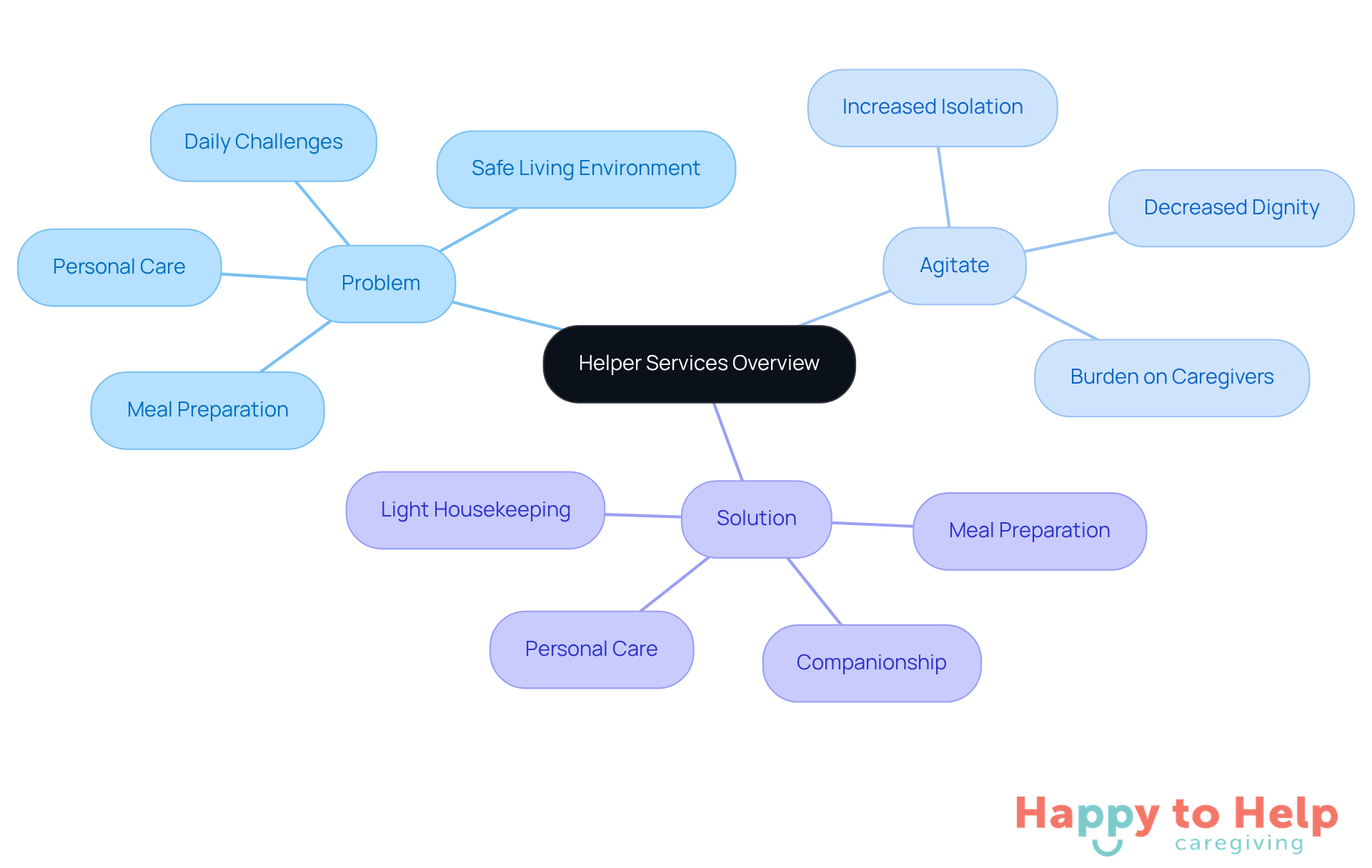
Problem: Many seniors and individuals with disabilities face daily challenges that can hinder their independence and quality of life. These challenges often include difficulties with personal care, meal preparation, and maintaining a safe living environment.
Agitate: Without adequate support, these individuals may experience increased isolation, decreased dignity, and a greater risk of accidents at home. This situation not only affects their well-being but also places a significant burden on caregivers who strive to provide assistance.
Solution: Support functions offer a helper service that provides a variety of non-medical aid designed to help these individuals manage their daily tasks effectively. Helper services like companionship, personal care, meal preparation, and light housekeeping can significantly improve their quality of life. By providing customized assistance, caregivers can meet the unique needs of each person, fostering independence and ensuring safety in their home setting. This approach not only helps clients maintain their dignity but also empowers them to live more fulfilling lives.
The Role of Helper Services in Family Caregiving
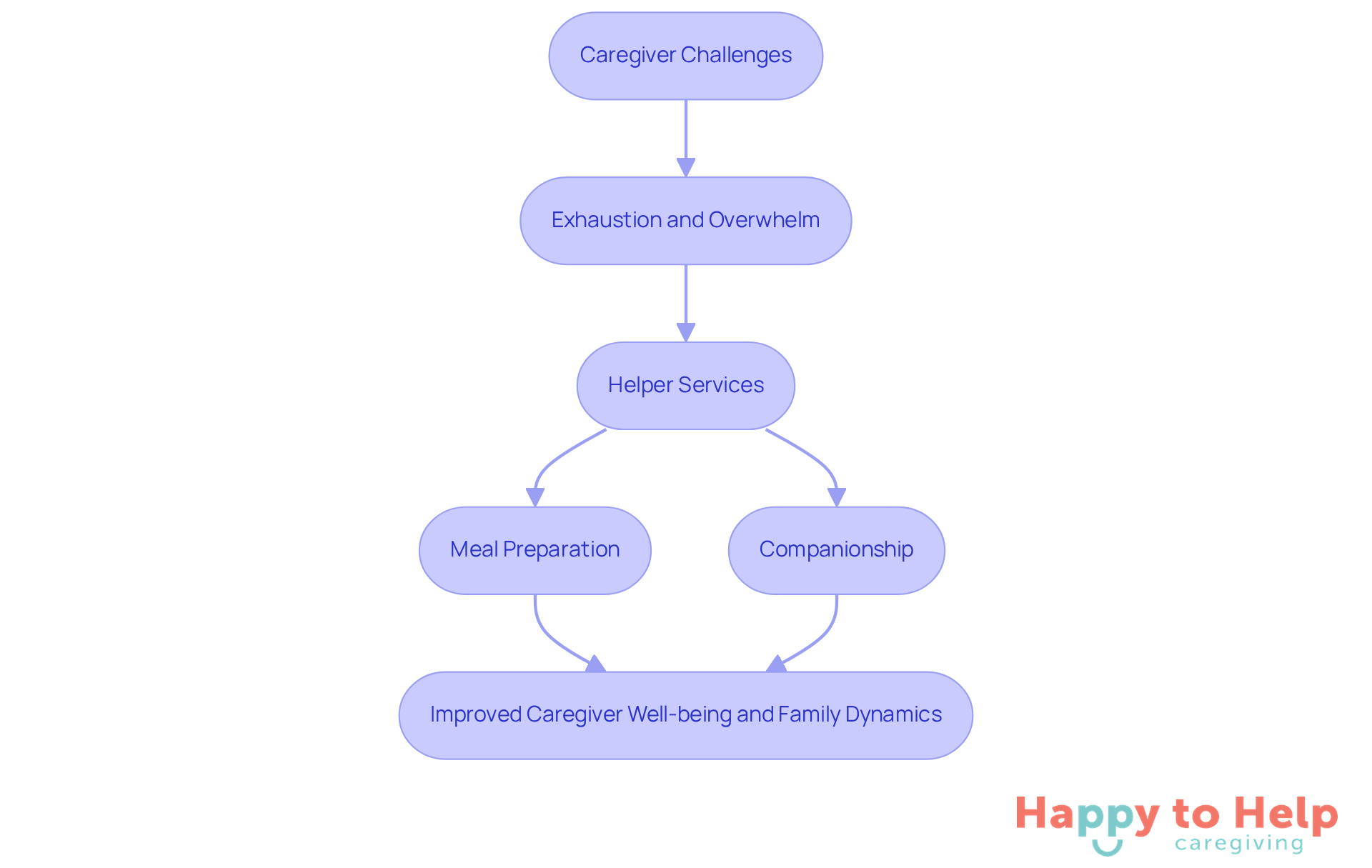
Caregivers often face significant challenges, particularly the exhaustion that comes from balancing caregiving duties with other life demands. This fatigue can lead to feelings of being overwhelmed, impacting not only the caregiver's well-being but also the overall family dynamic.
To address this issue, a helper service is essential. They offer a vital helper service that enables caregivers to take necessary breaks and focus on their own needs. For instance, hiring an aide for meal preparation or companionship can free up time for caregivers to concentrate on more intricate care tasks or simply rejuvenate.
This collaborative approach enhances the quality of care provided and fosters a healthier family environment. Caregivers who feel supported are less likely to experience burnout, leading to a more balanced and fulfilling caregiving experience.
The Evolution of Helper Services: A Historical Perspective
The concept of assistance roles has undergone a significant transformation over the past century.
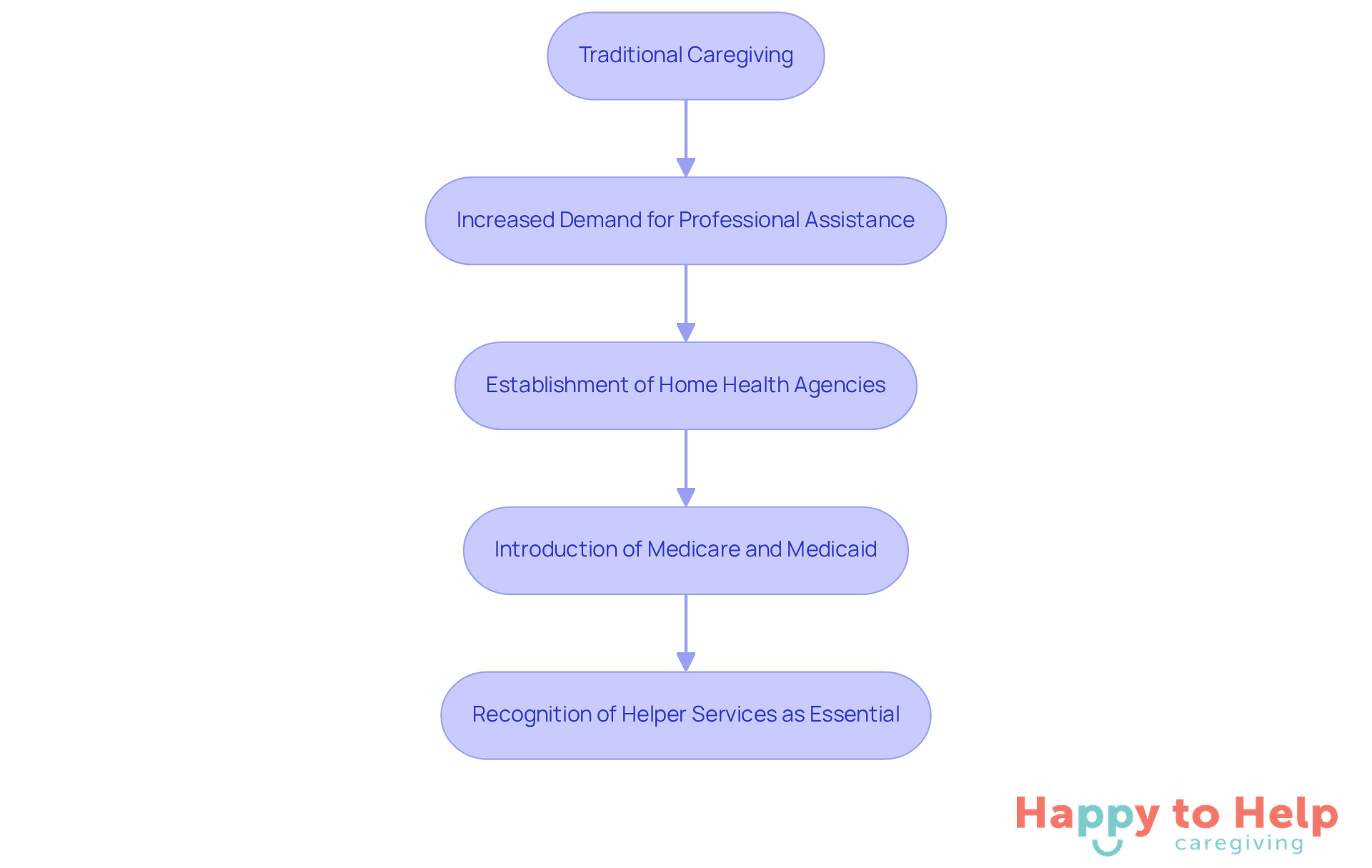
Problem: Traditionally, caregiving was primarily a family responsibility, with limited formal assistance networks in place. As societal norms evolved and the population aged, the demand for professional assistance surged.
Agitate: This shift has profound implications; families often find themselves overwhelmed by the complexities of caregiving, leading to stress and burnout. The establishment of home health agencies in the mid-20th century marked a pivotal change by introducing a helper service for families facing these challenges. The introduction of Medicare and Medicaid in the 1960s further enhanced access to home healthcare options, making professional assistance more attainable.
Today, helper services are recognized as essential components of the healthcare continuum, providing necessary aid that enables individuals to age in place and maintain their independence. This evolution reflects broader changes in healthcare delivery, underscoring the critical role of personalized care within familiar environments.
With forecasts indicating that by 2030, nearly 20% of U.S. inhabitants will be aged 65 and above-almost double the percentage from 2010-the demand for such support is more urgent than ever. As historians note, the changing role of caregiving not only mirrors demographic shifts but also highlights the increasing complexity of care needs, necessitating a more robust support system for households.
Key Features and Benefits of Helper Services
Caregiving can be a challenging experience, often leading to significant stress for caregivers. This stress not only affects the caregiver but also impacts the quality of life for clients. Many caregivers struggle with balancing their responsibilities, which can lead to feelings of overwhelm and burnout.
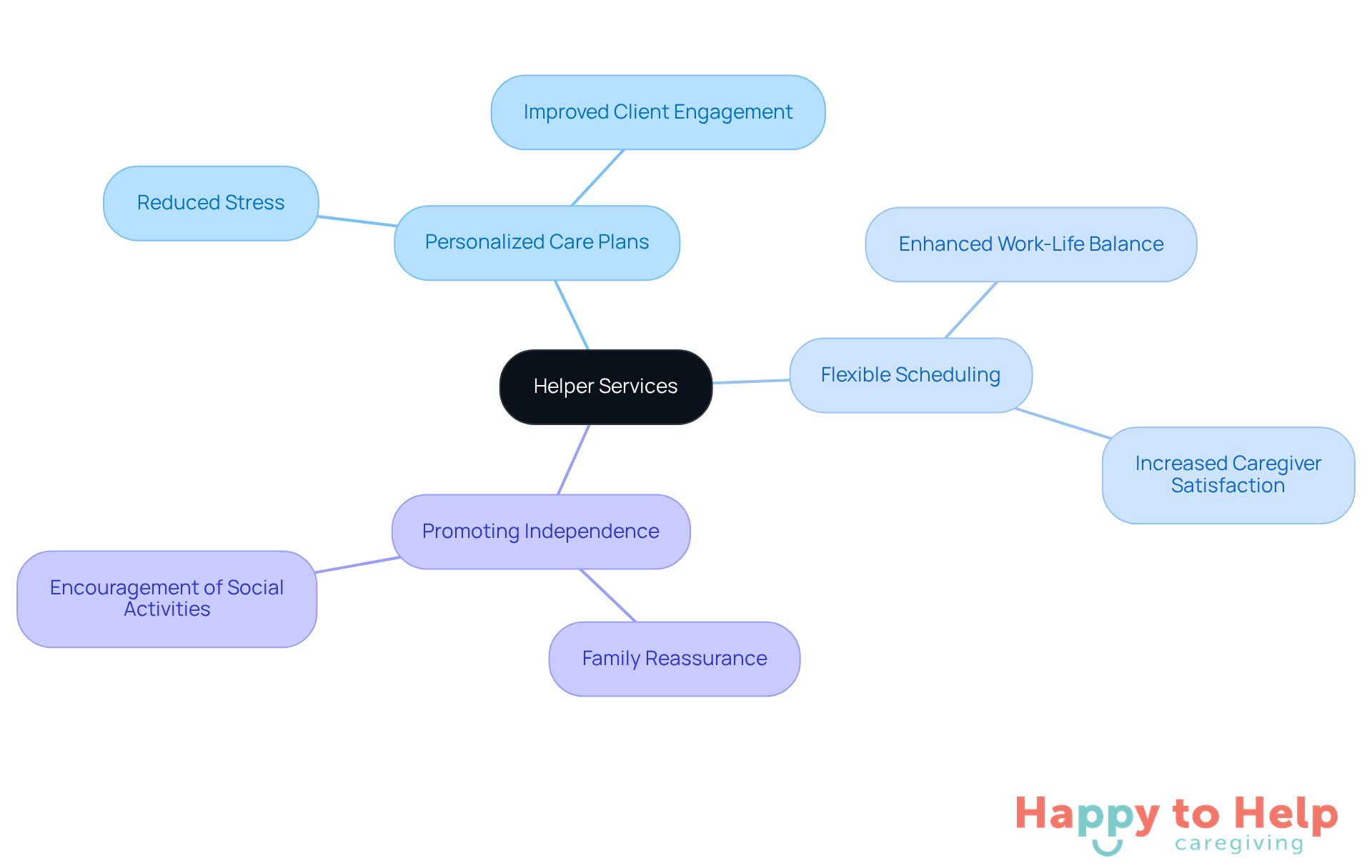
To address these challenges, the helper service offers various features that enhance the caregiving experience. Key features include:
- Personalized care plans tailored to individual needs
- Flexible scheduling options
- A strong focus on promoting independence
These solutions can significantly reduce caregiver stress and enhance the overall well-being of clients by utilizing a helper service.
For instance, households frequently report that employing an assistant allows their relatives to engage in social activities and maintain routines that contribute to their overall health. Furthermore, assistance options provide reassurance for families, knowing that their loved ones receive expert support in a comfortable environment. By utilizing these resources, caregivers can foster a more positive caregiving experience for themselves and their clients.
Challenges and Considerations in Utilizing Helper Services
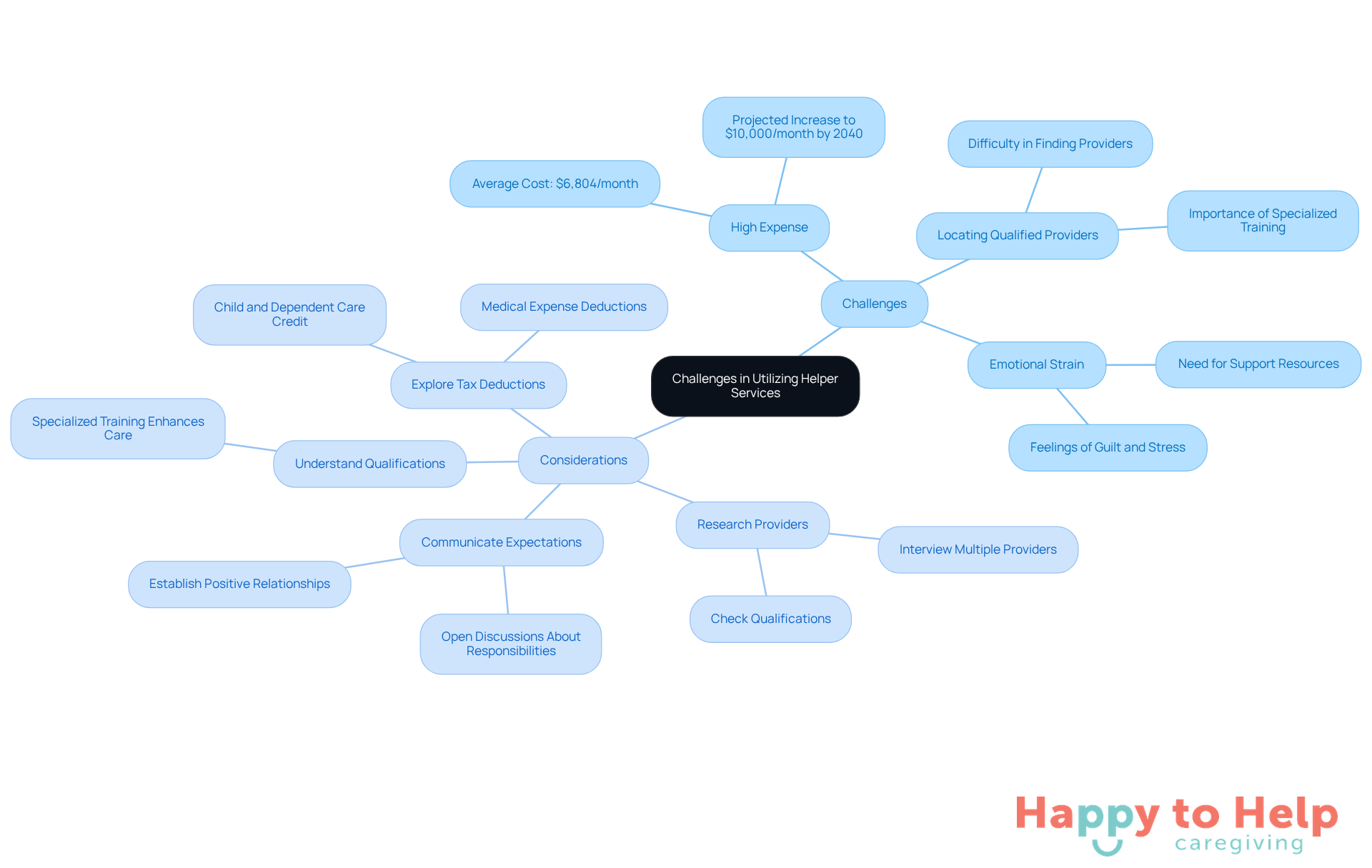
While support options offer numerous advantages, households often encounter significant challenges when trying to incorporate these resources into their caregiving routines. The main issues include:
- The high expense of assistance, averaging around $6,804 monthly for 40 hours of in-home support in California.
- The difficulty in locating qualified providers.
In 2025, the median hourly rate for non-medical in-home care is projected to be approximately $35, highlighting the financial hurdles individuals must navigate.
To address these challenges, relatives should:
- Conduct thorough research and interview multiple service providers.
- Understand that statistics show caregivers with specialized training and qualifications significantly enhance the quality of care provided.
- Engage in open communication about expectations and preferences, which is crucial for establishing a positive working relationship.
- Recognize that caregiving consultants stress that clear discussions regarding responsibilities can prevent misunderstandings and foster a supportive environment.
Additionally, households should be aware of potential tax deductions or credits they may qualify for when employing support staff directly, which can alleviate some financial pressures. Emotional strain is another major challenge caregivers face, making it essential to seek support and resources that can help manage these feelings. By proactively addressing these issues, families can maximize the benefits of helper service, ensuring a smoother transition for their loved ones and enhancing their overall caregiving experience.
Key Takeaways for Caregivers
Understanding the significance of helper services is crucial for family caregivers navigating the complexities of caregiving. Caregivers often face the challenge of balancing their responsibilities while ensuring their loved ones receive the care they need. This can lead to stress and burnout, impacting both the caregiver and the client.
Helper services provide essential support that enhances independence and quality of life for seniors and individuals with disabilities. By fostering a nurturing environment, these services play a pivotal role in alleviating caregiver stress and improving the overall well-being of clients. However, families may encounter challenges in utilizing these resources, such as navigating the transition from family-based care to professional assistance networks.
To address these challenges, families should consider:
- Personalized care plans
- Flexible scheduling
- A focus on promoting independence
Thorough research and open communication are vital in overcoming barriers to accessing these services. By implementing these strategies, caregivers can create a more balanced caregiving routine that benefits everyone involved.
Ultimately, embracing helper services enriches lives and creates supportive family dynamics. As the demand for these services grows, especially with an aging population, it becomes increasingly vital for families to integrate such support into their caregiving routines. By doing so, they can foster a healthier environment that enhances the quality of life for both caregivers and clients.
https://iframe.tely.ai/cta/eyJhcnRpY2xlX2lkIjogIjY5MjdhNWNhNjE5YzYxNzIyYjkyMzYzZSIsICJjb21wYW55X2lkIjogIjY4ZWU1ZGNhNzMxNzYyNTU3ZjNjOTVjMSIsICJpbmRleCI6IG51bGwsICJ0eXBlIjogImFydGljbGUifQ==Frequently Asked Questions
What are helper services?
Helper services provide non-medical support designed to assist seniors and individuals with disabilities in managing daily tasks such as personal care, meal preparation, and maintaining a safe living environment.
What challenges do seniors and individuals with disabilities face?
They often experience difficulties with personal care, meal preparation, and ensuring their living environment is safe, which can hinder their independence and quality of life.
How do helper services improve the quality of life for clients?
Helper services offer companionship, personal care, meal preparation, and light housekeeping, which help individuals maintain their dignity and independence, ultimately leading to a more fulfilling life.
What impact does inadequate support have on seniors and caregivers?
Without adequate support, individuals may face increased isolation, decreased dignity, and a higher risk of accidents at home, while caregivers may experience significant burdens and exhaustion.
How can helper services assist caregivers?
Helper services enable caregivers to take necessary breaks by providing assistance with tasks such as meal preparation or companionship, allowing them to focus on more complex care tasks or recharge.
What is the benefit of a collaborative approach in caregiving?
A collaborative approach enhances the quality of care provided and fosters a healthier family environment, reducing the risk of caregiver burnout and promoting a more balanced caregiving experience.
List of Sources
- Defining Helper Services: An Overview
- 13 Home Care Trends To Watch For in 2024 (And Thoughts From 11 Experts) | CareAcademy (https://careacademy.com/blog/home-care-trends)
- Non-Medical In-Home Care Trends in 2024 (https://axiscare.com/blog/non-medical-in-home-care-trends-in-2024)
- Top healthcare trends of 2026: Aging in place is driving innovation in home-based care and technology (https://definitivehc.com/blog/aging-in-place-driving-innovation)
- Growing Trend of Private Pay Home Care for Elderly (https://regencyhcs.com/blog/growing-trend-of-private-pay-home-care-for-elderly)
- Trends and Innovations in Senior Care | Amada Blog (https://amadaseniorcare.com/2025/01/trends-and-innovations-in-senior-care)
- The Role of Helper Services in Family Caregiving
- Benefits of Respite Care for Families and Patients (https://ltcnews.com/articles/respite-care-assisted-living-family-burden-provides-support)
- How Family Caregivers Can Benefit from Respite Home Care Services - At Home Care Inc (https://at-home-care.com/how-family-caregivers-can-benefit-from-respite-home-care-services)
- How Respite Care Can Improve Mental Health of Caregivers (https://bucknercalderwoods.org/news-blog/how-respite-care-can-improve-mental-health-of-caregivers)
- 'I don't know where to start.' Parents and caregivers are burned out. Who's most at risk? (https://usatoday.com/story/money/2025/04/04/parents-caregivers-burnt-out-help/82695959007)
- New Report Reveals Crisis Point for America’s 63 million Family Caregivers (https://press.aarp.org/2025-07-24-New-Report-Reveals-Crisis-Point-for-Americas-63-million-Family-Caregivers)
- The Evolution of Helper Services: A Historical Perspective
- A Look at the Evolution of Home Healthcare – Luckwell Solutions (https://luckwellsolutions.com/a-look-at-the-evolution-of-home-healthcare)
- What’s Next For Home Health As The Industry Faces Its Biggest Test Yet (https://homehealthcarenews.com/2025/10/whats-next-for-home-health-as-the-industry-faces-its-biggest-test-yet)
- The Evolution of Home Health Care: Insights from SurfMed (https://surfmed.com/blogs/surfmed-news/the-evolution-of-home-health-care-a-surfmed-perspective)
- The Future of Home Health Care: A Strategic Framework for Optimizing Value - PMC (https://pmc.ncbi.nlm.nih.gov/articles/PMC5052697)
- Evolution of the home health care market: The expansion and quality performance of multi‐agency chains - PMC (https://pmc.ncbi.nlm.nih.gov/articles/PMC7720704)
- Key Features and Benefits of Helper Services
- Growing Demand for Home Care Services: Insights & Statistics (https://lovinghomecareinc.com/home-care-industry-statistics)
- Home Care Statistics In 2025: Key Insights In Home Care (https://sagapixel.com/marketing/home-care-statistics)
- Helping Caregivers Thrive With Caregiver Leave, Flexible Work and More (https://adp.com/spark/articles/2025/03/helping-caregivers-thrive-with-caregiver-leave-flexible-work-and-more.aspx)
- Workplace flexibility is the most used, wanted benefit among caregivers: AARP (https://thehill.com/homenews/4668936-aarp-workplace-flexibility-most-used-wanted-benefit-caregivers)
- Go beyond flexible hours and daycare partnerships to help caregivers (https://benefitnews.com/news/how-more-expansive-benefits-could-make-a-difference-in-the-caregiving-crisis)
- Challenges and Considerations in Utilizing Helper Services
- Caregivers face multiple challenges (https://fox44news.com/washington/washington-dc/caregivers-face-multiple-challenges)
- Challenges Families Face While Providing Daily Care - The Gila Herald (https://gilaherald.com/challenges-families-face-while-providing-daily-care)
- Overcoming Challenges In Home-Based Care For Medically Intensive Patients (https://homehealthcarenews.com/2025/09/overcoming-challenges-in-home-based-care-for-medically-intensive-patients)
- Cost of In-Home Care in California (2025) + 11 Ways to Pay (https://lovinghomecareinc.com/blog/cost-of-in-home-care-california)
- Families struggling to afford home care leading to more youth caregivers: nonprofit founder (https://foxnews.com/media/families-struggling-afford-home-care-leading-more-youth-caregivers-nonprofit-founder)