
Understanding Hoarder Helpers: Their Role in
Hoarding disorder affects millions, resulting in not only physical clutter but also significant emotional distress for individuals and their families. This condition's rising prevalence highlights a pressing problem: caregivers often struggle to provide adequate support amidst the chaos. The emotional toll on both clients and caregivers can be overwhelming, leading to feelings of frustration and helplessness.
As the need for specialized care grows, the role of hoarder helpers becomes increasingly vital. These professionals navigate a complex emotional landscape, fostering trust and collaboration with their clients. Understanding the multifaceted responsibilities and skills of hoarder helpers reveals their crucial role in caregiving. They not only assist in decluttering but also provide emotional support, helping clients reclaim their lives.
To effectively support those struggling with hoarding, caregivers can implement several actionable strategies:
- Build Trust: Establish a safe environment where clients feel comfortable sharing their feelings.
- Educate: Provide information about hoarding disorder to demystify the condition and reduce stigma.
- Collaborate: Work alongside clients to set achievable goals, ensuring they feel involved in the process.
By recognizing the challenges and employing these strategies, caregivers can make a transformative impact on their clients' lives.
Define Hoarder Helpers: Roles and Responsibilities
Hoarding disorder presents a significant challenge for individuals and their families, often leading to overwhelming emotional distress. Approximately 2-5% of the UK population may experience this condition, highlighting the critical role of specialized caregivers, known as hoarder assistants. These professionals provide essential support, helping clients navigate their emotional connections to belongings while facilitating the decluttering process.
The implications of hoarding extend beyond physical clutter; they can deeply affect mental well-being. Families often feel frustration and helplessness as they witness their loved ones struggle. This emotional burden underscores the need for compassionate care. Hoarder assistants must engage with empathy and understanding, fostering trust that encourages clients to actively participate in the decluttering journey.
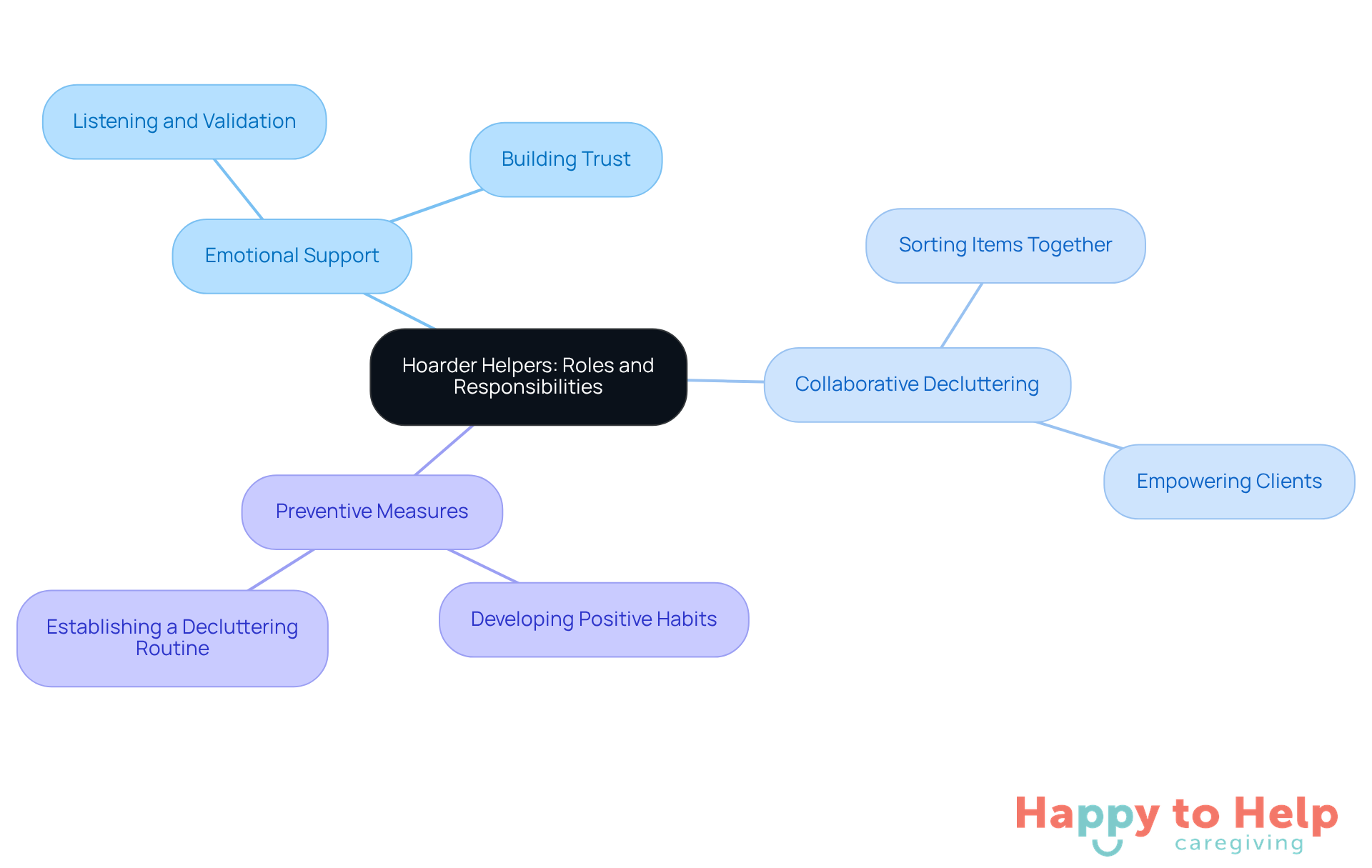
To effectively address these challenges, caregivers can implement several strategies:
- Emotional Support: Offer a listening ear and validate the feelings of clients.
- Collaborative Decluttering: Work alongside clients to sort through items, ensuring they feel in control of the process.
- Preventive Measures: Develop strategies to help clients avoid future accumulation, reinforcing positive habits.
Expert insights, such as those from Alan De La O, emphasize that hoarding is a clinical mental condition, necessitating professional assistance. Continuous psychological support, including counseling and peer groups, is vital for long-term recovery. Hoarder helpers assist not only with physical cleanup but also connect clients to essential resources, creating a supportive environment that fosters lasting change.
By adopting a compassionate and structured approach, clutter assistance providers play a pivotal role in helping individuals reclaim their lives from the burden of excessive accumulation.
Contextualize the Importance of Hoarder Helpers in Caregiving
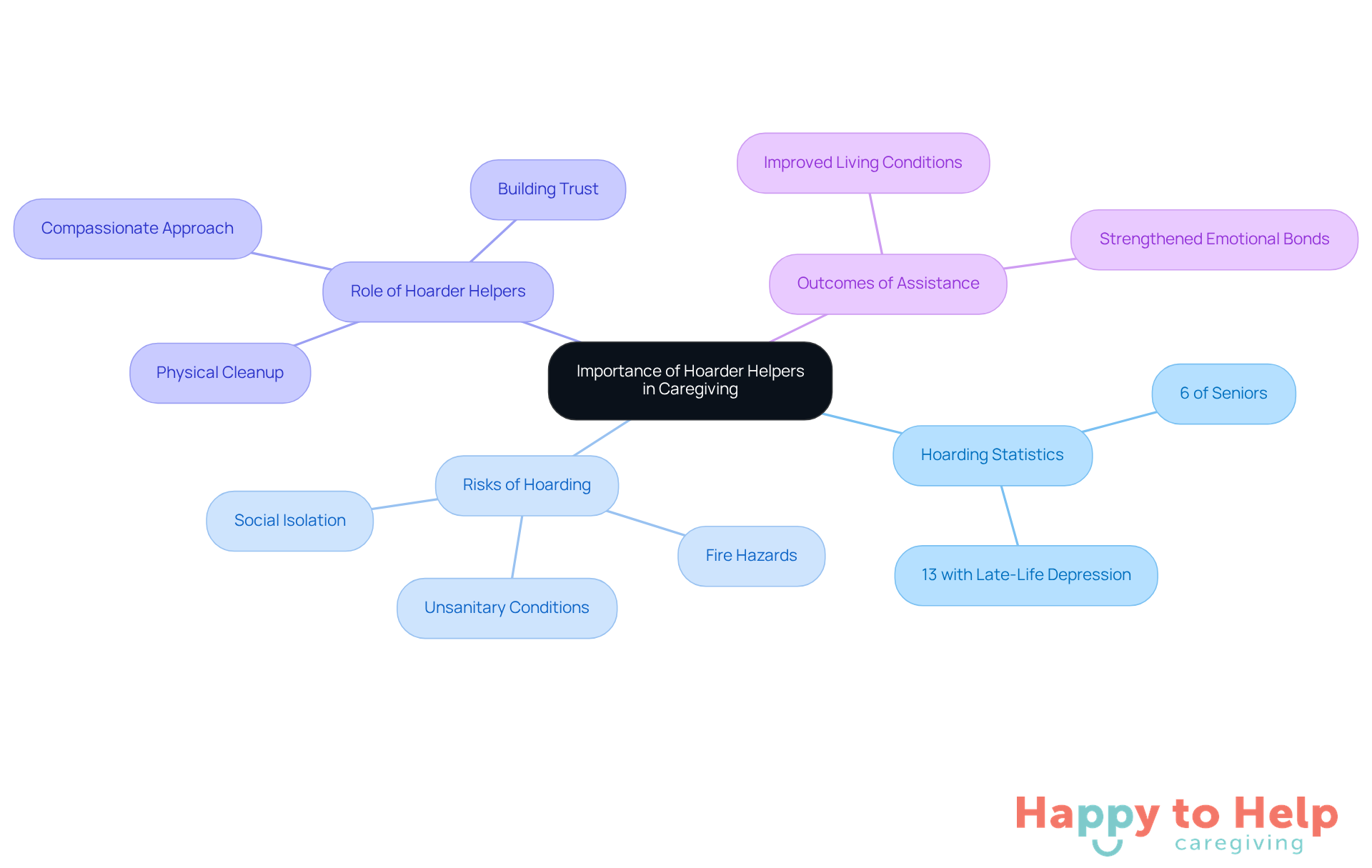
Hoarding is a complex mental health issue that poses significant safety risks and emotional suffering for individuals and their families. As the population ages, excessive collecting behaviors among seniors have become increasingly apparent. Approximately 6% of people over 70 experience a collecting issue, leading to reduced social interactions and feelings of isolation and sadness. Furthermore, 13% of older individuals facing late-life depression report significant compulsive accumulation, underscoring the psychological consequences of this disorder.
The risks associated with hoarding - such as fire hazards, unsanitary living conditions, and social isolation - are substantial. Addressing these challenges involves the vital role of hoarder helpers. Hoarder helpers provide tailored support that assists not only in the physical cleanup but also in helping clients regain control over their living spaces, ultimately enhancing their quality of life. Mental health professionals emphasize the importance of a compassionate approach, as individuals who accumulate possessions often perceive helpers as adversaries, leading to anxiety and resistance. Building trust between caregivers and those who collect excessively is essential for effective assistance, especially given that previous experiences of loss can strain relationships.
Clutter assistance can significantly alleviate the burden on family members, who may feel overwhelmed by managing a loved one's accumulation behavior. It's crucial to recognize that helping an elderly individual reclaim their home is a lengthy process, but it can lead to a safer and healthier living environment. Successful outcomes from clutter assistance highlight the effectiveness of tailored support strategies. Caregivers can foster a sense of accomplishment and build the hoarder's confidence by setting realistic, small goals and celebrating milestones. This collaborative approach not only improves the living conditions of those affected but also strengthens the emotional bonds between caregivers and clients, ultimately resulting in a safer and healthier home.
Trace the Origins and Evolution of Hoarder Helpers
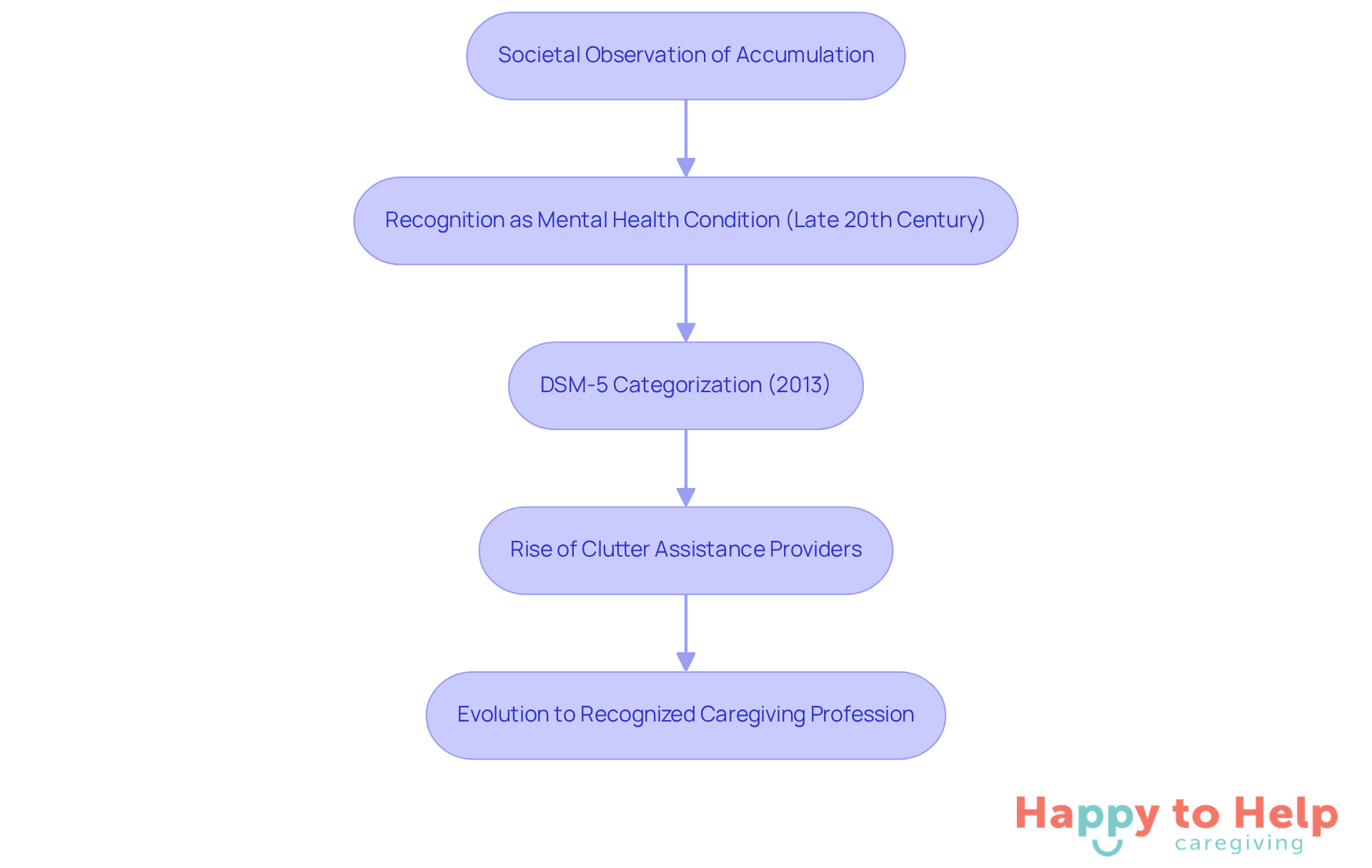
The understanding of excessive accumulation has evolved significantly over the centuries. Initially viewed as a societal observation, it became recognized as a mental health condition by the late 20th century. The DSM-5 formally categorized this condition as a distinct diagnosis in 2013, marking a crucial milestone in acknowledging accumulation behaviors. As awareness of this disorder grew, so did the demand for specialized support services tailored to its complexities.
Family members often faced the brunt of responsibility in assisting loved ones, navigating emotional and logistical challenges that could be overwhelming. This situation led to the rise of trained professionals known as clutter assistance providers. These experts are equipped with specific strategies to tackle the unique challenges associated with hoarding behaviors.
Over time, the role of hoarder helpers has evolved from informal support to a recognized caregiving profession. Hoarder helpers are now essential professionals in a multidisciplinary approach, collaborating with mental health experts, social workers, and family members to provide comprehensive care. Their responsibilities extend beyond physical decluttering; they also offer emotional support to address the root causes of excessive accumulation.
The prevalence of excessive accumulation is estimated at 4.0-5.8%, with higher rates observed in individuals over 60 years old. This statistic underscores the growing need for specialized care. The evolution of this field reflects an increasing awareness of the importance of empathy and specialized training in effectively assisting individuals facing accumulation issues. By promoting a supportive atmosphere for both clients and their families, caregivers can significantly improve outcomes.
Identify Key Characteristics and Skills of Effective Hoarder Helpers
Clutter can be a significant problem for many individuals, impacting their mental well-being and living conditions. Caregivers often face the challenge of navigating the complexities of disorganization, which can lead to feelings of frustration and helplessness.
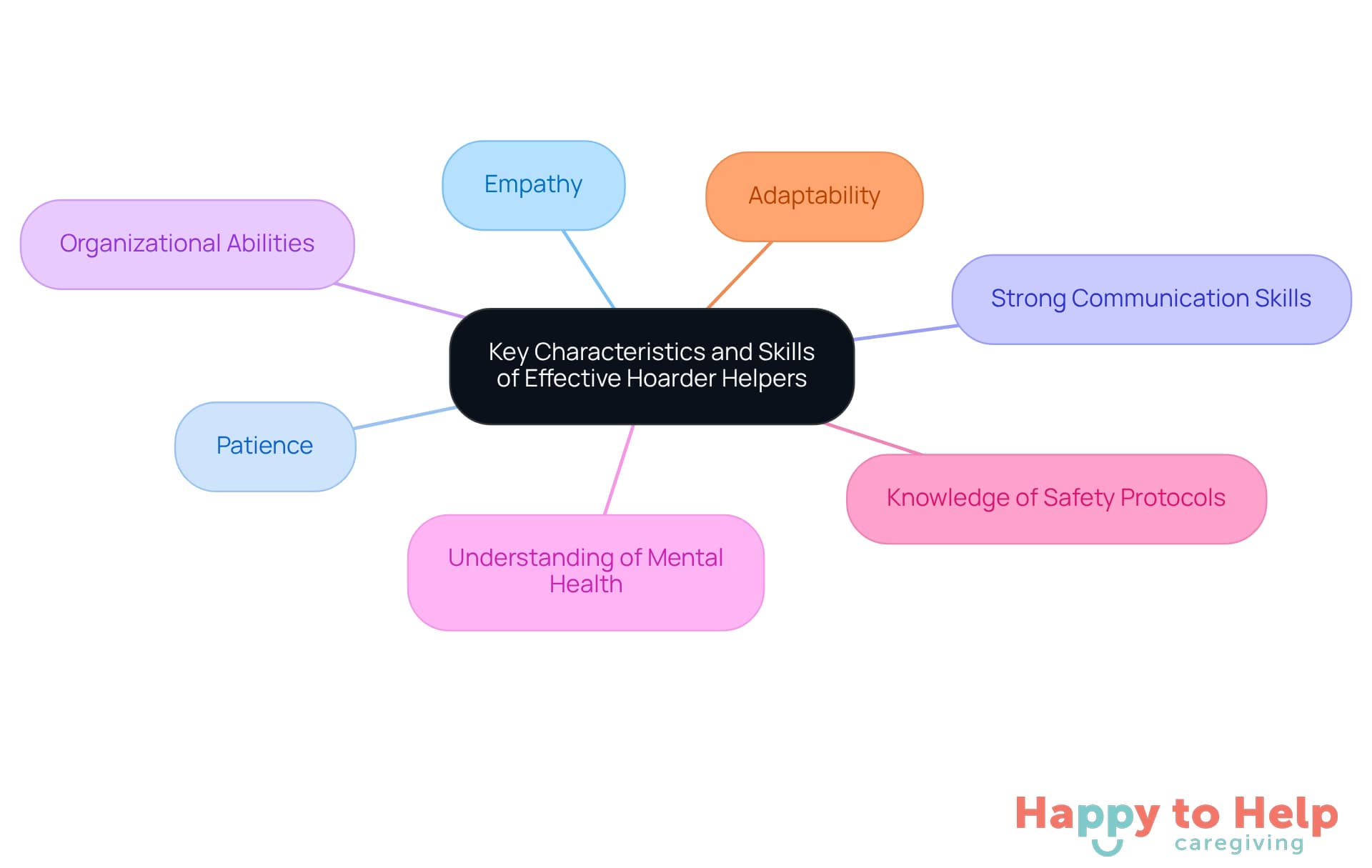
To effectively address this issue, clutter organizers must possess a unique blend of skills and characteristics. Key traits include:
- Empathy
- Patience
- Strong communication skills
These traits are crucial for building trust with clients. Additionally, organizational abilities are essential for aiding in the decluttering process, along with an understanding of the mental health concerns associated with excessive accumulation.
Moreover, knowledge of safety protocols is vital, as hoarding environments can pose health risks. Successful hoarder helpers demonstrate adaptability by tailoring their approach to meet the individual needs of each client. This combination of skills ensures that they can provide compassionate and effective support, ultimately helping clients reclaim their living spaces and improve their overall well-being.
Moving Forward with Hoarder Helpers: Their Role in
Hoarding disorder presents significant challenges for individuals and their families, creating a complex web of emotional ties to possessions. This mental health condition not only burdens those affected but also strains relationships and living environments. As hoarding becomes more prevalent, particularly among older adults, the need for skilled hoarder helpers is increasingly critical.
Hoarder helpers address these challenges by providing compassionate care and structured support. They assist clients in navigating their emotional connections to belongings while facilitating the decluttering process. This dual approach alleviates the physical burden of excessive accumulation and fosters a sense of autonomy and empowerment in clients, ultimately leading to improved mental well-being.
Key strategies employed by hoarder helpers include:
- Offering emotional support to clients.
- Collaborating in the decluttering process.
- Implementing preventive measures to avoid future accumulation.
Building trust and understanding the unique challenges faced by clients are essential components of their work. As society becomes more aware of the implications of hoarding, advocating for tailored support services is crucial. Engaging with hoarder helpers not only aids those struggling with hoarding but also promotes healthier living environments and stronger emotional bonds between caregivers and clients.
Embracing this compassionate approach can lead to transformative outcomes for individuals and their families, reinforcing the essential role of hoarder helpers in caregiving. By recognizing the significance of their work, we can foster a broader understanding of mental health support and the importance of community resources.
https://iframe.tely.ai/cta/eyJhcnRpY2xlX2lkIjogIjY5M2Y4MjU2ODIyN2JhZjJkZTdjMGI3YyIsICJjb21wYW55X2lkIjogIjY4ZWU1ZGNhNzMxNzYyNTU3ZjNjOTVjMSIsICJpbmRleCI6IG51bGwsICJ0eXBlIjogImFydGljbGUifQ==Frequently Asked Questions
What are hoarder helpers and what roles do they play?
Hoarder helpers, also known as hoarder assistants, are specialized caregivers who support individuals with hoarding disorder. Their roles include providing emotional support, facilitating the decluttering process, and helping clients navigate their emotional connections to their belongings.
How prevalent is hoarding disorder in the UK?
Approximately 2-5% of the UK population may experience hoarding disorder, highlighting the need for specialized care.
What emotional challenges do families face when dealing with a loved one who hoards?
Families often feel frustration and helplessness as they witness their loved ones struggle with hoarding, which can lead to significant emotional distress.
What strategies do hoarder assistants use to help clients?
Hoarder assistants implement several strategies, including providing emotional support, collaborating with clients during the decluttering process, and developing preventive measures to help clients avoid future accumulation.
Why is empathy important in the role of a hoarder assistant?
Empathy is crucial as it fosters trust between the hoarder assistant and the client, encouraging the client to actively participate in the decluttering journey.
What additional support is recommended for individuals with hoarding disorder?
Continuous psychological support, including counseling and peer groups, is vital for long-term recovery from hoarding disorder.
How do hoarder helpers contribute to the long-term recovery of clients?
Hoarder helpers assist with physical cleanup and connect clients to essential resources, creating a supportive environment that fosters lasting change and helps individuals reclaim their lives.
List of Sources
- Define Hoarder Helpers: Roles and Responsibilities
- Who gets Hoarding Disorder? (https://hoarding.iocdf.org/about-hoarding/who-gets-hoarding-disorder)
- Hoarding a UK mental health emergency – Birmingham group warns (https://bbc.com/news/articles/cj3xlel7vrro)
- Hoarding may be increasing because of aging population, scarce mental health care (https://npr.org/2023/09/07/1198065591/hoarding-may-be-increasing-because-of-aging-population-scarce-mental-health-care)
- How Hoarding Cleanup Transforms Mental Health and Home Life (https://worldofdumpsters.com/how-hoarding-cleanup-transforms-mental-health-and-home-life)
- What is Hoarding Disorder? (https://psychiatry.org/patients-families/hoarding-disorder/what-is-hoarding-disorder)
- Contextualize the Importance of Hoarder Helpers in Caregiving
- Dangers of Hoarding Behavior Become More Severe With Age (https://agingcare.com/articles/hoarding-behavior-becomes-more-severe-with-age-146409.htm)
- [CLUTTERED?] Hoarding Disorder Rising Among Older Adults - International Council on Active Aging® (https://icaa.cc/industrynews/2024-07/CLUTTERED-Hoarding-disorder-rising-among-older-adults.htm)
- Hoarding prevents home health providers from helping seniors: Senate Aging Committee report (https://mcknightshomecare.com/news/clutter-hoarding-prevents-home-health-providers-from-helping-seniors-senate-aging-committee-report)
- ‘Heartbreaking’ hoarding disorder rises as America ages, according to new Senate report (https://livenowfox.com/news/heartbreaking-hoarding-disorder-rises-america-ages-senate-report)
- U.S Senate Special Committee on Aging Unveils New Report Detailing the Effects of Hoarding Disorder on Older Americans - Massachusetts Healthy Aging Collaborative (https://mahealthyagingcollaborative.org/u-s-senate-special-committee-on-aging-unveils-new-report-detailing-the-effects-of-hoarding-disorder-on-older-americans)
- Trace the Origins and Evolution of Hoarder Helpers
- Hoarding prevents home health providers from helping seniors: Senate Aging Committee report (https://mcknightshomecare.com/news/clutter-hoarding-prevents-home-health-providers-from-helping-seniors-senate-aging-committee-report)
- Historical Portrayal of Hoarding Disorder in European Literature and Its Relationship to the Economic and Personal Circumstances of the Authors - PMC (https://pmc.ncbi.nlm.nih.gov/articles/PMC9629820)
- Chapter 1. Introduction and History | Psychiatry Online (https://psychiatryonline.org/doi/10.1176/appi.books.9781615379668.lg01)
- ‘The stuff under the stuff’: People with hoarding disorder open up | CNN (https://cnn.com/2025/08/09/health/hoarding-disorder-wellness)
- Identify Key Characteristics and Skills of Effective Hoarder Helpers
- For seniors with hoarding disorder, a support group helps with stigma and isolation (https://npr.org/sections/shots-health-news/2024/12/30/nx-s1-5241837/seniors-hoarding-disorder-support-group-ocd-dsm-stigma-isolation)
- Become a Pro Organizer for Hoarders - Best Pro Guide (https://tidyupscleaning.com/become-a-pro-organizer-for-hoarders)
- What are the key skills and qualifications needed to thrive in the Hoarding Specialist position and why are they important (https://ziprecruiter.com/e/What-are-the-key-skills-and-qualifications-needed-to-thrive-in-the-Hoarding-Specialist-position-and-why-are-they-important)
- Prevalence and Correlates of Hoarding Behavior in a Community-Based Sample - PMC (https://pmc.ncbi.nlm.nih.gov/articles/PMC2483957)
- ‘I’m never going back to living like this’: how an innovative project is helping hoarders (https://theguardian.com/society/2025/feb/04/im-never-going-back-to-living-like-this-how-an-innovative-project-is-helping-hoarders)