
Understanding Home Care Attendants: Roles and
Home care attendants are the unsung heroes of the healthcare system, providing essential support that enables individuals-especially seniors and those with disabilities-to maintain their independence in the comfort of their own homes. However, as the demand for these vital services continues to rise, a significant problem emerges: how can these professionals effectively bridge the gap between medical treatment and personal care to enhance the well-being of their clients?
This growing need for home care services highlights the multifaceted roles and responsibilities of attendants. They not only assist with daily living activities but also play a crucial role in monitoring health conditions and providing emotional support. Yet, the challenge lies in balancing these responsibilities while ensuring that clients receive comprehensive care tailored to their individual needs.
To address this issue, home care attendants can implement several practical strategies:
- They should prioritize open communication with healthcare providers to ensure that all aspects of a client's care are coordinated effectively.
- Ongoing training and education can empower attendants to stay updated on best practices in both medical and personal care.
By adopting these solutions, home care attendants can significantly enhance the quality of life for their clients, ensuring they receive the holistic support they deserve.
Defining Home Care Attendants
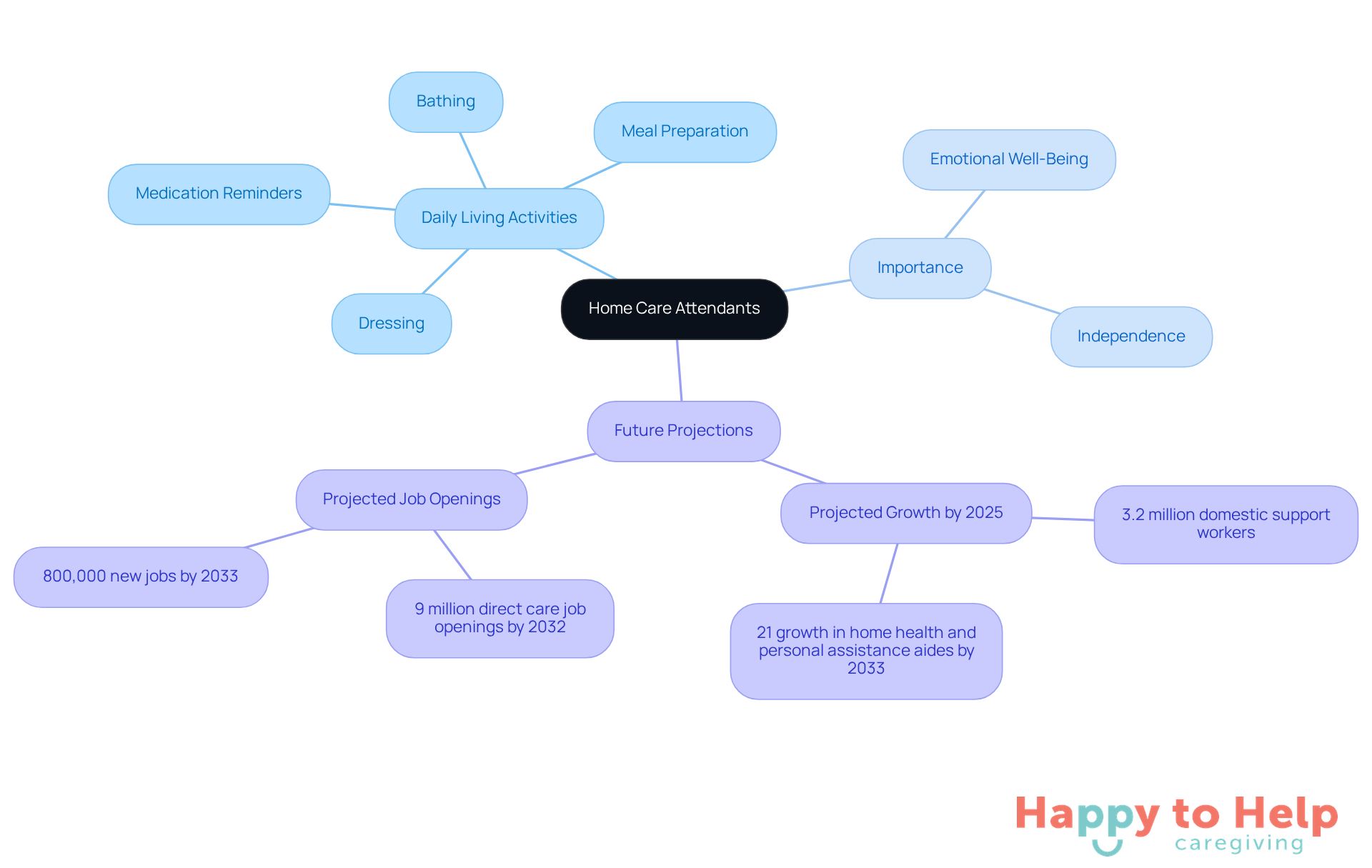
Domestic support workers, commonly known as home care attendants, are vital in assisting individuals within their homes. They help with essential daily living activities such as:
- Bathing
- Dressing
- Meal preparation
- Medication reminders
Unlike healthcare providers, these professionals focus on non-medical assistance, which is crucial for helping clients maintain their independence and quality of life in familiar surroundings.
As more people, particularly seniors and those with disabilities, prefer receiving assistance at home rather than in institutions, the importance of home care attendants has surged. By 2025, the number of domestic support workers in the U.S. is projected to reach approximately 3.2 million, reflecting a growing recognition of the need for residential assistance options (source: Bureau of Labor Statistics).
Effective support programs have demonstrated their ability to enhance the quality of life for individuals with disabilities. These initiatives not only provide essential help but also promote emotional well-being by alleviating feelings of isolation and loneliness. Healthcare experts emphasize that home care attendants are integral to the healthcare system. Jennifer Jones, AARP’s vice president of financial security and livable communities, notes, "Domestic support aides are the backbone of our assistance network for seniors, ensuring they can live with dignity and independence."
With the rising demand for home care attendants, their role in elder support is becoming increasingly significant. By 2033, the home health and personal assistance aide sector is expected to grow by 21%, creating over 800,000 new positions (source: Bureau of Labor Statistics). This growth underscores the critical need for skilled professionals who can provide compassionate assistance to an aging population.
The Role of Home Care Attendants in Healthcare
Home support workers face a significant challenge in the healthcare continuum: ensuring that patients receive personalized assistance that complements their medical treatment. This gap can lead to inadequate recovery support, leaving patients vulnerable during critical healing periods.
The implications of this issue are profound. Without proper support, patients may struggle to adhere to recovery plans, which can include essential physical therapy exercises and monitoring vital signs. This not only hampers their physical recovery but can also negatively impact their emotional well-being, as they may feel isolated and unsupported during vulnerable times.
Home care attendants offer a vital solution. By collaborating with nurses, therapists, and physicians, they ensure that individuals receive thorough support from a home care attendant tailored to their unique needs. For instance, after being released from the hospital, these workers help patients follow their recovery plans, offering companionship and encouragement. This holistic approach not only aids in physical recovery but also enhances emotional health, making a significant difference in patients' lives.

Key Responsibilities and Skills of Home Care Attendants
Home care attendants encounter significant challenges in ensuring the comfort and safety of those they assist. Key responsibilities of a home care attendant include personal hygiene, meal preparation, medication management, and light housekeeping, which are essential. However, the emotional support and companionship offered by a home care attendant are equally crucial for mental health.
The implications of these responsibilities are profound. Effective communication, compassion, patience, and the ability to adapt to the evolving needs of those they serve are essential qualities for a home care attendant. As Brandi Kurtyka, CEO of MissionCare Collective, notes, younger caregivers are increasingly driven by purpose and flexibility. This shift highlights the necessity for training programs to focus on these competencies.
To address these challenges, agencies can implement training programs that emphasize the following:
- Effective Communication: Essential for understanding and meeting the needs of clients.
- Compassion and Patience: Vital for building trust and rapport.
- Adaptability: Necessary for responding to changing circumstances.
Furthermore, statistics reveal that 50% of survey participants see leveraging technology as a high to extremely high-growth opportunity over the next five years. This underscores the importance of integrating technological training into caregiver education.
By addressing these evolving expectations and incorporating relevant training methodologies, agencies can better equip workers to deliver high-quality support and enhance service outcomes.

The Importance of Home Care Attendants in Client Well-Being
Home care attendants play a crucial role in enhancing the quality of life for individuals, especially seniors and those with disabilities. The problem arises when these individuals face isolation and mental health challenges, which can significantly impact their well-being. Studies indicate that older adults who have a home care attendant experience notably lower levels of depression and anxiety compared to those in institutional settings.
For instance, individuals receiving 40 or more hours of support report improved psychosocial outcomes, including fewer falls and better functional stability. This improvement can be attributed to the supportive relationships fostered by personal aides, who work diligently to alleviate feelings of loneliness. Their role extends beyond mere physical assistance; they cultivate nurturing environments that promote emotional well-being and happiness.
As highlighted by Shaw et al., "the fact that greater worker continuity in domestic settings was significantly linked to improved client outcomes emphasizes the vital role that these professionals play in assisting their clients to successfully age in place." Thus, a home care attendant not only addresses the physical needs of seniors but also significantly enhances their mental well-being and overall quality of life.
However, families often struggle to navigate senior support options, which underscores the importance of organizations like Happy to Help Caregiving. These organizations provide essential guidance and assistance in this complex landscape, ensuring that families can make informed decisions about care.

Challenges Faced by Home Care Attendants
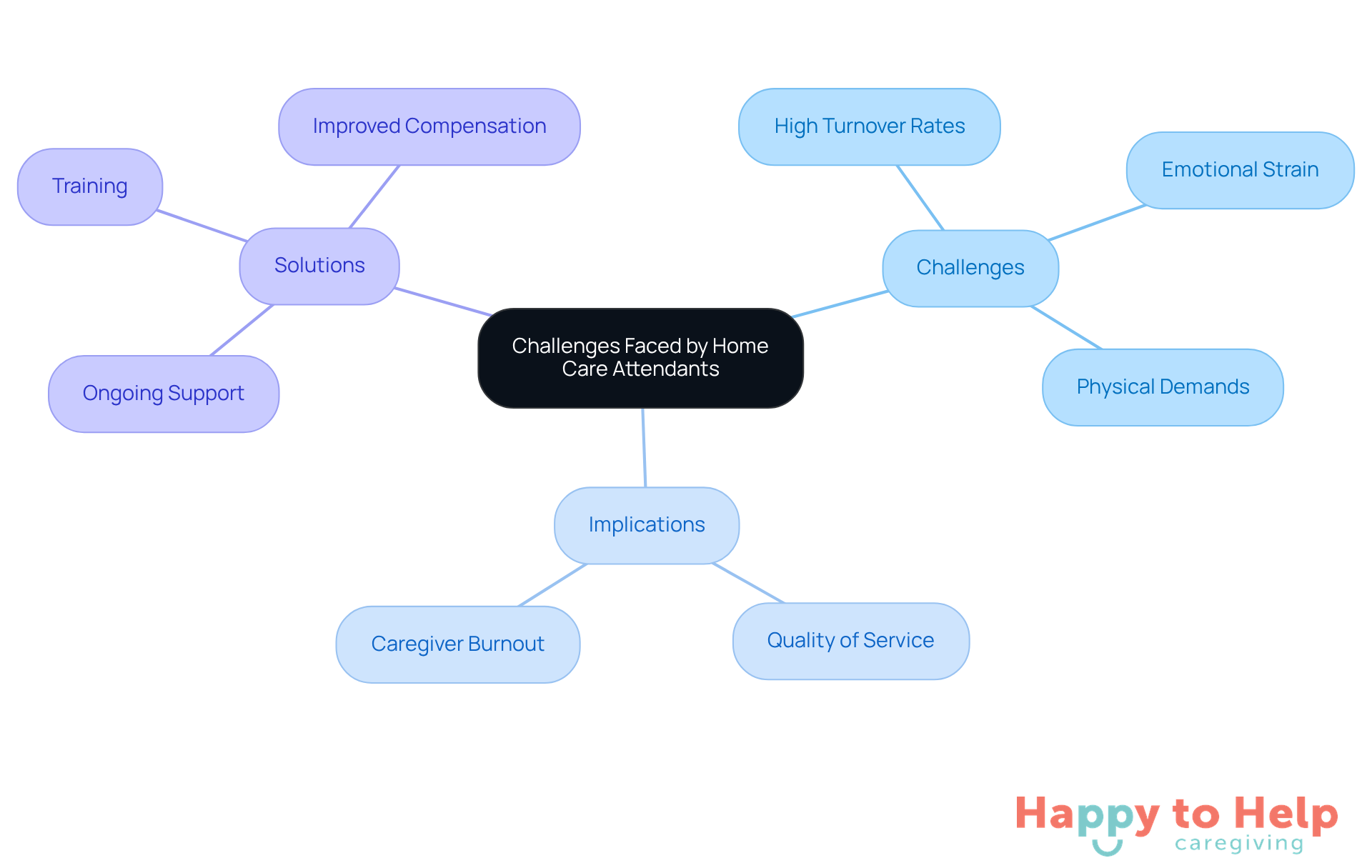
Home support workers play a crucial role in the healthcare system, yet they face significant challenges. High turnover rates, emotional strain, and demanding physical requirements contribute to a difficult work environment. Many caregivers experience burnout, largely due to the emotional toll of caring for clients with chronic illnesses or disabilities.
The implications of these challenges are profound. A notable lack of skilled caregivers leads to increased workloads, which can diminish the quality of service provided to clients. This situation not only affects the caregivers but also the individuals who rely on their support.
To address these pressing issues, ongoing support and training for the home care attendant are essential. Providing resources that enhance working conditions and improve compensation can significantly impact caregiver retention and job satisfaction. Additionally, implementing regular training sessions can equip caregivers with the skills needed to manage the emotional and physical demands of their roles effectively.
Taking the Next Steps
Home care attendants play a crucial role in enhancing the quality of life for individuals, especially seniors and those with disabilities. However, they face significant challenges, including high turnover rates and emotional strain. These issues not only affect the caregivers but also impact the quality of care provided to clients, leading to a pressing need for recognition and support.
To address these challenges, it’s essential to invest in training programs and improve working conditions for home care attendants. By doing so, society can enhance the quality of care delivered to clients while supporting the well-being of these dedicated professionals. As the demand for home care services continues to grow, recognizing and valuing the contributions of home care attendants will be vital in fostering a healthier and more compassionate community.
https://iframe.tely.ai/cta/eyJhcnRpY2xlX2lkIjogIjY5MjY0MzhmMDFkMWUzYmY0NmRiMjJkYSIsICJjb21wYW55X2lkIjogIjY4ZWU1ZGNhNzMxNzYyNTU3ZjNjOTVjMSIsICJpbmRleCI6IG51bGwsICJ0eXBlIjogImFydGljbGUifQ==Frequently Asked Questions
What are home care attendants and what do they do?
Home care attendants, also known as domestic support workers, assist individuals in their homes with essential daily living activities such as bathing, dressing, meal preparation, and medication reminders. They focus on non-medical assistance to help clients maintain their independence and quality of life.
Why is the demand for home care attendants increasing?
The demand for home care attendants is increasing as more people, particularly seniors and those with disabilities, prefer to receive assistance at home rather than in institutions. This trend is expected to continue, with the number of domestic support workers in the U.S. projected to reach approximately 3.2 million by 2025.
How do home care attendants contribute to the emotional well-being of their clients?
Home care attendants help alleviate feelings of isolation and loneliness, promoting emotional well-being for individuals with disabilities. Their support enhances the quality of life and helps clients feel more connected and supported in their daily lives.
What is the projected growth of the home care attendant sector?
The home health and personal assistance aide sector is expected to grow by 21% by 2033, creating over 800,000 new positions. This growth highlights the critical need for skilled professionals to provide compassionate assistance to an aging population.
How do home care attendants fit into the healthcare system?
Home care attendants play a vital role in the healthcare system by ensuring that patients receive personalized assistance that complements their medical treatment. They collaborate with nurses, therapists, and physicians to provide tailored support, which is crucial for patients' recovery and emotional well-being.
What challenges do home care attendants face in the healthcare continuum?
Home care attendants face the challenge of ensuring that patients receive adequate support during critical healing periods. Without proper assistance, patients may struggle to adhere to their recovery plans, impacting both their physical recovery and emotional health.
List of Sources
- Defining Home Care Attendants
- Understanding the Direct Care Workforce (https://phinational.org/policy-research/key-facts-faq)
- An Aging America Needs a Stronger Care Workforce - National Skills Coalition (https://nationalskillscoalition.org/blog/news/an-aging-america-needs-a-stronger-care-workforce)
- New Study Explores the Need for Expanded Long-Term Care Services to Support Aging-in-Place | Johns Hopkins Bloomberg School of Public Health (https://publichealth.jhu.edu/2025/new-study-explores-the-need-for-expanded-long-term-care-services-to-support-aging-in-place)
- 10 Must-Know U.S. Home Care Industry Stats for 2025 - North American Community Hub (https://nchstats.com/us-home-care-industry-stats)
- Pay, Job Protections for Home Care Aides at Risk Under Proposed Federal Rule (https://aarp.org/advocacy/job-protections-home-care-workers)
- The Role of Home Care Attendants in Healthcare
- Coming Home: Navigating the Transition from Hospital to Home Care - VNA Health Group (https://vnahg.org/coming-home-navigating-the-transition-from-hospital-to-home-care)
- After the Hospital: How Home Health Care Supports Recovery at Home - Advanced Nursing & Home Care (https://advancednursing.care/blog/after-the-hospital-how-home-health-care-supports-recovery-at-home)
- State of home care in 2025 (https://mcknightshomecare.com/state-of-home-care-in-2025)
- 52 Eye-Opening Home Health Statistics: Insights for 2025 (https://boosthomehealth.com/home-health-statistics)
- Reducing Hospital Readmissions with Home Health Care (https://partnersbend.org/how-home-health-care-reduces-hospital-readmission)
- Key Responsibilities and Skills of Home Care Attendants
- Home Care Industry Trends to Look Out for in 2025 (https://axiscare.com/blog/home-care-industry-trends)
- The Strategies At-Home Care Providers Use To Attract, Retain The Next Generation Of Workers (https://homehealthcarenews.com/2025/05/the-strategies-at-home-care-providers-use-to-attract-retain-the-next-generation-of-workers)
- The Future of Private Home Care: What to Expect in 2025 (https://anodyne-services.com/2024/08/14/the-future-of-private-home-care-what-to-expect-in-2025)
- Senior Care in Philadelphia, PA: Key Trends for 2025 and Beyond - AmeriBest Home Care (https://ameribesthomecare.com/recent-news/senior-care-in-philadelphia-pa-key-trends-for-2025-and-beyond)
- Home Care Workers Won the Right to Minimum Wage and Overtime Pay—the Trump Administration Wants to Take it Away - National Employment Law Project (https://nelp.org/home-care-workers-won-rights-trump-wants-to-take-it-away)
- The Importance of Home Care Attendants in Client Well-Being
- Home Care Worker Continuity in Home-Based Long-Term Care: Associated Factors and Relationships With Client Health and Well-Being (https://academic.oup.com/innovateage/article/8/3/igae024/7613388)
- The Future of Private Home Care: What to Expect in 2025 (https://anodyne-services.com/2024/08/14/the-future-of-private-home-care-what-to-expect-in-2025)
- Families Prefer In-Home Care To Senior Living – Yet Struggle To Identify Needed Support (https://homehealthcarenews.com/2025/11/families-prefer-in-home-care-to-senior-living-yet-struggle-to-identify-needed-support)
- Study Finds Home Health Aides Struggle with Mental Health (https://news.weill.cornell.edu/news/2024/06/study-finds-home-health-aides-struggle-with-mental-health)
- Demand for home health aides is soaring. So why are they still so undervalued? (https://statnews.com/2023/04/14/home-health-aides-mental-health)
- Challenges Faced by Home Care Attendants
- Understanding the Direct Care Workforce (https://phinational.org/policy-research/key-facts-faq)
- Report Highlights Challenges, Issues Faced by Direct Care Workers (https://homecaremag.com/news/report-highlights-challenges-issues-faced-direct-care-workers)
- Payment Rates for Medicaid Home Care: States’ Responses to Workforce Challenges | KFF (https://kff.org/medicaid/payment-rates-for-medicaid-home-care-states-responses-to-workforce-challenges)
- Top Challenges Facing Home Health Care in 2025 (https://axiscare.com/blog/challenges-in-home-health-care)
- Home Care Turnover Rate Jumps to 80%...HCAOA is Here to Help Members! (https://hcaoa.org/newsletters/home-care-turnover-rate-jumps-to-80hcaoa-is-here-to-help-members)