
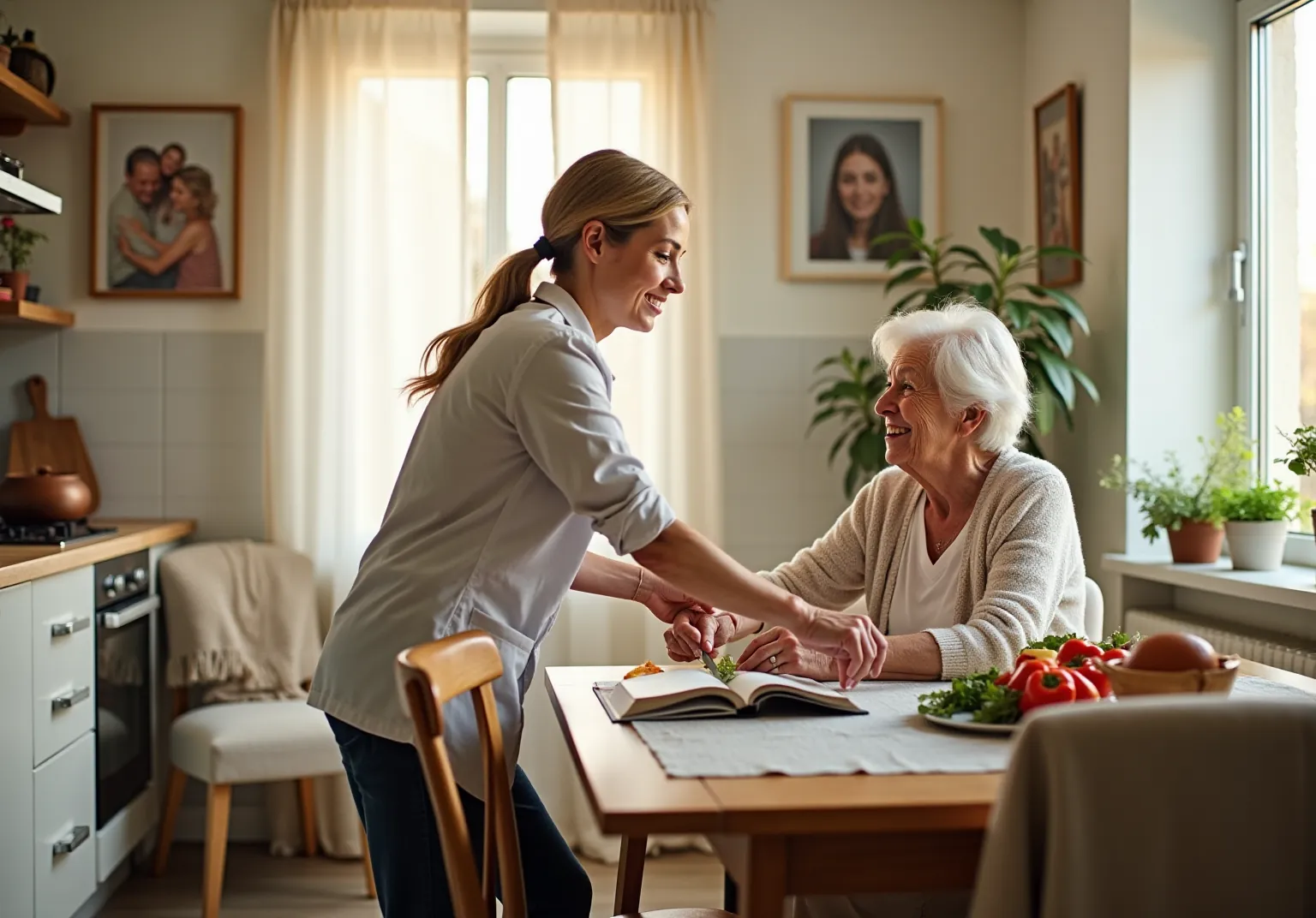
For families in our service areas
For families in our service areas, this guide explains home care and how non-medical in-home caregiving can support care planning in East Idaho, Treasure Valley & Magic Valley, Northern Wasatch, North Central West Virginia, and Northeast Ohio.
Understanding Home Care Private Duty: A Guide
Understanding the complexities of private duty home care is crucial for family caregivers. They often face significant challenges when supporting their loved ones, especially as the aging population strives to maintain independence. The demand for tailored support services is at an all-time high, making it essential to explore the various aspects of private duty care.
Caregivers must recognize when private duty care becomes necessary. This need arises when loved ones struggle with daily activities, highlighting the importance of personalized assistance. However, balancing caregiving responsibilities can be overwhelming. Caregivers may feel the weight of their duties, leading to stress and burnout.
So, how can caregivers effectively manage these challenges? Here are some actionable solutions:
- Assess Needs: Regularly evaluate the specific needs of your loved ones to determine the level of care required.
- Seek Support: Don’t hesitate to reach out for help from professional services or community resources.
- Prioritize Self-Care: Remember that taking care of yourself is just as important as caring for others.
By implementing these strategies, caregivers can ensure their loved ones receive the personalized assistance they need while maintaining their own well-being.
Define Private Duty Home Care
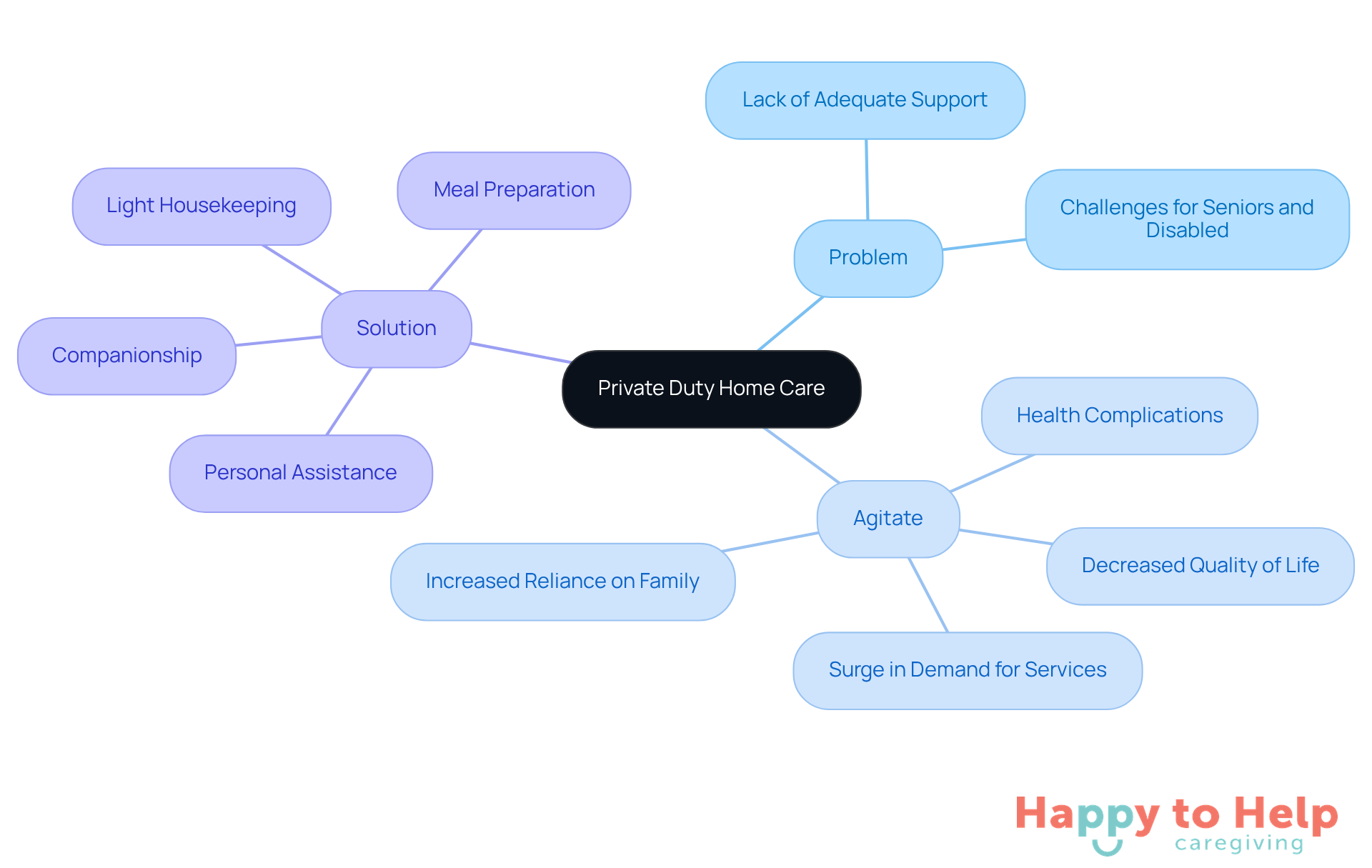
Problem: Many individuals, especially seniors and those with disabilities, face challenges in maintaining their independence at home due to a lack of adequate support.
Agitate: This situation can lead to decreased quality of life, increased reliance on family members, and even health complications. As the population ages, the demand for private personal support services has surged, with forecasts indicating that a significant portion of seniors will require these services by 2025.
Solution: Private personal support offers non-medical aid tailored to individual needs, focusing on daily tasks that enhance quality of life. Services typically include:
- Personal assistance
- Companionship
- Meal preparation
- Light housekeeping
These services, which include home care private duty, are primarily funded out-of-pocket and are crucial for helping clients retain their independence in a familiar environment.
Effective programs emphasize the importance of customized support plans that cater to personal needs, ensuring clients receive the assistance necessary to thrive in their living spaces. By raising awareness of in-residence assistance options, caregivers can better meet the expectations for tailored support, making private service support an essential component of the healthcare system.
Identify When Private Duty Care is Necessary
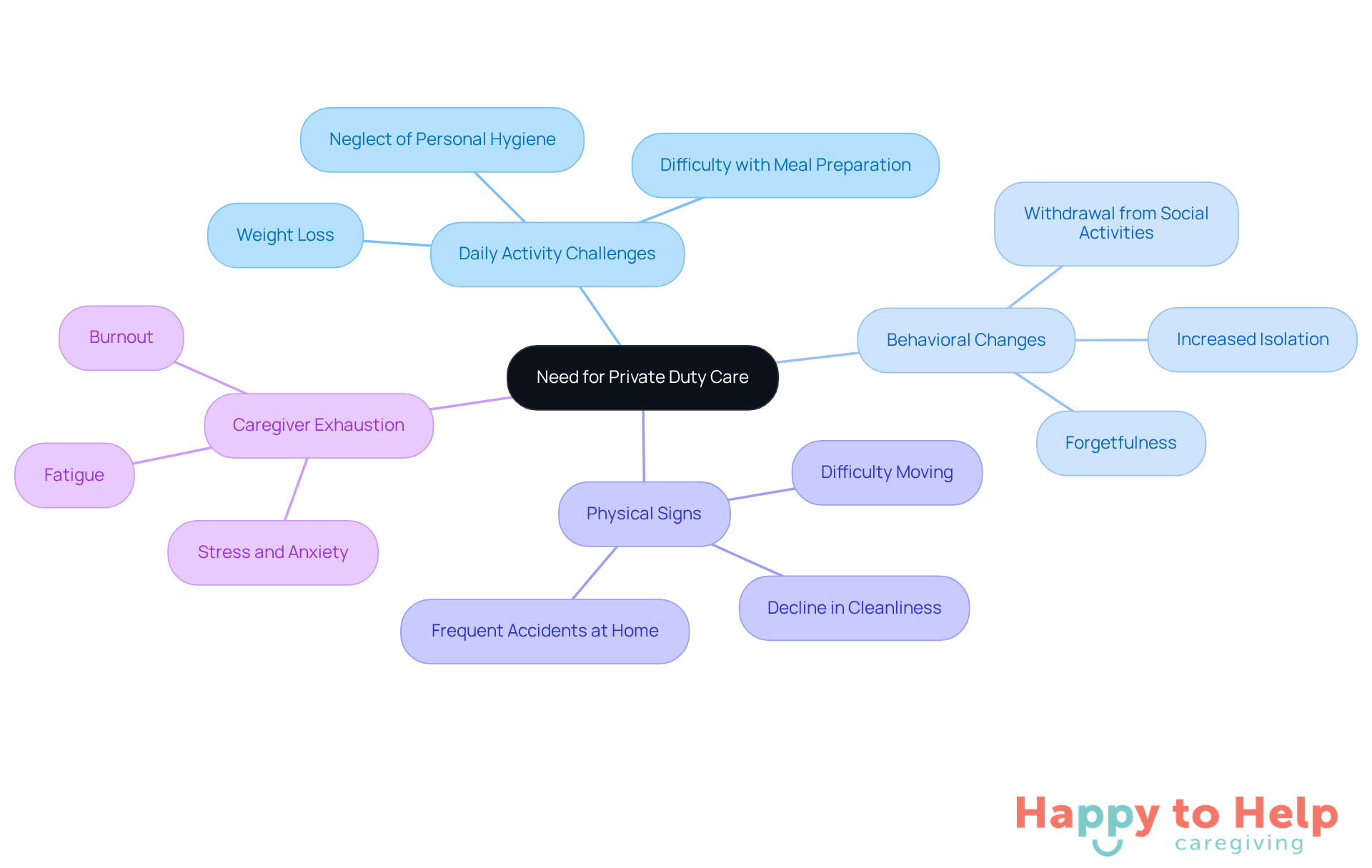
Private duty care becomes essential when individuals face challenges with daily activities such as bathing, dressing, or meal preparation. Key indicators that assistance is needed include noticeable weight loss, neglect of personal hygiene, increased isolation, and a decline in cleanliness within the living space. For instance, if a loved one is frequently forgetting appointments or experiencing accidents at home, these may signal a need for professional support.
Experts emphasize the importance of recognizing these signs early. Dr. Reckrey notes that changes in behavior, such as withdrawal from social activities or difficulty managing medications, can also indicate a decline in health. In one instance, a household observed that their elderly relative was becoming more isolated and had ceased engaging in cherished hobbies, prompting them to seek private assistance. This intervention not only provided necessary help but also alleviated feelings of loneliness.
Moreover, caregivers should be vigilant for physical signs of struggle, such as difficulty moving or maintaining a clean living environment. Caregiver exhaustion can lead to stress and anxiety, making it essential for relatives to recognize when professional assistance is necessary. These observations can assist households in determining when to contemplate home care private duty, ensuring that their loved ones receive the necessary support to sustain their quality of life.
Consulting with a senior support expert can further assist families in making informed decisions about assistance needs.
Explore Types of Private Duty Services
Caregivers often face significant challenges when it comes to providing adequate support for their loved ones. The emotional toll of caregiving can lead to feelings of isolation and stress. To address these issues, home care private duty services offer a variety of tailored support options that can make a real difference.
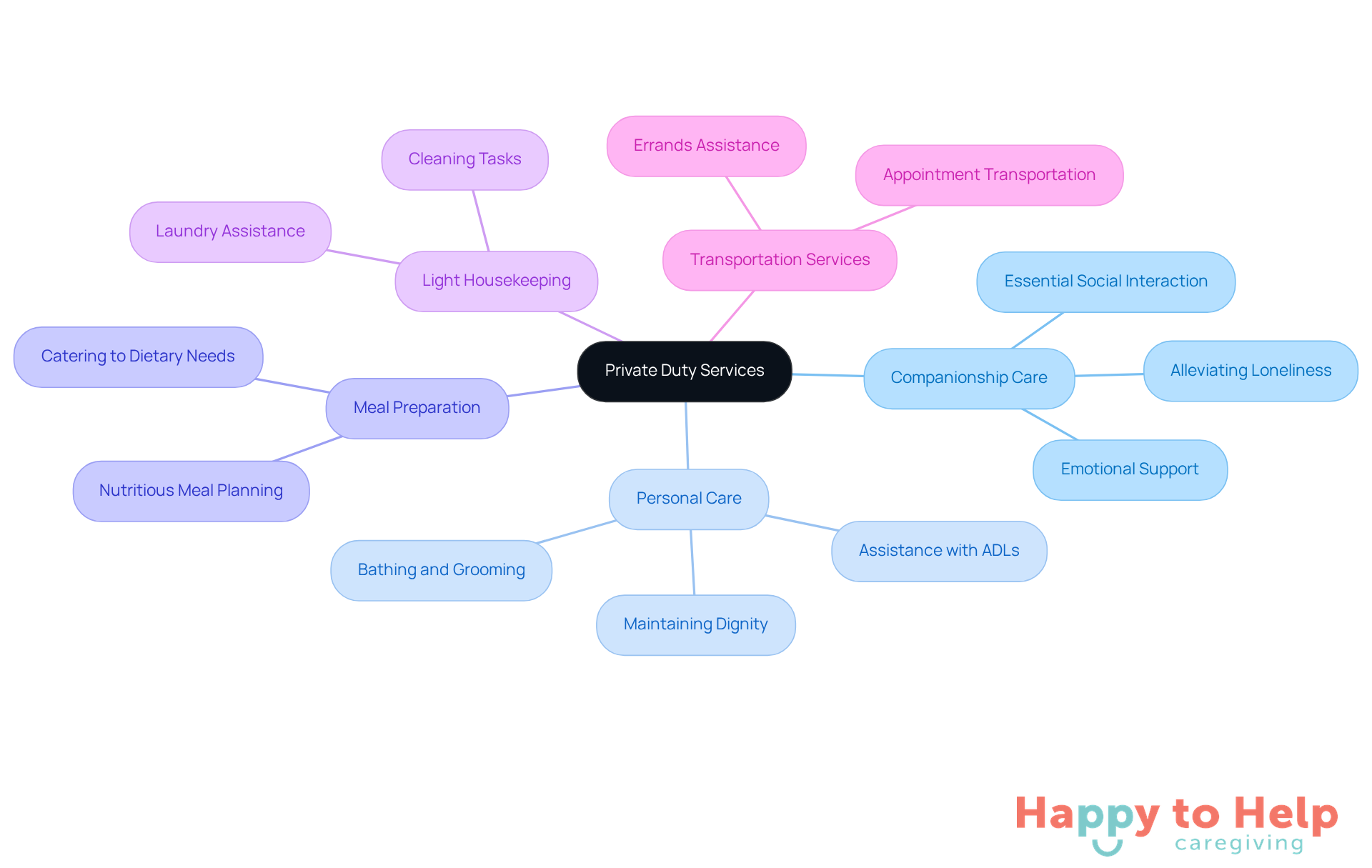
- Companionship Care provides essential social interaction and emotional support, helping to alleviate feelings of loneliness.
- Personal Care assists with activities of daily living (ADLs) such as bathing, grooming, and dressing, ensuring that individuals maintain their dignity and comfort.
- Meal Preparation focuses on planning and preparing nutritious meals that cater to specific dietary needs, promoting overall health.
In addition,
- Light Housekeeping helps with household tasks like laundry and cleaning, allowing caregivers to focus on more personal interactions.
- Transportation Services assist clients with errands or appointments, ensuring they remain engaged with their community.
Each of these home care private duty services can be tailored to meet the unique preferences and needs of the person receiving assistance, providing caregivers with practical solutions to enhance their caregiving experience.
Understand the Benefits of Private Duty Home Care
Caring for loved ones can be a daunting task, often leading to significant stress and emotional strain for family members. The burden of caregiving can impact not only the caregiver's well-being but also the quality of care provided to the individual in need. This is where home care private duty assistance comes into play, offering a vital solution to alleviate these challenges.
-
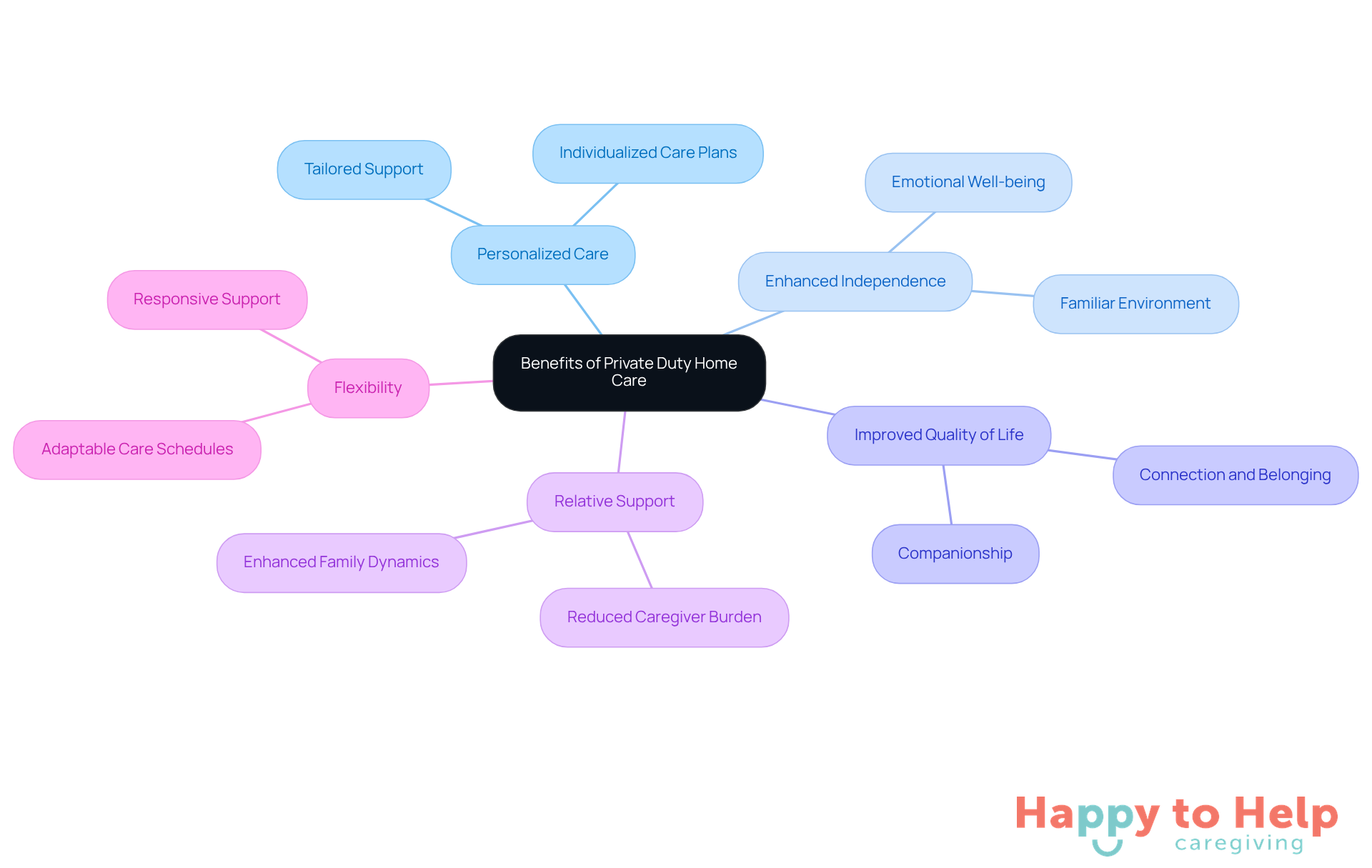
Personalized Care: One of the standout benefits of private duty assistance is its ability to provide tailored support that aligns with the specific needs and preferences of each individual. This ensures that care is both relevant and effective, addressing unique requirements.
-
Enhanced Independence: Clients can remain in their own homes, preserving their routines and comfort, which is crucial for emotional well-being. Research shows that maintaining a familiar environment significantly contributes to improved mental health outcomes.
-
Improved Quality of Life: Regular companionship and assistance not only alleviate feelings of loneliness but also foster better mental and emotional health. Families indicate that home care private duty support results in improved feelings of connection and belonging, which are essential for overall well-being.
Relative support is enhanced by home care private duty assistance, which alleviates relatives of the caregiving burden and allows them to focus on their own lives while ensuring their loved ones receive the necessary support. This shift enables families to return to their roles as parents or siblings, enhancing family dynamics and reducing the stress associated with caregiving responsibilities.
- Flexibility: Services can be arranged based on the client’s requirements, offering a tailored approach to support that adjusts as situations evolve. This flexibility is crucial for adapting to the distinct lifestyles and preferences of clients, ensuring that assistance remains effective and responsive, with ongoing supervision and support for each patient.
In summary, home care private duty not only enhances the quality of life for seniors and individuals with special needs but also empowers relatives to manage the complexities of caregiving with confidence.
Challenges in Private Duty Home Care
While private duty home care offers numerous benefits, it also presents several challenges that families must navigate:
-
Problem: Cost
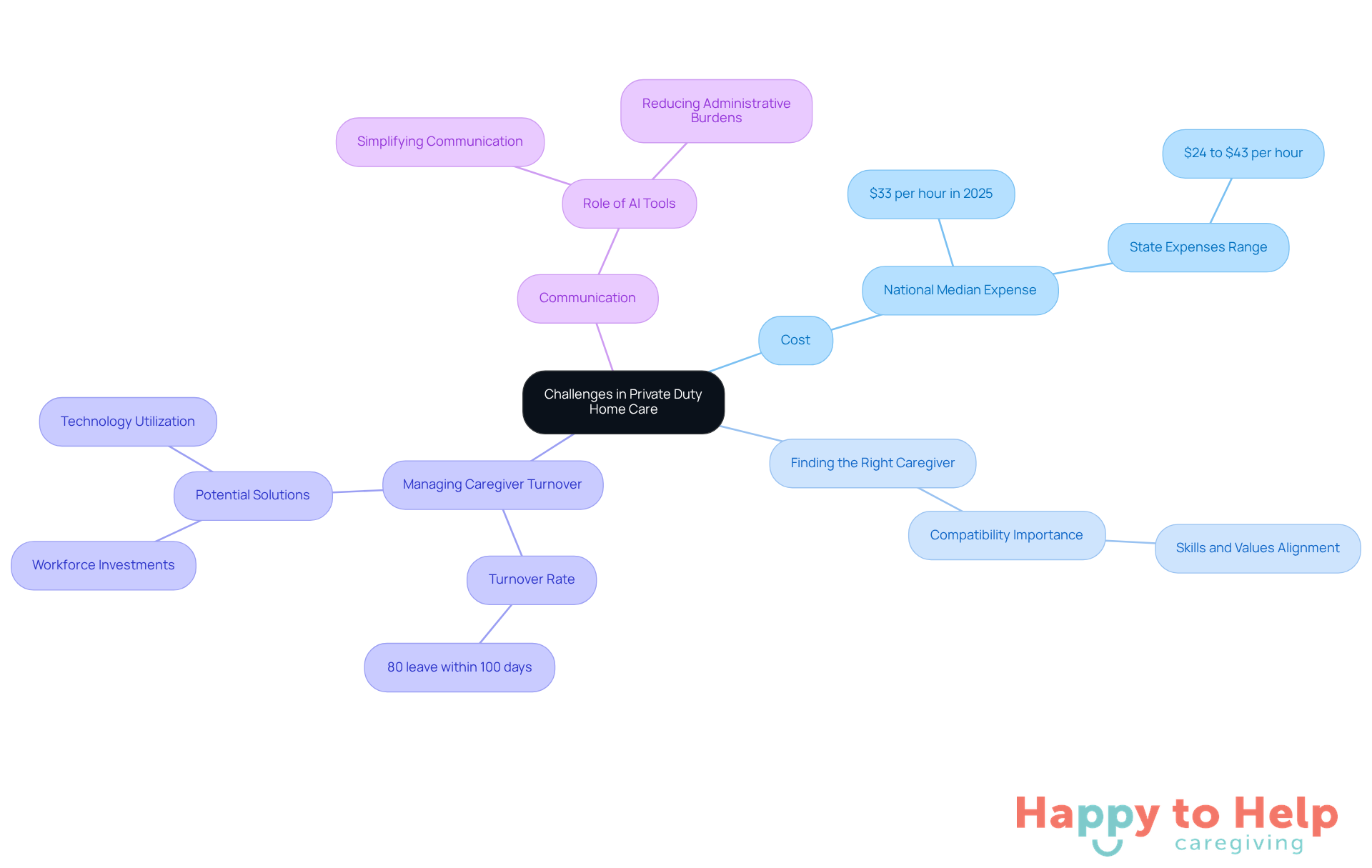
Private duty services are generally paid out-of-pocket, which can impose a significant financial burden on families. As Susanna Guzman points out, "You can anticipate a national median expense of $33 per hour for nonmedical in-home assistance in 2025; median state expenses range from $24 to $43 per hour." This variability complicates budgeting for services. -
Agitate: Finding the Right Caregiver
Identifying a caregiver who aligns with the specific needs and personality of the client can be daunting. Families often seek caregivers who not only possess the necessary skills but also share compatible values and interests with their loved ones. -
Agitate: Managing Caregiver Turnover
The home assistance sector faces a continual issue with elevated turnover rates, with nearly 80% of caregivers leaving their positions within the initial 100 days. This turnover disrupts continuity of assistance, making it crucial for relatives to build stable connections with caregivers to ensure reliable support. Agencies can address this issue through workforce investments and technology, which can help improve caregiver retention in the field of home care private duty. -
Solution: Communication
Effective communication among household members, caregivers, and clients is crucial for a successful caregiving experience. However, achieving this can be challenging, especially when organizing schedules and treatment plans. The use of AI tools, like Layla, can simplify communication and lessen administrative burdens, offering households more efficient methods to manage care.
By understanding these challenges, families can take proactive measures to address them, fostering a more positive and effective caregiving experience.
Making the Right Choice
Private duty home care is a crucial resource for individuals, especially seniors and those with disabilities, who want to maintain their independence while receiving essential support. However, many caregivers face challenges when their loved ones struggle with daily activities. This situation can lead to emotional and physical burdens for families, making it vital to recognize the need for assistance.
The implications of inadequate support can be significant. Caregivers may feel overwhelmed, leading to stress and burnout. Understanding the landscape of private duty home care can help families make informed decisions that improve their loved ones' quality of life while alleviating these burdens.
Private duty care offers various services, including:
- Companionship
- Personal care
- Meal preparation
- Light housekeeping
Each service is tailored to meet the unique needs of clients, promoting their independence and well-being. By embracing these services, families can transform the caregiving experience, ensuring that individuals receive the support they need.
To navigate the challenges associated with private duty care, effective communication and proactive planning are essential. Families should discuss their needs openly and explore available options. This approach not only enhances the quality of life for their loved ones but also allows family members to focus on their own well-being and relationships.
In conclusion, recognizing the indicators that signal a need for assistance is crucial. By understanding the benefits of private duty home care, families can take actionable steps to improve their caregiving experience, ensuring that both caregivers and recipients thrive.
https://iframe.tely.ai/cta/eyJhcnRpY2xlX2lkIjogIjY5MjRmMjBkZWM0Y2FiOGU3NGVjMDExMyIsICJjb21wYW55X2lkIjogIjY4ZWU1ZGNhNzMxNzYyNTU3ZjNjOTVjMSIsICJpbmRleCI6IG51bGwsICJ0eXBlIjogImFydGljbGUifQ==Frequently Asked Questions
What is private duty home care?
Private duty home care provides non-medical assistance tailored to individual needs, focusing on daily tasks that enhance the quality of life for seniors and individuals with disabilities. Services typically include personal assistance, companionship, meal preparation, and light housekeeping.
Why is private duty home care important?
It helps individuals maintain their independence at home, reduces reliance on family members, and can prevent health complications. As the population ages, the demand for these services is increasing, ensuring clients can thrive in their familiar living environments.
How is private duty home care funded?
Private duty home care services are primarily funded out-of-pocket by clients or their families.
When is private duty care necessary?
Private duty care becomes necessary when individuals struggle with daily activities such as bathing, dressing, or meal preparation. Signs include noticeable weight loss, neglect of personal hygiene, increased isolation, and a decline in cleanliness at home.
What are some indicators that someone might need private duty care?
Indicators include forgetting appointments, experiencing accidents at home, withdrawal from social activities, difficulty managing medications, and physical signs of struggle like difficulty moving or maintaining a clean environment.
How can families recognize when to seek private duty care?
Families should look for changes in behavior, such as increased isolation or a decline in health, and be aware of caregiver exhaustion, which can lead to stress and anxiety. Consulting with a senior support expert can help families make informed decisions about assistance needs.
What role do customized support plans play in private duty home care?
Customized support plans are crucial as they cater to the individual needs of clients, ensuring they receive the specific assistance necessary to enhance their quality of life and maintain their independence.
List of Sources
- Define Private Duty Home Care
- What's Next and Why Should You Care: The Future of Private Pay Home Care (https://activatedinsights.com/articles/future-of-home-care)
- Home Care News Brief: September 17, 2025 (https://members.homecarefla.org/news/Details/home-care-news-brief-september-17-2025-289036)
- Growing private equity involvement in private duty nursing prompts quality, consolidation concerns (https://mcknightshomecare.com/news/growing-private-equity-involvement-in-private-duty-nursing-prompts-quality-consolidation-concerns)
- Private-Duty Nursing Attracts PE Investment Amid Strong Market Potential – And Rising Concerns (https://homehealthcarenews.com/2025/07/private-duty-nursing-attracts-pe-investment-amid-strong-market-potential-and-rising-concerns)
- The Future of Private Home Care: What to Expect in 2025 (https://anodyne-services.com/2024/08/14/the-future-of-private-home-care-what-to-expect-in-2025)
- Identify When Private Duty Care is Necessary
- Signs It’s Time for Kansas Private Duty Home Care (https://phoenixhomehc.com/news/how-do-you-know-your-loved-one-is-ready-for-kansas-private-duty-care)
- In-Home Care: 10 Signs Your Loved One Needs Elder Support - Aging Advocates CNY (https://agingadvocatescny.com/in-home-care-signs)
- Signs Your Senior Needs In-Home Care | Home Instead Midland (https://homeinstead.com/home-care/usa/tx/midland/741/news-and-media/recognizing-when-your-loved-one-needs-in-home-senior-care)
- 3 Signs Your Loved One Needs Special Home Care Assistance - VNA Health Group (https://vnahg.org/3-signs-your-loved-one-needs-special-home-care-assistance)
- Does Your Loved One Need In-Home Senior Care? Here's How To Tell (https://health.com/family/in-home-senior-care)
- Explore Types of Private Duty Services
- Home Care Industry Trends to Watch in 2025 (https://firstlighthomecare.com/blog/home-care-industry-trends)
- DOL Proposes Rule to Reinstate Companionship & Live-in Exemptions from Minimum Wage and Overtime for Third-Party Employers | Littler (https://littler.com/news-analysis/asap/dol-proposes-rule-reinstate-companionship-live-exemptions-minimum-wage-and)
- 2025 Home Care Statistics: Trends & Insights To Know (https://premierhcinc.com/blog/home-care-statistics)
- Reduced Hours, Companionship Exemption Nuance: The Regulations Requiring Home Care Innovation (https://homehealthcarenews.com/2025/10/reduced-hours-companionship-exemption-nuance-the-regulations-requiring-home-care-innovation)
- Home (https://homehealthcarenews.com)
- Understand the Benefits of Private Duty Home Care
- Why Families Choose Private Duty Nursing for Children's Care (https://phoenixhomehc.com/news/why-families-choose-private-duty-nursing-over-other-options)
- 10 Benefits of Private Pay Home Care: Enhancing Lives with Personalized Support - Andwell Health Partners (https://andwell.org/10-benefits-of-private-pay-home-care-enhancing-lives-with-personalized-support)
- The Case for Private Duty Nursing | Benefits & Impacts (https://phoenixhomehc.com/news/the-case-for-private-duty-nursing-why-it-works-and-how-it-helps)
- Private Duty Services | Partners In Care Foundation (https://picf.org/innovations-at-work/short-term-care-management-readmission-reduction/private-duty-services)
- The Benefits of Private Duty Home Care vs. Nursing Homes (https://brightstarcare.com/locations/provo/about-us/blog/the-benefits-of-private-duty-home-care-vs-nursing-homes)
- Challenges in Private Duty Home Care
- Tension Between Demand Growth, Rate Pressure Shape At-Home Care Playbooks (https://homehealthcarenews.com/2025/08/tension-between-demand-growth-rate-pressure-shapes-at-home-care-playbooks)
- The future of home-based care: Predictions for 2025 and beyond (https://alayacare.com/blog/the-future-of-home-based-care-predictions-for-2025-and-beyond)
- Home Care Costs in 2025: A State-by-State Guide (https://aplaceformom.com/caregiver-resources/articles/in-home-care-costs)
- Top Challenges Facing Home Health Care in 2025 (https://axiscare.com/blog/challenges-in-home-health-care)