

For families in our service areas
For families in our service areas, this guide explains caregiving and how non-medical in-home caregiving can support care planning in East Idaho, Treasure Valley & Magic Valley, Northern Wasatch, North Central West Virginia, and Northeast Ohio.
Understanding Your Options
Homecare registries play a vital role in connecting families with skilled independent caregivers. They offer a flexible and personalized approach to in-home care, which can be a source of comfort during challenging times. Families often face emotional stress when seeking care for their loved ones, and these registries help alleviate that burden.
By allowing families to choose from vetted providers, homecare registries enhance the caregiving experience. This choice leads to greater satisfaction, as families can find caregivers whose skills align with their specific needs. Imagine the peace of mind that comes from knowing you have selected a caregiver who truly understands your loved one’s requirements.
The emotional support these registries provide is invaluable. They not only connect families with caregivers but also foster a sense of community and understanding. Families can share their experiences and learn from one another, creating a nurturing environment that benefits everyone involved.
In the words of one caregiver, "It’s not just about providing care; it’s about building relationships that matter." This sentiment captures the essence of what homecare registries strive to achieve. They are not just a service; they are a lifeline for families navigating the complexities of caregiving.
Ultimately, homecare registries offer reassurance and encouragement. They remind families that they are not alone in this journey. With the right support, they can find compassionate caregivers who will provide the care and attention their loved ones deserve.
The Importance of Homecare Registry: Importance and Key
Navigating the complexities of in-home care can feel overwhelming for families who want the best for their loved ones. It’s a journey filled with emotional challenges, and it’s completely normal to feel stressed or uncertain. Homecare registries have become invaluable resources, connecting families with a wide range of qualified caregivers. They offer the flexibility needed to meet unique needs, providing a sense of relief in a difficult time.
However, as the demand for care grows, so do the challenges of ensuring quality support. Families often wonder: what key features should they look for in a homecare registry to find the right match for their loved ones? It’s important to know that you’re not alone in this search. Many families have walked this path and found compassionate care that truly makes a difference.
As you explore your options, remember that the right registry can help ease your worries and provide the support you need. Take heart; there are solutions available that can help you navigate this journey with confidence.
Define Homecare Registry
Finding the right support for in-home care can be overwhelming. Many families face the emotional challenge of seeking assistance while wanting to ensure their loved ones receive the best care possible. A homecare registry serves as a vital link between those in need of help and skilled providers, offering a compassionate solution to this common concern.
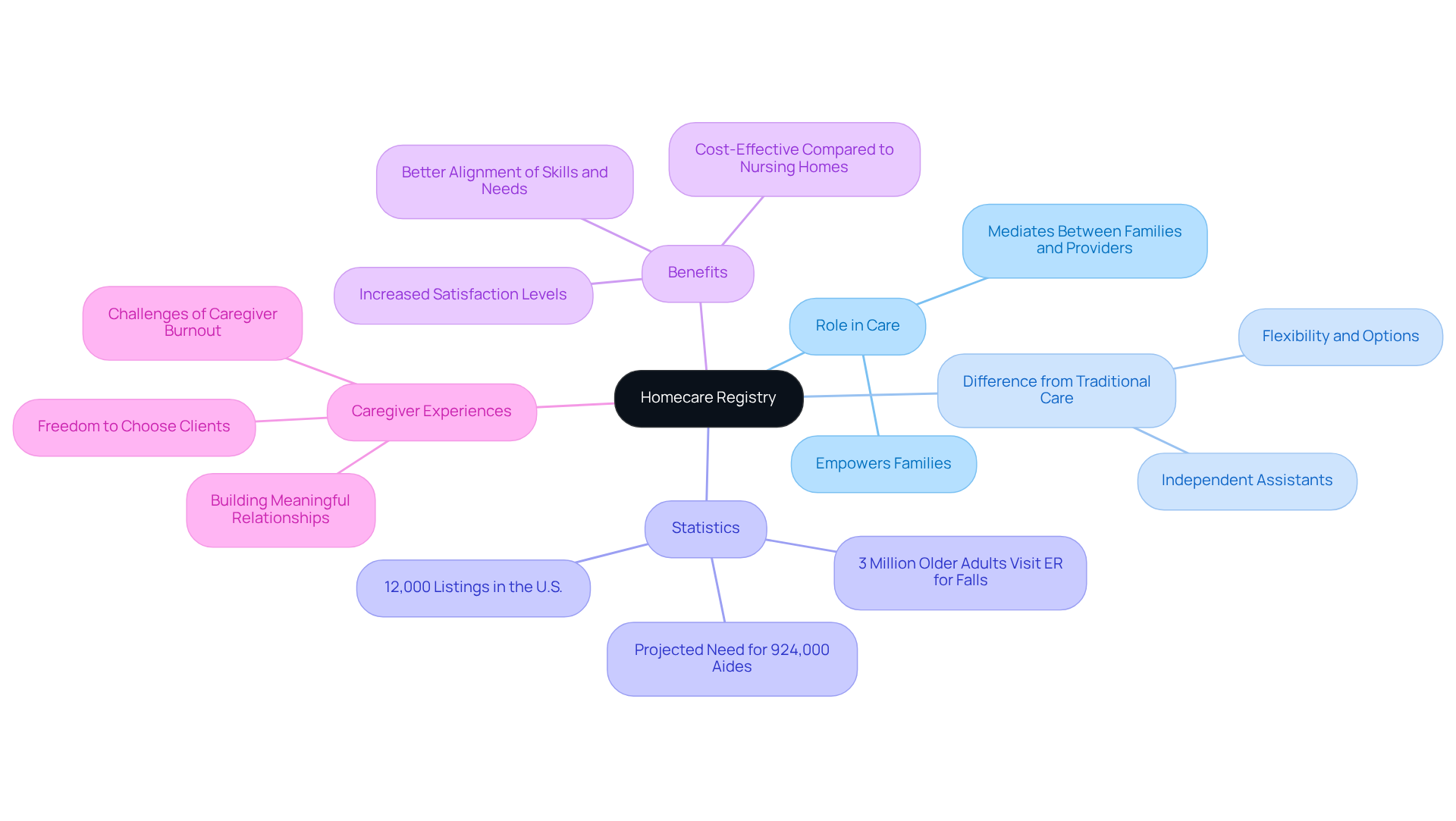
Unlike traditional homecare organizations that hire support workers directly, a listing acts as a mediator. This allows families to choose from a diverse group of independent assistants who have been carefully screened and listed in the homecare registry. This model not only provides flexibility and options but also empowers families to find providers who truly match their specific needs and preferences.
As of 2025, there are around 12,000 listings on the homecare registry operating across the United States, reflecting a growing demand for personalized care solutions. These databases offer essential resources and support for both providers and families, enhancing the overall experience of care. Experts highlight that this model can lead to greater satisfaction and retention among providers, who often appreciate the autonomy and flexibility that comes with the homecare registry-based work.
Effective homecare systems have shown significant positive effects on caregiving outcomes. Families report increased satisfaction levels, and there’s a better alignment between support worker skills and client needs. By fostering a more customized approach to in-home support, the homecare registry plays a crucial role in meeting the evolving needs of families and caregivers alike.
In the words of one caregiver, "Having the freedom to choose the right fit for my clients has made all the difference in my work. It’s not just about providing care; it’s about building relationships that matter." This sentiment echoes the heart of what homecare databases strive to achieve: a nurturing environment where both caregivers and families can thrive.
Contextualize the Importance of Homecare Registries
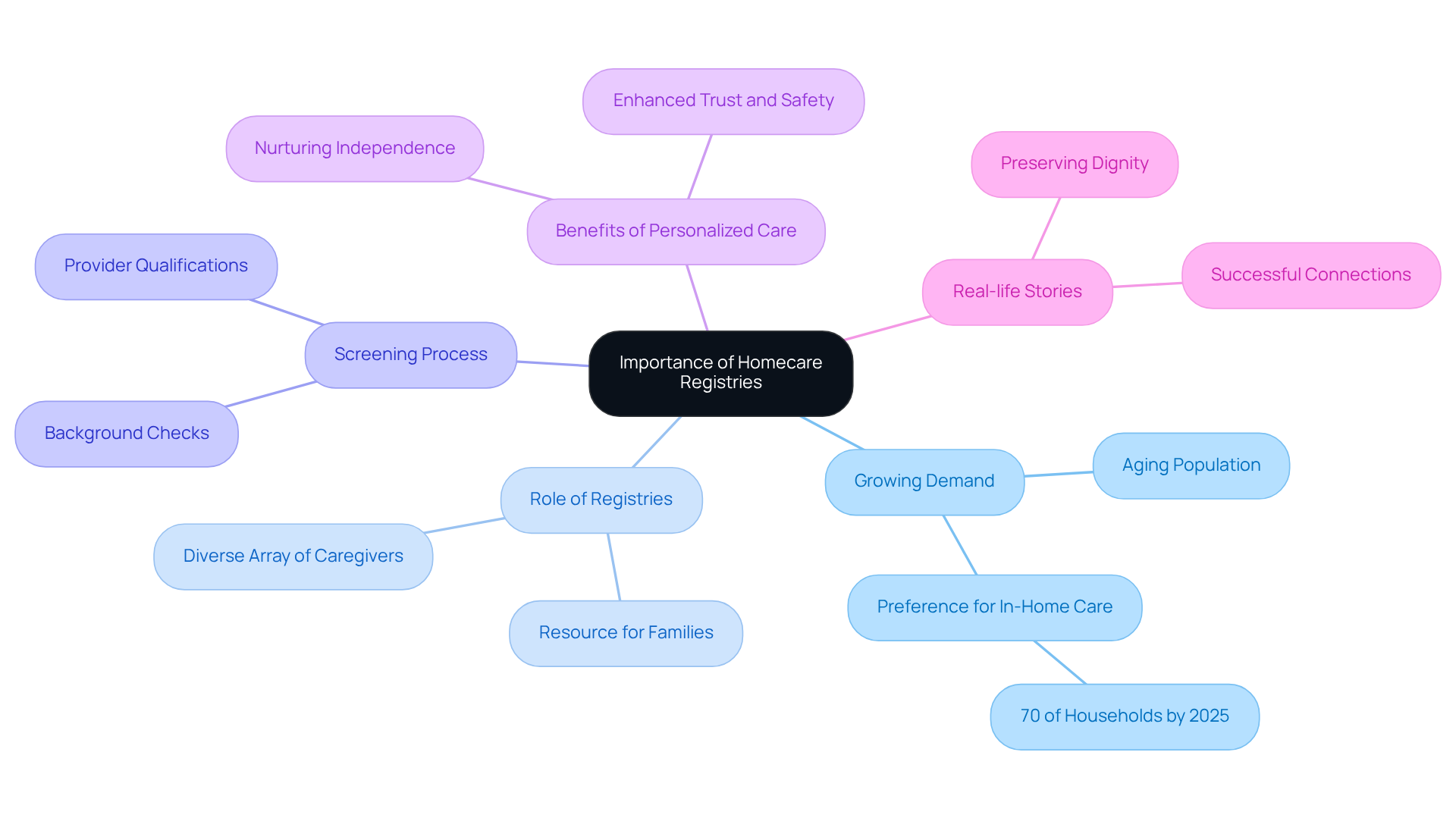
In recent years, the importance of home support lists has grown significantly. This shift is largely due to a rapidly aging population and a clear move towards in-home assistance options. By 2025, about 70% of households are expected to choose in-home care for their elderly loved ones. This trend reflects a heartfelt desire for personalized assistance in the comfort of home.
The homecare registry listings serve as a vital resource for families navigating the often overwhelming task of selecting a provider. They offer a diverse array of skilled caregivers, empowering families to make informed choices that cater to their unique needs. Geriatric support experts emphasize that a thorough screening process—complete with background checks and provider qualifications—enhances trust and safety for families.
This approach not only raises the standard of care but also nurtures independence among seniors and individuals with special needs. It aligns beautifully with the core values of agencies like Happy to Help Caregiving. Real-life stories illustrate how families have successfully connected with compassionate support providers through these listings. They ensure that their loved ones receive the care they deserve, all while preserving their dignity and independence.
Identify Key Features of Homecare Registries
Caring for a loved one can be incredibly challenging, often leading to feelings of stress and burnout. It’s essential to know that you’re not alone in this journey. Home support systems are designed to help ease these burdens, offering compassionate assistance tailored to your needs.
Key aspects of these systems include:
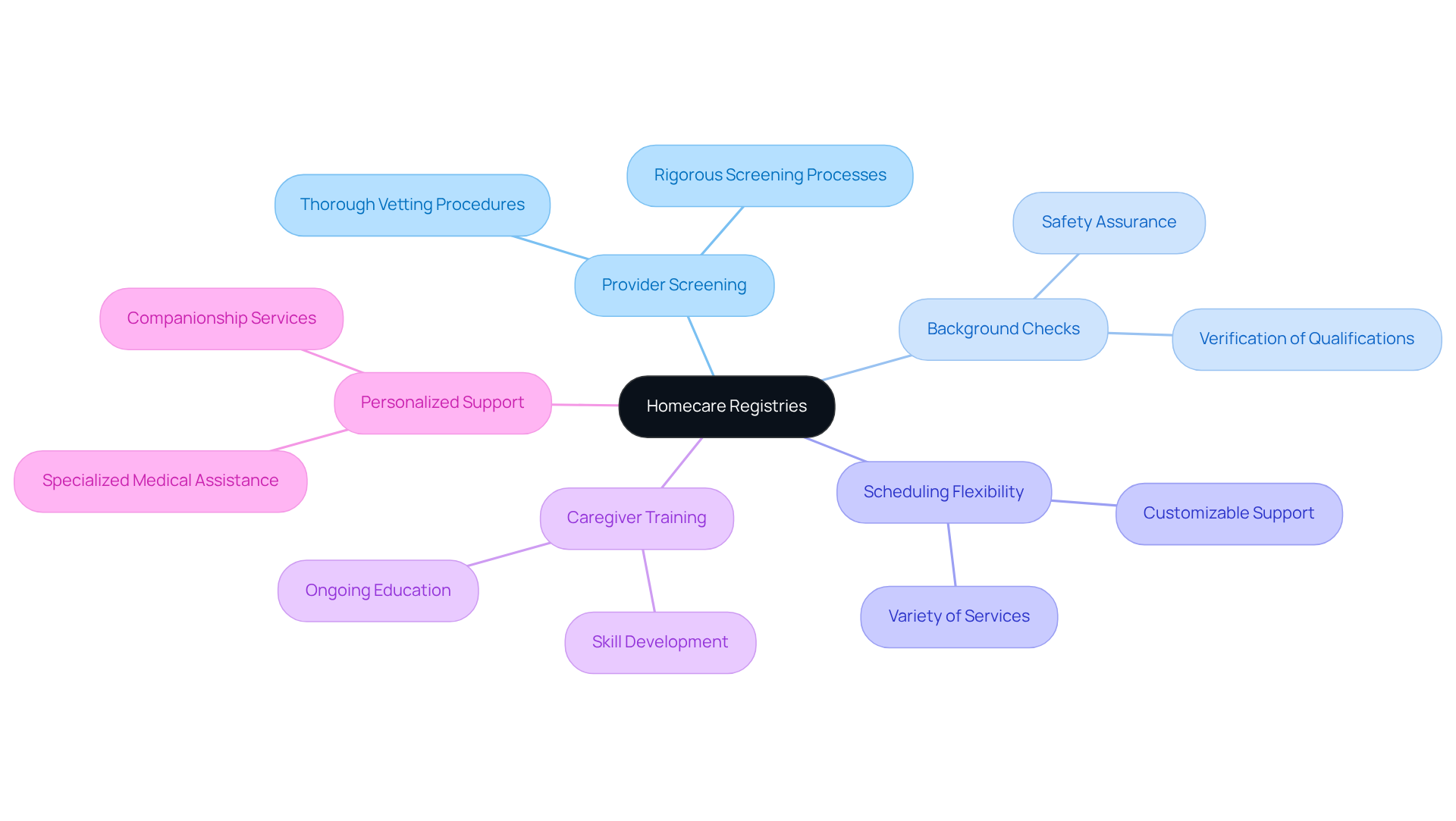
- Thorough provider screening and vetting procedures, which are crucial for the homecare registry to ensure that caregivers are qualified and trustworthy.
- Homecare registries conduct background checks and verify qualifications, ensuring you can feel confident in the care your loved one receives. This peace of mind is invaluable when you’re juggling so many responsibilities.
Moreover, the flexibility in scheduling allows families to customize support based on their loved ones' specific requirements. Whether it’s companionship, help with daily tasks, or specialized medical assistance, there’s a broad array of services available to meet those needs. Imagine having someone who not only understands the challenges but is also there to provide the support you need.
Additionally, many databases offer resources and training for caregivers, empowering them to assist their loved ones effectively. This comprehensive approach aligns beautifully with the mission of Happy to Help Caregiving, which emphasizes personalized care and the involvement of family members.
Remember, it’s okay to seek help. You deserve support, and there are compassionate solutions available to lighten your load. Together, we can navigate this journey with care and understanding.
Challenges and Considerations When Using a Homecare Registry
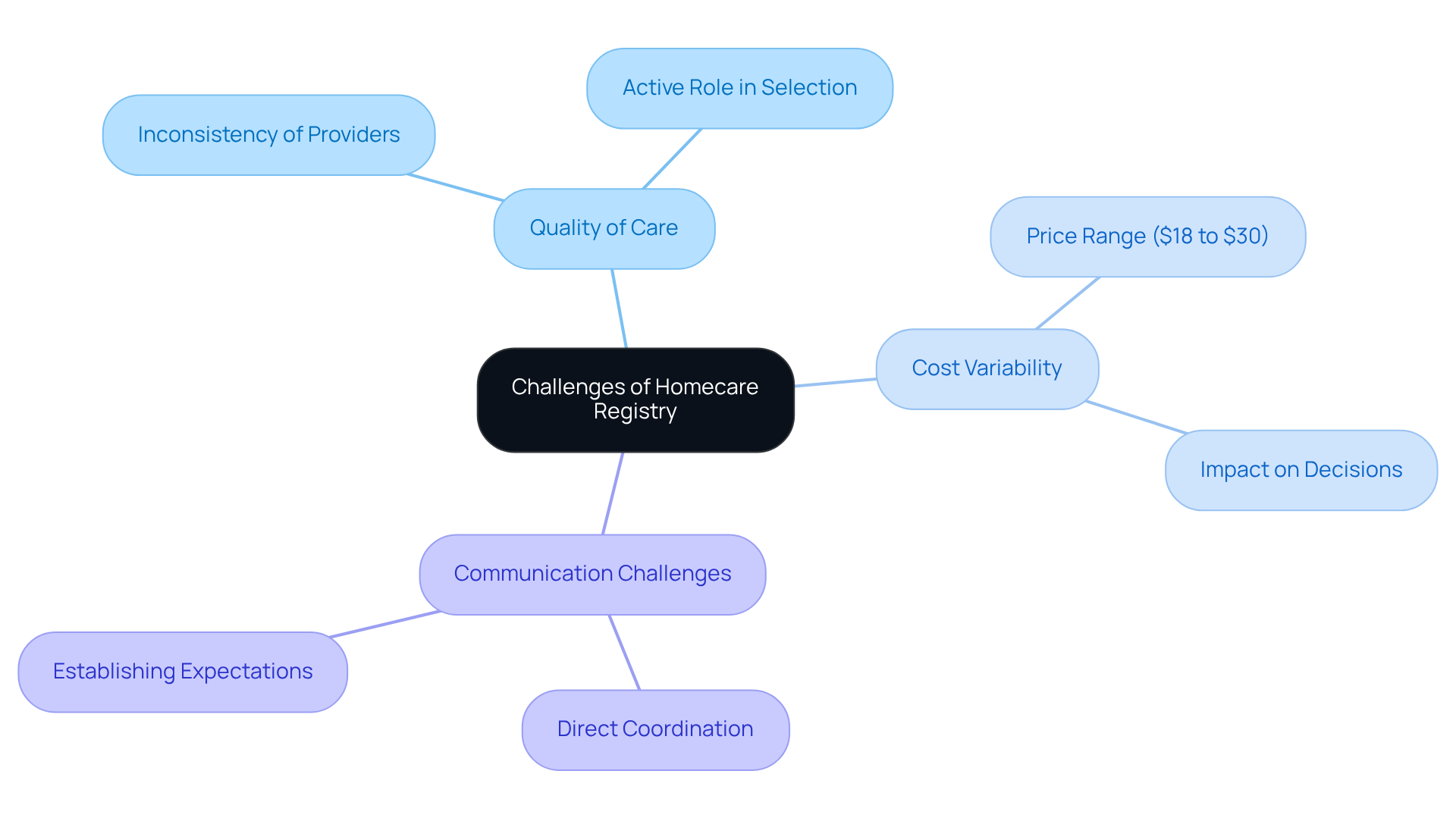
While the homecare registry offers many benefits, families often face significant challenges. One major concern is the inconsistency in the quality of care providers, as the homecare registry frequently lacks direct oversight of those it lists. Recent studies show that home care agency rates can range from $18 to over $30 per hour. This variability can lead families to seek lower-cost options that might not guarantee quality care. It’s essential for families to take an active role in interviewing and selecting support providers to find the right match. One relative shared, "Finding the right helper was tough, but asking the right questions gave us confidence in our choice."
Communication can also pose challenges, especially when families must coordinate directly with independent caregivers instead of through an agency. It’s crucial for families to establish clear expectations and maintain open lines of communication to foster a successful caregiving relationship. Implementing specific strategies, like scheduling regular check-ins and utilizing shared communication tools, can greatly enhance the caregiving experience. By being proactive and informed, families can effectively navigate these challenges, ensuring their loved ones receive the best possible care.
Your Path Forward
The significance of homecare registries truly cannot be overstated. They are vital resources for families looking for personalized in-home care solutions. By connecting families with independent caregivers, these registries empower individuals to find the right support tailored to their specific needs. This ensures that loved ones receive compassionate and competent care right in the comfort of their homes.
Throughout this article, we’ve highlighted key features of homecare registries, such as:
- Thorough screening processes
- Flexible scheduling options
- Resources available for caregivers
These elements not only enhance the quality of care but also create a nurturing environment where both caregivers and families can thrive. The growing trend toward in-home care, driven by our aging population and the desire for personalized assistance, underscores the importance of these registries in today’s healthcare landscape.
Embracing the use of homecare registries can significantly improve the caregiving experience. Families are encouraged to engage actively in the selection process, communicate openly with caregivers, and utilize the resources available to them. By doing so, they can ensure that their loved ones receive the best possible care while maintaining dignity and independence.
The journey toward finding the right support may feel challenging at times, but with the right tools and mindset, families can navigate it successfully. Remember, you’re not alone in this. Homecare registries play a vital role in enhancing the quality of life for both caregivers and recipients, providing the compassionate support that every family deserves.
https://iframe.tely.ai/cta/eyJhcnRpY2xlX2lkIjogIjY5MDNmY2I3NzZkNDdiNDRiOWM0MzM4NyIsICJjb21wYW55X2lkIjogIjY4ZWU1ZGNhNzMxNzYyNTU3ZjNjOTVjMSIsICJpbmRleCI6IG51bGwsICJ0eXBlIjogImFydGljbGUifQ==Frequently Asked Questions
What is a homecare registry?
A homecare registry is a platform that connects families in need of in-home care with independent, skilled providers. It acts as a mediator, allowing families to choose from a diverse group of screened assistants.
How does a homecare registry differ from traditional homecare organizations?
Unlike traditional homecare organizations that hire support workers directly, a homecare registry provides a listing of independent assistants, giving families the flexibility to select providers that best match their specific needs and preferences.
How many listings are available on homecare registries in the United States as of 2025?
As of 2025, there are approximately 12,000 listings on homecare registries operating across the United States.
What benefits do homecare registries offer to families and providers?
Homecare registries enhance the overall experience of care by providing essential resources, increasing satisfaction levels among families, and improving alignment between support worker skills and client needs. Providers also appreciate the autonomy and flexibility that comes with registry-based work.
What impact do effective homecare systems have on caregiving outcomes?
Effective homecare systems have shown significant positive effects on caregiving outcomes, including increased family satisfaction and a better match between support worker skills and client needs.
What is the overall goal of homecare registries?
The overall goal of homecare registries is to foster a customized approach to in-home support, creating a nurturing environment where both caregivers and families can thrive and build meaningful relationships.