
Understanding In-Home Care in Columbia, South
As the population in Columbia, South Carolina, ages, the demand for in-home care services is rapidly increasing. This surge highlights a critical problem: seniors and individuals with disabilities often struggle to maintain their independence without adequate support systems. Families and caregivers face significant challenges in navigating this complex landscape, which can lead to stress and uncertainty.
The implications of this growing demand are profound. Families may feel overwhelmed by the need to provide care while balancing their own responsibilities. Caregivers often encounter difficulties in finding reliable services that meet the specific needs of their loved ones. This situation can create a sense of urgency for effective solutions that ensure seniors receive the best possible support in the comfort of their own homes.
So, what can families do? First, it's essential to understand the various facets of in-home care, including essential services like personal care, companionship, and medical assistance. Engaging with local resources and support groups can provide valuable insights and recommendations. Additionally, families should consider creating a care plan that outlines specific needs and preferences, ensuring that their loved ones receive tailored support.
By addressing these challenges head-on and implementing practical solutions, families can navigate the complexities of in-home care more effectively, ultimately enhancing the quality of life for their loved ones.
Defining In-Home Care: What It Entails
In-home care in Columbia South Carolina addresses a significant problem, as many seniors and individuals with disabilities struggle to maintain their independence while managing daily living activities. This challenge can lead to feelings of isolation and decreased quality of life.
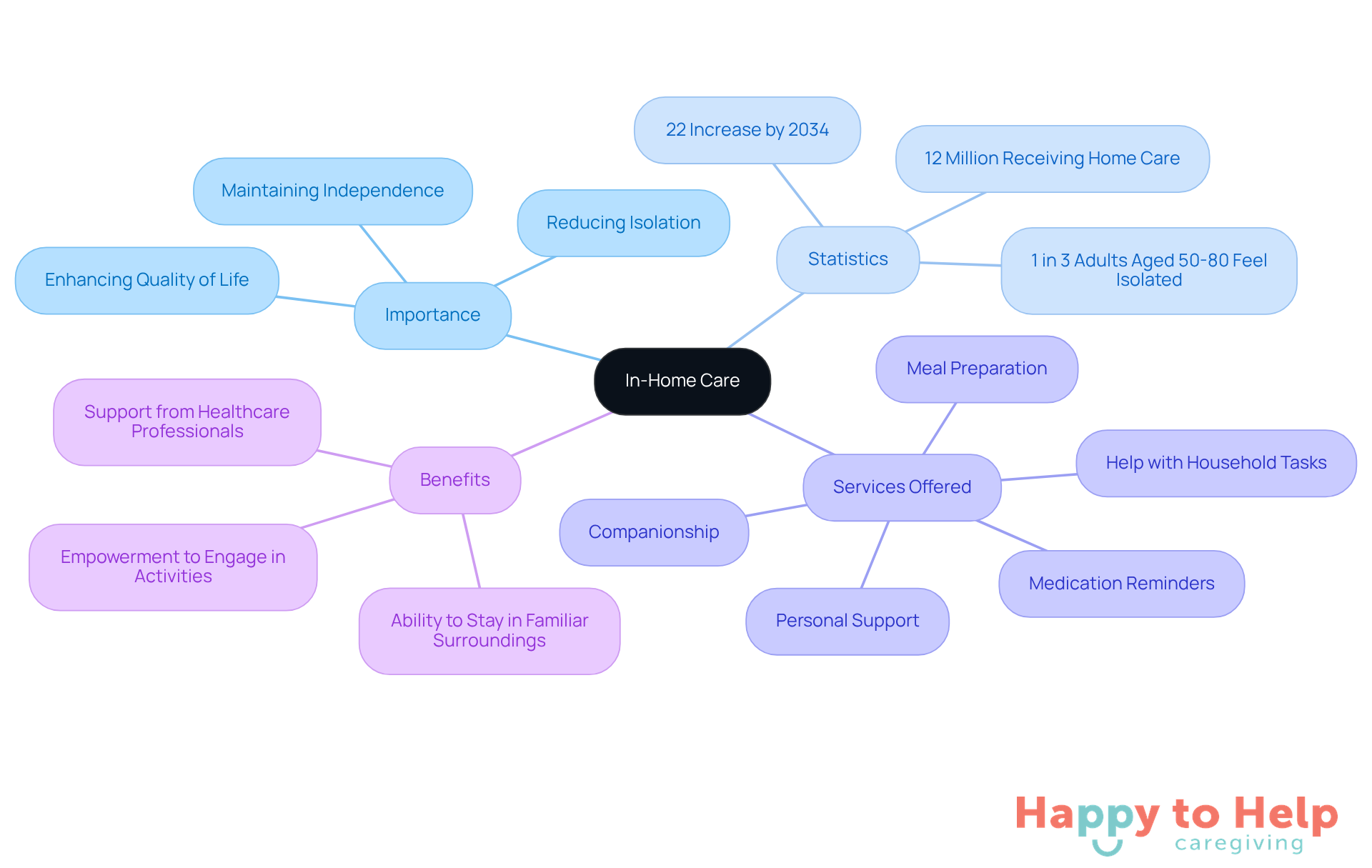
The implications are serious. As the population ages, there is a rising demand for in-home care in Columbia South Carolina. Statistics show that around 12 million individuals in the U.S. currently receive home assistance, a trend expected to grow by 22% by 2034 as one in five Americans will be 65 or older by 2030.
So, what’s the solution? In-home care in Columbia South Carolina provides a variety of support services tailored to individual needs. These services include:
- Personal support
- Companionship
- Meal preparation
- Medication reminders
- Help with household tasks
They provide in-home care in Columbia South Carolina, allowing individuals to stay in familiar surroundings while receiving the necessary support.
Geriatric professionals emphasize that maintaining independence is crucial for seniors' well-being. They advocate for in-home care in Columbia South Carolina as a way to enhance life satisfaction and reduce loneliness, which affects one in three adults aged 50-80.
Effective domestic support programs, particularly those designed for individuals with disabilities, demonstrate the success of this approach. These programs not only provide essential daily assistance but also empower clients to engage in enjoyable activities, significantly improving their overall quality of life.
In-Home Care in Columbia, South Carolina: Local Context and Services
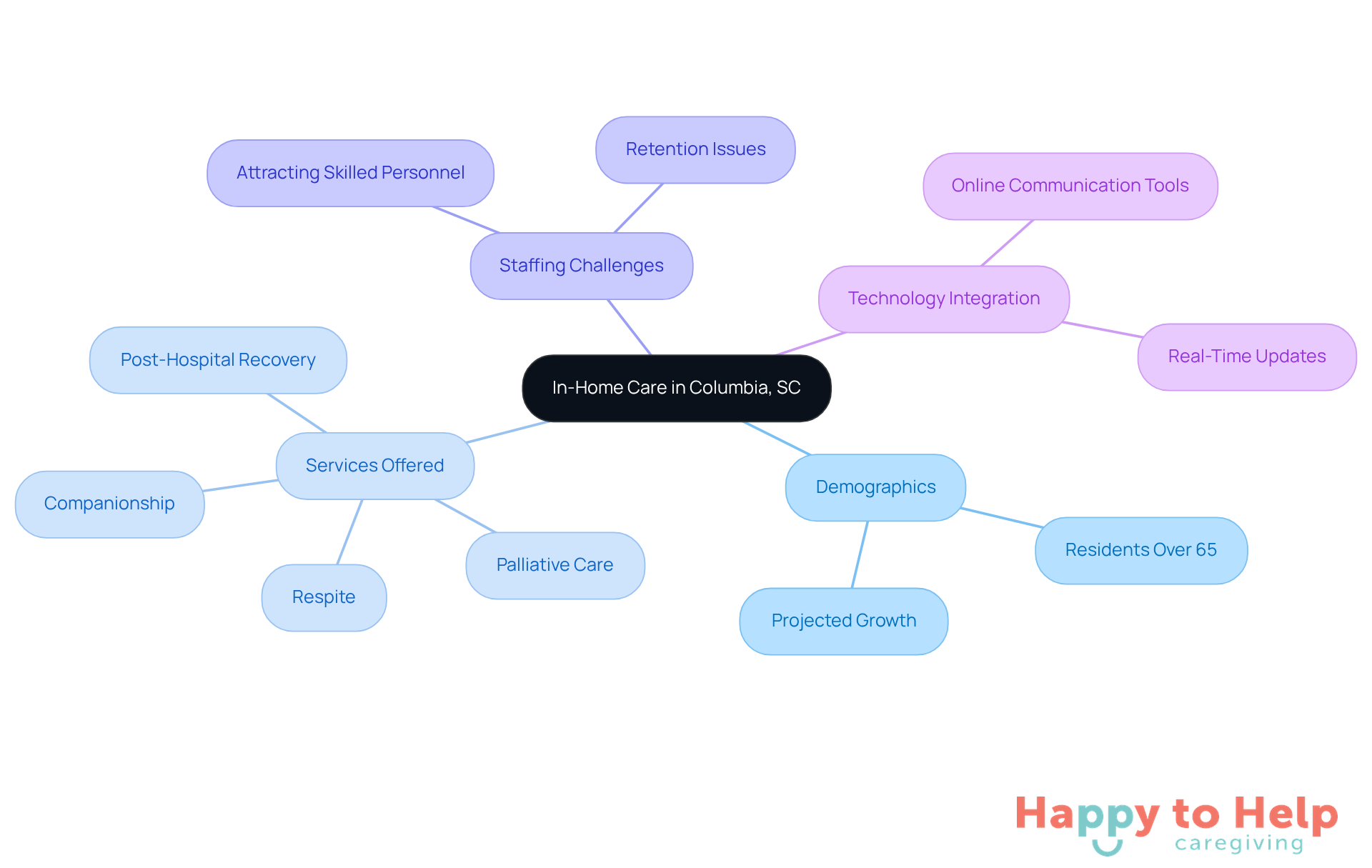
In Columbia, South Carolina, the growing demand for at-home assistance options presents a significant challenge. With nearly one in five residents expected to be over 65 by 2030, and the number of adults over 65 in South Carolina projected to nearly double to 2.7 million in the next twenty years, the need for customized support solutions is urgent.
Families are increasingly opting for in-home care in Columbia South Carolina to ensure their loved ones receive compassionate care while remaining in the comfort of their homes. This choice not only fosters a sense of security but also promotes independence, allowing seniors to thrive in familiar surroundings. Providers like Happy to Help Caregiving offer a range of services, including:
- Companionship
- Post-hospital recovery assistance
- Respite
- Palliative care
All aimed at enhancing the quality of life for seniors and individuals with special needs.
However, the sector faces challenges in attracting and retaining skilled personnel, which can impact the availability and consistency of services. Local agencies are stepping up to provide essential services that address both emotional and physical needs, but the difficulties in staffing remain a concern.
To navigate these challenges, families can leverage technology, such as online communication tools, to stay connected with caregivers and receive real-time updates. This integration enhances the caregiving experience and fosters engagement.
Ultimately, the focus on individualized support strategies ensures that each client receives tailored assistance, underscoring the importance of compassion and understanding in caregiving. As the aging population continues to grow, in-home care in Columbia South Carolina is becoming an indispensable ally for families managing the complexities of caregiving.
Key Characteristics of In-Home Care: Services and Benefits
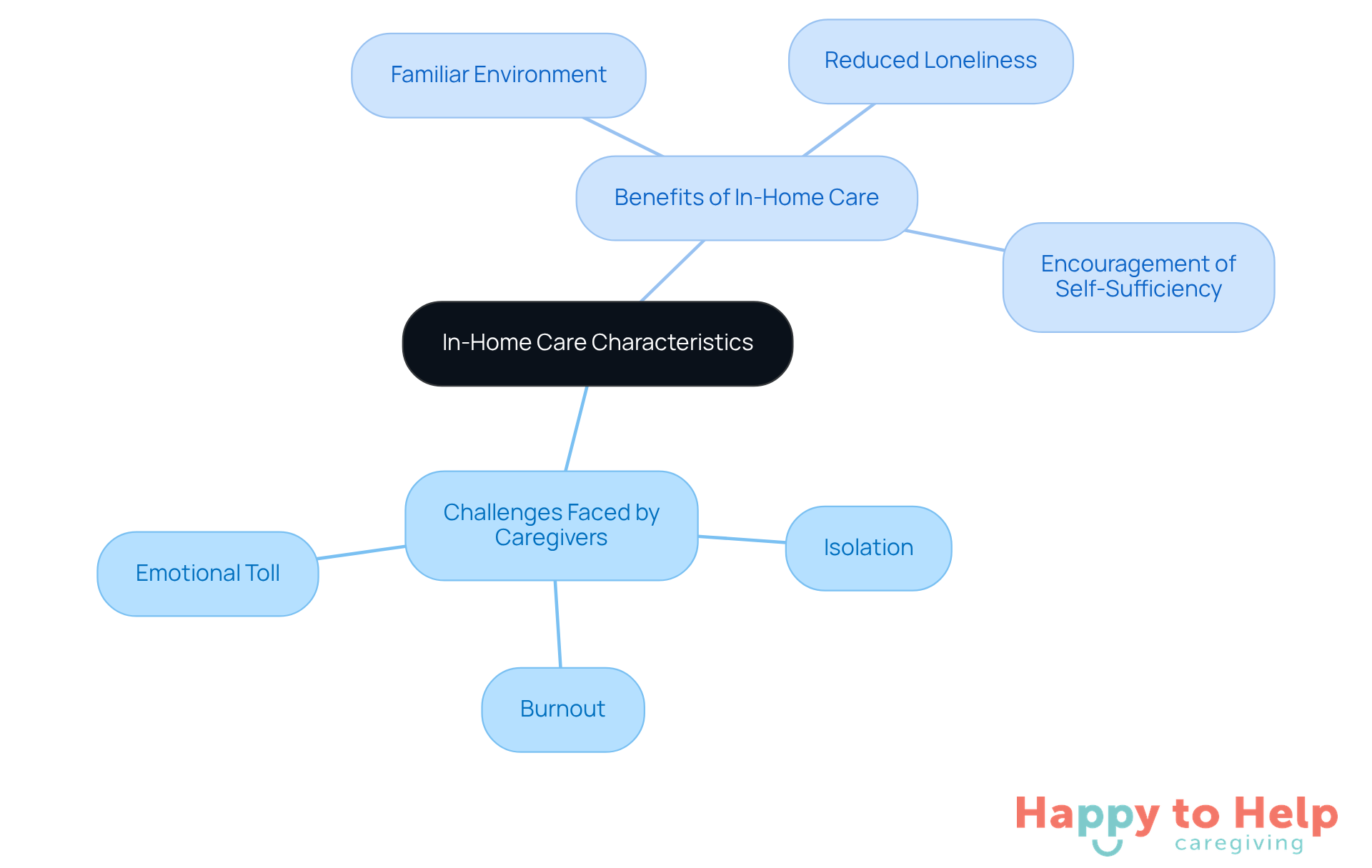
Problem: Caregivers often face significant challenges when providing at-home assistance, including feelings of isolation and the overwhelming nature of daily tasks.
Agitate: This strain can lead to caregiver burnout, impacting both their well-being and the quality of care provided to their loved ones. The emotional toll of managing conditions like dementia or supporting post-operative recovery can be particularly daunting.
At-home assistance, specifically in-home care in Columbia, South Carolina, offers a personalized approach that addresses these issues. In-home care in Columbia, South Carolina is tailored to individual needs, allowing caregivers to provide companionship, support with daily activities, and specialized care.
Benefits of at-home support include:
- Staying in a familiar environment
- Reduced feelings of loneliness
- Encouragement of self-sufficiency
Additionally, at-home assistance alleviates the burden on family caregivers, providing them with much-needed relief and peace of mind. By embracing these services, caregivers can enhance their quality of life while ensuring their loved ones receive the best possible care.
The Evolution of In-Home Care: Historical Background
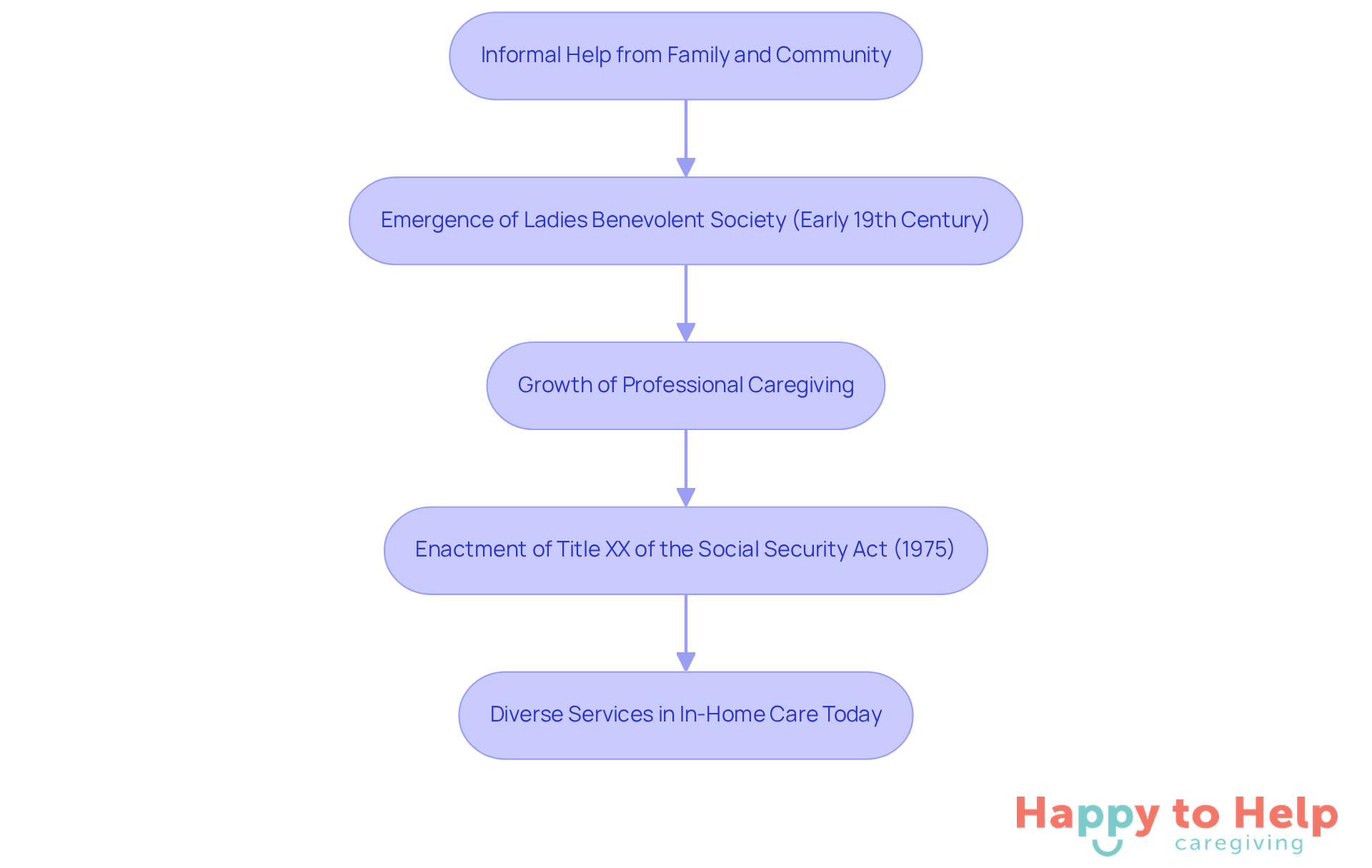
The development of in-home support has faced significant challenges, particularly in providing adequate assistance for the elderly. Historically, this began with informal help from family and community volunteers, but as the need grew, so did the complexity of care required. In the early 19th century, structured efforts like the Ladies Benevolent Society in Charleston, South Carolina, emerged, offering essential support for the ill in their homes. This marked a pivotal shift towards more organized support systems.
As the years progressed, the demand for tailored assistance options became increasingly evident. This spurred the growth of professional caregiving, transforming domestic support into a structured sector. By the late 20th century, significant milestones, such as the enactment of Title XX of the Social Security Act in 1975, laid the groundwork for home and community-based support, emphasizing the importance of aging in place.
Today, in-home care in Columbia, South Carolina, encompasses a diverse array of services, reflecting advancements in healthcare practices. This evolution underscores a growing recognition of the need for personalized support that enables individuals to maintain their independence and quality of life at home. Experts highlight that this change signifies a broader societal commitment to enhancing the well-being of older adults, ensuring they receive in-home care in Columbia, South Carolina, in the comfort of their own environments.
In-Home Care vs. Home Health Care: Understanding the Differences
Many caregivers face confusion when it comes to in-home care in Columbia, South Carolina, and home health services. This misunderstanding can lead to inadequate care for loved ones, as each service fulfills distinct roles.
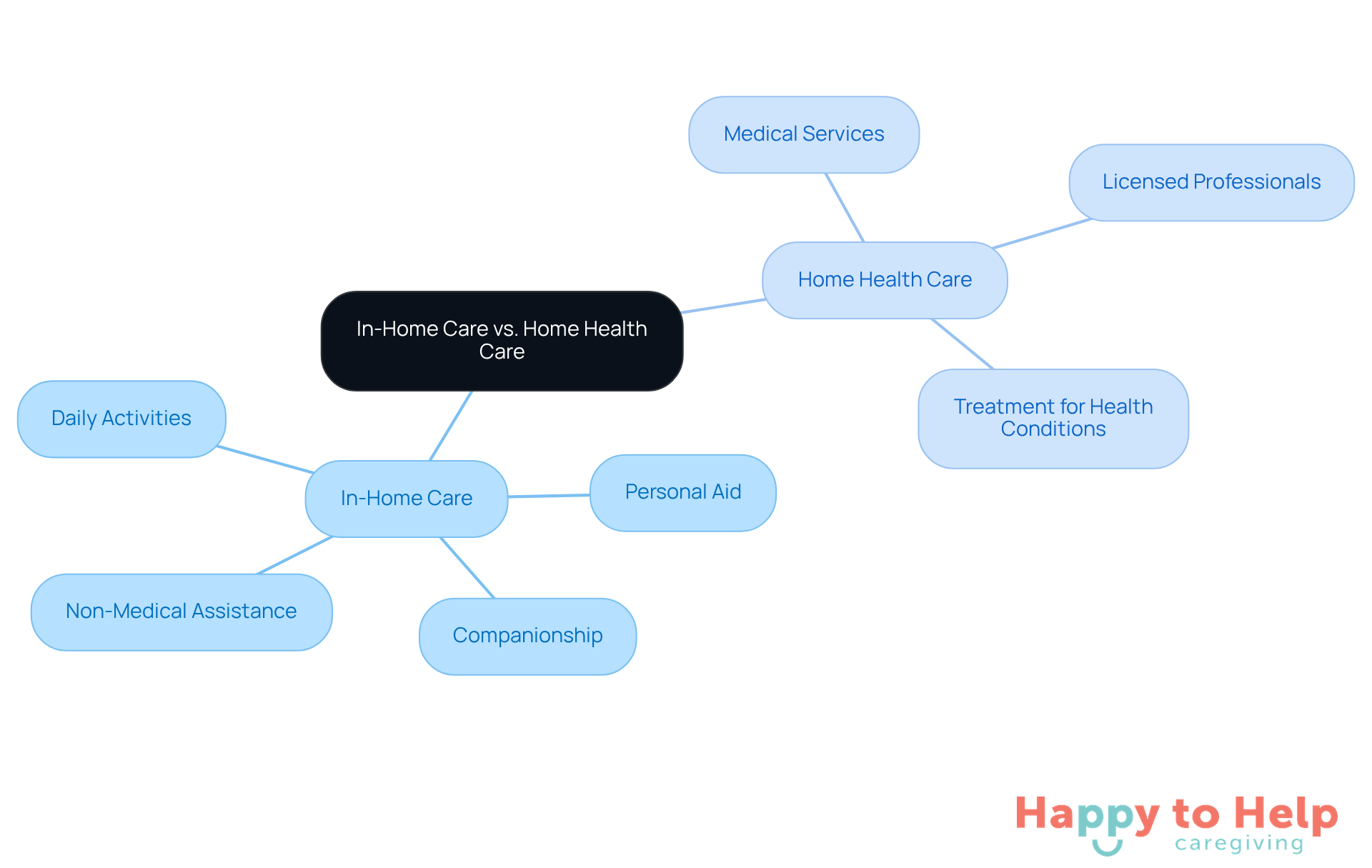
In-home care in Columbia, South Carolina, focuses on providing non-medical assistance, personal aid, companionship, and help with daily activities. In-home care in Columbia, South Carolina, is essential for individuals striving to maintain their independence and quality of life. On the other hand, home health assistance involves medical services delivered by licensed professionals, such as nurses or therapists. These services are crucial for treating specific health conditions or aiding recovery from illness or surgery.
Understanding these differences is vital for families. By recognizing the unique functions of each service, caregivers can make informed decisions about the type of care their loved ones truly need.
Making the Right Choice
In-home care in Columbia, South Carolina, stands out as a crucial solution for seniors and individuals with disabilities who want to maintain their independence while receiving essential support. However, caregivers face significant challenges, including burnout and staffing shortages, which can hinder the quality of care provided. This situation not only affects the caregivers but also impacts the well-being of those they care for, highlighting the urgent need for reliable support systems.
To address these challenges, families should explore local in-home care options that offer a diverse range of services - such as companionship, meal preparation, and medication reminders - tailored to meet the unique needs of each individual. By allowing seniors to remain in familiar environments, in-home care fosters a sense of security and continuity that is vital for emotional well-being. Moreover, understanding the distinction between in-home care and home health services can empower families to make informed decisions about the type of assistance required.
As the demographic landscape shifts, the demand for compassionate, tailored support is more critical than ever. Investing in in-home care not only enhances the quality of life for seniors but also contributes to their overall life satisfaction. Embracing these solutions is a meaningful step towards fostering independence and enriching lives within the community.
https://iframe.tely.ai/cta/eyJhcnRpY2xlX2lkIjogIjY5NDBhMjBiNGFiMmI4OGM4M2NiZjU4YyIsICJjb21wYW55X2lkIjogIjY4ZWU1ZGNhNzMxNzYyNTU3ZjNjOTVjMSIsICJpbmRleCI6IG51bGwsICJ0eXBlIjogImFydGljbGUifQ==Frequently Asked Questions
What is in-home care and why is it important in Columbia, South Carolina?
In-home care refers to support services provided to seniors and individuals with disabilities to help them maintain their independence while managing daily living activities. It is important in Columbia, South Carolina, as it addresses the significant challenges these individuals face, including feelings of isolation and a decreased quality of life.
What types of services are included in in-home care?
In-home care services include personal support, companionship, meal preparation, medication reminders, and assistance with household tasks.
How is the demand for in-home care expected to change in the coming years?
The demand for in-home care is expected to grow significantly, with statistics indicating that around 12 million individuals in the U.S. currently receive home assistance. This number is projected to increase by 22% by 2034, as one in five Americans will be 65 or older by 2030.
What are the benefits of in-home care for seniors?
In-home care enhances life satisfaction and reduces loneliness, which affects one in three adults aged 50-80. It allows seniors to maintain their independence, receive necessary support, and engage in enjoyable activities, significantly improving their overall quality of life.
What specific services does Happy to Help Caregiving offer in Columbia, South Carolina?
Happy to Help Caregiving offers services such as companionship, post-hospital recovery assistance, respite care, and palliative care, all aimed at enhancing the quality of life for seniors and individuals with special needs.
What challenges does the in-home care sector face in Columbia, South Carolina?
The in-home care sector faces challenges in attracting and retaining skilled personnel, which can impact the availability and consistency of services. Local agencies are working to provide essential services, but staffing difficulties remain a concern.
How can families enhance the caregiving experience?
Families can enhance the caregiving experience by leveraging technology, such as online communication tools, to stay connected with caregivers and receive real-time updates, fostering engagement and improving the overall care experience.
Why is individualized support important in in-home care?
Individualized support is crucial in in-home care as it ensures that each client receives tailored assistance that meets their specific needs, emphasizing the importance of compassion and understanding in the caregiving process.
List of Sources
- Defining In-Home Care: What It Entails
- Family caregivers prefer in-home care over senior living, new industry report finds (https://mcknightshomecare.com/news/family-caregivers-prefer-in-home-care-over-senior-living-new-industry-report-finds)
- Article - The Rise of Hospital Level In-Home Healthcare: Trends, Benefits and the Future (https://achc.org/the-rise-of-hospital-level-in-home-healthcare-trends-benefits-and-the-future)
- 2025 Home Care Statistics: Trends & Insights To Know (https://premierhcinc.com/blog/home-care-statistics)
- The Top 10 Home Health Care News Stories Of 2025 (https://homehealthcarenews.com/2025/12/the-top-10-home-health-care-news-stories-of-2025)
- Demand for Home Care Expected to Surge 22% by 2034 (https://respiratory-therapy.com/public-health/healthcare-policy/home-care/demand-home-care-expected-surge-22-2034)
- In-Home Care in Columbia, South Carolina: Local Context and Services
- The Aging Population and the Growing Need for Quality Senior Living Facilities (https://yonasolutions.com/article/the-aging-population-and-the-growing-need-for-quality-senior-living-facilities)
- Herceptin at Home – A shared care model delivering patient choice and efficiency - Quality in Care Awards Programme (https://qualityincare.org/case\_studies/herceptin\_at\_home\_a\_shared\_care\_model\_delivering\_patient\_choice\_and\_efficiency)
- 10 Local Caregiver Agencies to Support Your Family's Needs - Happy To Help (https://happytohelpcaregiving.com/10-local-caregiver-agencies-to-support-your-familys-needs)
- 'Care crisis' in South Carolina grows as home healthcare workers face low wages (https://abcnews4.com/news/local/care-crisis-in-south-carolina-grows-as-home-healthcare-workers-face-low-wages)
- How local nonprofits are adapting to the surge in senior residents across South Carolina (https://wltx.com/article/news/local/the-push-to-expand-senior-housing-in-south-carolina-amid-rapid-growth/101-0bdf601e-d4f8-4f78-a6fa-33bda4be196d)
- Key Characteristics of In-Home Care: Services and Benefits
- 2025 Home Care Statistics: Trends & Insights To Know (https://premierhcinc.com/blog/home-care-statistics)
- New Models of In-Home Support for Safe, Personalized Care | Tendly Home (https://tendlyhome.com/articles/new-models-in-home-support)
- 52 Eye-Opening Home Health Statistics: Insights for 2025 (https://boosthomehealth.com/home-health-statistics)
- 6 Benefits of Home Care and Home Health Care (https://aplaceformom.com/caregiver-resources/articles/benefits-of-home-care)
- The Benefits of In-Home Care for Seniors - Consumer Directed Choices (https://cdchoices.org/2023/11/27/the-benefits-of-in-home-care-for-seniors)
- The Evolution of In-Home Care: Historical Background
- Home Care Industry Statistics & Facts (https://h2hhc.com/blog/home-care-industry-statistics-facts)
- Topic: Home care in the U.S. (https://statista.com/topics/4049/home-care-in-the-us?srsltid=AfmBOorV71pijCl2Ib0klzXB2wyFA\_\_P1mglNMNjkGwcN3b8P3GNDGSG)
- Exploring the History Behind Home Care Services (https://h2hhc.com/blog/history-of-home-care-services)
- Encouraging Home Care Statistics for 2023 (https://axiscare.com/blog/encouraging-home-care-statistics)
- The Evolution of Home Health Care: Insights from SurfMed (https://surfmed.com/blogs/surfmed-news/the-evolution-of-home-health-care-a-surfmed-perspective)
- In-Home Care vs. Home Health Care: Understanding the Differences
- Families Prefer In-Home Care To Senior Living – Yet Struggle To Identify Needed Support (https://homehealthcarenews.com/2025/11/families-prefer-in-home-care-to-senior-living-yet-struggle-to-identify-needed-support)
- 28 Senior Care Statistics: In-Home & Assisted Living | Shortlister (https://myshortlister.com/insights/senior-care-statistics)
- Understanding Home Health Care Options (https://health.usnews.com/best-senior-living/articles/understanding-home-health-care-service-options)
- Home (https://homehealthcarenews.com)