

For families in our service areas
For families in our service areas, this guide explains home care and how non-medical in-home caregiving can support care planning in East Idaho, Treasure Valley & Magic Valley, Northern Wasatch, North Central West Virginia, and Northeast Ohio.
The Importance of Individual Home Care: Importance,
The increasing need for assistance among seniors living at home presents a significant challenge in our society. As the population ages, the demand for individual home care services is surging. This trend promises to enhance the quality of life for elderly individuals while alleviating the burdens faced by their families.
However, caregivers often struggle to address the diverse needs of this demographic. How can they ensure emotional well-being and independence for seniors? The implications of inadequate support can be profound, affecting not only the elderly but also their families and communities.
Exploring the vital components of individual home care reveals a landscape rich with opportunities for personalized support. Caregivers can implement practical solutions that cater to the unique needs of each senior, fostering a sense of dignity and autonomy. By focusing on tailored care strategies, we can transform lives and create a more supportive environment for our aging population.
Defining Individual Home Care
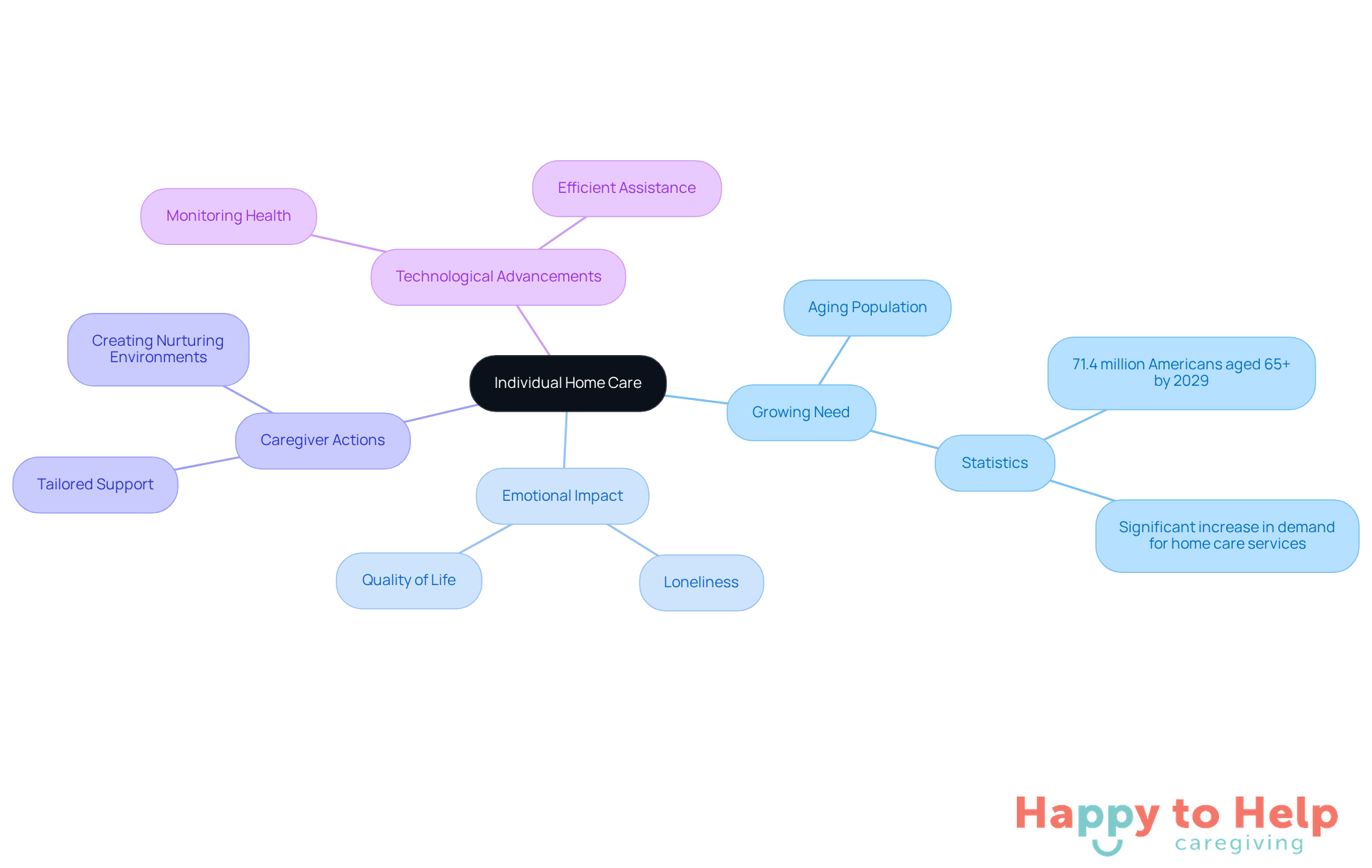
Individual home care addresses a pressing issue: the growing need for assistance among individuals in their own homes. With an aging population, many seniors require help with daily living tasks, which can significantly impact their independence and quality of life. This demand for support is not just a statistic; it reflects the real challenges faced by caregivers and their loved ones.
The implications of this trend are profound. As the number of seniors needing assistance rises, feelings of loneliness and isolation can become more prevalent. According to a recent survey, by 2029, around 71.4 million Americans aged 65 and older will require support. This highlights the urgency for effective domestic support programs, including individual home care, that not only provide essential daily living assistance but also foster social engagement and emotional well-being. For instance, personal support can help reduce the risk of falls and injuries by assisting with mobility and identifying hazards in the home environment.
So, what can caregivers do? Tailored support services are crucial. Healthcare experts emphasize that personalized assistance can significantly alleviate feelings of loneliness. As Tia Walker aptly puts it, "Caregiving often calls us to lean into love we didn’t know possible." By creating a nurturing environment, caregivers can help clients maintain their independence while ensuring their safety and comfort.
Moreover, advancements in technology are enhancing the capabilities of individual home care services. Caregivers can now monitor health and provide timely assistance more efficiently than ever before. As the healthcare landscape evolves, the importance of personal support services cannot be overstated. They offer families peace of mind and improve the quality of life for those in need.
Context and Importance of Individual Home Care
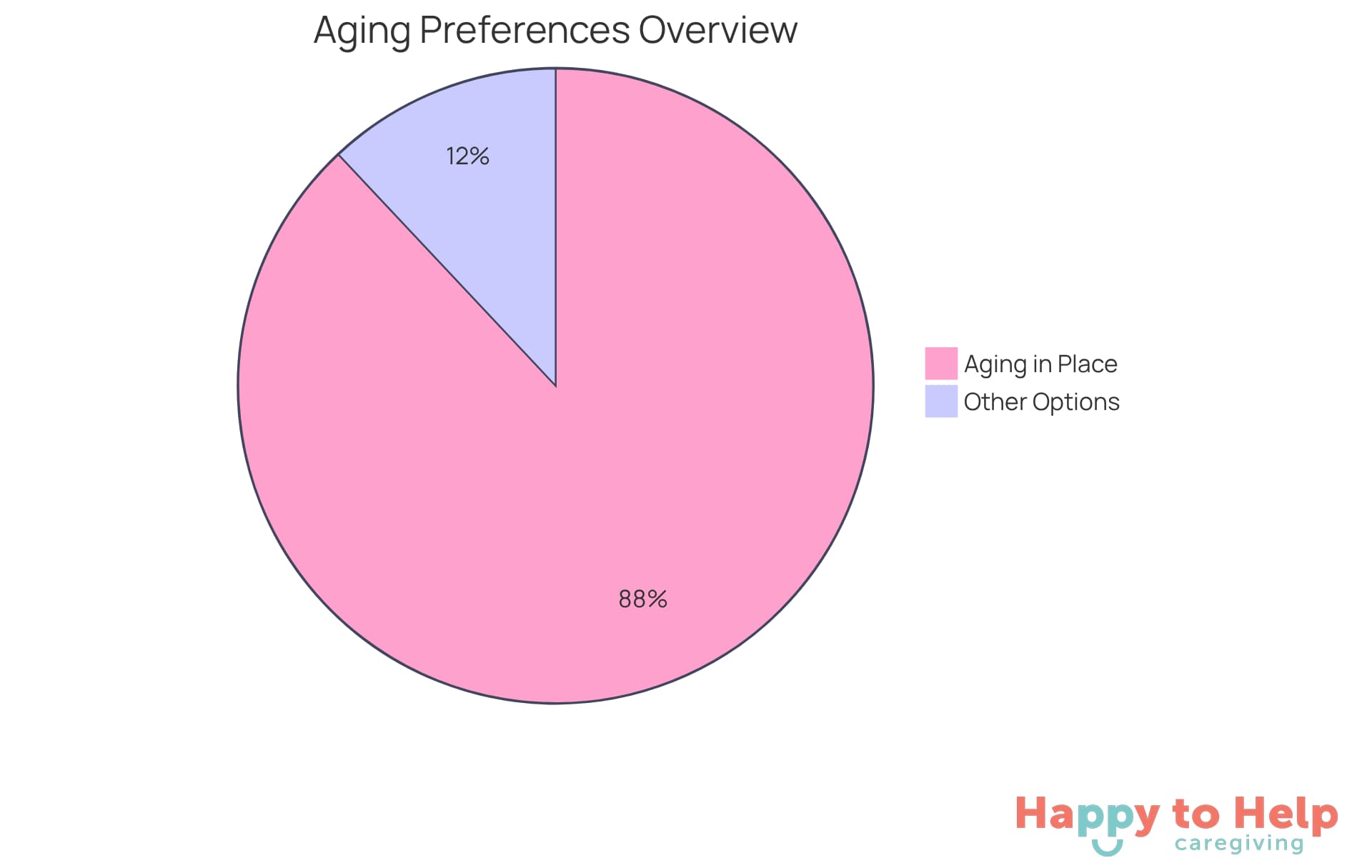
The growing demand for personal residence support presents a significant challenge for caregivers today. With an aging population, many seniors express a strong desire to remain in their homes, valuing the comfort and familiarity of their surroundings. In fact, an impressive 88% of adults aged 50 and older wish to age in place rather than transition to institutional settings, a sentiment echoed by 9 out of 10 seniors.
This preference highlights a pressing need for solutions in individual home care assistance. Statistics reveal that a substantial number of domestic support recipients require individual home care assistance with daily tasks, underscoring the essential demand for customized support. As the residential health and personal support aide workforce is projected to grow by 21% from 2023 to 2033, resulting in over 800,000 new positions, it’s clear that individual home care is crucial not only for meeting physical needs but also for enhancing emotional well-being.
By reducing feelings of isolation and fostering a sense of community, individual home care significantly improves the overall quality of life for individuals. As the baby boomer generation continues to age, the emphasis on individual home care support plans becomes increasingly vital. Caregivers must prioritize these tailored solutions in individual home care to effectively address the diverse needs of this demographic.
Key Services Offered in Individual Home Care
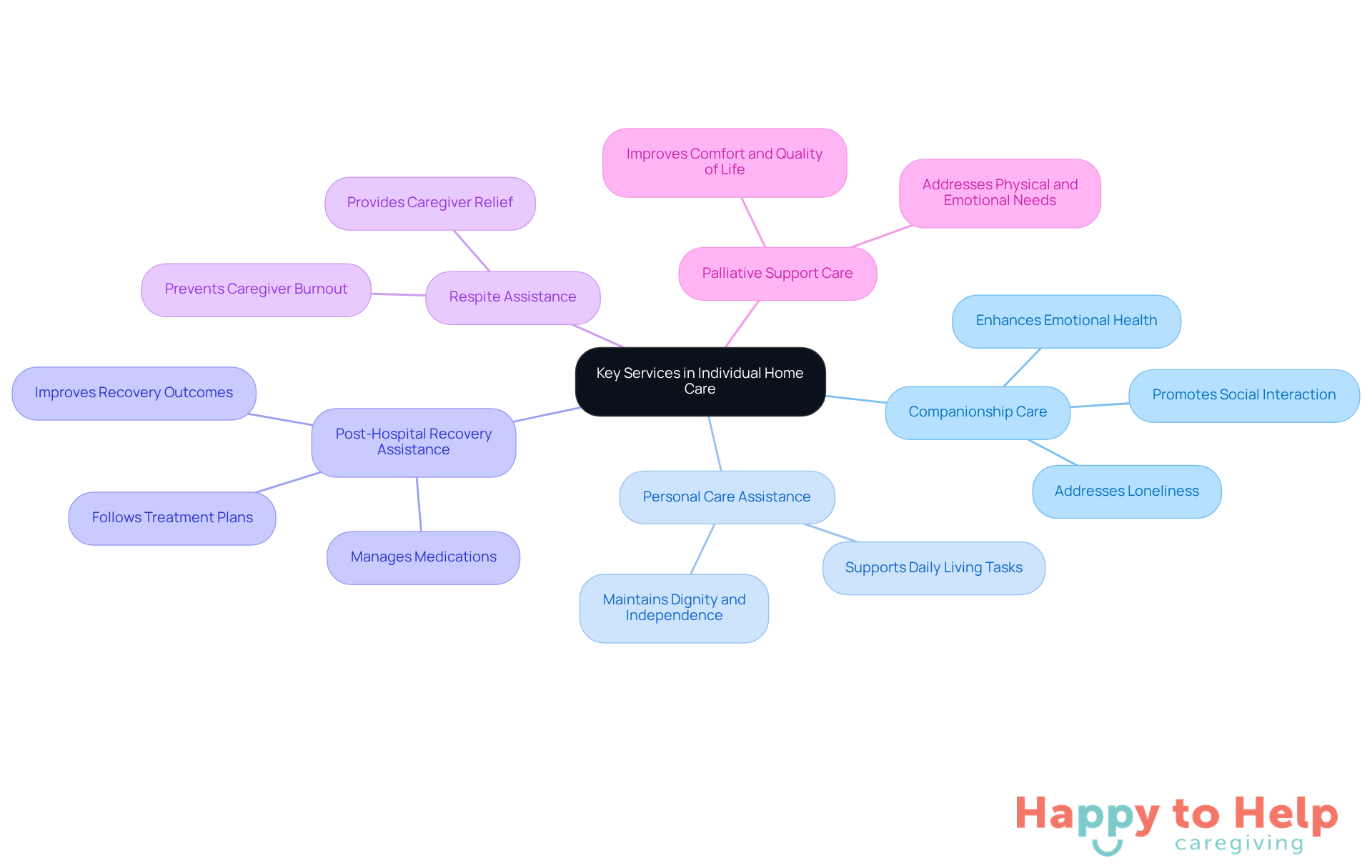
Key services in individual home care address essential support options tailored to meet the unique needs of clients, tackling significant challenges they face:
-
Companionship Care: Loneliness is a pressing issue, with nearly 37% of older adults reporting a lack of companionship in 2023. This can adversely affect their emotional and physical health. Engaging in regular social activities can decrease blood pressure and alleviate stress, enhancing overall well-being. As noted, "loneliness can lead to isolation and depression, resulting in serious mental health issues." Companionship care provides vital social interaction and emotional support, significantly alleviating these feelings.
-
Personal Care Assistance: Many individuals struggle with daily tasks such as bathing, grooming, and dressing due to age or disability. Personal care assistance ensures that people uphold their dignity and independence, allowing them to maintain a quality lifestyle.
-
Post-Hospital Recovery Assistance: Transitioning home from medical facilities can be daunting. Providers assist individuals in following treatment plans, managing medications, and offering essential support during recovery. Successful case studies demonstrate that personalized assistance during this critical period can significantly improve recovery outcomes and reduce the likelihood of readmission.
-
Respite Assistance: Family caregivers often experience fatigue, which can lead to a decline in the quality of care they provide. Respite assistance offers short-term relief, enabling caregivers to recharge while ensuring their loved ones receive quality support.
-
Palliative Support Care: Individuals with serious illnesses face numerous challenges. Palliative support care aims to improve comfort and quality of life, addressing both physical and emotional needs. Caregivers provide empathetic assistance, helping individuals navigate their health challenges while preserving a sense of dignity.
Each service is crafted to be adaptable and customized to personal preferences, ensuring that clients receive the individual home care they need to flourish in their own residences.
Benefits of Individual Home Care for Clients and Families
The Problem of Inadequate Support for Elderly Individuals
As individuals age, many face the challenge of finding adequate support while maintaining their independence. This situation can lead to feelings of isolation and anxiety for both the elderly and their families.
The Implications of Insufficient Care
Without proper assistance, elderly individuals may struggle to manage daily tasks, impacting their quality of life. This lack of support can also strain family relationships, as loved ones may feel overwhelmed by caregiving responsibilities.
The Solution: Individual Home Care
Individual home care offers numerous benefits that address these challenges:
-
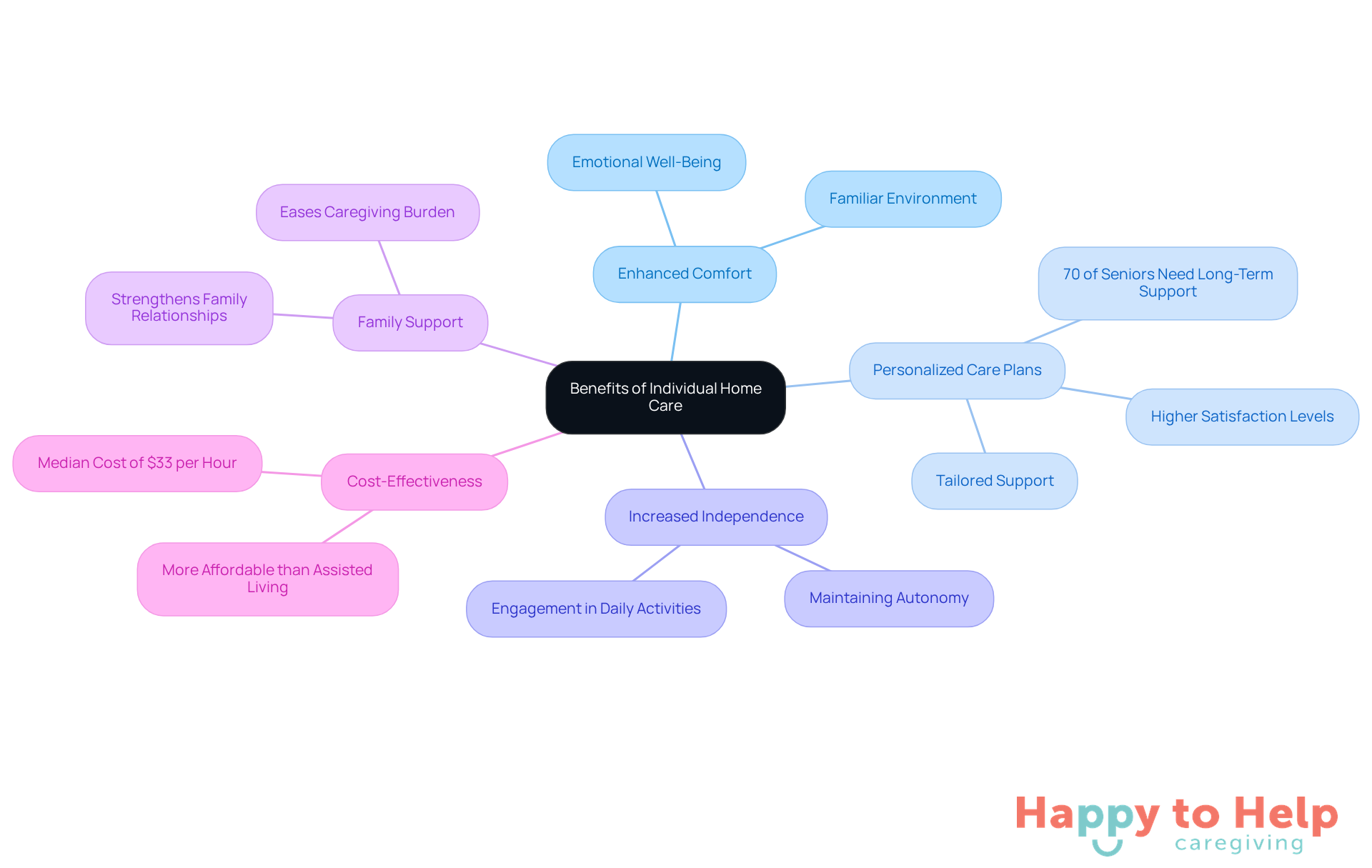
Enhanced Comfort and Familiarity: Clients can stay in their own homes, surrounded by their belongings and memories, promoting emotional well-being. This familiar environment fosters a sense of security and belonging, crucial for mental health.
-
Personalized Care Plans: Services are tailored to meet each individual's specific needs, ensuring support is relevant and effective. Research shows that personalized plans lead to higher satisfaction levels among clients, as their unique preferences are recognized. With nearly 70% of individuals aged 65 and older requiring long-term support, personalized assistance is vital.
-
Increased Independence: Clients maintain autonomy, essential for dignity and self-esteem. By receiving support at home, they can continue their daily routines and engage in activities they enjoy, enhancing their quality of life.
Family support is enhanced through individual home care, which eases the burden on family members by providing peace of mind that their loved ones are receiving professional assistance. Families report increased confidence in the support offered, strengthening their relationships with clients.
- Cost-Effectiveness: Home care is often more economical than institutional services, allowing families to allocate resources efficiently. The national median cost of in-home assistance is $33 per hour, significantly lower than assisted living facilities, making it a financially viable option for many.
In summary, individual home care enhances clients' quality of life while also strengthening family connections by providing essential support and reassurance. Testimonials from families highlight the positive impact of personalized care plans on their loved ones' well-being and happiness.
Key Takeaways for Caregivers
The significance of individual home care is profound, addressing the pressing needs of our aging population. Seniors often face emotional challenges like loneliness and isolation, which can significantly impact their quality of life. Individual home care provides a vital solution by offering personalized support in the comfort of their homes, allowing them to maintain independence while receiving necessary assistance for daily living tasks.
Key services within individual home care include:
- Companionship
- Personal care assistance
- Post-hospital recovery support
- Respite care
- Palliative support
Each service is tailored to meet the unique needs of clients, ensuring they receive appropriate care to thrive in familiar environments. This approach not only enhances the well-being of seniors but also alleviates caregiver stress, fostering a sense of security within family dynamics.
As more seniors express a desire to age in place, the importance of investing in personalized home care services cannot be overstated. Families and caregivers are encouraged to explore available options, embracing the advantages of individual home care. By doing so, they ensure that loved ones receive the compassionate support they deserve, ultimately enhancing their overall well-being. The future of home care holds immense potential for improving lives, making it a pivotal consideration for families navigating the complexities of aging.
https://iframe.tely.ai/cta/eyJhcnRpY2xlX2lkIjogIjY5MjY2NjFiMDFkMWUzYmY0NmRiMjMwYyIsICJjb21wYW55X2lkIjogIjY4ZWU1ZGNhNzMxNzYyNTU3ZjNjOTVjMSIsICJpbmRleCI6IG51bGwsICJ0eXBlIjogImFydGljbGUifQ==Frequently Asked Questions
What is individual home care?
Individual home care addresses the need for assistance among individuals in their own homes, particularly seniors who require help with daily living tasks, impacting their independence and quality of life.
Why is there a growing need for individual home care?
The growing need for individual home care is driven by an aging population, with projections indicating that by 2029, approximately 71.4 million Americans aged 65 and older will require support.
What are the implications of the rising demand for home care?
The implications include increased feelings of loneliness and isolation among seniors, highlighting the urgency for effective domestic support programs that provide essential assistance and foster social engagement.
How can individual home care improve safety for seniors?
Individual home care can help reduce the risk of falls and injuries by assisting with mobility and identifying hazards in the home environment.
What role do tailored support services play in individual home care?
Tailored support services are crucial as they can significantly alleviate feelings of loneliness and help clients maintain their independence while ensuring their safety and comfort.
How has technology impacted individual home care services?
Advancements in technology have enhanced the capabilities of individual home care services, allowing caregivers to monitor health and provide timely assistance more efficiently.
What benefits do personal support services offer to families?
Personal support services offer families peace of mind and improve the quality of life for those in need by providing essential assistance and fostering emotional well-being.
List of Sources
- Defining Individual Home Care
- Home (https://homehealthcarenews.com)
- Why Senior Home Care is More Important Than Ever (https://homeinstead.com/home-care/usa/la/carencro/347/news-and-media/senior-home-care-is-more-important-than-ever)
- State of home care in 2025 (https://mcknightshomecare.com/state-of-home-care-in-2025)
- Demand for Home Care Expected to Surge 22% by 2034 (https://respiratory-therapy.com/public-health/healthcare-policy/home-care/demand-home-care-expected-surge-22-2034)
- Context and Importance of Individual Home Care
- State of home care in 2025 (https://mcknightshomecare.com/state-of-home-care-in-2025)
- The senior population is booming. Caregiving is struggling to keep up (https://cnbc.com/2025/11/21/senior-caregiving-labor.html)
- 10 Must-Know U.S. Home Care Industry Stats for 2025 - North American Community Hub (https://nchstats.com/us-home-care-industry-stats)
- Warning From Older Adults: Care for Aging in America Needs Urgent Rethinking (https://johnahartford.org/newsroom/view/warning-from-older-adults-care-for-aging-in-america-needs-urgent-rethinking)
- Key Services Offered in Individual Home Care
- 10 Benefits of Professional Companion Services for Family Caregivers - Happy To Help (https://happytohelpcaregiving.com/10-benefits-of-professional-companion-services-for-family-caregivers)
- 2025 DOL Shift: A Turning Point for Home Care - SwyftOps (https://swyftops.com/companionship-services-exemption-2025-2)
- 13 Home Care Trends To Watch For in 2024 (And Thoughts From 11 Experts) | CareAcademy (https://careacademy.com/blog/home-care-trends)
- DOL Proposes Rule to Reinstate Companionship & Live-in Exemptions from Minimum Wage and Overtime for Third-Party Employers | Littler (https://littler.com/news-analysis/asap/dol-proposes-rule-reinstate-companionship-live-exemptions-minimum-wage-and)
- 7 Key Trends Shaping Post-Acute Care in 2025 (https://therapystrong.com/blog-1/f/7-key-trends-shaping-post-acute-care-in-2025?blogcategory=Telehealth)
- Benefits of Individual Home Care for Clients and Families
- North Carolina's aging population drives demand for in-home caregivers - Triangle Business Journal (https://bizjournals.com/triangle/news/2025/11/07/north-carolina-inhome-healthcare-aging-population.html)
- 5 Benefits of Senior In-Home Care in 2025 | Valley Home Care (https://valleyhca.com/the-top-5-benefits-of-in-home-senior-care-for-aging-loved-ones-in-2025)
- Home Care Industry Trends to Watch in 2025 (https://firstlighthomecare.com/blog/home-care-industry-trends)
- 6 Benefits of Home Care and Home Health Care (https://aplaceformom.com/caregiver-resources/articles/benefits-of-home-care)
- Caregiving in the US 2025 (https://aarp.org/pri/topics/ltss/family-caregiving/caregiving-in-the-us-2025)