Understanding Life Expectancy When Elderly Stop Eating:

For families in our service areas
For families in our service areas, this guide explains caregiver support and how non-medical in-home caregiving can support care planning in East Idaho, Treasure Valley & Magic Valley, Northern Wasatch, North Central West Virginia & Southwestern Pennsylvania, and Northeast Ohio.
The Importance of Life Expectancy When Elderly Stop
Understanding the complexities of appetite loss in the elderly is crucial for caregivers who must navigate the delicate balance of health and nutrition. The problem is clear: as individuals age, various factors - ranging from medical conditions to psychological challenges - can significantly diminish their desire to eat. This poses serious implications for their overall well-being and life expectancy.
So, how can caregivers effectively address these challenges? It's essential to recognize that appetite loss can lead to malnutrition, which in turn can exacerbate existing health issues and reduce life expectancy. Caregivers need to be proactive in ensuring that their loved ones maintain adequate nutrition during these critical times.
This guide delves into the reasons behind appetite loss, its potential impact on life expectancy, and actionable strategies to foster healthier eating habits among seniors. By understanding these factors, caregivers can implement effective solutions to support their loved ones in maintaining a balanced diet.
Identify Reasons for Appetite Loss in the Elderly
Problem: Appetite Loss in the Elderly
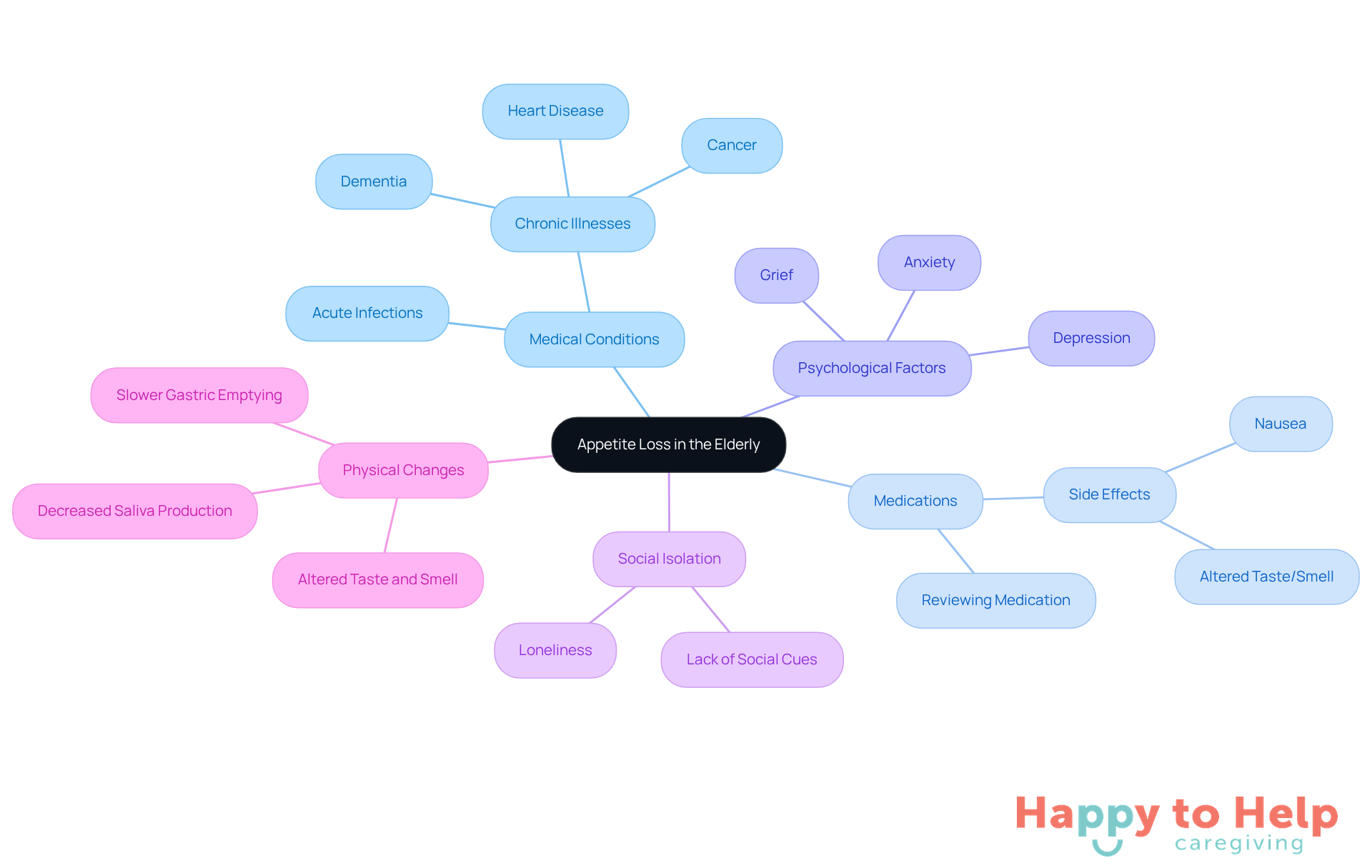
Appetite loss in elderly individuals can stem from various factors, significantly impacting their health and well-being. Caregivers must recognize these challenges to provide effective support.
Agitate: Understanding the Implications
Several issues can contribute to this problem:
- Medical Conditions: Chronic illnesses like heart disease, cancer, and dementia can greatly diminish the desire to eat. Caregivers should monitor existing health issues and consult healthcare professionals for guidance.
- Medications: Some medications may have side effects that reduce appetite. It's crucial to review the patient's medication list and discuss any concerns with their doctor.
- Psychological Factors: Emotional issues such as depression, anxiety, or grief can lead to a lack of interest in eating. Caregivers should engage individuals in discussions about their feelings and encourage social interactions.
- Social Isolation: Loneliness is common among the elderly and can negatively affect their appetite. Caregivers can facilitate social activities or provide companionship during meals.
- Physical Changes: Aging often alters taste and smell, making meals less appealing. Caregivers should experiment with different flavors and textures to enhance meal enjoyment.
Solution: Practical Steps for Caregivers
By systematically evaluating these factors, caregivers can gain a clearer understanding of the reasons behind a client's appetite loss. Taking appropriate action based on these insights can significantly improve the individual's eating habits and overall quality of life.
Understand Life Expectancy When an Elderly Person Stops Eating
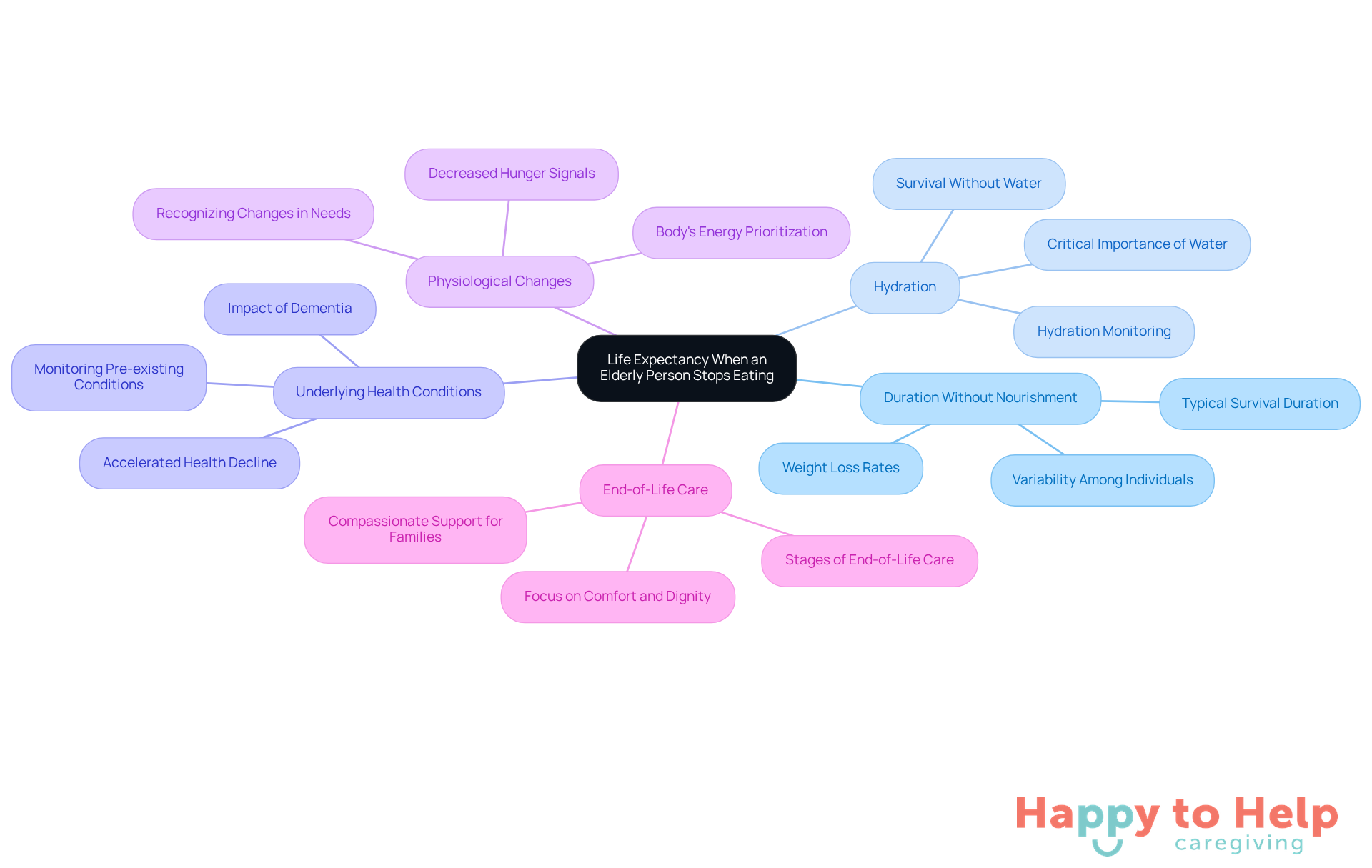
The challenge that caregivers face when an elderly person stops eating significantly impacts life expectancy when elderly stop eating in various ways. Understanding these factors is crucial for providing effective support.
Duration Without Nourishment: Typically, individuals can survive without food for about 1 to 3 weeks, depending on their overall health and hydration. However, this duration can vary widely among individuals, making it essential for caregivers to monitor their loved ones closely.
Hydration: While food intake may cease, hydration remains critical. A person can only survive a few days without water, underscoring the importance of ensuring adequate fluid intake.
Underlying Health Conditions: Pre-existing health issues can accelerate health decline when food intake stops. For example, individuals with dementia may experience a more rapid deterioration, highlighting the need for vigilant care.
Physiological Changes: As the body begins to shut down, it prioritizes essential functions, leading to decreased energy needs and a natural decline in hunger. Caregivers should recognize these changes to provide appropriate support.
End-of-Life Care: Familiarity with the stages of end-of-life care can empower caregivers to offer compassionate support to both the individual and their family during this challenging time.
By acknowledging these factors, caregivers can better assist those they care for and prepare families for the potential outcomes of appetite loss. This understanding not only enhances the quality of care but also fosters a supportive environment for everyone involved.
Implement Strategies to Encourage Eating and Drinking
To encourage eating and drinking among elderly clients, caregivers face a significant challenge: many seniors struggle with nutrition, which can lead to serious health issues. This problem is compounded by factors such as decreased appetite, difficulty in chewing, and social isolation.
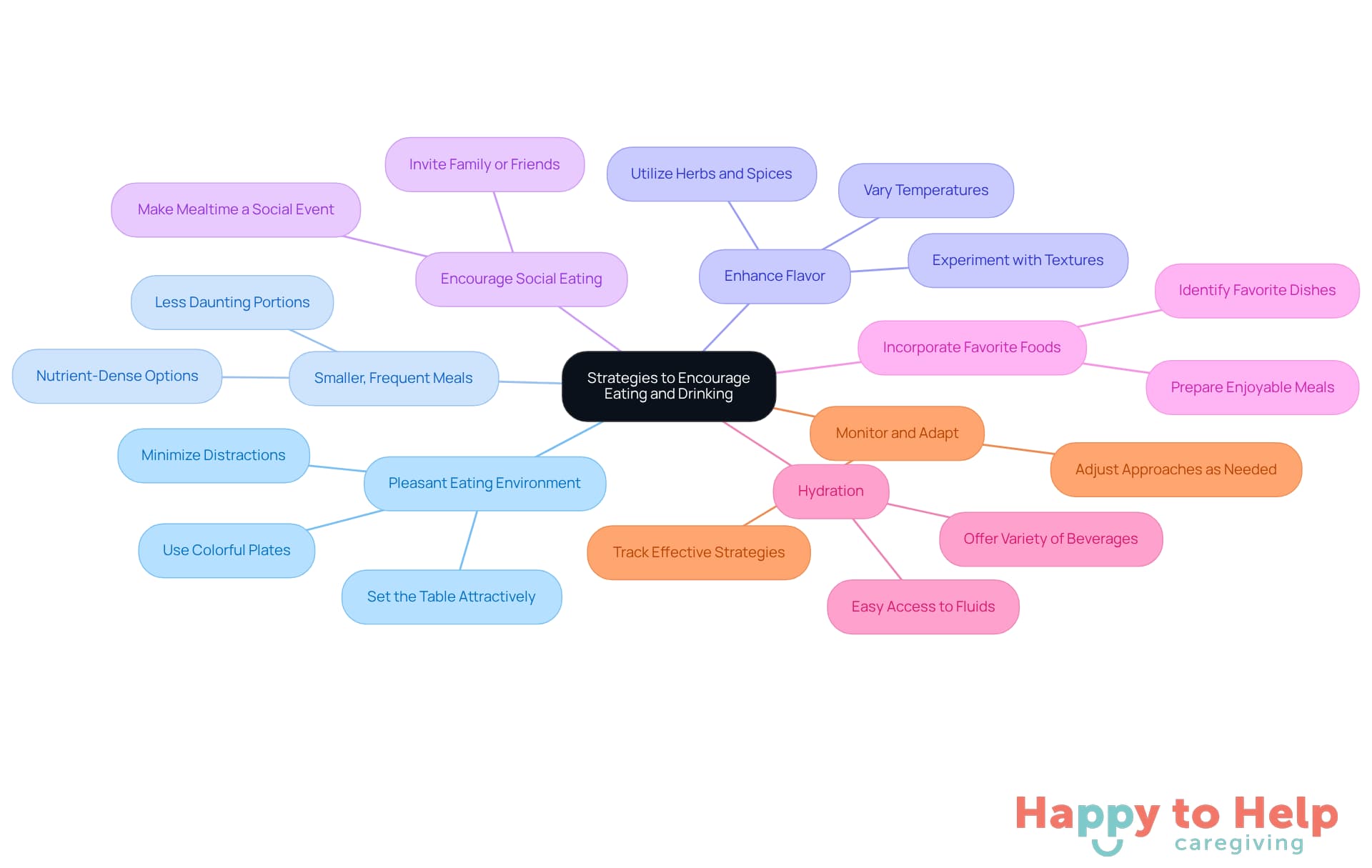
To address these challenges, caregivers can implement the following actionable strategies:
-
Create a Pleasant Eating Environment: Set the table attractively, use colorful plates, and minimize distractions to enhance the mealtime experience.
-
Offer Smaller, Frequent Meals: Instead of three large meals, provide smaller, nutrient-dense meals throughout the day to make eating less daunting and more manageable.
-
Enhance Flavor: Utilize herbs and spices to elevate the taste of food. Experiment with various textures and temperatures to discover what the client enjoys most.
-
Encourage Social Eating: Invite family members or friends to join meals. Social interaction can significantly enrich the eating experience and stimulate appetite. Research indicates that making mealtime a social event can encourage better eating habits among seniors.
-
Incorporate Favorite Foods: Identify and prepare the individual's favorite dishes to spark interest in eating and make mealtime more enjoyable.
-
Hydration: Ensure individuals have easy access to fluids throughout the day. Offer a variety of beverages, including smoothies and flavored water, to promote hydration. Dehydration is common among the elderly due to a decreased sense of thirst, making regular fluid intake essential.
-
Monitor and Adapt: Keep track of effective strategies and be flexible in adjusting approaches to meet the individual's evolving preferences and needs.
By employing these strategies, caregivers can significantly enhance their clients' nutritional intake and overall quality of life, which is crucial for improving life expectancy when elderly stop eating. As Hippocrates wisely stated, 'Let food be thy medicine and medicine be thy food,' highlighting the essential role of nutrition in well-being.
Recognize Signs Indicating the Need for Additional Care
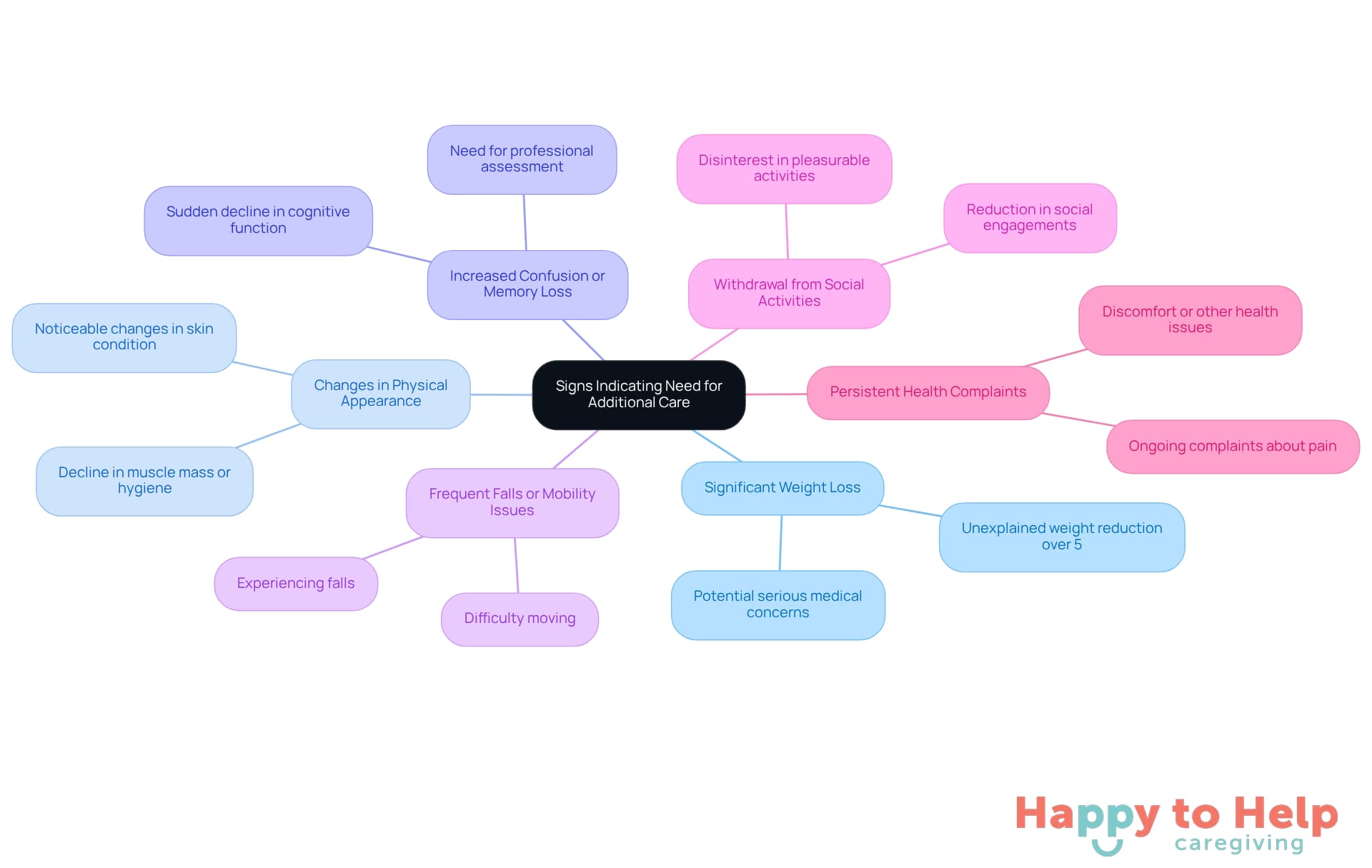
Caregivers should be vigilant about signs that may indicate the need for additional care:
-
Significant Weight Loss: Unexplained weight reduction of over 5% of body mass in a brief timeframe can indicate serious medical concerns.
-
Changes in Physical Appearance: Noticeable changes in skin condition, muscle mass, or overall hygiene can indicate neglect of self-care.
-
Increased Confusion or Memory Loss: A sudden decline in cognitive function may require professional assessment and intervention.
-
Frequent Falls or Mobility Issues: If the client is experiencing falls or difficulty moving, it may be time to consider additional support or modifications in their living environment.
-
Withdrawal from Social Activities: A reduction in social engagements or a disinterest in once pleasurable activities can indicate depression or other mental conditions.
-
Persistent Health Complaints: Ongoing complaints about pain, discomfort, or other health issues should be addressed with a healthcare provider.
Recognizing these signs is crucial. By being aware of these indicators, caregivers can take proactive steps to ensure their clients receive the necessary care and support, ultimately enhancing their quality of life.
Making the Right Choice
Understanding the complexities surrounding appetite loss in the elderly presents a significant challenge for caregivers. This issue can stem from various factors, including medical conditions, medication side effects, psychological issues, and social isolation. Recognizing these reasons is crucial, as it empowers caregivers to provide tailored support that addresses both immediate nutritional needs and long-term health outcomes.
Caregivers can implement several strategies to encourage eating and drinking among elderly clients. Here are some actionable tips:
- Create a pleasant dining environment.
- Offer smaller, more manageable meals.
- Foster social interactions during mealtime.
Additionally, being vigilant about signs that indicate a need for extra care is vital. This ensures that elderly individuals receive appropriate support when their health or appetite declines. By being proactive and attentive, caregivers can significantly enhance their clients' nutritional intake and overall well-being.
Ultimately, caregivers play a critical role in the lives of the elderly. By remaining vigilant, compassionate, and informed, they can improve their clients' immediate eating habits and contribute to a more dignified end-of-life experience. Embracing these strategies fosters a supportive environment where the elderly can thrive, even amidst the challenges of appetite loss.
https://iframe.tely.ai/cta/eyJhcnRpY2xlX2lkIjogIjY5MjBmZDU5Y2E3OGI5ZDliYTJkYTRlYyIsICJjb21wYW55X2lkIjogIjY4ZWU1ZGNhNzMxNzYyNTU3ZjNjOTVjMSIsICJpbmRleCI6IG51bGwsICJ0eXBlIjogImFydGljbGUifQ==Frequently Asked Questions
What are the main reasons for appetite loss in the elderly?
Appetite loss in the elderly can be caused by medical conditions, medications, psychological factors, social isolation, and physical changes associated with aging.
How do medical conditions affect appetite in elderly individuals?
Chronic illnesses such as heart disease, cancer, and dementia can significantly reduce the desire to eat, making it important for caregivers to monitor these health issues and consult healthcare professionals.
Can medications impact appetite in the elderly?
Yes, some medications may have side effects that reduce appetite. It's important for caregivers to review the patient's medication list and discuss any concerns with their doctor.
What psychological factors can lead to appetite loss in the elderly?
Emotional issues like depression, anxiety, or grief can contribute to a lack of interest in eating. Caregivers should engage elderly individuals in discussions about their feelings and encourage social interactions.
How does social isolation affect appetite in the elderly?
Loneliness is common among elderly individuals and can negatively impact their appetite. Caregivers can help by facilitating social activities or providing companionship during meals.
What physical changes in aging can influence appetite?
Aging can alter taste and smell, making meals less appealing. Caregivers are encouraged to experiment with different flavors and textures to enhance meal enjoyment.
What steps can caregivers take to address appetite loss in the elderly?
Caregivers should systematically evaluate the factors contributing to appetite loss and take appropriate actions based on these insights to improve the individual's eating habits and overall quality of life.
List of Sources
- Identify Reasons for Appetite Loss in the Elderly
- Study: Appetite loss strikes 1 in 4 older adults before malnutrition develops (https://mcknights.com/news/study-appetite-loss-strikes-1-in-4-older-adults-before-malnutrition-develops)
- An overview of appetite decline in older people - PMC (https://pmc.ncbi.nlm.nih.gov/articles/PMC4589891)
- Is it normal to lose your appetite as you get older? (https://uclahealth.org/news/article/it-normal-lose-your-appetite-you-get-older)
- Understand Life Expectancy When an Elderly Person Stops Eating
- Exploring Nutrition Concerns in Hospice Care (https://agapehospicenw.org/blog/how-long-do-hospice-patients-live-without-eating)
- How long can a person with dementia live without food or drink? (https://medicalnewstoday.com/articles/dementia-how-long-can-a-person-live-without-eating-or-drinking)
- How Long Can You Live Without Food? Effects of Starvation (https://healthline.com/health/food-nutrition/how-long-can-you-live-without-food)
- Implement Strategies to Encourage Eating and Drinking
- The changing nutritional needs of older adults and how to meet them (https://heart.org/en/news/2024/12/18/the-changing-nutritional-needs-of-older-adults-and-how-to-meet-them)
- 5 Strategies To Improve Nutrition in the Elderly (https://bucknerparkwayplace.org/news-blog/5-strategies-to-improve-nutrition-in-the-elderly)
- Top 20 Famous Quotes about Nutrition - Become A Nutritionist (https://becomeanutritionist.org/blog/top-20-famous-quotes-about-nutrition)
- Famous Quotes on Nutrition and Well-Being - Center for the Advancement of Well-Being (https://wellbeing.gmu.edu/famous-quotes-on-nutrition-and-well-being)
- Recognize Signs Indicating the Need for Additional Care
- The Telltale Signs Your Parent Might Need Extra Care - The Cottages % (https://assistedlivingidaho.com/the-telltale-signs-your-parent-might-need-extra-care)
- 10 Signs Your Elderly Parent Needs Help (https://sunriseseniorliving.com/resources/caregivers-and-families/signs-elderly-parent-needs-help)
- Typical Signs the Elderly Need Home Care (https://careindeed.com/blogs/typical-signs-the-elderly-need-home-care)
- 11 Signs Your Aging Parent Needs Senior Care (https://health.usnews.com/senior-care/caregiving/articles/identifying-the-right-time-for-senior-care)
- Signs Parents Need Extra Care (https://carelink.org/identifying-signs-your-parents-need-extra-care)