Understanding Live-In Help: A Complete Guide for Family

For families in our service areas
For families in our service areas, this guide explains caregiver support and how non-medical in-home caregiving can support care planning in East Idaho, Treasure Valley & Magic Valley, Northern Wasatch, North Central West Virginia & Southwestern Pennsylvania, and Northeast Ohio.
Why Live-In Help: A Complete Guide Matters
Navigating the complexities of caregiving presents significant challenges for families supporting loved ones who need constant assistance. This situation can be overwhelming, as families often face emotional strain and uncertainty about how to provide the best care.
The decision to hire a live-in caregiver is a crucial one, as it not only involves finding the right fit for the loved one but also raises concerns about compatibility, cost, and emotional implications. Families may worry about whether the caregiver will meet their loved one's needs while also considering their own emotional well-being.
To address these challenges, families can take several actionable steps:
- Conducting thorough research on potential caregivers can help ensure compatibility.
- Discussing expectations openly with caregivers can foster a better understanding of needs and preferences.
- Considering the financial aspects upfront can alleviate some of the stress associated with this decision.
By approaching the hiring process with clear communication and careful planning, families can make informed choices that benefit both their loved ones and themselves.
Define Live-In Help and Its Importance for Family Caregivers
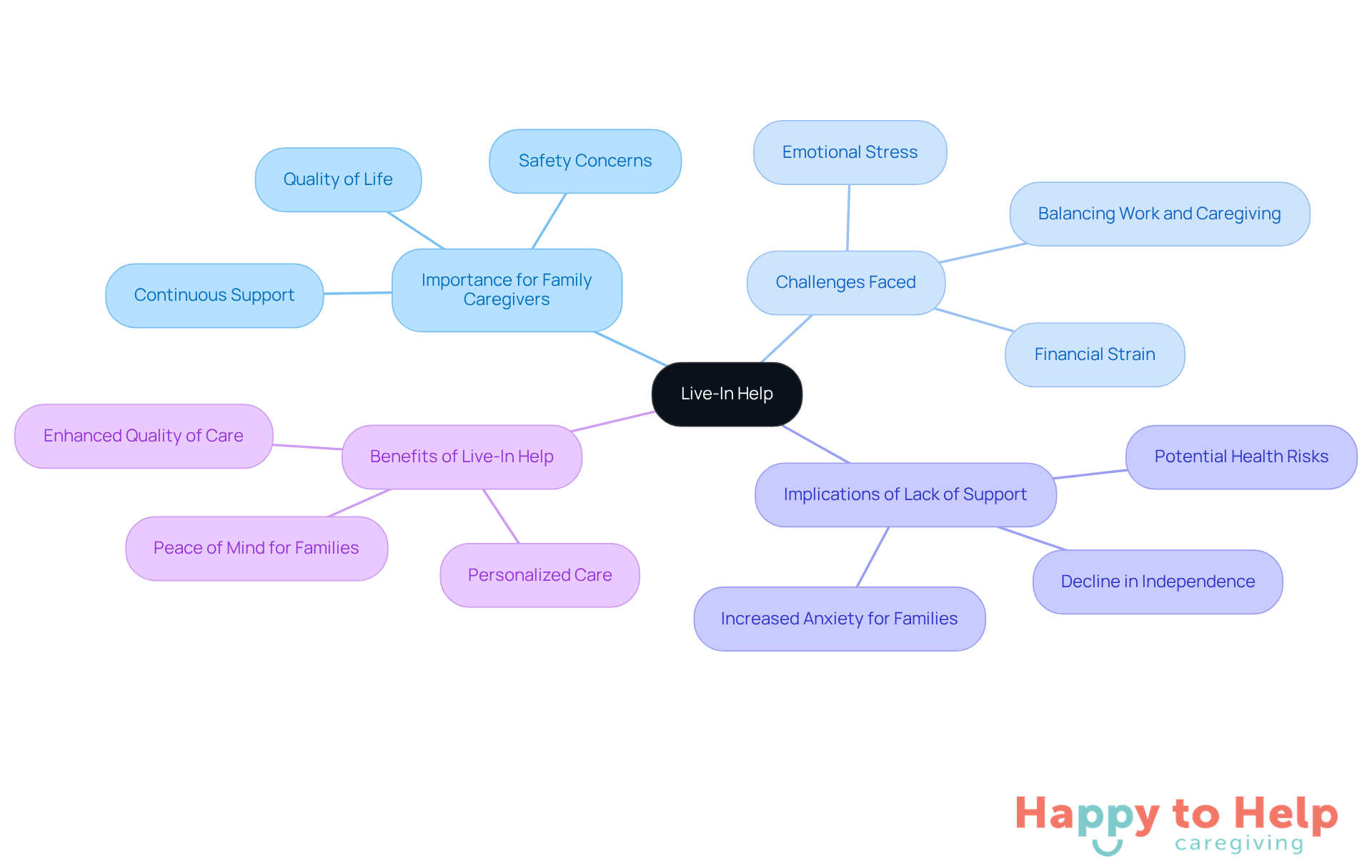
Live-in help addresses a significant challenge faced by many families: the need for continuous support for loved ones due to age, illness, or disability, which is effectively provided by live-in help. This situation can create anxiety about safety and well-being, leaving families feeling overwhelmed and uncertain.
The implications of this problem are profound. Without adequate support, individuals may struggle to maintain their independence, leading to a decline in their quality of life. Families often worry about their loved ones being alone, which can add to their stress and concern.
A practical solution to this issue is to utilize live-in help. This arrangement allows a professional caregiver to reside in the client's home, providing personalized, one-on-one attention. Such support not only enhances the quality of care but also fosters a sense of security and comfort for both clients and their families. With a caregiver available at all times, families can rest easier, knowing their loved ones are safe and receiving the assistance they need.
In summary, providing live-in help is an effective way to ensure that individuals receive the necessary support in a familiar environment, allowing them to preserve their independence while alleviating family concerns.
Identify Situations That Require Live-In Assistance
There are several situations where live in help may be required, and understanding these can help families make informed decisions about care options for their loved ones.
-
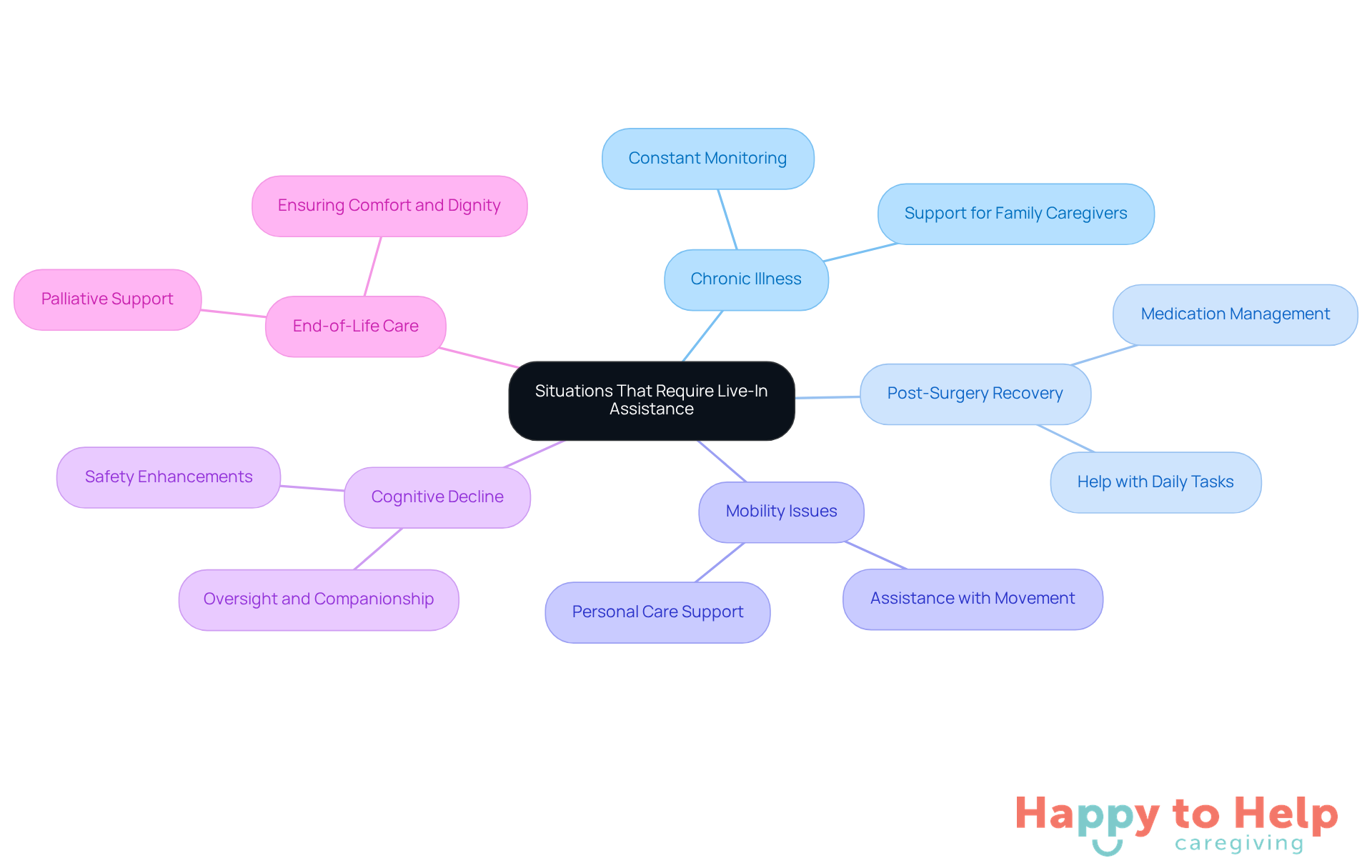
Chronic Illness: Individuals with chronic conditions such as heart disease, diabetes, or Alzheimer's often face the challenge of needing constant monitoring and support. This can be overwhelming for family caregivers, who may struggle to provide the necessary level of care.
-
Post-Surgery Recovery: After surgery, patients frequently need help with daily tasks and medication management. This period can be particularly stressful for families, making live in help a practical solution to ensure that patients receive the care they need during recovery.
-
Mobility Issues: Seniors or individuals with mobility challenges may find daily tasks increasingly difficult. The presence of an assistant can significantly alleviate this burden, providing essential help with movement and personal care.
-
Cognitive Decline: Those facing cognitive decline can benefit from live-in assistants who offer oversight and companionship. This support not only enhances safety but also reduces the risk of accidents, providing peace of mind for families.
-
End-of-Life Care: Families seeking palliative support for terminally ill relatives often choose live-in assistants to ensure comfort and dignity during this sensitive time. Having a dedicated caregiver can make a profound difference in the quality of life for both the patient and their family.
Identifying these scenarios can aid families in deciding when live in help is the optimal option for their relatives.
Guide to Hiring and Integrating Live-In Caregivers
Hiring and integrating live in help can be a daunting task for families. The challenge lies in ensuring that the caregiver meets the specific needs of your loved one while also fitting into the family dynamic. This process can be overwhelming, but with a clear approach, it can create an environment where we live in help and support.
-
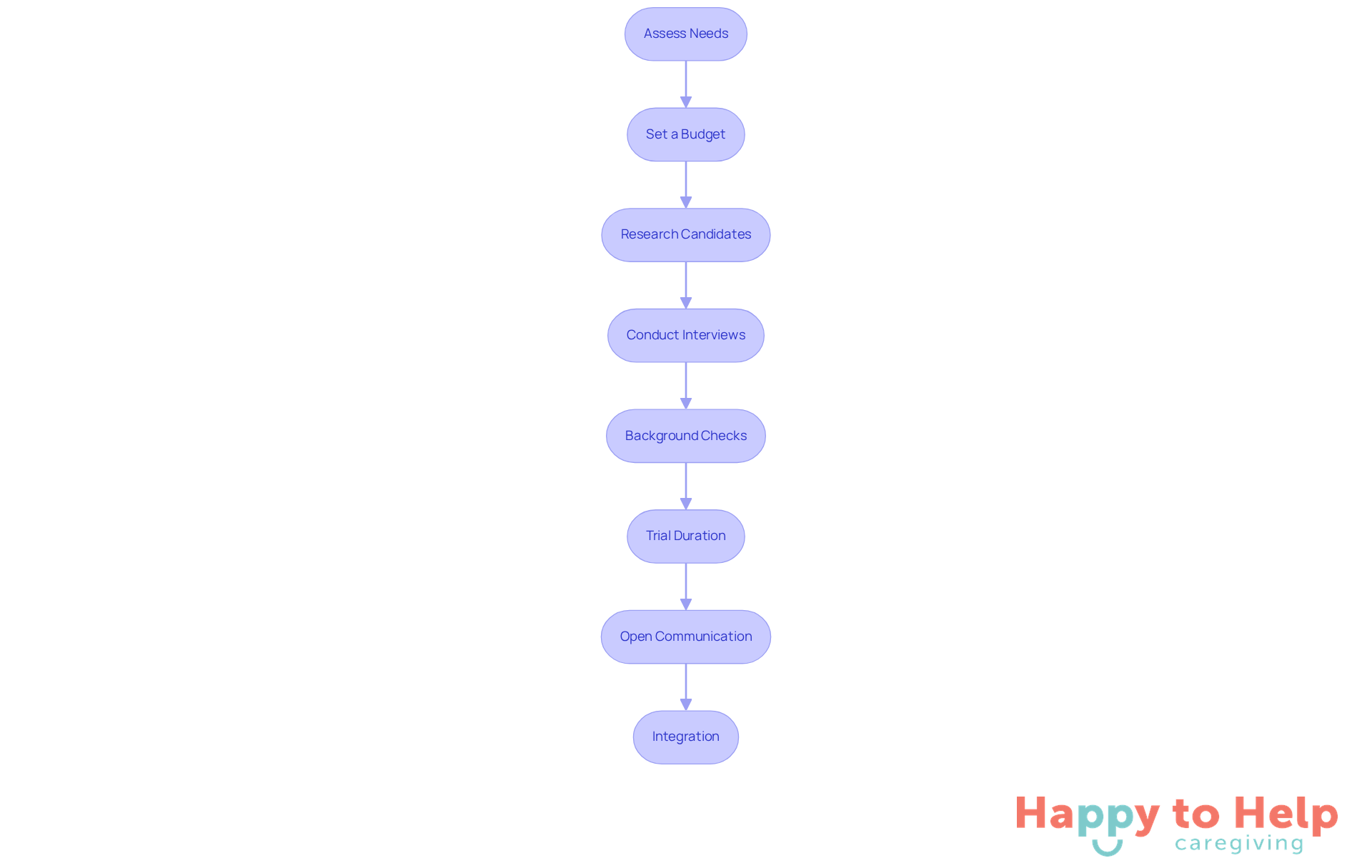
Assess Needs: Start by determining the specific care needs of your loved one. Assess their medical requirements, daily tasks, and individual preferences to ensure that the assistance provided is effective.
-
Set a Budget: Understand the financial implications of employing a live-in aide. This includes wages, taxes, and possible agency fees. The national median cost for nonmedical in-home support averages approximately $33 per hour, varying by location and the experience of the provider.
-
Research Candidates: Seek support providers through reputable agencies or personal referrals. Verify their credentials, experience, and references to ensure they align with your family member's needs.
-
Conduct Interviews: Interview potential support providers to assess their compatibility with your loved one. Discuss their experience, approach to care, and availability to gauge how well they might fit into your family dynamic.
-
Background Checks: Conduct comprehensive background checks to ensure the safety and trustworthiness of the individual providing care. This step is crucial for establishing trust and security in the caregiving relationship.
-
Trial Duration: Consider introducing a trial period to assess the provider's compatibility with your family and your relative's requirements. This allows both parties to adjust and evaluate their fit in a real-world setting.
-
Open Communication: Establish clear communication channels among the provider, family members, and the care recipient. Open dialogue fosters a collaborative environment and helps address any concerns promptly.
-
Integration: Gradually introduce the support person, allowing your loved one to adjust to their presence. Encourage social interactions and shared activities to build rapport. Starting with straightforward activities can ease the transition, especially for individuals with dementia or Alzheimer’s, who may be resistant to new support.
By following these steps, families can create a supportive atmosphere that enhances the quality of live in help and fosters positive connections between caregivers and care recipients.
Address Challenges and Emotional Considerations for Family Caregivers
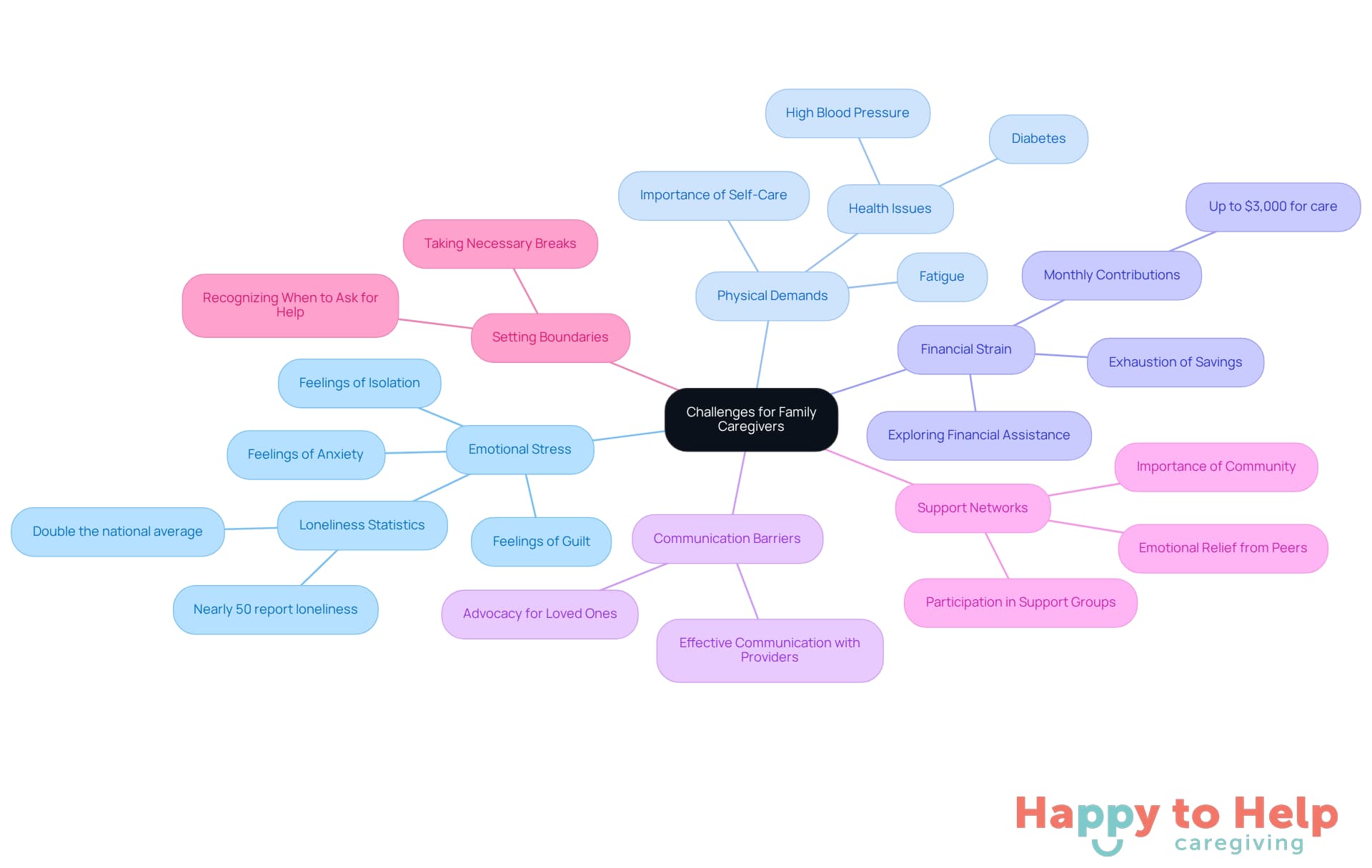
Family caregivers often face significant challenges that can impact their emotional and physical well-being.
-
Emotional Stress: Caregiving can lead to feelings of anxiety, guilt, and isolation. Nearly half of caregivers report experiencing loneliness, which is more than double the national average. Acknowledging these emotions and seeking support is crucial for mental well-being.
-
Physical Demands: The physical toll of caregiving can result in fatigue and health issues, such as high blood pressure and diabetes. Caregivers should prioritize self-care and explore options that provide live in help to effectively manage their physical health.
-
Financial Strain: The financial burden of caregiving can be considerable. Many individuals, like Christina Keys, contribute up to $3,000 monthly for their family members' care. Exploring financial assistance programs can provide live in help to alleviate some of this strain.
-
Communication Barriers: Effective communication with healthcare providers and family members is essential. Caregivers must advocate for their loved ones, ensuring their needs are clearly articulated and met.
-
Support Networks: Establishing a support network of friends, family, and professionals who live in help can significantly reduce feelings of isolation. Participating in support groups offers emotional relief and practical advice, fostering a sense of community. As Marvell Adams, CEO of the Caregiver Action Network, emphasizes, caregivers should know they are not alone in their struggles.
-
Setting Boundaries: It's vital for caregivers to set boundaries to protect their own well-being. This includes recognizing when to ask for help and taking necessary breaks to recharge.
Key Takeaways for Caregivers
The essence of live-in help lies in its ability to provide continuous support for individuals facing age, illness, or disability challenges. Families often experience stress and anxiety regarding their loved ones' safety and well-being. This arrangement not only enhances the quality of care but also alleviates these concerns, allowing families to focus on what truly matters.
Situations such as:
- Chronic illness
- Post-surgery recovery
- Mobility issues
- Cognitive decline
- End-of-life care
highlight when live-in help becomes essential. The emotional and physical challenges faced by family caregivers can be overwhelming. Recognizing these challenges underscores the necessity of a support system that includes live-in caregivers.
To address these issues, families are encouraged to prioritize their loved ones' needs while also considering their own well-being. By incorporating live-in caregivers, families can ensure their relatives maintain a sense of independence in a familiar environment. This creates a nurturing atmosphere that fosters both comfort and security.
Ultimately, the decision to seek live-in help is about enhancing the quality of life for both the care recipient and their family. Embracing this approach allows caregivers to navigate the complexities of their roles more effectively, fostering a harmonious balance that benefits everyone involved. By utilizing the insights shared, families can create a supportive environment that promotes well-being for all.
https://iframe.tely.ai/cta/eyJhcnRpY2xlX2lkIjogIjY5MjNhMGE3MjcyNDliYTNkMmMzZTVmZSIsICJjb21wYW55X2lkIjogIjY4ZWU1ZGNhNzMxNzYyNTU3ZjNjOTVjMSIsICJpbmRleCI6IG51bGwsICJ0eXBlIjogImFydGljbGUifQ==Frequently Asked Questions
What is live-in help?
Live-in help refers to a professional caregiver who resides in a client's home to provide continuous support for individuals due to age, illness, or disability.
Why is live-in help important for family caregivers?
Live-in help is important because it addresses the challenges faced by families needing continuous support for their loved ones, alleviating anxiety about safety and well-being, and reducing the stress families may feel about their loved ones being alone.
What are the implications of not having live-in help?
Without live-in help, individuals may struggle to maintain their independence, leading to a decline in their quality of life. This situation can increase stress and concern for families regarding their loved ones' safety and well-being.
How does live-in help improve the quality of care?
Live-in help enhances the quality of care by providing personalized, one-on-one attention to clients, fostering a sense of security and comfort for both the clients and their families.
What benefits does live-in help provide to families?
Live-in help allows families to rest easier, knowing their loved ones are safe and receiving the necessary assistance at all times, which alleviates family concerns and improves overall peace of mind.
How does live-in help support independence for individuals?
Live-in help enables individuals to receive necessary support in a familiar environment, which helps them preserve their independence while ensuring they have the assistance they need.
List of Sources
- Define Live-In Help and Its Importance for Family Caregivers
- The Caregiving Landscape: Data & Insights on the Caregiver Experience in the U.S. (https://caregiveraction.org/caregiver-statistics)
- Number of Family Caregivers Supporting Older Adults Increased Nearly One-Third Between 2011 and 2022 | Johns Hopkins Bloomberg School of Public Health (https://publichealth.jhu.edu/2025/number-of-family-caregivers-supporting-older-adults-increased-nearly-one-third-between-2011-and-2022)
- Caregiving in the US 2025 (https://aarp.org/pri/topics/ltss/family-caregiving/caregiving-in-the-us-2025)
- Fact Sheet: Trends in Family Care for Older Americans (https://prb.org/resources/fact-sheet-trends-in-family-care-for-older-americans)
- Identify Situations That Require Live-In Assistance
- She cares for her aging parents full time. That requires taking care of herself, too (https://npr.org/2025/11/20/nx-s1-5522341/unpaid-caregivers-elderly-support)
- As Family Caregiving Grows, So Does the Need for Reform - Medicare Rights Center (https://medicarerights.org/medicare-watch/2025/08/14/as-family-caregiving-grows-so-does-the-need-for-reform)
- WHO calls for urgent transformation of care and support systems for older people (https://who.int/news/item/01-10-2024-who-calls-for-urgent-transformation-of-care-and-support-systems-for-older-people)
- In-Home Care for Seniors - Caregiving News and Tips (https://aarp.org/caregiving/home-care)
- What Is the Caregiver Crisis? | Johns Hopkins Bloomberg School of Public Health (https://publichealth.jhu.edu/2025/what-is-the-caregiver-crisis)
- Guide to Hiring and Integrating Live-In Caregivers
- How to Hire an In-Home Caregiver (https://aplaceformom.com/caregiver-resources/articles/hiring-an-in-home-caregiver)
- Here's what to know about hiring a caregiver from start to finish (https://care.com/c/caregiver-agencies-vs-independent-care)
- Caregiver Statistics: Work and Caregiving (https://caregiver.org/resource/caregiver-statistics-work-and-caregiving)
-
- Introducing and Integrating New Caregivers: 6 Essential Tips (https://thecaregiversjourney.org/34-introducing-and-integrating-new-caregivers-6-essential-tips)
- How To Prepare a Home for a Live-In Caregiver: Essential Steps for a Smooth Transition? (https://legacyhc.net/how-to-prepare-a-home-for-a-live-in-caregiver-essential-steps-for-a-smooth-transition)
- Address Challenges and Emotional Considerations for Family Caregivers
- Family Caregiver Support, Education Needs Growing (https://hospicenews.com/2025/11/11/family-caregiver-support-education-needs-growing)
- Caregiving can be a tough, lonely mission. One daughter found ways to reconnect (https://npr.org/sections/shots-health-news/2024/10/31/nx-s1-5172517/caregiver-caregiving-isolation-burnout-resources)
- 'I don't know where to start.' Parents and caregivers are burned out. Who's most at risk? (https://usatoday.com/story/money/2025/04/04/parents-caregivers-burnt-out-help/82695959007)
- New Report Reveals Crisis Point for America’s 63 million Family Caregivers (https://press.aarp.org/2025-07-24-New-Report-Reveals-Crisis-Point-for-Americas-63-million-Family-Caregivers)
- Family Caregivers Struggling In Some States More Than Others (https://disabilityscoop.com/2025/10/31/family-caregivers-struggling-in-some-states-more-than-others/31710)