
For families in our service areas
For families in our service areas, this guide explains caregiver support and how non-medical in-home caregiving can support care planning in East Idaho, Treasure Valley & Magic Valley, Northern Wasatch, North Central West Virginia, and Northeast Ohio.
Understanding Living Caregivers: Roles, Challenges,
The landscape of caregiving is rapidly evolving, reflecting the pressing needs of an aging population and the complexities of modern life. Living caregivers have emerged as a vital solution, offering not just assistance with daily tasks but also essential companionship that fosters emotional well-being. However, the role of these caregivers is fraught with challenges, raising questions about their support systems and the recognition they deserve.
How can society better advocate for living caregivers to ensure they can continue to provide the indispensable care that enhances the quality of life for those they serve? This question highlights the urgent need for action. Without adequate support, caregivers may struggle to meet the demands placed upon them, potentially compromising the quality of care they provide.
To address these challenges, it is crucial to implement practical solutions that empower caregivers. This includes advocating for better resources, training programs, and community support systems that recognize the invaluable contributions of living caregivers.
Defining a Living Caregiver
Use english for answers
The Problem of Inadequate Care
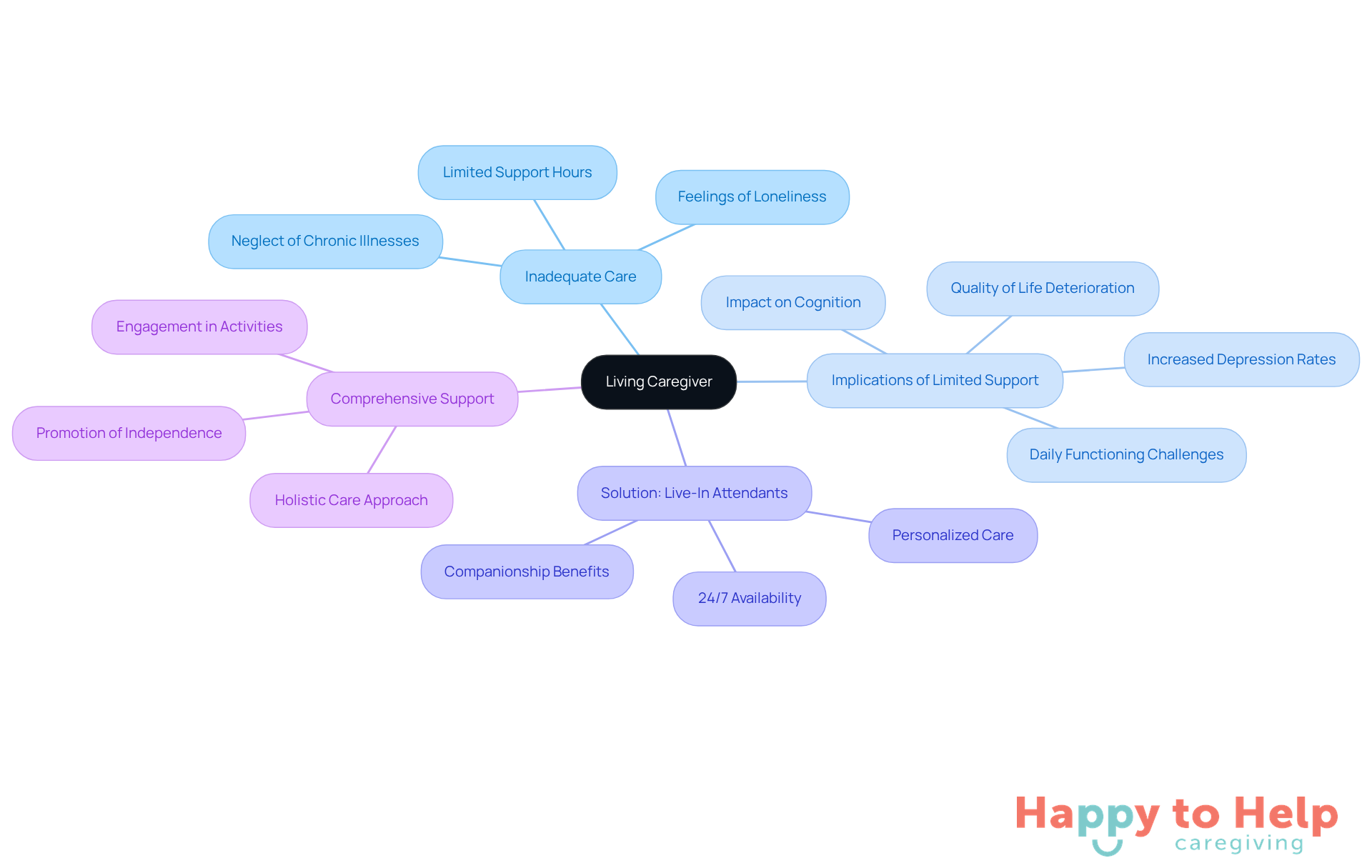
Many individuals requiring assistance face challenges due to insufficient support. Traditional caregivers often provide help only during designated hours, leaving gaps in care that can lead to feelings of loneliness and neglect, making a living caregiver an essential option. This is particularly concerning for those with chronic illnesses, disabilities, or those recovering from surgery, who need consistent support in a familiar environment.
The Implications of Limited Support
Research shows that elderly individuals who remain at home generally exhibit improved cognition, better daily functioning, decreased depression, and lower rates of incontinence compared to those in institutional settings. Without adequate support, individuals may struggle with daily tasks and emotional well-being, impacting their overall quality of life.
The Solution: Live-In Attendants
Live-in attendants offer a solution by providing ongoing assistance and companionship. They are available around the clock, ensuring that individuals receive vital aid with daily tasks and emotional care. This arrangement fosters a personalized and consistent level of care provided by a living caregiver, significantly enhancing the quality of life for those they assist.
Comprehensive Support
Live-in helpers not only aid individuals in maintaining their routines but also engage them in activities they enjoy, reducing feelings of isolation. This comprehensive approach is essential, especially as caregivers often overlook their own needs while providing support. By ensuring clients receive holistic care, living caregivers promote independence and well-being, making them invaluable partners in home care.
Context and Importance of Living Caregivers
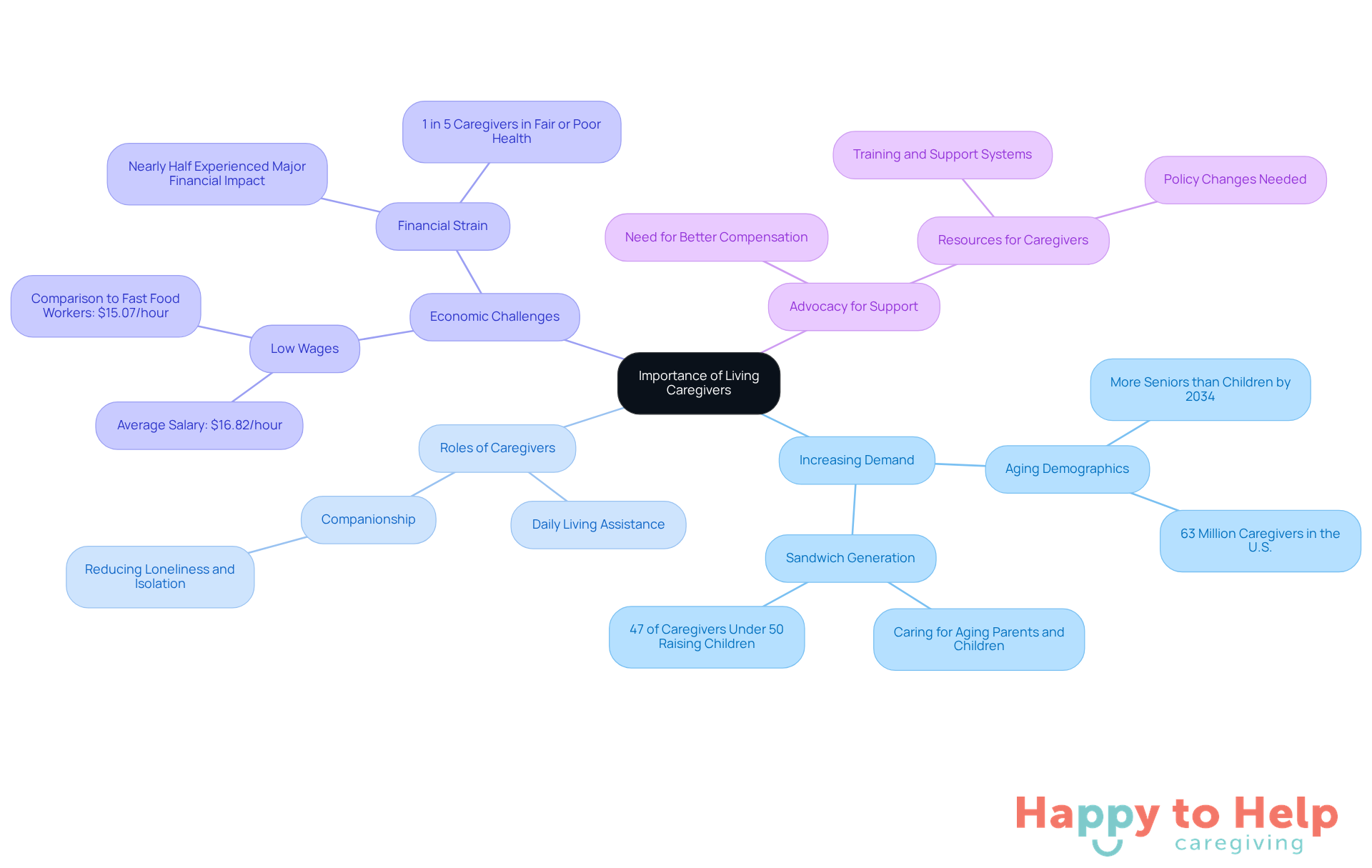
The demand for living caregivers has surged in recent years, driven by an aging demographic and a growing desire for aging in place. By 2034, projections indicate that there will be more seniors than children in the U.S., underscoring the urgency of the senior care crisis. Currently, around 63 million Americans serve as living caregivers, with a significant portion assisting in home settings.
This situation presents a dual challenge: living caregivers not only help with daily living tasks but also offer vital companionship, which is crucial for emotional well-being. The presence of a living caregiver can significantly reduce feelings of loneliness and isolation, creating a supportive environment that fosters independence and dignity for clients.
However, the economic realities of caregiving are stark. The average salary for home health aides is $16.82 per hour, just above the $15.07 earned by fast food workers. This reflects the financial strain many caregivers face, as highlighted by AARP and the National Alliance for Caregiving. Caregivers often experience financial challenges, which emphasizes the essential role they play in our society.
To address these issues, it is vital to advocate for better support systems for living caregivers, including fair compensation and resources that recognize their contributions. By doing so, we can help alleviate some of the burdens they carry and ensure that they can continue to provide the necessary care for our aging population.
Historical Evolution of Living Caregiving
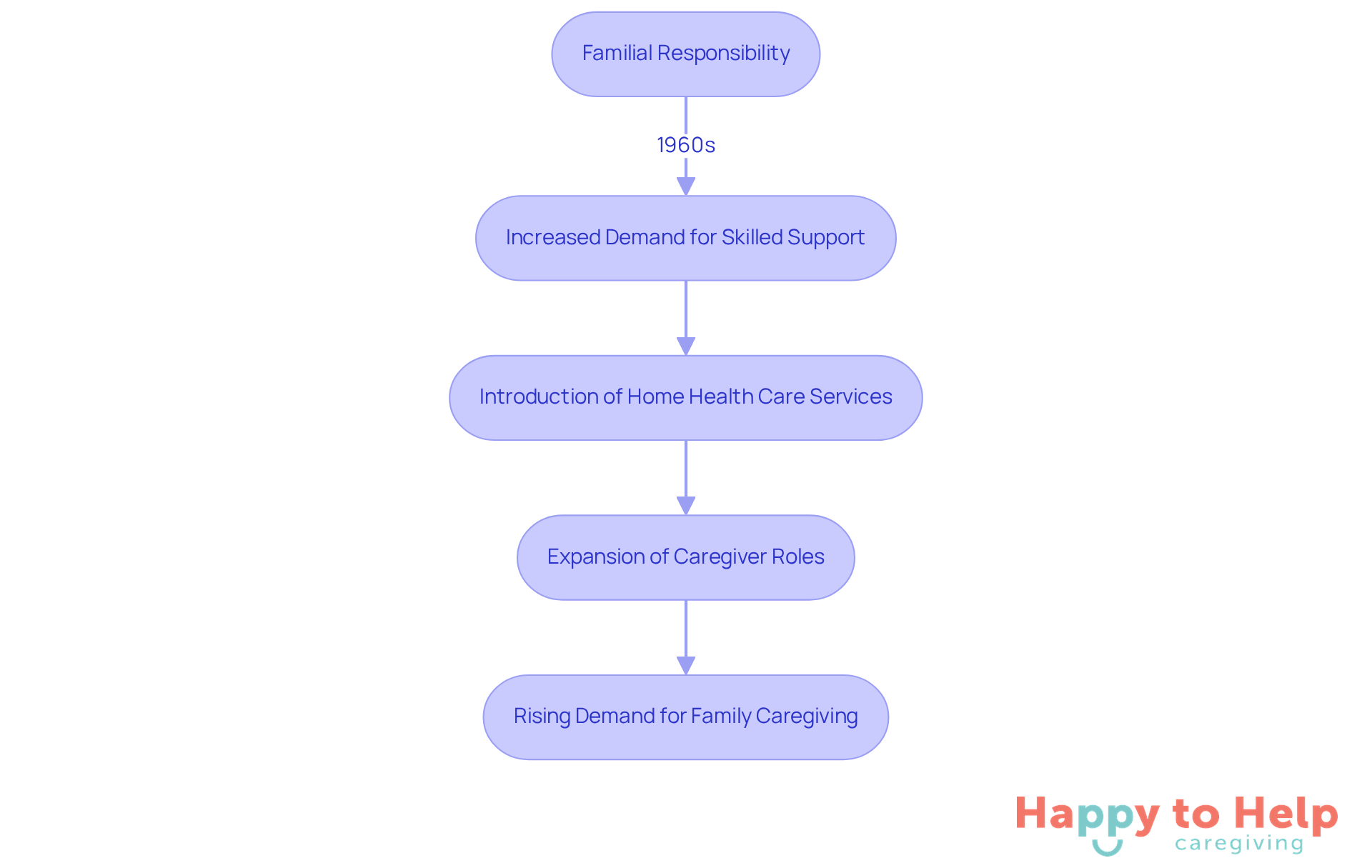
Historically, caregiving was primarily a familial responsibility, with relatives caring for aging parents or disabled family members. However, as social frameworks evolved, particularly in the 20th century, the demand for skilled support providers increased. The introduction of home health care services in the 1960s marked a significant shift, enabling families to hire providers for daily assistance.
As the role of living caregivers expanded over the decades, they adapted to meet the needs of clients with various health conditions, becoming integral to the healthcare system. This shift is especially relevant as more individuals opt to remain at home rather than enter institutional care. With the oldest baby boomers turning 80 next year, the demand for family caregiving is expected to rise significantly. Rita B. Choula emphasizes that "with the oldest baby boomers turning 80 next year, the need for family caregiving will only intensify in the years ahead."
Financial pressure is a major concern for caregivers. Over one-third of individuals providing care report that they have stopped saving due to their responsibilities. Additionally, 70% of working-age caregivers are part of the workforce, balancing professional obligations with caregiving duties. This highlights the essential role that living caregivers play within the healthcare system, connecting family assistance and professional care.
Core Responsibilities of Living Caregivers
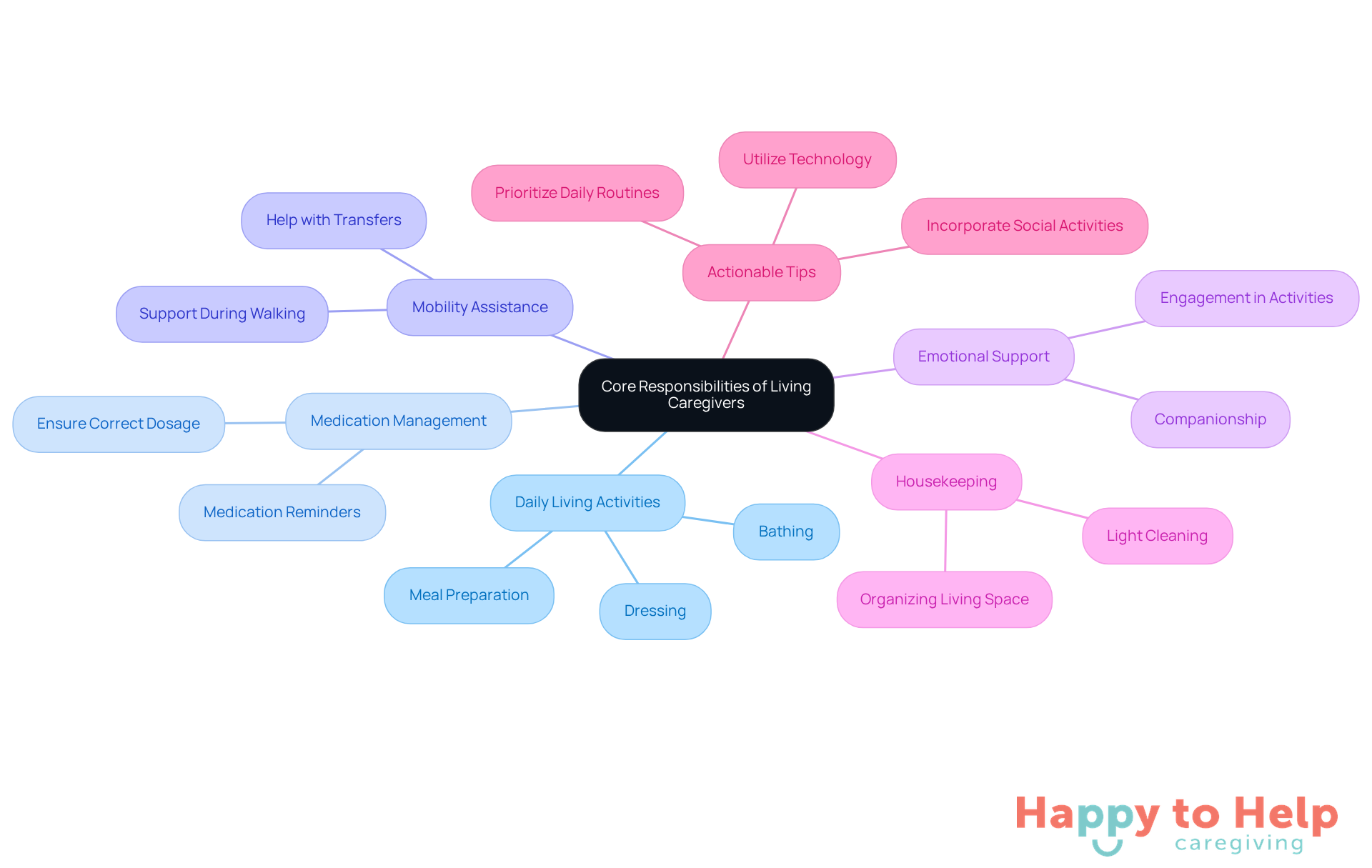
Residential support providers face significant challenges in ensuring the welfare of those they assist. These responsibilities can be overwhelming, as they encompass a range of duties that a living caregiver must perform, including aiding with activities of daily living (ADLs) such as bathing, dressing, and meal preparation. The implications of these tasks are profound, as they directly impact the quality of life for clients.
To address these challenges, a living caregiver must manage medications, provide mobility assistance, and help with light housekeeping tasks. In addition to providing physical support, a living caregiver also offers emotional backing and companionship, engaging individuals in activities that promote mental engagement and social interaction. This multifaceted role of a living caregiver is crucial in maintaining a safe and comfortable living environment, allowing clients to thrive in their own homes.
Here are some actionable tips for caregivers:
- Prioritize daily routines to streamline care tasks.
- Incorporate social activities to enhance emotional well-being.
- Utilize technology for medication management and reminders.
By implementing these strategies, caregivers can better navigate their responsibilities and improve the overall care experience for their clients.
Challenges and Support for Living Caregivers
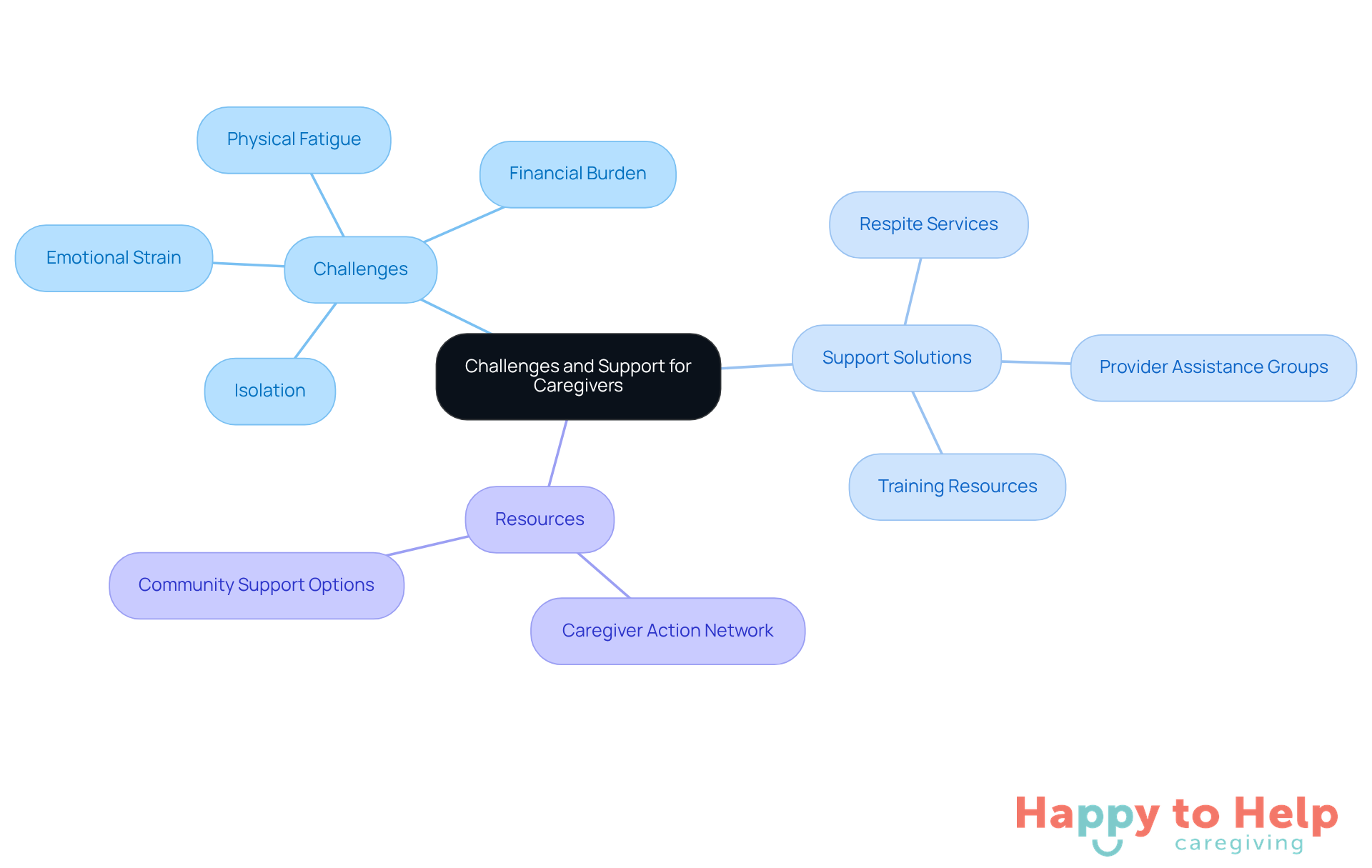
Caregivers face significant challenges, including emotional strain, physical fatigue, and the complexities of managing intricate care needs. Nearly half of caregivers report a decline in their mental well-being, underscoring the seriousness of their responsibilities and the urgent need for support systems. Many also experience feelings of isolation and exhaustion due to the demanding nature of their roles.
The financial burden on caregivers is considerable, with many encountering economic difficulties as a result of their caregiving duties. This situation highlights the pressing need for effective assistance systems. Solutions such as:
- Respite services
- Provider assistance groups
- Access to training resources
are essential for helping caregivers navigate these challenges.
Organizations like the Caregiver Action Network provide valuable resources and community support, enabling caregivers to connect with others in similar situations and share coping strategies. As Jisoo Choi notes, caregivers are often the 'linchpin in the health care of older adults,' emphasizing their critical role and the necessity for assistance.
By addressing these challenges and enhancing support systems, we can significantly improve the well-being of caregivers, ultimately benefiting the clients they serve.
Moving Forward with Living Caregivers: Roles, Challenges,
Living caregivers face significant challenges in the healthcare landscape, impacting their ability to provide essential support and companionship to those in need. The growing demand for their services, driven by an aging population and a preference for aging in place, highlights the urgency of addressing these issues. Financial strain and emotional fatigue are common, making it difficult for caregivers to maintain their own well-being while supporting others.
To tackle these challenges, it is crucial to advocate for improved support systems and fair compensation. Caregivers should seek access to resources that can alleviate their burdens, such as:
- Community support groups
- Training programs
Recognizing the contributions of living caregivers is vital; they are the backbone of home care, significantly influencing patient outcomes and the overall quality of life for the aging population.
By implementing these solutions, we can ensure that living caregivers continue to provide high-quality care. Valuing their work not only benefits the caregivers themselves but also enhances the care experience for those they assist. Together, we can create a supportive environment that fosters independence and dignity for both caregivers and clients.
https://iframe.tely.ai/cta/eyJhcnRpY2xlX2lkIjogIjY5Mjc5NGRkMTRjODUwNzI1NGI4N2M0ZiIsICJjb21wYW55X2lkIjogIjY4ZWU1ZGNhNzMxNzYyNTU3ZjNjOTVjMSIsICJpbmRleCI6IG51bGwsICJ0eXBlIjogImFydGljbGUifQ==Frequently Asked Questions
What is a living caregiver?
A living caregiver is an individual who provides ongoing assistance and companionship to those requiring support, available around the clock to help with daily tasks and emotional care.
Why is there a need for living caregivers?
There is a need for living caregivers due to the challenges of inadequate care from traditional caregivers, who often provide help only during specific hours, leading to feelings of loneliness and neglect for individuals with chronic illnesses, disabilities, or those recovering from surgery.
What are the benefits of having a living caregiver?
Living caregivers offer continuous support, improve emotional well-being, enhance daily functioning, and reduce feelings of isolation, significantly improving the overall quality of life for those they assist.
How do living caregivers impact the emotional well-being of their clients?
Living caregivers provide vital companionship, which helps reduce feelings of loneliness and isolation, fostering a supportive environment that promotes independence and dignity for clients.
What is the current demand for living caregivers in the U.S.?
The demand for living caregivers has increased due to an aging population and a growing desire for seniors to age in place. By 2034, there will be more seniors than children in the U.S., highlighting the urgency of the senior care crisis.
What are the economic challenges faced by living caregivers?
Living caregivers often face financial challenges, with the average salary for home health aides being around $16.82 per hour, which is only slightly above the minimum wage and comparable to fast food workers' earnings.
What can be done to support living caregivers?
It is essential to advocate for better support systems for living caregivers, including fair compensation and resources that recognize their contributions, to help alleviate their burdens and ensure they can continue providing necessary care.
List of Sources
- Defining a Living Caregiver
- The National Alliance for Caregiving and AARP Release Caregiving Report - CAPC - News Bites (https://capc.org/blog/new-data-on-family-caregivers-in-the-us)
- The Caregiving Landscape: Data & Insights on the Caregiver Experience in the U.S. (https://caregiveraction.org/caregiver-statistics)
- Caregiver Statistics: Demographics (https://caregiver.org/resource/caregiver-statistics-demographics)
- Live-in caregiver - Wikipedia (https://en.wikipedia.org/wiki/Live-in\_caregiver)
- Number of Family Caregivers Supporting Older Adults Increased Nearly One-Third Between 2011 and 2022 | Johns Hopkins Bloomberg School of Public Health (https://publichealth.jhu.edu/2025/number-of-family-caregivers-supporting-older-adults-increased-nearly-one-third-between-2011-and-2022)
- Context and Importance of Living Caregivers
- National Alliance for Caregiving: Caregiving in the US 2025 Report (https://johnahartford.org/resources/view/national-alliance-for-caregiving-caregiving-in-the-us-2025-report)
- Opinion | America’s Caregivers Are in Crisis (https://nytimes.com/2025/11/24/opinion/caregiving-crisis.html)
- 63 million Americans are family caregivers | AHA News (https://aha.org/news/headline/2025-07-25-63-million-americans-are-family-caregivers)
- The senior population is booming. Caregiving is struggling to keep up (https://cnbc.com/2025/11/21/senior-caregiving-labor.html)
- New Report Reveals Crisis Point for America’s 63 million Family Caregivers - Massachusetts Healthy Aging Collaborative (https://mahealthyagingcollaborative.org/new-report-reveals-crisis-point-for-americas-63-million-family-caregivers)
- Historical Evolution of Living Caregiving
- National Alliance for Caregiving: Caregiving in the US 2025 Report (https://johnahartford.org/resources/view/national-alliance-for-caregiving-caregiving-in-the-us-2025-report)
- Caregiver Statistics: Demographics (https://caregiver.org/resource/caregiver-statistics-demographics)
- Caregiving Crisis: 45% Increase in Americans Providing Care (https://aarp.org/caregiving/basics/caregiving-in-us-survey-2025)
- Number of Family Caregivers Supporting Older Adults Increased Nearly One-Third Between 2011 and 2022 | Johns Hopkins Bloomberg School of Public Health (https://publichealth.jhu.edu/2025/number-of-family-caregivers-supporting-older-adults-increased-nearly-one-third-between-2011-and-2022)
- Core Responsibilities of Living Caregivers
- Opinion | America’s Caregivers Are in Crisis (https://nytimes.com/2025/11/24/opinion/caregiving-crisis.html)
- 2023 Study — Caregiving in America, Statistics on Family Caregivers and Beyond | Guardian (https://guardianlife.com/reports/caregiving-in-america)
- The Role of Assisted Living Caregivers - FellowshipLIFE (https://fellowshiplifeinc.org/blog/the-role-of-assisted-living-caregivers-what-families-should-know)
- Caregivers are in crisis. How bad it is depends on where you live, new data shows. (https://usatoday.com/story/life/health-wellness/2025/10/28/caregiver-crisis-state-by-state/86855003007)
- New Report Reveals Crisis Point for America’s 63 million Family Caregivers (https://press.aarp.org/2025-07-24-New-Report-Reveals-Crisis-Point-for-Americas-63-million-Family-Caregivers)
- Challenges and Support for Living Caregivers
- HHS Backs AI Innovation for America’s Caregivers | HHS.gov (https://hhs.gov/press-room/hhs-backs-ai-innovation-for-americas-caregivers.html)
- New Report Reveals Crisis Point for America’s 63 million Family Caregivers (https://states.aarp.org/maryland/caregiving-report)
- You’re not alone in caregiving (https://health.ucdavis.edu/news/headlines/youre-not-alone-in-caregiving/2025/11)
- Honoring America’s Family Caregivers, the Unseen Workforce Behind Our Health System - Medicare Rights Center (https://medicarerights.org/medicare-watch/2025/11/25/honoring-americas-family-caregivers-the-unseen-workforce-behind-our-health-system)
- Opinion | America’s Caregivers Are in Crisis (https://nytimes.com/2025/11/24/opinion/caregiving-crisis.html)