

For families in our service areas
For families in our service areas, this guide explains personal care and how non-medical in-home caregiving can support care planning in East Idaho, Treasure Valley & Magic Valley, Northern Wasatch, North Central West Virginia, and Northeast Ohio.
The Importance of Personal Care Agreements: Key Insights
Navigating the complexities of caregiving can be daunting. Informal arrangements often lead to misunderstandings and stress, creating a challenging environment for caregivers. This situation not only affects the quality of care provided but can also strain relationships between caregivers and recipients.
Personal Care Agreements (PCAs) emerge as a vital tool in this context. By clearly outlining specific responsibilities and compensation, these agreements enhance the quality of support while safeguarding the financial stability of both caregivers and recipients. However, establishing these agreements can be emotionally challenging, leaving caregivers uncertain about how to initiate these crucial conversations.
So, what steps can caregivers take to ensure that everyone involved feels supported and understood? It's essential to approach these discussions with empathy and clarity, fostering an environment where open communication can thrive.
Define Personal Care Agreement
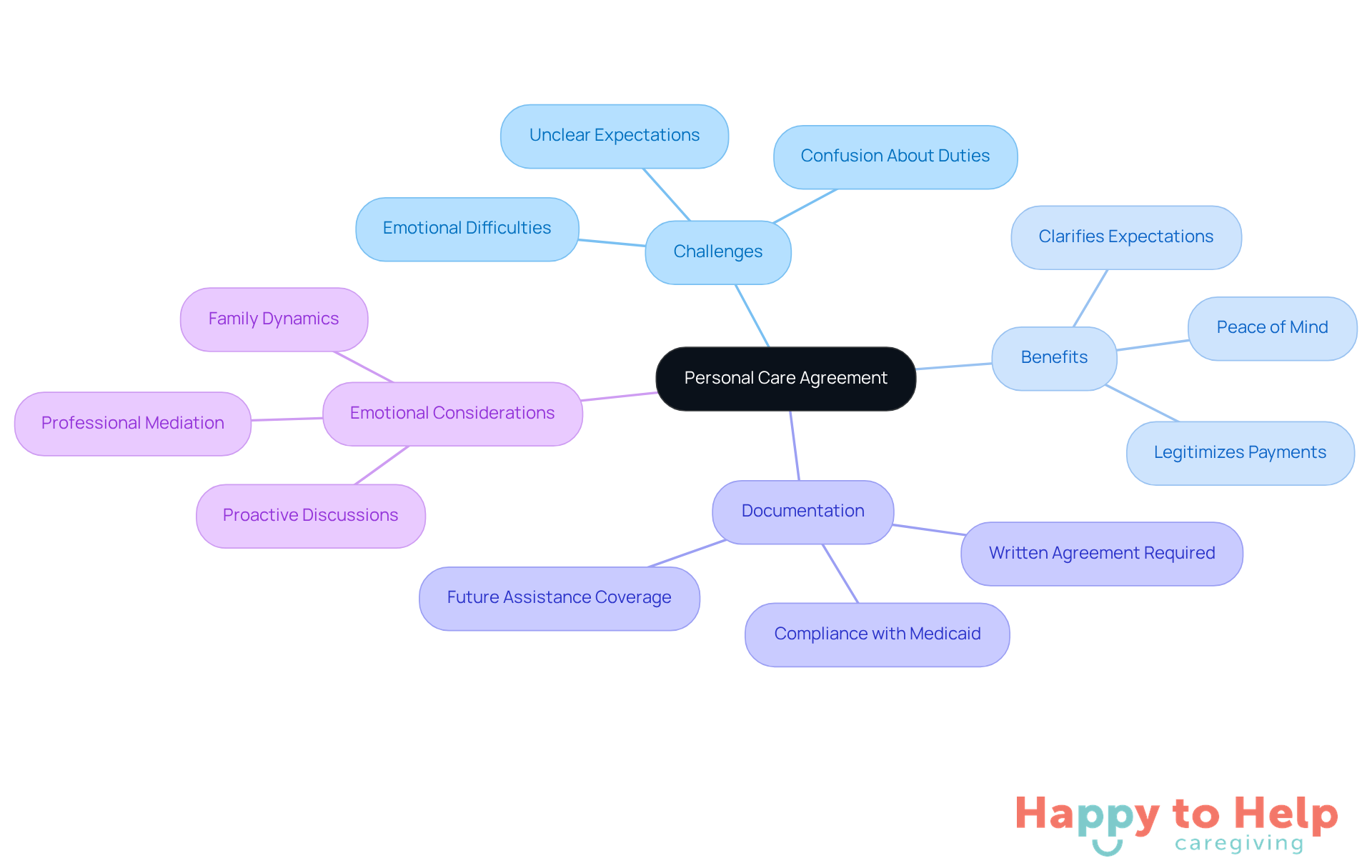
A Personal Support Contract (PCA) addresses a significant problem faced by caregivers: the lack of formal arrangements in providing assistance. Without a PCA, caregivers may struggle with unclear expectations, leading to potential misunderstandings and stress. This situation can be particularly challenging for family members who take on caregiving roles, as they often juggle their own responsibilities alongside providing support.
The implications of not having a PCA are profound. In 2020, nearly 42 million Americans served as unpaid family supporters for individuals aged 50 and above. This informal arrangement can lead to confusion about the type of assistance provided, payment for services, and the duties of both parties involved. Establishing a personal care agreement clarifies these expectations and fosters a professional relationship that benefits both the provider and the recipient.
To address these challenges, caregivers should consider formalizing their caregiving arrangements through a personal care agreement. This contract outlines the specific assistance to be offered, payment details, and the responsibilities of each party. It not only improves the quality of support for the elderly but also provides peace of mind for everyone involved. As Gregg Balbera states, 'A personal care agreement is essential for ensuring everyone’s peace of mind when a relative is going to be providing the caregiving.'
Moreover, it is crucial for the PCA to be documented and to cover future assistance, ensuring compliance with Medicaid regulations. Caregivers must also be aware of the Medicaid look-back period of up to five years, which evaluates spending and asset levels that can affect eligibility for long-term support assistance.
While the emotional difficulties linked to forming support agreements can complicate the process, approaching discussions thoughtfully and potentially involving a professional mediator can ease the burden. By taking these steps, caregivers can create a structured and supportive environment that benefits both themselves and their loved ones.
Explain the Importance of Personal Care Agreements
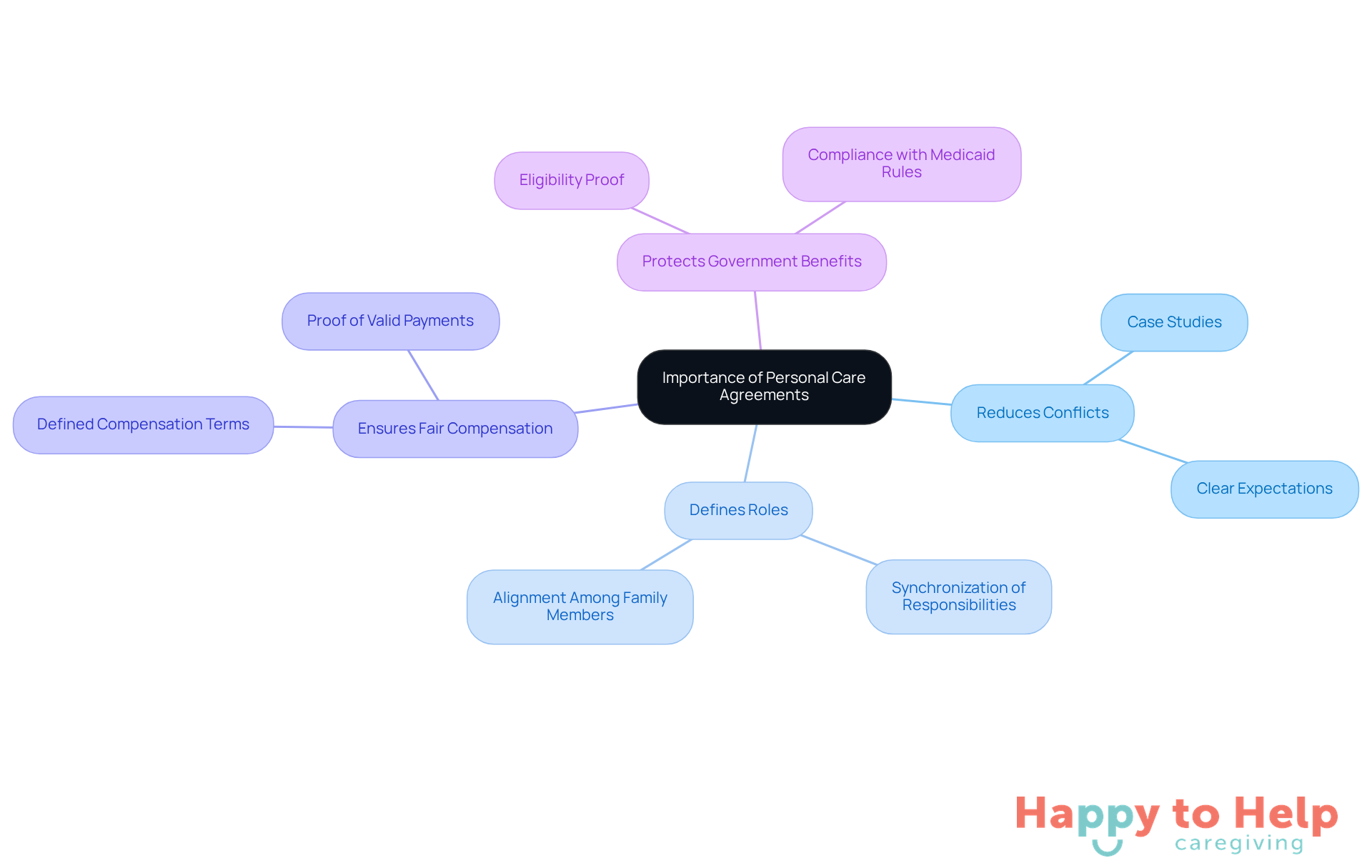
Personal support arrangements address a significant problem in caregiving: misunderstandings and conflicts among relatives. These issues can lead to stress and confusion, particularly in complex family dynamics. By clearly defining specific duties and compensation, a personal care agreement helps ensure that support providers receive fair remuneration for their time and efforts.
Moreover, formalizing these arrangements protects the recipient's eligibility for government benefits, such as Medicaid. This is crucial because it provides proof that payments to support providers are valid compensation rather than gifts, preserving financial stability for both parties involved.
Case studies highlight the effectiveness of personal care agreements in reducing conflicts. Households that established clear personal care agreements reported fewer disputes regarding expectations and responsibilities. This clarity fosters a more harmonious caregiving environment.
Additionally, these personal care agreements assist in defining roles, ensuring that all family members are aligned on their support responsibilities and compensation. This synchronization ultimately promotes a nurturing environment for both providers and recipients of assistance.
Outline Key Components of a Personal Care Agreement
A well-organized personal care agreement is crucial for establishing clear expectations and legal protections for both caregivers and those receiving assistance. Without such an agreement, misunderstandings can arise, leading to disputes and dissatisfaction.
To address this issue, here are key components to include in your personal support agreement:
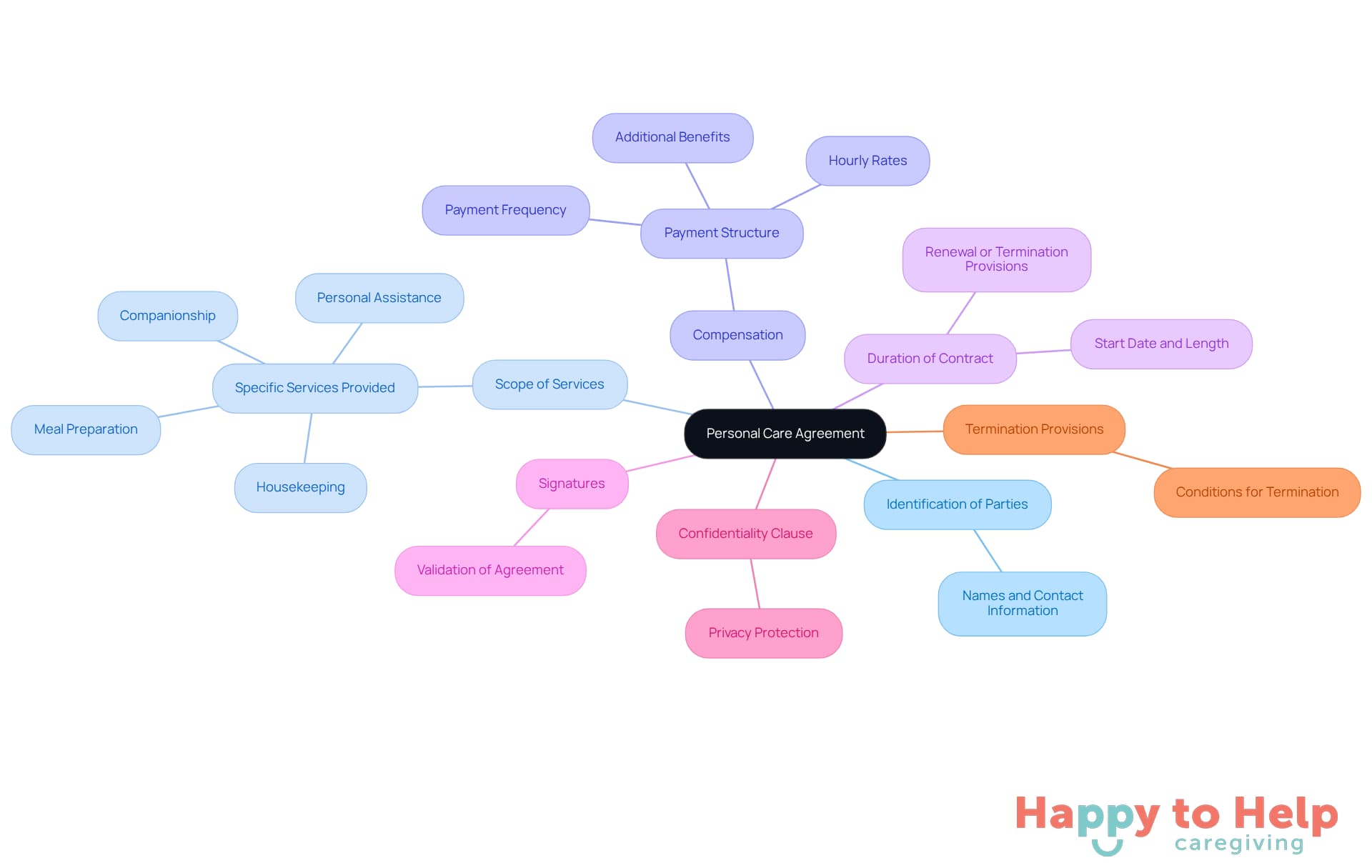
- Identification of Parties: Clearly state the names and contact information of both the caregiver and the individual receiving assistance.
- Scope of Services: Detail the specific services to be provided, such as personal assistance, companionship, meal preparation, and housekeeping. This specificity helps prevent misunderstandings about responsibility for assistance.
- Compensation: Outline the payment structure, including hourly rates, payment frequency, and any additional benefits. Compensation must be reasonable and not exceed what would be paid to a third party for similar services in the state.
- Duration of Contract: Specify the start date of the caregiving services and the length of the contract, including provisions for renewal or termination. This clarity aids in managing expectations and allows for modifications as support needs change.
- Signatures: Both parties should sign and date the document to validate it legally, ensuring that all terms are acknowledged and accepted.
- Confidentiality Clause: Include a provision to safeguard the privacy of the recipient's personal and medical information, emphasizing the significance of confidentiality in support relationships.
- Termination Provisions: Include specific terms regarding how the contract can be terminated, which is essential for managing expectations and ensuring clarity.
By including these elements, you not only create a thorough and legally enforceable personal care agreement but also provide vital protection for both the caregiver and the individual receiving assistance. A well-prepared personal care agreement can reduce disputes and clarify responsibilities, ultimately enhancing the caregiving experience. Moreover, having a personal support arrangement can help mitigate sibling conflicts regarding caregiving duties, fostering household harmony.
It's also important to consider the look-back period for Medicaid eligibility when drafting these documents, as this can significantly impact financial planning. Consulting with a senior living lawyer is strongly advised to ensure that the contract is legally valid and tailored to the family's needs. A comprehensive personal care agreement can help protect the interests of all individuals involved.
Discuss Family Involvement in Personal Care Agreements
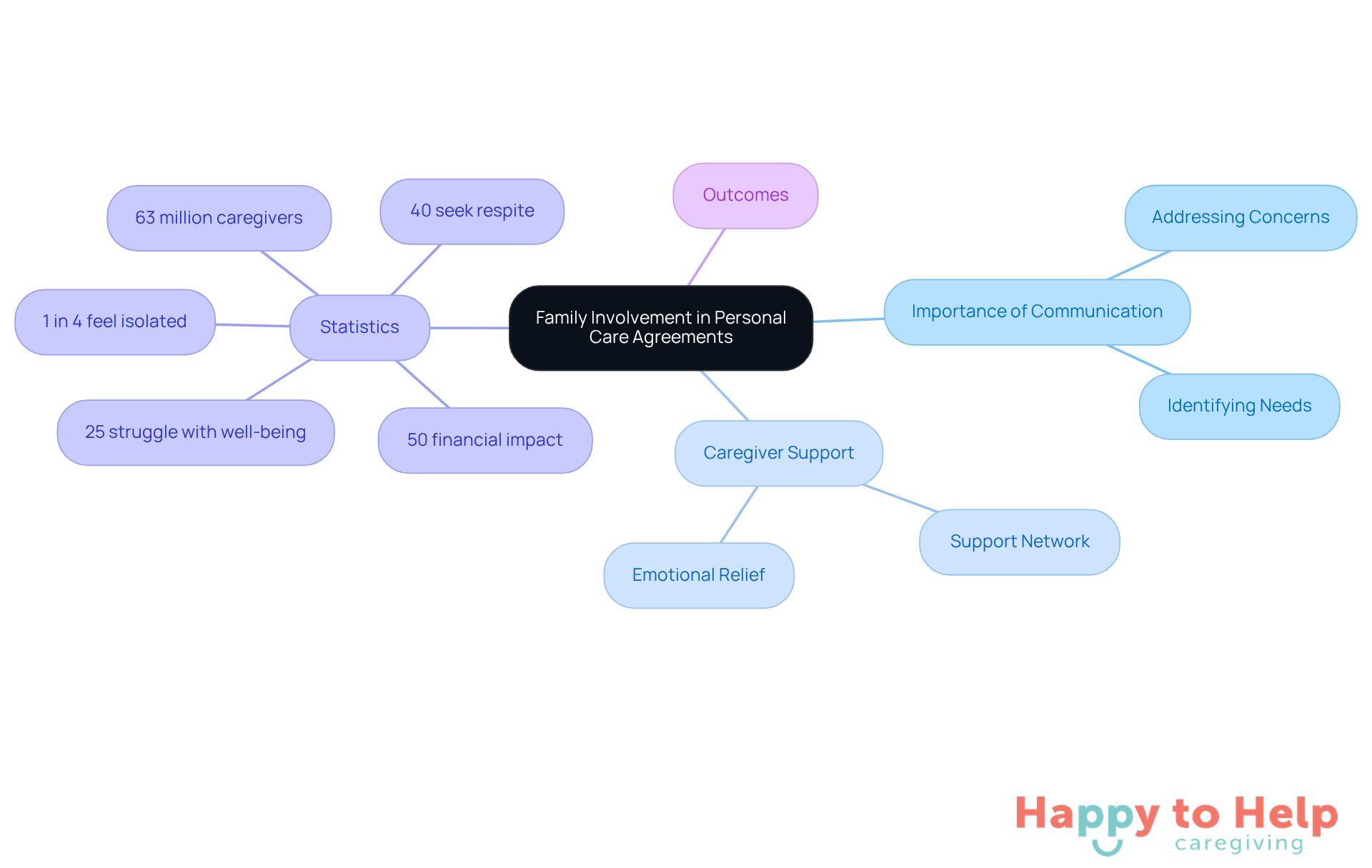
Family participation in personal care agreements is crucial for caregivers. Without it, misunderstandings about caregiving duties and expectations can arise, leading to stress and confusion. Open communication among relatives can address concerns and preferences, making the caregiving process smoother.
When family members are included in discussions, they can help identify the specific needs of the care recipient. This collaboration results in a more customized and efficient support plan. Moreover, having multiple relatives involved creates a support network for the caregiver, alleviating the emotional and physical burdens that often accompany caregiving.
Consider this: nearly 63 million Americans are relatives providing care. The importance of communication among family members in a personal care agreement cannot be overstated; it directly influences outcomes for both caregivers and those receiving care. Additionally, 40% of caregivers seek respite services, and 50% report a negative financial impact due to caregiving. This highlights the urgent need for support from family members.
Furthermore, 25% of caregivers struggle to maintain their own well-being, and 1 in 4 feel isolated. This underscores the significance of family involvement in building a strong support network. By prioritizing family participation, caregivers can navigate the complexities of care with greater confidence and support.
Making the Right Choice
Establishing a Personal Care Agreement (PCA) addresses a significant problem for caregivers: the lack of clear, structured arrangements. This ambiguity can lead to misunderstandings and increased stress, ultimately affecting the quality of care provided. By formalizing caregiving roles and expectations, a PCA not only mitigates these issues but also fosters a professional relationship that enhances care quality.
The importance of a PCA lies in its ability to clarify duties, define compensation, and protect the interests of both caregivers and care recipients. Key components such as the scope of services, payment structures, and confidentiality clauses are essential in creating a comprehensive agreement that minimizes potential conflicts. Involving family members in this process can further support a shared understanding of caregiving responsibilities, creating a more cohesive environment.
Ultimately, personal care agreements represent a commitment to organized and compassionate caregiving. As the caregiving landscape evolves, embracing the practice of creating detailed and inclusive PCAs will enhance the caregiving experience and foster a sense of community among family members. Caregivers should prioritize this essential step to ensure a harmonious and effective caregiving journey.
https://iframe.tely.ai/cta/eyJhcnRpY2xlX2lkIjogIjY5MjY2NjFiZjRlMzY1MzFmZjFhZDVkZSIsICJjb21wYW55X2lkIjogIjY4ZWU1ZGNhNzMxNzYyNTU3ZjNjOTVjMSIsICJpbmRleCI6IG51bGwsICJ0eXBlIjogImFydGljbGUifQ==Frequently Asked Questions
What is a Personal Care Agreement (PCA)?
A Personal Care Agreement (PCA) is a formal contract that addresses the challenges faced by caregivers by clarifying expectations, responsibilities, and payment details for the assistance provided to individuals, particularly the elderly.
Why is a PCA important for caregivers?
A PCA is important because it helps prevent misunderstandings and stress by outlining specific assistance, payment arrangements, and duties of both the caregiver and the recipient, fostering a professional relationship.
What are the implications of not having a PCA?
Without a PCA, caregivers may face confusion regarding the type of assistance provided, payment for services, and responsibilities, which can lead to stress and potential conflicts, especially among family caregivers.
How many Americans served as unpaid family supporters in 2020?
In 2020, nearly 42 million Americans served as unpaid family supporters for individuals aged 50 and above.
What should a PCA include?
A PCA should include details about the specific assistance to be offered, payment information, and the responsibilities of each party involved.
Why is it important for a PCA to be documented?
Documenting a PCA is crucial to ensure compliance with Medicaid regulations and to clarify the terms of the caregiving arrangement.
What is the Medicaid look-back period?
The Medicaid look-back period is up to five years and evaluates spending and asset levels that can affect eligibility for long-term support assistance.
How can emotional difficulties in forming support agreements be addressed?
Emotional difficulties can be addressed by approaching discussions thoughtfully and potentially involving a professional mediator to ease the burden of the conversation.
List of Sources
- Define Personal Care Agreement
- Personal Care Agreements (https://caregiver.org/resource/personal-care-agreements)
- What Is a Caregiver Contract (Personal Care Agreement)? - Gravis Law (https://gravislaw.com/estate-law/what-is-a-caregiver-contract-personal-care-agreement)
- A Family Caregiver Contract Can Prevent Conflict, but Getting it Right May Require Professional Guidance - Home (https://agingoptions.com/news/a-family-caregiver-contract-can-prevent-conflict-but-getting-it-right-may-require-professional-guidance)
- Why a Personal Care Agreement is Important | Right at Home | Nassau Suffolk (https://rightathome.net/nassau-suffolk/blog/why-a-personal-care-agreement-is-important)
- Personal Care Agreements | KWGD (https://kwgd.com/news/personal-care-agreements)
- Explain the Importance of Personal Care Agreements
- Legal Planning for Family Caregivers: How to Protect Your Loved Ones and Yourself (https://melonelawpc.com/blog/legal-planning-for-family-caregivers-how-to-protect-your-loved-ones-and-yourself)
- How Enforceable Are Caregiver Contracts and Agreements? (https://accordinglaw.com/how-enforceable-are-caregiver-contracts-and-agreements)
- Ask the Expert: What Is a Caregiver Agreement and Why Might I Need One in My Estate Plan? (https://thenewirmonews.com/ask-the-expert-what-is-a-caregiver-agreement-and-why-might-i-need-one-in-my-estate-plan)
- Recognizing and Supporting Family Caregivers in Estate Planning (https://snyderlawpc.com/recognizing-and-supporting-family-caregivers-in-estate-planning)
- A Family Caregiver Contract Can Prevent Conflict, but Getting it Right May Require Professional Guidance - Home (https://agingoptions.com/news/a-family-caregiver-contract-can-prevent-conflict-but-getting-it-right-may-require-professional-guidance)
- Outline Key Components of a Personal Care Agreement
- Personal Care Agreements (https://caregiver.org/resource/personal-care-agreements)
- Understanding Personal Care Agreements (https://hoplerwilms.com/blog/2018/08/29/understanding-personal-care-agreements)
- Personal Care Agreements for Seniors: What to Know (https://californiamobility.com/personal-care-agreement-template)
- Vital elements of personal care agreements | Hodges Law Firm, LLC (https://rhodgeslaw.com/blog/2023/06/vital-elements-of-personal-care-agreements)
- What is a Caregiver Agreement and When to Use it? (https://rothkofflaw.com/2025/08/14/what-is-a-caregiver-agreement-and-when-to-use-it)
- Discuss Family Involvement in Personal Care Agreements
- Caregiving Statistics US 2025: Insights for Family Caregivers (https://zencaregiving.org/caregiving-statistics-us-2025)
- Governor Hochul Announces Next Steps in Plans to Strengthen Home Care Services for New Yorkers (https://governor.ny.gov/news/governor-hochul-announces-next-steps-plans-strengthen-home-care-services-new-yorkers)
- WHO and Noora Health begin collaboration to strengthen support for family caregivers (https://who.int/news/item/29-07-2025-who-and-noora-health-begin-collaboration-to-strengthen-support-for-family-caregivers)
- Caregiving in the US 2025 (https://aarp.org/pri/topics/ltss/family-caregiving/caregiving-in-the-us-2025)
- Caregiver Statistics: Demographics (https://caregiver.org/resource/caregiver-statistics-demographics)