Understanding Private Duty Home Care: Key Benefits for Families

For families in our service areas
For families in our service areas, this guide explains home care and how non-medical in-home caregiving can support care planning in East Idaho, Treasure Valley & Magic Valley, Northern Wasatch, North Central West Virginia, and Northeast Ohio.
What You Need to Know About Private Duty Home Care: Key Benefits
As the population ages, families face a pressing challenge: ensuring their loved ones receive the support needed to maintain independence and comfort. The demand for non-medical home care services is surging, and with it comes the risk of caregiver burnout and isolation. This situation can lead to significant stress for families trying to balance their responsibilities.
Private duty home care emerges as a vital solution to this problem. It offers tailored assistance for daily living tasks, which can significantly enhance the quality of life for both clients and caregivers. By providing personalized support, families can alleviate some of the pressures associated with caregiving, allowing them to focus on what truly matters - the well-being of their loved ones.
So, how can families navigate these complexities? Understanding the key benefits of private duty home care is essential. This article explores how such services can transform family dynamics, providing essential support in an ever-evolving caregiving landscape.
Define Private Duty Home Care
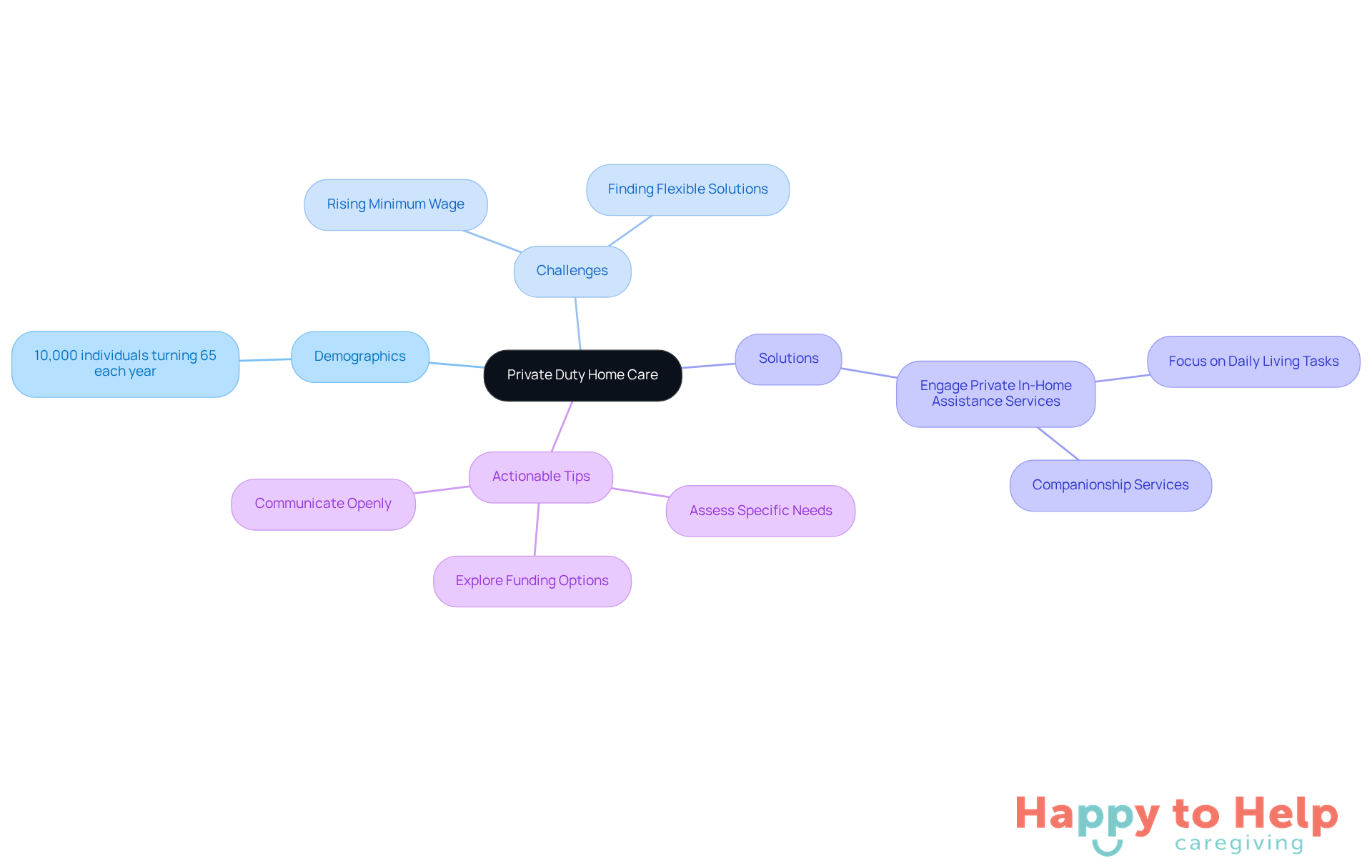
Private in-home assistance addresses a growing problem: the increasing demand for non-medical services as more baby boomers reach retirement age. With 10,000 individuals turning 65 each year, families face the challenge of ensuring their loved ones receive the support they need while maintaining independence and comfort in their own homes.
This situation is further complicated by the rising minimum wage, which affects home support workers and may impact the quality of services provided. Families often struggle to find flexible solutions that cater to specific needs, making it essential to explore private funding options that allow for tailored assistance.
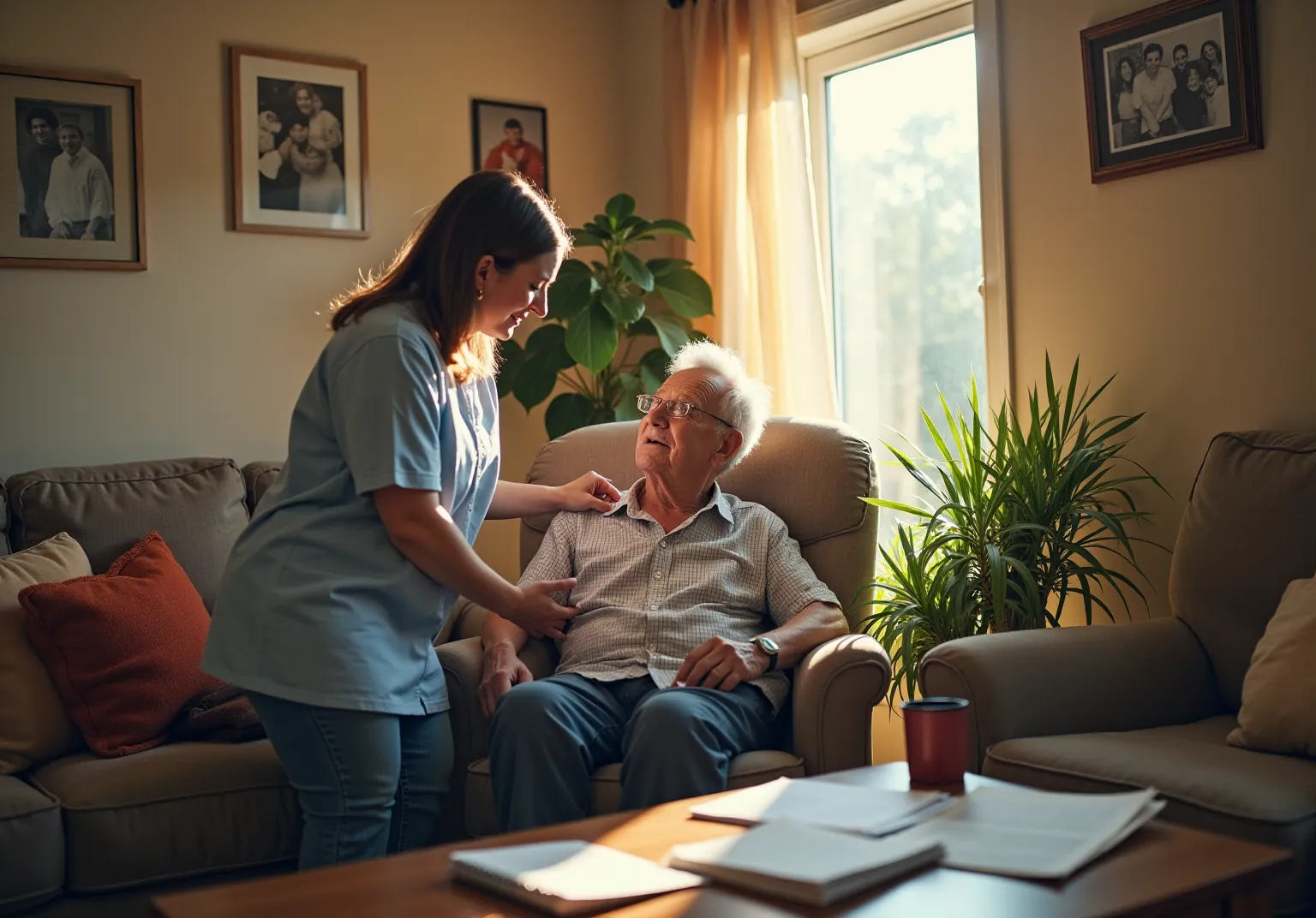
One effective solution is to engage private in-home assistance services that focus on daily living tasks such as bathing, dressing, meal preparation, and companionship. As one relative noted, "The presence of home health professionals enabled me to concentrate on being a parent instead of a caregiver, improving household dynamics."
To navigate these challenges, families should consider the following actionable tips:
- Assess specific needs: Identify the daily tasks that require assistance.
- Explore funding options: Look into private funding to customize services.
- Communicate openly: Discuss expectations with service providers to ensure quality care.
By prioritizing these strategies, families can enhance the quality of life for their loved ones while alleviating the pressures on caregivers.
Contextualize the Role of Private Duty Home Care in Family Support
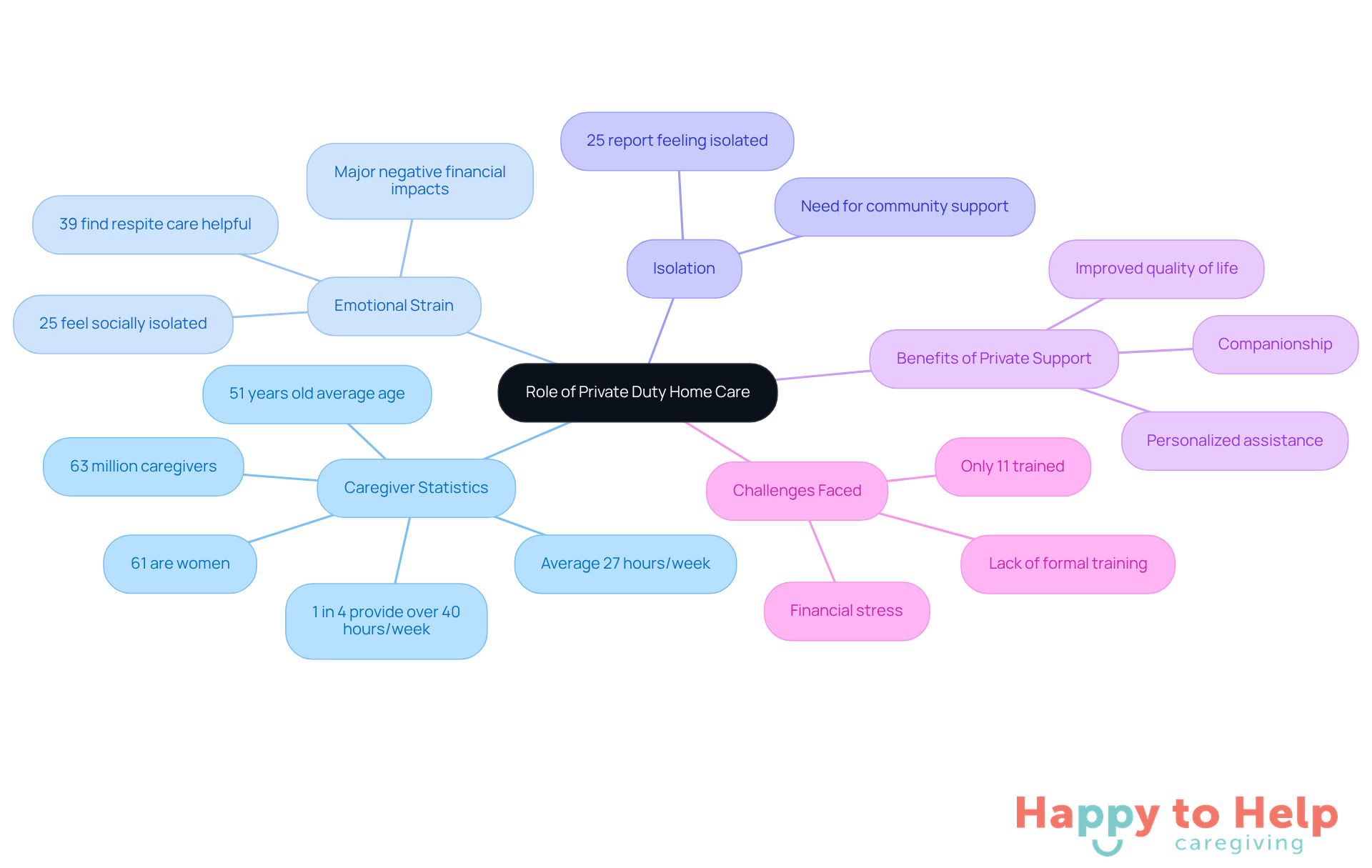
Private personal support at home is crucial for households managing the complexities of caregiving, especially as relatives grow older or face health issues. Nearly 63 million Americans provide assistance for adults or children with complex medical conditions, highlighting a significant need for additional support. Caregivers often struggle to balance their caregiving responsibilities with work and personal obligations, leading to physical and emotional strain. In fact, caregivers dedicate an average of 27 hours weekly to support, with nearly one in four providing over 40 hours each week, which can result in burnout. Alarmingly, about 25% of those offering assistance report feeling socially isolated, underscoring the need for community support. Private support providers can help reduce this isolation by offering companionship and personalized assistance.
By ensuring that loved ones receive compassionate, personalized support, private duty home care professionals enhance not only the quality of life for clients but also the emotional well-being of caregivers. For instance, caretakers can assist with daily living tasks, allowing relatives to focus on their own health and responsibilities. This collaborative approach fosters a healthier household dynamic, as caregivers can engage in meaningful interactions with their loved ones, alleviating feelings of loneliness.
Moreover, many caregivers face significant challenges, including financial stress and a lack of formal training for medical tasks. With only 11% of attendants having received any formal training, the role of private support providers becomes even more critical in delivering necessary assistance and expertise. By integrating private assistance into family routines, families can navigate the caregiving landscape more effectively, ensuring that both caregivers and their loved ones thrive.
Identify Key Services and Characteristics of Private Duty Home Care
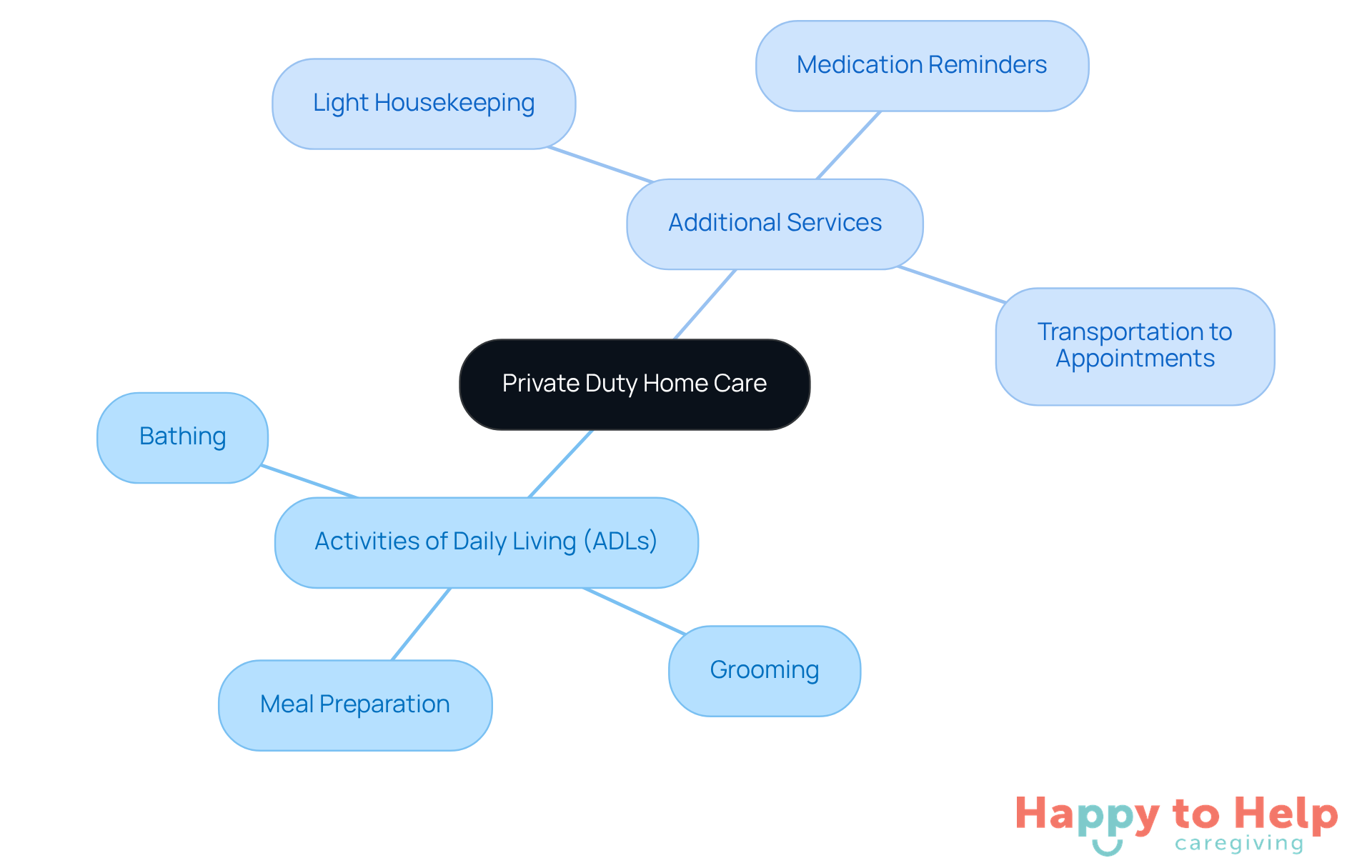
Caregivers often face significant challenges when it comes to providing essential support for daily living tasks. These tasks, known as Activities of Daily Living (ADLs), include:
- Bathing
- Grooming
- Meal preparation
Without adequate assistance, caregivers may feel overwhelmed, impacting both their well-being and the quality of care they provide.
To address these challenges, private duty home care services provide a solution that is both flexible and personalized. Caregivers can receive help not only with ADLs but also with:
- Light housekeeping
- Medication reminders
- Transportation to appointments
This adaptability allows services to be tailored to meet the unique needs and preferences of each client, ensuring they receive the right level of support.
By utilizing these services, caregivers can maintain their clients' independence in a familiar environment while alleviating some of their own burdens. This personalized approach not only enhances the quality of care but also fosters a supportive relationship between caregivers and clients.
Highlight the Benefits of Private Duty Home Care for Families
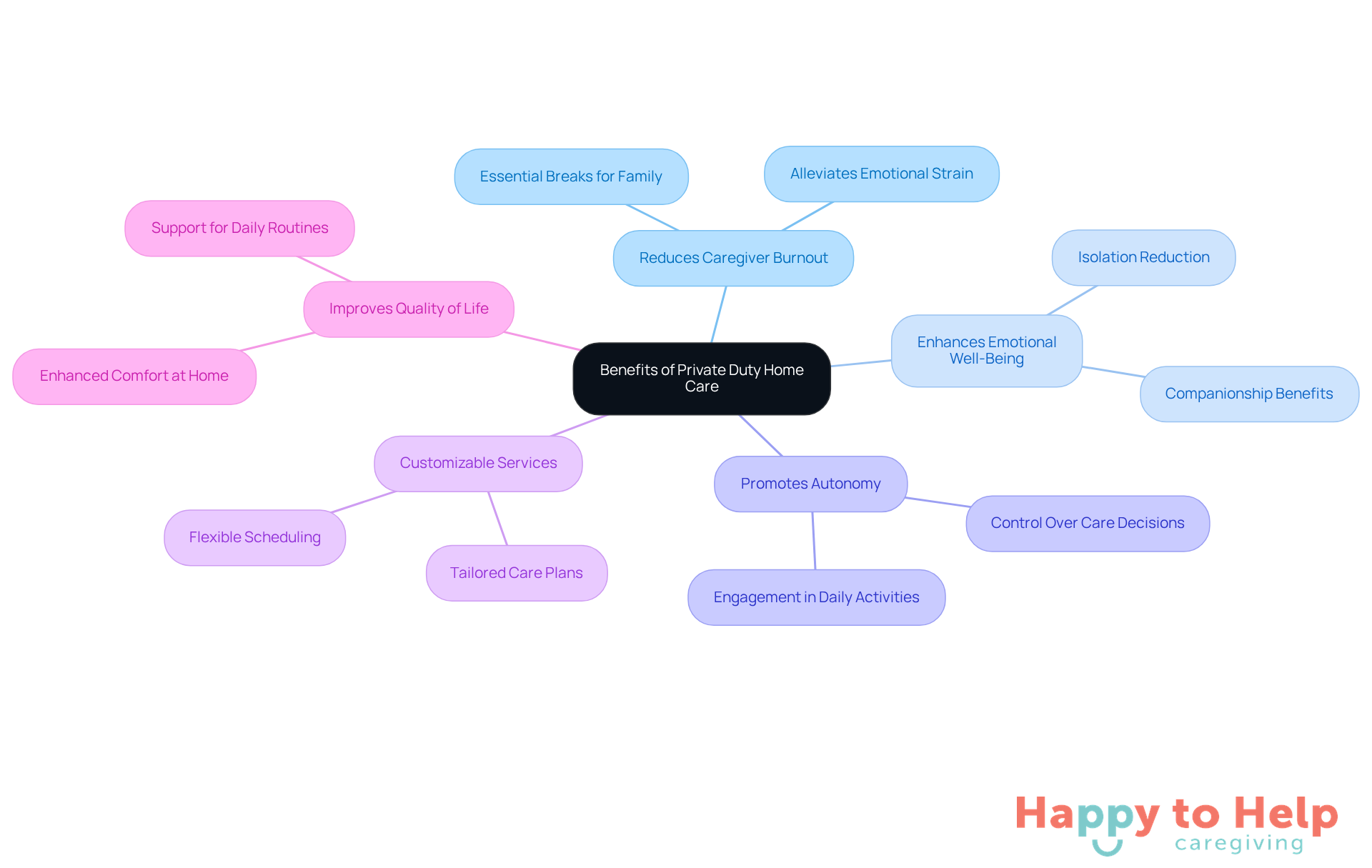
Private duty home care tackles a significant issue: caregiver burnout and the emotional strain experienced by clients. Many families struggle to provide adequate support while maintaining their own well-being. This situation can lead to feelings of isolation for clients and exhaustion for caregivers.
The implications of this issue are profound. When family members are overwhelmed, they may not be able to provide the level of care their loved ones need. This can diminish the quality of life for both parties. However, a viable solution is offered by private duty home care. It allows individuals to receive assistance in the comfort of their own homes, significantly enhancing emotional well-being.
This model promotes autonomy, enabling clients to engage in daily activities with the necessary support, rather than relying entirely on family members. Such an arrangement not only fosters independence but also alleviates caregiver stress, as family members can take essential breaks, knowing their loved ones are in capable hands.
Moreover, private assistance is highly customizable. Services can be tailored to specific time intervals, starting at just two hours, ensuring clients receive personalized support that meets their unique needs. The companionship provided by caregivers further enriches emotional well-being, reducing feelings of loneliness.
As a result, households often experience an overall improvement in quality of life for both clients and caregivers. With the US Census Bureau projecting that the population aged 65 and over will surpass 80 million by 2025, the demand for such services is increasingly critical. Additionally, support from family, friends, and healthcare organizations is essential in navigating healthcare needs, underscoring the importance of private duty home care.
Taking the Next Steps
Private duty home care addresses a significant problem for families: the emotional and physical burdens of caregiving. As the aging population grows, caregivers often find themselves overwhelmed, struggling to balance their loved ones' needs with their own well-being. This situation can lead to stress, burnout, and a decline in the quality of care provided.
The implications of these challenges are profound. Caregivers may feel isolated and unsupported, which can negatively impact both their health and the health of those they care for. However, private duty home care offers a viable solution. By integrating personalized support into daily routines, families can ensure their loved ones receive compassionate care while alleviating the pressures on caregivers.
Key benefits of private duty home care include:
- Emotional support
- Companionship
- Flexibility to tailor services to individual needs
This collaborative approach not only enhances the quality of life for clients but also fosters healthier family dynamics. Families can explore funding options and maintain open communication with service providers to maximize these benefits.
Recognizing the vital role of private duty home care is essential for families seeking a balanced and supportive environment. By embracing these services, families can improve their loved ones' lives and ensure caregivers receive the necessary support to thrive. Investing in private duty home care is a proactive step towards a more harmonious caregiving experience, ultimately enhancing the quality of life for everyone involved.
https://iframe.tely.ai/cta/eyJhcnRpY2xlX2lkIjogIjY5MjI2NTA5ZDQwYzk1M2M1MjExZGE2YiIsICJjb21wYW55X2lkIjogIjY4ZWU1ZGNhNzMxNzYyNTU3ZjNjOTVjMSIsICJpbmRleCI6IG51bGwsICJ0eXBlIjogImFydGljbGUifQ==Frequently Asked Questions
What is private duty home care?
Private duty home care provides non-medical assistance to individuals in their homes, addressing the needs of an aging population, particularly as more baby boomers retire.
Why is there a growing demand for private duty home care?
The demand is increasing due to the significant number of individuals turning 65 each year, which creates challenges for families in ensuring their loved ones receive necessary support while maintaining their independence.
What challenges do families face when seeking home care services?
Families often struggle to find flexible solutions that meet specific needs, and the rising minimum wage can affect the availability and quality of home support workers.
What types of services do private in-home assistance typically offer?
Private in-home assistance services focus on daily living tasks such as bathing, dressing, meal preparation, and companionship.
How can families enhance their loved ones' quality of life with private duty home care?
Families can improve quality of life by assessing specific needs, exploring private funding options for customized services, and communicating openly with service providers about expectations.
What is one benefit of engaging home health professionals?
Engaging home health professionals allows family members to focus on their roles, such as being a parent, rather than solely on caregiving, which can improve household dynamics.
List of Sources
- Define Private Duty Home Care
- Private-Duty Nursing Attracts PE Investment Amid Strong Market Potential – And Rising Concerns (https://homehealthcarenews.com/2025/07/private-duty-nursing-attracts-pe-investment-amid-strong-market-potential-and-rising-concerns)
- 13 Home Care Trends To Watch For in 2024 (And Thoughts From 11 Experts) | CareAcademy (https://careacademy.com/blog/home-care-trends)
- The Case for Private Duty Nursing | Benefits & Impacts (https://phoenixhomehc.com/news/the-case-for-private-duty-nursing-why-it-works-and-how-it-helps)
- What's Next and Why Should You Care: The Future of Private Pay Home Care (https://activatedinsights.com/articles/future-of-home-care)
- Growing private equity involvement in private duty nursing prompts quality, consolidation concerns (https://mcknightshomecare.com/news/growing-private-equity-involvement-in-private-duty-nursing-prompts-quality-consolidation-concerns)
- Contextualize the Role of Private Duty Home Care in Family Support
- As Family Caregiving Grows, So Does the Need for Reform - Medicare Rights Center (https://medicarerights.org/medicare-watch/2025/08/14/as-family-caregiving-grows-so-does-the-need-for-reform)
- New Report Reveals Crisis Point for America’s 63 million Family Caregivers (https://press.aarp.org/2025-07-24-New-Report-Reveals-Crisis-Point-for-Americas-63-million-Family-Caregivers)
- Family Caregivers Deserve Recognition — Medicare Is Starting to Listen (https://commonwealthfund.org/blog/2025/family-caregivers-deserve-recognition-medicare-starting-to-listen)
- Only 32% of America’s 63 Million Family Caregivers Use Paid Help (https://homehealthcarenews.com/2025/07/only-32-of-americas-63-million-caregivers-use-paid-help)
- Identify Key Services and Characteristics of Private Duty Home Care
- Virtual Hybrid Home Care Model Poised to Open 50% More Market Share for Private Duty Home Care Agencies (https://cbs42.com/business/press-releases/accesswire/1069461/virtual-hybrid-home-care-model-poised-to-open-50-more-market-share-for-private-duty-home-care-agencies)
- Flexible Private Caregiving for Evolving Daily Needs (https://phoenixhomehc.com/news/how-does-private-duty-caregiving-adapt-to-my-loved-ones-needs)
- Where The Largest Home-Based Care Providers Are Scoring Key Wins (https://homehealthcarenews.com/2025/11/where-the-largest-home-based-care-providers-are-scoring-key-wins)
- News Releases (https://hcaoa.org/news-releases.html)
- The Future Of Private Home Care: Trends For 2025 And Beyond | Devoted Care Services In-Home Care (https://devoted.care/the-future-of-private-home-care-trends-for-2025-and-beyond)
- Highlight the Benefits of Private Duty Home Care for Families
- Private Duty Home Care and Why You Should Start One (https://nursenextdoorfranchise.com/blogs/private-duty-home-care-and-why-you-should-start-one)
- 5 Healthcare Resolutions for 2025: Private Duty Care & More (https://phoenixhomehc.com/news/consider-these-research-based-healthcare-resolutions-for-2025)
- 10 Benefits of Private Pay Home Care: Enhancing Lives with Personalized Support - Andwell Health Partners (https://andwell.org/10-benefits-of-private-pay-home-care-enhancing-lives-with-personalized-support)
- The Benefits of Private Duty Home Care for Aging Adults (https://humancareny.com/blog/the-benefits-of-private-duty-home-care-for-aging-adults)