Understanding Private Pay for Home Care: Costs, Services,
For families in our service areas
For families in our service areas, this guide explains home care and how non-medical in-home caregiving can support care planning in East Idaho, Treasure Valley & Magic Valley, Northern Wasatch, North Central West Virginia, and Northeast Ohio.
What You Need to Know About Private Pay for Home Care: Costs,
The landscape of home care for seniors is changing. Families often face the daunting task of navigating insurance and governmental aid, which frequently fall short of meeting their loved ones' needs. This complexity can lead to significant stress and uncertainty.
Private pay for home care emerges as a crucial alternative, providing tailored support that prioritizes independence and well-being. However, with costs averaging around $4,000 per month, families are left questioning whether this model truly meets their needs. The financial responsibilities can be overwhelming, leaving many to wonder about the real benefits and limitations of private pay home care.
To make informed choices in this intricate environment, families must weigh the advantages of personalized care against the financial implications. Understanding the nuances of private pay options can empower caregivers to find solutions that best suit their circumstances.
Define Private Pay Home Care and Its Importance
The challenge many seniors face is the lack of adequate support in their own homes. Many individuals and families find themselves navigating a complex landscape of insurance and governmental aid, which often falls short of their unique needs. This situation can lead to feelings of isolation and a diminished quality of life for seniors.
Private pay for home care emerges as a solution, enabling families to directly fund the support their loved ones require. This model not only offers enhanced flexibility but also enables families to select specific services tailored to individual needs. By prioritizing independence and personalized support strategies, private pay for home care significantly enhances the overall well-being of seniors.
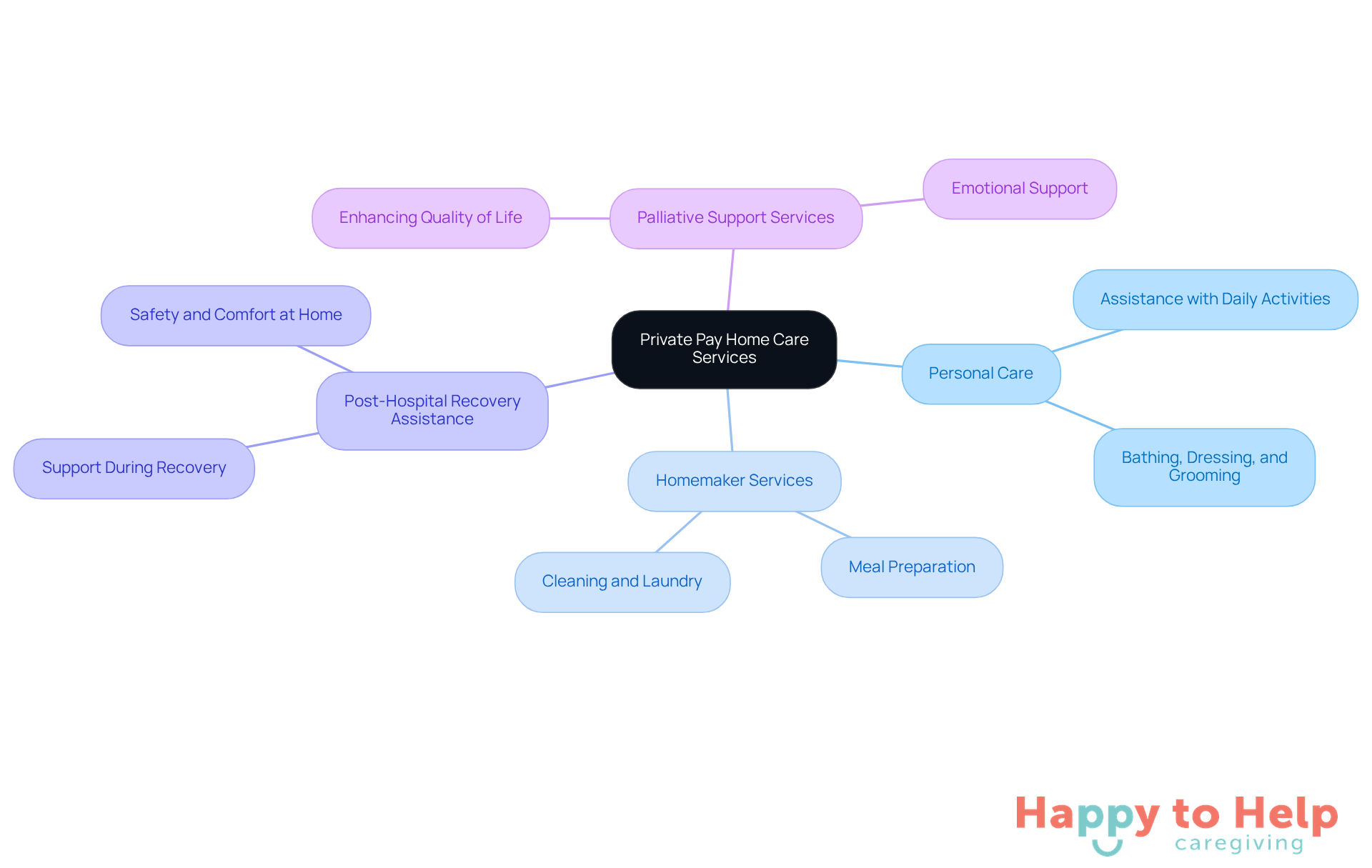
Statistics reveal that nearly 90% of seniors prefer to age in their own residences, underscoring the necessity for customized support solutions. Furthermore, about 63% of domestic assistance is funded through private pay for home care, indicating a strong preference among seniors and families for this payment approach. The satisfaction rates are also promising, with 91% of domestic assistance clients expressing contentment with their caregivers. High caregiver satisfaction is a strong indicator of the quality of support services provided.
In addition, residential health services can lead to better patient outcomes after hospital discharge, further showcasing the advantages of this service model. By embracing private pay for home care options, families can ensure their loved ones receive the tailored support they deserve, which fosters both independence and dignity.
Examine Factors Affecting Private Pay Home Care Costs
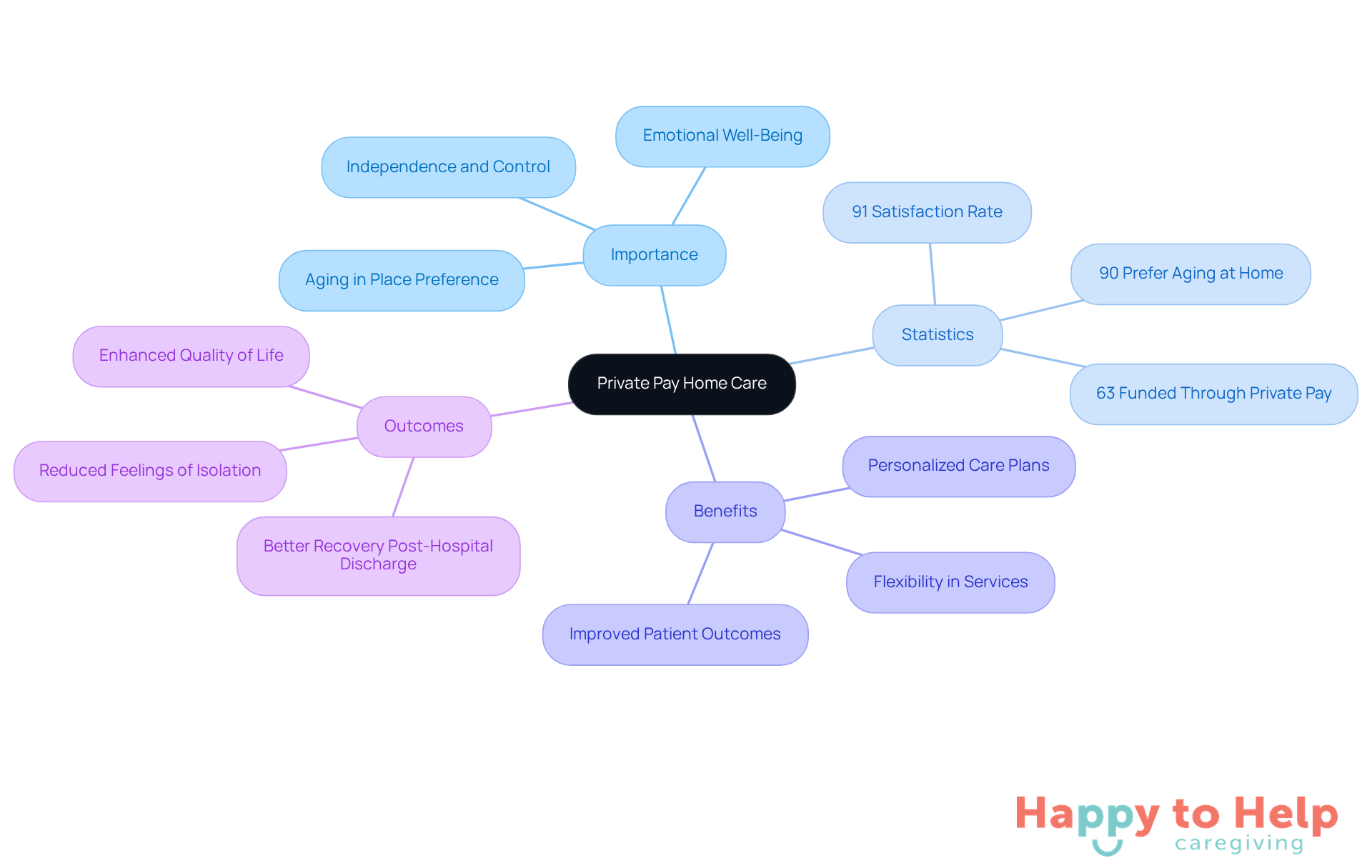
Understanding the costs associated with private pay home care can be challenging for families. Several factors contribute to these expenses, making it crucial to grasp their implications.
-
Geographical Location: Care costs can vary significantly based on the region. Urban areas typically charge more due to higher living expenses.
-
Type of Support Required: The complexity of assistance needs plays a vital role in pricing. For instance, specialized medical help will generally cost more than basic companionship.
-
Caregiver Experience and Qualifications: More experienced caregivers often command higher rates due to their expertise and training, which can impact overall costs.
-
Hours of Service: The frequency and duration of assistance needed directly influence expenses. More hours of care will naturally lead to higher costs.
By comprehending these factors, families can better plan and budget for the private pay for home care that their loved ones require. This understanding not only aids in financial planning but also ensures that families can make informed decisions about the care they choose.
Explore Service Types in Private Pay Home Care
Private pay in-home assistance addresses a significant problem: loneliness among elderly individuals. This emotional isolation can severely impact their health and well-being. In fact, 77% of adults over 50 wish to remain in their homes as they age, highlighting the critical need for companionship support to foster a sense of belonging and comfort. With the population of those aged 65 and above expected to nearly double by 2030, the demand for these services is only set to increase.
To combat loneliness, private pay home care offers a variety of services:
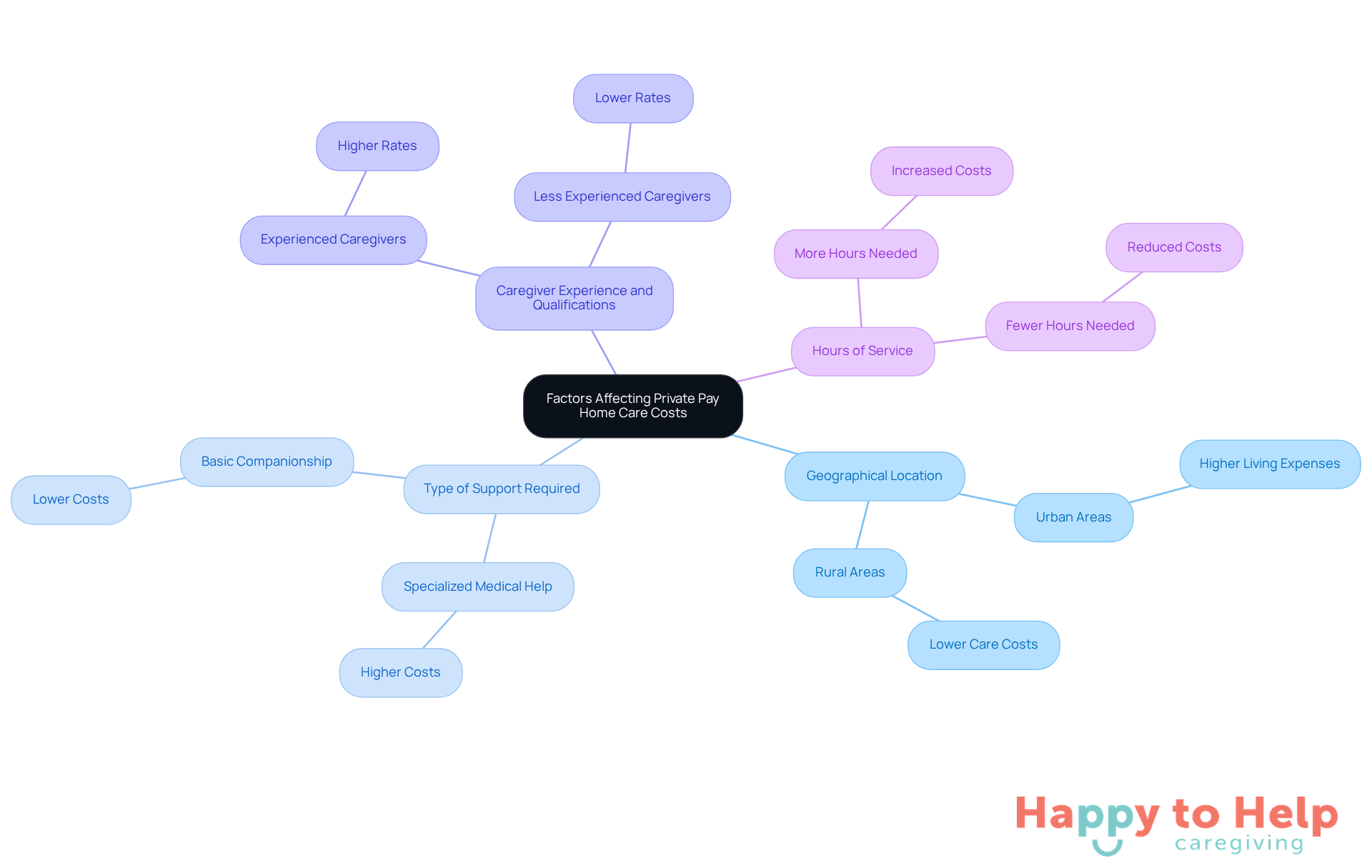
- Personal Care: Assistance with daily activities like bathing, dressing, and grooming, ensuring dignity and comfort.
- Homemaker Services: Help with household tasks such as meal preparation, cleaning, and laundry, allowing seniors to maintain a clean and safe living environment.
- Post-Hospital Recovery Assistance: Support during recovery from medical procedures, ensuring safety and comfort at home.
- Palliative Support Services: Specialized assistance aimed at enhancing the quality of life for individuals with serious illnesses, focusing on comfort and emotional support.
These services can be tailored to meet individual preferences and needs, ensuring a personalized approach. For instance, a customized support plan might include scheduled companionship visits, assistance with specific daily tasks, or activities that align with the client's interests, such as reading or pursuing hobbies. This personalization not only enhances the quality of support but also helps seniors maintain their independence and dignity in familiar surroundings.
However, the sector of private pay for home care faces challenges, including a significant caregiver shortage and rising operational costs, which can impact service availability. As Justin McAdoo, CTO, points out, "Technology is not here to replace the human touch. It’s really here to protect it," underscoring the importance of personal connections in caregiving. The growing need for specialized healthcare options for chronic conditions further emphasizes the necessity for flexible and responsive support solutions.
Analyze Advantages and Limitations of Private Pay Home Care
Private pay for home care presents significant challenges for families navigating the complexities of caregiving.
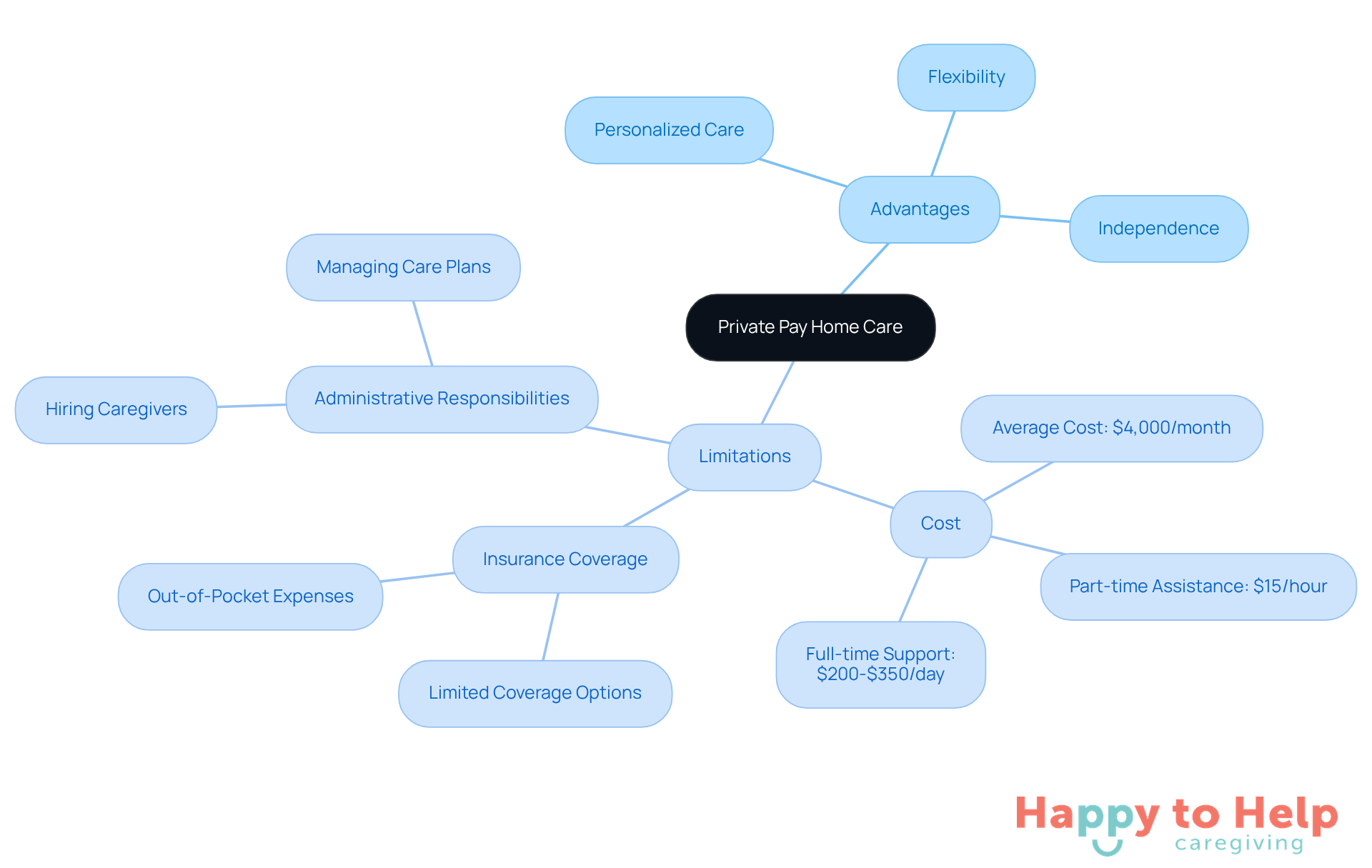
Problem: One of the primary issues is the cost associated with private pay services. The national average for in-home health care can reach around $4,000 per month. Families may face part-time assistance costs of approximately $15 per hour, while full-time support can range from $200 to $350 per day. This financial burden can strain budgets and limit options for private pay for home care services.
Agitate: Additionally, many insurance plans do not cover private pay for home care services, complicating financial planning even further. This lack of coverage can leave families feeling overwhelmed, as they must find ways to manage substantial out-of-pocket expenses. Moreover, families often take on the responsibility of hiring and managing caregivers, adding to their administrative load. Balancing these tasks with other commitments can be daunting.
Despite these challenges, private pay for home care offers several advantages that can be tailored to meet individual needs.
- Personalized Care: Families can customize services to align with specific preferences and requirements, enhancing the overall quality of assistance.
- Flexibility: Unlike insurance-covered services, private pay arrangements allow for dynamic modifications in support plans as needs evolve, which is crucial for adapting to changing health conditions.
- Independence: Clients can remain in their own homes, preserving their routines and familiar surroundings, which is vital for emotional well-being.
Recognizing these advantages and limitations is essential for families to make informed decisions regarding their loved ones' care. By understanding the financial implications and the responsibilities involved, families can choose the best path forward in this complex landscape.
Moving Forward with Private Pay for Home Care: Costs,
Private pay for home care is a crucial option for families seeking personalized and flexible support for their elderly loved ones. However, many families face challenges in finding adequate care that meets their unique needs. This gap in care options can lead to decreased independence and quality of life for seniors.
Understanding the costs associated with private pay home care is essential. Factors such as geographical location, type of support required, caregiver qualifications, and hours of service significantly influence expenses. For instance, personal care services may vary in cost compared to palliative support, highlighting the versatility of private pay options. While challenges like caregiver shortages and financial burdens exist, the benefits of personalized care and the ability to maintain a familiar living environment make this approach compelling.
Recognizing the importance of private pay home care is vital for families making decisions about their loved ones' care. With an aging population and increasing demand for customized support, exploring private pay options can lead to better outcomes for seniors. Families should weigh the benefits against the limitations, enabling them to make informed choices that prioritize the well-being of their loved ones.
In conclusion, private pay home care offers a tailored solution that traditional insurance often fails to deliver, ensuring seniors receive the dignity and care they deserve.
https://iframe.tely.ai/cta/eyJhcnRpY2xlX2lkIjogIjY5MjNhMGQyNmIzYzAyYTIxMjhhY2RmYyIsICJjb21wYW55X2lkIjogIjY4ZWU1ZGNhNzMxNzYyNTU3ZjNjOTVjMSIsICJpbmRleCI6IG51bGwsICJ0eXBlIjogImFydGljbGUifQ==Frequently Asked Questions
What is private pay home care?
Private pay home care refers to a model where families directly fund the support services their loved ones need at home, allowing for personalized care tailored to individual needs.
Why is private pay home care important for seniors?
Private pay home care is important because it provides seniors with the flexibility to choose specific services that enhance their independence and overall well-being, addressing the lack of adequate support available through insurance and governmental aid.
What are the preferences of seniors regarding aging at home?
Statistics show that nearly 90% of seniors prefer to age in their own residences, highlighting the need for customized support solutions like private pay home care.
How prevalent is private pay funding for domestic assistance?
About 63% of domestic assistance is funded through private pay for home care, indicating a strong preference among seniors and families for this payment approach.
What is the satisfaction rate among clients of domestic assistance?
Approximately 91% of domestic assistance clients express satisfaction with their caregivers, which is a strong indicator of the quality of support services provided.
What are the benefits of residential health services related to home care?
Residential health services can lead to better patient outcomes after hospital discharge, showcasing the advantages of private pay home care in supporting recovery and well-being.
How does private pay home care foster independence and dignity for seniors?
By allowing families to choose tailored support options, private pay home care fosters independence and dignity for seniors, ensuring they receive the specific assistance they require in a familiar environment.
List of Sources
- Define Private Pay Home Care and Its Importance
- 52 Eye-Opening Home Health Statistics: Insights for 2025 (https://boosthomehealth.com/home-health-statistics)
- Growing Trend of Private Pay Home Care for Elderly (https://regencyhcs.com/blog/growing-trend-of-private-pay-home-care-for-elderly)
- The ‘Strategic Trade-Offs’ Private-Pay Home Care Providers Are Making To Grow (https://homehealthcarenews.com/2023/10/the-strategic-trade-offs-private-pay-home-care-providers-are-making-to-grow)
- Home Care Statistics In 2025: Key Insights In Home Care (https://sagapixel.com/marketing/home-care-statistics)
- What is the Growing Trend of Private Pay Home Care for Elderly? - At Peace Health (https://atpeacehealth.com/growing-trend-of-private-pay-home-care-for-elderly)
- Examine Factors Affecting Private Pay Home Care Costs
- Navigating Home Care Amidst the Tide of Rising Costs | Amada (https://amadaseniorcare.com/2024/03/navigating-home-care-amidst-the-tide-of-rising-costs)
- Growing Trend of Private Pay Home Care for Elderly (https://regencyhcs.com/blog/growing-trend-of-private-pay-home-care-for-elderly)
- The Hidden Costs of Aging in Place | Village Caregiving (https://villagecaregiving.com/blog/the-hidden-costs-of-aging-in-place)
- What's Next and Why Should You Care: The Future of Private Pay Home Care (https://activatedinsights.com/articles/future-of-home-care)
- Geography Matters: Location plays key role in long-term care cost (https://insurancenewsnet.com/innarticle/geography-matters-location-plays-key-role-in-long-term-care-cost)
- Explore Service Types in Private Pay Home Care
- 52 Eye-Opening Home Health Statistics: Insights for 2025 (https://boosthomehealth.com/home-health-statistics)
- Growing Trend of Private Pay Home Care for Elderly (https://regencyhcs.com/blog/growing-trend-of-private-pay-home-care-for-elderly)
- Caring Senior Service Banks Growth Goals On New House-Made Technology (https://homehealthcarenews.com/2025/10/caring-senior-service-banks-growth-goals-on-new-house-made-technology)
- 2025 Home Care Statistics: Trends & Insights To Know (https://premierhcinc.com/blog/home-care-statistics)
- In-Home Care for Seniors - Caregiving News and Tips (https://aarp.org/caregiving/home-care)
- Analyze Advantages and Limitations of Private Pay Home Care
- Encouraging Home Care Statistics for 2023 (https://axiscare.com/blog/encouraging-home-care-statistics)
- What's Next and Why Should You Care: The Future of Private Pay Home Care (https://activatedinsights.com/articles/future-of-home-care)
- Growing Trend of Private Pay Home Care for Elderly (https://regencyhcs.com/blog/growing-trend-of-private-pay-home-care-for-elderly)
- 52 Eye-Opening Home Health Statistics: Insights for 2025 (https://boosthomehealth.com/home-health-statistics)