Understanding Senior Care Companions: Their Role and Importance

For families in our service areas
For families in our service areas, this guide explains companion care and how non-medical in-home caregiving can support care planning in East Idaho, Treasure Valley & Magic Valley, Northern Wasatch, North Central West Virginia, and Northeast Ohio.
Why Senior Care Companions: Their Role and Matters
The growing issue of social isolation among the elderly has sparked significant concern. Studies reveal that its health risks can rival those of smoking, highlighting a serious problem that needs addressing.
Senior care companions emerge as a vital solution, providing not just assistance but also meaningful emotional support that enhances the quality of life for older adults. But what exactly do these companions offer? How do they address the profound loneliness that many seniors face?
Exploring the essential roles and responsibilities of senior care companions reveals their critical impact on fostering connection and well-being in elderly care.
Defining Senior Care Companions
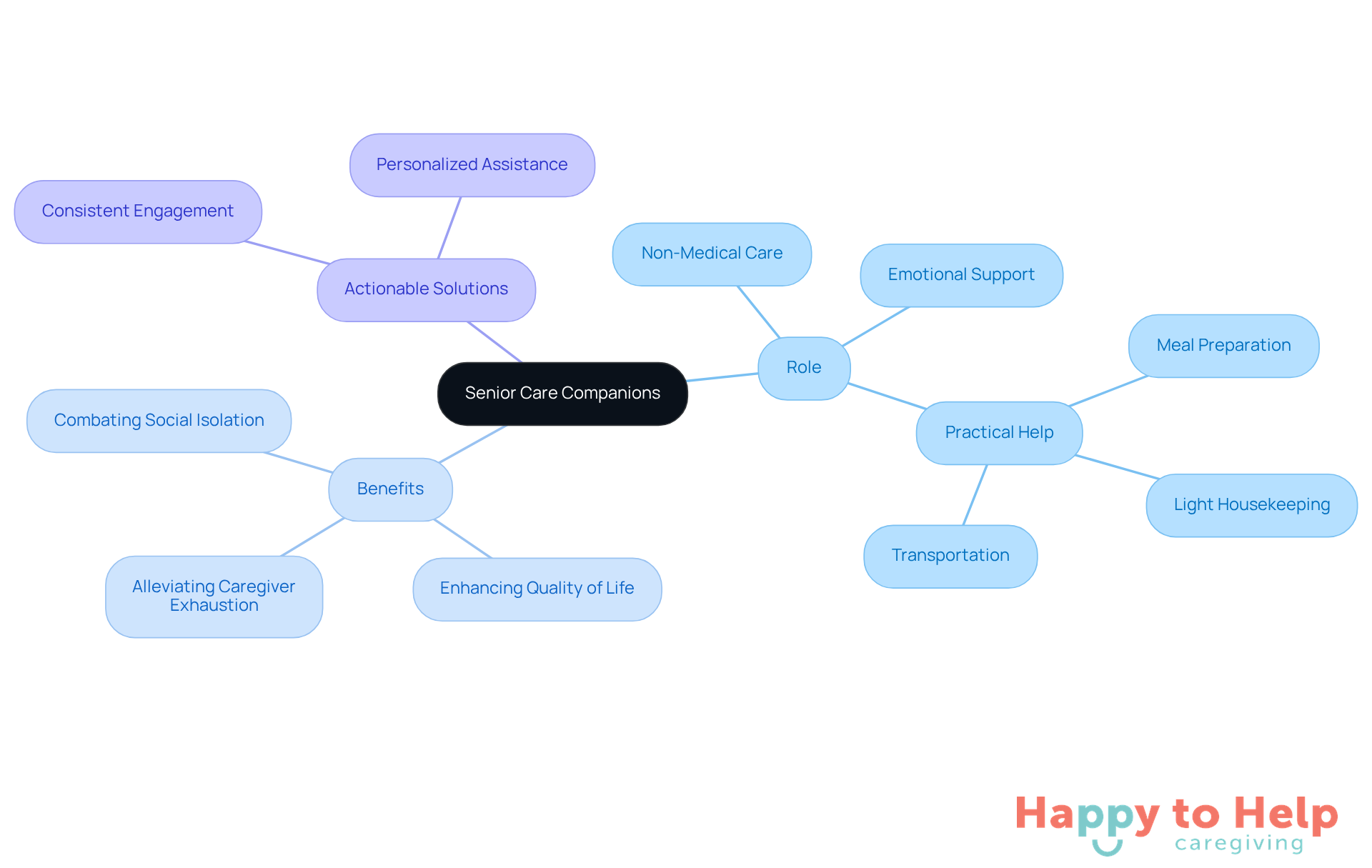
Senior care companions are non-medical caregivers who play a crucial role in supporting elderly individuals, particularly in combating social isolation. This issue is significant, as studies indicate that social isolation can pose health risks comparable to smoking fifteen cigarettes a day, according to researchers at the University of California. The emotional toll of loneliness can lead to decreased mood and overall joy, making companionship essential for older adults.
Unlike personal care aides who may provide medical assistance, senior care companions focus on interaction, emotional support, and practical help, such as light housekeeping and meal preparation. This type of care is especially beneficial for older adults who may not require extensive medical attention but face challenges associated with aging, including mobility issues.
To address these challenges, caregivers can implement several actionable solutions. First, fostering consistent interpersonal engagement can greatly enhance the quality of life for older adults. Gerontologists emphasize that companionship not only fulfills psychological needs but also promotes mental and physical health. Additionally, support care can alleviate caregiver exhaustion, providing vital relief for family caregivers and ensuring that older adults receive personalized assistance tailored to their unique needs.
In 2025, the importance of companionship in elderly care is more pronounced than ever. Present trends in non-medical caregiving highlight the necessity for a senior care companion that provides customized care, nurturing personal connections and enabling older adults to maintain their independence while receiving the assistance they need in the comfort of their own homes.
The Importance of Senior Care Companions in Elderly Care
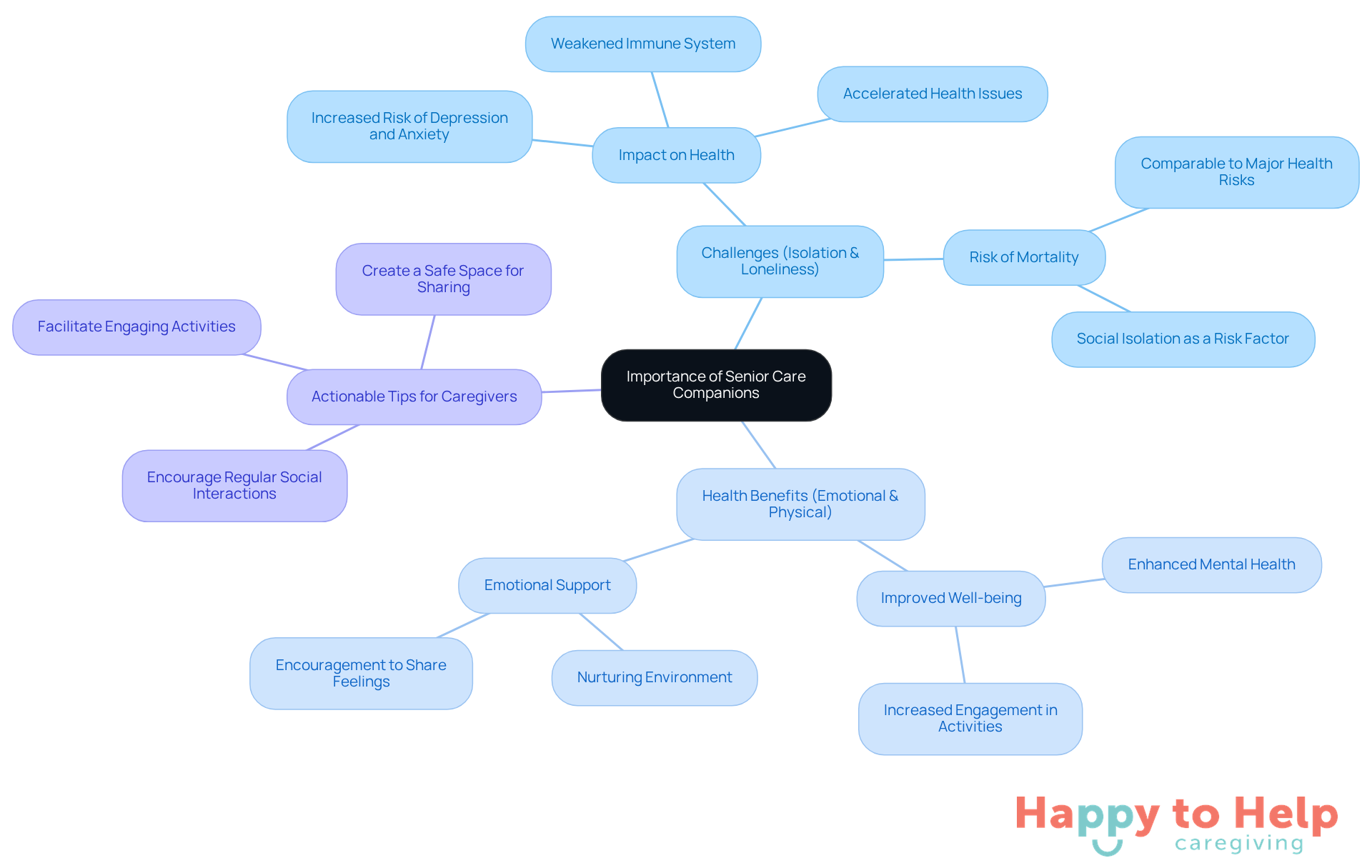
Isolation and loneliness are significant challenges faced by many seniors, impacting their emotional and physical health. Research shows that regular interpersonal interaction can greatly reduce feelings of depression and anxiety, leading to better overall health outcomes. In fact, studies indicate that social connections can lower the risk of premature mortality, comparable to other major health risk factors.
The role of senior care companions is crucial in addressing these issues. A senior care companion provides a sense of security and familiarity for older adults, especially those living alone or recovering from medical procedures. By encouraging participation in activities like walking, reading, or pursuing hobbies, companions help enhance both mental and physical well-being. These activities contribute to a more fulfilling life, allowing seniors to engage meaningfully with the world around them.
Moreover, having a companion fosters a nurturing environment where older adults can express their thoughts and concerns. This emotional support is vital for their mental well-being. Experts emphasize that improving interpersonal interaction is essential for alleviating loneliness among elderly individuals, ultimately leading to a better quality of life.
To support caregivers, consider these actionable tips:
- Encourage regular social interactions.
- Facilitate engaging activities that promote mental and physical health.
- Create a safe space for seniors to share their feelings.
By implementing these strategies, caregivers can significantly improve the lives of seniors, ensuring they feel connected and valued.
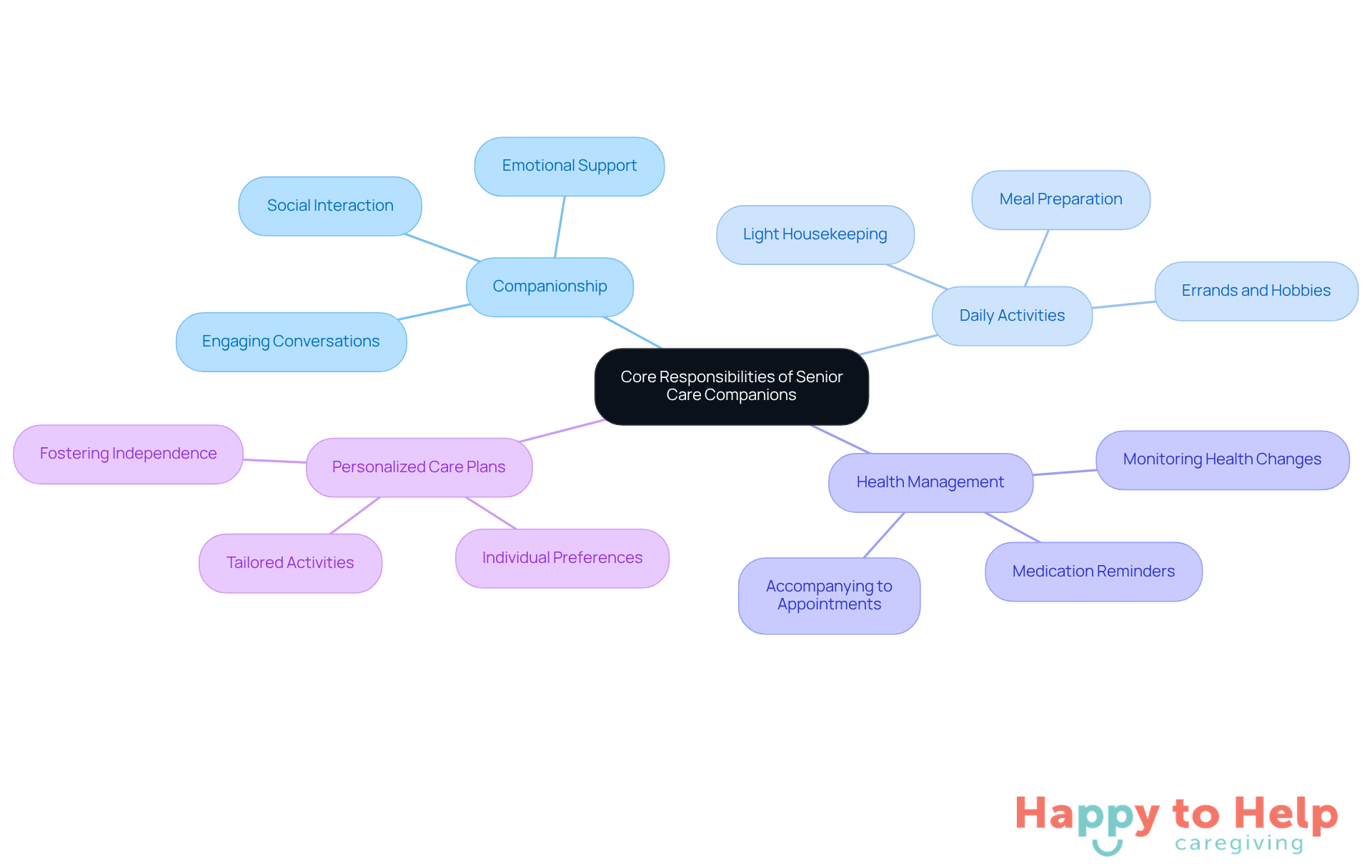
Core Responsibilities and Daily Duties of Senior Care Companions
The primary duties of senior care companions revolve around addressing a significant issue: social isolation among the elderly. This isolation can lead to serious health risks, including dementia, depression, and even premature death. Therefore, providing companionship is not just beneficial; it’s essential for cognitive health.
Daily responsibilities of elderly care companions include:
- Engaging in meaningful conversations and activities that stimulate mental engagement, crucial for maintaining cognitive function.
- Assisting with light housekeeping tasks, such as laundry and meal preparation, to ensure a clean and comfortable living environment.
- Accompanying elderly individuals on outings or appointments, helping them stay socially active and connected to their community.
- Offering reminders for medications and appointments, which aids older adults in managing their health effectively, even though companions do not administer medications.
As a senior care companion, providing emotional support through active listening and companionship significantly improves the elder's mood and overall outlook on life.
These responsibilities are tailored to meet the specific needs of each client, ensuring that elderly individuals receive customized care aligned with their preferences and lifestyle. For example, a personalized care plan might include activities like gardening or playing games, fostering a sense of purpose and joy.
By focusing on the unique requirements of clients, elderly care aides help combat feelings of loneliness and isolation, which can lead to serious health issues, including depression and cognitive decline. This personalized approach guarantees that elderly individuals receive the compassionate support they need to thrive in their own homes.
As the demand for assisted living services is projected to reach nearly two million by 2040, the role of elderly care aides is becoming increasingly vital.
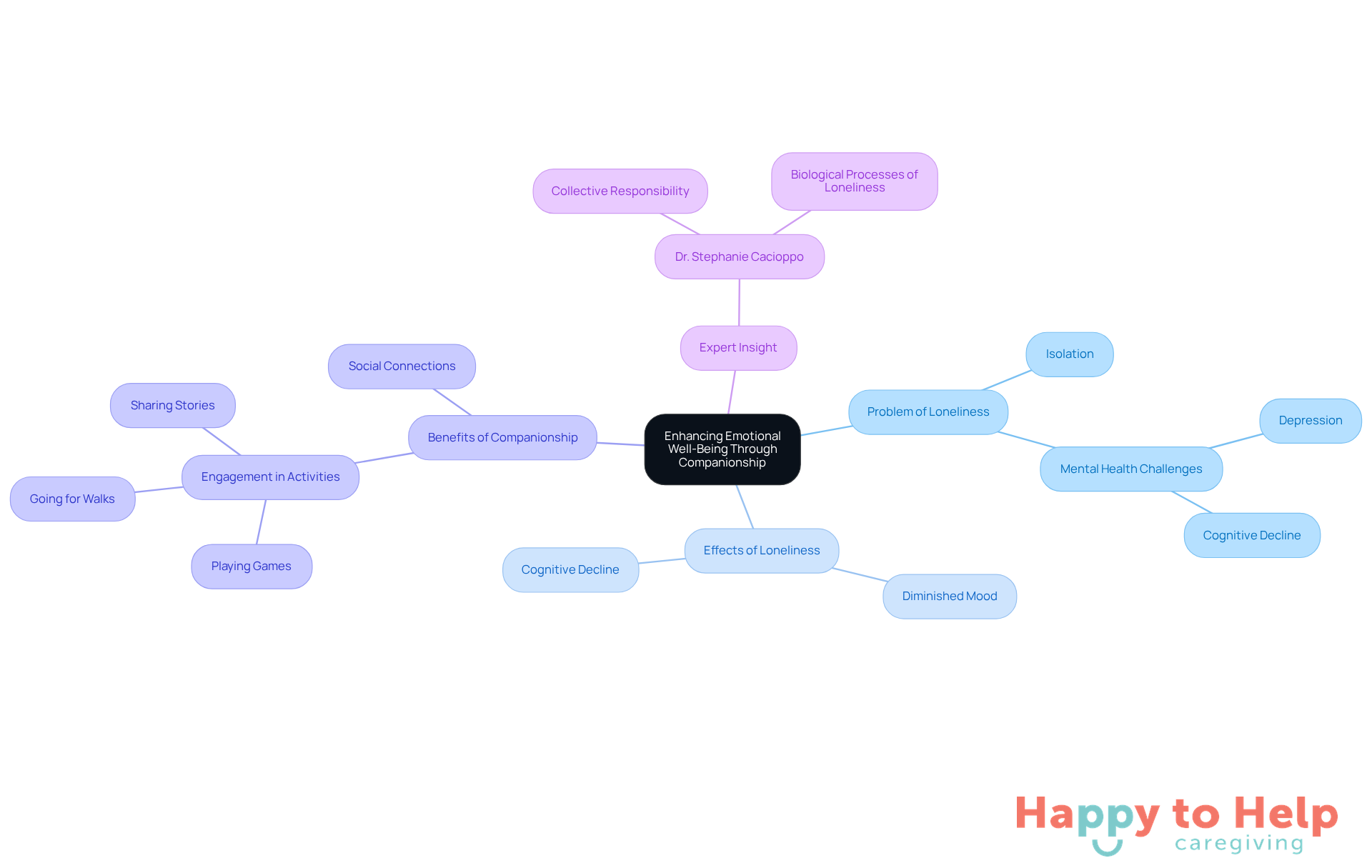
Enhancing Emotional Well-Being Through Companionship
Problem: Loneliness is a significant issue in elderly care, impacting emotional well-being. Many older individuals experience feelings of isolation, which can lead to serious mental health challenges.
Agitate: Research shows that loneliness not only diminishes mood but can also accelerate cognitive decline and increase the risk of conditions like Alzheimer's disease. The absence of companionship can exacerbate these feelings, making it crucial to address this issue.
The presence of a senior care companion can be transformative. Companions encourage older adults to engage in enjoyable activities - like playing games, going for walks, or sharing stories - which fosters a sense of belonging and purpose.
- Engagement in Activities: Regular communal interactions can significantly enhance mood and mental health outcomes.
- Social Connections: Studies indicate that older adults who maintain social ties are less likely to experience depression.
- Expert Insight: Dr. Stephanie Cacioppo emphasizes that addressing loneliness is a collective responsibility, underscoring the vital role of companionship in senior care.
In conclusion, the emotional support provided by senior care companions is invaluable, promoting a fulfilling and enriched life for older adults.
Key Takeaways for Caregivers
Senior care companions address a critical problem: social isolation among elderly individuals. This issue significantly impacts their mental and physical health, leading to feelings of loneliness, anxiety, and increased health risks. By focusing on companionship and emotional support, these caregivers enhance the quality of life for seniors, fostering a sense of security and belonging.
The implications of social isolation are profound. Regular social interactions can significantly reduce loneliness and anxiety, contributing to better health outcomes. Senior care companions engage seniors in meaningful activities, providing the personalized attention they need to maintain independence while feeling valued and connected. Their responsibilities, from assisting with daily tasks to encouraging social engagement, are tailored to meet the unique needs of each individual.
Recognizing the vital role of senior care companions is essential for creating a supportive environment for the elderly. As society faces the challenges of an aging population, prioritizing companionship in elderly care can lead to healthier, happier lives for seniors. Communities must advocate for solutions that combat loneliness, enriching the lives of older adults and enhancing their overall well-being.
https://iframe.tely.ai/cta/eyJhcnRpY2xlX2lkIjogIjY5MmY5MTk5Y2E4MDg5MWIwMmZiMDBmNSIsICJjb21wYW55X2lkIjogIjY4ZWU1ZGNhNzMxNzYyNTU3ZjNjOTVjMSIsICJpbmRleCI6IG51bGwsICJ0eXBlIjogImFydGljbGUifQ==Frequently Asked Questions
What are senior care companions?
Senior care companions are non-medical caregivers who provide support to elderly individuals, focusing on combating social isolation and offering emotional support, practical help, and companionship.
Why is companionship important for older adults?
Companionship is essential for older adults as it helps combat social isolation, which can have health risks comparable to smoking fifteen cigarettes a day. It also improves mood and overall joy, contributing to better mental and physical health.
How do senior care companions differ from personal care aides?
Unlike personal care aides who provide medical assistance, senior care companions focus on interaction, emotional support, and practical help such as light housekeeping and meal preparation.
What challenges do senior care companions help address?
Senior care companions help address challenges associated with aging, including mobility issues and the emotional toll of loneliness, thereby enhancing the quality of life for older adults.
What are some actionable solutions caregivers can implement?
Caregivers can foster consistent interpersonal engagement to enhance the quality of life for older adults, fulfilling their psychological needs and promoting mental and physical health.
How can support care benefit family caregivers?
Support care can alleviate caregiver exhaustion, providing vital relief for family caregivers and ensuring that older adults receive personalized assistance tailored to their unique needs.
Why is the role of senior care companions becoming more important in 2025?
By 2025, the importance of companionship in elderly care is more pronounced due to trends in non-medical caregiving that highlight the necessity for customized care, nurturing personal connections, and enabling older adults to maintain their independence at home.
List of Sources
- Defining Senior Care Companions
- Companion Care Benefits for Seniors (https://careindeed.com/blogs/companion-care-benefits-for-seniors)
- Understanding the Benefits of Companion Care for Seniors - Freedom Home Care (https://freedomhomecare.net/2025/08/26/understanding-the-benefits-of-companion-care-for-seniors)
- The Value of Companion Care for Seniors- Home Care Powered By AUAF (https://homecare-aid.com/the-value-of-companion-care-for-seniors)
- The Incredible Benefits of Home Care, in 7 Amazing Stats - Companions For Seniors (https://companionsforseniors.com/2019/08/benefits-home-care-amazing-stats-trends-reports)
- Companion Care at Home Reduces Loneliness for Seniors During the Holidays (https://lifesathomecare.com/companion-care-at-home-reduces-loneliness-for-seniors-during-the-holidays)
- The Importance of Senior Care Companions in Elderly Care
- Social isolation, loneliness in older people pose health risks (https://nia.nih.gov/news/social-isolation-loneliness-older-people-pose-health-risks)
- Summary - Social Isolation and Loneliness in Older Adults - NCBI Bookshelf (https://ncbi.nlm.nih.gov/books/NBK557972)
- Lonely Seniors Are Turning To AI Bots For Companionship (https://forbes.com/sites/rashishrivastava/2025/10/18/lonely-seniors-are-turning-to-ai-bots-for-companionship)
- Core Responsibilities and Daily Duties of Senior Care Companions
- The Impact of Elderly Companion Services (https://h2hhc.com/blog/elderly-companion-services)
- 2025 Home Care Statistics: Trends & Insights To Know (https://premierhcinc.com/blog/home-care-statistics)
- Combat Loneliness: The Benefits of Companion Care for Seniors (https://allheartcare.com/more-than-just-company-the-vital-role-of-companion-care-for-seniors)
- Fact Sheet: Trends in Family Care for Older Americans (https://prb.org/resources/fact-sheet-trends-in-family-care-for-older-americans)
- 28 Senior Care Statistics: In-Home & Assisted Living | Shortlister (https://myshortlister.com/insights/senior-care-statistics)
- Enhancing Emotional Well-Being Through Companionship
- Social isolation, loneliness in older people pose health risks (https://nia.nih.gov/news/social-isolation-loneliness-older-people-pose-health-risks)
- Riveter Consulting Group | Lifestyle Management Service | Staffing Agency (https://riveterinc.com/how-companion-care-enhances-emotional-well-being)
- AI companion helps Bronx senior living facility residents combat loneliness (https://cbsnews.com/newyork/news/ai-companionship-for-seniors-bronx)
- How Companion Care Improves Emotional Well-Being in Seniors | Touching Hearts (https://touchinghearts.com/blog/how-companion-care-improves-emotional-well-being-in-seniors)
- The Emotional Benefits of Companion Care for Seniors (https://comfortkeepers.com/offices/texas/round-rock/resources/news/the-emotional-benefits-of-companion-care-for-seniors)