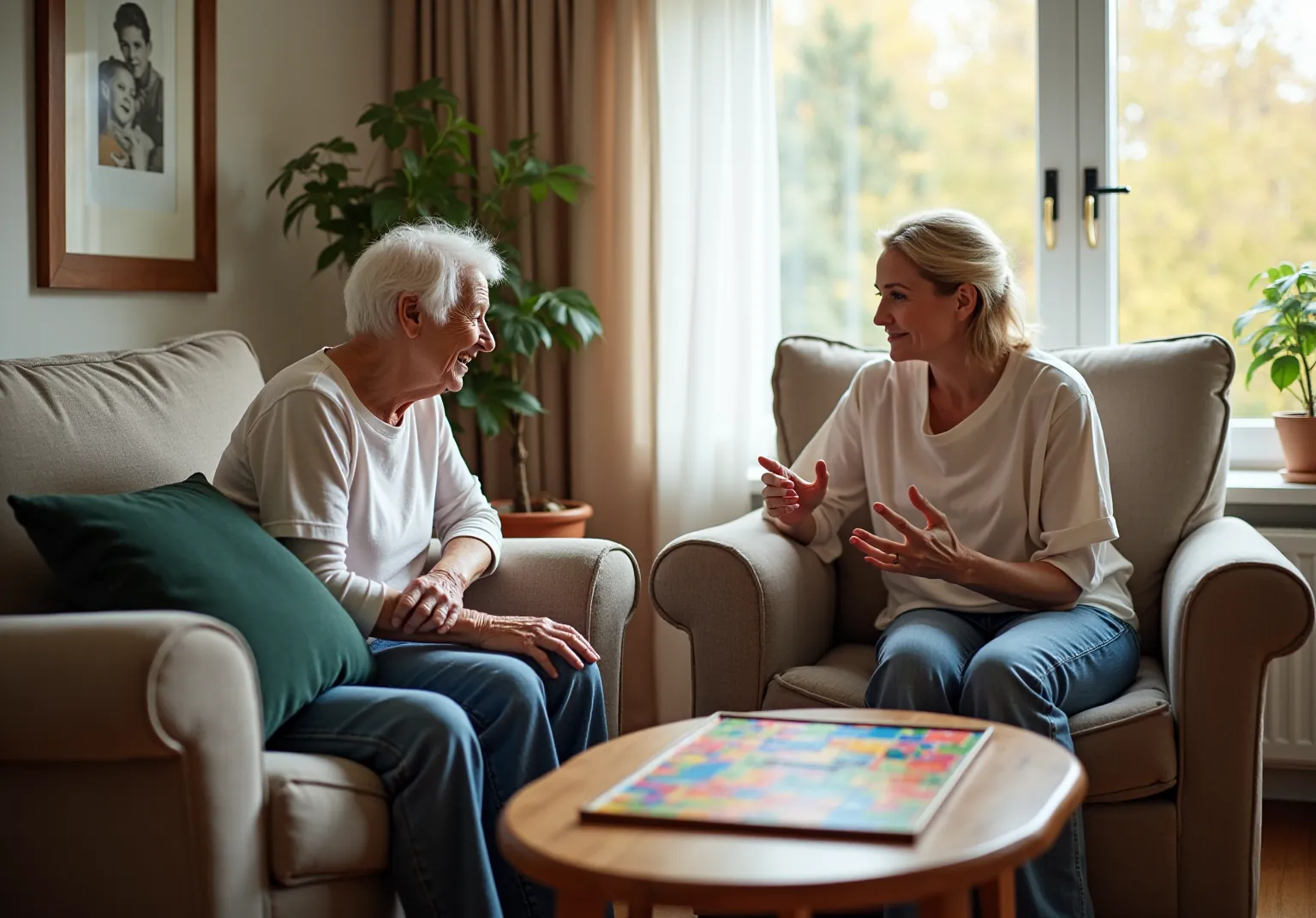
Understanding Senior Citizens and Technology: Adoption Trends

For families in our service areas
For families in our service areas, this guide explains caregiving and how non-medical in-home caregiving can support care planning in East Idaho, Treasure Valley & Magic Valley, Northern Wasatch, North Central West Virginia & Southwestern Pennsylvania, and Northeast Ohio.
What You Need to Know About Senior Citizens and Technology:
The rapid evolution of technology has transformed everyday life, yet a significant gap remains in its adoption among senior citizens. Many older adults express a desire to engage with digital tools, but barriers such as limited training and physical challenges often hinder their full participation.
This situation presents a pressing problem: how can society bridge this digital divide to enhance the quality of life for older adults? The implications are profound, as technology can significantly improve communication, access to services, and overall well-being for seniors.
To address this issue, we must focus on practical solutions. The following strategies can empower older adults to embrace digital tools:
- Providing targeted training programs
- Simplifying technology interfaces
- Fostering supportive environments
By implementing these strategies, we can help ensure that seniors are not left behind in our increasingly digital world.
Overview of Technology Adoption Among Seniors
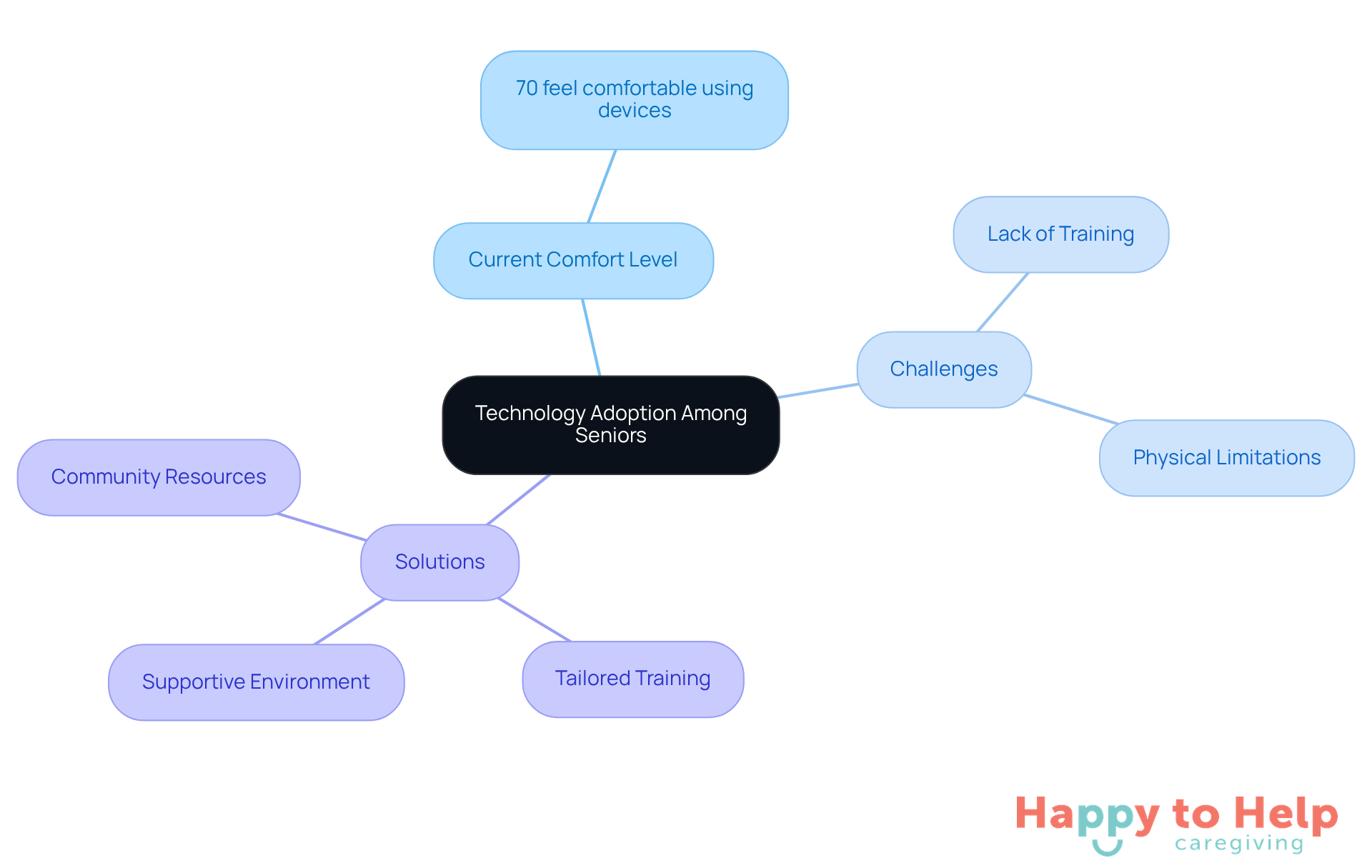
The digital divide among seniors presents a significant challenge. Despite a notable increase in the use of digital tools, many senior citizens and technology still present challenges for older adults who struggle to engage fully with new technologies. According to the 2025 AARP survey, about 70% of individuals aged 50 and above feel comfortable using devices like smartphones, tablets, and smart home innovations. However, barriers such as lack of training and physical limitations hinder many from taking full advantage of these advancements.
This situation is concerning, as it limits the ability of senior citizens and technology to provide the conveniences that seniors can benefit from. Intuitive interfaces and targeted educational initiatives have made these innovations more accessible, yet a gap remains. Many older adults are hesitant or unable to engage with these tools, which can lead to feelings of isolation and frustration.
To bridge this digital divide for senior citizens and technology, caregivers can implement several practical steps:
- Provide tailored training sessions that focus on the specific needs and abilities of seniors.
- Create a supportive environment where seniors feel comfortable asking questions and exploring new technologies to foster confidence.
- Leverage community resources, such as local workshops or online tutorials, to further enhance seniors' digital literacy.
Benefits of Technology for Older Adults
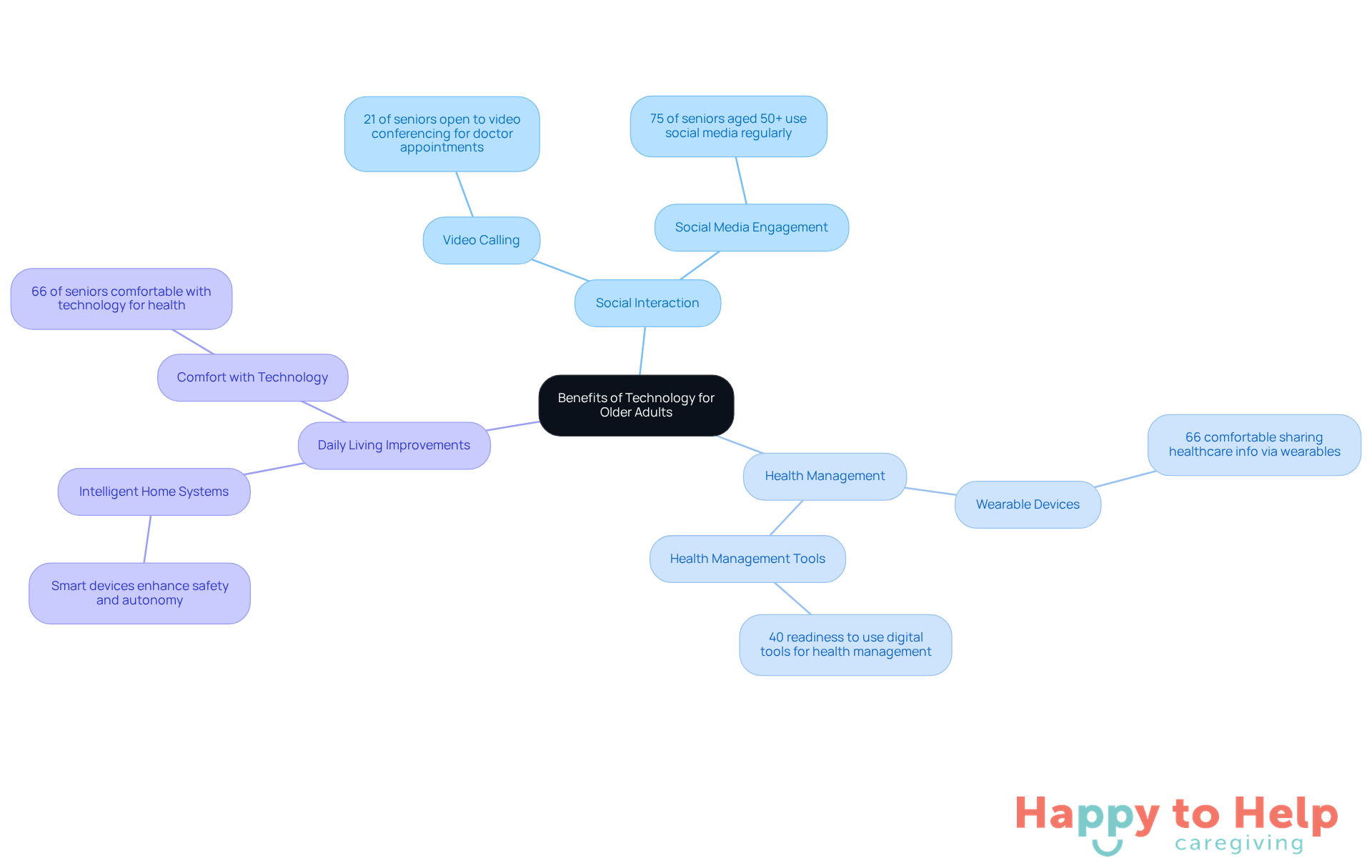
The integration of senior citizens and technology significantly improves their quality of life by addressing the pressing issue of social isolation. Loneliness can have severe implications for mental health, leading to feelings of depression and isolation. In fact, studies indicate that social interaction is vital for mental well-being. Video calling applications play a crucial role in this regard, enabling older adults to maintain meaningful connections with family and friends. Notably, 21% of senior citizens and technology users are open to using video conferencing for virtual appointments with their doctors, showcasing a growing acceptance of digital communication.
Moreover, 75% of senior citizens and technology users aged 50 and above engage with social media consistently, further highlighting the significance of digital tools in preserving social bonds. Health-related innovations, such as wearable devices, also contribute to enhancing the quality of life. These devices allow older adults to track their vital signs consistently and notify caregivers of potential medical issues, facilitating timely interventions. About 40% of older adults are ready to utilize digital tools for health management activities, demonstrating the growing importance of senior citizens and technology in areas such as medication reminders and virtual consultations.
Intelligent home systems automate daily activities, improving safety and autonomy for older adults. Devices like smart locks, video doorbells, and voice-activated assistants streamline routines and offer reassurance for both older adults and their families. For instance, 66% of older adults feel comfortable sharing personal healthcare information via wearable devices, indicating an increasing trust in technology's role in health management. As Lynda Jennings notes, "Technology also plays a vital role in combating social isolation."
These advancements collectively contribute to a higher quality of life for older adults, fostering greater autonomy and security in their living environments. As innovation progresses, its capacity to assist senior citizens and technology in aging in place and improve the welfare of older adults becomes more apparent. Alek Argueta highlights that "by adopting innovation, older adults can lead more fulfilling, connected, and autonomous lives.
Comparative Adoption Rates Across Age Groups
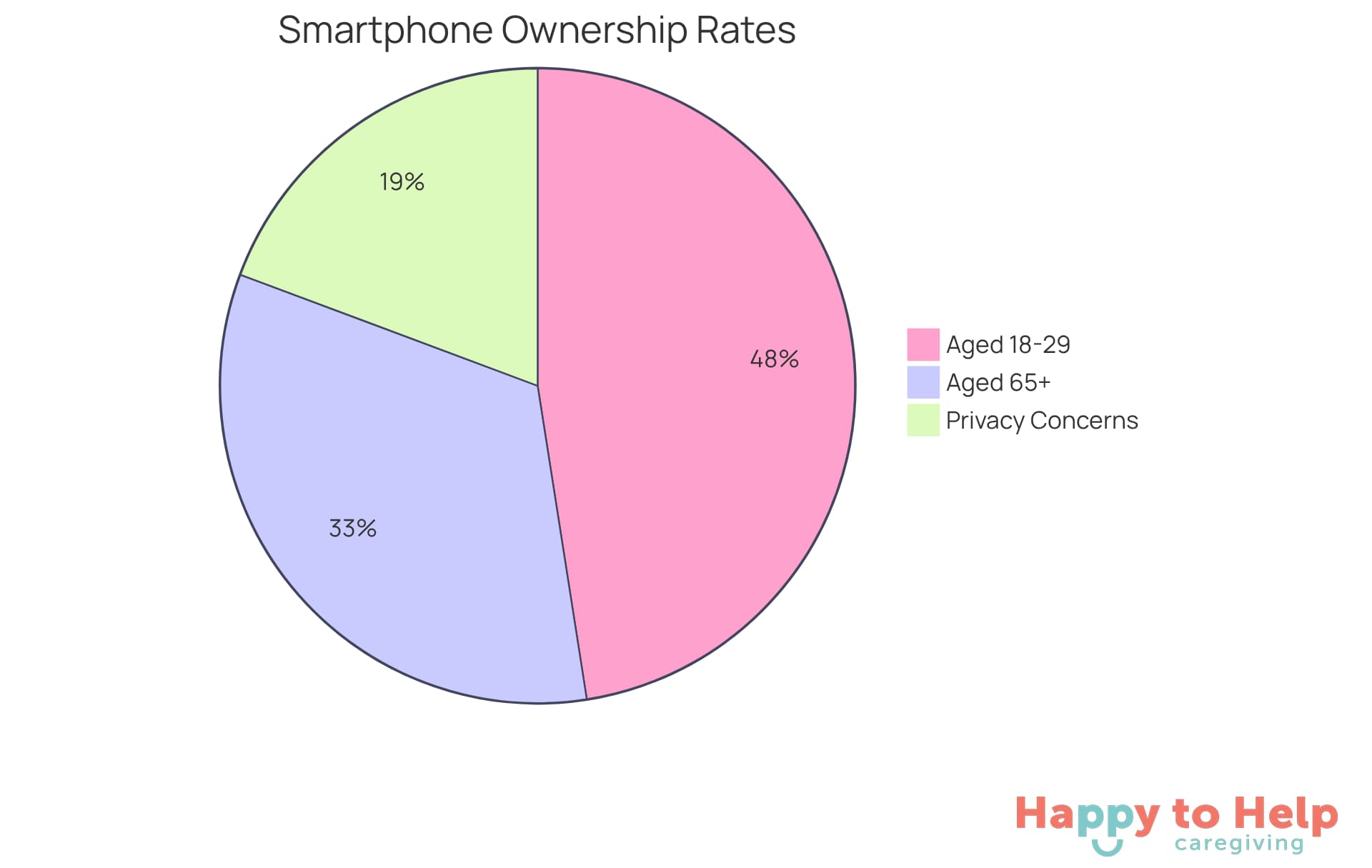
The adoption rates of innovations across age groups reveal a significant problem: a stark generational divide in technology usage. For instance, about 67% of seniors aged 65 and older own a smartphone, compared to 96% of individuals aged 18-29. This 29 percentage point gap underscores the challenges older adults face in engaging with digital tools.
Moreover, younger adults are more inclined to explore new innovations like AI and smart home devices. In contrast, 39% of older users express privacy concerns when using digital health tools. Understanding these differences is crucial for developing strategies that can help bridge this gap and promote greater adoption of digital tools among senior citizens and technology.
Interestingly, 83% of senior citizens and technology are eager to embrace new technology, indicating a willingness to engage if they receive the right support. Additionally, the notable increase in Instagram usage among individuals aged 50 and above, along with the fact that 88% of older adults watch YouTube weekly, highlights their growing involvement with digital content.
As Yusra Bintemohiuddin points out, 'Senior citizens and technology have made older adults today far more digitally connected, active, and brand-conscious than stereotypes imply.' This statement emphasizes the evolving digital landscape for this demographic, suggesting that with the right encouragement and resources, older adults can successfully navigate the digital world.
Challenges in Technology Adoption for Seniors
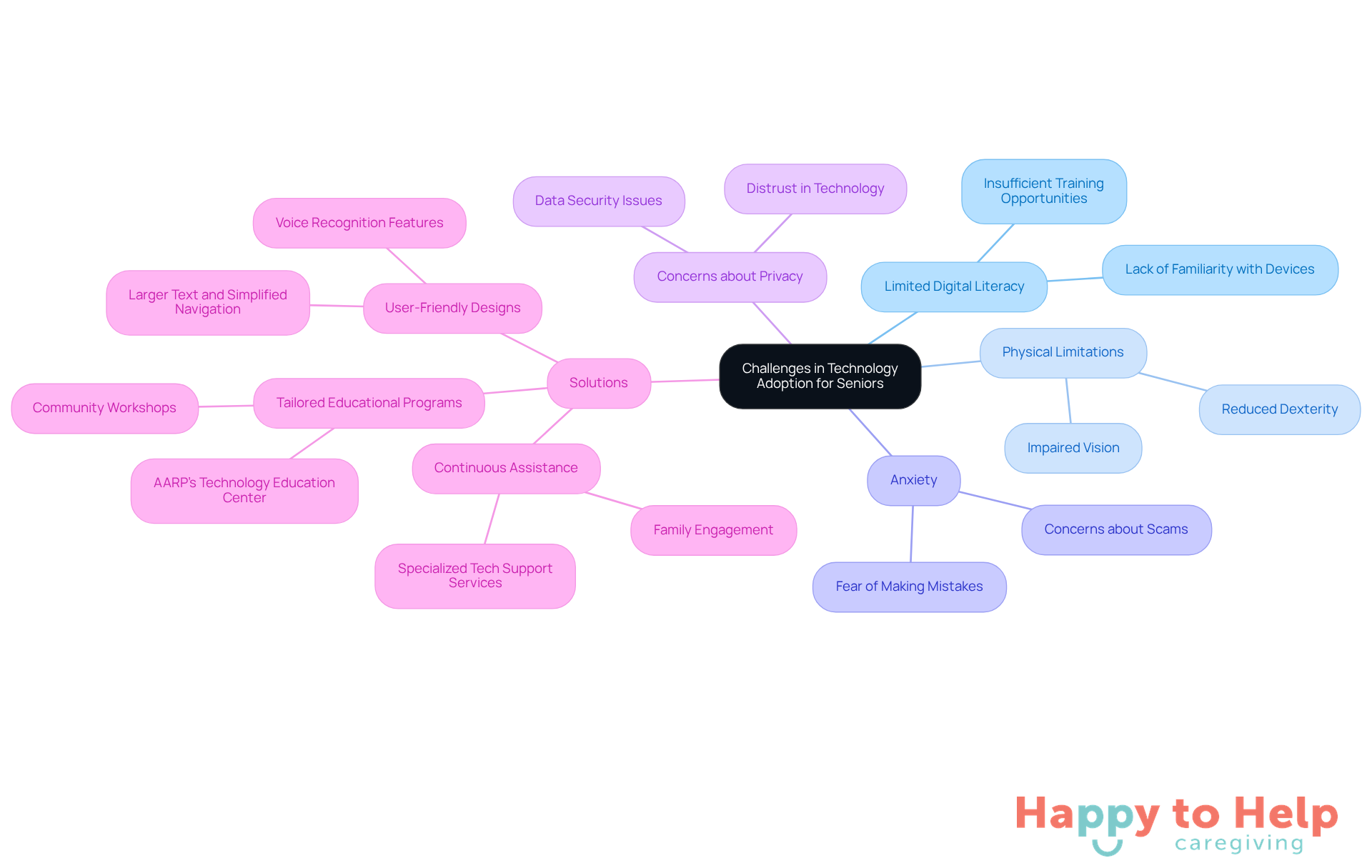
Despite the numerous benefits that modern tools provide, several challenges obstruct their acceptance among seniors. Key barriers include:
- Limited digital literacy
- Physical limitations such as impaired vision or reduced dexterity
- Anxiety surrounding the use of new devices
Many seniors did not develop alongside modern devices, leading to a sense of unfamiliarity that can feel daunting. Furthermore, concerns about data privacy and security significantly impact their willingness to engage with digital tools. A survey carried out in 2023 indicated that 64% of older adults believed that devices were not created with their age group in mind, which can worsen feelings of frustration and skepticism.
To effectively address these challenges, tailored educational programs are essential. Initiatives such as AARP’s Technology Education Center, community workshops, and peer tutoring can equip older adults with the skills they require to navigate digital resources confidently. User-friendly device designs, featuring larger text and simplified navigation, can also enhance usability. Continuous assistance, whether via family engagement or specialized tech support services, plays a vital role in enabling older adults to adopt digital tools. This support ultimately enhances their quality of life and promotes greater independence.
Future Trends in Senior Technology Adoption
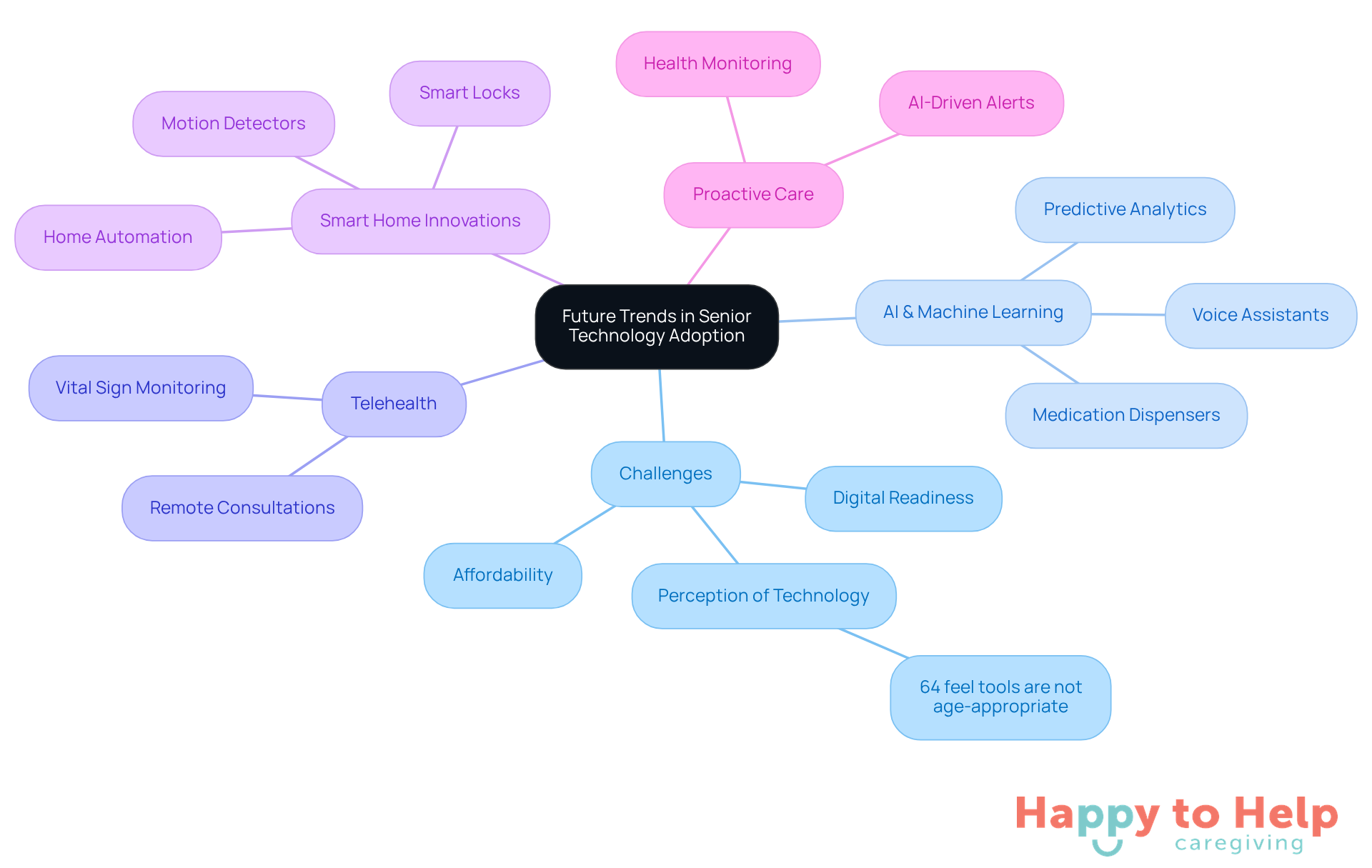
Looking ahead, several trends are set to influence the acceptance of innovations among seniors. A significant challenge is the affordability and digital readiness of older adults. A substantial segment of this demographic, particularly 64%, believes that digital tools are not created with their age in mind, which can create barriers to engagement. This perception can hinder the adoption of beneficial technologies.
However, the incorporation of artificial intelligence and machine learning into daily devices offers a promising solution. These technologies are anticipated to improve usability and personalization, making innovations more intuitive for older users. For example, AI-driven voice assistants can ease interactions, while intelligent medication dispensers provide reminders tailored to personal schedules, enhancing compliance with wellness routines.
Moreover, the increasing focus on telehealth services motivates seniors to adopt health-related tools that enable remote consultations and ongoing monitoring of vital signs. This can lead to prompt interventions and better health outcomes, addressing the critical need for accessible healthcare.
As smart home innovations gain popularity, features like motion detectors for lighting and smart locks for improved security will provide greater safety and convenience. These advancements encourage older adults to engage more with technology, fostering a sense of independence.
Furthermore, AI-driven systems can analyze patterns in health data, alerting caregivers to potential issues before they escalate, thus promoting proactive care. By fostering an environment that prioritizes accessibility, training, and support, the future of technology adoption among seniors appears promising, paving the way for enhanced independence and quality of life.
Your Path Forward
The relationship between senior citizens and technology is evolving, revealing significant challenges that hinder their full engagement. Many older adults are embracing digital tools, yet barriers such as limited digital literacy, physical constraints, and privacy concerns persist. These obstacles not only restrict access but also contribute to social isolation, making it crucial to address them to ensure seniors can fully benefit from modern technology.
To combat these challenges, tailored educational initiatives and supportive environments are essential. By fostering confidence among seniors, we can help them integrate technology into their daily lives. This integration not only combats social isolation but also enhances health management and overall quality of life. Statistics indicate a notable increase in smartphone ownership and social media engagement among older adults, demonstrating their eagerness to engage with digital innovations when provided with the right resources.
Looking ahead, the future of technology adoption among seniors appears promising, especially with advancements in artificial intelligence and telehealth services. As these tools become more accessible and user-friendly, they will empower older adults to lead more connected, autonomous lives. It is vital for communities, caregivers, and technology developers to collaborate in creating an inclusive digital landscape that accommodates the unique needs of senior citizens. By doing so, we can enrich their lives and foster independence.
https://iframe.tely.ai/cta/eyJhcnRpY2xlX2lkIjogIjY5MjY0Mzk1ZDdhYTIxYWI5OTE3NmUyMiIsICJjb21wYW55X2lkIjogIjY4ZWU1ZGNhNzMxNzYyNTU3ZjNjOTVjMSIsICJpbmRleCI6IG51bGwsICJ0eXBlIjogImFydGljbGUifQ==Frequently Asked Questions
What is the current state of technology adoption among seniors?
Approximately 70% of individuals aged 50 and above feel comfortable using devices like smartphones, tablets, and smart home innovations, though many still face challenges due to lack of training and physical limitations.
What barriers do seniors face in using technology?
Barriers include a lack of training, physical limitations, and hesitance or inability to engage with new tools, which can lead to feelings of isolation and frustration.
How can caregivers help seniors bridge the digital divide?
Caregivers can provide tailored training sessions, create a supportive environment for questions, and leverage community resources like workshops and online tutorials to enhance seniors' digital literacy.
What are the benefits of technology for older adults?
Technology improves the quality of life for older adults by addressing social isolation, enabling video calls for maintaining connections, and facilitating health management through wearable devices and intelligent home systems.
How does technology help combat social isolation among seniors?
Video calling applications and social media allow seniors to maintain meaningful connections with family and friends, which is vital for mental well-being.
What percentage of seniors are open to using video conferencing for virtual doctor appointments?
About 21% of senior citizens and technology users are open to using video conferencing for virtual appointments with their doctors.
How do wearable devices benefit older adults?
Wearable devices allow older adults to track vital signs and notify caregivers of potential medical issues, facilitating timely interventions and improving health management.
What role do intelligent home systems play for older adults?
Intelligent home systems automate daily activities, improving safety and autonomy, with devices like smart locks and video doorbells streamlining routines and offering reassurance.
How comfortable are older adults with sharing healthcare information via technology?
Approximately 66% of older adults feel comfortable sharing personal healthcare information through wearable devices, indicating growing trust in technology's role in health management.
What is the overall impact of technology on the lives of older adults?
Technology fosters greater autonomy and security, helping older adults lead more fulfilling, connected, and autonomous lives while improving their overall quality of life.
List of Sources
- Overview of Technology Adoption Among Seniors
- Older Americans Are Leveraging More Technology (https://aarp.org/pri/topics/technology/internet-media-devices/2025-technology-trends-older-adults)
- Senior Technology Statistics: Key Facts (https://californiamobility.com/21-senior-technology-statistics)
- Embracing Technology: Surging Smartphone Adoption Among the Elderly | QliqSOFT (https://qliqsoft.com/blog/embracing-technology-surging-smartphone-adoption-among-the-elderly)
- AARP Research Insights on Technology (https://aarp.org/pri/topics/technology/internet-media-devices/aarp-research-insights-technology)
- Benefits of Technology for Older Adults
- (https://connectednation.org/blog/how-technology-is-enhancing-the-well-being-of-older-adults)
- Older Americans Are Leveraging More Technology (https://aarp.org/pri/topics/technology/internet-media-devices/2025-technology-trends-older-adults)
- Senior Technology Statistics: Key Facts (https://californiamobility.com/21-senior-technology-statistics)
- How Older People Are Reaping Brain Benefits From New Tech - KFF Health News (https://kffhealthnews.org/news/article/tech-apps-ai-older-adults-health-benefits)
- Empowering Aging: How Technology Enhances Independence and Safety for Older Adults - Summit Professional Education (https://summit-education.com/blog/general/empowering-aging-how-technology-enhances-independence-and-safety-for-older-adults)
- Comparative Adoption Rates Across Age Groups
- TOP 20 SENIOR CITIZEN MARKETING STATISTICS 2025 | Amra And Elma LLC (https://amraandelma.com/senior-citizen-marketing-statistics)
- 131 AI Statistics and Trends for (2024) | National University (https://nu.edu/blog/ai-statistics-trends)
- 20 Mind-Blowing AI Statistics Everyone Must Know About Now (https://forbes.com/sites/bernardmarr/2025/06/03/mind-blowing-ai-statistics-everyone-must-know-about-now-in-2025)
- Elderly And Technology Statistics: ZipDo Education Reports 2025 (https://zipdo.co/elderly-and-technology-statistics)
- Share of those 65 and older who are tech users has grown in the past decade (https://pewresearch.org/short-reads/2022/01/13/share-of-those-65-and-older-who-are-tech-users-has-grown-in-the-past-decade)
- Challenges in Technology Adoption for Seniors
- Overcoming Barriers to Digital Literacy and Bridging the Digital Divide Among Older Adults - Senior Hope (https://seniorhope.com/overcoming-barriers-to-digital-literacy-and-bridging-the-digital-divide-among-older-adults)
- Older Americans Are Leveraging More Technology (https://aarp.org/pri/topics/technology/internet-media-devices/2025-technology-trends-older-adults)
- Older Adults Embracing Technology, AARP Reports (https://forbes.com/sites/jamiegold/2024/01/23/older-adults-embracing-technology-aarp-reports)
- Adults 50+ Own as Many Tech Devices as Those Under 50 (https://aarp.org/pri/topics/technology/internet-media-devices/2024-technology-trends-older-adults)
- Senior Living Industry Sees Surge in AI Adoption and Collaboration, Report Finds (https://retirementlivingsourcebook.com/proagingnews/senior-living-industry-sees-surge-in-ai-adoption-and-collaboration-report-finds)
- Future Trends in Senior Technology Adoption
- Older Adults Embracing Technology, AARP Reports (https://forbes.com/sites/jamiegold/2024/01/23/older-adults-embracing-technology-aarp-reports)
- Navigating Technology Trends and AI Implementation in Senior Living (https://ccl-hg.com/perspectives/navigating-technology-trends-ai-implementation-in-senior-living)
- AI Technology is Transforming Aging Safely Through Winter (https://ltcnews.com/articles/ai-technology-transforming-aging-safely-through-winter)
- Older Americans Are Leveraging More Technology (https://aarp.org/pri/topics/technology/internet-media-devices/2025-technology-trends-older-adults)
- How Technology will Transform Senior Care in 2025 (https://thecareconcierges.com/how-technology-will-transform-senior-care-in-2025)