
Understanding Senior Companionship Services:
Loneliness and isolation are significant issues that disproportionately impact older adults, often resulting in serious mental and physical health challenges. In fact, one in three adults aged 50 to 80 in the U.S. experiences feelings of isolation. This alarming statistic highlights the urgent need for effective solutions to address these challenges.
Senior companionship services emerge as a vital resource in this context. They not only provide emotional support and social interaction but also assist with daily activities that enhance overall well-being. However, what truly makes these services effective? How can they be tailored to meet the unique needs of each individual?
Exploring the features and benefits of senior companionship services reveals essential insights into their role in promoting a fulfilling and independent life for seniors. By understanding these services, caregivers can implement practical solutions that significantly improve the quality of life for older adults.
Defining Senior Companionship Services
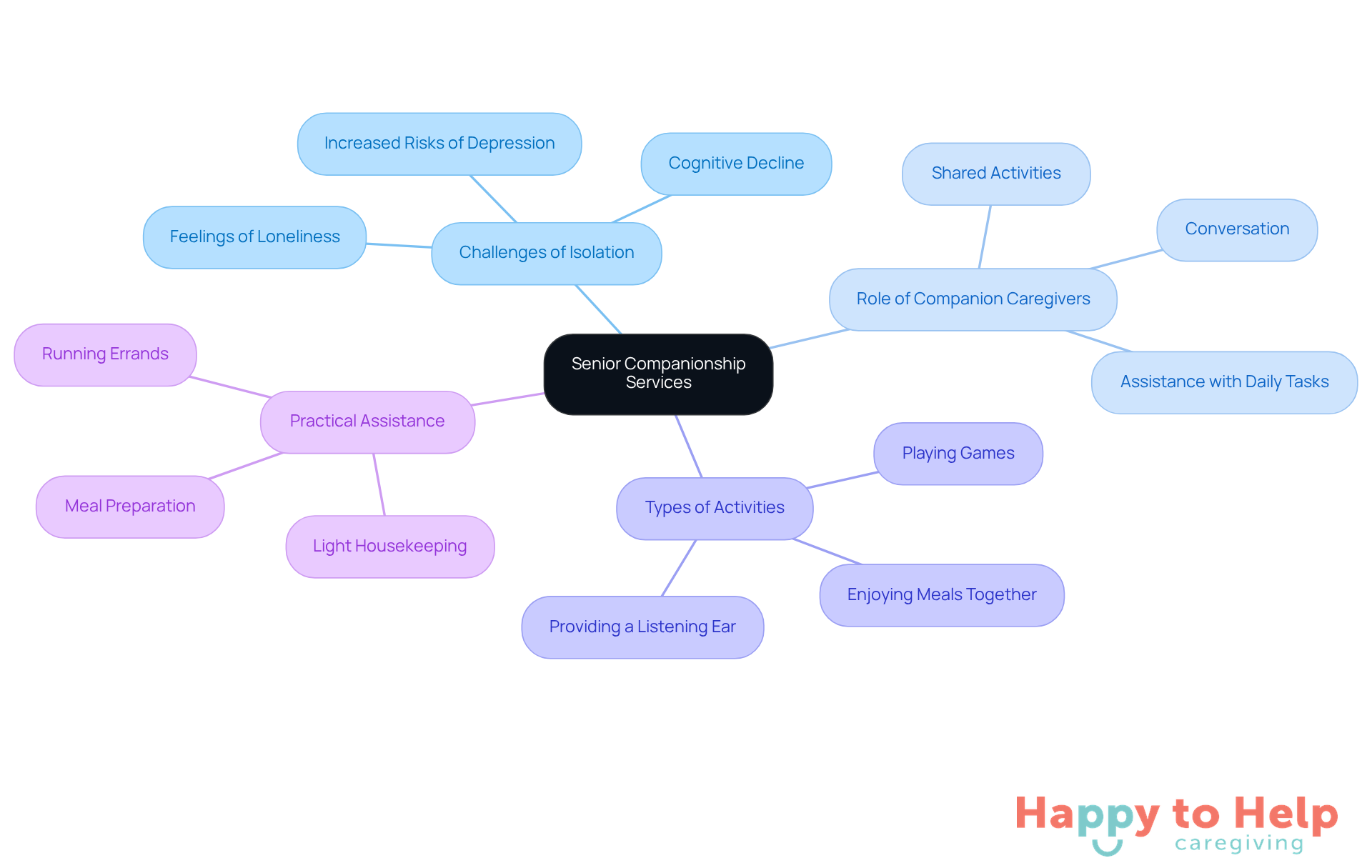
Loneliness and isolation are significant challenges faced by older adults, particularly those living alone or with limited social interactions. Studies indicate that about one third of U.S. adults aged 50 to 80 experience feelings of isolation. This social isolation can lead to increased risks of depression, anxiety, and cognitive decline, making it crucial to address these issues.
To combat these feelings, senior companionship services offer non-medical assistance that emphasizes emotional and social interaction. Companion caregivers play a vital role in this process, offering senior companionship services through:
- Conversation
- Shared activities
- Assistance with daily tasks
Activities may include:
- Playing games
- Enjoying meals together
- Simply providing a listening ear
All aimed at enhancing the quality of life for older adults.
By fostering significant relationships, senior companionship services help individuals create a sense of belonging and purpose. They tailor their support according to an elderly person's abilities, lifestyle, and personal goals, ensuring personalized care. This approach not only uplifts the spirits of older adults but also provides comfort and consistent information for long-distance families.
Moreover, companion care encompasses practical activities such as:
- Meal preparation
- Light housekeeping
- Running errands
These senior companionship services further enhance the overall quality of life for older adults, allowing them to maintain their independence while receiving the necessary support for a fulfilling life.
The Importance of Companionship in Home Care
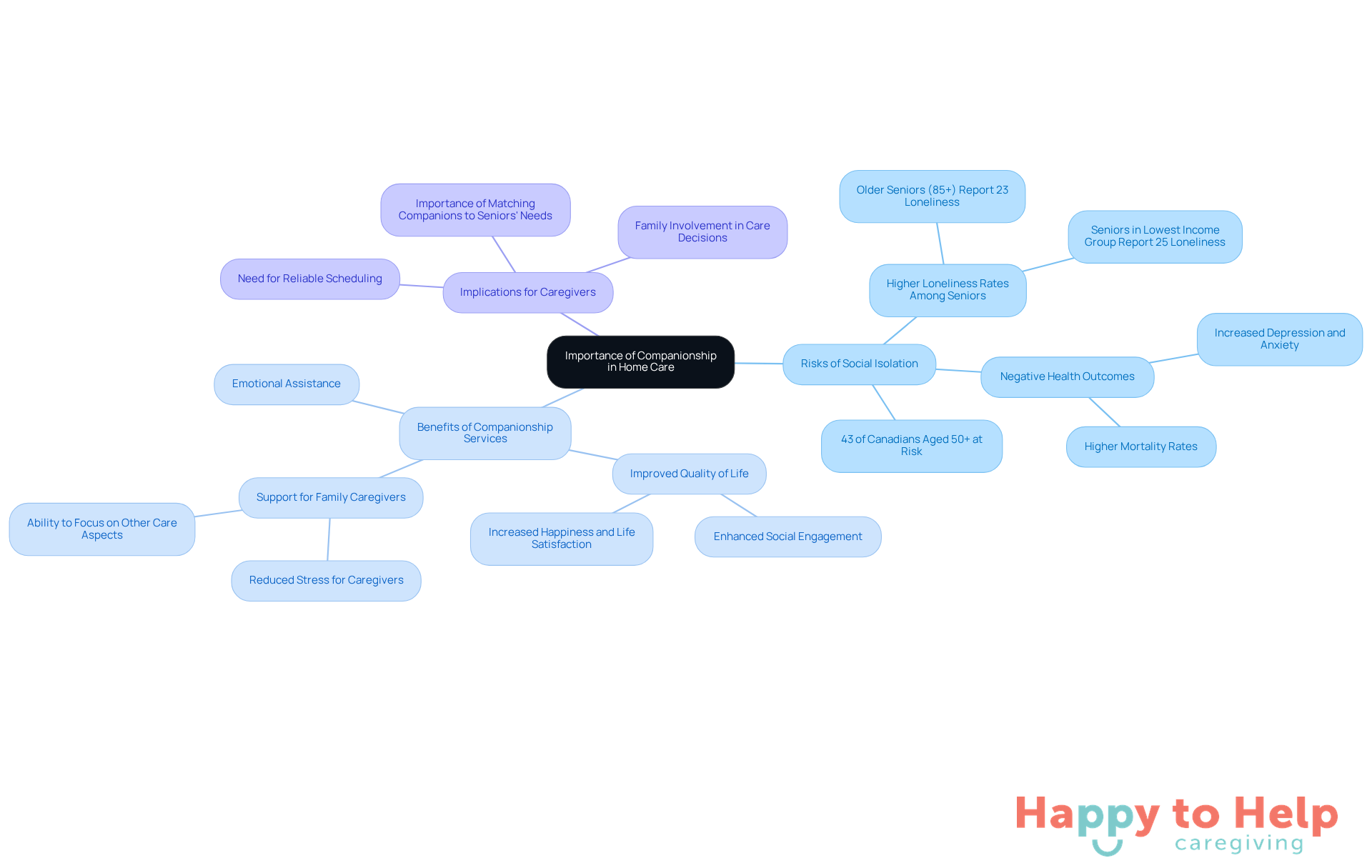
In home care, senior companionship services are a significant concern, especially for elderly individuals facing the risk of social isolation. Research shows that regular social interaction can dramatically reduce feelings of loneliness and lower the risk of depression among older adults. In fact, 43% of Canadians aged 50 and older are at risk of social isolation, which underscores the urgency of addressing this issue.
The implications of social isolation are profound. Older adults who frequently engage with friends report higher levels of happiness and life satisfaction. Without adequate support, many may struggle to maintain a sense of routine and purpose in their daily lives, which is essential for their overall well-being.
Fortunately, there are senior companionship services available to help combat these challenges. These senior companionship services enhance the quality of life for older adults by providing emotional assistance and fostering social interaction. They also alleviate stress for family caregivers, allowing them to focus on other aspects of care, knowing their loved ones are receiving the necessary support to thrive.
Additionally, these programs can assist with daily activities, further improving the quality of life for elderly individuals. By prioritizing companionship and support, caregivers can create a more fulfilling environment for their loved ones.
The Evolution of Senior Companionship Services
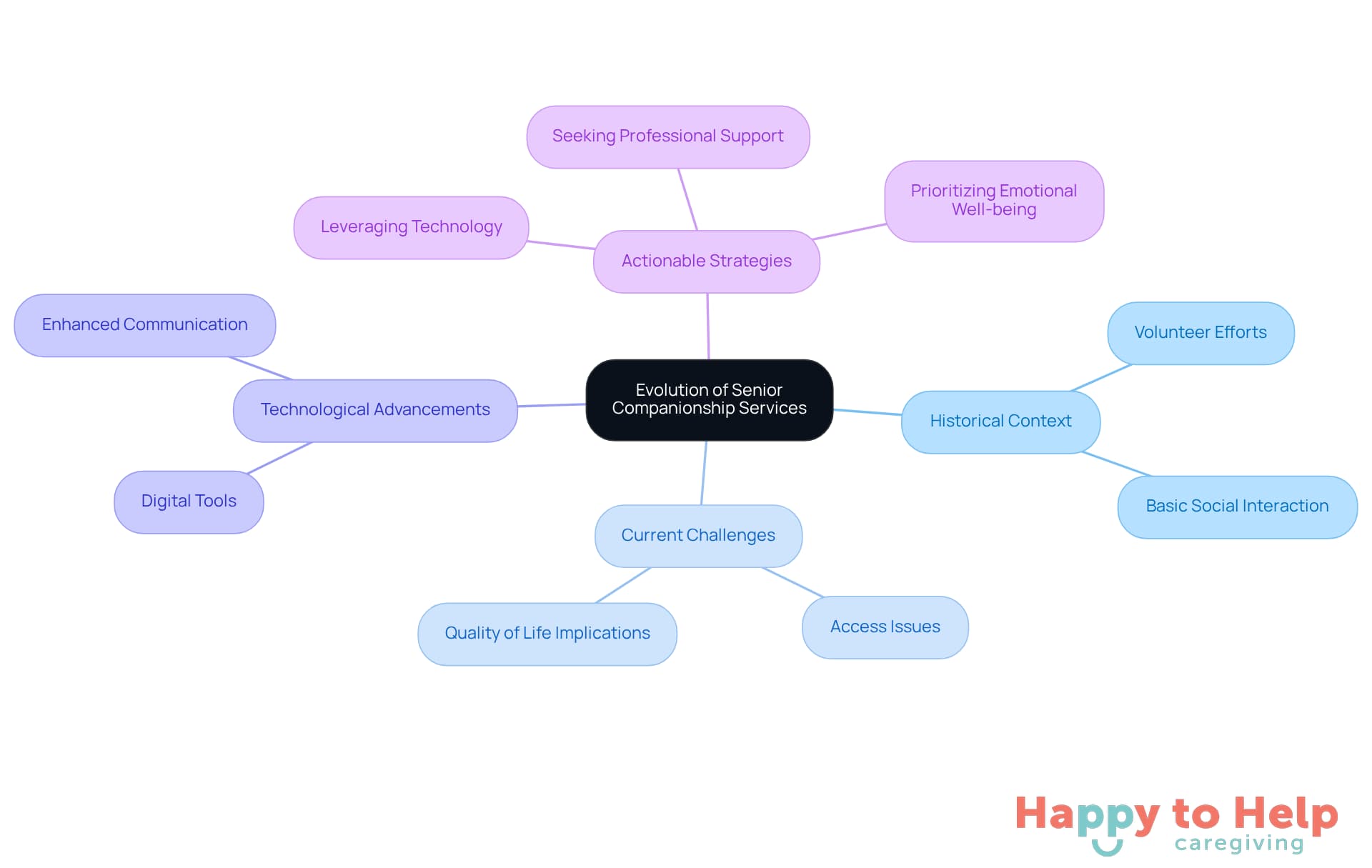
The landscape of support options for seniors has undergone a significant transformation in recent decades. Initially rooted in volunteer efforts, these programs primarily focused on providing basic social interaction. However, as the aging population has expanded and the demand for personalized care has surged, the importance of senior companionship services has become increasingly vital.
This shift presents a pressing problem: many seniors still lack access to adequate senior companionship services that are tailored to their individual needs. The implications are profound, as inadequate support can lead to diminished quality of life and increased isolation among the elderly.
Fortunately, senior companionship services are emerging to provide solutions. Today, many support offerings, such as senior companionship services, are integrated into comprehensive home care programs, delivering a wide range of assistance that is customized to meet personal needs. Technological advancements play a crucial role in this evolution. Agencies are now utilizing digital tools to enhance communication between caregivers and families, ensuring that everyone is on the same page.
Moreover, there is a growing recognition of the essential role that senior companionship services provide in elder care. This awareness has led to the development of more comprehensive and impactful assistance options. As the industry continues to adapt, the focus remains on enhancing the quality of life for elderly individuals through senior companionship services that provide compassionate and personalized care.
To further improve care, caregivers can implement actionable strategies such as:
- Leveraging technology for better communication.
- Seeking out professional support services that cater to specific needs.
- Prioritizing emotional well-being alongside physical care.
By embracing these solutions, caregivers can significantly enhance the support they provide through senior companionship services, ultimately leading to a more fulfilling life for seniors.
Key Features of Effective Companionship Services
Senior companionship services face significant challenges that can impact the quality of life for older adults. Caregivers often struggle to meet the diverse needs of elderly individuals, which highlights the importance of senior companionship services to prevent feelings of isolation and neglect.
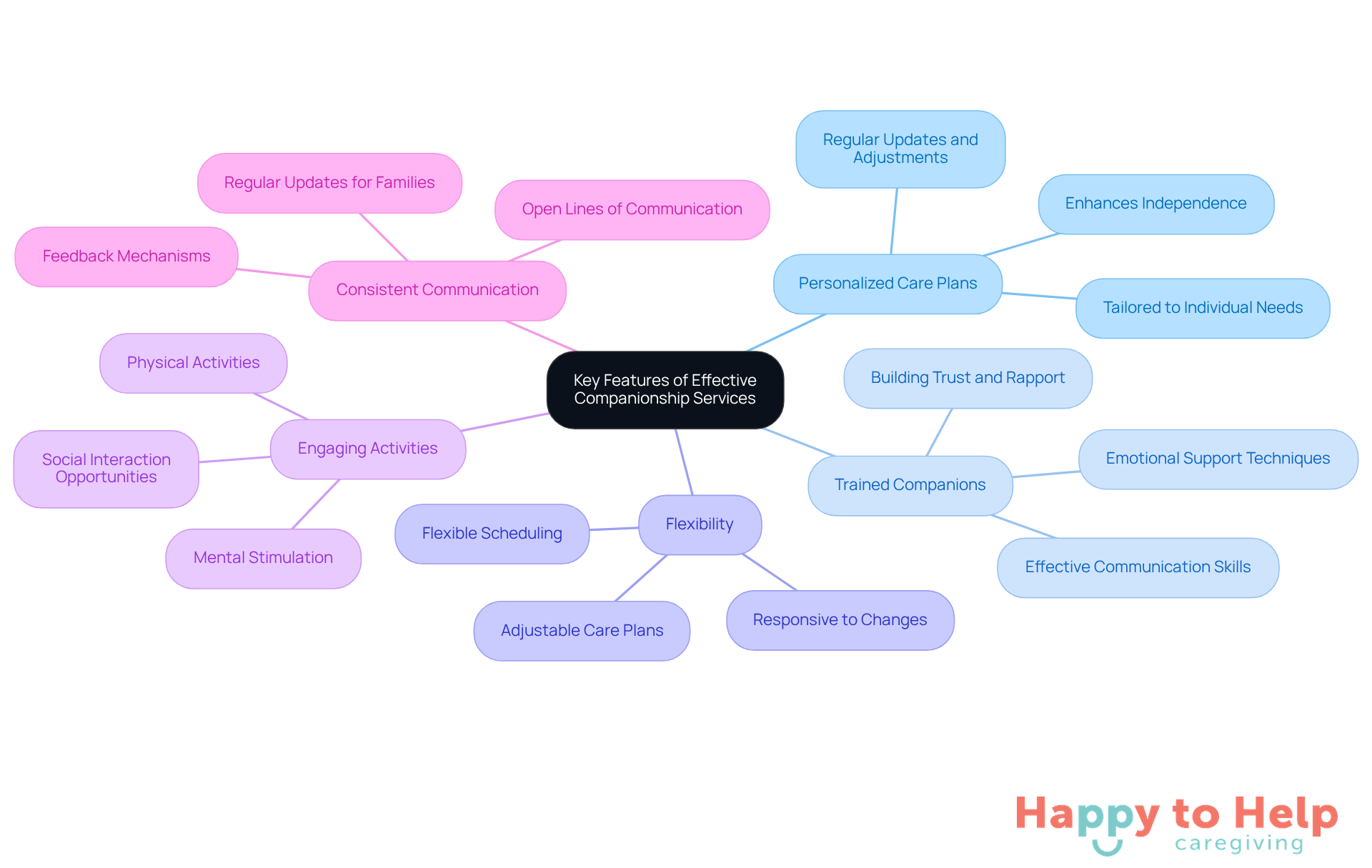
Personalized Care Plans are essential in addressing these challenges. Customizing services to the distinct needs and preferences of each elderly individual ensures that assistance aligns with their specific health, lifestyle, and psychological needs. This approach not only promotes independence but also enhances overall well-being through senior companionship services, as older adults feel appreciated and acknowledged. As highlighted by Wisdom Senior Care, "A personalized plan focuses on the individual's unique health, lifestyle, and habits, rather than the uniform routine that is intended for all."
Another critical aspect is having trained companions provided by senior companionship services. Caregivers must possess training that goes beyond basic caregiving skills. Effective communication and emotional support techniques are vital for establishing trust and rapport with elderly individuals. Research indicates that senior companionship services can reduce the risk of dementia by 50%, highlighting the necessity of trained companions in providing effective care.
Flexibility in services is also crucial. The ability to adjust care in response to changes in an elderly individual's condition or preferences allows caregivers to provide timely support. Flexible scheduling for senior companionship services ensures that seniors receive the assistance they need at the most critical times. Wisdom Senior Care emphasizes, "Help is given to the elderly only in places where they require it, thus they still feel as if they are in control of their lives."
Moreover, engaging activities play a significant role in senior companionship services. Meaningful interactions that stimulate mental and psychological engagement are essential. Activities like hobbies, games, and outings not only offer enjoyment but also enhance cognitive function and psychological resilience. For instance, Mrs. Jenkins, who "now lights up during her twice-weekly card games with her companion caregiver," illustrates how engaging activities can enhance feelings of fulfillment and connection.
Lastly, senior companionship services emphasize that consistent communication is vital. Regular updates and open lines of communication between caregivers and family members ensure that the elder's evolving needs are met effectively. This transparency fosters trust and reassurance, allowing families to focus on quality interactions rather than daily caregiving tasks.
Together, these attributes enhance senior companionship services, fostering a supportive atmosphere that assists older adults in preserving their autonomy and emotional well-being.
Real-Life Examples of Companionship Services
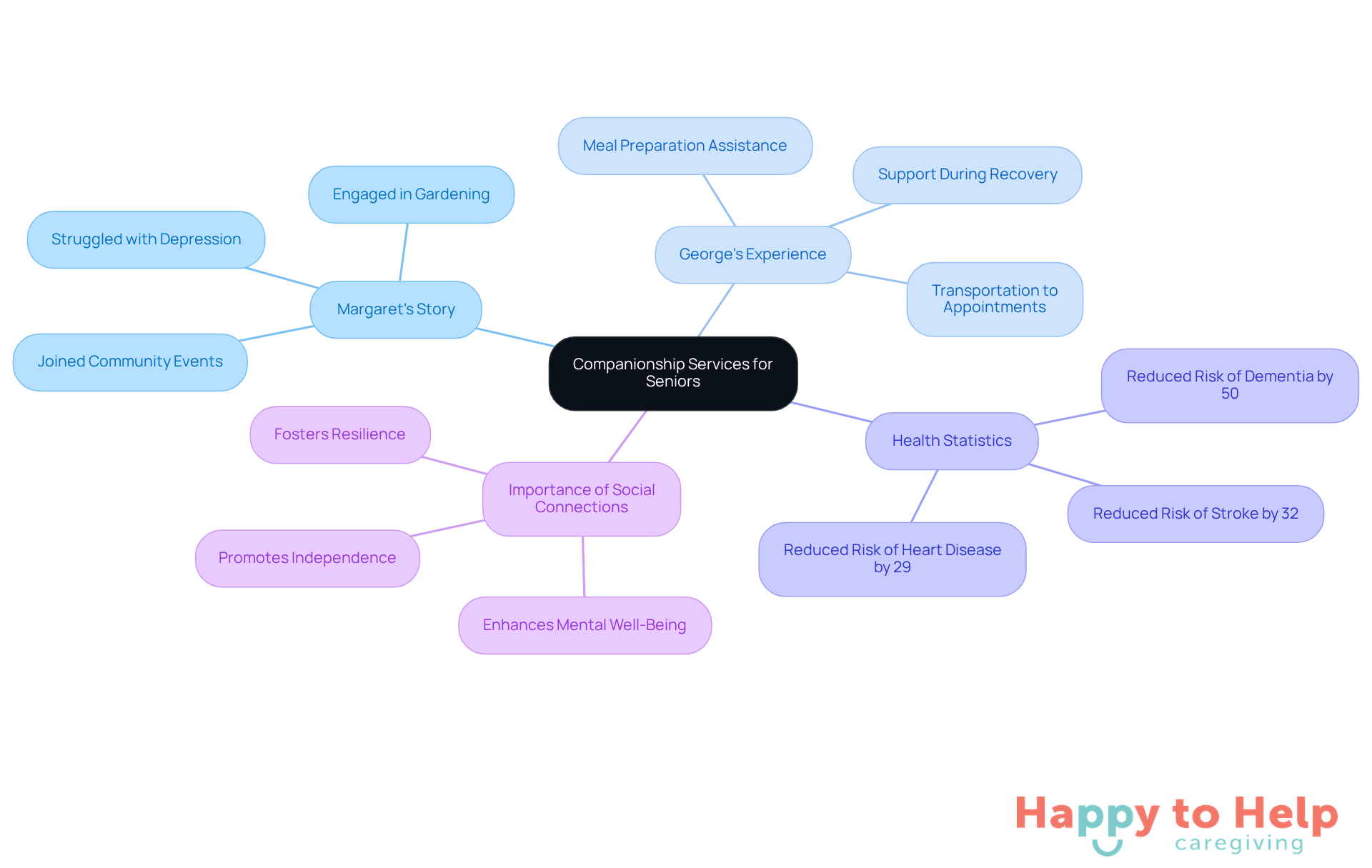
Loneliness among older adults poses a significant problem, impacting their mental health and overall well-being. For example, Margaret, a senior living alone, struggled with depression until regular visits from a companion transformed her life. Engaging her in activities like gardening and reading not only alleviated her loneliness but also encouraged her to join community events, enhancing her social connections.
The implications of loneliness are serious. Studies indicate that social connections can reduce the risk of dementia by 50%, stroke by 32%, and heart disease by 29%. This highlights the vital role that supportive assistance plays in improving mental well-being. Similarly, George, an older adult recovering from surgery, found immense value in support options that offered both mental encouragement and practical help with daily tasks, such as meal preparation and transportation to appointments.
As noted by University Health News, social interactions are crucial for preserving cognitive functions in older adults. This underscores the importance of senior companionship services in combating loneliness and fostering resilience. By providing regular social engagement, senior companionship services can significantly enhance the quality of life for seniors, promoting both independence and emotional well-being.
Your Path Forward
Loneliness and isolation among older adults is a pressing issue that significantly impacts their emotional and mental well-being. Senior companionship services address this challenge by providing essential emotional and social support, enhancing the overall quality of life for seniors. These services allow older adults to maintain their independence while receiving tailored assistance, fostering meaningful interactions that create a sense of belonging and purpose.
Key insights reveal the importance of:
- Personalized care plans
- Trained companions
- Engaging activities that cater to the unique needs of seniors
As the aging population continues to grow, the evolution of these services reflects a growing recognition of their significance in home care. Real-life examples illustrate how companionship can transform the lives of older adults, showcasing the tangible benefits of regular social interaction in combating loneliness and promoting cognitive health.
The importance of senior companionship services cannot be overstated. As society grapples with the challenges of an aging population, prioritizing these services is essential for ensuring that older adults receive the support they need to thrive. Embracing effective companionship programs not only enhances the lives of seniors but also contributes to a more compassionate and connected community.
https://iframe.tely.ai/cta/eyJhcnRpY2xlX2lkIjogIjY5NDBhMjI1M2RiOWY3ZmNiNDY0N2VjNyIsICJjb21wYW55X2lkIjogIjY4ZWU1ZGNhNzMxNzYyNTU3ZjNjOTVjMSIsICJpbmRleCI6IG51bGwsICJ0eXBlIjogImFydGljbGUifQ==Frequently Asked Questions
What are senior companionship services?
Senior companionship services provide non-medical assistance to older adults, focusing on emotional and social interaction to combat loneliness and isolation.
Why are senior companionship services important?
They help reduce feelings of loneliness, lower the risk of depression, and enhance the overall quality of life for older adults by fostering social interaction and emotional support.
What activities do companion caregivers engage in with older adults?
Companion caregivers engage in activities such as conversation, playing games, enjoying meals together, and simply providing a listening ear.
How do senior companionship services address the needs of older adults?
These services are tailored to the elderly person's abilities, lifestyle, and personal goals, ensuring personalized care that uplifts their spirits and provides comfort to families.
What practical tasks do companion caregivers assist with?
Companion caregivers assist with practical tasks including meal preparation, light housekeeping, and running errands.
How does social interaction impact older adults?
Regular social interaction can significantly reduce feelings of loneliness and lower the risk of depression, contributing to higher levels of happiness and life satisfaction among older adults.
What challenges do older adults face without companionship?
Without adequate companionship, older adults may struggle to maintain a sense of routine and purpose, which is essential for their overall well-being.
How do senior companionship services benefit family caregivers?
These services alleviate stress for family caregivers by ensuring their loved ones receive the necessary support, allowing caregivers to focus on other aspects of care.
List of Sources
- Defining Senior Companionship Services
- Combat Loneliness: The Benefits of Companion Care for Seniors (https://allheartcare.com/more-than-just-company-the-vital-role-of-companion-care-for-seniors)
- How Companion Care Enhances Quality of Life for Seniors (https://assistinghands.com/70/illinois/lombard/blog/how-companion-care-enhances-quality-of-life-for-seniors)
- Lonely Seniors Are Turning To AI Bots For Companionship (https://forbes.com/sites/rashishrivastava/2025/10/18/lonely-seniors-are-turning-to-ai-bots-for-companionship)
- The Importance of Companionship in Home Care
- Why Companions for Seniors Matter - For the one you love (https://fortheoneyoulove.ca/2025/11/28/why-companionship-matters-for-senior-health)
- The Role of Companionship in Senior Well-Being (https://anodyne-services.com/2025/01/07/the-role-of-companionship-in-senior-well-being)
- HOW IN-HOME COMPANIONSHIP IMPROVES MENTAL HEALTH FOR SENIORS IN THE USA - Quality Homemakers (https://qualityhomemakers.com/blog/how-in-home-companionship-improves-mental-health-for-seniors-in-the-usa)
- The Role of Companion Care in Reducing Depression Among Seniors (https://malamamaikai.com/role-of-companion-care-in-reducing-depression-among-seniors)
- The Evolution of Senior Companionship Services
- DOL Proposes Rule to Reinstate Companionship & Live-in Exemptions from Minimum Wage and Overtime for Third-Party Employers | Littler (https://littler.com/news-analysis/asap/dol-proposes-rule-reinstate-companionship-live-exemptions-minimum-wage-and)
- Senior Living Trends in 2025 | Juniper (https://junipercommunities.com/senior-living-trends-in-2025)
- Trends in Senior Care: What to Expect in 2025 (https://agingconnections.org/blog/trends-in-senior-care-what-to-expect-in-2025)
- Walberg Introduces Bill to Help Ensure Elderly Have Access to Affordable Companion Care (https://walberg.house.gov/media/press-releases/walberg-introduces-bill-help-ensure-elderly-have-access-affordable-companion)
- The senior population is booming. Caregiving is struggling to keep up (https://cnbc.com/2025/11/21/senior-caregiving-labor.html)
- Key Features of Effective Companionship Services
- Importance of Personalized Senior Home Care in Burlington NC (https://wisdomseniorcare.com/the-importance-of-personalized-care-plans-for-seniors)
- 10 Essential Companionship Services for Seniors You Need Today - Happy To Help (https://happytohelpcaregiving.com/10-essential-companionship-services-for-seniors-you-need-today)
- The Power of Companionship for Seniors: A Key Ingredient to Quality Aging (https://homecarepgh.com/blog-posts/companionship-in-old-age)
- How Companion Care Enhances Quality of Life for Seniors (https://assistinghands.com/70/illinois/lombard/blog/how-companion-care-enhances-quality-of-life-for-seniors)
- The Amazing Benefits of Companion Care for Seniors (https://homeinstead.com/home-care/usa/az/phoenix/808/news-and-media/the-amazing-benefits-of-companion-care-for-seniors)
- Real-Life Examples of Companionship Services
- Success Stories: How Caregiver Services Transformed Lives (https://homematterspaoh.com/success-stories-how-caregiver-services-transformed-lives)
- Success Stories (https://a-1homecare.com/success-stories)
- Companion Care Uncovered: 9 Stories of Friendship - Senior Care (https://angelseniorcare.com/blog-posts/companion-care-uncovered-9-stories-of-friendship)
- The Power of Companionship for Seniors: A Key Ingredient to Quality Aging (https://homecarepgh.com/blog-posts/companionship-in-old-age)