
For families in our service areas
For families in our service areas, this guide explains in-home care and how non-medical in-home caregiving can support care planning in East Idaho, Treasure Valley & Magic Valley, Northern Wasatch, North Central West Virginia, and Northeast Ohio.
What You Need to Know About Senior Helpers: Essential Roles in
Understanding the vital role of senior helpers in in-home care highlights a significant problem: families often struggle to navigate the complexities of these services. As the demand for in-home care grows, the need for effective support becomes increasingly critical. Senior helpers not only assist with daily tasks but also provide essential emotional support, enhancing the quality of life for the elderly.
However, many families find it challenging to identify what distinguishes effective senior helpers in this landscape. This uncertainty can lead to stress and confusion when making care decisions. To address these challenges, families should consider several actionable solutions:
- Researching qualifications and training of potential helpers is crucial.
- Seeking recommendations from healthcare professionals or other families can provide valuable insights.
By understanding the role of senior helpers and implementing these strategies, families can ensure they make informed choices that promote independence and well-being for their loved ones.
Defining Senior Helpers: Key Roles and Responsibilities
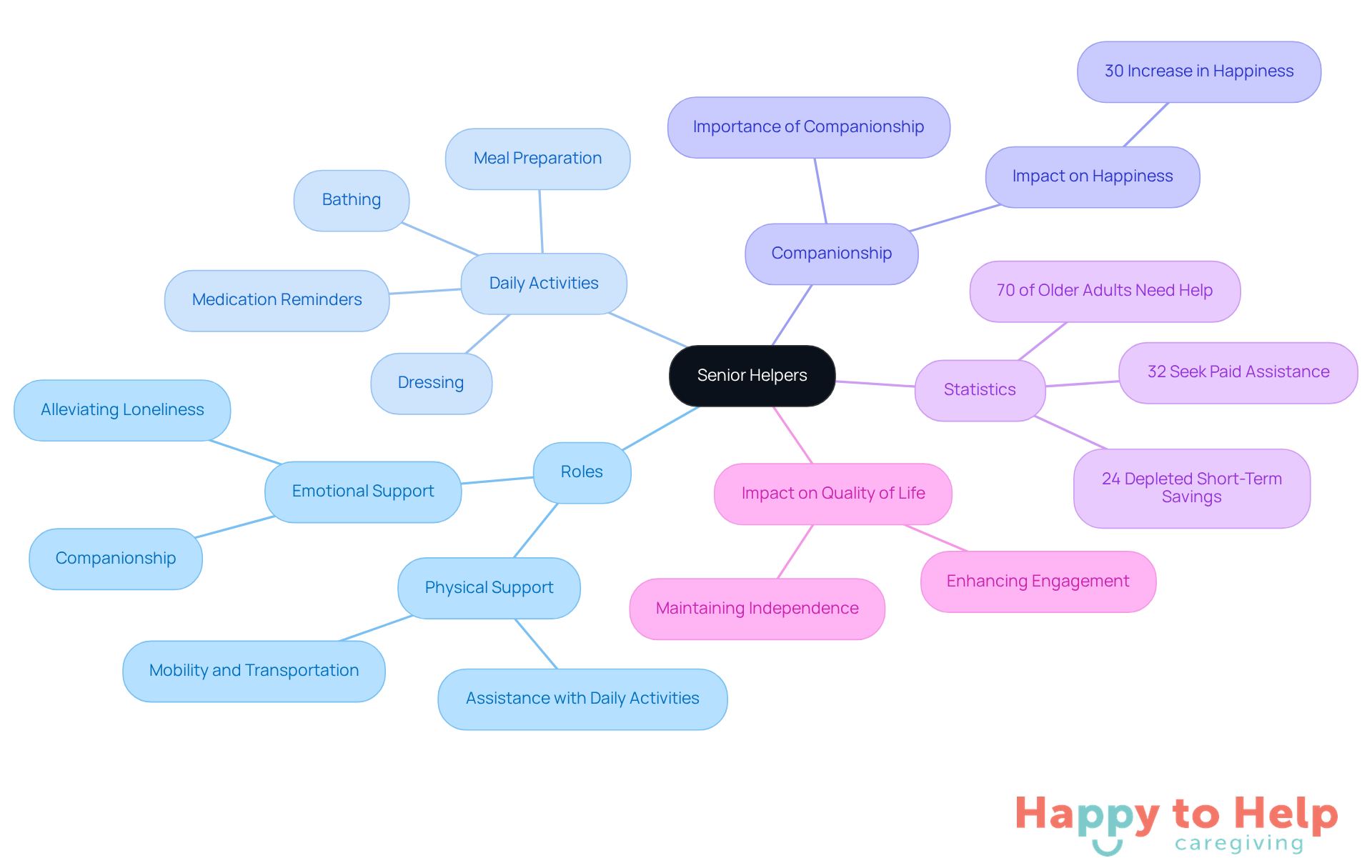
Senior helpers, often referred to as in-home caregivers, are trained professionals who deliver essential support to elderly individuals. This support enables seniors to maintain their independence while a senior helper provides the necessary assistance. However, many elderly individuals face challenges in daily activities such as bathing, dressing, meal preparation, and medication reminders. This lack of support can lead to feelings of isolation and decreased quality of life.
Companionship is particularly significant in this context. Studies show that nearly 84% of older adults value their independence, and a senior helper plays a crucial role in facilitating their mobility and transportation, which are vital for an active lifestyle. The impact of a senior helper extends beyond physical assistance; they provide emotional support that alleviates loneliness. A case study reveals that seniors receiving companionship assistance reported a 30% increase in overall happiness and improved engagement in daily activities. This underscores the importance of companionship in elderly support, fostering a sense of security and belonging.
As the oldest baby boomers reach 80 this year, the demand for in-home assistance is on the rise. This trend highlights the need to recognize family supporters as a critical component of the long-term care system. Statistics indicate that around 70% of older adults require help with at least one daily task, yet only 32% of America's 63 million family supporters seek paid assistance. This gap in support services is concerning. Additionally, financial strain is common among caregivers, with 24% having depleted their personal short-term savings.
Experienced senior helpers are vital in enhancing the quality of life for older adults, allowing them to thrive in their own homes. By providing both physical and emotional support, they help bridge the gap in care, ensuring that seniors can enjoy their independence while receiving the assistance they need.
The Importance of Senior Helpers in In-Home Care
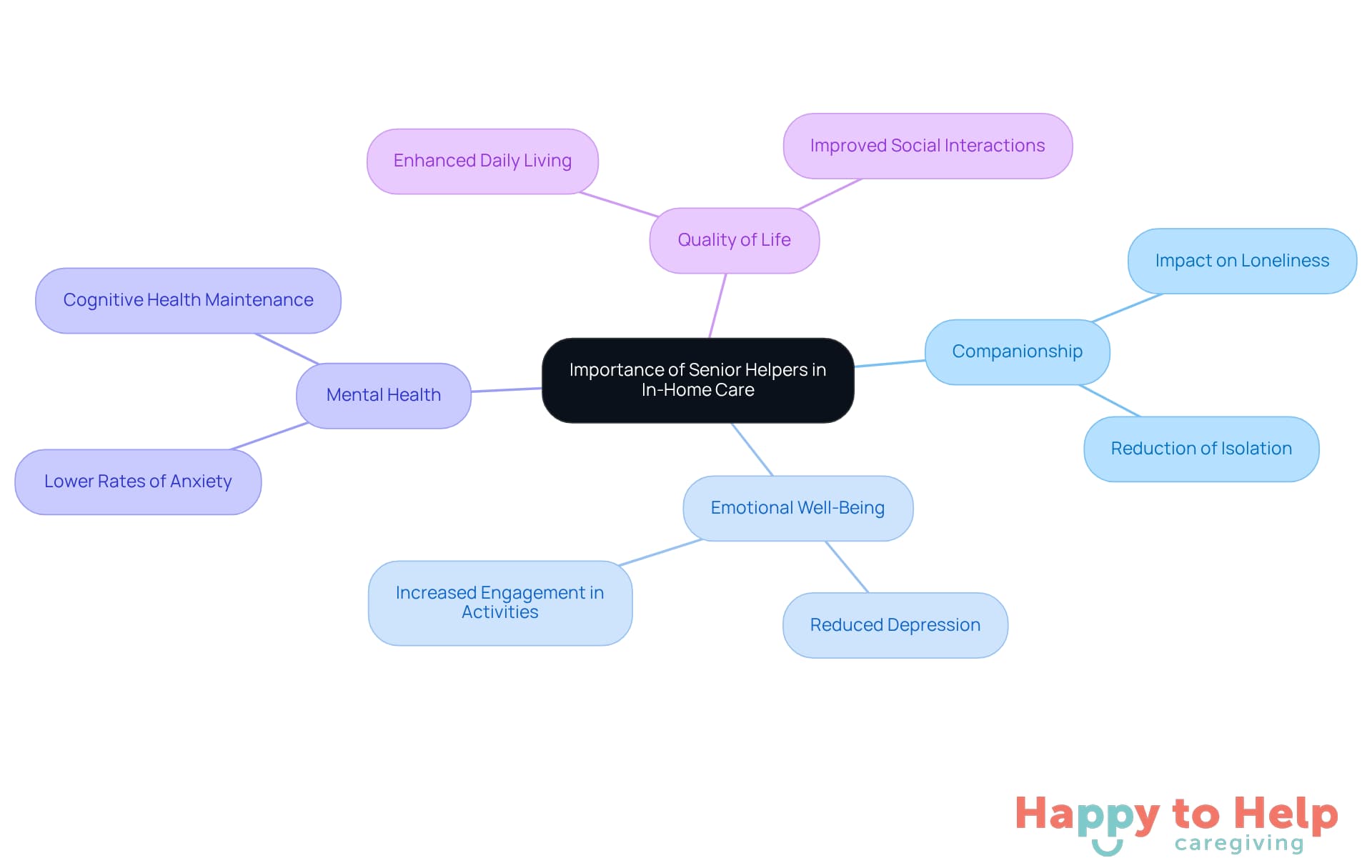
Senior helpers play a vital role in in-home care, addressing a significant problem: the loneliness and isolation that many elderly individuals face. Approximately one in three older adults report a lack of companionship, which can severely impact their mental health and overall quality of life. Loneliness and social isolation are key risk factors for mental health issues in the elderly, leading to increased rates of depression, anxiety, and cognitive decline.
By fostering a sense of companionship and security, a senior helper not only meets physical needs but also enhances the emotional and mental well-being of their clients. This support reduces feelings of loneliness and depression, creating a more fulfilling daily life for seniors. Furthermore, these caregivers serve as essential connections between elderly individuals and healthcare professionals, ensuring that medical requirements are effectively communicated and that clients receive appropriate assistance.
Case studies show that elderly individuals receiving in-home care experience improved emotional well-being. Many report greater involvement in enjoyable activities and a heightened sense of purpose in their everyday lives. In fact, older adults in assisted living are 19% more likely to engage in pleasurable activities after relocating to such settings.
The emotional benefits of having a senior helper extend beyond mere companionship; they contribute to a holistic approach to health that encompasses both physical and mental wellness. This ultimately leads to a higher quality of life for seniors, making the presence of experienced caregivers not just beneficial, but essential.
Services Provided by Senior Helpers: Tailored Support for Diverse Needs
In-home caregivers face a significant challenge: providing adequate support for seniors with diverse needs, often requiring the assistance of a senior helper. Many elderly individuals struggle with daily activities, and having a senior helper can reduce feelings of isolation and enhance their quality of life. This issue is compounded by the complexities of conditions like Alzheimer's and Parkinson's disease, which require specialized care and attention.
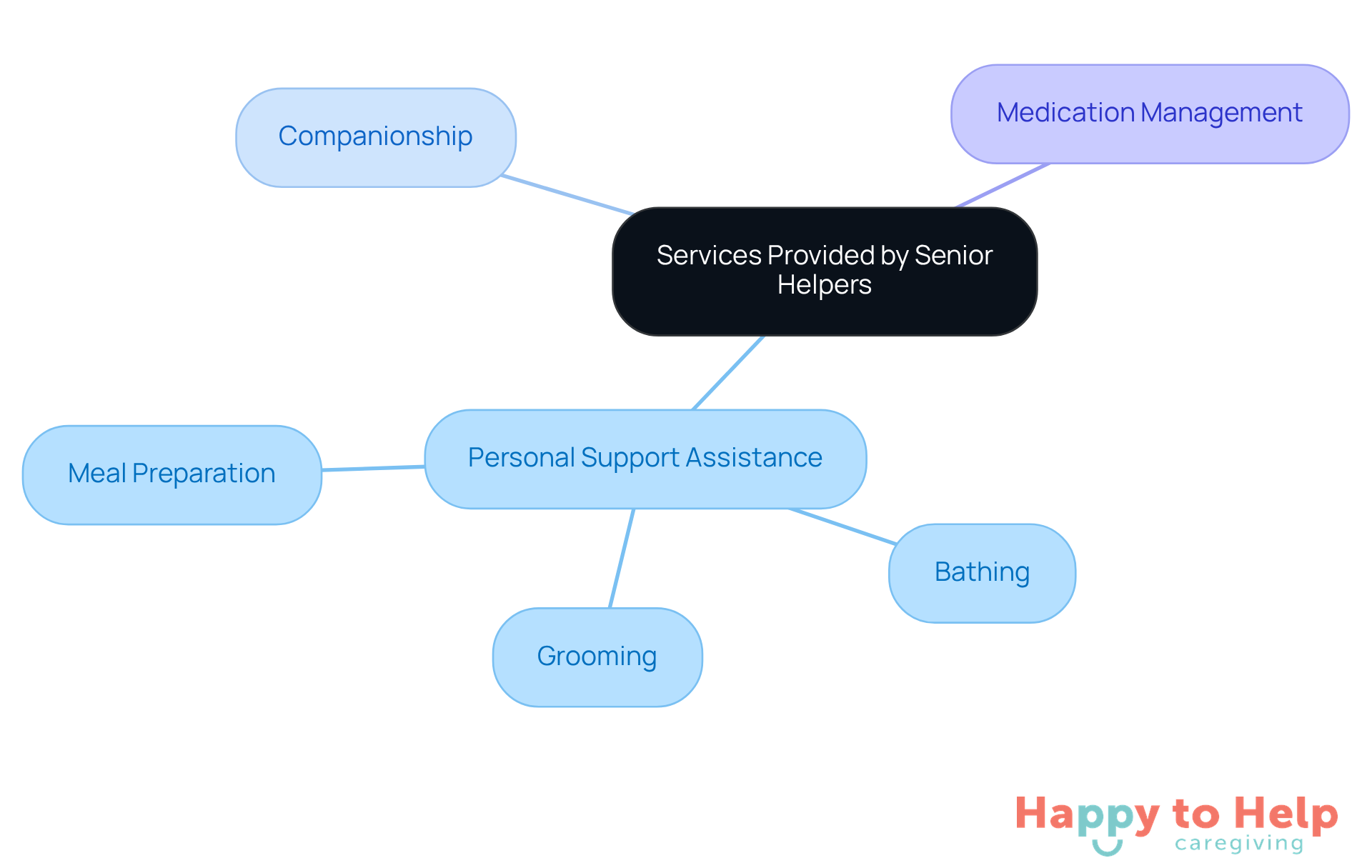
To address these challenges, a senior helper offers a comprehensive array of services tailored to meet the unique needs of their clients. These services include:
- Personal support assistance, such as bathing, grooming, and meal preparation
- Companionship
- Medication management
The adaptability of these services enables a senior helper to create personalized support strategies that evolve with the changing requirements of seniors, promoting independence and comfort in their own homes.
According to the National Institute on Aging, person-centered approaches significantly enhance communication and trust, leading to improved outcomes for elderly individuals. As highlighted by HarborChase, "When support is customized, it transforms lives and enhances well-being far beyond the scope of routine assistance." This tailored support not only honors the uniqueness of each client but also enhances their overall well-being, making it an essential element of effective assistance provided by a senior helper.
What Sets Senior Helpers Apart: Compassionate and Personalized Care
Caregivers often face the challenge of providing not just physical support but also emotional care for their clients. This gap can lead to feelings of isolation and neglect among seniors, impacting their overall well-being.
To address this issue, experienced assistants focus on offering compassionate and individualized support tailored to each client's unique needs. Unlike traditional organizational support environments, in-home providers prioritize building strong connections with their clients, fostering trust and understanding.
This personalized approach not only enhances the quality of care but also significantly improves the overall experience for older adults and their families. Senior helpers are trained to recognize the emotional and psychological aspects of caregiving, ensuring they effectively address both physical needs and emotional well-being.
By adopting this holistic method, caregivers can create a supportive and nurturing environment for seniors, ultimately leading to better outcomes for both clients and their families.
Making the Right Choice
Senior helpers face a significant challenge: many elderly individuals struggle with loneliness and a lack of support at home. This issue not only affects their emotional well-being but also their overall quality of life. As the aging population grows, the demand for in-home care services increases, highlighting the urgent need for effective solutions.
These caregivers provide essential services that go beyond daily task assistance. They offer companionship, emotional support, and tailored care, creating an environment where seniors can thrive. By addressing both physical and emotional needs, senior helpers significantly enhance the mental health and happiness of their clients.
To tackle the challenges faced by seniors, it’s crucial to advocate for increased support and resources for both the elderly and their caregivers. Emphasizing the importance of compassionate, personalized care can lead to transformative outcomes. By fostering connections and ensuring that seniors feel valued, we can help them maintain their independence and well-being in their own homes.
https://iframe.tely.ai/cta/eyJhcnRpY2xlX2lkIjogIjY5MjRmMjBiY2Q1NjY3YWUxYjQzNTcxNSIsICJjb21wYW55X2lkIjogIjY4ZWU1ZGNhNzMxNzYyNTU3ZjNjOTVjMSIsICJpbmRleCI6IG51bGwsICJ0eXBlIjogImFydGljbGUifQ==Frequently Asked Questions
What are senior helpers?
Senior helpers, also known as in-home caregivers, are trained professionals who provide essential support to elderly individuals, enabling them to maintain their independence while receiving necessary assistance.
What challenges do elderly individuals face that senior helpers can address?
Elderly individuals often face challenges in daily activities such as bathing, dressing, meal preparation, and medication reminders, which can lead to feelings of isolation and decreased quality of life.
How significant is companionship in the role of a senior helper?
Companionship is crucial as nearly 84% of older adults value their independence. Senior helpers facilitate mobility and transportation, providing emotional support that alleviates loneliness and enhances overall happiness.
What impact does companionship assistance have on seniors?
Seniors receiving companionship assistance reported a 30% increase in overall happiness and improved engagement in daily activities, highlighting the importance of companionship in elderly support.
Why is there an increasing demand for in-home assistance for seniors?
As the oldest baby boomers reach 80, the demand for in-home assistance is rising, emphasizing the need to recognize family supporters as a critical component of the long-term care system.
What statistics reflect the need for paid assistance among older adults?
Approximately 70% of older adults require help with at least one daily task, yet only 32% of America's 63 million family supporters seek paid assistance, indicating a significant gap in support services.
What financial challenges do caregivers face?
Financial strain is common among caregivers, with 24% having depleted their personal short-term savings, highlighting the difficulties they encounter in providing care.
How do experienced senior helpers enhance the quality of life for older adults?
Experienced senior helpers provide both physical and emotional support, bridging the gap in care and ensuring that seniors can enjoy their independence while receiving the assistance they need.
List of Sources
- Defining Senior Helpers: Key Roles and Responsibilities
- Families Prefer In-Home Care To Senior Living – Yet Struggle To Identify Needed Support (https://homehealthcarenews.com/2025/11/families-prefer-in-home-care-to-senior-living-yet-struggle-to-identify-needed-support)
- CaringBridge (https://caringbridge.org/resources/inspirational-quotes-on-caregiving)
- Older adults find support through health care companions (https://news-medical.net/news/20250924/Older-adults-find-support-through-health-care-companions.aspx)
- Caregiving Crisis: 45% Increase in Americans Providing Care (https://aarp.org/caregiving/basics/caregiving-in-us-survey-2025)
- National Family Caregivers Month: Recognizing 63 million Americans (https://bio.news/latest-news/national-caregivers-awareness-month-recognizing-63-million-unpaid-carers)
- The Importance of Senior Helpers in In-Home Care
- U.S. News Survey Finds Senior Living Reduces Loneliness (https://sunriseseniorliving.com/resources/caregivers-and-families/senior-living-reduces-loneliness)
- Medflyt at Home | Elderly Mental Health Statistics: What You Need To Know (https://medflyt.com/blog/posts/elderly-mental-health-statistics)
- 52+ Senior Health Statistics, Facts & Trends (https://humancareny.com/blog/52-senior-health-statistics-facts-trends)
- Fighting elderly loneliness (https://cbsnews.com/video/fighting-elderly-loneliness)
- 2024 Senior Helpers Media Coverage (https://seniorhelpers.com/resources/news/2025-media-coverage)
- Services Provided by Senior Helpers: Tailored Support for Diverse Needs
- Personalized Care for Seniors: Feel Seen, Supported, Empowered (https://harborchase.com/blogs/what-personalized-care-for-seniors-looks-like)
- Aging at home: How families and care teams are meeting the rising demand for in-home support (https://health.yahoo.com/wellness/healthy-aging/mobility/articles/aging-home-families-care-teams-190007909.html)
- In-Home Care for Seniors - Caregiving News and Tips (https://aarp.org/caregiving/home-care)
- News Releases (https://hcaoa.org/news-releases.html)
- What Sets Senior Helpers Apart: Compassionate and Personalized Care
- Understanding the Importance of Mental Health in Older Adults (https://agewellmedical.com/news/how-to-prioritize-older-adults-mental-health-in-2025)
- Families Prefer In-Home Care To Senior Living – Yet Struggle To Identify Needed Support (https://homehealthcarenews.com/2025/11/families-prefer-in-home-care-to-senior-living-yet-struggle-to-identify-needed-support)
- Psychological Support for Seniors: Why Mental Wellness Matters in Later Life | Home Care agency in New York (https://angelcareny.com/psychological-support-for-seniors-why-mental-wellness-matters-in-later-life)
- The Incredible Benefits of Home Care, in 7 Amazing Stats - Companions For Seniors (https://companionsforseniors.com/2019/08/benefits-home-care-amazing-stats-trends-reports)
- As Family Caregiving Grows, So Does the Need for Reform - Medicare Rights Center (https://medicarerights.org/medicare-watch/2025/08/14/as-family-caregiving-grows-so-does-the-need-for-reform)