
What You Need to Know About Sleep Patterns by Age: A Caregiver
Understanding the complex nature of sleep patterns is crucial, as age significantly influences the rest needs of individuals. Caregivers face the challenge of navigating these varying requirements throughout different life stages, from infancy to older adulthood. This complexity can impact the well-being of those in their care, making it essential for caregivers to adapt their strategies accordingly.
The problem lies in the unique sleep needs that evolve over time. Infants, children, adults, and seniors all have distinct requirements that can affect their health and daily functioning. Caregivers must recognize these differences to provide the best support possible. So, how can they effectively tailor their approaches to meet these diverse needs and promote healthier sleep habits?
To address this challenge, caregivers can implement several practical strategies:
- Educate themselves about the specific sleep needs at each life stage.
- Monitor sleep patterns regularly to identify any changes or issues.
- Create a conducive sleep environment that promotes relaxation and comfort.
- Establish consistent sleep routines to help individuals feel secure and rested.
By understanding and addressing the unique sleep requirements of those they care for, caregivers can enhance overall well-being and foster healthier sleep habits.
Explore Sleep Patterns Across Different Age Groups
Sleep patterns by age vary significantly across different age groups, influenced by biological, psychological, and environmental factors. This variation presents challenges for caregivers who must adapt to the unique sleep needs of those in their care.
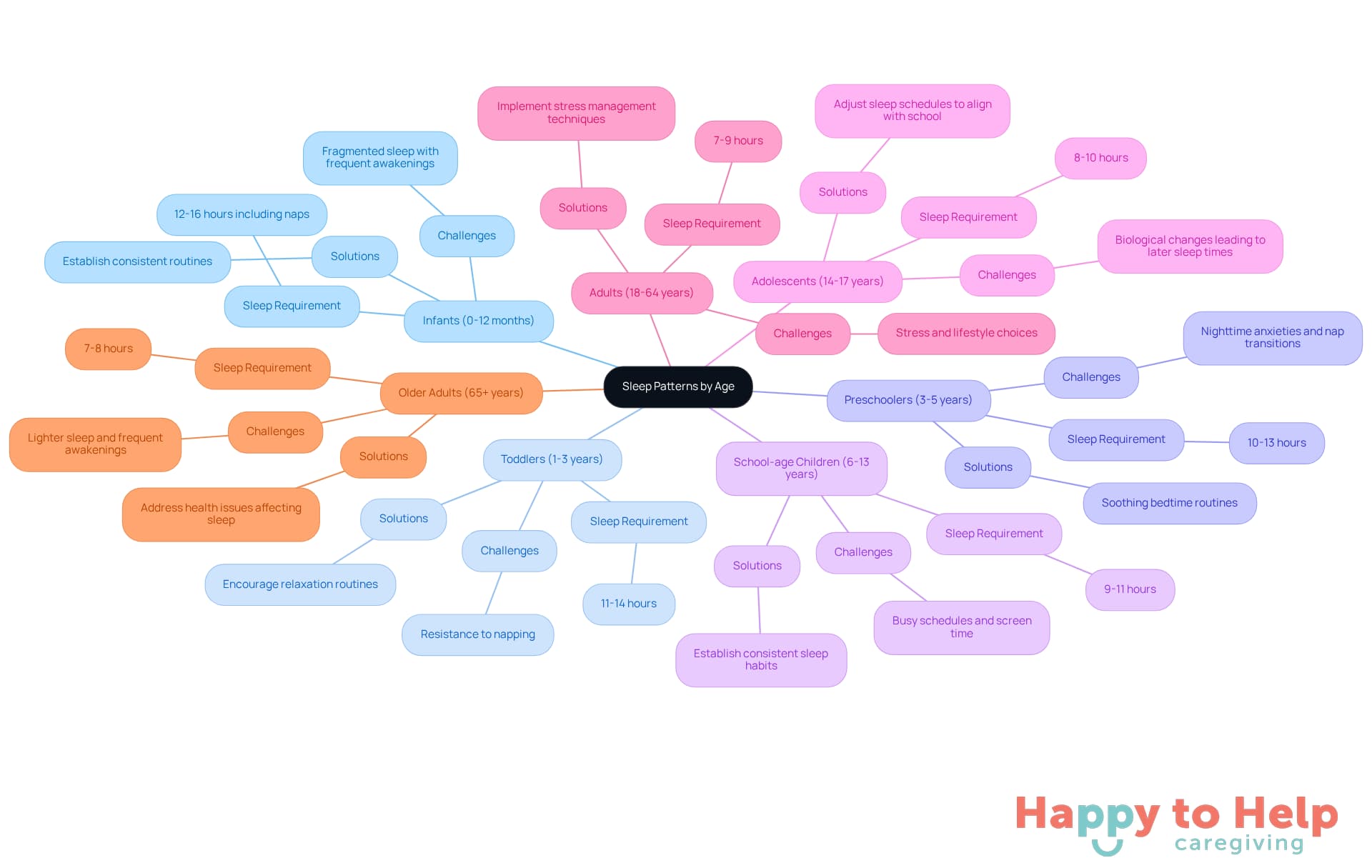
Problem: Infants (0-12 months) require 12-16 hours of sleep, including naps. Their sleep is often fragmented, with frequent awakenings for feeding, making it difficult for caregivers to establish a consistent routine.
Agitate: As toddlers (1-3 years) transition to needing roughly 11-14 hours of rest, their newfound independence can lead to resistance to napping, complicating their overall relaxation. Preschoolers (3-5 years) generally need 10-13 hours, but nighttime anxieties and the shift from naps can disrupt their sleep quality, necessitating a soothing bedtime routine.
Solution: For school-age children (6-13 years), who require about 9-11 hours of sleep, busy schedules and increased screen time can interfere with their rest. Caregivers should establish consistent sleep habits to combat these disruptions. Adolescents (14-17 years) need 8-10 hours, but biological changes often lead to later sleep and wake times, which can conflict with early school schedules. Adults (18-64 years) typically require 7-9 hours, yet stress and lifestyle choices can significantly impact sleep quality, leading to increased fatigue.
Older adults (65+ years) often need 7-8 hours of rest but may experience lighter sleep and more frequent awakenings due to health issues or medications. Notably, 20-60% of older individuals report taking daytime naps due to inadequate overnight rest. This demographic is particularly vulnerable to sleep disorders, which can exacerbate existing health problems.
As Mahatma Gandhi wisely noted, "Man should forget his anger before he lies down to rest," underscoring the importance of a peaceful mind for quality relaxation. By acknowledging the sleep patterns by age, caregivers can design tailored relaxation settings and routines that promote better recuperation, ultimately enhancing overall well-being.
Examine Key Statistics on Sleep and Aging
Statistics reveal critical insights into sleep and aging that caregivers must address:
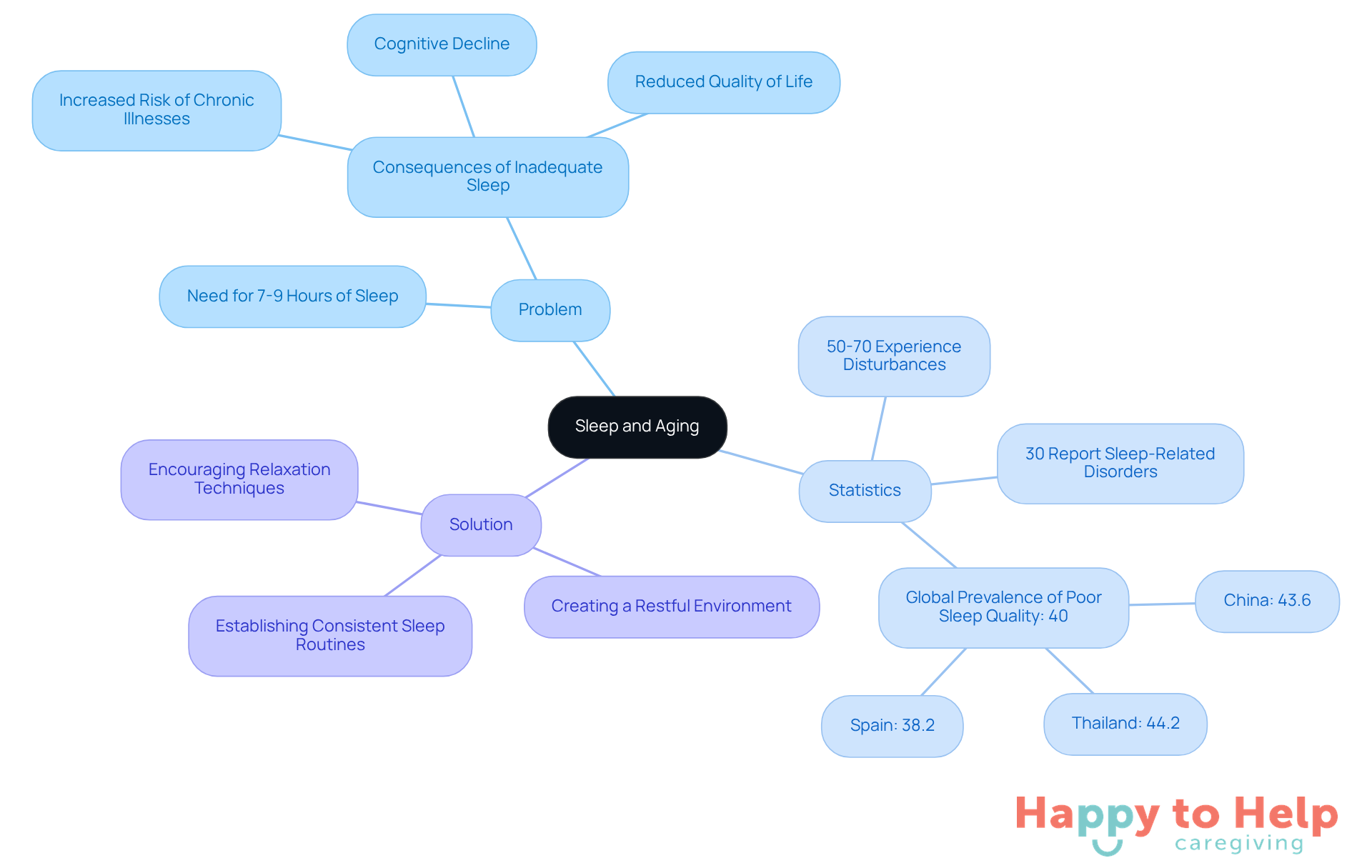
Problem: Many older adults struggle with sleep, typically needing 7-9 hours but often getting less due to various factors. This lack of adequate sleep can lead to serious consequences.
Agitate: Approximately 50-70% of older individuals experience disturbances in their rest, such as insomnia and sleep apnea. Aging is also linked to lighter sleep, increased awakenings, and earlier bedtimes. The impact of inadequate sleep quality is significant, as it correlates with cognitive decline, a heightened risk of chronic illnesses, and a reduced quality of life. Alarmingly, nearly 30% of older adults report experiencing a sleep-related disorder, highlighting the urgent need for caregivers to recognize and address these issues.
Solution: To manage these challenges effectively, caregivers should adopt strategies that promote better sleep hygiene. This includes:
- Creating a restful environment
- Establishing consistent sleep routines
- Encouraging relaxation techniques
By prioritizing sleep management, caregivers can significantly enhance the well-being of older adults in their care.
Implement Strategies for Enhancing Sleep Quality
To enhance sleep quality for clients, caregivers face a significant challenge: many older adults struggle with inadequate rest. Studies indicate that about 1 in 3 adults in the U.S. report not obtaining sufficient sleep daily, which can lead to various health issues. This common problem underscores the need for effective strategies to improve sleep quality.
-
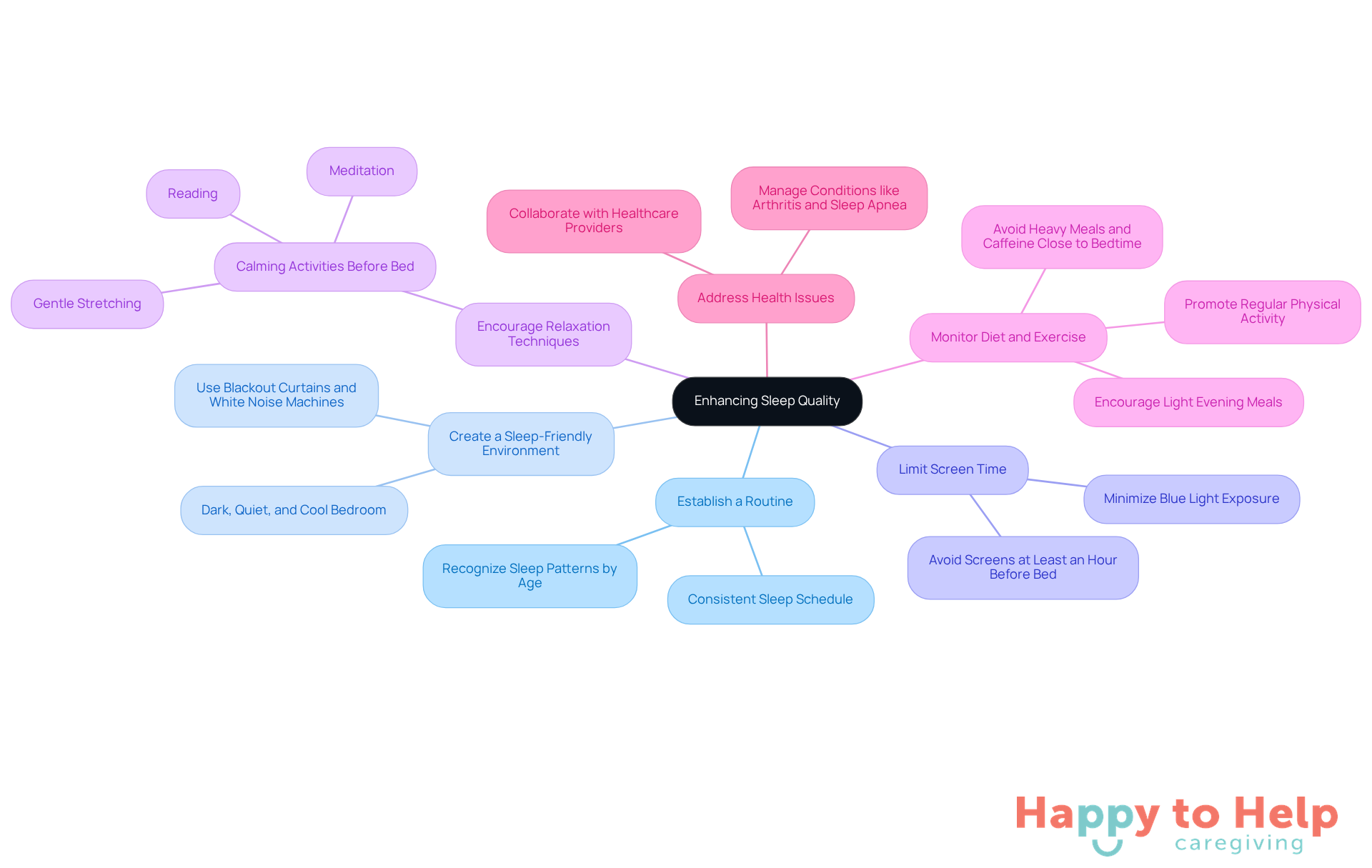
Establish a Routine: One effective solution is to encourage clients to maintain a consistent sleep schedule. Going to bed and waking up at the same time every day can greatly enhance rest quality. Older individuals typically require 7-9 hours of sleep each night, and recognizing sleep patterns by age can help achieve a regular schedule.
-
Create a Sleep-Friendly Environment: Caregivers should ensure that the bedroom is dark, quiet, and cool. Utilizing blackout curtains and white noise machines can help create an ideal sleeping environment, essential for uninterrupted rest.
-
Limit Screen Time: Another practical tip is to advise clients to avoid screens at least an hour before bedtime. This minimizes blue light exposure, which can disrupt melatonin production and hinder the ability to fall asleep.
-
Encourage Relaxation Techniques: Introducing calming activities before bed, such as reading, gentle stretching, or meditation, can also be beneficial. Dr. Michael Breus, a reliable sleep specialist, emphasizes that quality rest is vital for overall well-being. These practices signal to the body that it’s time to relax, enhancing better sleep hygiene.
-
Monitor Diet and Exercise: Caregivers should encourage light evening meals and regular physical activity during the day while avoiding heavy meals and caffeine close to bedtime. Adequate nutrition and physical activity can significantly influence the improvement of sleep effectiveness.
-
Address Health Issues: Finally, collaborating with healthcare providers to manage any medical conditions or medications that may interfere with sleep is crucial. Conditions such as arthritis and sleep apnea are prevalent among older adults and can greatly affect their sleep patterns by age. Addressing these health issues is essential for enhancing overall sleep quality.
By implementing these strategies, caregivers can significantly enhance their clients' sleep standards, resulting in improved health outcomes and overall well-being. Adopting proper sleep hygiene practices has been shown to improve sleep quality and general well-being, making it an essential focus for caregivers.
Understand the Impact of Sleep on Health
Sleep is a cornerstone of overall health, particularly for older adults, and understanding sleep patterns by age is essential, yet many face challenges in achieving adequate rest. The lack of sleep patterns by age can significantly impact various aspects of well-being, creating a pressing issue for caregivers to address.
-
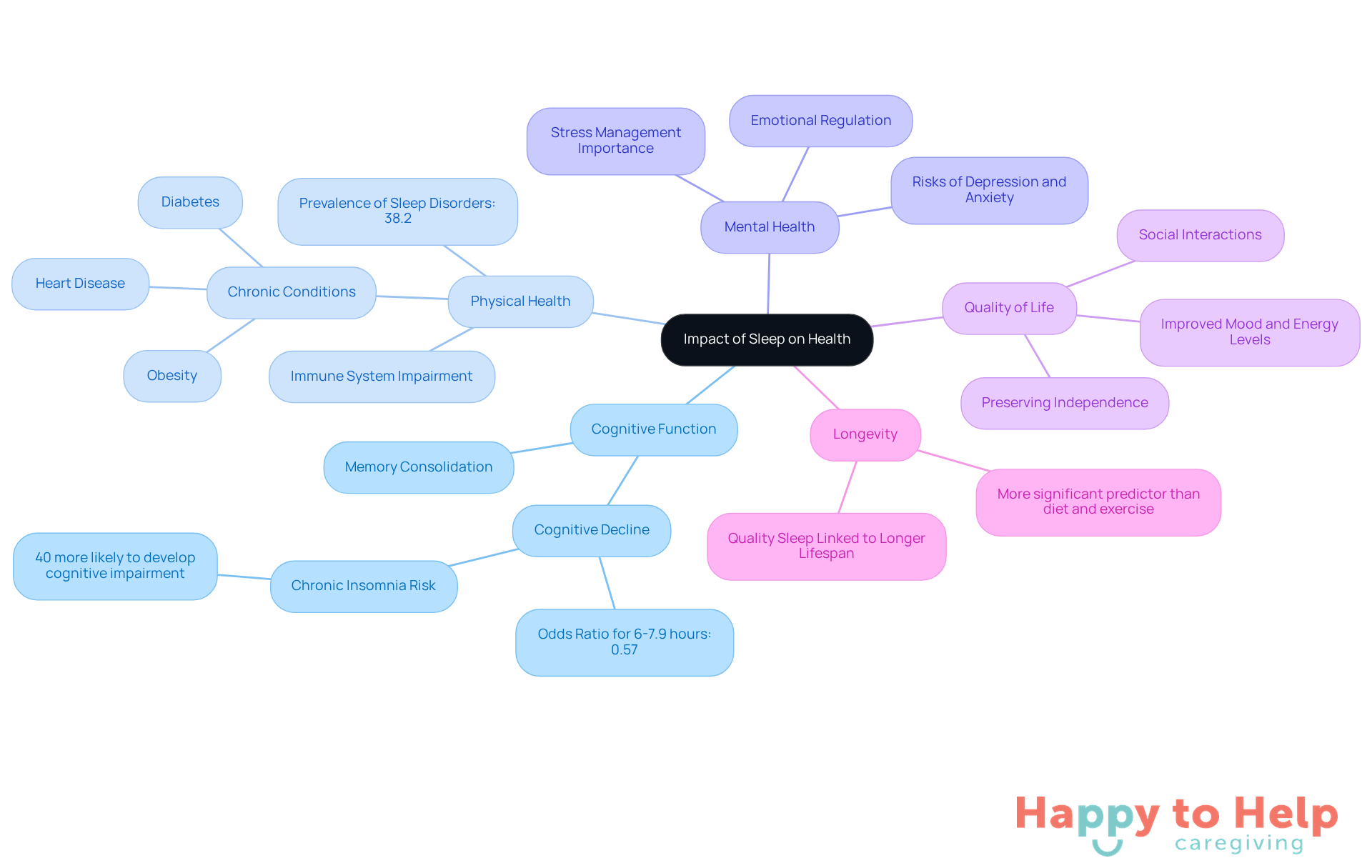
Cognitive Function: Inadequate sleep is vital for memory consolidation and cognitive performance. Chronic insomnia can lead to faster declines in memory and thinking skills, highlighting the importance of understanding sleep patterns by age to mitigate the risk of cognitive impairment. Research shows that participants who slept 6-7.9 hours per day had an odds ratio (OR) of 0.57 for cognitive dysfunction compared to those who slept less than 6 hours per day.
-
Physical Health: Insufficient rest is linked to a higher risk of chronic conditions like heart disease, diabetes, and obesity. It can also impair the immune system, making seniors more susceptible to illnesses. Alarmingly, nearly 38.2% of adults experience sleep disorders, highlighting the need to analyze sleep patterns by age.
-
Mental Health: Quality sleep is crucial for emotional regulation. Lack of rest is associated with increased risks of depression, anxiety, and mood disorders. Caregivers must prioritize understanding sleep patterns by age, as mental illness and stress can hinder proper rest, making stress management essential.
-
Quality of Life: Restful sleep enhances overall well-being, leading to improved mood, energy levels, and social interactions. It plays a vital role in preserving independence and quality of life for seniors when we understand their sleep patterns by age.
-
Longevity: Consistent, quality sleep is linked to a longer lifespan. Research indicates that insufficient rest is a more significant predictor of reduced life expectancy than diet and physical activity, underscoring its importance in aging populations. This reinforces the idea that sleep is not a luxury but a biological necessity.
By recognizing these impacts, caregivers can advocate more effectively for their clients' sleep health, understanding it as a fundamental component of holistic care.
Making the Right Choice
Understanding the diverse sleep patterns across various age groups presents a significant challenge for caregivers. Each stage of life comes with unique sleep requirements, making it essential for caregivers to adapt their approaches to meet these needs effectively.
Infants, for instance, require substantial amounts of sleep, while toddlers and preschoolers often struggle with issues related to independence and anxiety. School-age children and adolescents face disruptions from busy schedules and biological changes, and adults frequently contend with stress that affects their sleep quality. Notably, older adults experience a higher prevalence of sleep disorders, underscoring the need for caregivers to implement effective strategies for better sleep hygiene.
To address these challenges, caregivers must prioritize sleep not just by ensuring adequate hours of rest but by fostering an environment that promotes physical, cognitive, and emotional health. Here are some actionable solutions:
- Establish consistent sleep routines.
- Create restful environments conducive to sleep.
- Address any underlying health issues that may disrupt sleep.
By recognizing and addressing the complexities of sleep patterns by age, caregivers can significantly enhance the quality of life for those they care for. This proactive approach leads to healthier, happier lives for clients, ultimately fulfilling the caregivers' mission.
https://iframe.tely.ai/cta/eyJhcnRpY2xlX2lkIjogIjY5M2Y1MDhmNGM3OGNhYjkzOThjNmZhOCIsICJjb21wYW55X2lkIjogIjY4ZWU1ZGNhNzMxNzYyNTU3ZjNjOTVjMSIsICJpbmRleCI6IG51bGwsICJ0eXBlIjogImFydGljbGUifQ==Frequently Asked Questions
How do sleep patterns vary across different age groups?
Sleep patterns vary significantly by age due to biological, psychological, and environmental factors, requiring caregivers to adapt to the unique sleep needs of those they care for.
What is the sleep requirement for infants?
Infants (0-12 months) require 12-16 hours of sleep, including naps, but their sleep is often fragmented with frequent awakenings for feeding.
What challenges do toddlers face regarding sleep?
Toddlers (1-3 years) need about 11-14 hours of sleep, but their newfound independence can lead to resistance to napping, complicating their overall relaxation.
How much sleep do preschoolers need, and what issues might they encounter?
Preschoolers (3-5 years) generally need 10-13 hours of sleep. They may experience nighttime anxieties and disruptions from the transition away from naps, necessitating a soothing bedtime routine.
What are the sleep needs for school-age children?
School-age children (6-13 years) require about 9-11 hours of sleep, but busy schedules and increased screen time can interfere with their rest.
How do adolescents' sleep requirements differ from younger children?
Adolescents (14-17 years) need 8-10 hours of sleep, but biological changes often lead to later sleep and wake times, which can conflict with early school schedules.
What is the typical sleep requirement for adults?
Adults (18-64 years) typically require 7-9 hours of sleep, but stress and lifestyle choices can significantly impact their sleep quality.
What sleep challenges do older adults face?
Older adults (65+ years) often need 7-8 hours of sleep but may experience lighter sleep and more frequent awakenings due to health issues or medications. Many report taking daytime naps due to inadequate overnight rest.
What is the prevalence of sleep disorders in older adults?
Older adults are particularly vulnerable to sleep disorders, which can exacerbate existing health problems, with 20-60% reporting daytime napping due to inadequate overnight rest.
How can caregivers support better sleep in individuals across different age groups?
Caregivers can design tailored relaxation settings and routines that promote better recuperation, ultimately enhancing overall well-being by acknowledging the unique sleep patterns by age.
List of Sources
- Explore Sleep Patterns Across Different Age Groups
- How Much Sleep Do You Need by Age? Sleep Requirements Chart (https://medicinenet.com/how\_much\_sleep\_do\_you\_need\_by\_age/article.htm)
- How Much Sleep Do I Need? (https://ncoa.org/article/sleep-statistics-older-adults)
- 30 Quotes About Sleep You Need To Read - The Sleep Matters Club (https://dreams.co.uk/sleep-matters-club/30-quotes-sleep-need-read)
- Sleep Patterns At Every Age From Newborns To Older Adults (https://sleepclinicpretoria.co.za/normal-sleep-for-infants-adults-and-the-elderly)
- 100+ Sleep Statistics (https://sleepfoundation.org/how-sleep-works/sleep-facts-statistics)
- Examine Key Statistics on Sleep and Aging
- Worldwide prevalence of sleep problems in community-dwelling older adults: A systematic review and meta-analysis (https://sciencedirect.com/science/article/abs/pii/S1389945724001448)
- How Much Sleep Do I Need? (https://ncoa.org/article/sleep-statistics-older-adults)
- Roundup: ‘Chronic Insomnia’ May Accelerate Cognitive Decline; and More News (https://baptisthealth.net/baptist-health-news/chronic-insomnia-may-accelerate-cognitive-decline-and-brain-aging)
- Study links poor sleep to adverse health outcomes in seniors (https://news-medical.net/news/20251028/Study-links-poor-sleep-to-adverse-health-outcomes-in-seniors.aspx)
- Implement Strategies for Enhancing Sleep Quality
- 100+ Sleep Statistics (https://sleepfoundation.org/how-sleep-works/sleep-facts-statistics)
- How Much Sleep Do I Need? (https://ncoa.org/article/sleep-statistics-older-adults)
- 101 Sleep Quotes to Inspire You to Unwind & Sleep Better (https://blog.mindvalley.com/sleep-quotes)
- Strategies for Improving Sleep in Older Adults (https://medicine.yale.edu/news-article/strategies-for-improving-sleep-in-older-adults)
- Understand the Impact of Sleep on Health
- Association of sleep quality with cognitive dysfunction in middle-aged and elderly adults: a cross-sectional study in China - PMC (https://pmc.ncbi.nlm.nih.gov/articles/PMC11439658)
- Roundup: ‘Chronic Insomnia’ May Accelerate Cognitive Decline; and More News (https://baptisthealth.net/baptist-health-news/chronic-insomnia-may-accelerate-cognitive-decline-and-brain-aging)
- Sleep (https://cdc.gov/cdi/indicator-definitions/sleep.html)
- Longevity: Sleep more important than diet, exercise (https://medicalnewstoday.com/articles/sleep-is-more-important-for-longevity-than-diet-exercise-social-ties)
- Study links poor sleep to adverse health outcomes in seniors (https://news-medical.net/news/20251028/Study-links-poor-sleep-to-adverse-health-outcomes-in-seniors.aspx)