

For families in our service areas
For families in our service areas, this guide explains caregiving and how non-medical in-home caregiving can support care planning in East Idaho, Treasure Valley & Magic Valley, Northern Wasatch, North Central West Virginia, and Northeast Ohio.
Why The Aging Life Care Professional Matters
Caring for aging loved ones can be a daunting journey, often leaving families feeling overwhelmed and uncertain. It’s a reality many face as the number of older adults continues to grow. In these challenging times, the role of Aging Life Care Professionals (ALCPs) becomes increasingly vital. These compassionate advocates help families navigate the intricate web of healthcare and support services, offering not just essential guidance but also personalized care plans tailored to individual needs.
But it’s not just about the logistics. ALCPs understand the emotional and psychological needs of both clients and caregivers. They recognize the stress and burnout that can accompany caregiving, and they’re here to help lighten that load. How can families tap into the expertise of ALCPs? By doing so, they can create a more manageable and fulfilling caregiving experience, one that nurtures both the caregiver and the loved one in their care.
Define Aging Life Care Professional
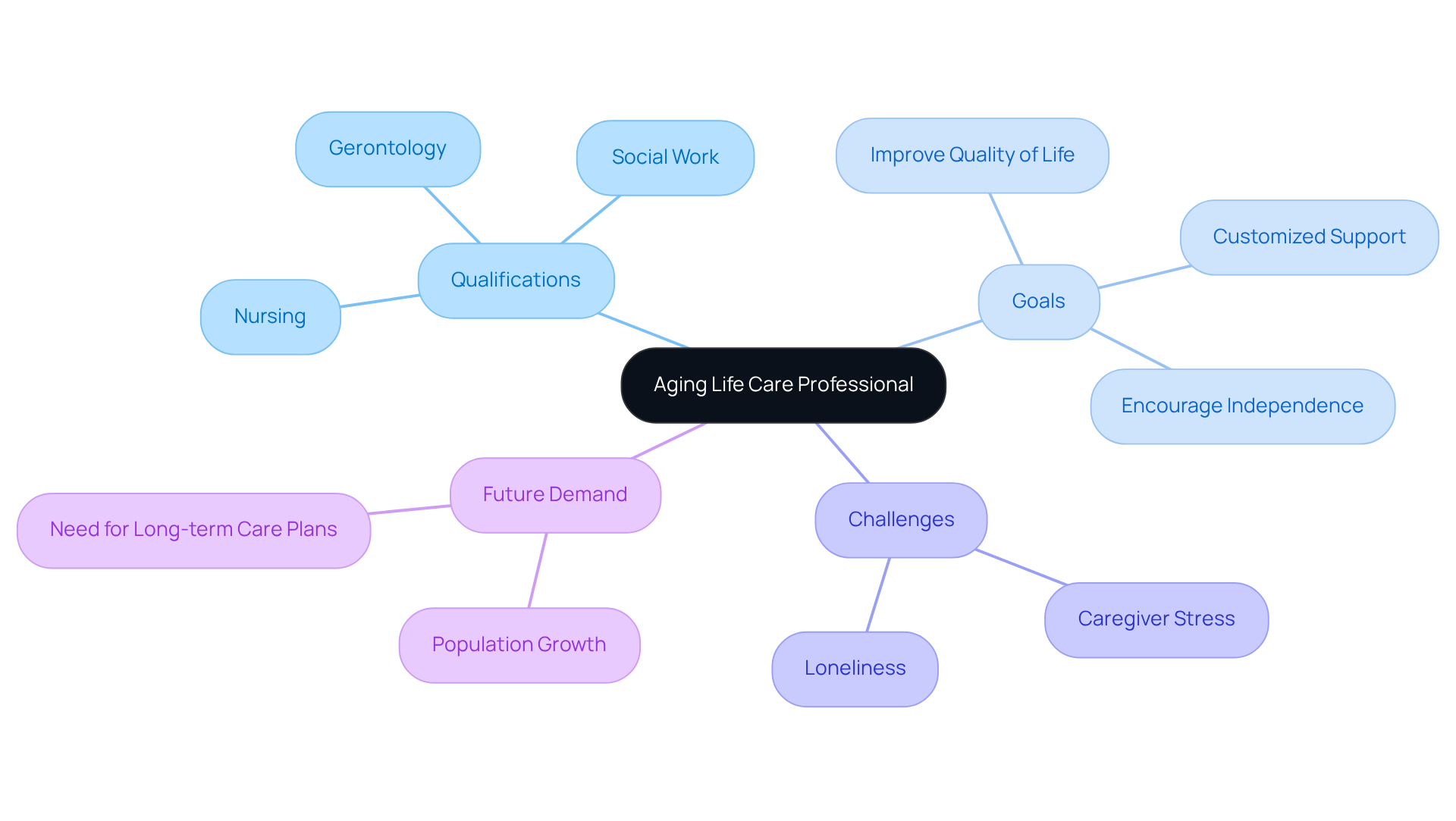
An aging life care professional is more than just an expert in geriatric management; they are a compassionate advocate and coordinator for older adults and their families. With backgrounds in nursing, social work, or gerontology, ALSPs have the skills to truly understand individual needs. They develop comprehensive support plans and coordinate a variety of services tailored to each person's unique situation.
Their main goal? To improve the quality of life for clients by encouraging independence and ensuring that support is customized. As we look ahead to 2025, the number of certified aging life care professionals continues to grow, reflecting the increasing demand for their expertise in navigating the complexities of aging and healthcare.
Effective interventions by community care providers often involve creating personalized care strategies that focus on health, safety, and emotional well-being. This approach leads to better outcomes for older adults, alleviating the stress faced by families. In fact, nearly 70% of family caregivers report struggling to balance their careers with caregiving duties. This highlights the importance of advanced care planning, offering peace of mind through expert guidance and support on the caregiving journey.
Moreover, a recent survey by the Aging Life Care Professional Association® reveals a troubling rise in loneliness among older individuals, highlighting the need for support from an aging life care professional after the pandemic. This underscores the emotional support that aging life care professionals provide, helping to combat feelings of isolation.
As we anticipate that the population aged 85 and older will nearly quadruple by 2040, the services of aging life care professionals and the need for advanced long-term care plans will become increasingly essential. Together, we can navigate this journey with compassion and understanding.
Contextualize Their Role in Caregiving
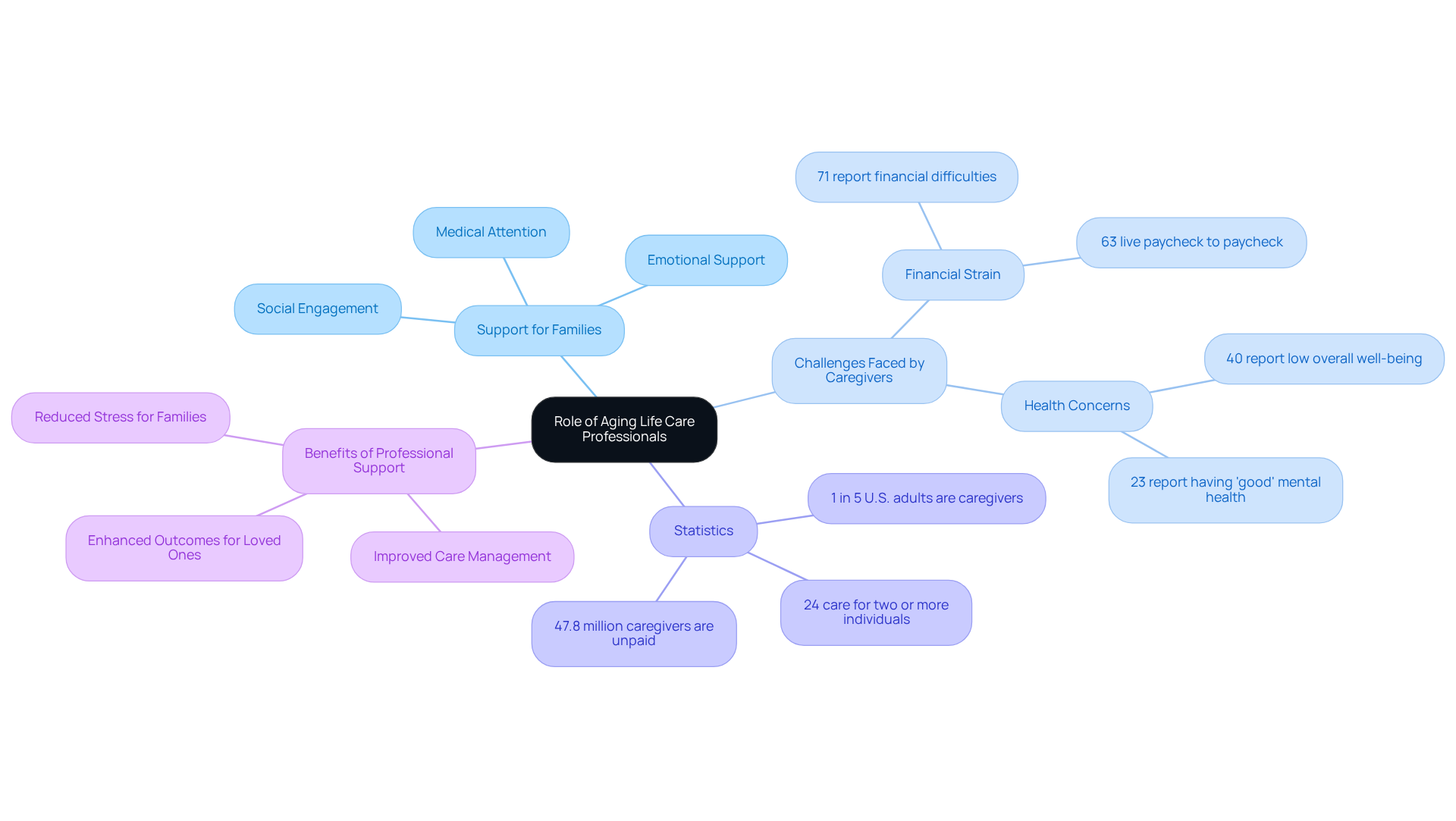
Caring for elderly loved ones can be incredibly challenging, and an aging life care professional is here to help. They act as a vital link between families and healthcare systems, ensuring that clients receive the medical attention, emotional support, and social engagement they need.
These specialists conduct thorough assessments to understand the unique needs of each client, considering medical, psychological, and social aspects. By collaborating with various service providers, they help families manage care more effectively, reducing stress and improving outcomes for their loved ones.
Their support, provided by an aging life care professional, is especially beneficial in complex situations, such as when multiple health issues arise or when families live far from their aging relatives. It’s important to recognize that one in five U.S. adults are caregivers for relatives or friends with chronic health conditions or disabilities. Many of these caregivers face significant challenges, including financial strain and health concerns. In fact, 71% report financial difficulties, with 63% living paycheck to paycheck.
By addressing these challenges, assisted living community providers not only enhance the quality of care for the elderly but also support families in achieving better overall outcomes. With 24% of caregivers looking after two or more individuals, the complexity of caregiving situations is increasing, underscoring the need for personalized support.
Remember, you’re not alone in this journey. There are compassionate resources available to help lighten the load and provide the care your loved ones deserve.
Trace the Origins and Evolution of Aging Life Care
The concept of Aging Life Assistance emerged in the late 20th century, driven by the increasing complexity of support needs among older adults. Traditionally, caregiving was a family-centered duty, but as society shifted towards dual-income households, the need for professional support became clear. The establishment of the Aging Life Care Association (ALCA) in 1985 marked a significant milestone in formalizing this profession, providing a structured framework for Aging Life Care Specialists. Since then, ALCA has seen remarkable growth in membership, reflecting a growing recognition of the need for specialized management in our aging population.
These organizations have adapted over the years to address various challenges, including:
- Managing chronic illnesses
- Supporting mental health
- Providing end-of-life assistance
This evolution highlights a broader understanding of the importance of holistic, client-centered approaches in caregiving. As the profession has developed, it increasingly emphasizes the need to incorporate emotional and psychological support into care plans, recognizing that well-being encompasses more than just physical health. The ongoing progress of aging life care professionals demonstrates a commitment to improving the quality of life for older adults, ensuring they receive comprehensive care tailored to their individual needs.
Statistics indicate that the population aged 65 and older is projected to reach 83.9 million by 2050, nearly doubling from 43.1 million in 2012. This underscores the rising demand for services provided by an aging life care professional. Additionally, the Home Health Assistance Services sector reported an estimated revenue of $102.7 billion in 2020, a 50.5% increase since 2013, further emphasizing the growing need for professional support. Notable figures, like David Bowie, have remarked on aging as an extraordinary process, which resonates with family caregivers and highlights the positive aspects of growing older. Insights from case studies, such as that of Jeanne Louise Calment, can provide practical applications of Aging Life Management, enhancing the relevance of this vital content.

Identify Key Characteristics and Services Offered
Caring for an aging loved one can be an emotional journey filled with challenges. Aging life care professionals understand the stress and burnout that caregivers often face. They offer a comprehensive approach to management that not only addresses practical needs but also provides emotional support.
-
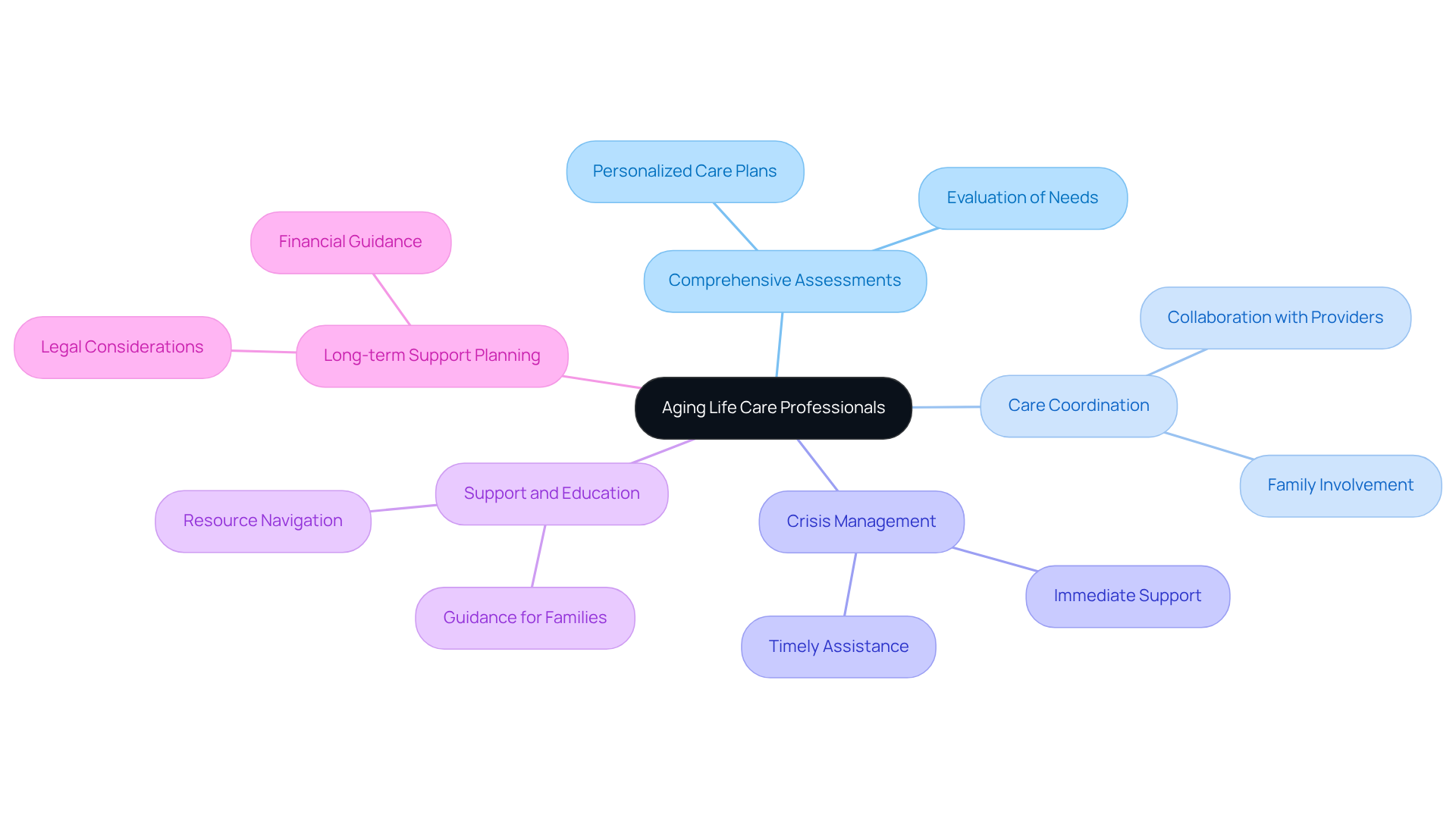
Comprehensive Assessments: ALCPs take the time to evaluate the physical, emotional, and social needs of clients. This thorough assessment allows them to create personalized care plans that truly reflect individual circumstances, ensuring that every aspect of care is considered.
-
Care Coordination: They collaborate with healthcare providers, family members, and community resources to ensure that assistance flows smoothly. This teamwork promotes open communication and continuity, which is vital for peace of mind.
-
Crisis Management: In times of health crises or emergencies, ALCPs are there to provide immediate support and intervention. They ensure that clients receive timely assistance when it matters most, alleviating some of the pressure on caregivers.
-
Support and Education: ALCPs offer guidance and resources to family members, helping them navigate their loved one's condition and explore accessible treatment options. This support is essential for informed decision-making, empowering caregivers to feel more confident in their choices.
-
Long-term Support Planning: Understanding the complexities of long-term support can be overwhelming. ALCPs assist families in comprehending the financial and legal aspects, reducing stress and uncertainty.
These services highlight the indispensable role that aging life care professionals play in enhancing the quality of life for older adults and their families. They ensure that care is not only effective but also compassionate and tailored to individual needs. With ALCPs by your side, you can feel reassured that you’re not alone on this journey.
Taking the Next Steps
Aging life care professionals are essential in enhancing the quality of life for older adults and their families. These specialists not only possess expertise in geriatric management but also act as compassionate advocates, tailoring support plans to meet individual needs. As the elderly population continues to grow, the significance of their role in navigating the complexities of aging becomes even more critical.
Throughout this article, we’ve shared key insights into the multifaceted responsibilities of aging life care professionals. From conducting thorough assessments to providing emotional support and crisis management, these experts ensure that both the physical and emotional needs of their clients are met. The evolution of this profession reflects a broader understanding of caregiving that prioritizes holistic, client-centered approaches, which are essential in today’s caregiving landscape.
Recognizing the importance of aging life care professionals is vital for families facing the challenges of caregiving. As our population ages, the support provided by these professionals will only become more crucial. Engaging with an aging life care professional can alleviate stress and enhance the overall caregiving experience, empowering families to navigate this journey with confidence and compassion.
https://iframe.tely.ai/cta/eyJhcnRpY2xlX2lkIjogIjY5MWZkYzVlNDE0OGNiZGNlMjRmMzkzMyIsICJjb21wYW55X2lkIjogIjY4ZWU1ZGNhNzMxNzYyNTU3ZjNjOTVjMSIsICJpbmRleCI6IG51bGwsICJ0eXBlIjogImFydGljbGUifQ==Frequently Asked Questions
What is an aging life care professional (ALCP)?
An aging life care professional is a compassionate advocate and coordinator for older adults and their families, specializing in geriatric management and having backgrounds in nursing, social work, or gerontology.
What are the main responsibilities of an aging life care professional?
ALCPs develop comprehensive support plans and coordinate various services tailored to the unique needs of older adults, aiming to improve their quality of life and encourage independence.
Why is there an increasing demand for aging life care professionals?
The demand for ALCPs is growing due to the complexities of aging and healthcare, as well as the anticipated increase in the population aged 85 and older by 2040.
How do aging life care professionals assist families?
They alleviate stress for families by creating personalized care strategies that focus on health, safety, and emotional well-being, which helps balance caregiving duties with personal careers.
What challenges do family caregivers face?
Nearly 70% of family caregivers report struggling to balance their careers with their caregiving responsibilities.
What role do aging life care professionals play in addressing loneliness among older adults?
They provide emotional support to combat feelings of isolation, which has been exacerbated by the pandemic, as indicated by a rise in loneliness among older individuals.
What is the significance of advanced care planning in aging life care?
Advanced care planning offers peace of mind through expert guidance and support, helping families navigate the caregiving journey effectively.