
The Importance of The Cost of In-Home Nursing Care in
Understanding the complexities of in-home nursing care presents a significant challenge for families navigating the caregiving landscape. As the demand for personalized support continues to rise, many families are realizing the substantial benefits of in-home services. These services can provide comfort, independence, and customized care plans tailored to individual needs.
However, deciphering the various cost factors associated with these services in Savannah, GA, can be daunting. Families often find themselves overwhelmed by the myriad of pricing elements that influence their decisions. What are the key factors that affect these costs? How can families ensure they make informed choices that align with their specific needs and budget?
To tackle these challenges, families should start by identifying the primary elements that contribute to in-home nursing care costs. This includes:
- Understanding the level of care required
- The qualifications of the caregivers
- The specific services offered
By gathering this information, families can better assess their options and make choices that suit their financial situation.
Explore In-Home Nursing Care: Concepts and Benefits
In-home nursing assistance addresses a significant challenge faced by caregivers: the need for reliable support for individuals recuperating from surgery, managing chronic conditions, or requiring help with daily tasks. This situation can be overwhelming, as caregivers often juggle multiple responsibilities while ensuring their loved ones receive the care they need.
The implications of inadequate support can be serious. Caregivers may experience burnout, leading to decreased quality of care for their loved ones. This is where in-home nursing assistance becomes a vital solution, offering a range of health and personal support services right in the comfort of a patient’s residence.
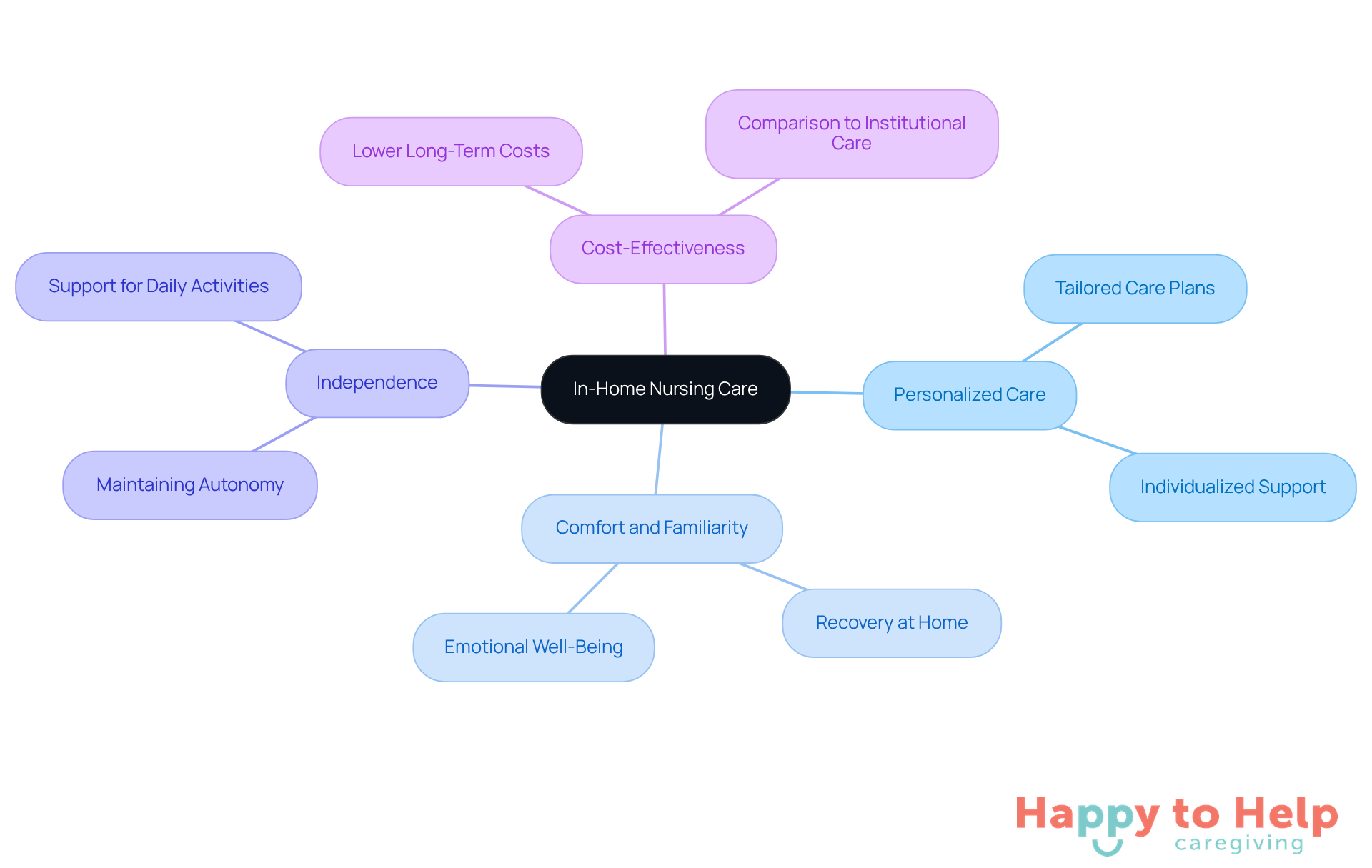
Benefits of In-Home Nursing Care:
- Personalized Care: Care plans are tailored to meet the specific needs of each individual, ensuring that they receive the right level of support.
- Comfort and Familiarity: Patients can recover in their own environment, which can significantly enhance their emotional well-being.
- Independence: In-home assistance enables individuals to uphold a degree of independence while obtaining the necessary support.
- Cost-Effectiveness: In numerous instances, the cost of in home nursing care savannah ga can be more economical than institutional support, particularly for long-term requirements.
Overall, in-home nursing services provide a compassionate alternative to conventional nursing facilities. They enable individuals to flourish in their familiar environments while receiving the support they require.
Analyze Cost Factors for In-Home Nursing Care in Savannah
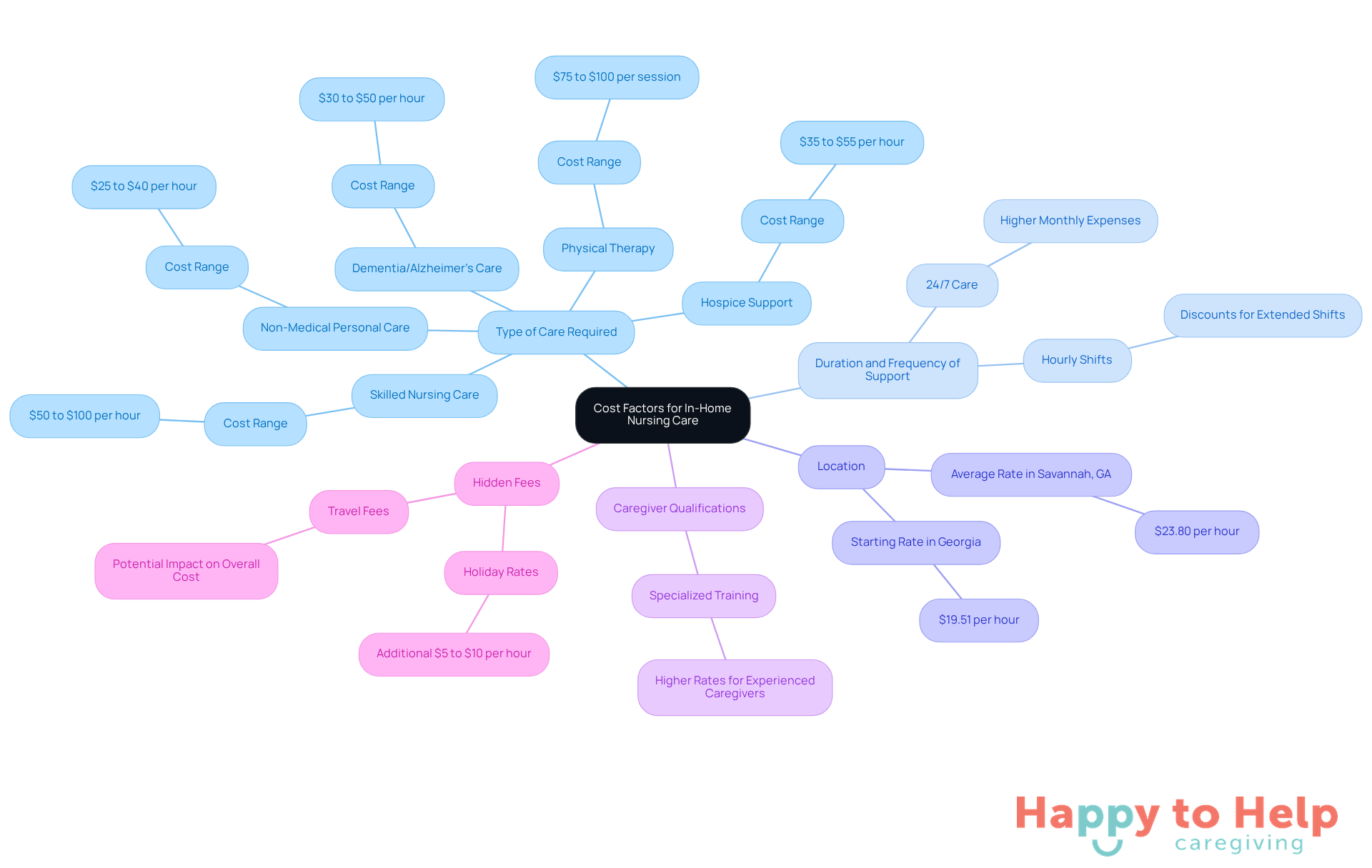
Understanding the cost of in home nursing care Savannah GA can be challenging for families. Several key factors influence the cost of in home nursing care Savannah GA, making it essential to navigate this landscape carefully.
-
Type of Care Required: The type of care needed plays a significant role in determining costs. Skilled nursing care typically incurs higher fees than non-medical personal care. For example, expert nursing services can range from $50 to $100 per hour, while personal assistance usually falls between $25 and $40 per hour.
-
Duration and Frequency of Support: The total cost also hinges on how much assistance is required each week. Families seeking round-the-clock support, which includes 24/7 care, should be prepared for considerably higher monthly expenses.
-
Location: Within Savannah, costs can fluctuate based on local demand and caregiver availability. On average, home assistance services can reach up to $23.80 per hour, with the typical starting rate in Georgia being $19.51 per hour.
-
Caregiver Qualifications: Rates may increase for caregivers with specialized training or extensive experience, reflecting their ability to provide high-quality assistance. This factor is crucial as families assess caregiver credentials when planning for support.
-
Hidden Fees: It's important for families to be aware of potential hidden charges associated with in-home assistance. These can include holiday rates and travel fees, which may significantly impact the overall cost.
By understanding these factors, families can better budget for the cost of in home nursing care Savannah GA and identify options that fit their financial capabilities. As Lise Marquis, a Certified Senior Advisor, notes, "Selecting the appropriate type of senior support for a loved one is one of the most crucial-and frequently daunting-choices." This insight highlights the importance of informed decision-making in navigating the complexities of caregiving.
Identify Types of In-Home Care Services and Their Costs
In-home care services present a challenge for families seeking the right support for their loved ones. With various types available, understanding the cost of in home nursing care savannah ga is essential for making informed decisions.
-
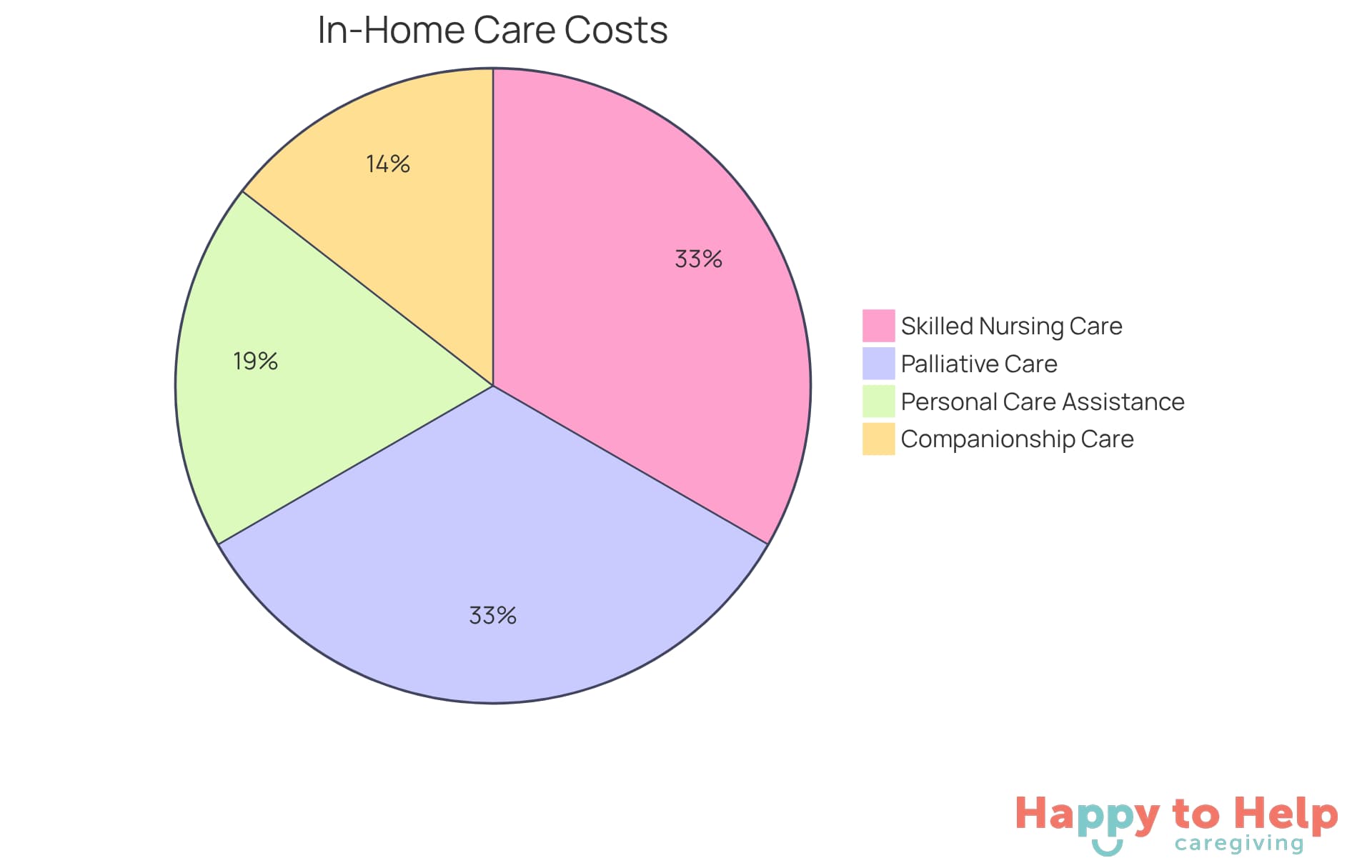
Companionship Care: This service provides social interaction and emotional support, typically costing between $20 and $30 per hour. In Georgia, the cost of in home nursing care savannah ga indicates that companionship support ranges from $21 to $28 each hour, making it an accessible option for families looking to reduce loneliness and offer companionship.
-
Personal Care Assistance: This includes help with daily tasks like bathing and dressing, with costs varying from $25 to $40 per session. Such support is vital for seniors who need assistance with activities of daily living (ADLs) but do not require medical attention.
-
Skilled Nursing Care: For those needing medical attention, skilled nursing assistance can range from $40 to $75 per hour, depending on the complexity of care required. This service is crucial for individuals with chronic conditions or those recovering from surgery.
-
Palliative Care: This specialized support for individuals with serious illnesses is often priced similarly to skilled nursing and focuses on enhancing quality of life and providing comfort.
Understanding these service types and their associated costs, such as the cost of in home nursing care savannah ga, helps families assess their specific needs and budget effectively. Additionally, families may qualify for tax deductions or credits when hiring caregivers directly, which can alleviate some financial burdens. As the demand for in-home assistance grows, especially with an aging population, families are encouraged to explore all available options to ensure their loved ones receive the appropriate support.
Evaluate Your Needs and Budget for In-Home Care
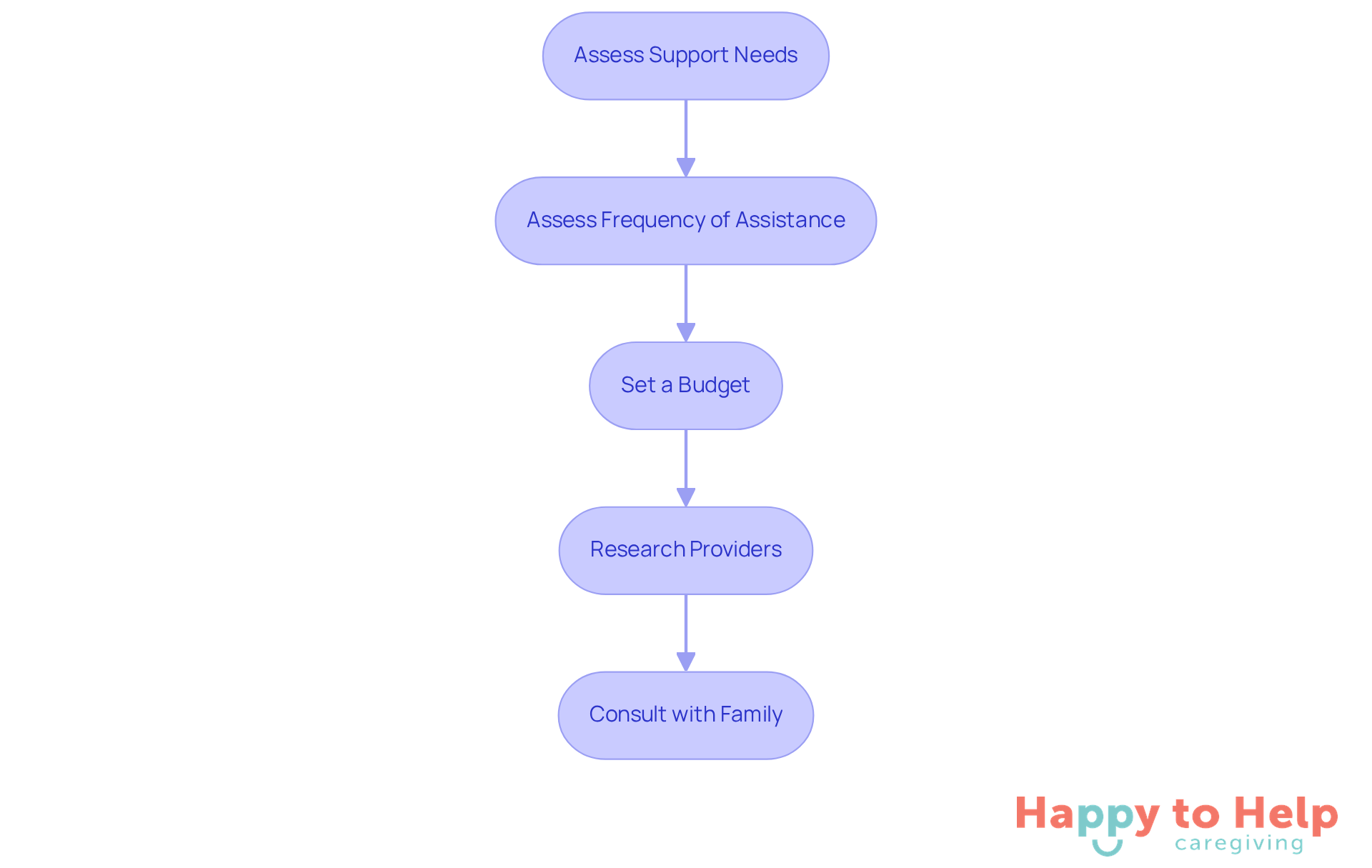
To effectively evaluate your needs and budget for in-home care, consider the following steps:
-
Assess Support Needs: Identify the specific assistance required, such as help with daily living activities, medical attention, or companionship. Understanding the amount of assistance needed is vital, as it directly affects the kind of support you will require.
-
Assess Frequency of Assistance: Decide how many units of support are needed each week. Studies show that the typical weekly time for in-home services can vary greatly depending on personal requirements, with many families choosing anywhere from 15 to 44 hours each week based on the complexity of assistance needed.
-
Set a budget based on the cost of in-home nursing care Savannah GA, considering your financial circumstances. The national median cost of in-home nursing care Savannah GA for non-medical home assistance is expected to be around $33 per hour in 2025. For families considering live-in support, the cost of in-home nursing care Savannah GA can vary from $6,000 to $12,000 each month, depending on specific assistance needs. Explore potential funding sources, such as savings, insurance, or government assistance programs, to help manage the cost of in-home nursing care Savannah GA.
-
Research Providers: Look for reputable in-home assistance agencies in Savannah, evaluating their offerings and costs to find the best fit for your needs. It's crucial to obtain detailed quotes from different agencies to understand the full scope of services and the cost of in-home nursing care Savannah GA, along with any additional costs that may arise.
-
Consult with Family: Involve family members in the decision-making process to ensure everyone is aligned regarding support options and financial commitments. Open discussions can help alleviate concerns and foster a collaborative approach to caregiving.
By following these steps, families can create a comprehensive plan that addresses both care needs and budgetary constraints, ensuring that their loved ones receive the support they need while managing financial responsibilities.
Taking the Next Steps
In-home nursing care in Savannah, GA, presents a significant challenge for families grappling with the complexities of caregiving. The burden on caregivers can be overwhelming, impacting their well-being and the quality of life for those needing assistance. Without adequate support, families may struggle to provide the personalized care that individuals deserve in the comfort of their own homes.
Understanding the various types of in-home nursing services available is crucial. From companionship care to skilled nursing, each service offers unique benefits tailored to individual needs. However, families must also consider the associated costs and the factors influencing pricing, such as:
- The type of care required
- Duration
- Caregiver qualifications
This knowledge empowers families to make informed financial decisions.
The significance of in-home nursing care is paramount, especially with an aging population and rising demand for personalized support. Families are encouraged to assess their needs and budget carefully. By exploring all available options and consulting with family members, they can ensure their loved ones receive the necessary care while maintaining financial stability. This thoughtful approach not only enhances the caregiving experience but also positively impacts the lives of both caregivers and recipients.
https://iframe.tely.ai/cta/eyJhcnRpY2xlX2lkIjogIjY5MjBmZDQxY2E3OGI5ZDliYTJkYTRkZiIsICJjb21wYW55X2lkIjogIjY4ZWU1ZGNhNzMxNzYyNTU3ZjNjOTVjMSIsICJpbmRleCI6IG51bGwsICJ0eXBlIjogImFydGljbGUifQ==Frequently Asked Questions
What is in-home nursing care?
In-home nursing care is a service that provides health and personal support to individuals recuperating from surgery, managing chronic conditions, or needing assistance with daily tasks, all within the comfort of their own home.
Why is in-home nursing care important for caregivers?
In-home nursing care is important for caregivers as it addresses the challenge of needing reliable support, helping to prevent caregiver burnout and ensuring that loved ones receive adequate care.
What are the benefits of in-home nursing care?
The benefits of in-home nursing care include personalized care tailored to individual needs, comfort and familiarity of recovering in one's own environment, maintaining a degree of independence, and cost-effectiveness compared to institutional support.
How does in-home nursing care enhance emotional well-being for patients?
In-home nursing care enhances emotional well-being by allowing patients to recover in their own familiar environment, which can provide comfort and reduce stress during the recovery process.
Is in-home nursing care more economical than institutional support?
Yes, in many cases, in-home nursing care can be more economical than institutional support, especially for long-term care needs.
List of Sources
- Explore In-Home Nursing Care: Concepts and Benefits
- 52 Eye-Opening Home Health Statistics: Insights for 2025 (https://boosthomehealth.com/home-health-statistics)
- Governor Hochul Announces Next Steps in Plans to Strengthen Home Care Services for New Yorkers (https://governor.ny.gov/news/governor-hochul-announces-next-steps-plans-strengthen-home-care-services-new-yorkers)
- Medicare covers at-home nursing care for dementia patients for the first time this year (https://tampabay.com/news/health/2025/08/14/medicare-covers-at-home-nursing-care-dementia-patients-first-time-this-year)
- 10 Must-Know U.S. Home Care Industry Stats for 2025 - North American Community Hub (https://nchstats.com/us-home-care-industry-stats)
- 2025 Home Care Statistics: Trends & Insights To Know (https://premierhcinc.com/blog/home-care-statistics)
- Analyze Cost Factors for In-Home Nursing Care in Savannah
- How Much Does In-Home Care Cost in 2025? A State-by-State Guide - Elder Answers (https://elder-answers.com/how-does-in-home-care-cost-in-2025)
- Inflation Hits Home Care, Increasing Pressure on Older Adults and Family Caregivers (https://blog.aarp.org/thinking-policy/inflation-hits-home-care-increasing-pressure-older-adults-family-caregivers)
- How much does home care cost in Savannah, GA? (https://care.com/cost/home-care/savannah-ga)
- Long-Term Care Costs Increase in Georgia, Remain Lower Than National Costs (https://investor.genworth.com/news-events/press-releases/detail/992/long-term-care-costs-increase-in-georgia-remain-lower-than?utm\_source=chatgpt.com)
- Identify Types of In-Home Care Services and Their Costs
- The Cost of Dignity: A Guide to In-Home Care Costs and Happier Aging in 2025 | Nurse Next Door (https://nursenextdoor.com/blog/how-much-does-senior-home-care-cost)
- Cost of In-Home Care in California (2025) + 11 Ways to Pay (https://lovinghomecareinc.com/blog/cost-of-in-home-care-california)
- Home Care Costs in 2025: A State-by-State Guide (https://aplaceformom.com/caregiver-resources/articles/in-home-care-costs)
- How Much Does In-Home Care Cost in 2025? A State-by-State Guide - Elder Answers (https://elder-answers.com/how-does-in-home-care-cost-in-2025)
- Evaluate Your Needs and Budget for In-Home Care
- How Much Will Home Care Cost Per Month in 2025? | Home Care agency in New York (https://angelcareny.com/how-much-will-home-care-cost-per-month-in-2025)
- Home Care Costs in 2025: A State-by-State Guide (https://aplaceformom.com/caregiver-resources/articles/in-home-care-costs)
- 24/7 In-Home Care Costs in 2025 - Assisted Living Magazine (https://assistedlivingmagazine.com/24-7-in-home-care-costs-in-2025)
- 2025 Budget Impacts: House Bill Would Cut Assistance and Raise Costs for Seniors (https://cbpp.org/research/federal-budget/2025-budget-impacts-house-bill-would-cut-assistance-and-raise-costs-for)