

For families in our service areas
For families in our service areas, this guide explains caregiver support and how non-medical in-home caregiving can support care planning in East Idaho, Treasure Valley & Magic Valley, Northern Wasatch, North Central West Virginia, and Northeast Ohio.
The Definition of Live-In Caregivers at a Glance
Live-in caregivers are more than just residential support workers; they are compassionate companions who provide essential personal care and assistance with daily tasks, all within the comfort of individuals' homes. Their presence fosters not only independence but also emotional well-being, allowing those they care for to feel valued and supported.
The multifaceted roles of live-in caregivers encompass personal care, domestic duties, and emotional support. As the demand for such services grows—driven by an aging population and the desire for seniors to age in place—these caregivers stand as a vital resource. They help alleviate the feelings of stress and burnout that often accompany caregiving, offering a sense of relief and reassurance to families.
By understanding the emotional challenges faced by both caregivers and those receiving care, we can appreciate the profound impact these dedicated individuals have on the lives they touch. Their work is not just about tasks; it’s about creating meaningful connections and fostering a nurturing environment.
In this journey, the importance of compassionate care cannot be overstated. Live-in caregivers provide a lifeline, helping individuals navigate their daily lives with dignity and grace. Their unwavering support serves as a reminder that no one has to face the challenges of aging alone.
Understanding The Definition of Live-In Caregivers
The growing demand for live-in caregivers reflects a significant shift in how society approaches elder care and support for individuals with disabilities. These dedicated professionals not only provide essential assistance with daily tasks, but they also foster emotional connections that can greatly enhance the quality of life for their clients.
However, as families navigate the complexities of caregiving, questions arise about the true impact and challenges of this arrangement. What does it really mean to have a live-in caregiver? How can families ensure they are making the best choice for their loved ones?
These questions are not just practical; they touch on the emotional heart of caregiving. Families often feel a mix of hope and anxiety as they consider this option. It’s important to recognize these feelings and understand that seeking help is a sign of strength, not weakness.
Live-in caregivers offer more than just assistance; they provide companionship, understanding, and a sense of security. This can be a source of great comfort for both the individual receiving care and their family members. As you explore this path, remember that you are not alone. There are resources and support systems available to help you make the best decision for your loved ones.
Define Live-In Caregiver: Roles and Responsibilities
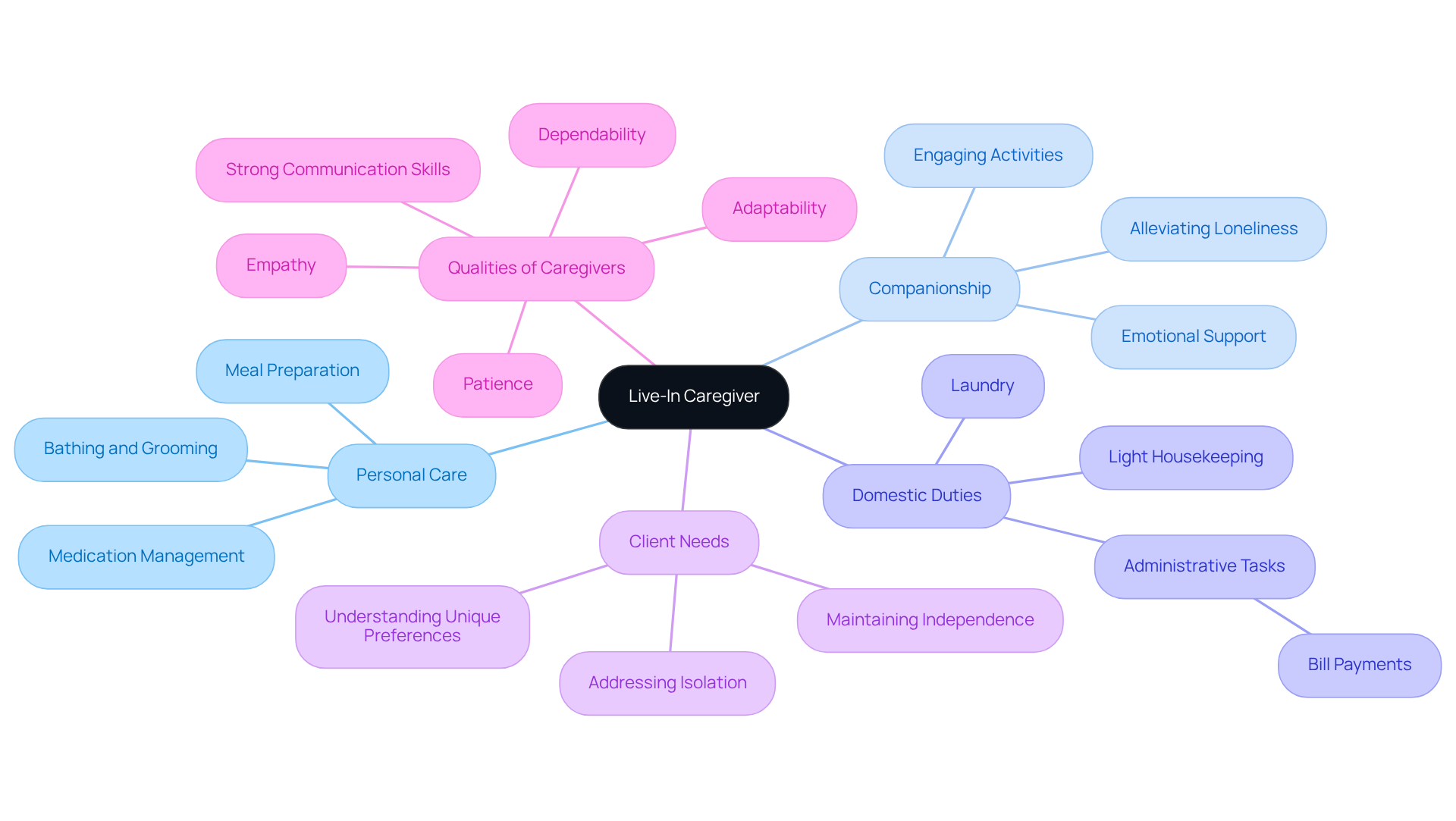
The definition of live in caregiver describes a residential support worker as a dedicated expert who lives in the household of the person they assist, providing ongoing help and guidance with everyday tasks. Their main duties include personal care tasks such as bathing, grooming, and dressing, along with overseeing medications and preparing healthy meals tailored to individuals' dietary needs. More than just these essential tasks, residential aides offer companionship and emotional support, engaging clients in meaningful conversations and activities that help alleviate feelings of loneliness, which can significantly impact mental health. Notably, one in three individuals between 50 and 80 years old report experiencing isolation at least occasionally, underscoring the vital role that supporters play in addressing this concern.
In addition to personal assistance, resident aides help with domestic duties, including light cleaning, laundry, and administrative tasks like bill payments, ensuring a tidy and organized living space. This arrangement fosters a more personalized approach to support, allowing providers to develop a deeper understanding of their clients' unique needs and preferences over time. As the average time spent providing care has risen to 26 hours per week, the demand for home care services continues to grow, which emphasizes the definition of live in caregiver as increasingly essential in aiding seniors and individuals with special needs. Furthermore, 82% of seniors wish to remain in their current homes for as long as possible, highlighting the importance of full-time support in helping them maintain their independence and quality of life in the comfort of their own surroundings. Key qualities such as empathy, patience, and strong communication skills are crucial for enhancing the caregiving experience and the well-being of those receiving care.
Contextual Importance of Live-In Caregivers in Home Care
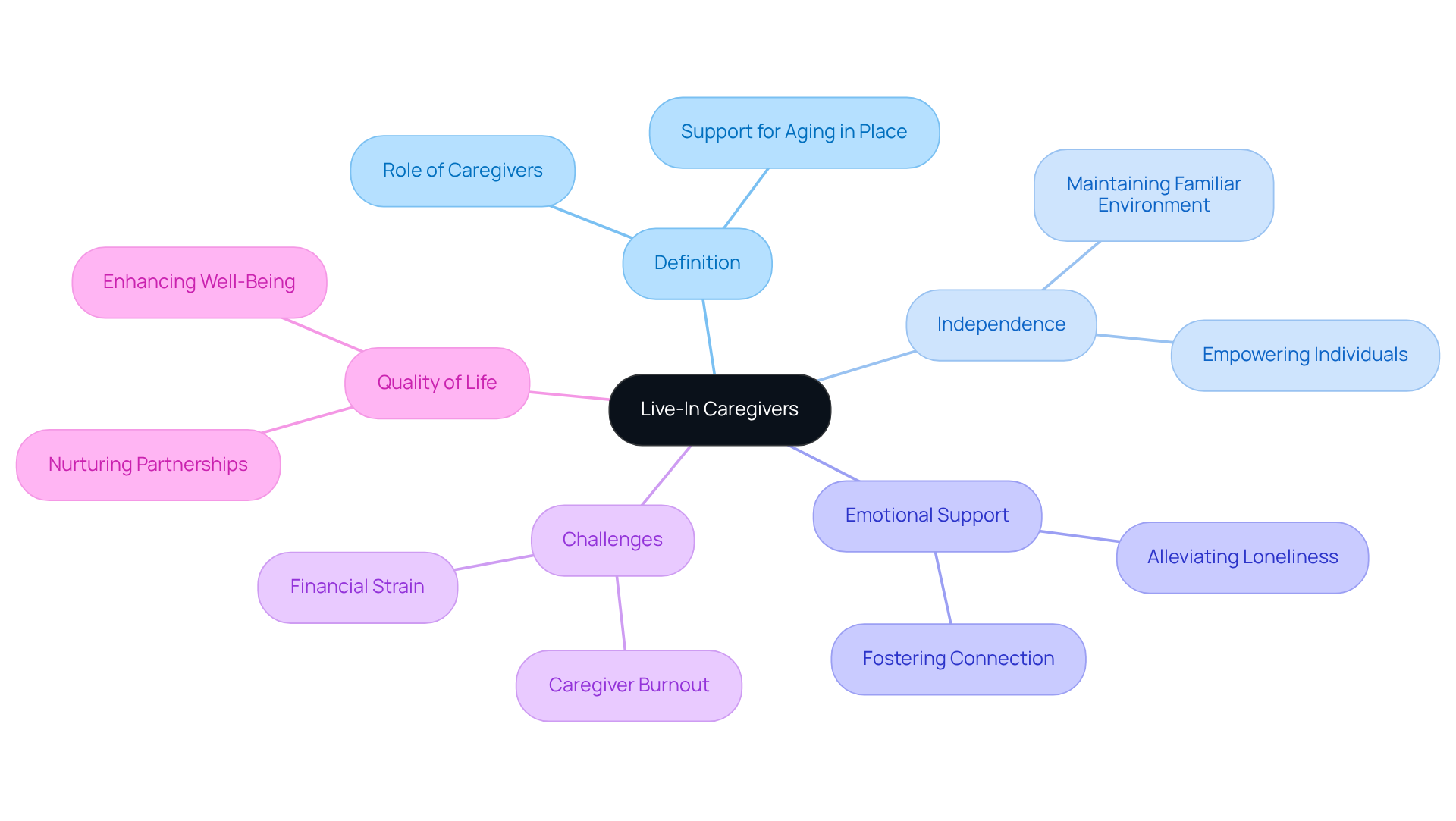
In recent years, the demand for support workers has surged, highlighting the definition of live-in caregiver. This increase is driven by an aging population and a growing preference for aging in place. Many seniors and individuals with disabilities wish to remain in their familiar environments, where they feel secure and comfortable.
The definition of live-in caregiver highlights their crucial role in enabling this wish. They offer essential support that allows individuals to maintain their independence. Moreover, the emotional and psychological advantages of having a support person present can greatly improve overall well-being. This companionship helps alleviate feelings of loneliness and isolation, fostering a sense of connection and community.
In these challenging times, it’s important to recognize the stress and burnout caregivers may experience. They often juggle numerous responsibilities, and the emotional toll can be significant. However, the presence of compassionate support can make a world of difference, providing not just physical assistance but also emotional comfort.
By choosing live-in support, individuals are not just opting for help; they are embracing a nurturing partnership that reflects the definition of live-in caregiver, prioritizing their needs and well-being. This choice reflects a commitment to maintaining quality of life, ensuring that individuals can thrive in the comfort of their own homes.
Types of Live-In Caregivers and Their Services
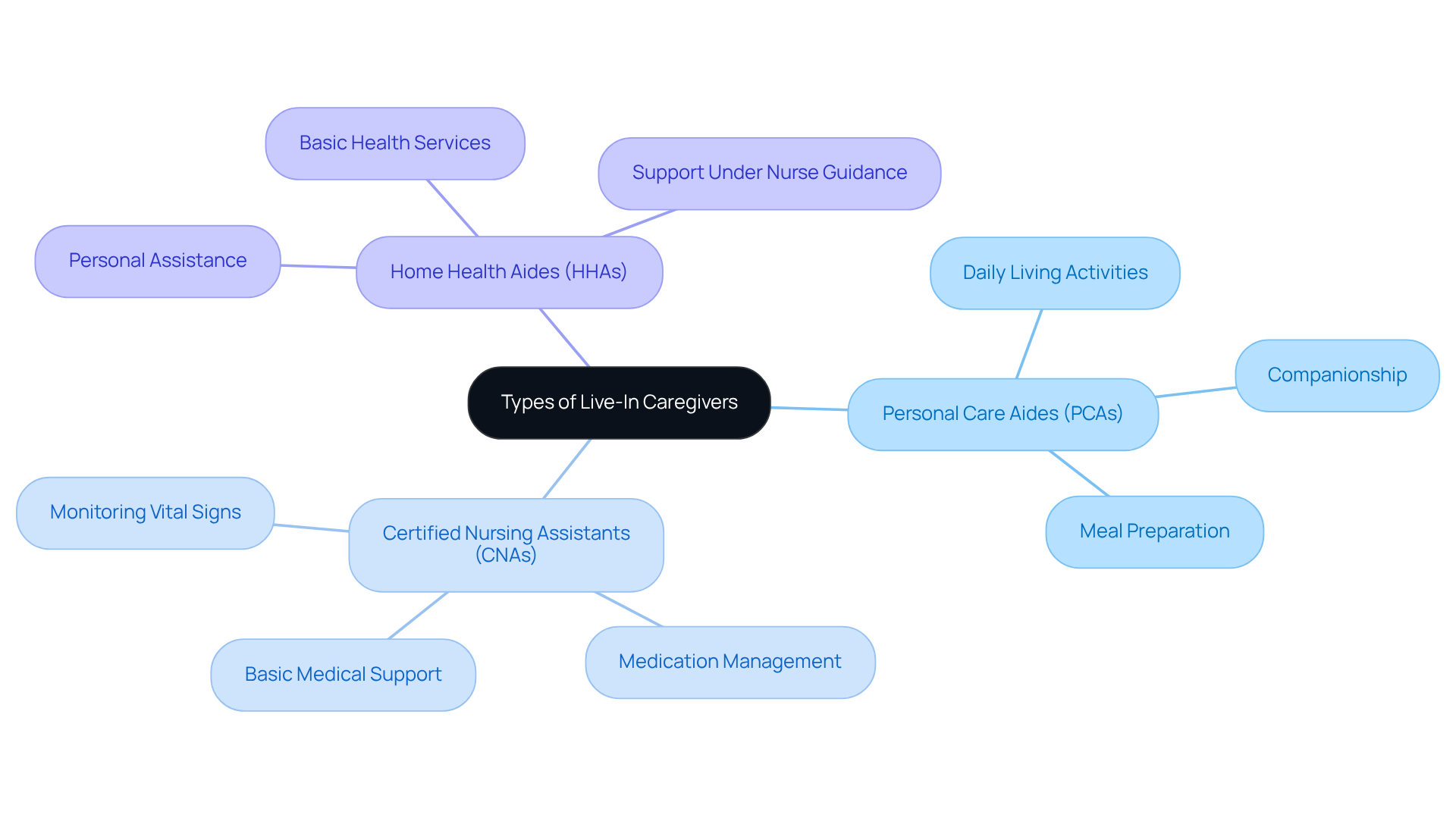
Live-in caregivers can be categorized into several types based on their qualifications and the services they provide, each tailored to meet specific client needs:
-
Personal Care Aides (PCAs): These caregivers focus on assisting with daily living activities, such as bathing, dressing, grooming, meal preparation, and companionship. Their support is crucial for seniors and individuals with disabilities who wish to maintain independence in their own homes. With 70% of working-age caregivers employed, the role of PCAs is vital in helping families balance work and caregiving responsibilities.
-
Certified Nursing Assistants (CNAs): CNAs provide more advanced medical assistance, including monitoring vital signs, aiding with medication management, and delivering basic medical support. Their training allows them to handle more complex health needs, making them essential for clients requiring ongoing medical attention. As the demand for home support services continues to grow, the role of CNAs becomes increasingly vital in ensuring quality assistance.
-
Home Health Aides (HHAs): HHAs offer a mix of personal assistance and basic health services, frequently operating under the guidance of a registered nurse. They support with daily activities while also handling some health-related tasks, ensuring a comprehensive approach to assistance. The growing intricacy of caregiving requirements emphasizes the importance of HHAs in the home support environment.
Each kind of provider brings unique skills and training, allowing families to choose the most appropriate option based on their loved one's specific needs. The selection among PCAs, CNAs, and HHAs can greatly influence the quality of assistance provided, along with the overall well-being of clients. Moreover, it is crucial to acknowledge the financial burden on those providing care, with more than one-third reporting that they have ceased saving and 23% stating they are in debt because of their caregiving duties. Understanding these distinctions and the broader implications of the definition of live-in caregiver roles becomes increasingly important for families as they navigate their caregiving options.
Benefits and Challenges of Live-In Caregiving
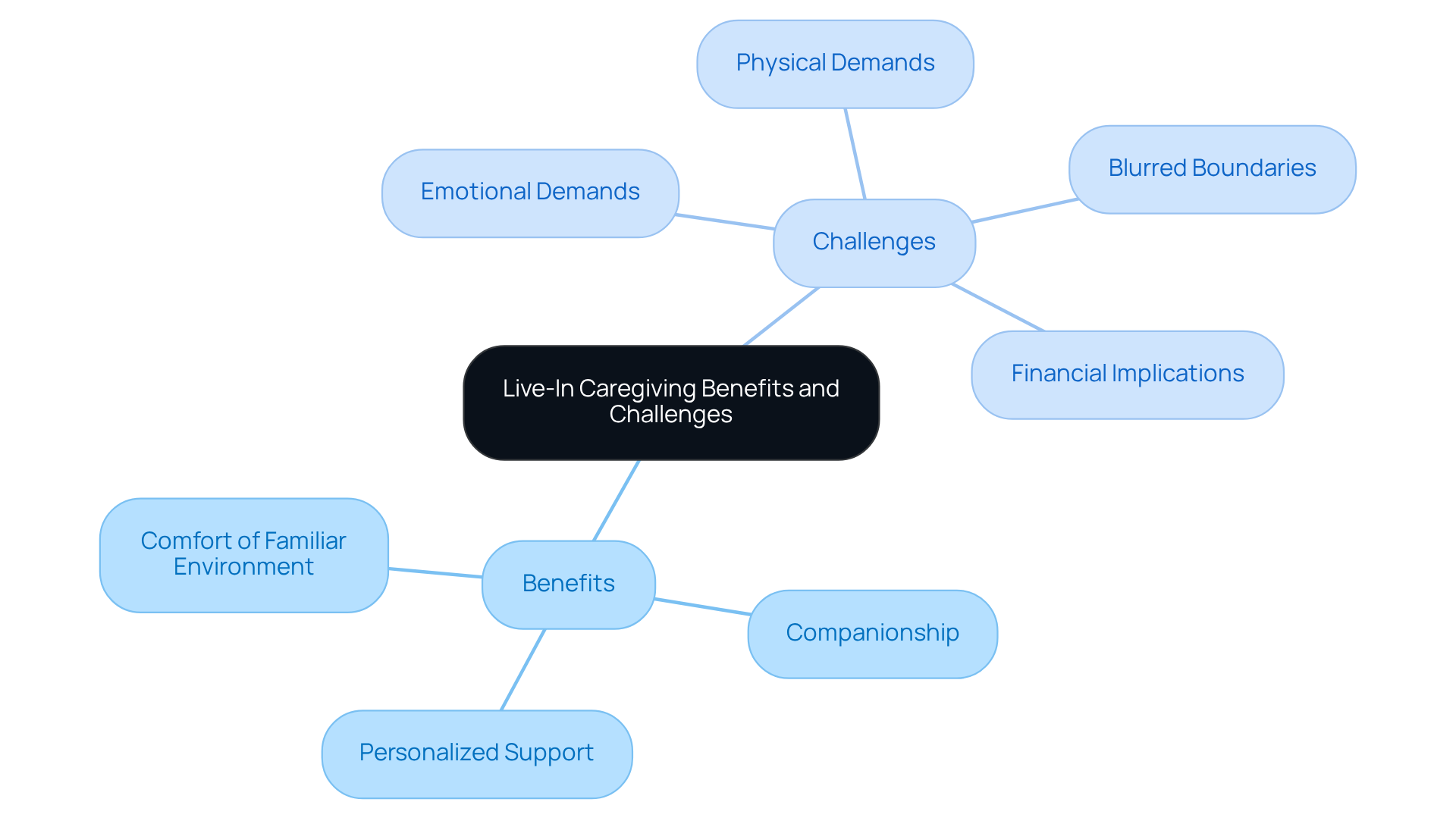
The definition of live-in caregiver encompasses numerous advantages, such as personalized support, companionship, and the comfort of staying in a familiar environment. Clients often find that this arrangement enhances their emotional well-being and fosters a greater sense of security. However, it’s important to acknowledge the challenges that come with it. Caregivers may experience significant emotional and physical demands, and the close quarters can sometimes blur the lines between professional and personal relationships.
Families must also consider the financial implications. While live-in support can often be more economical than assisted living facilities, it still represents a considerable expense. Balancing these factors is essential for families as they seek the best care solutions for their loved ones. Remember, navigating these choices can be overwhelming, but support is available to help ensure that both clients and caregivers feel valued and cared for.
Your Path Forward
The role of live-in caregivers is increasingly recognized as essential in providing comprehensive support for individuals wishing to maintain their independence at home. These dedicated professionals not only assist with daily living activities but also offer companionship and emotional support, addressing the growing concerns of isolation among seniors and individuals with disabilities. As the demand for such services rises, understanding the multifaceted nature of live-in caregiving becomes crucial for families seeking the best care solutions.
Key insights from the article underscore the various responsibilities of live-in caregivers, including:
- Personal care
- Household management
- Emotional companionship
The different types of caregivers—Personal Care Aides, Certified Nursing Assistants, and Home Health Aides—each bring unique skills tailored to meet specific client needs. Moreover, the challenges faced by caregivers, such as emotional strain and financial burdens, highlight the importance of recognizing and supporting both caregivers and clients in this partnership.
Ultimately, embracing the live-in caregiving model not only reflects a commitment to quality care but also enhances the overall well-being of individuals in need. As families navigate the complexities of caregiving options, it is vital to prioritize the selection of qualified caregivers who can provide the necessary support while fostering a nurturing environment. By understanding the definition and significance of live-in caregivers, individuals can make informed decisions that promote a better quality of life for their loved ones.
https://iframe.tely.ai/cta/eyJhcnRpY2xlX2lkIjogIjY4ZmMxMzE1OWNlYTkzMTRiMTExNjZkYiIsICJjb21wYW55X2lkIjogIjY4ZWU1ZGNhNzMxNzYyNTU3ZjNjOTVjMSIsICJpbmRleCI6IG51bGwsICJ0eXBlIjogImFydGljbGUifQ==Frequently Asked Questions
What is a live-in caregiver?
A live-in caregiver is a residential support worker who lives in the household of the person they assist, providing ongoing help and guidance with everyday tasks.
What are the main responsibilities of a live-in caregiver?
The main responsibilities include personal care tasks such as bathing, grooming, and dressing, overseeing medications, preparing healthy meals, providing companionship, and assisting with domestic duties like light cleaning and laundry.
How do live-in caregivers support emotional well-being?
Live-in caregivers offer companionship and emotional support by engaging clients in meaningful conversations and activities, which helps alleviate feelings of loneliness that can significantly impact mental health.
What percentage of individuals aged 50 to 80 report experiencing isolation?
One in three individuals between 50 and 80 years old report experiencing isolation at least occasionally.
What additional tasks do live-in caregivers perform beyond personal care?
In addition to personal care, live-in caregivers help with domestic duties, including light cleaning, laundry, and administrative tasks like bill payments.
Why is the role of live-in caregivers becoming increasingly essential?
The role is becoming increasingly essential due to the rising average time spent providing care (26 hours per week) and the growing demand for home care services, especially as 82% of seniors wish to remain in their current homes as long as possible.
What key qualities should a live-in caregiver possess?
Key qualities include empathy, patience, and strong communication skills, which are crucial for enhancing the caregiving experience and the well-being of those receiving care.