
For families in our service areas
For families in our service areas, this guide explains caregiver support and how non-medical in-home caregiving can support care planning in East Idaho, Treasure Valley & Magic Valley, Northern Wasatch, North Central West Virginia, and Northeast Ohio.
Why The Essential Qualities of Caregivers Matters
Understanding the essential qualities of caregivers is crucial as families navigate the complexities of providing support to loved ones in need. Caregivers play a pivotal role not only in assisting with daily tasks but also in fostering emotional well-being. Their qualities - such as compassion, reliability, and effective communication - are paramount for successful caregiving.
However, caregivers face significant challenges, including financial strain and emotional burnout. These issues not only affect their well-being but also the quality of care they provide. It raises important questions about how society can better support these vital individuals.
To enhance the well-being of caregivers while ensuring the highest quality of care for those they serve, several strategies can be implemented:
- Provide financial assistance to alleviate economic pressures.
- Offer mental health resources to combat emotional burnout.
- Encourage community support networks to foster connection and shared experiences.
By addressing these challenges head-on, we can create a more supportive environment for caregivers, ultimately benefiting both them and the loved ones they care for.
Define Caregiver: Understanding the Role and Responsibilities
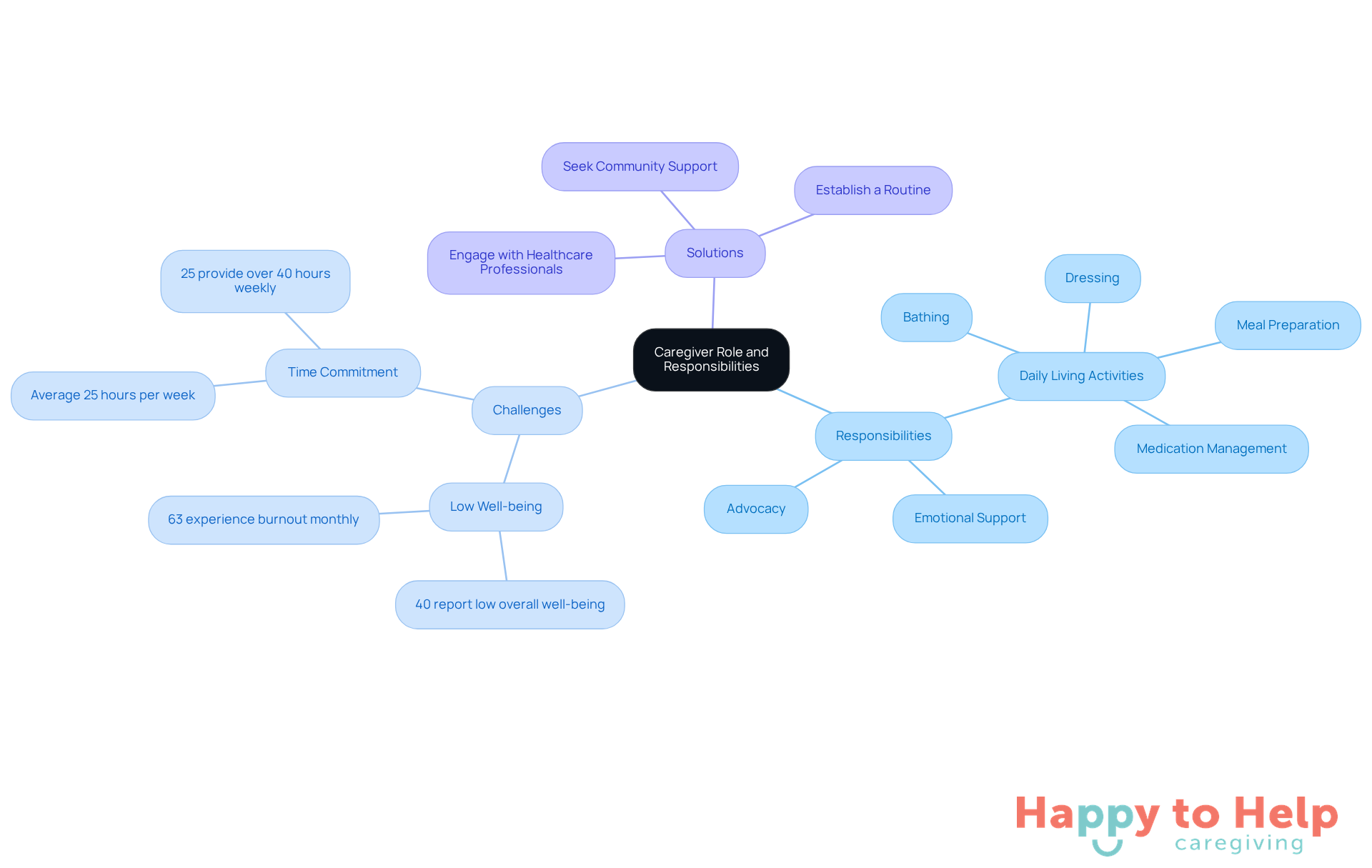
A support worker is someone who provides essential assistance to individuals who cannot fully care for themselves due to age, illness, disability, or recovery from medical procedures. This support can come from family members, friends, or professional caregivers, with family members making up a significant portion of the caregiving workforce. In fact, about 90% of family caregivers offer some form of financial support for their loved ones' care, often spending an average of $7,200 annually out of pocket on caregiving expenses (AARP, March 2025).
The challenges faced by caregivers are significant. They are responsible for a wide range of daily living activities, such as:
- Bathing
- Dressing
- Meal preparation
- Medication management
Additionally, they provide emotional support, companionship, and advocacy, ensuring that the physical, emotional, and social needs of those they care for are met. Caregivers typically spend around 25 hours per week on these tasks, with many dedicating over 40 hours weekly, especially when caring for spouses or partners.
This multifaceted role requires the qualities of caregiver, such as compassion, patience, and practical skills. Caregiving professionals emphasize that building a personal connection with individuals is vital for fostering trust and enhancing the qualities of caregiver support for those they assist. This connection not only helps reduce feelings of loneliness and isolation but also enhances a sense of security and comfort in familiar environments. However, it’s important to recognize that 40% of caregivers report low overall well-being, highlighting the emotional and mental health challenges they face (Guardian Life, 2023).
To address these challenges, caregivers can implement several practical solutions:
- Seeking support from local community resources or online forums can provide valuable advice and emotional relief.
- Establishing a routine can help manage time effectively, ensuring that caregivers balance their responsibilities with self-care.
- Engaging in regular communication with healthcare professionals can help caregivers stay informed about the best practices for care, ultimately improving their own well-being and that of their loved ones.
Contextualize Caregiving: The Importance of Caregivers in Modern Life
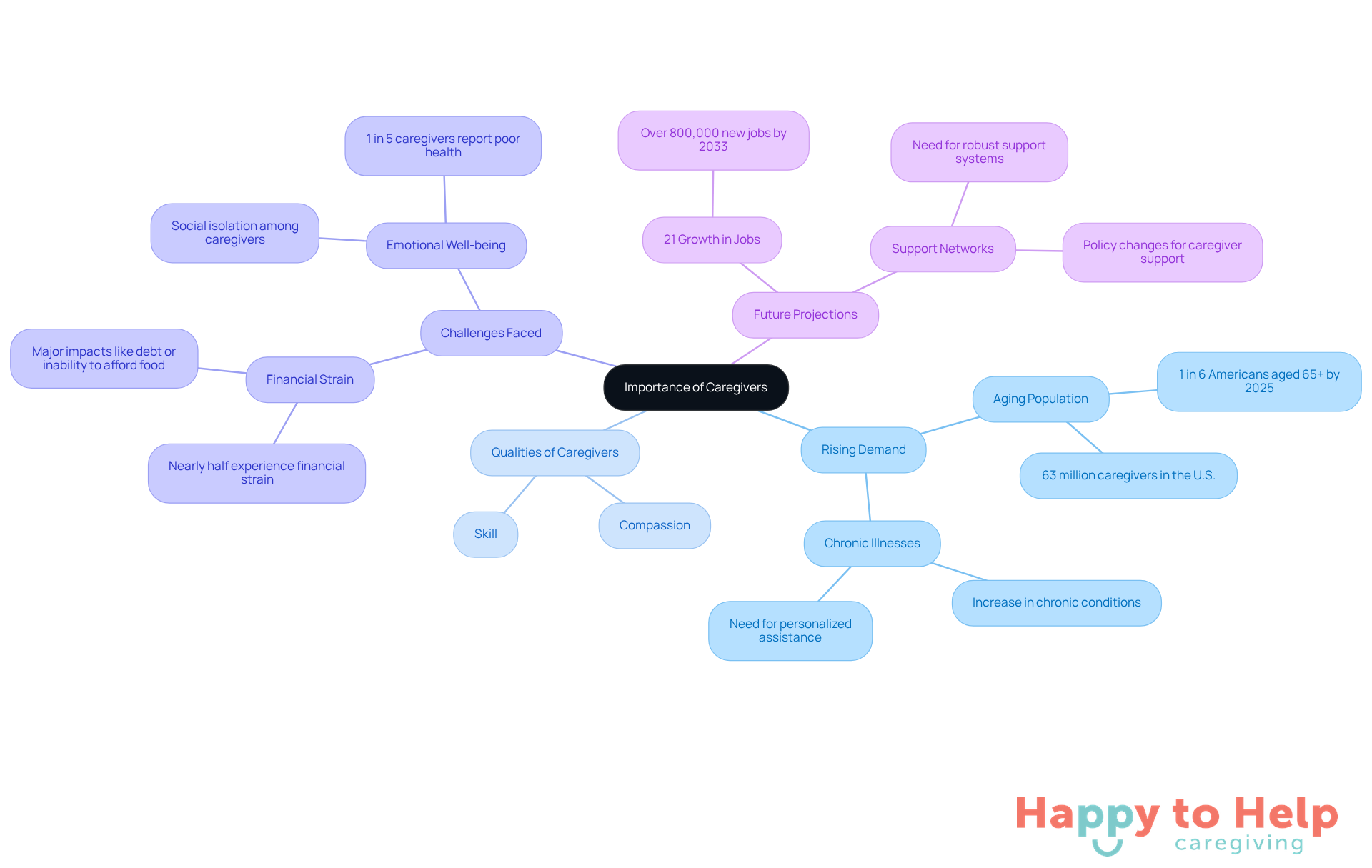
The demand for in-home care solutions is rising as families seek support for their loved ones. With the US Census projecting that 1 in 6 Americans will be aged 65 or older by 2025, alongside an increase in chronic illnesses, the need for personalized assistance in familiar settings is more pressing than ever. The qualities of caregiver are vital, as they not only assist with physical tasks but also play a crucial role in maintaining their clients' emotional well-being. They alleviate feelings of loneliness and isolation, fostering a sense of security and comfort.
However, the economic pressures faced by caregivers present significant challenges. Nearly half of those providing care experience substantial financial strain, underscoring the need for robust support systems. As healthcare systems shift towards community-based care models, the role of support providers in enhancing the quality of life for individuals with special needs becomes increasingly vital. This shift is evident in the projected 21% growth in home health and personal care aides from 2023 to 2033, translating to over 800,000 new jobs, according to the World Economic Forum.
To address these challenges, it is essential to cultivate a workforce that embodies the qualities of caregiver, including compassion and skill, to navigate the complexities of family dynamics and chronic health issues. By ensuring that individuals receive the necessary assistance, we can help them thrive at home. Implementing strong support networks and providing resources for caregivers can significantly improve their ability to manage both the emotional and financial aspects of caregiving.
Identify Key Qualities: Essential Traits of an Effective Caregiver
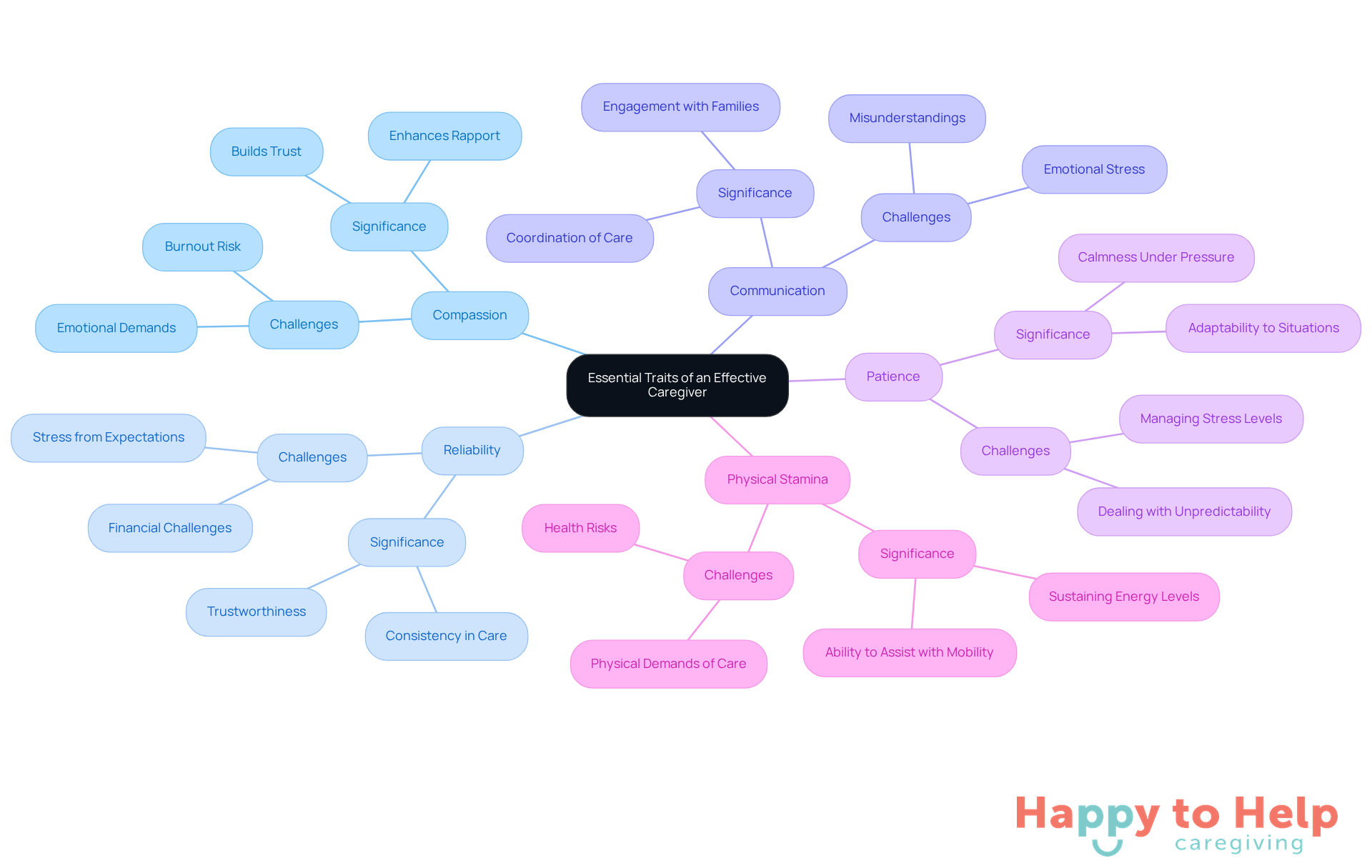
Effective providers embody a distinct set of qualities of caregiver that are crucial for delivering high-quality care. However, caregivers face significant challenges that can impact their ability to provide support. Among these challenges, the emotional and physical demands of caregiving can lead to stress and burnout.
Compassion and empathy are foundational traits that represent the qualities of caregiver for effective caregiving. Grasping the emotional and physical challenges encountered by individuals promotes trust and rapport, which are vital for effective caregiving. As highlighted, "Reliability is essential for any provider," emphasizing the importance of trustworthiness and dependability. Relatives must feel confident that their support person will consistently meet their responsibilities, offering a sense of safety for both the individual and their loved ones.
Robust communication abilities are essential for support providers. These skills allow caregivers to engage effectively with patients, families, and healthcare professionals, ensuring that care is well-coordinated. Moreover, patience and flexibility are crucial qualities of caregiver, enabling them to adjust to evolving circumstances and remain composed under stress, which is often required in unpredictable support settings.
Physical stamina is another critical quality, as caregiving can be physically demanding. Caregivers frequently assist individuals with mobility and daily activities, making it essential for them to maintain their own health and energy levels. The typical family supporter spends approximately $7,200 annually out of pocket on caregiving costs, emphasizing the financial challenges they encounter.
To address these challenges, caregivers can implement practical solutions:
- Prioritize self-care
- Seek support from community resources
- Engage in open communication with family members
The qualities of caregiver not only enhance the caregiving experience but also result in better outcomes for clients. Individuals who exhibit the qualities of caregiver, including compassion, reliability, communication, patience, and physical capability, are better prepared to meet the diverse needs of those they support. With 1 in 5 adults now managing work and caregiving duties, the pressures on caregivers are becoming more substantial, highlighting the necessity for assistance and understanding in their roles.
Trace the Evolution: Historical Development of Caregiving Qualities
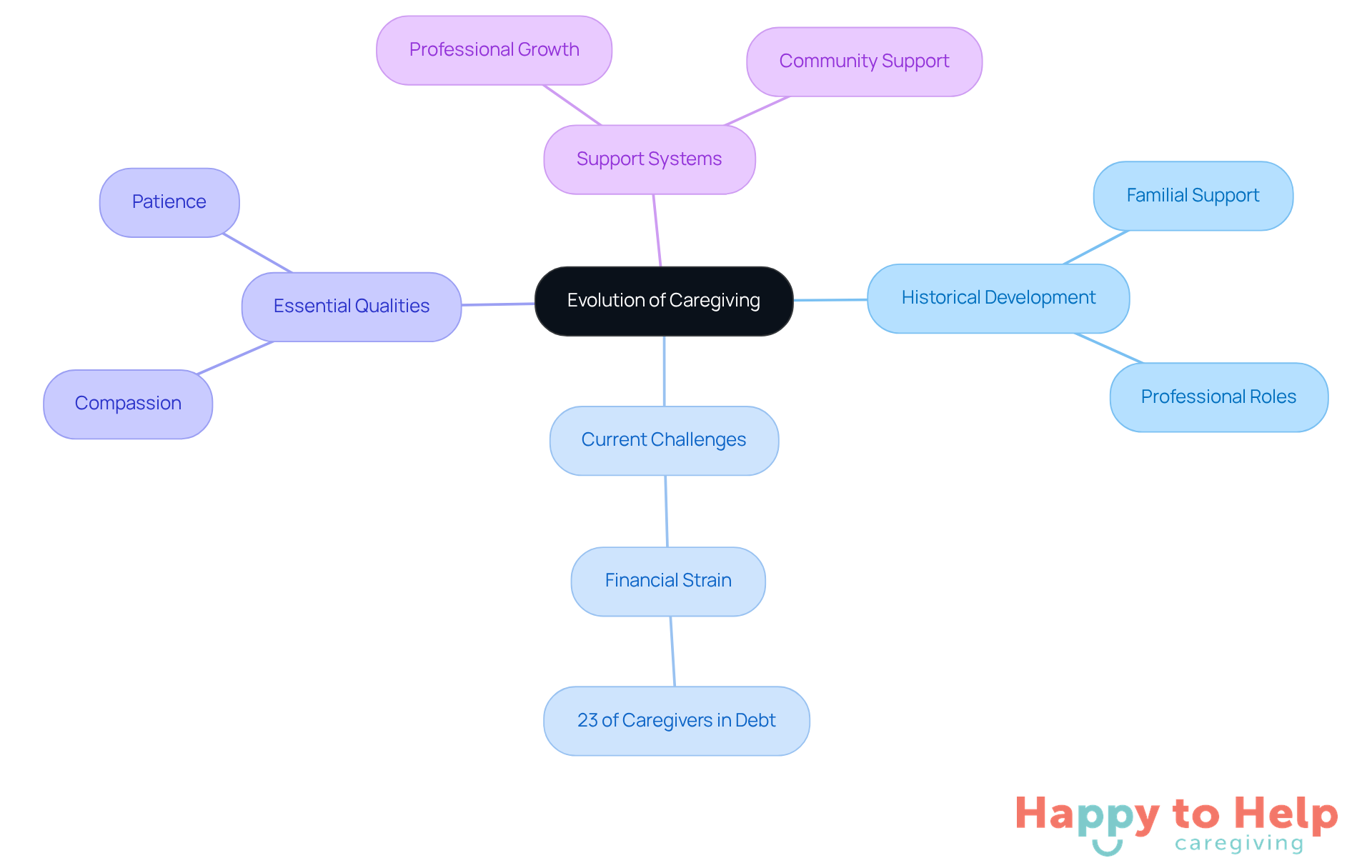
Caregiving has deep historical roots, transitioning from familial and community-based support to more formalized professional roles. However, today’s caregivers face significant challenges, particularly financial strain. Approximately 23 percent of caregivers report being in debt due to their responsibilities, highlighting a pressing issue that affects many.
This financial pressure not only impacts the caregivers themselves but also the quality of care they can provide. With around 5 million paid helpers in the U.S. and 63 million Americans acting as family support providers, the demand for effective caregiving is higher than ever. The essential qualities of caregiver, such as compassion and patience, reflect enduring human values of empathy and support.
To address these challenges, continuous professional growth and support systems are crucial. Caregivers can benefit from seeking out resources and training opportunities that enhance their skills and resilience. Expert insights, like those from Stacey Lee, JD, emphasize the increasing number of unpaid caregivers and the obstacles they encounter, underscoring the need for a robust support system in the caregiving profession. By fostering a community of support and providing access to professional development, we can help alleviate some of the burdens faced by caregivers today.
Key Takeaways for Caregivers
The role of caregivers is indispensable in society, providing crucial support to individuals needing assistance due to various circumstances. However, caregivers face significant challenges, including:
- Emotional strain
- Financial burdens
- The need for reliable support systems
These issues can lead to burnout, affecting both caregivers and those they assist.
To address these challenges, it’s essential to cultivate skilled and resilient caregivers. By prioritizing self-care, seeking community resources, and maintaining open communication, caregivers can enhance their well-being while delivering the best possible care. For instance, joining support groups can provide emotional relief, while accessing financial assistance programs can alleviate some burdens.
Recognizing and supporting the vital role of caregivers is crucial for fostering a healthier, more compassionate society. As the demographic landscape shifts, investing in resources and training for caregivers becomes increasingly important. This investment ensures that families can provide their loved ones with the quality care they deserve while safeguarding the health and well-being of those dedicated to this noble profession.
https://iframe.tely.ai/cta/eyJhcnRpY2xlX2lkIjogIjY5M2Y1MGI1NGM3OGNhYjkzOThjNmZiMiIsICJjb21wYW55X2lkIjogIjY4ZWU1ZGNhNzMxNzYyNTU3ZjNjOTVjMSIsICJpbmRleCI6IG51bGwsICJ0eXBlIjogImFydGljbGUifQ==Frequently Asked Questions
What is the role of a caregiver?
A caregiver is someone who provides essential assistance to individuals who cannot fully care for themselves due to age, illness, disability, or recovery from medical procedures. This support can be offered by family members, friends, or professional caregivers.
What percentage of caregivers are family members?
Approximately 90% of family caregivers provide some form of financial support for their loved ones' care.
How much do family caregivers typically spend on caregiving expenses annually?
Family caregivers often spend an average of $7,200 out of pocket each year on caregiving expenses.
What daily living activities do caregivers assist with?
Caregivers help with a variety of daily living activities, including bathing, dressing, meal preparation, and medication management.
How many hours per week do caregivers typically spend on caregiving tasks?
Caregivers typically spend around 25 hours per week on caregiving tasks, with many dedicating over 40 hours weekly, especially when caring for spouses or partners.
What qualities are important for caregivers to possess?
Important qualities for caregivers include compassion, patience, and practical skills. Building a personal connection with those they care for is also vital for fostering trust.
What emotional challenges do caregivers face?
About 40% of caregivers report low overall well-being, indicating significant emotional and mental health challenges.
What strategies can caregivers use to address their challenges?
Caregivers can seek support from local community resources or online forums, establish a routine to manage time effectively, and engage in regular communication with healthcare professionals to stay informed about best practices for care.
List of Sources
- Define Caregiver: Understanding the Role and Responsibilities
- The Caregiving Landscape: Data & Insights on the Caregiver Experience in the U.S. (https://caregiveraction.org/caregiver-statistics)
- National Alliance for Caregiving: Caregiving in the US 2025 Report (https://johnahartford.org/resources/view/national-alliance-for-caregiving-caregiving-in-the-us-2025-report)
- Caregiver Statistics: Demographics (https://caregiver.org/resource/caregiver-statistics-demographics)
- Family caregivers prefer in-home care over senior living, new industry report finds (https://mcknightshomecare.com/news/family-caregivers-prefer-in-home-care-over-senior-living-new-industry-report-finds)
- Contextualize Caregiving: The Importance of Caregivers in Modern Life
- 10 Must-Know U.S. Home Care Industry Stats for 2025 - North American Community Hub (https://nchstats.com/us-home-care-industry-stats)
- New Report Reveals Crisis Point for America’s 63 million Family Caregivers - Massachusetts Healthy Aging Collaborative (https://mahealthyagingcollaborative.org/new-report-reveals-crisis-point-for-americas-63-million-family-caregivers)
- Family caregivers prefer in-home care over senior living, new industry report finds (https://mcknightshomecare.com/news/family-caregivers-prefer-in-home-care-over-senior-living-new-industry-report-finds)
- Caregiving in the US 2025 (https://aarp.org/pri/topics/ltss/family-caregiving/caregiving-in-the-us-2025)
- Identify Key Qualities: Essential Traits of an Effective Caregiver
- Important Traits of a Caregiver (https://homeinstead.com/home-care/usa/la/carencro/347/news-and-media/important-traits-of-a-caregiver)
- The Caregiving Landscape: Data & Insights on the Caregiver Experience in the U.S. (https://caregiveraction.org/caregiver-statistics)
- Qualities of a Good Caregiver: Traits That Matter (https://agingarkansas.org/qualities-of-a-good-caregiver-key-traits-that-matter-most)
- Caregiver Statistics: Demographics (https://caregiver.org/resource/caregiver-statistics-demographics)
- News You Can Use - 5 Qualities to Look For in Caregivers - Diversified Resources (https://diversifiedresources.net/news-you-can-use-5-qualities-to-look-for-in-caregivers)
- Trace the Evolution: Historical Development of Caregiving Qualities
- Caregiving Crisis: 45% Increase in Americans Providing Care (https://aarp.org/caregiving/basics/caregiving-in-us-survey-2025)
- What Is the Caregiver Crisis? | Johns Hopkins Bloomberg School of Public Health (https://publichealth.jhu.edu/2025/what-is-the-caregiver-crisis)
- A New Labor Rule Could Push Caregivers to the Breaking Point | ACLU (https://aclu.org/news/womens-rights/a-new-labor-rule-could-push-caregivers-to-the-breaking-point)
- Caregiver Crisis: New Report Gives a “Wake Up” Call to Congress - Herb Weiss (https://rinewstoday.com/caregiver-crisis-new-report-gives-a-wake-up-call-to-congress-herb-weiss)
- Federal policy changes threaten job quality, stability for paid caregivers, PHI says (https://mcknightsseniorliving.com/news/federal-policy-changes-threaten-job-quality-stability-for-paid-caregivers-phi-says)