
For families in our service areas
For families in our service areas, this guide explains caregiver support and how non-medical in-home caregiving can support care planning in East Idaho, Treasure Valley & Magic Valley, Northern Wasatch, North Central West Virginia, and Northeast Ohio.
Understanding The Qualities of a Good Caregiver for
Understanding the qualities that define a good caregiver is crucial for families seeking effective support for their loved ones. The problem is that not all caregivers possess the essential traits needed for optimal care. Families often struggle to identify caregivers who are empathetic, patient, and possess strong communication skills. This challenge can lead to a lack of trust and connection, ultimately affecting the quality of care provided.
So, what can be done? Families can employ several strategies to ensure they select caregivers who embody these essential traits:
- Conducting thorough interviews and asking targeted questions can reveal a caregiver's empathy and communication skills.
- Seeking recommendations from trusted sources can help identify caregivers with a proven track record.
- Existing caregivers can cultivate these qualities through ongoing training and support.
- Providing resources, such as workshops on effective communication and empathy, can significantly enhance their skills.
By exploring these strategies, families can create a more nurturing and supportive caregiving environment that benefits both caregivers and clients alike.
Defining the Good Caregiver: Essential Qualities
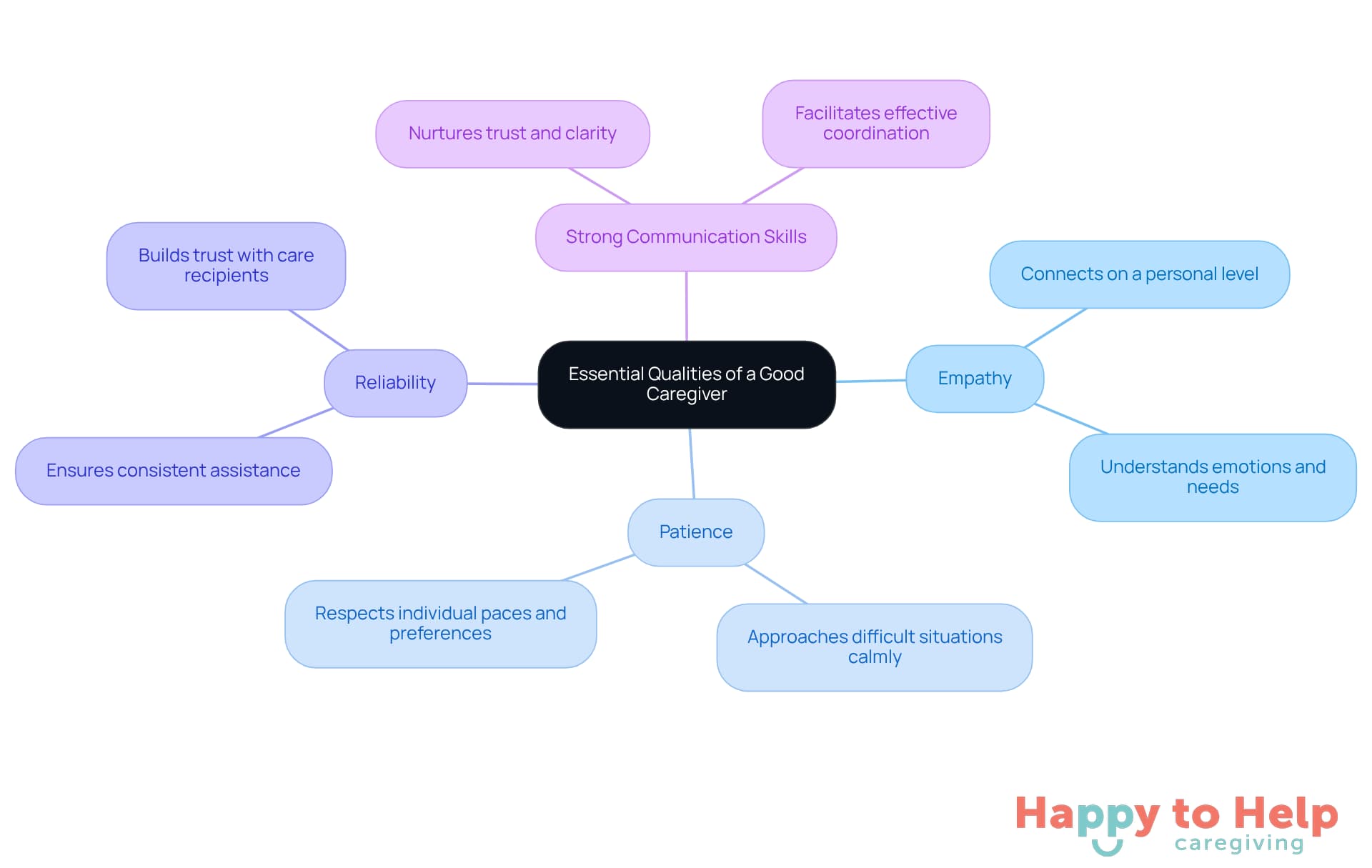
The problem is that caregivers often struggle with the challenge of finding support providers who have the qualities of a good caregiver that are necessary for effective assistance. The caregiving experience can suffer significantly without the qualities of a good caregiver.
Agitation can arise when support providers do not exhibit the qualities of a good caregiver, including empathy, patience, reliability, and strong communication skills, resulting in misunderstandings and frustration. For instance, without empathy, providers may fail to connect with individuals on a personal level, missing out on understanding their emotions and needs. Similarly, a lack of patience can exacerbate difficult situations, making it challenging to maintain a calm and steady approach. This can erode trust and clarity in the provider-recipient relationship, ultimately impacting the quality of care.
Solution: To foster a supportive atmosphere that enhances the overall caregiving experience, it’s crucial for providers to embody these vital traits:
- Empathy: Connect with individuals on a personal level, understanding their emotions and requirements.
- Patience: Approach difficult situations calmly and steadily.
- Reliability: Ensure consistent assistance that individuals can depend on.
- Strong Communication Skills: Nurture trust and clarity in relationships.
By prioritizing these qualities, caregivers can significantly improve the support they provide, leading to a more positive and effective caregiving experience.
Empathy and Compassion: Cornerstones of Effective Care
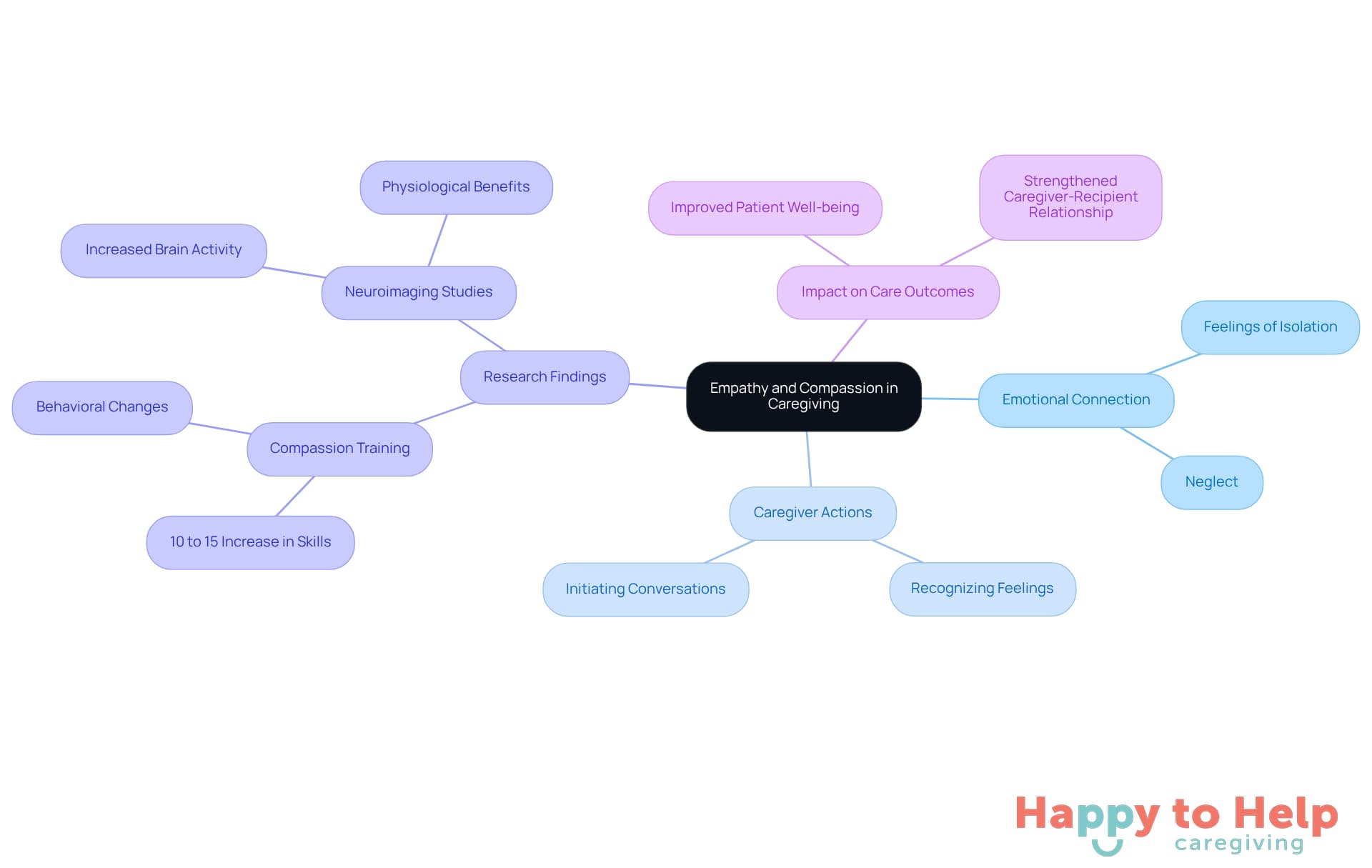
Empathy and compassion are some of the key qualities of a good caregiver that address crucial challenges in effective caregiving. Caregivers often struggle to connect emotionally with those they assist, which can lead to feelings of isolation and neglect among recipients. This emotional disconnect not only affects the well-being of individuals but also hampers the quality of care provided.
To address this issue, caregivers can cultivate the qualities of a good caregiver by actively sharing and understanding the emotions of those they support. For instance, a support worker who recognizes a person's feelings of loneliness can initiate conversations or engage them in enjoyable activities, fostering a sense of connection. This emotional support exemplifies the qualities of a good caregiver, as it not only elevates the individual's mood but also strengthens the caregiver-recipient relationship, leading to improved care outcomes.
Research shows that practicing compassion significantly enhances emotional environments. Studies indicate that caregivers who demonstrate compassion are more likely to create positive settings, which can greatly improve the well-being of those they support. Moreover, compassion training has been shown to enhance compassion-related abilities by 10% to 15% among medical students, underscoring the importance of compassionate interactions for both providers and patients.
Neuroimaging studies further reveal increased brain activity in areas linked to empathy following compassion exercises, highlighting the physiological benefits of such training. Ultimately, the qualities of a good caregiver, including empathy and compassion, transform individual experiences and contribute to a more supportive and nurturing care environment.
Key Skills and Attributes: Communication, Adaptability, and Reliability
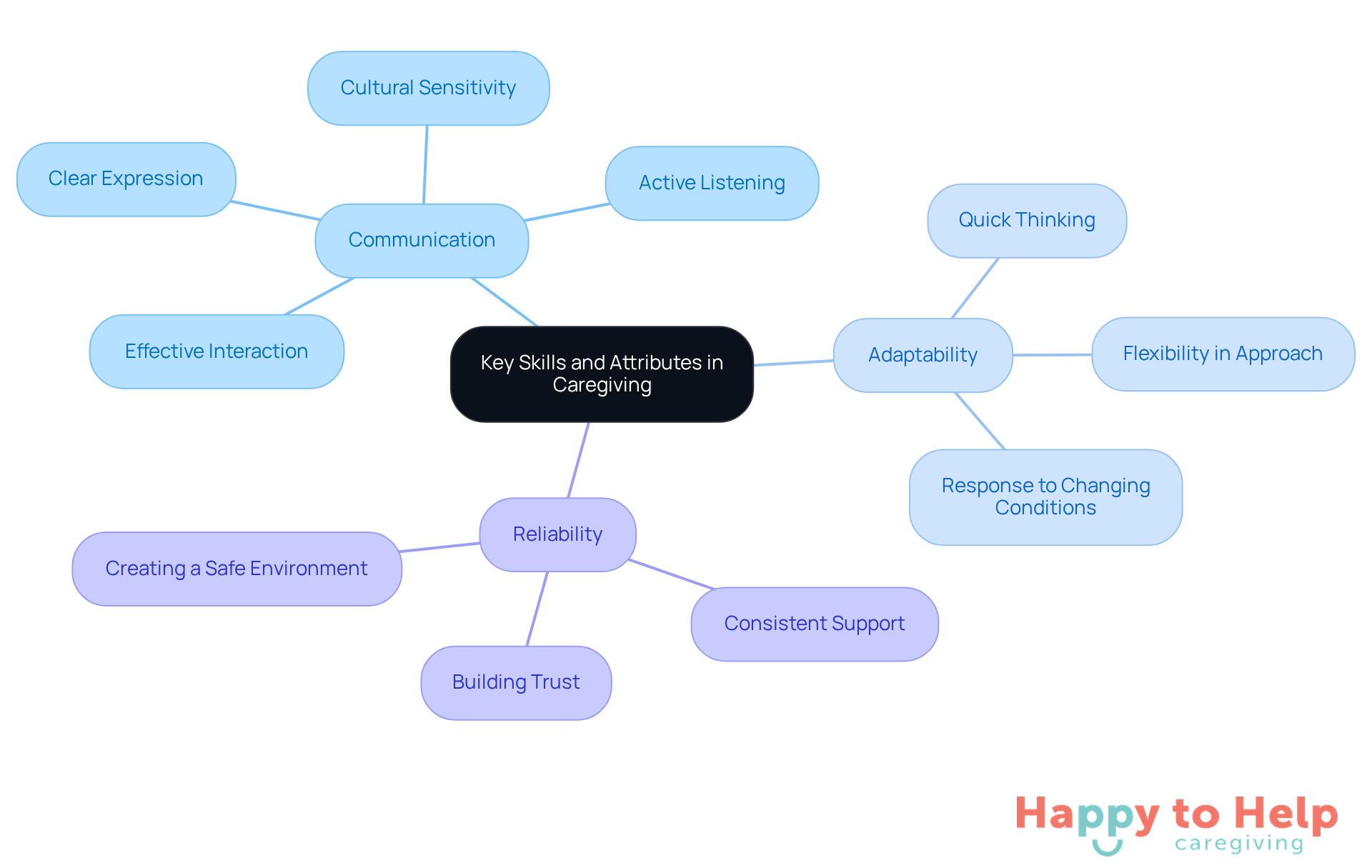
Effective caregivers face significant challenges that can hinder their caregiving capabilities. One major issue is the lack of effective communication, which is essential for conveying details clearly and listening attentively to clients and their families. As noted, "Effective interaction is crucial in all aspects of life, but it takes on even greater significance in the context of caregiving." Statistics show that educating support providers in clear communication methods leads to better health outcomes and higher patient satisfaction. Individuals who feel acknowledged are more inclined to participate actively in their health management.
Another challenge is the need for adaptability. Caregivers often encounter unforeseen circumstances that require quick thinking and flexibility. For instance, a support provider who adjusts their approach in response to a client's changing health condition demonstrates both expertise and a commitment to excellent care. A relevant case study highlights that good communication fosters trust, understanding, and a positive caregiving experience.
Reliability also plays a crucial role in effective caregiving. Consistent support fosters a sense of security and trust, which are essential for caregivers to provide the best care possible. By emphasizing the qualities of a good caregiver, including effective communication, adaptability, and reliability, caregivers can create a more nurturing and attentive atmosphere for those they assist.
The Impact of Caregiver Qualities on Client Well-Being
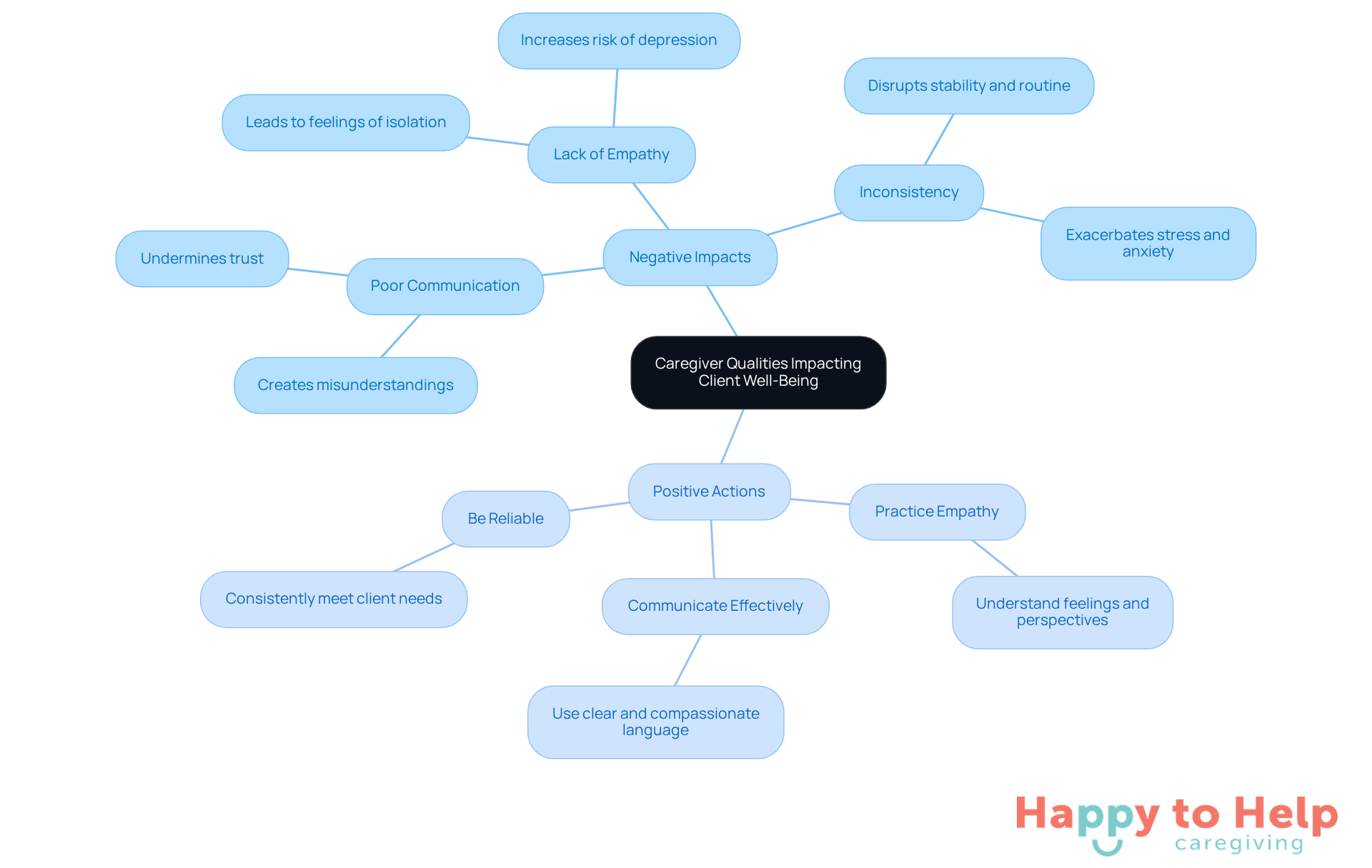
The qualities of a good caregiver significantly impact the well-being of those receiving care. Caregivers who lack empathy, patience, and strong communication skills can inadvertently contribute to negative emotional and physical health outcomes for their clients. This can lead to feelings of isolation and depression among individuals who do not feel understood or supported.
Moreover, when caregivers fail to consistently address the needs of those they assist, it disrupts the sense of stability and routine that is crucial for overall well-being. This instability can exacerbate stress and anxiety for both caregivers and clients, creating a cycle of distress.
To combat these challenges, caregivers can focus on developing the qualities of a good caregiver that will enhance their effectiveness. Here are some actionable tips:
- Practice Empathy: Take the time to understand the feelings and perspectives of those you support.
- Communicate Effectively: Use clear and compassionate language to foster trust and understanding.
- Be Reliable: Consistently meet the needs of your clients to help maintain their sense of stability.
By fostering a positive caregiver-client relationship, caregivers can significantly enhance their clients' quality of life and promote a greater sense of independence.
Making the Right Choice
Effective caregiving hinges on embodying essential qualities that not only enhance a caregiver's ability to provide support but also significantly improve the well-being of those receiving care. The problem arises when caregivers lack traits such as empathy, patience, reliability, and strong communication skills. Without these attributes, the caregiving experience can deteriorate, leading to misunderstandings and emotional distress for both caregivers and clients.
The implications of this issue are profound. Empathy fosters emotional connections, while patience helps navigate challenging situations. Reliability builds trust, and effective communication ensures clarity and understanding. Together, these attributes create a nurturing environment vital for positive caregiving outcomes. Research shows that caregivers who prioritize these traits can transform their interactions, leading to improved emotional and physical health for their clients.
To address these challenges, caregivers must actively cultivate these essential qualities. Embracing the traits of a good caregiver is not merely a professional obligation; it’s a profound opportunity to make a difference in the lives of others. Caregivers are encouraged to reflect on these essential traits and seek to develop them. By doing so, they enhance their effectiveness and contribute to a more compassionate and supportive community for all.
https://iframe.tely.ai/cta/eyJhcnRpY2xlX2lkIjogIjY5MmY5MWJkNWE2YzBkMzU2MDcwMDMxMCIsICJjb21wYW55X2lkIjogIjY4ZWU1ZGNhNzMxNzYyNTU3ZjNjOTVjMSIsICJpbmRleCI6IG51bGwsICJ0eXBlIjogImFydGljbGUifQ==Frequently Asked Questions
What are the essential qualities of a good caregiver?
The essential qualities of a good caregiver include empathy, patience, reliability, and strong communication skills.
Why is empathy important for caregivers?
Empathy is important because it allows caregivers to connect with individuals on a personal level, helping them understand their emotions and needs.
How does a lack of patience affect caregiving?
A lack of patience can exacerbate difficult situations, making it challenging for caregivers to maintain a calm and steady approach, which can erode trust in the provider-recipient relationship.
What role does reliability play in caregiving?
Reliability ensures that individuals receive consistent assistance they can depend on, which is crucial for effective caregiving.
How do strong communication skills benefit caregivers?
Strong communication skills nurture trust and clarity in relationships, which is essential for a positive caregiving experience.
What can happen if caregivers do not possess these qualities?
Without these qualities, caregivers may struggle to provide effective assistance, leading to misunderstandings, frustration, and a negative caregiving experience.
List of Sources
- Defining the Good Caregiver: Essential Qualities
- Important Traits of a Caregiver (https://homeinstead.com/home-care/usa/la/carencro/347/news-and-media/important-traits-of-a-caregiver)
- Empathy’s Influence: Dementia Patients Supporting Caregivers (https://caes.ucdavis.edu/news/empathys-influence-dementia-patients-supporting-caregivers)
- The Importance of Empathy and Patience in Caregiving Roles (https://linkedin.com/pulse/importance-empathy-patience-caregiving-roles-langdale-care-homes-moswf)
- Qualities of a Good Caregiver: Traits That Matter (https://agingarkansas.org/qualities-of-a-good-caregiver-key-traits-that-matter-most)
- A systematic review of research on empathy in health care - PMC (https://pmc.ncbi.nlm.nih.gov/articles/PMC10012244)
- Empathy and Compassion: Cornerstones of Effective Care
- Empathy, Technology, and Caregiving: Insights from the EmpathyTech Conference (https://nursing.upenn.edu/live/news/2872-empathy-technology-and-caregiving-insights-from)
- Compassion in Action: How to create and sustain cultures of compassion | AHA News (https://aha.org/news/blog/2019-11-05-compassion-action-how-create-and-sustain-cultures-compassion)
- Can compassion help heal patients — and providers? (https://aamc.org/news/can-compassion-help-heal-patients-and-providers)
- New WHO document highlights the role of compassion in primary health care (https://who.int/news/item/07-02-2025-new-who-document-highlights-the-role-of-compassion-in-primary-health-care)
- Key Skills and Attributes: Communication, Adaptability, and Reliability
- The Importance of Communication in Home Health Care Relationships (https://h2hhc.com/blog/the-importance-of-communication-in-home-health-care-relationships)
- The Importance of Good Communication in Domiciliary Care | First City Nursing (https://firstcitynursing.co.uk/news/2025/01/the-importance-of-good-communication-in-domiciliary-care/96)
- The Importance of Effective Communication in Caregiving (https://familycaregiversonline.net/the-importance-of-effective-communication-in-caregiving)
- Effective Communication as a Caregiver | Always Caring of CT (https://alwayscaringct.com/news/effective-communication-as-a-caregiver)
- The Impact of Caregiver Qualities on Client Well-Being
- The Heart of Homecare is Built on the Unshakeable Compassion and Dedication of Caregivers | Healthcare IT Today (https://healthcareittoday.com/2024/09/25/the-heart-of-homecare-is-built-on-the-unshakeable-compassion-and-dedication-of-caregivers)
- New CaringBridge Impact Report Finds Online Health Communities Reduce Caregiver Loneliness and Overwhelm (https://prnewswire.com/news-releases/new-caringbridge-impact-report-finds-online-health-communities-reduce-caregiver-loneliness-and-overwhelm-302621615.html)
- Changes in Health Indicators Among Caregivers... (https://cdc.gov/mmwr/volumes/73/wr/mm7334a2.htm)
- The Importance of Caregiver-Client Relationships in Senior Well-Being (https://homeinstead.com/home-care/usa/in/goshen/588/news-and-media/the-importance-of-caregiver-client-relationships-in-senior-well-being)
- Caregiver Statistics: Demographics (https://caregiver.org/resource/caregiver-statistics-demographics)