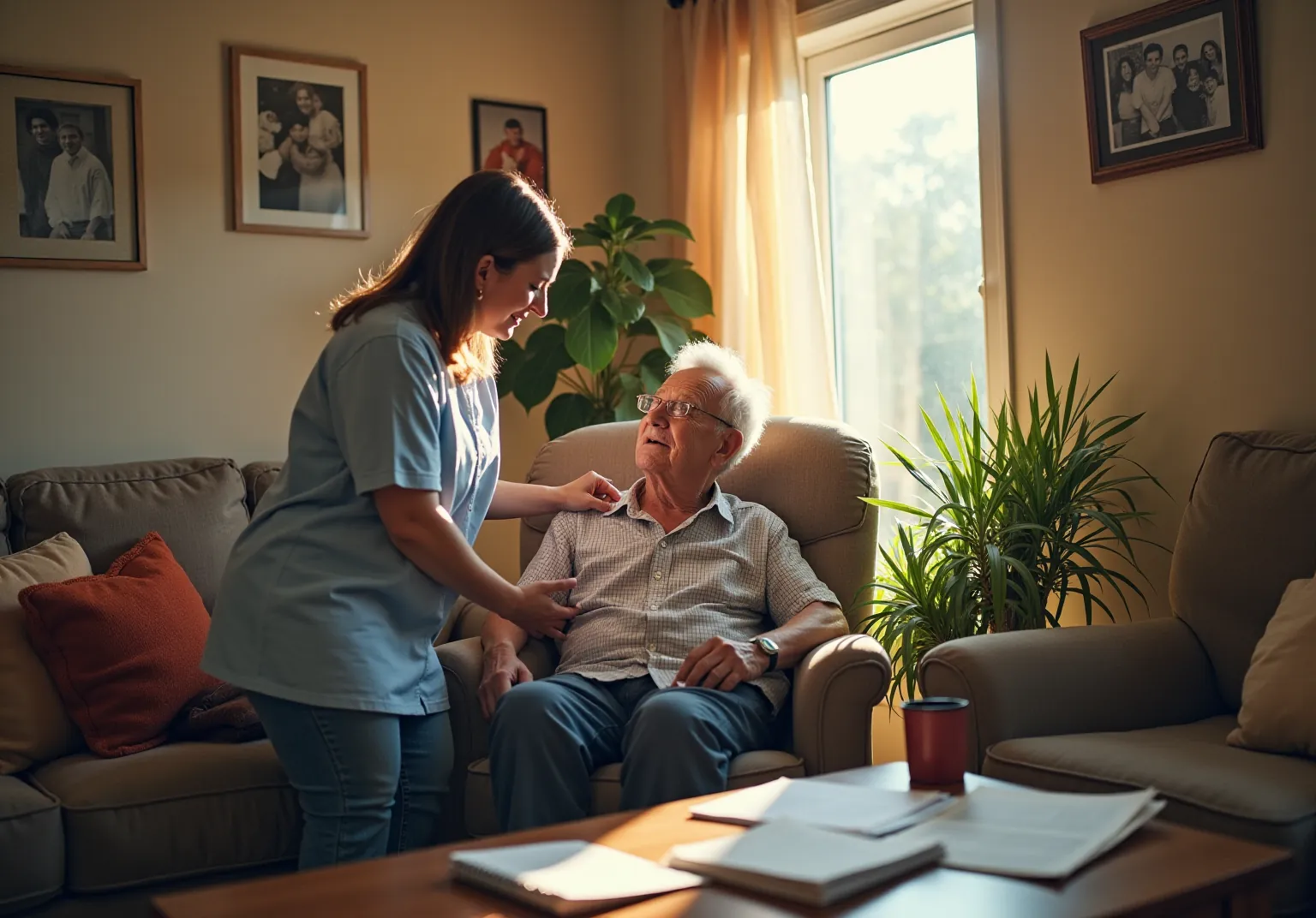
Understanding the Role of a Private Personal Care Assistant
For families in our service areas
For families in our service areas, this guide explains personal care and how non-medical in-home caregiving can support care planning in East Idaho, Treasure Valley & Magic Valley, Northern Wasatch, North Central West Virginia & Southwestern Pennsylvania, and Northeast Ohio.
What You Need to Know About The Role of a Private Personal Care
The growing need for support in daily living activities presents a significant challenge, especially for seniors and individuals with disabilities. This situation highlights the crucial role of private personal care assistants (PCAs), who provide tailored, non-medical assistance that not only enhances quality of life but also promotes independence.
As the demand for these vital services continues to rise, it raises important questions about the skills and training necessary for PCAs to effectively meet the diverse needs of their clients. What does it take to excel in this rewarding yet demanding role? How can the caregiving community ensure that these indispensable workers are well-equipped for the future?
Addressing these questions is essential for fostering a supportive environment for both caregivers and those they assist.
Defining a Private Personal Care Assistant
Many individuals face challenges in daily living activities due to age, disability, or recovery from illness. This can lead to a loss of independence and a decline in quality of life.
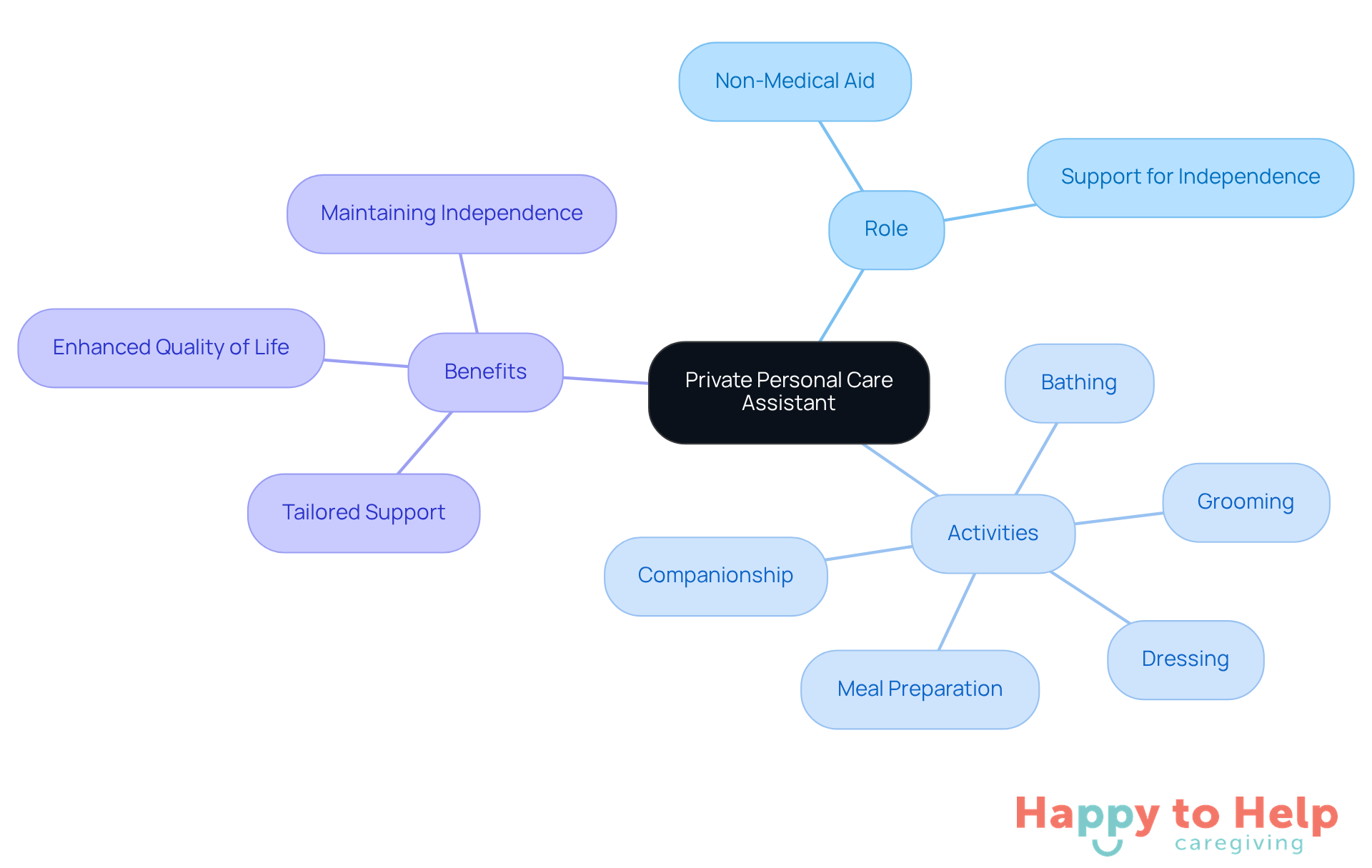
A private personal care assistant (PCA) plays a crucial role in addressing these challenges. By providing non-medical aid, a private personal care assistant helps seniors and individuals with disabilities maintain their independence in the comfort of their own homes. They assist with essential activities such as:
- Bathing
- Dressing
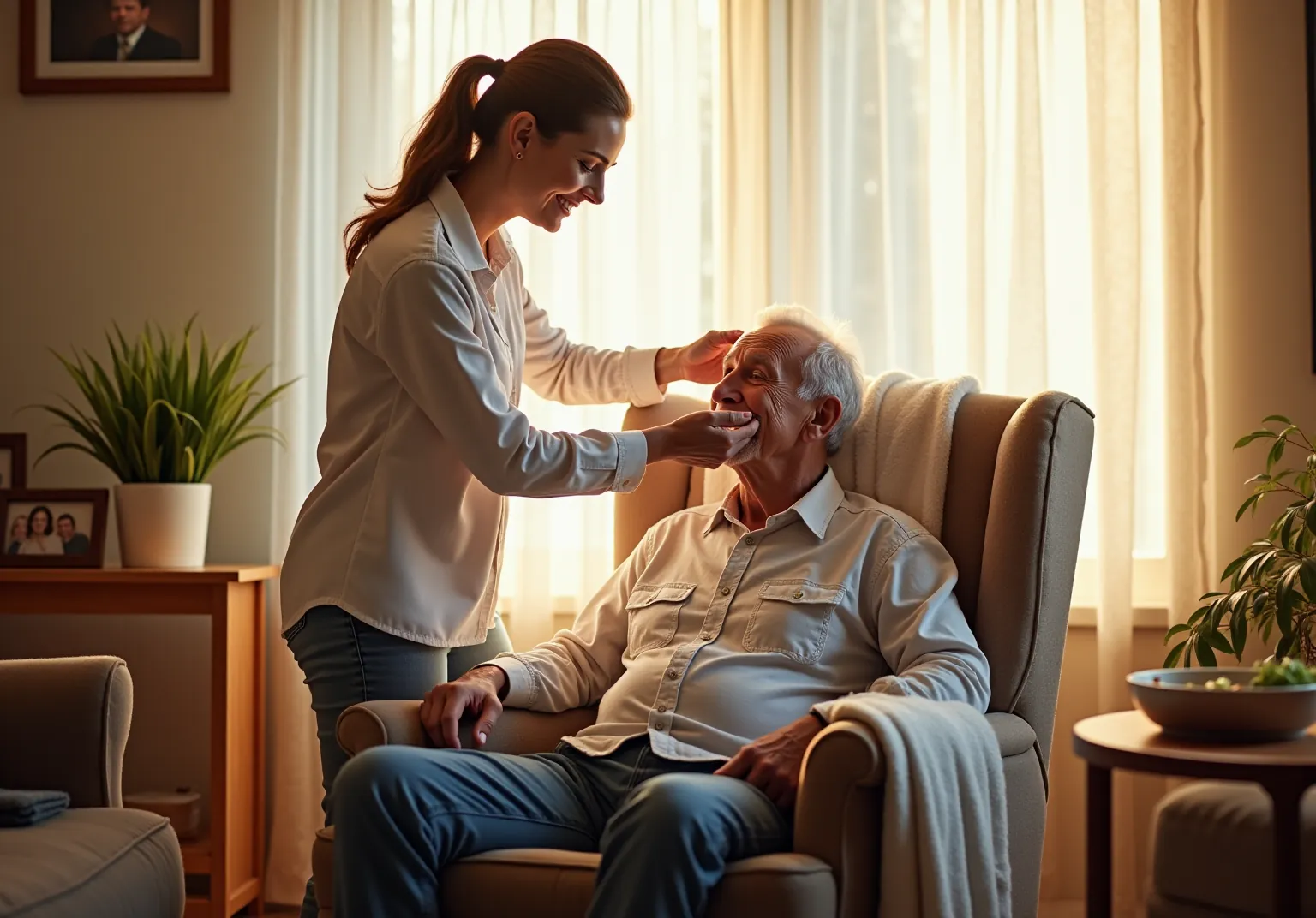
- Grooming
- Meal preparation
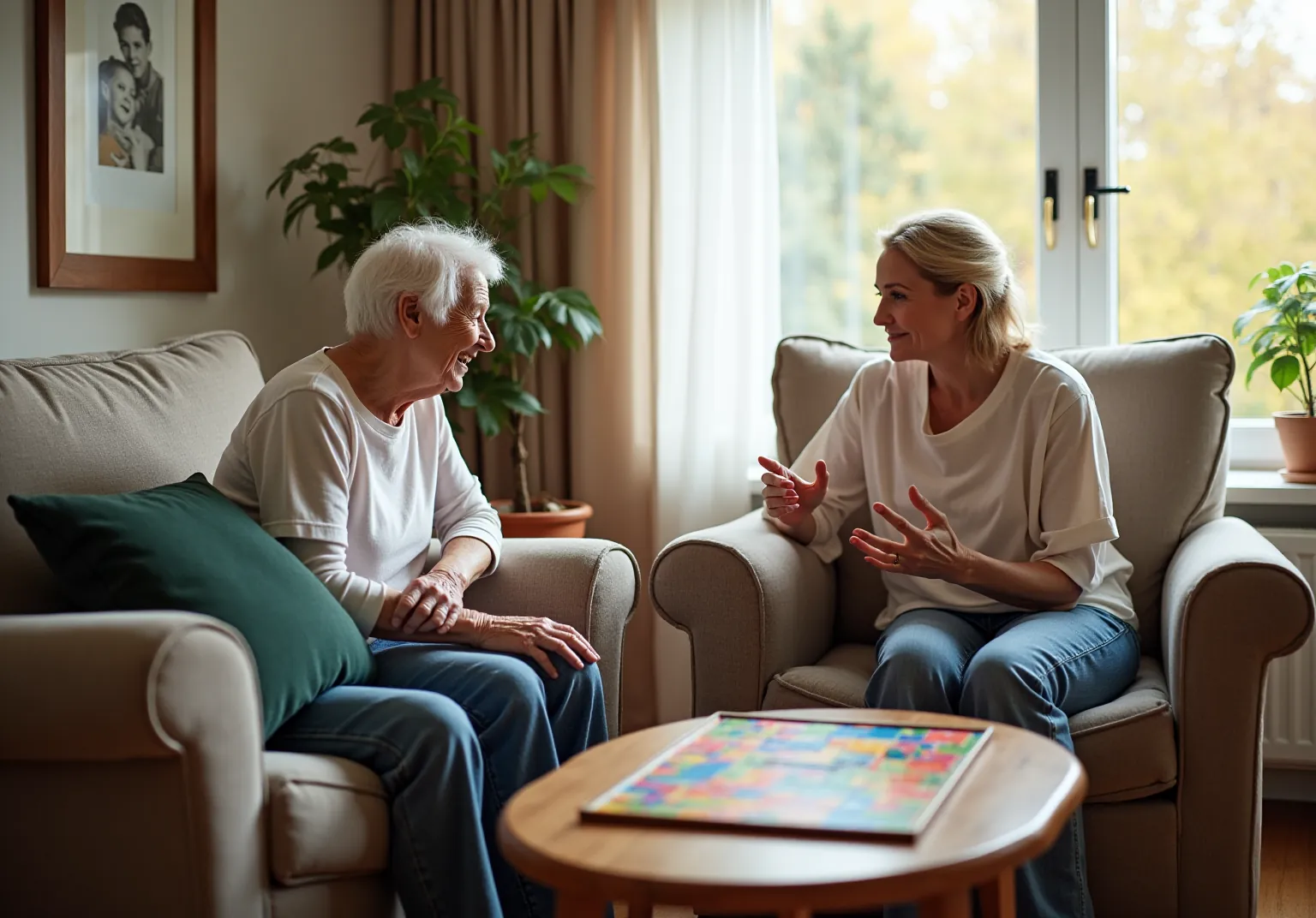
- Companionship
This ensures that each person receives tailored support that meets their unique needs.
Unlike medical caregivers, PCAs focus on enhancing daily living experiences rather than providing medical care. This distinction is vital, as it allows individuals to enjoy a better quality of life while receiving the support they need.
In summary, engaging a private personal care assistant can significantly enhance the daily lives of those in need, allowing them to thrive in their own environments.
The Role of Personal Care Assistants in Caregiving
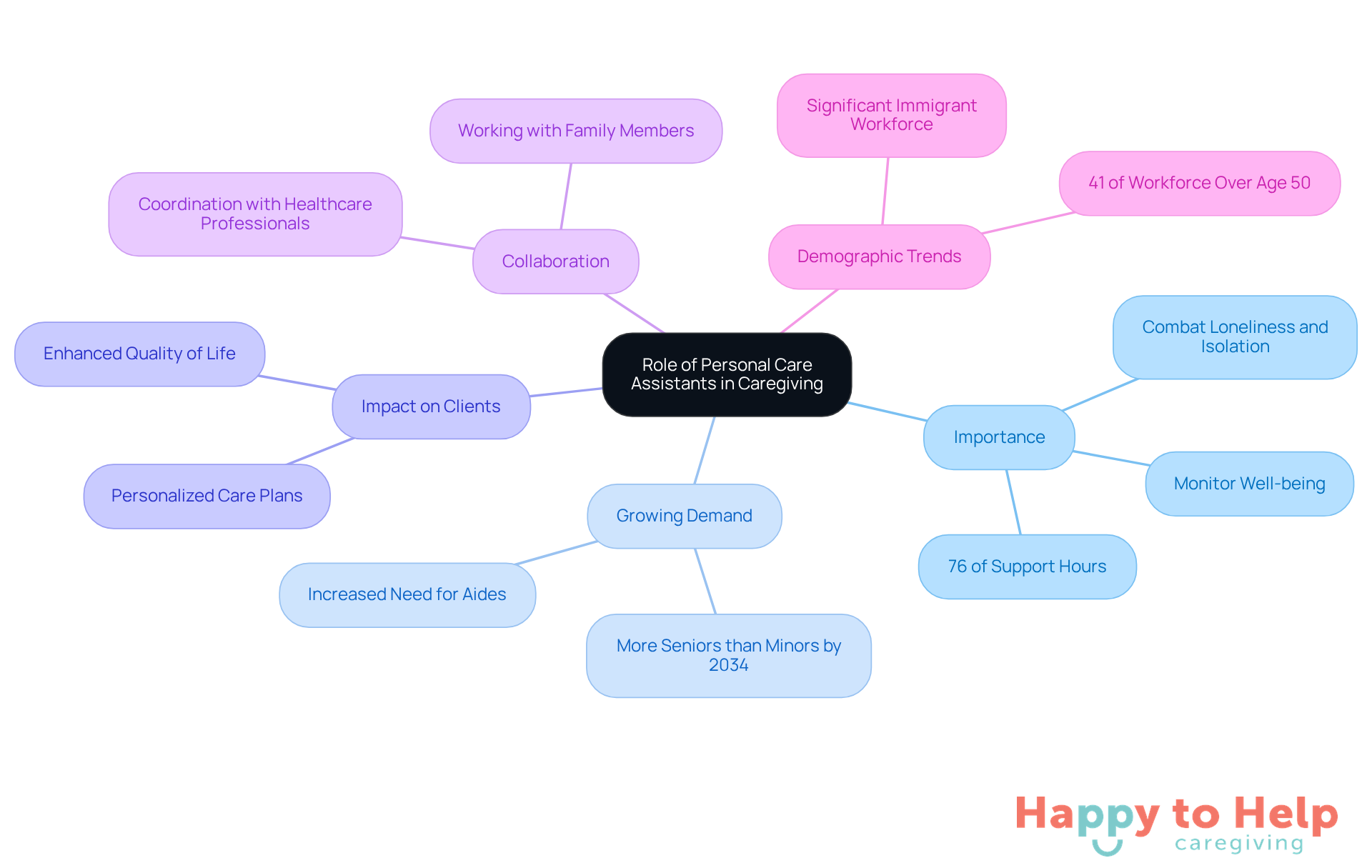
Private personal care assistants are crucial in the caregiving environment, often serving as the primary support for individuals in their daily activities. However, the increasing demand for these aides presents a significant challenge. With predictions suggesting that by 2034, there will be more elderly individuals in the U.S. than minors, the need for private personal care assistants is expected to rise dramatically.
This growing demand has implications for both caregivers and those they assist. Personal care aides not only help with physical tasks but also combat feelings of loneliness and isolation, fostering a sense of companionship and security. Their role is vital, as they monitor well-being, communicate changes in health status, and provide emotional support. In fact, 76% of support hours in residential facilities are delivered by private personal care assistants, underscoring their importance in the caregiving process.
To address these challenges, it’s essential for private personal care assistants to collaborate closely with family members and healthcare professionals. This joint approach allows for the development and implementation of personalized care plans that cater to individual needs. By ensuring clients can perform daily activities safely and comfortably, a private personal care assistant significantly enhances the overall quality of life for those they assist.
Moreover, with over one in four direct support workers in the U.S. being 55 or older, understanding demographic trends is crucial for shaping the future of the caregiving workforce. As the landscape of caregiving evolves, the influence of private personal care assistants will only continue to grow, making their role as essential allies in the caregiving process more pronounced.
Essential Skills and Qualities of Personal Care Assistants
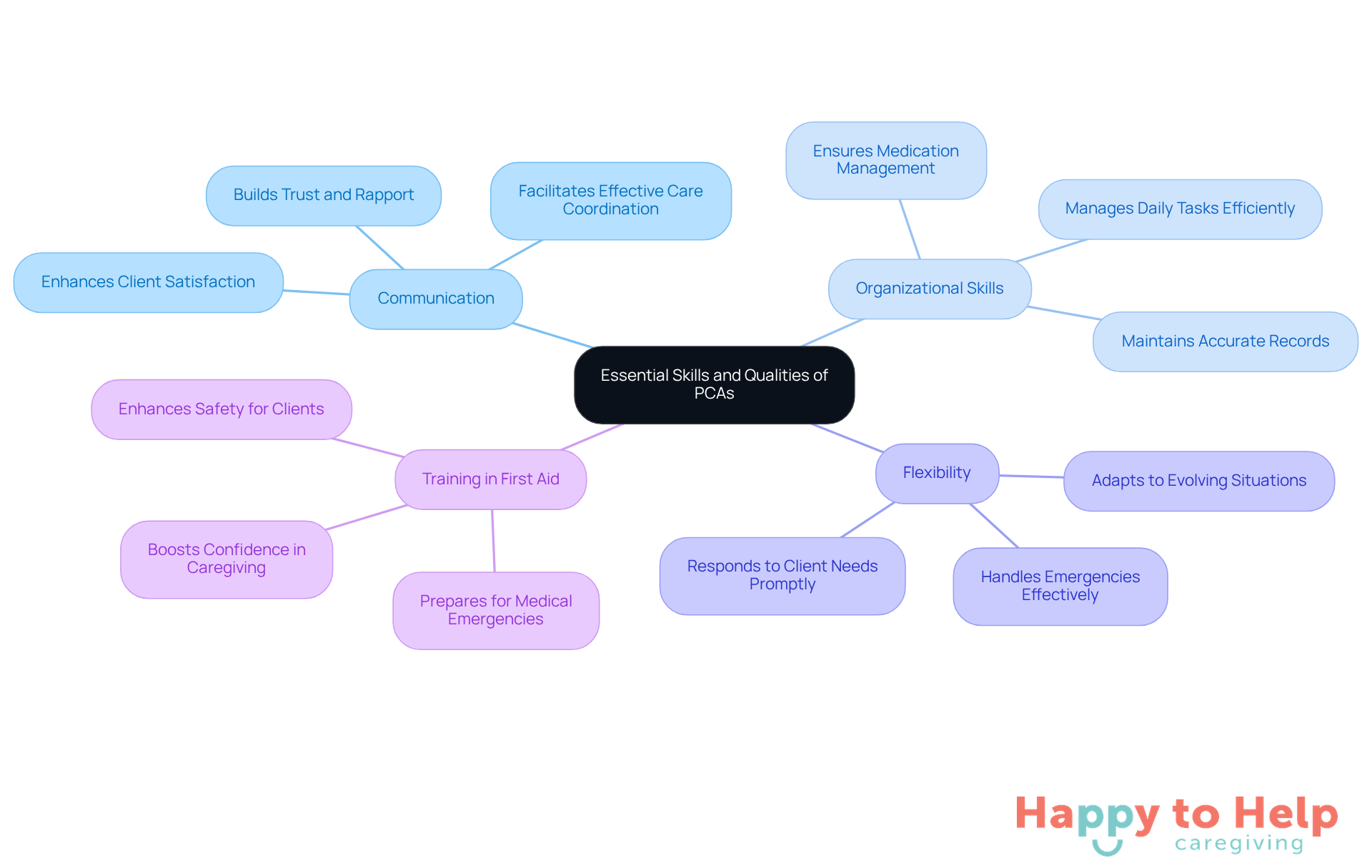
Effective personal care assistants (PCAs) face a growing challenge: the demand for their services is skyrocketing. By 2050, the global population aged 60 and older will double, leading to an unprecedented need for caregiving services. This surge in demand is not just a statistic; it translates into real-world implications for caregivers, who often experience financial strain and burnout as they strive to meet the needs of their clients.
The implications of this demand are significant. Research shows that caregivers who excel in communication enhance client satisfaction and cooperation. However, without proper support and training, many private personal care assistants may struggle to deliver the high-quality care that clients deserve. According to the John A. Hartford Foundation, the direct care workforce is expected to generate over 860,000 new positions by 2032, highlighting the urgent need for skilled private personal care assistants.
So, what can be done? First, organizational skills are crucial for managing daily tasks efficiently. Flexibility is equally important, allowing PCAs to adapt to evolving situations. Training programs that cover essential first aid and safety procedures can prepare private personal care assistants to handle emergencies effectively, ensuring the safety of those they assist. These competencies not only enhance the PCA's performance but also help clients feel valued and understood, which is vital for their emotional well-being.
Moreover, new funding for a Direct Care Workforce Strategies Center aims to bolster professional development for those working as private personal care assistants. This initiative addresses the challenges they face, providing the necessary training and support to ensure that personal care aides are well-equipped to meet the complex needs of those they serve. As noted by AARP, unpaid caregiving in the U.S. is valued at over $600 billion annually, underscoring the significant yet often overlooked contribution of caregivers to the economy. By investing in the training and support of personal care assistants, we can ensure that they are prepared to navigate the increasing demands of their vital role.
Services Offered by Personal Care Assistants
Personal care aides address a critical problem: many seniors struggle with daily living activities that are essential for their well-being. Without adequate support, these individuals may face challenges in maintaining their dignity and self-esteem, which can lead to a decline in their overall quality of life.
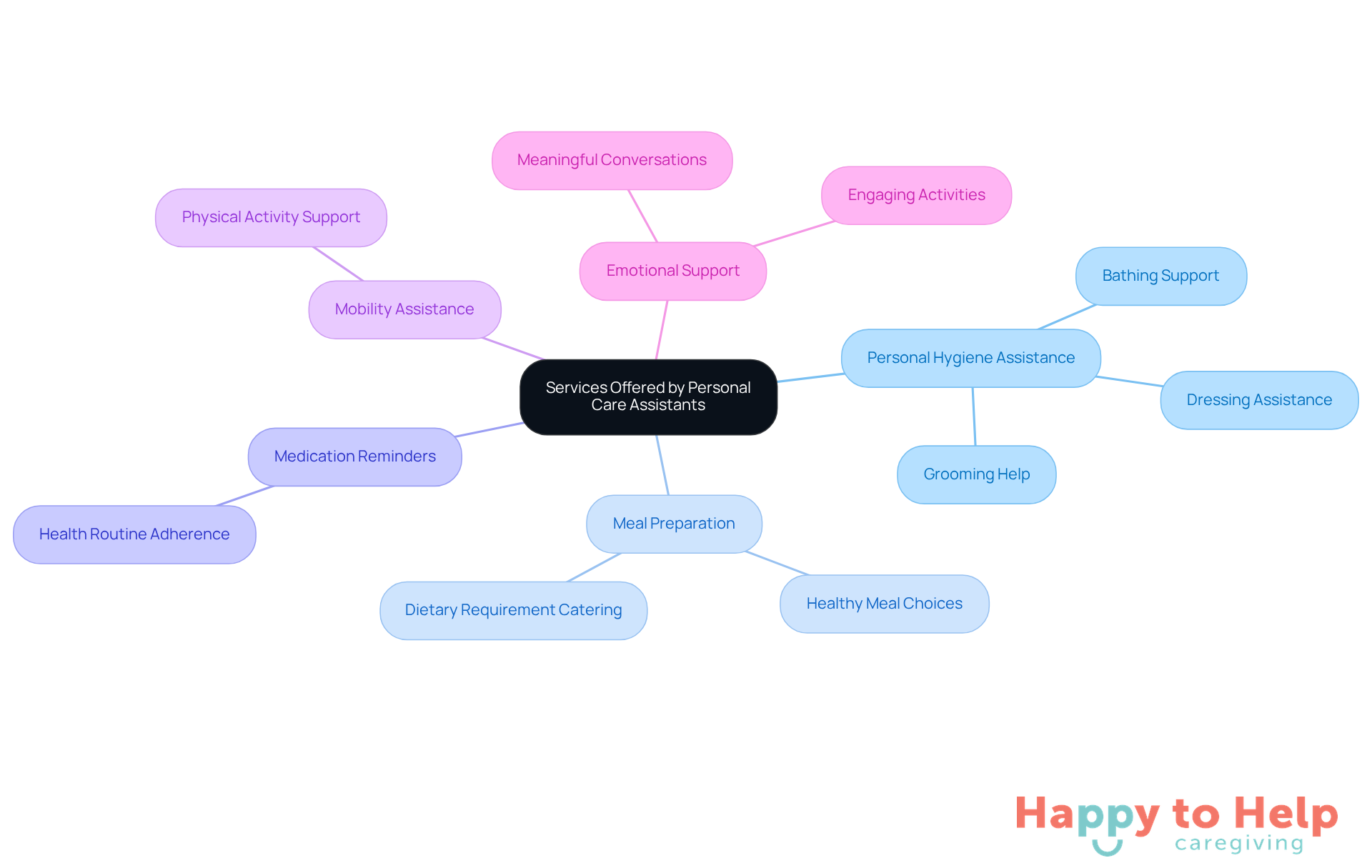
The implications of this issue are significant. Seniors often require assistance with personal hygiene, meal preparation, medication reminders, and mobility. When these needs go unmet, it can result in feelings of isolation and decreased independence. Private personal care assistants play a vital role in mitigating these challenges by providing essential services tailored to individual needs.
Solutions offered by personal care aides include:
- Personal Hygiene Assistance: Helping with bathing, grooming, and dressing to maintain dignity.
- Meal Preparation: Offering healthy meal choices that cater to specific dietary requirements.
- Medication Reminders: Ensuring adherence to health routines.
- Mobility Assistance: Supporting physical activity to enhance overall health.
Additionally, personal care aides contribute to light housekeeping tasks, such as laundry and cleaning, which help create a safe and comfortable living environment. They also provide emotional support by engaging clients in meaningful conversations and activities that foster social interaction and mental engagement.
Recent trends indicate a growing recognition of the importance of having a private personal care assistant. Families are increasingly seeking these services to ensure their loved ones can age in place comfortably. As the demand for personal care aides continues to rise, the emphasis on compassionate care and personalized support remains crucial, reflecting the evolving landscape of in-home caregiving.
Taking the Next Steps
The role of a private personal care assistant (PCA) is essential in enhancing the quality of life for individuals facing daily living challenges. However, the increasing demand for PCAs, driven by demographic shifts and a growing elderly population, presents significant challenges. Caregivers often struggle to provide the necessary support while maintaining the independence and dignity of those they serve.
This demand highlights the need for effective communication, organizational skills, and ongoing training. Without these, caregivers may find it difficult to meet the evolving needs of clients. The collaboration between PCAs, families, and healthcare professionals is vital in creating tailored care plans that address individual requirements, ensuring comprehensive support for those in need.
To navigate these challenges, investing in PCA training and development is crucial. This investment not only equips PCAs with the skills they need but also enhances the quality of care provided. Recognizing the value of PCAs and supporting their growth is a step toward a more compassionate and effective caregiving environment. Ultimately, prioritizing this vital workforce is essential for ensuring that high-quality care enhances the lives of those they serve.
https://iframe.tely.ai/cta/eyJhcnRpY2xlX2lkIjogIjY5MjUwZjkxMTk5OWZjNThlNjA5NGVjNyIsICJjb21wYW55X2lkIjogIjY4ZWU1ZGNhNzMxNzYyNTU3ZjNjOTVjMSIsICJpbmRleCI6IG51bGwsICJ0eXBlIjogImFydGljbGUifQ==Frequently Asked Questions
What is the role of a private personal care assistant (PCA)?
A private personal care assistant (PCA) provides non-medical aid to individuals facing challenges in daily living activities due to age, disability, or recovery from illness, helping them maintain their independence at home.
What types of activities do PCAs assist with?
PCAs assist with essential activities such as bathing, dressing, grooming, meal preparation, and providing companionship.
How do PCAs differ from medical caregivers?
PCAs focus on enhancing daily living experiences and providing non-medical support, while medical caregivers provide medical care and treatment.
Why is the role of a PCA important for individuals with challenges in daily living?
Engaging a PCA can significantly enhance the daily lives of individuals in need, allowing them to thrive in their own environments and maintain a better quality of life.
List of Sources
- Defining a Private Personal Care Assistant
- New Study Explores the Need for Expanded Long-Term Care Services to Support Aging-in-Place | Johns Hopkins Bloomberg School of Public Health (https://publichealth.jhu.edu/2025/new-study-explores-the-need-for-expanded-long-term-care-services-to-support-aging-in-place)
- DOL Proposes To Exempt Home Health And Personal Care Aides From Minimum Wage Requirements (https://homehealthcarenews.com/2025/07/dol-proposes-to-exempt-home-health-and-personal-care-aides-from-minimum-wage-requirements)
- Caregiving Crisis: 45% Increase in Americans Providing Care (https://aarp.org/caregiving/basics/caregiving-in-us-survey-2025)
- News Releases (https://hcaoa.org/news-releases.html)
- WHO calls for urgent transformation of care and support systems for older people (https://who.int/news/item/01-10-2024-who-calls-for-urgent-transformation-of-care-and-support-systems-for-older-people)
- The Role of Personal Care Assistants in Caregiving
- New Report Reveals Crisis Point for America’s 63 million Family Caregivers (https://press.aarp.org/2025-07-24-New-Report-Reveals-Crisis-Point-for-Americas-63-million-Family-Caregivers)
- The senior population is booming. Caregiving is struggling to keep up (https://cnbc.com/2025/11/21/senior-caregiving-labor.html)
- Personal Care Aides Provide 76% of Residential Care Hours, New Data Show (https://ltcnews.com/articles/personal-care-aides-provide-residential-care-hours)
- An Aging America Needs a Stronger Care Workforce - National Skills Coalition (https://nationalskillscoalition.org/blog/news/an-aging-america-needs-a-stronger-care-workforce)
- Healey seeks controls as home care costs soar for personal care assistants (https://wgbh.org/news/health/2025-02-10/healey-seeks-controls-as-home-care-costs-soar-for-personal-care-assistants)
- Essential Skills and Qualities of Personal Care Assistants
- PHI Launches Universal Direct Care Workforce Initiative to Transform Training and Career Pathways for Nation's Five Million Direct Care Workers (https://phinational.org/news/phi-launches-universal-direct-care-workforce-initiative-to-transform-training-and-career-pathways-for-nations-five-million-direct-care-workers)
- New Universal Workforce Model Aims To Transform Direct Care Training And Credentialing (https://homehealthcarenews.com/2025/07/new-universal-workforce-model-aims-to-transform-direct-care-training-and-credentialing)
- The Ultimate Guide to Being a Successful Caregiver in 2025 – Skills, Tips & Support (https://comforcare.com/north-carolina/greensboro/resources/blog/the-ultimate-guide-to-being-a-successful-caregiver-in-2025-skills-tips-support)
- An Aging America Needs a Stronger Care Workforce - National Skills Coalition (https://nationalskillscoalition.org/blog/news/an-aging-america-needs-a-stronger-care-workforce)
- 27 Inspirational Quotes for Caregivers (https://ultimatecareny.com/resources/27-quotes-for-caregivers)
- Services Offered by Personal Care Assistants
- Healey seeks controls as home care costs soar for personal care assistants (https://wgbh.org/news/health/2025-02-10/healey-seeks-controls-as-home-care-costs-soar-for-personal-care-assistants)
- Motivational Quotes for Home Health Aides - Anodyne (https://anodyne-services.com/2021/07/12/motivational-quotes-for-home-health-aides)
- The Caregiving Landscape: Data & Insights on the Caregiver Experience in the U.S. (https://caregiveraction.org/caregiver-statistics)
- Topic: Home care in the U.S. (https://statista.com/topics/4049/home-care-in-the-us?srsltid=AfmBOorjzMwh5NCb3Tjr_GuGRe5ONjV9XPYHJxWxwEPEObZ_fSv6SNaa)
- Inspirational Quotes for Compassionate Caregivers (https://humancareny.com/blog/inspirational-quotes-for-caregivers)