
Understanding Types of Elderly Care
As the population of older adults continues to grow, families face a pressing challenge: providing adequate care for their aging loved ones. Projections indicate that by 2034, there will be more seniors than children in the U.S. This shift underscores the importance of understanding the diverse types of elderly care available. Family caregivers need effective solutions to navigate this complex landscape.
However, the complexities of care options - from in-home support to specialized facilities - can be overwhelming. Families must consider various factors to ensure they make the best choice for their loved ones' unique needs while maintaining their dignity and independence. What are the key considerations that can guide families in this critical decision-making process?
Defining Elderly Care: An Overview
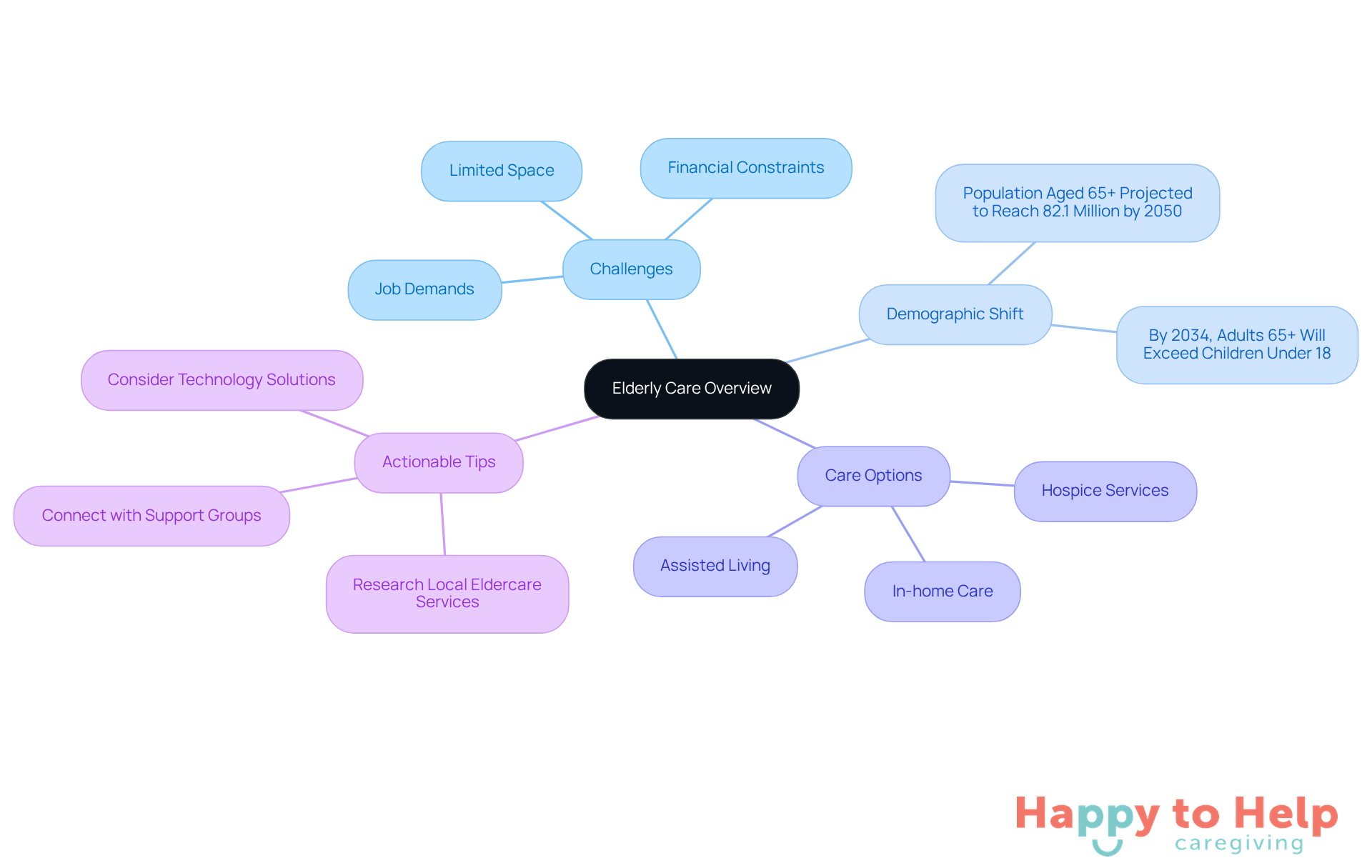
Elderly assistance, often referred to as eldercare, presents a significant challenge for many families. As the U.S. population aged 65 and older is projected to reach 82.1 million by 2050, the demand for support services is more urgent than ever. Many households struggle to provide care due to job demands, limited space, or financial constraints, which can lead to stress and uncertainty for caregivers.
This situation is further complicated by the fact that by 2034, the number of U.S. adults aged 65 and above will exceed the number of children under 18. This demographic shift emphasizes the need for effective solutions to support our aging loved ones. Caregivers often feel overwhelmed, navigating the complexities of daily activities, medical needs, and emotional support for seniors.
Fortunately, there are practical solutions available. Families can explore the different types of elderly care options, including in-home care, assisted living facilities, and hospice services. Additionally, technology is playing a transformative role in eldercare. Innovations such as smart home systems and remote patient monitoring can significantly enhance the independence of older adults, allowing them to live more comfortably and safely.
Understanding these resources and technologies is crucial for families and caregivers. By staying informed and proactive, they can better navigate the challenges of supporting their loved ones in an increasingly aging society. Here are some actionable tips for caregivers:
- Research local eldercare services to find the best fit for your loved one.
- Consider technology solutions that promote independence and safety.
- Connect with support groups for caregivers to share experiences and advice.
By addressing these challenges head-on and utilizing available resources, caregivers can improve the quality of life for seniors, ensuring their dignity and well-being.
Exploring Different Types of Elderly Care Options
Choosing the right elderly support option can be a daunting task for caregivers. With various types of elderly care available, each addressing different needs and preferences, it’s essential to understand the implications of each type.
Here are some common options:
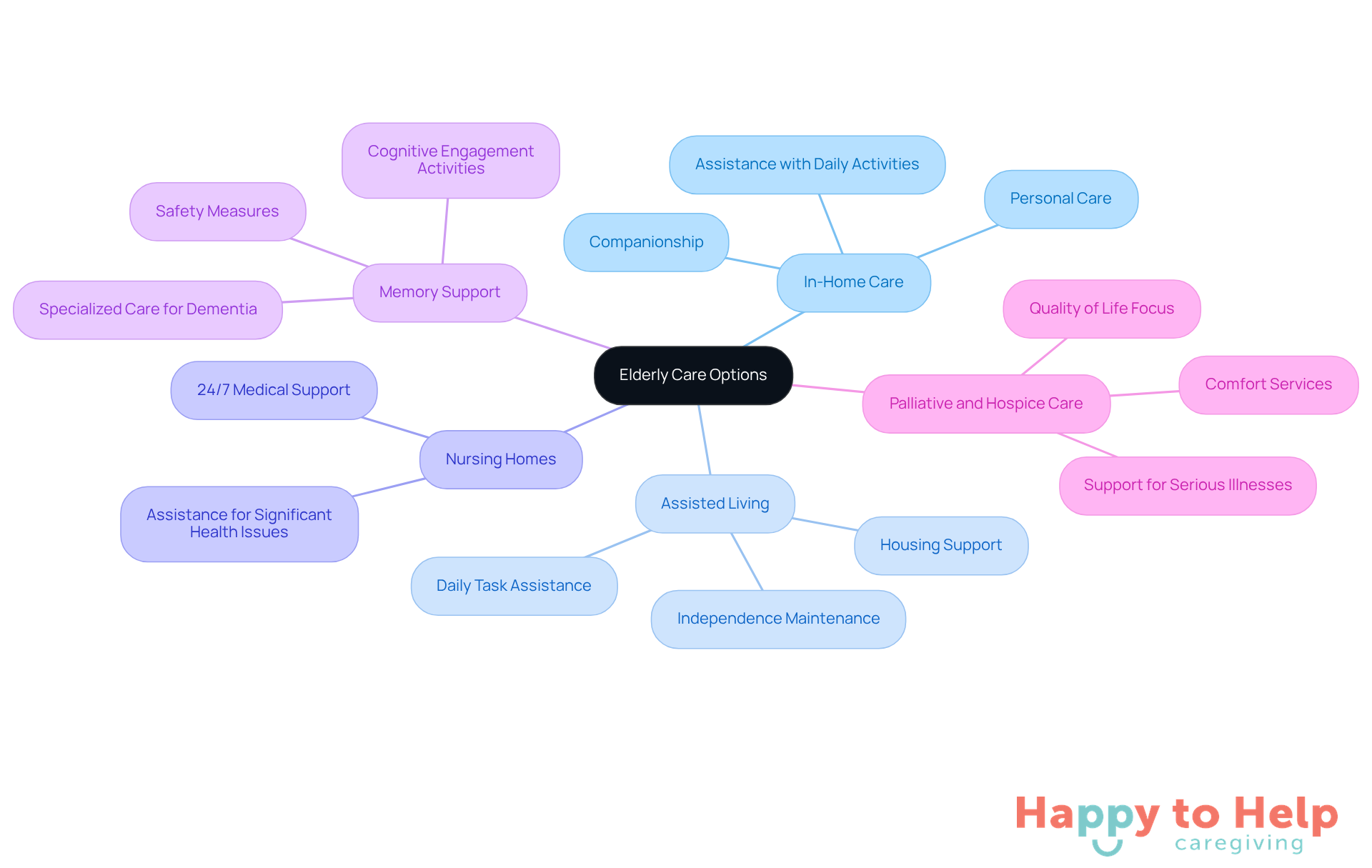
- In-Home Care: Services provided in the comfort of the senior's home, including personal care, companionship, and assistance with daily activities.
- Assisted Living: Facilities that offer housing and support services for older adults who need help with daily tasks but wish to maintain some independence.
- Nursing Homes: Facilities that provide 24/7 medical support and assistance for seniors facing significant health issues or disabilities.
- Memory Support: Specialized care for individuals with Alzheimer’s disease or other forms of dementia, focusing on safety and cognitive engagement.
- Palliative and Hospice Care: Services designed to provide comfort and support for individuals with serious illnesses, prioritizing quality of life over curative treatment.
Each of the types of elderly care comes with its own set of benefits and considerations. Therefore, it’s crucial for families to assess their loved one's specific needs when selecting the appropriate type of assistance.
The Importance of Personalized Care in Elderly Support
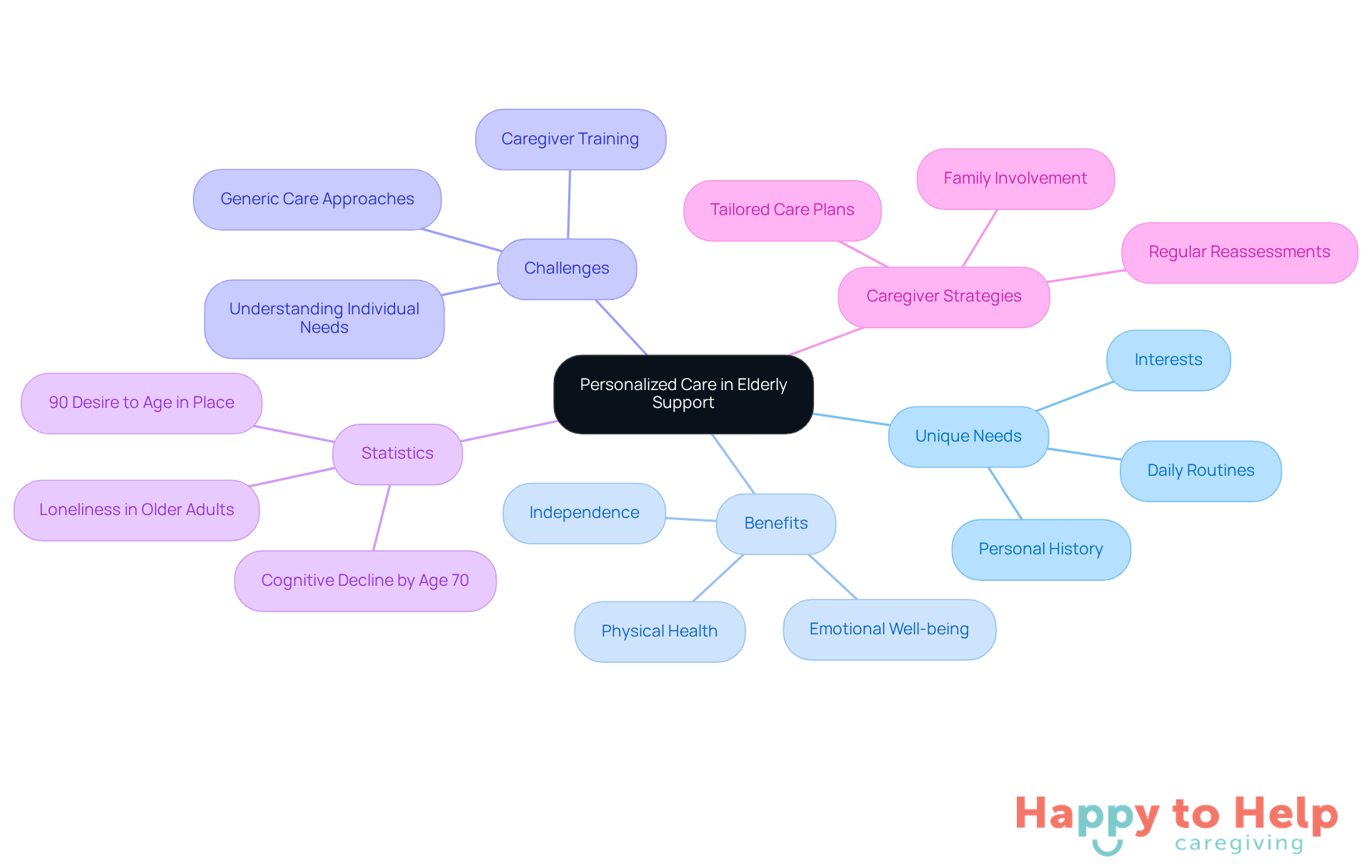
Effective types of elderly care require personalized assistance, as each individual has unique needs, preferences, and life experiences. When caregivers customize care plans to these specific needs, they can significantly enhance an elderly person's emotional and physical well-being.
However, many caregivers struggle to provide this level of personalized care. Without understanding an elderly person's personal history, interests, and daily routines, the support offered can feel generic and disengaging. This lack of tailored assistance can lead to diminished dignity and independence, making it harder for older adults to maintain control over their lives.
The solution lies in adopting a personalized approach for types of elderly care. Caregivers who take the time to learn about the individuals they support can offer different types of elderly care that create a more engaging and supportive environment. Studies show that individualized support leads to better health outcomes, including fewer hospital stays and increased satisfaction for both elderly individuals and their families. As noted by Wisdom Senior Services, "Personalized support brings older adults to the forefront of their own assistance," highlighting the importance of recognizing individual requirements.
Moreover, nearly 90% of elderly individuals express a desire to age in their own homes. This statistic underscores the vital role of tailored support in preserving their independence and enhancing their quality of life. To ensure that the assistance provided remains relevant and impactful, caregivers should consistently revise treatment strategies to adapt to evolving needs.
Factors Influencing the Choice of Elderly Care
Choosing the right types of elderly care can be a daunting challenge for families. Several factors significantly influence this decision, and understanding them is crucial for ensuring the best support for loved ones.
-
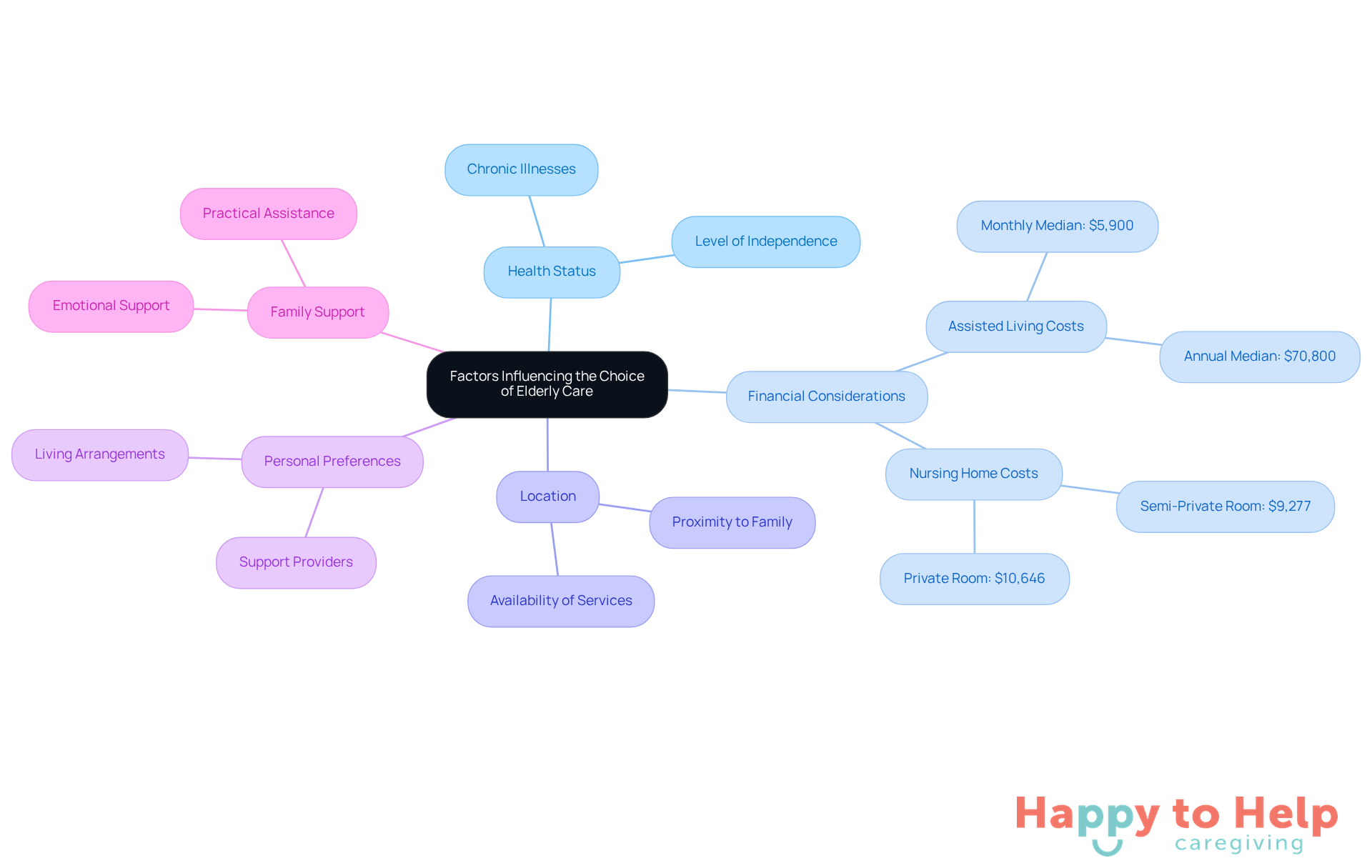
Health Status: A senior's medical condition and level of independence are pivotal in determining the most suitable type of care. For instance, those with chronic illnesses may require more intensive support, while healthier seniors might prefer independent living arrangements.
-
Financial Considerations: The expenses linked to different support options can differ significantly. In 2024, the national median expense for assisted living was around $5,900 monthly, while nursing home services averaged $9,277 for a semi-private room. Families must carefully assess their budget and available resources to navigate these expenses effectively.
-
Location: The closeness of support services to family members can greatly influence decisions. Families frequently choose alternatives that enable regular visits and participation in their loved one's support.
-
Personal Preferences: Seniors often have specific preferences concerning their living situations and support providers. Honoring these preferences is essential for their emotional well-being and overall satisfaction with their support.
-
Family Support: The participation of family members can greatly affect decision-making regarding assistance. Families often play a key role in decision-making, providing emotional support and practical assistance in navigating care options.
By considering these factors, families can make informed decisions regarding the types of elderly care that best meet the needs of their loved ones, ensuring their comfort and well-being as they age.
Making the Right Choice
Understanding the various types of elderly care presents a significant challenge for family caregivers. As the number of seniors requiring assistance continues to rise, navigating the available options becomes increasingly complex. This complexity can lead to caregiver stress and uncertainty, impacting both their well-being and that of their aging loved ones.
To address this issue, caregivers must recognize the importance of personalized care. They should assess the specific needs of their loved ones, taking into account financial and logistical constraints. Staying informed about technological advancements can also aid in eldercare, providing tools that enhance the caregiving experience. By doing so, families can make informed decisions that align with their loved ones' preferences and health requirements.
Ultimately, the landscape of elderly care is multifaceted, and families are encouraged to adopt a proactive approach. Engaging with local resources, leveraging technology, and connecting with support networks can significantly enhance the caregiving experience. By prioritizing individualized care and understanding the nuances of different support options, families can ensure their aging loved ones receive the compassionate and tailored assistance they deserve, fostering a sense of security and well-being in their later years.
https://iframe.tely.ai/cta/eyJhcnRpY2xlX2lkIjogIjY5Mjc5NGY3NmFmMzU5NTU2OTU3ODdjZCIsICJjb21wYW55X2lkIjogIjY4ZWU1ZGNhNzMxNzYyNTU3ZjNjOTVjMSIsICJpbmRleCI6IG51bGwsICJ0eXBlIjogImFydGljbGUifQ==Frequently Asked Questions
What is elderly care?
Elderly care, often referred to as eldercare, involves providing assistance and support to older adults, addressing their daily activities, medical needs, and emotional well-being.
Why is the demand for elderly care increasing?
The demand for elderly care is increasing due to the projected rise in the U.S. population aged 65 and older, which is expected to reach 82.1 million by 2050, along with a demographic shift where adults aged 65 and above will exceed the number of children under 18 by 2034.
What challenges do families face in providing elderly care?
Families often struggle with job demands, limited space, and financial constraints, which can lead to stress and uncertainty for caregivers in providing adequate care for their aging loved ones.
What types of elderly care options are available?
Available elderly care options include in-home care, assisted living facilities, and hospice services.
How is technology impacting elderly care?
Technology is transforming elderly care through innovations such as smart home systems and remote patient monitoring, which enhance the independence and safety of older adults, allowing them to live more comfortably.
What can caregivers do to improve their support for elderly individuals?
Caregivers can research local eldercare services, consider technology solutions for promoting independence and safety, and connect with support groups to share experiences and advice.
Why is staying informed important for families and caregivers?
Staying informed about resources and technologies is crucial for families and caregivers to effectively navigate the challenges of supporting their loved ones in an increasingly aging society, ultimately improving the quality of life for seniors.
List of Sources
- Defining Elderly Care: An Overview
- Warning From Older Adults: Care for Aging in America Needs Urgent Rethinking (https://johnahartford.org/newsroom/view/warning-from-older-adults-care-for-aging-in-america-needs-urgent-rethinking)
- Top healthcare trends of 2026: Aging in place is driving innovation in home-based care and technology (https://definitivehc.com/blog/aging-in-place-driving-innovation)
- New Study Explores the Need for Expanded Long-Term Care Services to Support Aging-in-Place | Johns Hopkins Bloomberg School of Public Health (https://publichealth.jhu.edu/2025/new-study-explores-the-need-for-expanded-long-term-care-services-to-support-aging-in-place)
- The declining population will make it even harder to care for elders (https://npr.org/2025/11/02/nx-s1-5535648/population-elderly-caregivers)
- Exploring Different Types of Elderly Care Options
- home care | Latest News | New York Post (https://nypost.com/tag/home-care)
- Most Americans expect to need long-term care in the future, and they don’t want that care in assisted living (https://mcknightsseniorliving.com/news/most-americans-expect-to-need-long-term-care-in-the-future-and-they-dont-want-that-care-in-assisted-living)
- HomeCare News | HomeCare Magazine (https://homecaremag.com/news)
- Home (https://homehealthcarenews.com)
- CMS Makes Updates to Nursing Home Care Compare and Five Star (https://ahcancal.org/News-and-Communications/Blog/Pages/CMS-Makes-Updates-to-Nursing-Home-Care-Compare-and-Five-Star-.aspx)
- The Importance of Personalized Care in Elderly Support
- Personalized Care for Seniors: Feel Seen, Supported, Empowered (https://harborchase.com/blogs/what-personalized-care-for-seniors-looks-like)
- Importance of Personalized Senior Home Care in Burlington NC (https://wisdomseniorcare.com/the-importance-of-personalized-care-plans-for-seniors)
- Novel Care Model May Improve Outcomes for Older Adults With Multiple Chronic Conditions (https://consultqd.clevelandclinic.org/novel-care-model-may-improve-outcomes-for-older-adults-with-multiple-chronic-conditions)
- The Power of Personalized Care Plans for Seniors Aging at Home (https://faithcareus.com/blog/personalized-care-plans-for-seniors-at-home)
- Factors Influencing the Choice of Elderly Care
- Cost of Long Term Care by State | Cost of Care Report | Carescout (https://carescout.com/cost-of-care)
- Long-term care statistics 2025 (https://singlecare.com/blog/news/long-term-care-statistics)
- Elderly Care Statistics (https://rosewood-nursing.com/post/elderly-care-statistics)
- 2025 Home Care Statistics: Trends & Insights To Know (https://premierhcinc.com/blog/home-care-statistics)
- The senior population is booming. Caregiving is struggling to keep up (https://cnbc.com/2025/11/21/senior-caregiving-labor.html)