Understanding What Causes Sudden Hallucinations in the Elderly
For families in our service areas
For families in our service areas, this guide explains caregiving and how non-medical in-home caregiving can support care planning in East Idaho, Treasure Valley & Magic Valley, Northern Wasatch, North Central West Virginia, and Northeast Ohio.
Understanding What Causes Sudden Hallucinations in
Sudden hallucinations can disrupt the peace of mind for both the elderly and their caregivers, often leading to confusion and distress. These vivid sensory experiences, affecting any of the five senses, are not merely symptoms of aging; they can signal underlying health issues that need attention.
Understanding the root causes of these hallucinations provides caregivers with a vital opportunity to enhance the quality of life for their loved ones. It’s essential to recognize the emotional challenges that come with these experiences. Caregivers often feel overwhelmed, stressed, and burnt out, grappling with the uncertainty of how to help.
What strategies can be implemented to effectively manage these unsettling experiences? By fostering a sense of safety amidst the chaos, caregivers can create a more comforting environment. Seeking support, whether through professional services or community resources, can make a significant difference. Remember, you’re not alone in this journey.
Together, we can navigate these challenges, ensuring that both caregivers and their loved ones find moments of peace and connection.
Define Hallucinations and Their Impact on the Elderly
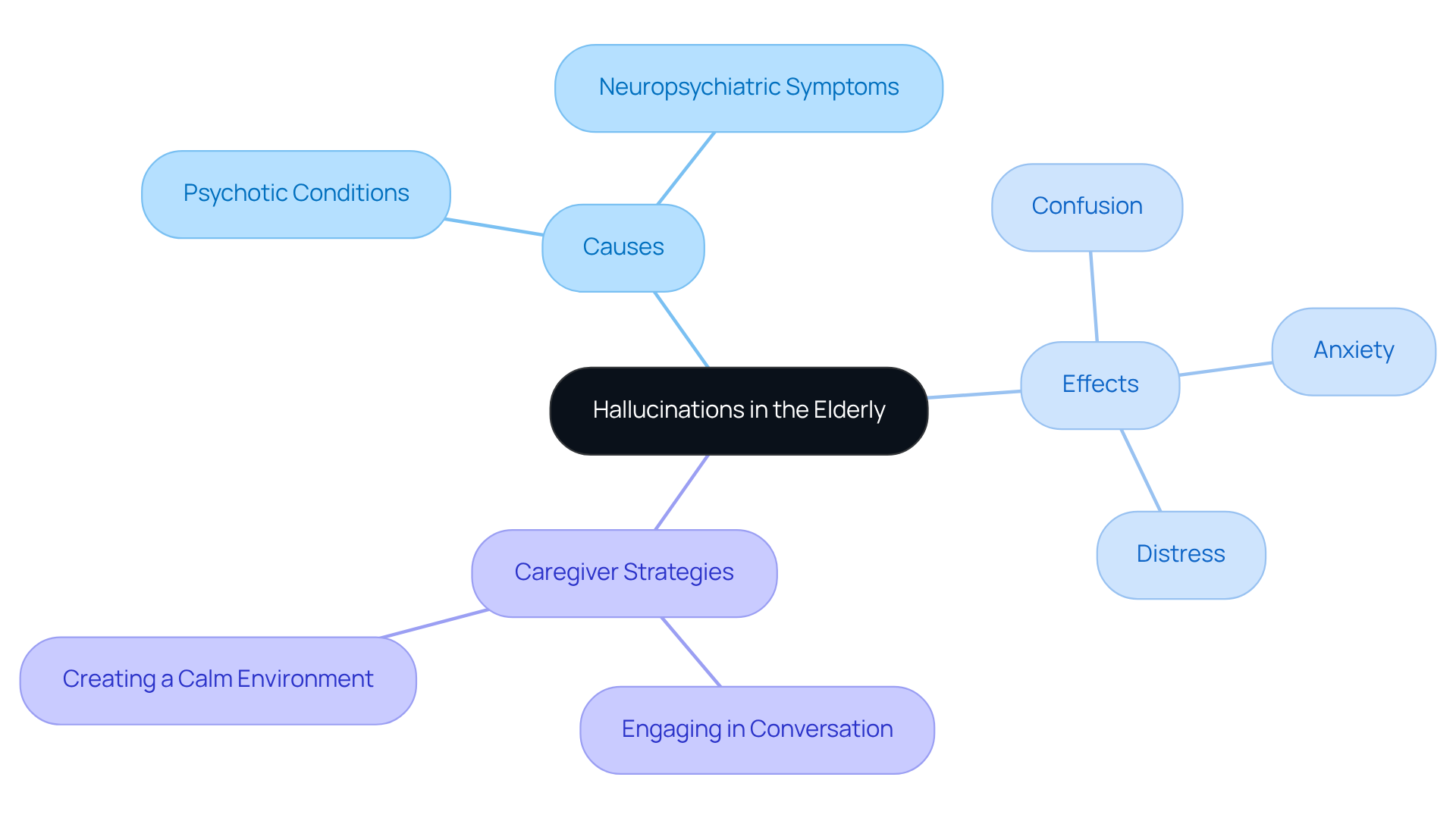
Hallucinations can be deeply unsettling experiences, especially when exploring what causes sudden hallucinations in elderly. These sensory perceptions, which seem real but originate from the mind, can affect any of the five senses. For many seniors, these events can lead to significant reductions in quality of life, manifesting as confusion, anxiety, and distress. Imagine a loved one seeing familiar faces or objects that aren’t really there - this can create feelings of disorientation and fear.
Studies reveal that up to 70% of senior patients with psychotic conditions experience auditory disturbances, which are particularly common. This is where caregivers become essential. They provide the reassurance and support that can make a world of difference. For instance, engaging seniors in conversation can help redirect their focus, while creating a calm environment can alleviate anxiety.
Geriatric specialists emphasize the importance of understanding what causes sudden hallucinations in elderly individuals. They note that effectively managing sensory experiences can significantly enhance the well-being of elderly patients. As one expert wisely stated, "Identifying neuropsychiatric symptoms in hospitalized patients is the first step in implementing appropriate interventions that may improve the quality of life of geriatric persons with NPS." This underscores the necessity for caregivers to be equipped with knowledge and strategies to support their loved ones effectively.
In these challenging moments, it’s crucial to remember that you’re not alone. With the right tools and support, caregivers can navigate these experiences alongside their loved ones, fostering a sense of safety and comfort.
Identify Common Causes of Hallucinations in Seniors
As we navigate the complexities of aging, it’s important to recognize what causes sudden hallucinations in elderly, as this can be deeply concerning for both them and their caregivers.
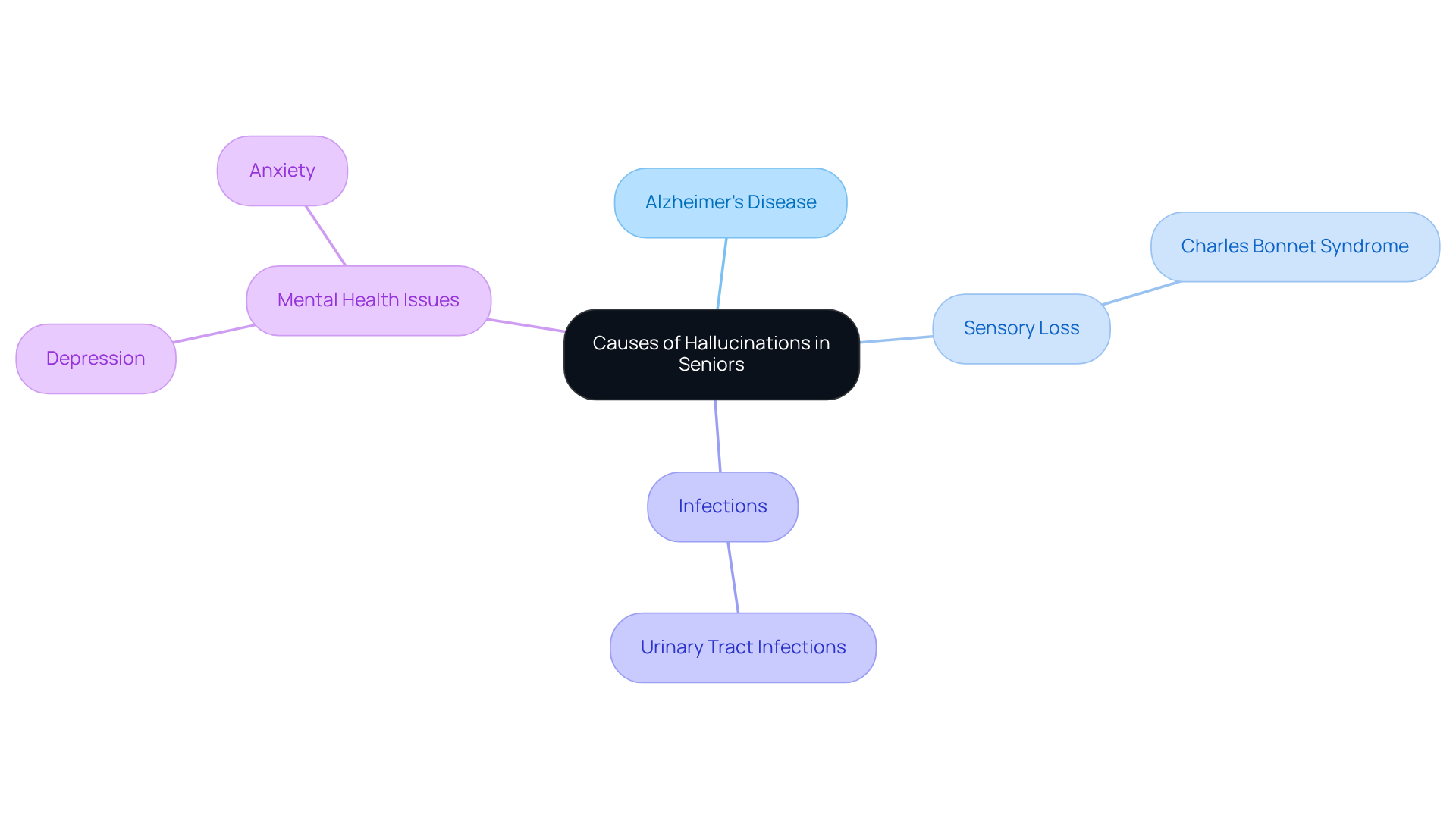
Conditions like Alzheimer's disease and other forms of dementia are examples of what causes sudden hallucinations in elderly individuals. These changes in brain function can be distressing, not just for the individual but also for their loved ones who witness these shifts.
Understanding what causes sudden hallucinations in elderly individuals is important, as some medications, especially those affecting the central nervous system, may alter perceptions. It’s crucial to monitor any changes in behavior and communicate with healthcare providers to find the best solutions.
-
Sensory Loss: Vision or hearing impairments can lead to conditions such as Charles Bonnet syndrome. This syndrome can cause individuals to experience visual distortions, which can be unsettling, especially when they are already dealing with significant vision loss.
-
Infections, such as urinary tract infections, can lead to delirium, prompting inquiries into what causes sudden hallucinations in elderly. Recognizing these signs early can help in managing the situation effectively.
-
Mental health issues, including depression and anxiety, can be part of what causes sudden hallucinations in elderly adults. It’s essential to approach these situations with compassion and understanding, ensuring that emotional support is readily available.
By acknowledging these challenges, we can foster a supportive environment that prioritizes the well-being of our seniors. Remember, you’re not alone in this journey; there are resources and compassionate care available to help navigate these difficult times.
Recognize Symptoms of Hallucinations in the Elderly
Hallucinations in the elderly can be distressing and lead to concerns about what causes sudden hallucinations in elderly individuals, impacting both those experiencing them and their caregivers. It's important to recognize the signs, which can vary widely and may include:
-
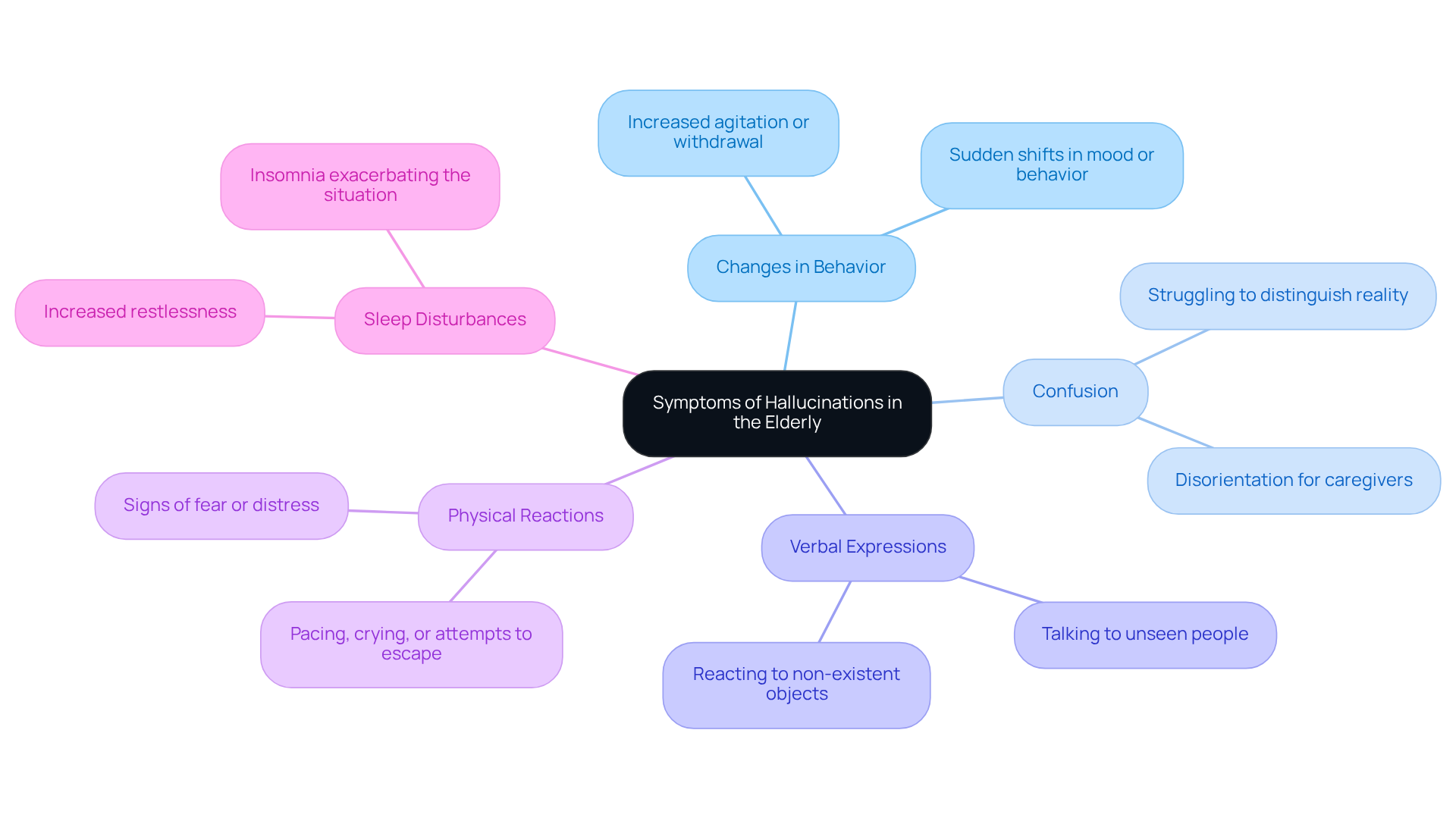
Changes in Behavior: You might notice sudden shifts in mood or behavior, such as increased agitation or withdrawal. These changes can be alarming and may leave you feeling helpless.
-
Confusion: Many elderly individuals may struggle to distinguish between reality and false perceptions, prompting inquiries into what causes sudden hallucinations in elderly, which can lead to disorientation. This confusion can be particularly challenging for caregivers who want to provide comfort and clarity.
-
Verbal Expressions: Some may talk to or react to things that aren’t there, responding to unseen people or objects. This can be heart-wrenching to witness, as it highlights their struggle.
-
Physical Reactions: Signs of fear or distress, like pacing, crying, or attempts to escape perceived threats, can emerge. These reactions can be tough to manage, and it’s essential to approach them with compassion.
-
Sleep Disturbances: Increased restlessness or insomnia may accompany these experiences, exacerbating the situation for both the individual and their caregivers.
Understanding these symptoms is the first step in providing the support and care that your loved one needs. Remember, you’re not alone in this journey. There are resources and compassionate services available to help you navigate these challenges. Together, we can find ways to ease the burden and foster a nurturing environment for those we care for.
Implement Strategies for Managing Hallucinations in Care Settings
Managing hallucinations in elderly individuals can be challenging for caregivers, but there are several compassionate strategies that can make a significant difference:
-
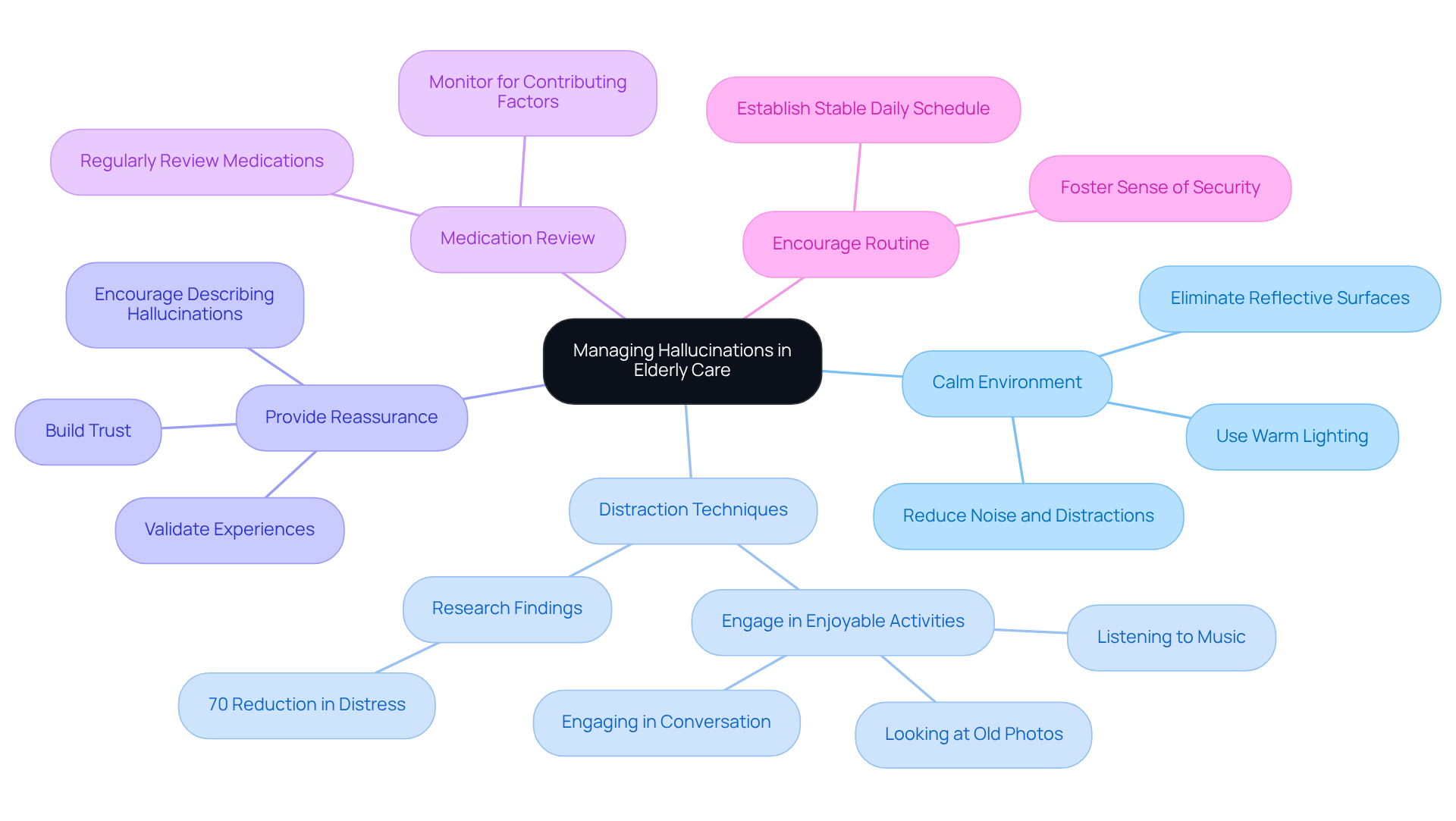
Create a Calm Environment: It’s essential to reduce noise and distractions while ensuring the space is well-lit. A peaceful atmosphere can help alleviate confusion. Warm lighting and the removal of reflective surfaces contribute to a soothing environment, minimizing anxiety and disorientation.
-
Engage in Distraction Techniques: Redirecting a senior's attention to enjoyable activities-like listening to music, looking at old photos, or engaging in conversation-can be incredibly beneficial. These distraction methods not only provide comfort but also help shift focus away from troubling experiences. Research shows that these techniques can reduce distressing symptoms in up to 70% of cases, underscoring their effectiveness in elderly care.
-
Provide Reassurance: Comfort and validation are crucial. It’s important for caregivers to reassure their loved ones that they are safe and supported, steering clear of disputes about what they see. This approach builds trust and alleviates fear. As caregiving specialist Ava Butler wisely suggests, "If your loved one encounters visions, ask them to explain what they observe." This not only validates their experience but also opens a dialogue for understanding their feelings.
Regularly reviewing medications with healthcare providers is vital to monitor for any that may contribute to false perceptions and to understand what causes sudden hallucinations in elderly. Adjusting medications can lead to significant improvements in the individual’s mental state.
- Encourage Routine: Establishing a stable daily schedule provides organization and reliability, which can help reduce anxiety and the occurrence of distorted perceptions. A consistent environment fosters a sense of security. Experts emphasize that creating a tranquil atmosphere is key to managing what causes sudden hallucinations in elderly individuals. One caregiving specialist noted, "The most effective way to combat illusions ahead of time is by maintaining a steady routine and a comforting atmosphere."
By implementing these strategies, caregivers can enhance the quality of life for seniors experiencing hallucinations, ensuring they feel safe and supported in their own homes.
Your Path Forward
Understanding the causes and implications of sudden hallucinations in the elderly is vital for enhancing their quality of life. These distressing sensory experiences can arise from various factors, including medical conditions, medications, and mental health issues. By recognizing these triggers, caregivers can offer the necessary support and reassurance, significantly improving the well-being of their loved ones.
Identifying common causes such as:
- Dementia
- Sensory loss
- Infections
- Mental health challenges
is crucial. Caregivers should be aware of the symptoms, which may manifest as behavioral changes, confusion, and physical reactions. Implementing compassionate strategies - like creating a calm environment, engaging in distraction techniques, and providing reassurance - can effectively manage these hallucinations and foster a sense of safety for seniors.
Ultimately, addressing hallucinations in the elderly goes beyond managing symptoms; it’s about promoting a supportive environment that prioritizes their dignity and comfort. Caregivers are encouraged to seek out resources and remain vigilant in monitoring changes, ensuring they navigate these challenges with empathy and understanding. By fostering open communication and utilizing effective interventions, caregivers can make a significant impact in the lives of seniors experiencing hallucinations, reinforcing the importance of compassionate care in this vulnerable population.
https://iframe.tely.ai/cta/eyJhcnRpY2xlX2lkIjogIjY5MWZkYzVmYzQ4NjU1NjRkNDliYzY3YyIsICJjb21wYW55X2lkIjogIjY4ZWU1ZGNhNzMxNzYyNTU3ZjNjOTVjMSIsICJpbmRleCI6IG51bGwsICJ0eXBlIjogImFydGljbGUifQ==Frequently Asked Questions
What are hallucinations, and how do they affect the elderly?
Hallucinations are sensory perceptions that seem real but originate from the mind, affecting any of the five senses. In the elderly, these experiences can lead to confusion, anxiety, and distress, significantly reducing their quality of life.
What percentage of senior patients with psychotic conditions experience auditory disturbances?
Studies reveal that up to 70% of senior patients with psychotic conditions experience auditory disturbances, which are particularly common among this population.
How can caregivers support elderly individuals experiencing hallucinations?
Caregivers can support elderly individuals by providing reassurance and engaging them in conversation to redirect their focus. Creating a calm environment can also help alleviate anxiety.
Why is it important for caregivers to understand the causes of sudden hallucinations in the elderly?
Understanding the causes of sudden hallucinations is crucial for caregivers as it enables them to manage sensory experiences effectively, which can significantly enhance the well-being of elderly patients.
What role do geriatric specialists play in managing hallucinations in the elderly?
Geriatric specialists emphasize the importance of identifying neuropsychiatric symptoms in hospitalized patients as the first step in implementing appropriate interventions to improve the quality of life for geriatric individuals experiencing hallucinations.
What should caregivers remember when dealing with hallucinations in elderly loved ones?
Caregivers should remember that they are not alone and that with the right tools and support, they can navigate these experiences alongside their loved ones, fostering a sense of safety and comfort.