Veterans Benefits for Elderly Care: A Complete Guide for Families

For families in our service areas
For families in our service areas, this guide explains veteran home care and how non-medical in-home caregiving can support care planning in East Idaho, Treasure Valley & Magic Valley, Northern Wasatch, North Central West Virginia, and Northeast Ohio.
The Importance of Veterans Benefits for Elderly Care: A
Navigating the complexities of elderly care for veterans presents a significant challenge for families. Many are unaware of the extensive benefits available to support their loved ones, which can lead to feelings of frustration and confusion. The U.S. Department of Veterans Affairs offers a range of programs designed to assist aging service members, but understanding these resources is crucial for ensuring they receive the care they deserve.
The difficulty lies in deciphering the eligibility requirements and application processes. This often leaves families feeling overwhelmed and unsure of where to turn for help. What if there was a clear guide to help them access these vital benefits? Such a resource could significantly improve the quality of life for elderly veterans and provide much-needed support to their caregivers.
Explore the Framework of Veterans Benefits for Elderly Care
Assistance programs for elderly care present a significant challenge for many families, particularly those caring for aging service members who are eligible for veterans benefits for elderly care. The lack of awareness about available resources can lead to inadequate support, impacting the quality of life for these veterans. Understanding the various initiatives overseen by the U.S. Department of Veterans Affairs (VA) is crucial for caregivers seeking to provide the best veterans benefits for elderly care.
-
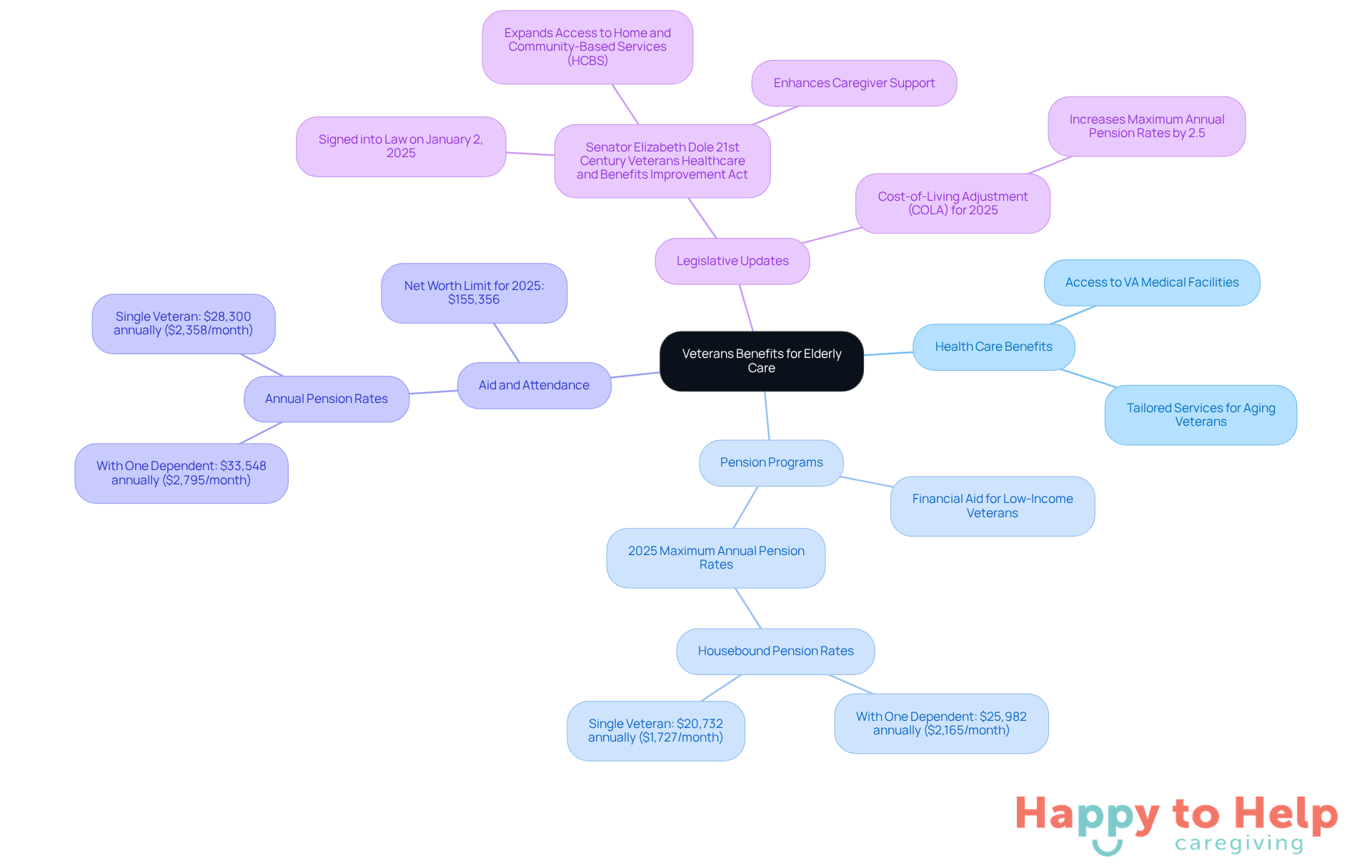
Health Care Benefits: Veterans can access VA medical facilities and services tailored specifically for their needs. This ensures they receive appropriate care as they age, addressing the critical health challenges they may face.
-
Pension Programs: Financial aid is available for low-income former military personnel, which can be essential for covering living costs. This support helps ensure a stable quality of life for veterans who may struggle financially by utilizing veterans benefits for elderly care.
-
Aid and Attendance: This program offers additional financial assistance for former service members who require help with everyday tasks. In 2025, the Aid and Attendance Pension Rates will be $33,548 annually ($2,795 per month) for an individual with one dependent, and $28,300 annually ($2,358 per month) for a single individual. This financial aid, including veterans benefits for elderly care, significantly reduces the burden of care expenses.
Recent legislative updates, such as the Senator Elizabeth Dole 21st Century Veterans Healthcare and Benefits Improvement Act, signed into law by President Biden on January 2, 2025, have expanded access to home and community-based services (HCBS). This allows former service members to receive care in their homes or communities rather than institutional settings, aligning with their preferences to age in place and aiming to reduce overall health care costs.
The net worth limit for 2025 is set at $155,356, which households should consider when assessing eligibility for the Aid and Attendance program. By familiarizing themselves with this framework, families can better advocate for their loved ones, ensuring they receive the necessary support and resources to thrive.
Identify Key Benefits Available to Elderly Veterans
Elderly servicemen often face challenges in accessing veterans benefits for elderly care, which can significantly aid their care. Many families may not fully understand the available resources, which can lead to missed opportunities for support. This lack of awareness can complicate the caregiving process, leaving families feeling overwhelmed and underprepared.
Fortunately, there are several key benefits that can provide essential assistance:
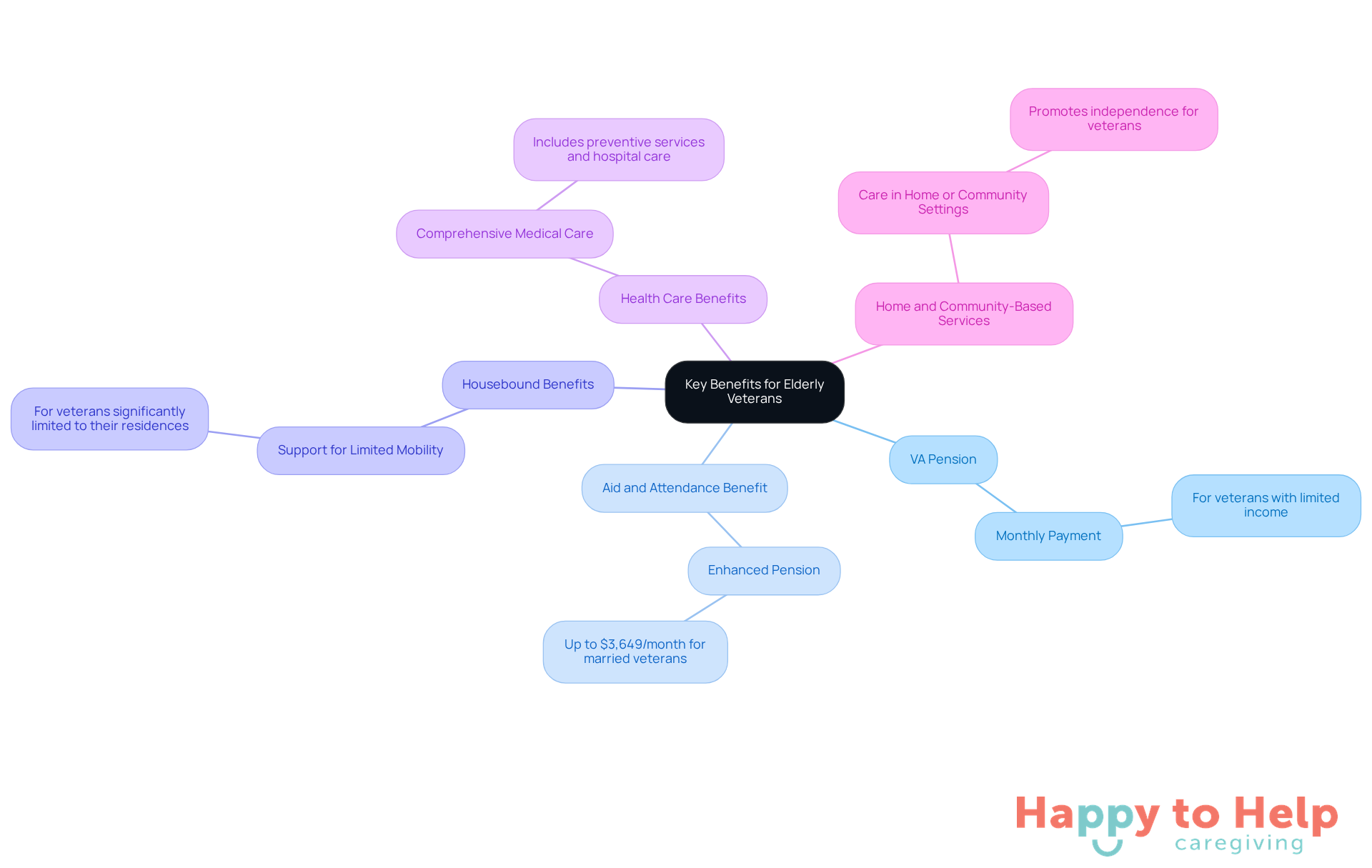
- VA Pension: A monthly payment for veterans with limited income, helping cover basic living expenses.
- Aid and Attendance Benefit: An enhancement to the basic pension for former service members who require assistance with daily living activities, potentially offering up to $3,649 per month for married individuals.
- Housebound Benefits: Designed for former military personnel who are significantly limited to their residences due to permanent disability.
- Health Care Benefits: Comprehensive medical care through the VA, including preventive services, hospital care, and outpatient services.
- Home and Community-Based Services: Programs that enable service members to receive care in their homes or community settings, promoting independence.
Understanding these advantages allows families to optimize the veterans benefits for elderly care available to their elderly military relatives, ensuring they receive the care they deserve.
Navigate the Application Process for Veterans Benefits
Requesting veterans benefits for elderly care for former service members can be a complicated procedure. This complexity can lead to delays and confusion, making it challenging for caregivers to secure the support they need. However, understanding the steps involved in applying can greatly ease the process of obtaining veterans benefits for elderly care. Here’s a streamlined guide to navigating the application process:
-
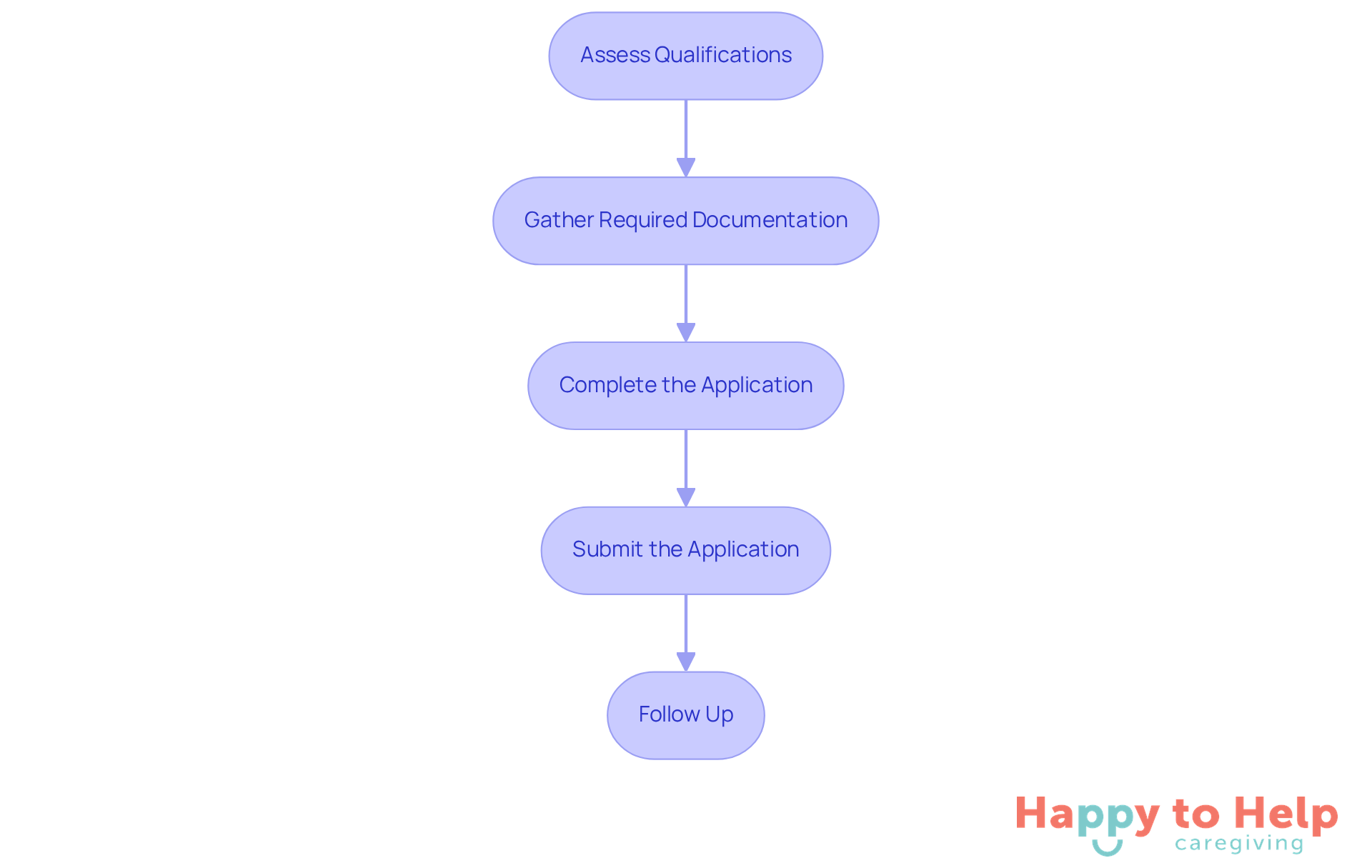
Assess Qualifications: Confirm that the former service member meets the required standards for the assistance being requested, including service duration and income limits. The VA has recently expanded eligibility for veterans benefits for elderly care through the Program of Comprehensive Assistance for Family Caregivers until September 30, 2028, which may support many families. Additionally, following a recent Supreme Court ruling, the VA is enhancing educational assistance for former service members who qualify for both the Montgomery GI Bill and the Post-9/11 GI Bill, allowing for a combined total of up to 48 months of support.
-
Gather Required Documentation: Collect essential documents such as discharge papers (DD Form 214), financial information, and medical records. Having these ready can expedite the process.
-
Complete the Application: Fill out the appropriate VA forms, such as VA Form 21-527EZ for pension assistance or VA Form 21-2680 for Aid and Attendance. The VA has made strides in improving the application process, processing over 2.5 million claims in fiscal 2025, indicating a more efficient system.
-
Submit the Application: Applications can be submitted online through the VA’s website, by mail, or in person at a local VA office. Utilizing online submission can often lead to faster processing times.
-
Follow Up: After submission, keep track of the application status and respond promptly to any requests for additional information from the VA. The number of former service members awaiting assistance has notably diminished, from 264,717 to 112,353 claims, illustrating the VA's dedication to enhancing service.
By adhering to these steps, households can navigate the application procedure more efficiently and ensure their relatives obtain the assistance they deserve. Successful narratives from former service members and their families emphasize the positive impact of veterans benefits for elderly care, which reinforces the importance of determination and diligence in the application process. As VA Secretary Denis McDonough stated, "This year alone, VA delivered $187 billion in earned entitlements to former service members and their survivors and provided more than 134 million health-care appointments, both the highest marks in our country’s history.
Access Additional Resources for Comprehensive Elderly Care
Families of elderly veterans often face significant challenges in accessing the support they need. Many veterans encounter mobility or communication issues that can hinder their ability to receive timely assistance from VA services. This situation can lead to increased stress for families who want to ensure their loved ones receive the care they deserve.
To address these challenges, families can tap into a variety of resources designed to support elderly veterans:
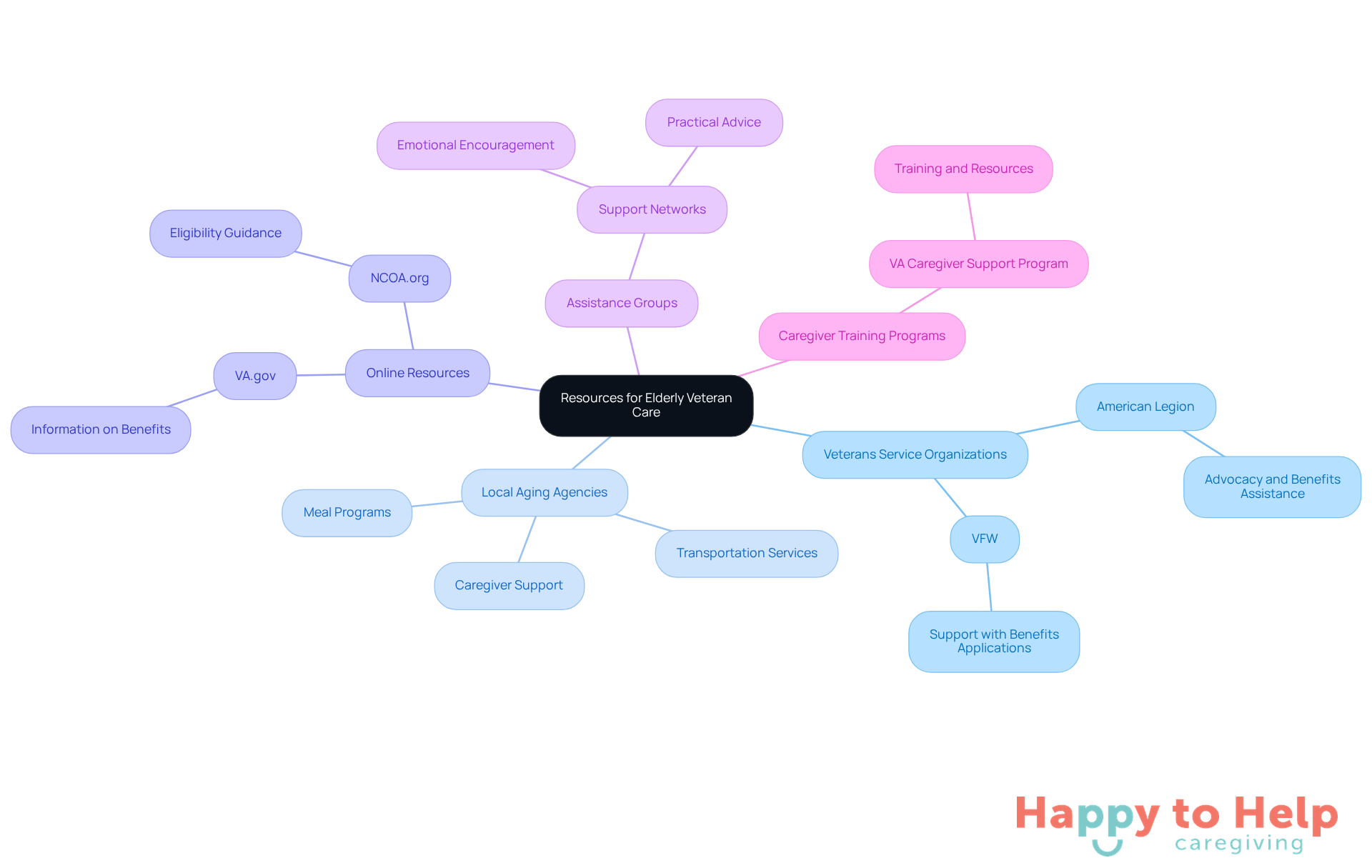
- Veterans Service Organizations (VSOs): Groups like the American Legion and VFW offer advocacy and assistance with benefits applications. Their expertise can simplify the process, helping veterans secure the entitlements they deserve.
- Local Aging Agencies: These organizations provide essential services such as meal programs, transportation, and caregiver support, all of which are crucial for maintaining the quality of life for older military personnel.
- Online Resources: Websites like VA.gov and NCOA.org offer comprehensive information on benefits and eligibility, making it easier for families to navigate the complexities of veteran care.
- Assistance Groups: Connecting with other families through support groups can provide emotional encouragement and practical advice during tough times.
- Caregiver Training Programs: Initiatives like the VA Caregiver Support Program equip relatives with training and resources to enhance their caregiving skills and confidence.
By utilizing these resources, families can improve the care they provide to their elderly veterans and better manage the intricacies of the assistance network. It's vital for families to recognize the obstacles veterans face in accessing VA services and to actively seek out these supports to ensure comprehensive care.
Taking the Next Steps
Understanding veterans benefits for elderly care is crucial for families supporting aging service members. Many families face challenges in navigating the complex landscape of available programs and resources, which can lead to inadequate support for their loved ones. This guide aims to clarify these benefits, ensuring elderly veterans receive the care they deserve.
Key benefits include:
- Health care services
- Pension programs
- The Aid and Attendance benefit
All of which can significantly ease financial burdens. Familiarizing oneself with the application process is essential, as is utilizing additional resources like Veterans Service Organizations and local aging agencies. These components are vital in enhancing caregiving efforts and improving the quality of life for elderly veterans.
In conclusion, families must take proactive steps to understand and access veterans benefits for elderly care. The support systems and resources available can profoundly impact the lives of aging service members. By staying informed and engaged, families can ensure their loved ones receive the comprehensive care they need and deserve, ultimately honoring their service and sacrifice.
https://iframe.tely.ai/cta/eyJhcnRpY2xlX2lkIjogIjY5NDBhMjE3NGFiMmI4OGM4M2NiZjU5YyIsICJjb21wYW55X2lkIjogIjY4ZWU1ZGNhNzMxNzYyNTU3ZjNjOTVjMSIsICJpbmRleCI6IG51bGwsICJ0eXBlIjogImFydGljbGUifQ==Frequently Asked Questions
What are the main challenges families face when caring for elderly veterans?
Families often struggle with a lack of awareness about available resources and assistance programs, which can lead to inadequate support and negatively impact the quality of life for aging service members.
What health care benefits are available for elderly veterans?
Veterans can access VA medical facilities and services specifically tailored to their needs, ensuring they receive appropriate care as they age and addressing critical health challenges.
Are there financial aid programs for low-income veterans?
Yes, there are pension programs available that provide financial assistance to low-income former military personnel, helping them cover living costs and maintain a stable quality of life.
What is the Aid and Attendance program and what benefits does it provide?
The Aid and Attendance program offers additional financial assistance for veterans who need help with everyday tasks. In 2025, the pension rates will be $33,548 annually for an individual with one dependent and $28,300 annually for a single individual.
What recent legislative updates have impacted veterans' benefits for elderly care?
The Senator Elizabeth Dole 21st Century Veterans Healthcare and Benefits Improvement Act, signed into law on January 2, 2025, expanded access to home and community-based services (HCBS), allowing veterans to receive care in their homes or communities.
What is the net worth limit for eligibility in the Aid and Attendance program in 2025?
The net worth limit for the Aid and Attendance program in 2025 is set at $155,356, which households need to consider when assessing eligibility.
How can families better advocate for their elderly veteran loved ones?
By familiarizing themselves with the available resources and benefits, families can better advocate for their loved ones, ensuring they receive the necessary support and resources for their care.
List of Sources
- Explore the Framework of Veterans Benefits for Elderly Care
- New Law Supports Home Care, Caregivers for Military Veterans (https://elderlawrillc.com/new-law-supports-home-care-caregivers-for-military-veterans)
- New 2025 Updates to Veterans Benefits for Assisted Living (https://floridaseniorconsulting.com/updated-veterans-aid-and-attendance-benefits-for-assisted-living)
- News (https://npaonline.org/about-npa/news/news/2025/01/03/president-biden-signs-bill-that-will-provide-veterans-with-increased-access-pace)
- Dole Act Becomes Law: What It Means to Veterans and Caregivers (https://moaa.org/content/publications-and-media/news-articles/2025-news-articles/advocacy/dole-act-becomes-law-what-it-means-to-veterans-and-caregivers)
- Identify Key Benefits Available to Elderly Veterans
- Current pension rates for Veterans | Veterans Affairs (https://va.gov/pension/veterans-pension-rates)
- New 2025 Updates to Veterans Benefits for Assisted Living (https://floridaseniorconsulting.com/updated-veterans-aid-and-attendance-benefits-for-assisted-living)
- Veterans get new pension benefits claim boost (https://newsweek.com/veterans-new-pension-benefits-claim-boost-11072036)
- Spread the word: The 2025 Veterans Benefits Guide is now available - VA News (https://news.va.gov/137659/spread-the-word-the-2025-veterans-benefits-guide-is-now-available)
- VA Benefits 2025: What Every Veteran Family Should Know | Operation Family Fund (https://operationfamilyfund.org/va-benefits-2025-update-what-every-veteran-family-should-know)
- Navigate the Application Process for Veterans Benefits
- VA reduces backlog of Veterans waiting for VA benefits by 57% (https://news.va.gov/press-room/va-reduces-backlog-of-veterans-waiting-for-va-benefits-by-57)
- VA Processes Record-Breaking Number of Disability Claims This Year, with 62% Approval Rate (https://military.com/daily-news/2025/08/20/va-processes-record-breaking-number-of-disability-claims-year-62-approval-rate.html)
- VA acting on Supreme Court decision to allow veterans expanded GI Bill benefits (https://legion.org/information-center/news/veterans-benefits/2025/january/va-acting-on-supreme-court-decision-to-allow-veterans-expanded-gi-bill-benefits)
- VA eliminates Veteran family health care backlog (https://news.va.gov/press-room/va-eliminates-veteran-family-health-care-backlog)
- Veterans Affairs sets new record for disability and pension claims processing (https://federalnewsnetwork.com/federal-newscast/2025/08/veterans-affairs-sets-new-record-for-disability-and-pension-claims-processing)
- Access Additional Resources for Comprehensive Elderly Care
- Serving older Veterans every step of the way - VA News (https://news.va.gov/142743/serving-older-veterans-every-step-of-the-way)
- Kiggans Leads Bipartisan Push to Expand Care, Benefits, and Support for America’s Veterans (https://kiggans.house.gov/posts/kiggans-leads-bipartisan-push-to-expand-care-benefits-and-support-for-americas-veterans)
- Older Veterans: VA Has Programs and Support for Every Step of Your Health Journey (https://triwest.com/en/news/news-archive/2025/older-veterans-va-has-programs-and-support-for-every-step-of-your-health-journey)
- New 2025 Updates to Veterans Benefits for Assisted Living (https://floridaseniorconsulting.com/updated-veterans-aid-and-attendance-benefits-for-assisted-living)
- Sens. Moran, King Introduce Legislation to Improve Care Coordination for Veterans Using VA and Medicare (https://veterans.senate.gov/2025/2/sens-moran-king-introduce-legislation-to-improve-care-coordination-for-veterans-using-va-and-medicare)