Vitamin D Dosage for Seniors: Key Comparisons for Caregivers
For families in our service areas
For families in our service areas, this guide explains caregiver support and how non-medical in-home caregiving can support care planning in East Idaho, Treasure Valley & Magic Valley, Northern Wasatch, North Central West Virginia & Southwestern Pennsylvania, and Northeast Ohio.
Understanding Vitamin D Dosage
Understanding the vital role of vitamin D in senior health is essential. Many older adults struggle to maintain adequate levels due to limited sun exposure and dietary intake. This deficiency can lead to serious health risks, including weakened bones and an increased risk of chronic conditions.
Caregivers face the challenge of navigating varying guidelines from health organizations while addressing the unique health needs of each senior. So, how can they ensure the well-being of those in their care?
First, it's crucial to recognize the recommended dosages of vitamin D for seniors. Experts suggest that older adults should aim for a daily intake of 800 to 1,000 IU, depending on individual health factors. This optimal intake can significantly improve bone strength and reduce the risk of chronic illnesses.
To effectively manage vitamin D levels, caregivers can take several practical steps:
- Encourage safe sun exposure when possible.
- Incorporate vitamin D-rich foods into meals, such as fatty fish, fortified dairy products, and egg yolks.
- Consider supplements if dietary intake and sun exposure are insufficient.
By understanding these recommendations and implementing them, caregivers can play a vital role in enhancing the health and quality of life for seniors.
Understanding Vitamin D: Importance for Seniors
The appropriate vitamin D dosage for seniors is essential for various bodily functions, particularly in older adults. The problem arises from the challenges they face in synthesizing vitamin D due to limited sun exposure and dietary intake. This deficiency can lead to serious health issues, including weakened bones and increased risk of osteoporosis.
Research indicates that optimal serum levels of 25(OH)D for well-being should range between 40-60 ng/mL. Higher levels are associated with a significant reduction in all-cause mortality rates - an estimated 15-20% decrease corresponds to doubling serum levels from 20 ng/mL to 40 ng/mL. Caregivers must recognize the importance of maintaining adequate vitamin D dosage for seniors to promote their health and longevity.
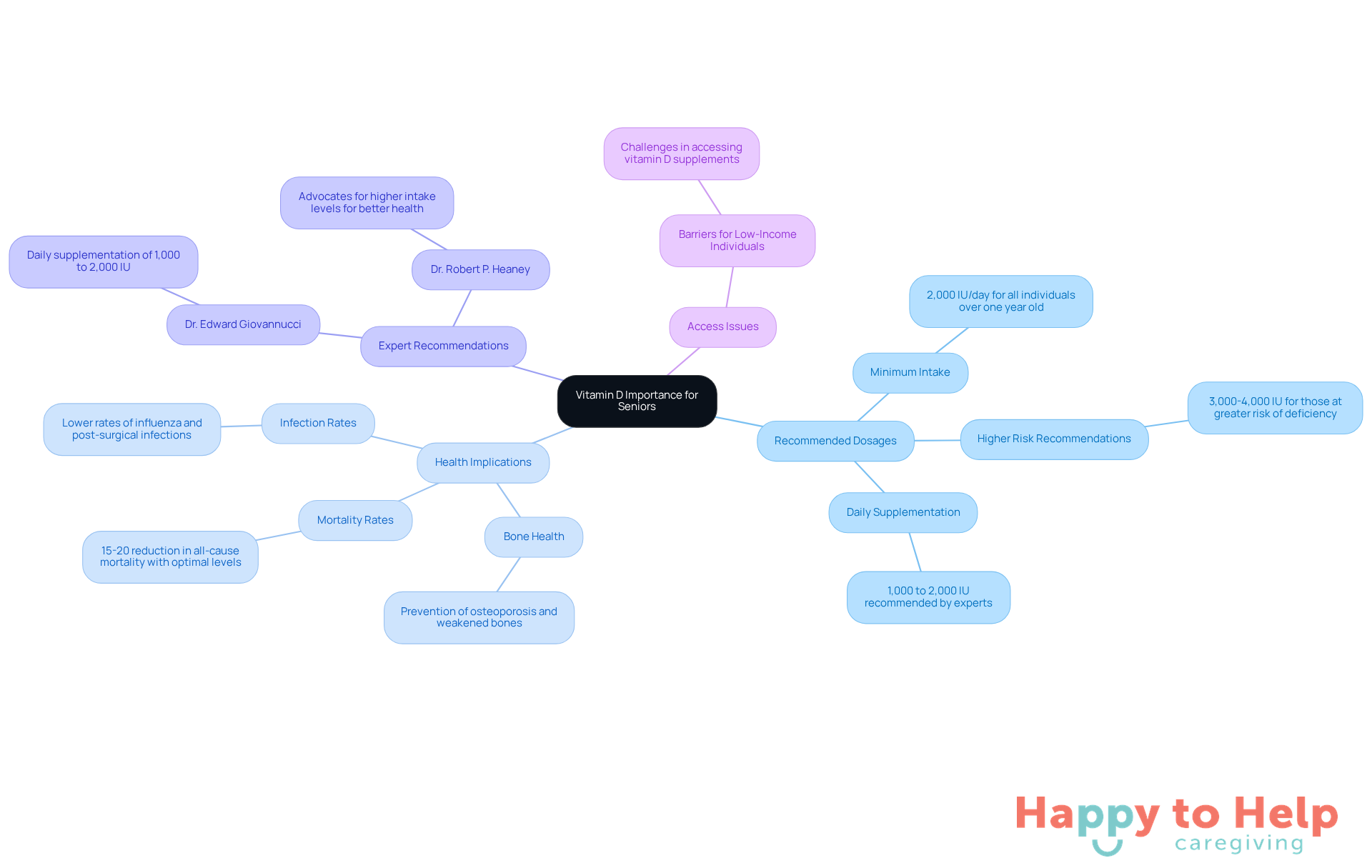
To address this issue, the recommendation for vitamin D dosage for seniors is set at a minimum intake of 2,000 IU/day for individuals over one year old. For those at greater risk of deficiency, a vitamin D dosage for seniors of 3,000-4,000 IU is recommended. For instance, research shows that sufficient vitamin D levels can enhance recovery rates in individuals with hepatitis C, increasing from 40% to 96% when levels exceed 80 nmol/L.
Experts emphasize the necessity of daily vitamin D dosage for seniors supplementation. Dr. Edward Giovannucci recommends a vitamin D dosage for seniors of 1,000 to 2,000 IU, especially for those at risk of deficiency. Additionally, Dr. Robert P. Heaney advocates for public awareness regarding the benefits of increased vitamin D consumption, arguing that achieving ideal serum concentrations can significantly improve overall wellness outcomes.
Caregivers should also be aware that low-income individuals may face barriers in accessing vitamin D supplements, impacting their ability to maintain adequate levels. Furthermore, sufficient vitamin D is linked to lower rates of influenza and post-surgical infections, underscoring its vital role in overall well-being. Understanding these dynamics is crucial for caregivers aiming to enhance the health of seniors, especially in relation to vitamin D dosage for seniors in their care.
Comparing Recommended Intakes from Health Organizations
Vitamin D deficiency is a pressing issue among seniors, with significant implications for their health and well-being. In the U.S., 61% of older adults lack sufficient vitamin D, which can lead to increased fall risk and chronic health conditions. This deficiency highlights the urgent need for caregivers to address the vitamin D dosage for seniors among their clients.
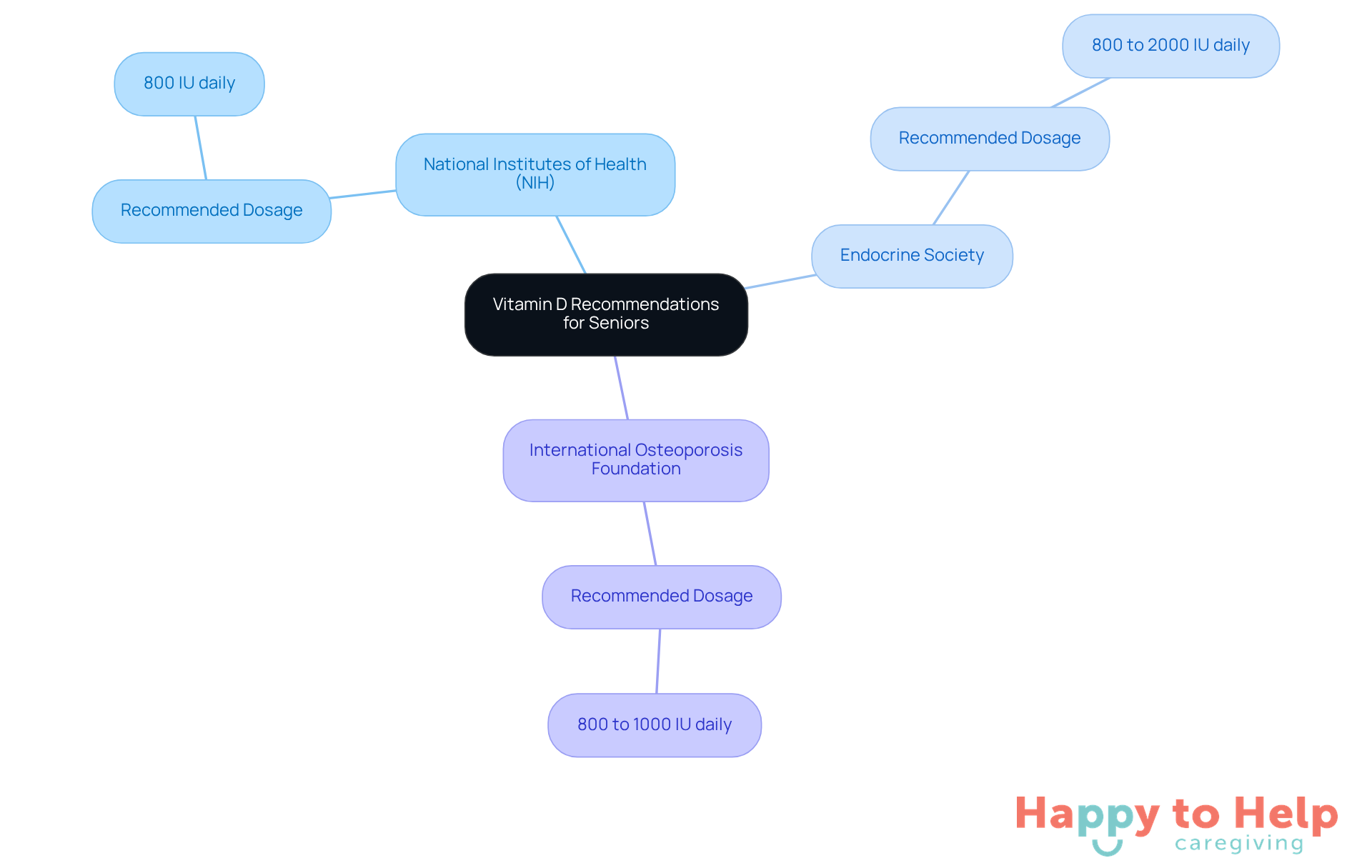
To tackle this problem, caregivers should be aware of the varying recommendations regarding vitamin D dosage for seniors. The National Institutes of Health (NIH) advises that the recommended vitamin D dosage for seniors is a daily intake of 800 IU for adults over 70 years. Meanwhile, the Endocrine Society suggests that the vitamin D dosage for seniors should be in a broader range of 800 to 2000 IU, depending on individual health conditions and lifestyle factors. Additionally, the International Osteoporosis Foundation recommends a vitamin D dosage for seniors of 800 to 1000 IU daily to enhance muscle strength and reduce fall risk.
To ensure adequate vitamin D levels, caregivers can encourage clients to incorporate dietary sources rich in vitamin D, such as fatty fish and fortified foods, and to seek sunlight exposure. Personalized evaluation through serum testing is essential for tailoring supplementation to individual needs, ensuring clients receive the necessary support to maintain their wellness.
Health Implications of Vitamin D Deficiency in Seniors
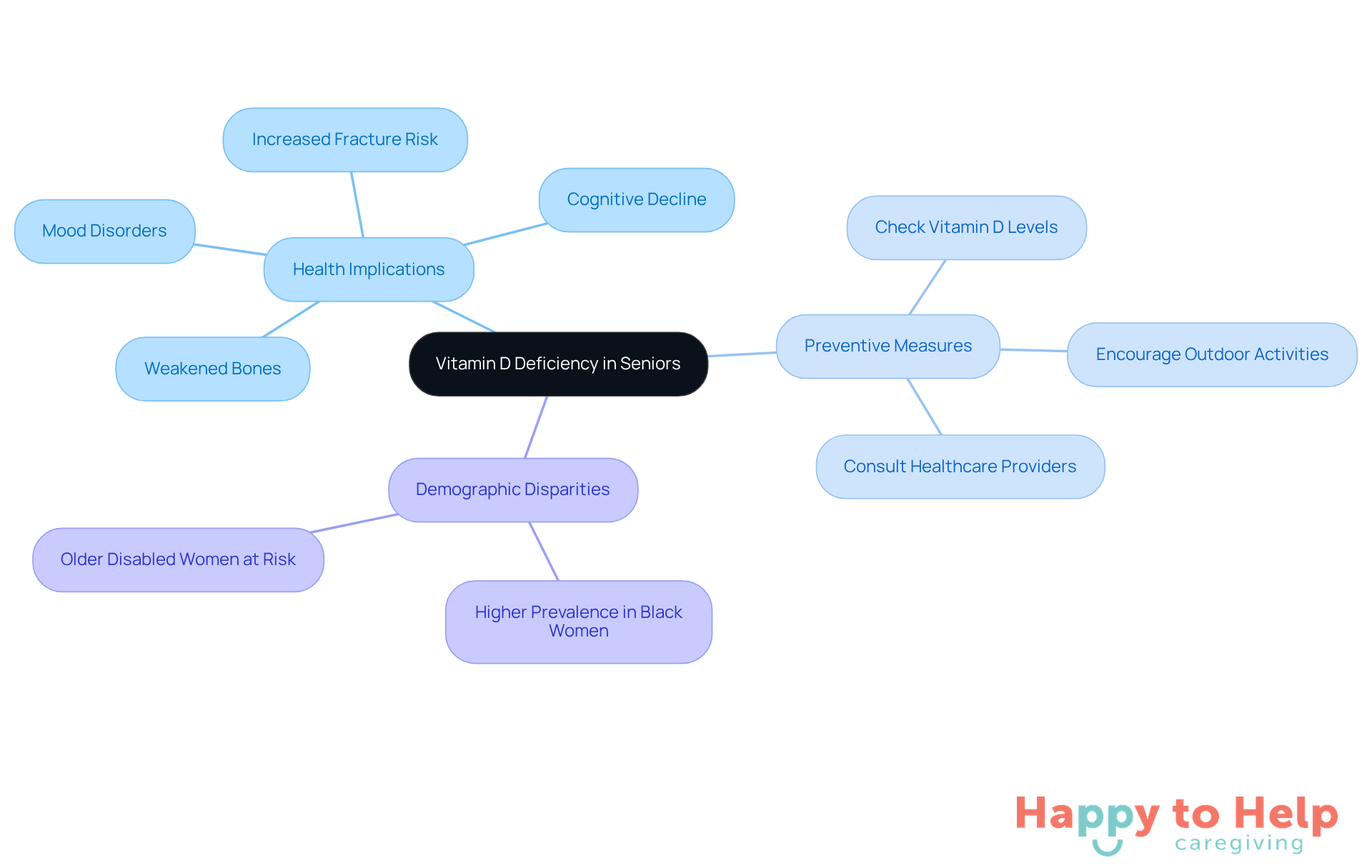
Vitamin D deficiency in seniors poses significant health challenges. It can lead to weakened bones, an increased risk of fractures, and muscle weakness, all of which can severely impact mobility and independence. Research shows that low levels of Vitamin D are associated with a higher incidence of falls and fractures among the elderly. In fact, Vitamin D deficiency is considered the most common medical condition globally, underscoring its widespread effects.
Moreover, this deficiency can contribute to cognitive decline and mood disorders, complicating the health landscape for seniors. Experts stress the importance of preventing falls and fractures, as these incidents can jeopardize ongoing health and independence. Caregivers play a crucial role in this prevention by monitoring vitamin D levels and advocating for the correct vitamin D dosage for seniors when necessary.
However, it's important to note that the U.S. Preventive Services Task Force advises against routine Vitamin D and calcium supplementation for fall and fracture prevention in community-dwelling adults aged 60 and older. Additionally, demographic factors reveal disparities, such as the higher prevalence of Vitamin D deficiency among black women compared to white women, highlighting the need for targeted public health initiatives.
To mitigate these risks, caregivers should:
- Regularly check Vitamin D levels in seniors.
- Encourage outdoor activities to boost natural Vitamin D production.
- Consult healthcare providers about the appropriate vitamin D dosage for seniors when supplementation is needed.
By taking these proactive steps, caregivers can significantly enhance the health and well-being of the seniors they support.
Factors Influencing Vitamin D Needs in Seniors
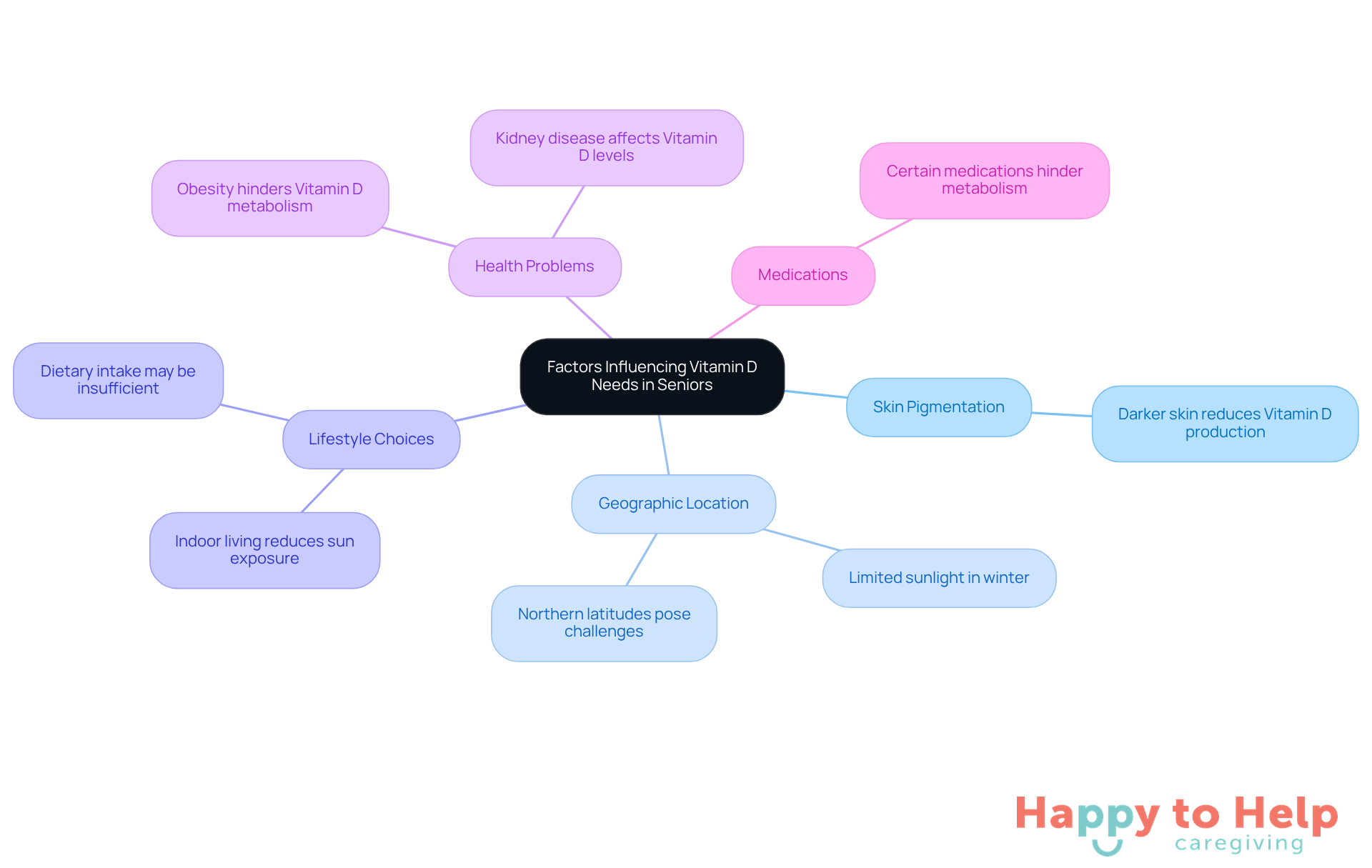
Several factors significantly affect the vitamin D dosage for seniors, such as skin pigmentation, geographic location, and lifestyle choices. The problem is that people with darker skin have a reduced ability to produce Vitamin D from sunlight, often necessitating increased dietary consumption or supplementation to maintain adequate levels. For instance, seniors living in northern latitudes face challenges due to limited sunlight exposure, particularly during winter months, which can elevate their risk of deficiency.
Agitating the issue, health problems like obesity and kidney disease, along with certain medications, can hinder Vitamin D metabolism, complicating nutritional needs. Observational studies indicate that nearly two-thirds of Americans are deficient in Vitamin D, underscoring the importance of addressing this issue through improved dietary intake and supplementation.
The solution for caregivers is to carefully assess these individual factors when determining the vitamin D dosage for seniors. It is recommended that many individuals, especially those at higher risk, consider a daily vitamin D dosage for seniors of 1,000 to 2,000 IU of D3, with some requiring as much as 3,000 to 4,000 IU to achieve sufficient blood levels. Additionally, testing for Vitamin D levels is essential to ensure clients receive the necessary intake for optimal health outcomes.
Moving Forward with Vitamin D Dosage
Ensuring adequate vitamin D dosage for seniors presents a significant challenge that can impact their overall health and well-being. Vitamin D deficiency is linked to various health issues commonly faced by older adults, including increased risks of falls and chronic conditions. Caregivers must recognize the importance of addressing this deficiency to support the health of those in their care.
The implications of vitamin D deficiency are serious. Health organizations recommend dosages ranging from 800 IU to as much as 4,000 IU, depending on individual needs. Factors such as skin pigmentation and geographic location can influence these recommendations, making individualized assessments crucial. By understanding these variations, caregivers can make informed decisions about vitamin D supplementation.
To effectively advocate for seniors, caregivers should:
- Monitor vitamin D levels
- Ensure adequate intake
Taking proactive steps can significantly reduce the risks associated with deficiency. As the population ages, the need to address vitamin D requirements will only increase. Staying informed and engaged in this vital aspect of senior health is imperative for caregivers.
https://iframe.tely.ai/cta/eyJhcnRpY2xlX2lkIjogIjY5MjBmZDViNzJkZTk4NjA5OWQwYjBkOCIsICJjb21wYW55X2lkIjogIjY4ZWU1ZGNhNzMxNzYyNTU3ZjNjOTVjMSIsICJpbmRleCI6IG51bGwsICJ0eXBlIjogImFydGljbGUifQ==Frequently Asked Questions
Why is vitamin D important for seniors?
Vitamin D is essential for various bodily functions in seniors, particularly for maintaining bone health and reducing the risk of osteoporosis. A deficiency can lead to serious health issues.
What challenges do seniors face in synthesizing vitamin D?
Seniors often face challenges such as limited sun exposure and inadequate dietary intake, which can lead to vitamin D deficiency.
What are the optimal serum levels of vitamin D for seniors?
The optimal serum levels of 25(OH)D for well-being in seniors should range between 40-60 ng/mL.
How does vitamin D affect mortality rates?
Higher levels of vitamin D are associated with a significant reduction in all-cause mortality rates, with an estimated 15-20% decrease when serum levels double from 20 ng/mL to 40 ng/mL.
What is the recommended vitamin D dosage for seniors?
The recommended minimum intake of vitamin D for seniors is 2,000 IU/day. For those at greater risk of deficiency, a dosage of 3,000-4,000 IU is recommended.
How does vitamin D impact recovery rates in specific health conditions?
Sufficient vitamin D levels can enhance recovery rates in individuals with hepatitis C, increasing recovery from 40% to 96% when levels exceed 80 nmol/L.
What do experts recommend regarding vitamin D supplementation for seniors?
Experts recommend daily vitamin D supplementation for seniors, with Dr. Edward Giovannucci suggesting 1,000 to 2,000 IU, especially for those at risk of deficiency.
What barriers might low-income seniors face regarding vitamin D?
Low-income individuals may face challenges in accessing vitamin D supplements, which can impact their ability to maintain adequate levels.
What additional health benefits are linked to sufficient vitamin D levels?
Sufficient vitamin D levels are associated with lower rates of influenza and post-surgical infections, highlighting its role in overall well-being.
Why is it important for caregivers to understand vitamin D dynamics for seniors?
Understanding the importance of vitamin D dosage is crucial for caregivers to enhance the health and longevity of seniors in their care.
List of Sources
- Understanding Vitamin D: Importance for Seniors
- Vitamin D supplements may lower blood pressure in older people with obesity (https://endocrine.org/news-and-advocacy/news-room/2024/vitamin-d-supplements-may-lower-blood-pressure-in-older-people-with-obesity)
- Quotes on the State of Vitamin D Science, Reference to IOM Report - GrassrootsHealth (https://grassrootshealth.net/quotes-on-the-state-of-vitamin-d-science-reference-to-iom-report)
- Quotes on Vitamin D | VitaminDWiki (https://vitamindwiki.com/Quotes+on+Vitamin+D)
- Comparing Recommended Intakes from Health Organizations
- Quotes on the State of Vitamin D Science, Reference to IOM Report - GrassrootsHealth (https://grassrootshealth.net/quotes-on-the-state-of-vitamin-d-science-reference-to-iom-report)
- Quotes on Vitamin D | VitaminDWiki (https://vitamindwiki.com/Quotes+on+Vitamin+D)
- 5.1: Appendix A - Case Studies (https://med.libretexts.org/Bookshelves/Nutrition/Culinary_Medicine_2025e_(Antonopoulos_et_al.)/05:_Appendices/5.01:_Appendix_A_-_Case_Studies)
- Vitamin D Deficiency - StatPearls - NCBI Bookshelf (https://ncbi.nlm.nih.gov/books/NBK532266)
- Endocrine Society Guideline recommends healthy adults under the age of 75 take the recommended daily allowance of vitamin D (https://endocrine.org/news-and-advocacy/news-room/2024/endocrine-society-recommends-healthy-adults-take-the-recommended-daily-allowance-of-vitamin-d)
- Health Implications of Vitamin D Deficiency in Seniors
- Vitamin D deficiency among older women with and without disability (https://sciencedirect.com/science/article/pii/S0002916523069162)
- Roundup: Caution Urged on Use of Vitamin D, Calcium Supplements for Older Adults; and More News (https://baptisthealth.net/baptist-health-news/caution-urged-on-use-of-vitamin-d-and-calcium-supplements-for-older-adults)
- Hints of a different way-case studies in practice-based evidence: Computerized protocols to assist clinical research (https://researchgate.net/publication/309054187_Hints_of_a_different_way-case_studies_in_practice-based_evidence_Computerized_protocols_to_assist_clinical_research)
- Quotes on Vitamin D | VitaminDWiki (https://vitamindwiki.com/Quotes+on+Vitamin+D)
- Factors Influencing Vitamin D Needs in Seniors
- Quotes on the State of Vitamin D Science, Reference to IOM Report - GrassrootsHealth (https://grassrootshealth.net/quotes-on-the-state-of-vitamin-d-science-reference-to-iom-report)
- Why are so many Americans deficient in vitamin D? (https://news.miami.edu/stories/2025/10/why-are-so-many-americans-deficient-in-vitamin-d.html)