

For families in our service areas
For families in our service areas, this guide explains caregiving and how non-medical in-home caregiving can support care planning in East Idaho, Treasure Valley & Magic Valley, Northern Wasatch, North Central West Virginia, and Northeast Ohio.
The Importance of What Are Instrumental Activities of
Understanding the nuances of daily living is crucial, especially regarding the independence of older adults. When it comes to managing their lives effectively, Instrumental Activities of Daily Living (IADLs) play a pivotal role. However, these tasks often go unnoticed compared to basic self-care activities.
The decline in the ability to perform IADLs can significantly impact seniors' autonomy and well-being. This situation poses a challenge for caregivers, who must navigate the complexities of supporting these essential functions. What happens when the ability to perform these tasks begins to wane? Caregivers may feel overwhelmed, unsure of how to adapt to ensure the safety and independence of their loved ones.
To address these challenges, caregivers can implement practical strategies:
- Assessing the specific IADLs that are becoming difficult for the senior can help identify areas needing support.
- Exploring adaptive tools and resources designed to assist with these tasks.
- Fostering open communication with seniors about their needs and preferences can empower them and enhance their sense of control.
By understanding the significance of IADLs and proactively addressing the challenges they present, caregivers can better support the independence and well-being of older adults.
Define Instrumental Activities of Daily Living (IADLs)
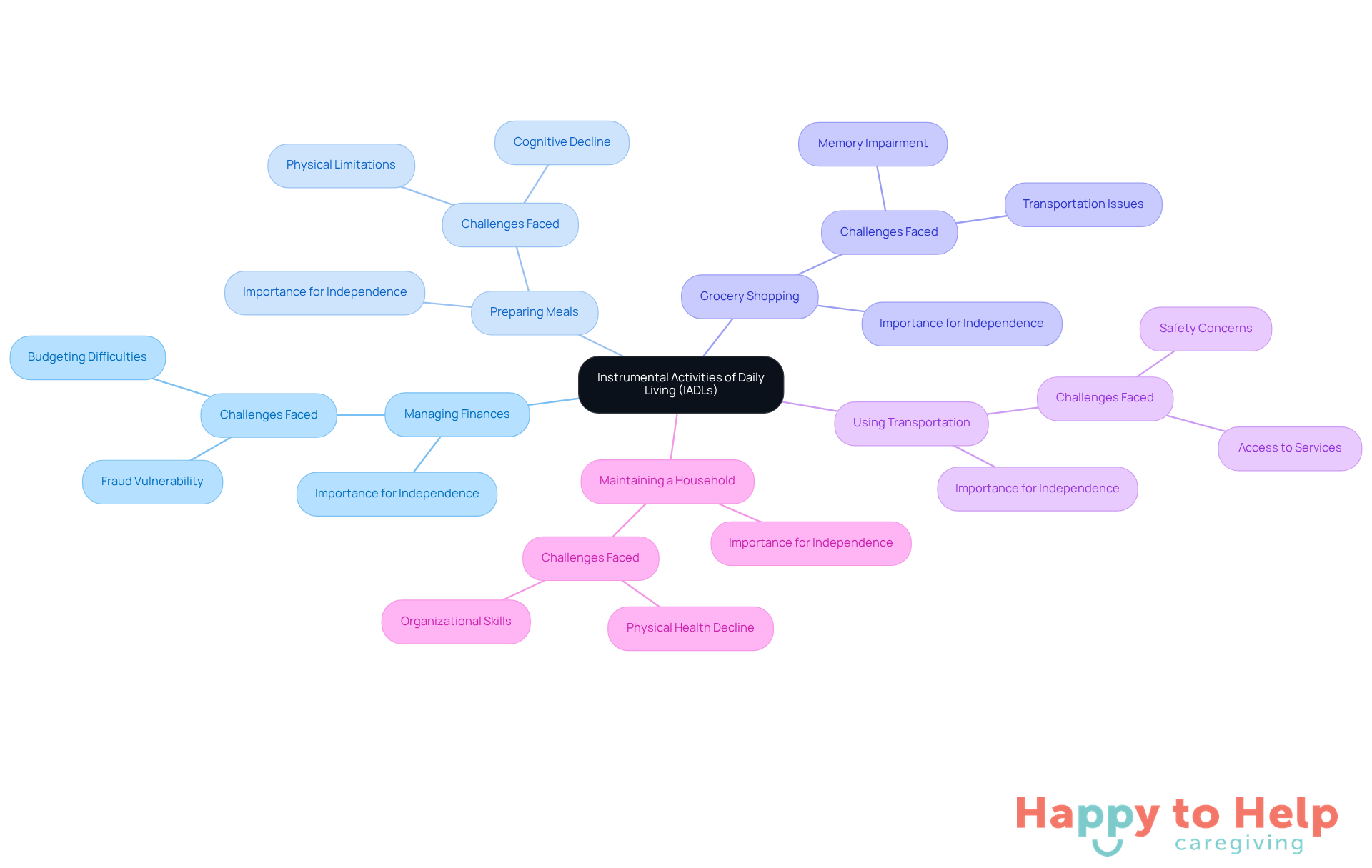
What are instrumental activities of daily living (IADLs) and why they are essential for individuals to live independently within their communities? Unlike basic self-care tasks, known as Activities of Daily Living (ADLs), IADLs require higher-level cognitive functions and organizational skills. These activities encompass:
- Managing finances
- Preparing meals
- Grocery shopping
- Using transportation
- Maintaining a household
It is crucial to understand what are instrumental activities of daily living for assessing a person's ability to function autonomously and for organizing appropriate care services.
The significance of what are instrumental activities of daily living cannot be overstated, as these activities greatly impact a person's independence. Research indicates that over 40% of individuals aged 65 and older experience some form of memory impairment, which can hinder their ability to perform daily activities effectively. Understanding what are instrumental activities of daily living is crucial, as this decline in IADLs often precedes difficulties with ADLs, making early detection vital for timely intervention and support. In fact, IADLs may deteriorate before ADLs, underscoring the importance for caregivers to monitor these activities closely.
Experts assert that the ability to manage what are instrumental activities of daily living is a strong indicator of overall well-being and independence. For example, older adults who struggle with meal preparation or medication management face heightened risks of health complications and diminished quality of life. Real-world examples highlight this: seniors who successfully manage their finances and household tasks report greater satisfaction and engagement in their daily lives. Furthermore, in-home services can prolong the ability to live independently, offering essential support for those facing challenges related to what are instrumental activities of daily living.
As we approach 2025, it becomes increasingly critical to recognize what are instrumental activities of daily living in independent living. With the aging population expected to rise, tailored support services addressing IADL challenges will be essential in fostering autonomy and improving the quality of life for seniors. Additionally, it is important to note that senior citizens lost nearly $2 billion to fraudulent schemes last year, revealing the vulnerabilities they face in managing their IADLs effectively.
Differentiate IADLs from Activities of Daily Living (ADLs)
Activities of Daily Living (ADLs) are essential self-care tasks necessary for survival, including bathing, dressing, eating, and toileting. However, many caregivers overlook what are instrumental activities of daily living, which involve more complex tasks that support independent living, such as managing finances, preparing meals, and using transportation.
Recent statistics reveal that 31.1% of retired individuals aged 65 and older require assistance with ADLs. This highlights a significant challenge for caregivers: understanding both ADLs and what are instrumental activities of daily living is crucial for effective caregiving. Without this knowledge, caregivers may struggle to assess the level of support needed, which can hinder a client's independence and quality of life.
To address this issue, caregivers should focus on identifying specific challenges faced by older adults. For instance, difficulties in meal preparation - like burning food, leaving the stove on, or skipping meals - can signal the need for intervention. Additionally, cognitive impairments may obstruct an older adult's ability to follow multi-step instructions, complicating their management of daily living activities.
By recognizing these challenges, caregivers can create effective care plans that prioritize the well-being and independence of older adults. This understanding empowers caregivers to cultivate a supportive environment, ensuring that clients receive tailored assistance that promotes their autonomy.

Explain the Importance of IADLs in Caregiving
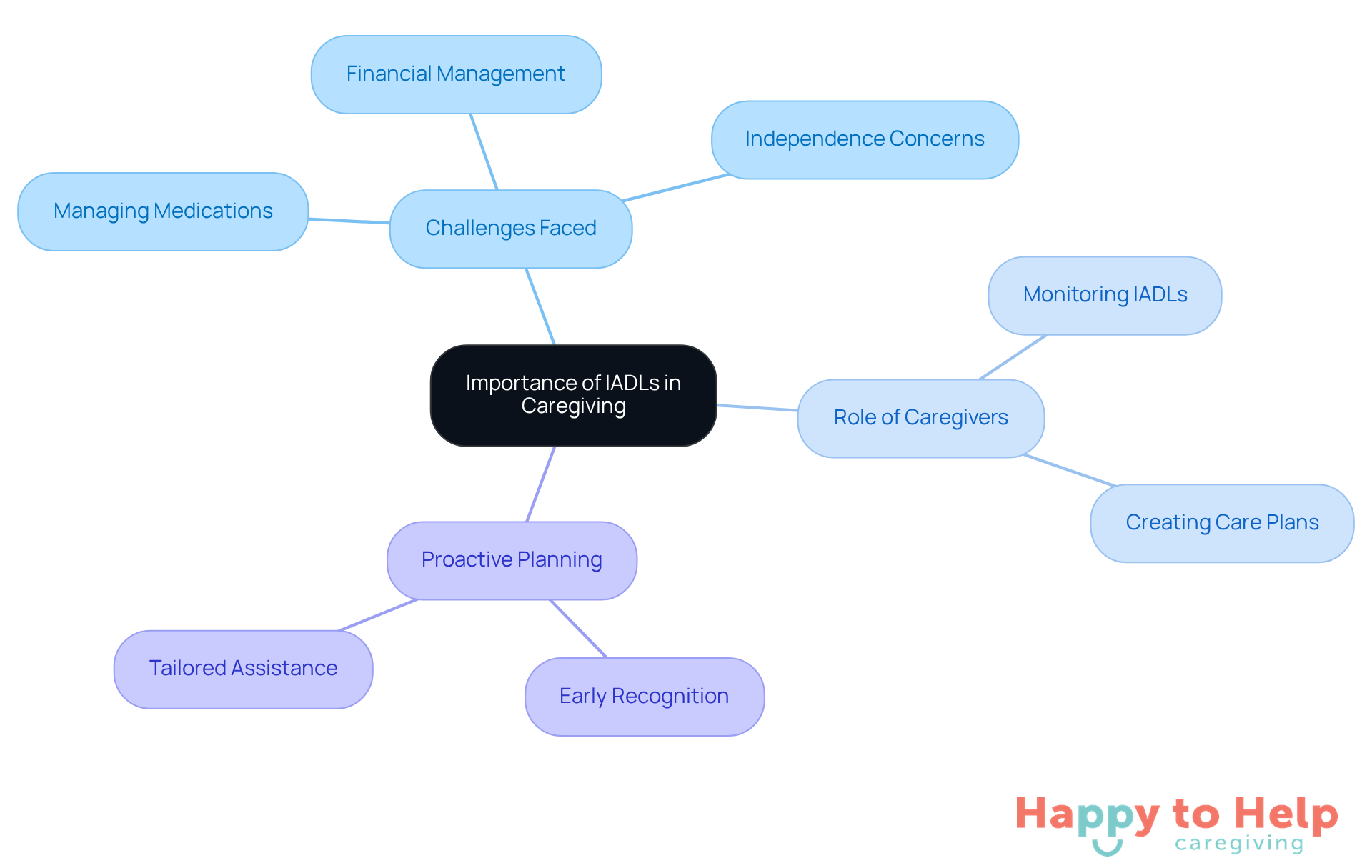
Many elderly individuals face significant challenges related to what are instrumental activities of daily living (IADLs), which impacts their ability to maintain autonomy and manage daily life. When older adults struggle with tasks such as managing medications or finances, it can lead to questions about what are instrumental activities of daily living and indicate a need for increased assistance or supervision. These difficulties not only affect their independence but also raise concerns for family members about their loved ones' safety and well-being.
Recognizing these challenges is crucial for caregivers and healthcare professionals. By evaluating what are instrumental activities of daily living, they can determine the necessary level of support required. This proactive approach allows for the creation of tailored care plans that enhance independence while ensuring safety. As Laird Landon, PhD, notes, monitoring what are instrumental activities of daily living is often more significant than understanding the precise diagnosis, underscoring the essential role these evaluations play in effective caregiving.
To improve the quality of life for clients and alleviate family anxiety, caregivers should prioritize early recognition of what are instrumental activities of daily living that may present difficulties. This enables proactive planning for future care needs, ensuring seniors receive appropriate assistance as their situations evolve. By focusing on IADLs, caregivers can significantly enhance the overall well-being of their clients.
List Common Examples of Instrumental Activities of Daily Living
Common examples of Instrumental Activities of Daily Living (IADLs) include:
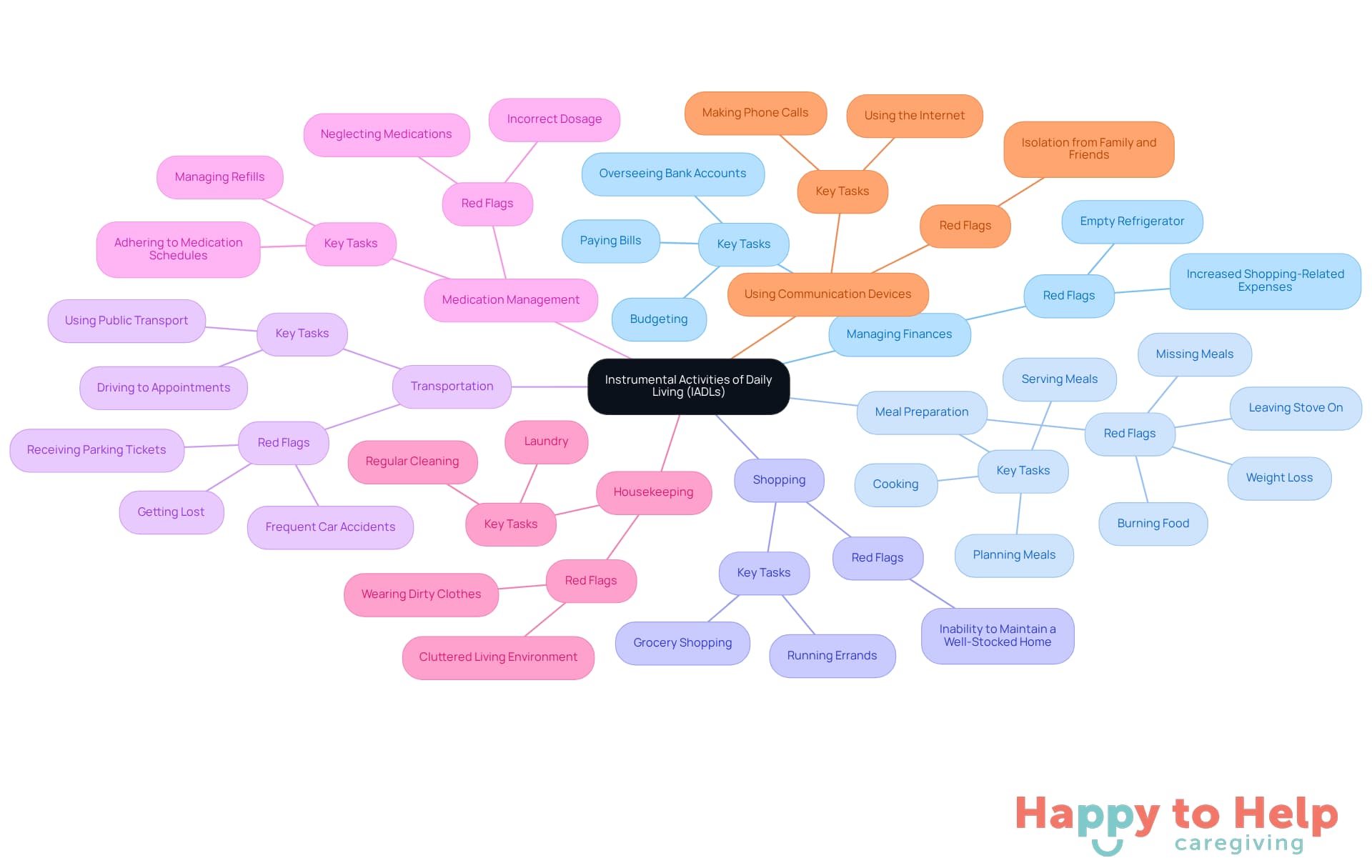
- Managing Finances: This involves tasks such as paying bills, budgeting, and overseeing bank accounts, which are crucial for financial independence.
- Meal Preparation: Planning, cooking, and serving meals not only ensures proper nutrition but also fosters a sense of accomplishment and autonomy. Red flags for meal preparation include burning food, leaving the stove on, missing meals, and experiencing weight loss or significant changes in diet.
- Shopping: Grocery shopping and running errands are essential for maintaining a well-stocked home and supporting personal preferences.
- Transportation: Utilizing public transport or driving to appointments is vital for accessing healthcare and social activities, enhancing overall well-being.
- Medication Management: Adhering to prescribed medication schedules and managing refills is critical for health maintenance, particularly for those with chronic conditions. Proper medication management is vital for individuals with chronic conditions, involving correct dosage, timing, and understanding side effects.
- Housekeeping: Regular cleaning, laundry, and maintaining a safe living environment contribute to physical health and emotional comfort. Wearing clean clothes positively impacts health, making regular laundry maintenance important for those living alone.
- Using Communication Devices: Making phone calls and utilizing the internet for communication helps older adults stay connected with family and friends, reducing feelings of isolation.
Understanding what are instrumental activities of daily living is essential for maintaining independence and quality of life, particularly for seniors and individuals with disabilities. However, research indicates that the ability to perform what are instrumental activities of daily living is closely linked to cognitive function and overall health. A decline in skills related to what are instrumental activities of daily living often signals the need for additional support. For instance, a study found that the overall prevalence of IADL impairments declined to 25.4% in the 2018 wave, yet many older adults still require assistance with these tasks.
By focusing on enhancing IADL capabilities, caregivers can significantly improve the quality of life for seniors, allowing them to thrive in their own homes.
Your Path Forward
Understanding instrumental activities of daily living (IADLs) is vital for promoting independence and quality of life, especially among older adults. However, many seniors face challenges in executing these higher-level tasks, which include:
- Managing finances
- Meal preparation
- Transportation
This struggle can significantly impact their ability to live independently and safely.
Recognizing and supporting individuals in performing IADLs is crucial. Caregivers play a pivotal role in assessing these needs and ensuring that tailored support and care plans are in place. Early detection and intervention become essential to enhance the independence of those they assist.
In light of the growing aging population, the significance of understanding and addressing IADLs cannot be understated. By prioritizing the evaluation and support of these activities, caregivers not only enhance the lives of seniors but also contribute to a broader societal commitment to fostering autonomy and dignity in aging. It is imperative for caregivers, family members, and communities to recognize the critical role IADLs play in elderly care, ensuring that every individual has the opportunity to thrive in their own home.
https://iframe.tely.ai/cta/eyJhcnRpY2xlX2lkIjogIjY5MjI2NTFhZTUyMTQ2MjY5ZDM1OGNmNSIsICJjb21wYW55X2lkIjogIjY4ZWU1ZGNhNzMxNzYyNTU3ZjNjOTVjMSIsICJpbmRleCI6IG51bGwsICJ0eXBlIjogImFydGljbGUifQ==Frequently Asked Questions
What are instrumental activities of daily living (IADLs)?
Instrumental activities of daily living (IADLs) are tasks that require higher-level cognitive functions and organizational skills, essential for individuals to live independently. They include managing finances, preparing meals, grocery shopping, using transportation, and maintaining a household.
How do IADLs differ from Activities of Daily Living (ADLs)?
IADLs differ from Activities of Daily Living (ADLs) in that ADLs refer to basic self-care tasks, while IADLs involve more complex tasks that require cognitive abilities and planning.
Why are IADLs important for independent living?
IADLs are crucial for assessing a person's ability to function autonomously and for organizing appropriate care services. They significantly impact an individual's independence and overall well-being.
What is the relationship between IADLs and memory impairment in older adults?
Research indicates that over 40% of individuals aged 65 and older experience some form of memory impairment, which can hinder their ability to perform IADLs effectively. Declines in IADLs often precede difficulties with ADLs, making early detection vital for timely intervention and support.
How do difficulties with IADLs affect older adults?
Older adults who struggle with IADLs, such as meal preparation or medication management, face heightened risks of health complications and diminished quality of life. Those who successfully manage these activities report greater satisfaction and engagement in their daily lives.
What role do in-home services play in managing IADLs?
In-home services can provide essential support for individuals facing challenges with IADLs, helping to prolong their ability to live independently.
Why is it important to recognize IADLs as the aging population increases?
As the aging population is expected to rise, recognizing IADLs becomes increasingly critical for fostering autonomy and improving the quality of life for seniors. Tailored support services addressing IADL challenges will be essential.
What vulnerabilities do seniors face in managing their IADLs?
Seniors face vulnerabilities such as susceptibility to fraudulent schemes, evidenced by nearly $2 billion lost last year, highlighting the importance of effective management of their IADLs.
List of Sources
- Define Instrumental Activities of Daily Living (IADLs)
- Seven trends in senior living that will define 2025 and beyond (https://mcknightsseniorliving.com/home/columns/guest-columns/seven-trends-in-senior-living-that-will-define-2025-and-beyond)
- Importance of Activities of Daily Living | Peace Village (https://peacevillage.org/news/importance-adls)
- Senior Living Trends in 2025 | Juniper (https://junipercommunities.com/senior-living-trends-in-2025)
- Activities of Daily Living: As Seniors Become Unable to Perform Basic Self-Care, Families are Faced with Tough Decisions - Home (https://agingoptions.com/uncategorized/activities-of-daily-living-as-seniors-become-unable-to-perform-basic-self-care-families-are-faced-with-tough-decisions)
- The Prevalence and Trends of Instrumental Activities of Daily Living Impairments in the United States from 2008–2018 - PMC (https://pmc.ncbi.nlm.nih.gov/articles/PMC10200247)
- Differentiate IADLs from Activities of Daily Living (ADLs)
- ADLs vs IADLs: What’s the Difference? (https://mooringspark.org/news/adls-vs-iadls-whats-the-difference)
- Why Activities of Daily Living Are Important for Living Independently (https://health.usnews.com/senior-care/caregiving/articles/activities-of-daily-living-for-seniors)
- ADLs vs IADLs in Healthcare: Key Differences (https://carerev.com/blog/adls-vs-iadls-in-healthcare)
- ADLs Vs IADLs: Why Are They Important? | CarePatrol (https://carepatrol.com/blog/adls-vs-iadls-why-are-they-important)
- Explain the Importance of IADLs in Caregiving
- Tracking ADLs and IADLs helps caregivers adapt | BEACON Senior News - Western Colorado (https://westerncolorado.beaconseniornews.com/2025/09/03/545288/tracking-adls-and-iadls-helps-caregivers-adapt)
- How IADLs Impact Independence - A One Home Care (https://aonehomecare.org/?p=1266)
- Why IADLs Matter in Long-Term Care Insurance | Boston ERISA Attorneys (https://erisaattorneys.com/why-iadls-matter-in-long-term-care-insurance)
- ADLs vs IADLs: What’s the Difference? (https://mooringspark.org/news/adls-vs-iadls-whats-the-difference)
- Why Are ADLs and IADLs Significant for Seniors? (https://alternativeseniorcare.net/why-are-adls-and-iadls-significant-for-seniors)
- List Common Examples of Instrumental Activities of Daily Living
- Tracking ADLs and IADLs helps caregivers adapt | BEACON Senior News - Western Colorado (https://westerncolorado.beaconseniornews.com/2025/09/03/545288/tracking-adls-and-iadls-helps-caregivers-adapt)
- Why Activities of Daily Living Are Important for Living Independently (https://health.usnews.com/senior-care/caregiving/articles/activities-of-daily-living-for-seniors)
- Understanding the Fundamentals of ADLs and IADLs (https://cielseniorliving.com/adls-and-iadls)
- The Prevalence and Trends of Instrumental Activities of Daily Living Impairments in the United States from 2008–2018 - PMC (https://pmc.ncbi.nlm.nih.gov/articles/PMC10200247)
- Instrumental activities of daily living and self-rated health in community-dwelling older adults: cross-sectional findings from the HUNT Study (HUNT4 Trondheim 70+) - BMC Geriatrics (https://bmcgeriatr.biomedcentral.com/articles/10.1186/s12877-025-05983-w)