
For families in our service areas
For families in our service areas, this guide explains caregiving and how non-medical in-home caregiving can support care planning in East Idaho, Treasure Valley & Magic Valley, Northern Wasatch, North Central West Virginia, and Northeast Ohio.
Why What Are the 6 ADLs? Understanding Matters
Understanding the challenges of daily living activities is crucial for maintaining independence, especially among older adults. Nearly half of seniors worldwide struggle with these essential tasks, highlighting the importance of Activities of Daily Living (ADLs). This situation not only affects their quality of life but also places a significant burden on caregivers.
Recognizing the six key ADLs is vital for personal care. These activities include:
- Bathing
- Dressing
- Eating
- Toileting
- Transferring
- Continence
Each of these tasks requires varying levels of support, depending on the individual's needs and circumstances. Caregivers must be aware of these differences to provide appropriate assistance.
So, how can a deeper understanding of ADLs transform care assessments? By focusing on these activities, caregivers can enhance the quality of life for those they support. Implementing practical strategies based on this knowledge can lead to more effective care and improved outcomes for seniors.
Define Activities of Daily Living (ADLs)
Activities of Daily Living (ADLs) include essential tasks, often referred to as what are the 6 ADLs, that individuals perform daily to maintain personal care and overall well-being. However, nearly half of older individuals globally face challenges with these activities, which are crucial for independent living. Basic self-care tasks such as:
- bathing
- dressing
- eating
- toileting
- transferring
- managing continence
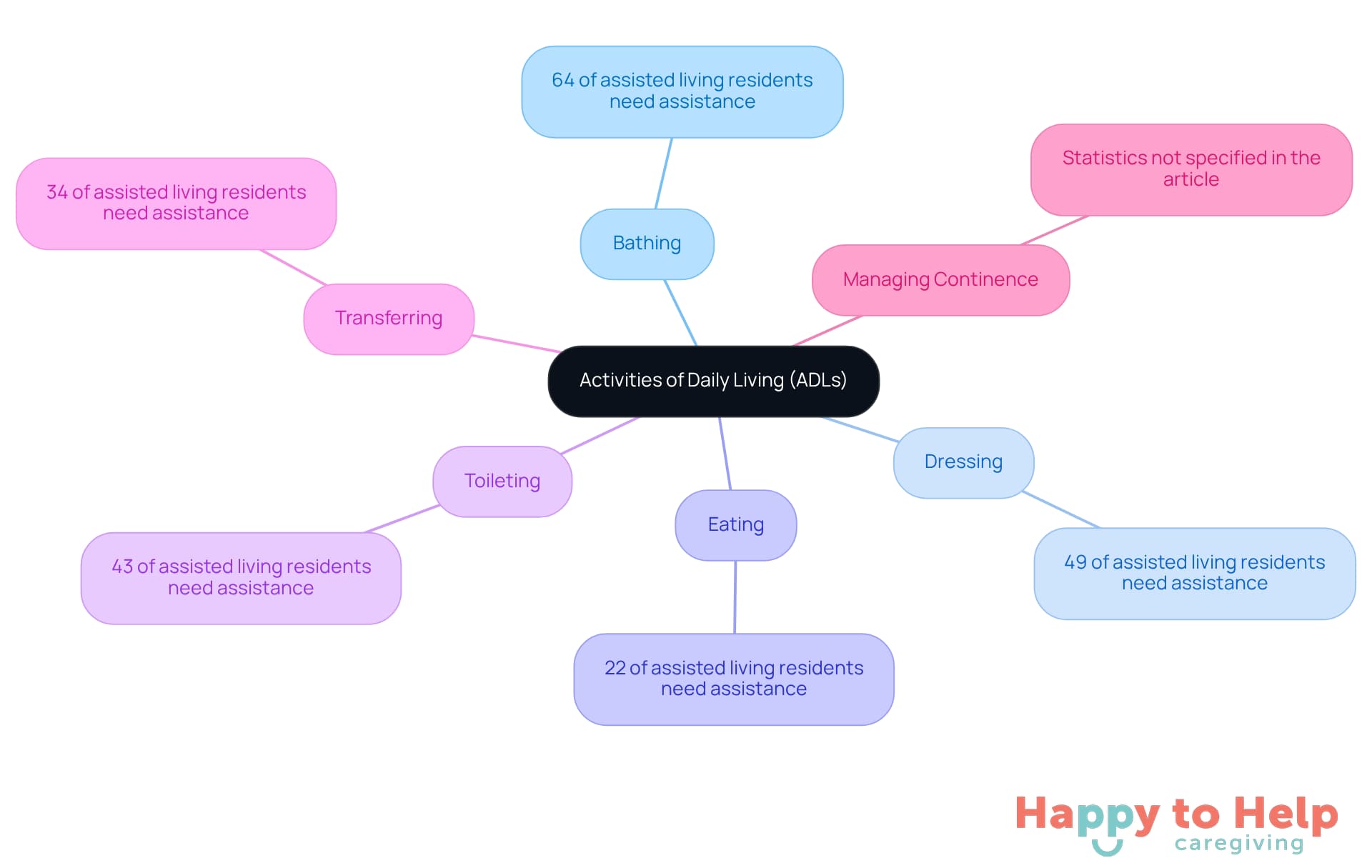
are often difficult for many. For instance, 64% of assisted living residents require help with bathing, while 50% need assistance with walking, and 49% struggle with dressing. Moreover, demographic studies reveal that Hispanic and non-Hispanic Black individuals experience higher rates of ADL limitations compared to their non-Hispanic White counterparts, underscoring the varying support needs across different populations.
Support providers and healthcare experts must understand what are the 6 ADLs to effectively assess a person's ability to live independently and determine the appropriate level of assistance. Limitations in these daily tasks can lead to increased reliance on caregivers and a decline in overall health, significantly affecting the quality of life for seniors. Therapy services play a crucial role in enhancing safety for older adults, particularly in fall prevention, which can further impede their ability to perform daily activities.
Real-world examples illustrate how personalized assistance with daily activities can boost the independence and well-being of seniors, allowing them to thrive in familiar environments. By focusing on these essential activities, providers can create tailored care plans that promote independence and respect for their clients.
Differentiate Between Basic ADLs and Instrumental ADLs
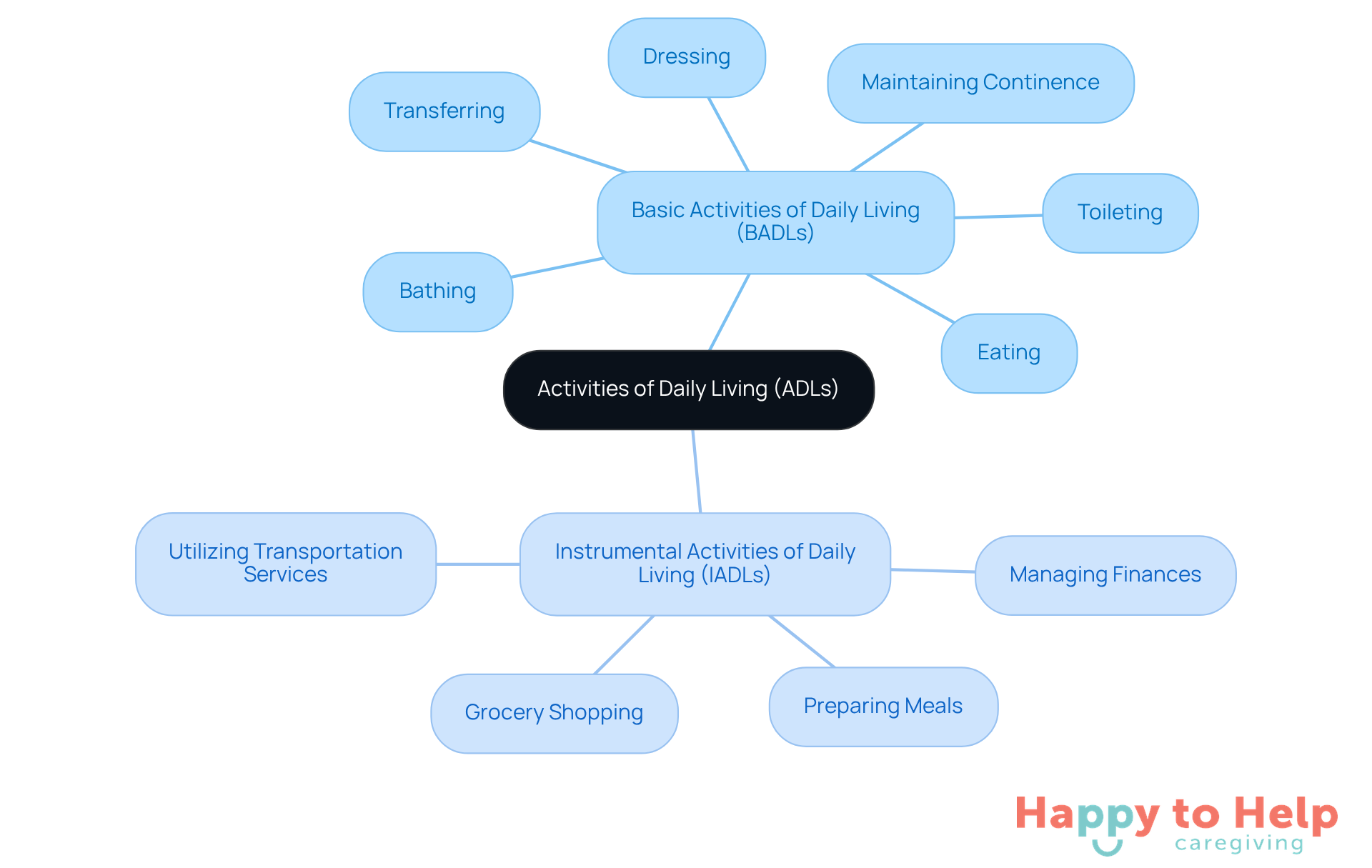
For many older adults, understanding what are the 6 ADLs can present a significant challenge. They are divided into two primary categories: Basic Activities of Daily Living (BADLs) and Instrumental Activities of Daily Living (IADLs). BADLs encompass essential self-care tasks necessary for survival, such as:
- Bathing
- Dressing
- Eating
- Toileting
- Transferring
- Maintaining continence
These activities are fundamental for personal hygiene and overall health. In contrast, IADLs involve more complex tasks that facilitate independent living but are not critical for immediate survival. Examples of IADLs include:
- Managing finances
- Preparing meals
- Grocery shopping
- Utilizing transportation services
It is crucial for caregivers to understand what are the 6 ADLs and the distinction between BADLs and IADLs. It aids in evaluating a person's functional abilities and identifying the appropriate level of care. For instance, a support worker might assess a senior's ability to perform BADLs to determine urgent assistance needs. Meanwhile, evaluating IADLs can reveal the necessity for help with everyday activities that enhance a person's quality of life.
Statistics highlight the prevalence of these challenges: approximately 31.1% of retired adults aged 65 and older require assistance with BADLs. This underscores the functional disabilities faced by this demographic. Additionally, the overall prevalence of ADL disability was reported at 16.5% in 2018, providing broader context for understanding these issues. Declines in IADLs can signal the need for additional support, as difficulties in managing finances or preparing meals may lead to unsafe living conditions.
To address these challenges, early identification and assessment of declines in what are the 6 ADLs is essential for proactive caregiving strategies. By recognizing these differences, caregivers can develop customized care plans tailored to their clients' specific needs. This approach not only ensures a higher quality of life but also fosters independence.
List the Six Key Activities of Daily Living
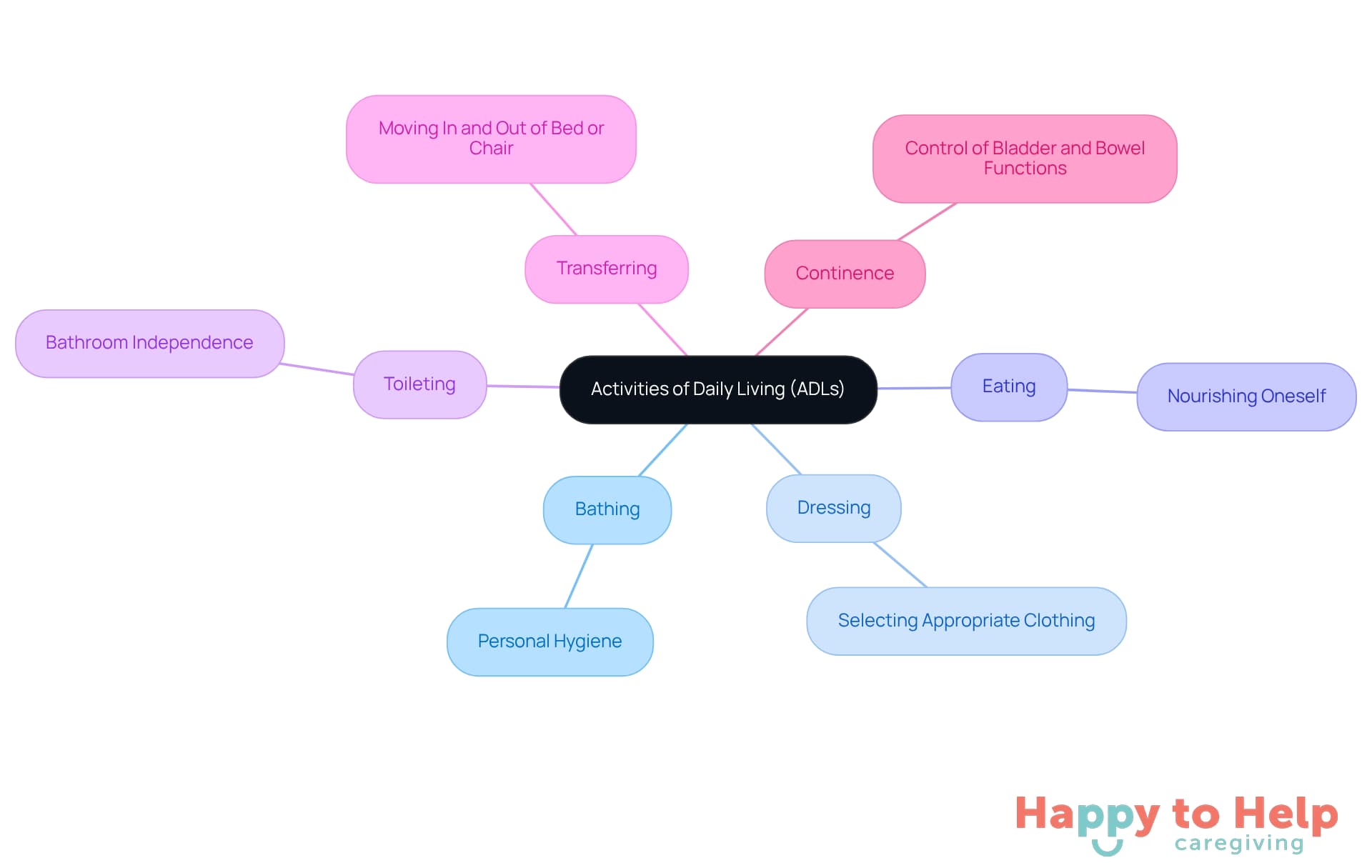
For seniors to maintain their independence and quality of life, it is important to understand what are the 6 ADLs. These activities include:
- Bathing: The ability to wash oneself and maintain personal hygiene.
- Dressing: The ability to select and put on appropriate clothing.
- Eating: The capability to nourish oneself and manage dietary requirements.
- Toileting: The ability to use the bathroom independently.
- Transferring: The ability to move in and out of bed or a chair.
- Continence: The ability to control bladder and bowel functions.
However, nearly 20 million adults aged 55 and older reported challenges with one or more ADLs in 2020. Alarmingly, only 11.6 million of these seniors indicated receiving any assistance. This gap underscores the importance of evaluating individual needs to provide appropriate support. Caregivers often assist clients with bathing and dressing, ensuring they maintain personal hygiene and dignity.
Recent discussions in senior care emphasize the need for consistent oversight of daily living activities. A decline in these tasks can lead to a rapid loss of autonomy. Caregivers are vital in recognizing changes in a client's ability to perform daily activities, which may signal the need for additional support or adjustments in living arrangements.
Moreover, the financial implications of supporting individuals with ADL disabilities highlight the challenges faced by seniors and their caregivers. By understanding what are the 6 ADLs and identifying them, caregivers can better meet their clients' needs and enhance their overall well-being.
Explain the Importance of ADLs in Care Assessments
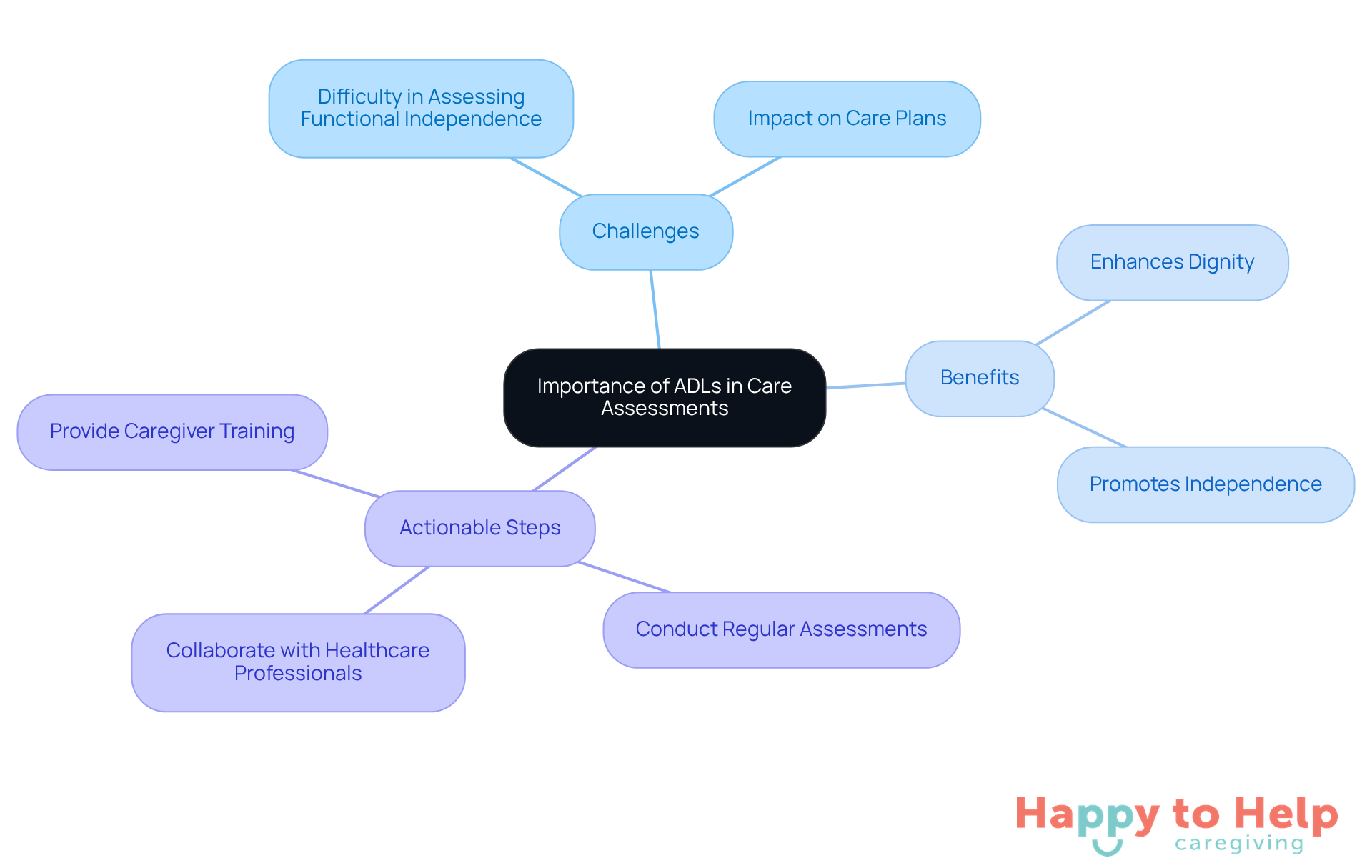
Caregivers face a significant challenge when assessing what are the 6 ADLs. Without a clear understanding of a person's functional independence, it becomes difficult to identify the specific areas where assistance is needed. This gap can lead to inadequate care plans that fail to address the unique needs of individuals, ultimately impacting their quality of life.
When caregivers recognize that someone struggles with essential tasks like bathing or dressing, they can implement targeted support strategies. This proactive approach not only enhances the individual's daily experience but also fosters a sense of dignity and independence. Moreover, understanding what are the 6 ADLs is crucial in determining eligibility for long-term care services and insurance benefits, making their assessment vital in the overall care process.
To effectively utilize ADLs in care assessments, caregivers should consider the following actionable steps:
- Conduct regular assessments to monitor changes in functional abilities.
- Collaborate with healthcare professionals to develop personalized care plans.
- Provide training for caregivers on how to assist with specific ADLs.
By addressing these challenges head-on, caregivers can ensure that they are equipped to provide the best possible support for those in their care.
Your Path Forward
Understanding the six Activities of Daily Living (ADLs) is essential for promoting independence and quality of life among older adults. These fundamental tasks - bathing, dressing, eating, toileting, transferring, and managing continence - are not merely routine activities; they are crucial for personal care and overall well-being. However, many seniors face significant challenges in performing these tasks, which can lead to a decline in their quality of life.
The implications of ADL limitations are profound. Statistics reveal that a substantial number of older adults experience difficulties with these activities, highlighting the urgent need for tailored support and intervention. Caregivers must recognize these challenges to effectively address the specific needs associated with each ADL. By doing so, they can develop care plans that enhance the quality of life for seniors.
To tackle these challenges, caregivers should prioritize the assessment and support of ADLs. This involves monitoring these activities closely and providing the necessary assistance and resources. By fostering an environment that respects and promotes independence, caregivers can significantly improve the lives of seniors facing daily challenges. In conclusion, maintaining dignity and autonomy for older adults is vital, and proactive support can make all the difference.
https://iframe.tely.ai/cta/eyJhcnRpY2xlX2lkIjogIjY5MjY0MzY3ZDdhYTIxYWI5OTE3NmUwYSIsICJjb21wYW55X2lkIjogIjY4ZWU1ZGNhNzMxNzYyNTU3ZjNjOTVjMSIsICJpbmRleCI6IG51bGwsICJ0eXBlIjogImFydGljbGUifQ==Frequently Asked Questions
What are Activities of Daily Living (ADLs)?
Activities of Daily Living (ADLs) are essential tasks that individuals perform daily to maintain personal care and overall well-being. The 6 ADLs include bathing, dressing, eating, toileting, transferring, and managing continence.
Why are ADLs important for older adults?
ADLs are crucial for independent living, and nearly half of older individuals globally face challenges with these activities. Difficulties in performing ADLs can lead to increased reliance on caregivers and a decline in overall health, significantly affecting the quality of life for seniors.
What statistics highlight the challenges older adults face with ADLs?
Statistics show that 64% of assisted living residents require help with bathing, 50% need assistance with walking, and 49% struggle with dressing. Additionally, demographic studies indicate that Hispanic and non-Hispanic Black individuals experience higher rates of ADL limitations compared to non-Hispanic White individuals.
How can support providers and healthcare experts assist individuals with ADL limitations?
Support providers and healthcare experts must understand the 6 ADLs to effectively assess a person's ability to live independently and determine the appropriate level of assistance. Personalized assistance with daily activities can boost the independence and well-being of seniors.
What role do therapy services play in supporting older adults with ADLs?
Therapy services are crucial in enhancing safety for older adults, particularly in fall prevention, which can further impede their ability to perform daily activities. These services help create tailored care plans that promote independence and respect for clients.
How do personalized assistance and tailored care plans benefit seniors?
Personalized assistance with daily activities allows seniors to thrive in familiar environments, enhancing their independence and overall well-being. Tailored care plans focus on essential activities to support the individual needs of each client.
List of Sources
- Define Activities of Daily Living (ADLs)
- ADL, functional limitations decline among older adults (https://mcknightsseniorliving.com/news/adl-functional-limitations-decline-among-older-adults)
- Nearly half of older adults worldwide struggle with daily tasks, study reveals (https://mcknights.com/news/nearly-half-of-older-adults-worldwide-struggle-with-daily-living-activities-study-reveals)
- Caregiver Crisis: New Report Gives a “Wake Up” Call to Congress - Herb Weiss (https://rinewstoday.com/caregiver-crisis-new-report-gives-a-wake-up-call-to-congress-herb-weiss)
- Senior Living Statistics (https://rosewood-nursing.com/post/senior-living-statistics)
- Prevalence and Trends of Basic Activities of Daily Living Limitations in Middle-Aged and Older Adults in the United States - PMC (https://pmc.ncbi.nlm.nih.gov/articles/PMC10660458)
- Differentiate Between Basic ADLs and Instrumental ADLs
- ADLs vs IADLs: What’s the Difference? (https://mooringspark.org/news/adls-vs-iadls-whats-the-difference)
- Prevalence and Trends of Basic Activities of Daily Living Limitations in Middle-Aged and Older Adults in the United States - PMC (https://pmc.ncbi.nlm.nih.gov/articles/PMC10660458)
- Activities of Daily Living: As Seniors Become Unable to Perform Basic Self-Care, Families are Faced with Tough Decisions - Home (https://agingoptions.com/uncategorized/activities-of-daily-living-as-seniors-become-unable-to-perform-basic-self-care-families-are-faced-with-tough-decisions)
- Functional disability in basic and instrumental activities of daily living among older adults globally: a systematic review and meta-analysis - BMC Geriatrics (https://bmcgeriatr.biomedcentral.com/articles/10.1186/s12877-025-06056-8)
- Why Activities of Daily Living Are Important for Living Independently (https://health.usnews.com/senior-care/caregiving/articles/activities-of-daily-living-for-seniors)
- List the Six Key Activities of Daily Living
- 6.6 percent of those 65+ need help with ADLs, says CDC (https://mcknightsseniorliving.com/news/6-6-of-those-65-need-help-with-adls-says-cdc)
- Prevalence and Trends of Basic Activities of Daily Living Limitations in Middle-Aged and Older Adults in the United States - PMC (https://pmc.ncbi.nlm.nih.gov/articles/PMC10660458)
- Why Activities of Daily Living Are Important for Living Independently (https://health.usnews.com/senior-care/caregiving/articles/activities-of-daily-living-for-seniors)
- U.S. Caregiving System Leaves Significant Unmet Needs Among Aging Adults - The New School SCEPA (https://economicpolicyresearch.org/resource-library/u-s-caregiving-system-leaves-significant-unmet-needs-among-aging-adults)