
For families in our service areas
For families in our service areas, this guide explains caregiver support and how non-medical in-home caregiving can support care planning in East Idaho, Treasure Valley & Magic Valley, Northern Wasatch, North Central West Virginia, and Northeast Ohio.
Understanding What Are the 7 ADLs? Essential Insights
Understanding the complexities of daily living is crucial, especially as our population ages and the need for effective caregiving grows. The seven Activities of Daily Living (ADLs) not only serve as important markers of independence but also significantly impact the emotional and psychological well-being of those who need assistance.
Many caregivers face the challenge of supporting their loved ones without formal training in these essential tasks. This can lead to feelings of stress and burnout. So, how can caregivers effectively provide support while nurturing dignity and autonomy?
This article explores the significance of the 7 ADLs, shedding light on their role in caregiving. We’ll also discuss the vital tools available for assessment, offering practical solutions to help caregivers feel more equipped and confident in their roles. Together, we can foster a compassionate environment that prioritizes the well-being of both caregivers and those they care for.
Define Activities of Daily Living (ADLs)
Activities of Daily Living, or what are the 7 ADLs, are the essential tasks we all perform daily to care for ourselves and maintain our independence. These fundamental activities for self-sufficiency include basic functions like:
- Bathing
- Dressing
- Eating
- Toileting
- Transferring (moving from one position to another)
- Managing continence
For caregivers, understanding what are the 7 ADLs is vital as they assess the level of support needed, especially for seniors and individuals with disabilities.
Research shows that the prevalence of ADL disability decreased from 17.8% in 2006 to 16.5% in 2018. This highlights the importance of monitoring these activities as our population ages. It’s heartening to know that around 75% of Americans aged 65 and above wish to remain in their homes, underscoring the significance of daily living activities in achieving this goal.
Evaluating a person's ability to live independently involves understanding what are the 7 ADLs, which serve as a benchmark. In healthcare settings, they are often used to determine what are the 7 ADLs for assistance services. For example, a senior who struggles with dressing may need help not just with that task but also to uphold their dignity and self-esteem. By recognizing the importance of these daily activities, caregivers can provide better support, fostering independence and enhancing quality of life.
Real-life stories show that when seniors receive help with their daily activities, they tend to stay engaged in their routines, leading to improved mental and emotional well-being. However, it’s important to note that only 11% of caregivers have received medical training for activities of daily living or instrumental activities of daily living. This points to a significant need for education and support for family caregivers.
As the number of seniors continues to rise, understanding and tracking activities of daily living will be essential in ensuring that individuals can thrive in their own homes. Together, we can create an environment where everyone feels supported and valued.
Explain the Importance of ADLs in Caregiving
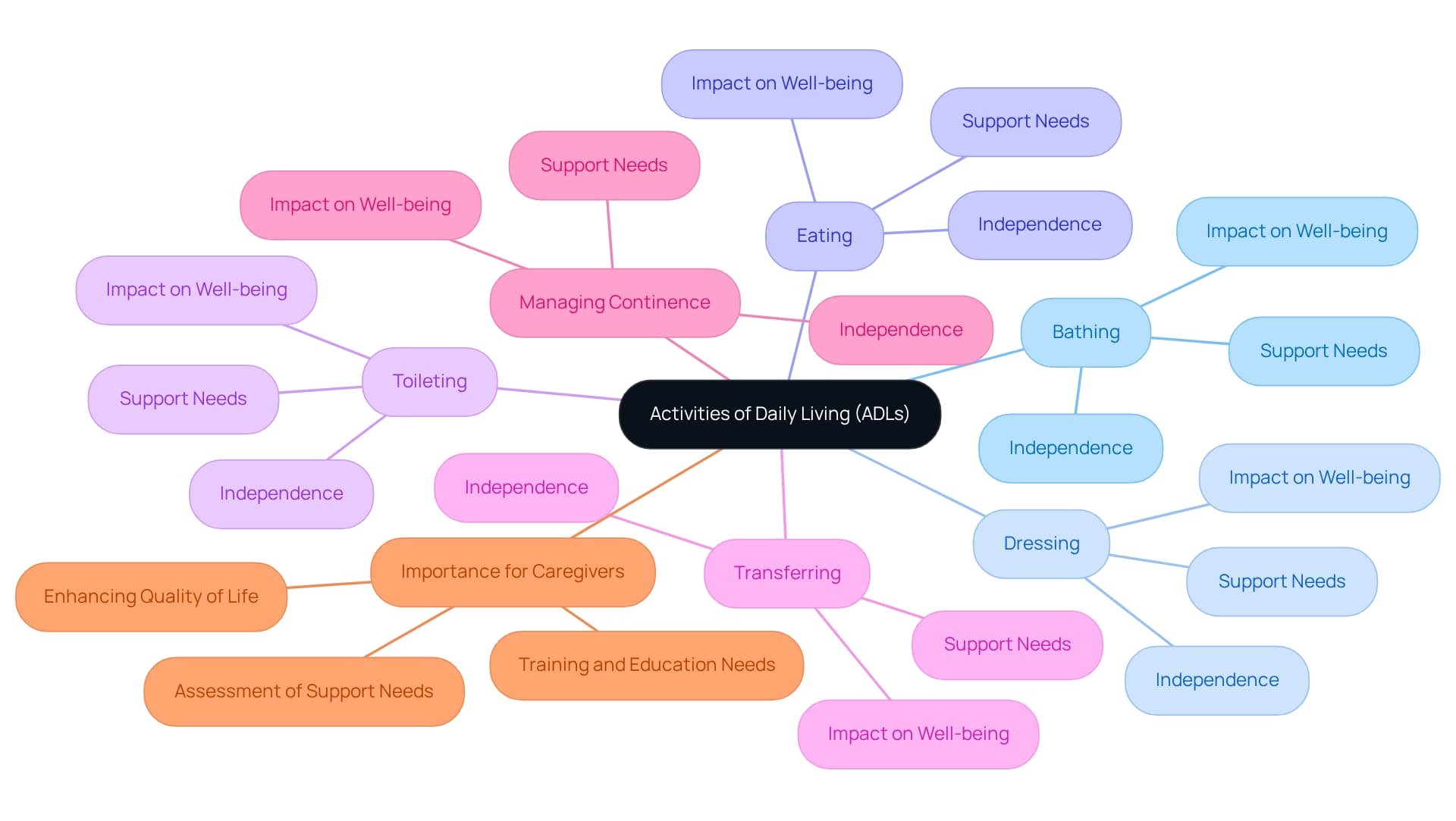
What are the 7 ADLs? They are so much more than just basic hygiene and health; they play a vital role in a person's emotional and psychological well-being. It's heart-wrenching to know that 21% of adults aged 65-69 and a staggering 52% of those aged 80 and over need assistance with these essential activities. This highlights what are the 7 ADLs and their crucial role in caregiving. When seniors can manage ADLs independently, they gain a sense of autonomy and dignity, which are essential for their self-esteem. On the flip side, struggling with these tasks can lead to frustration, feelings of dependency, and a decline in self-worth.
Caregivers are at the heart of this process, assessing what are the 7 ADLs to provide tailored support that maximizes independence while ensuring necessary help is always available. Striking this delicate balance is key to enhancing the overall quality of life for seniors and individuals with special needs. Moreover, those who provide assistance often bridge clinical recommendations with practical applications, underscoring their vital role in effectively managing daily living activities, specifically what are the 7 ADLs.
Effective caregiving methods, like encouraging participation in daily tasks and utilizing adaptive tools, can significantly boost a client's sense of control and emotional well-being. This nurturing approach fosters a more positive caregiving experience. It's also noteworthy that 51% of caregivers feel that their role gives them a sense of purpose, especially among Hispanic/Latino caregivers. This statistic beautifully illustrates the emotional rewards that come from assisting with daily living activities.
Identify the 7 Key Activities of Daily Living
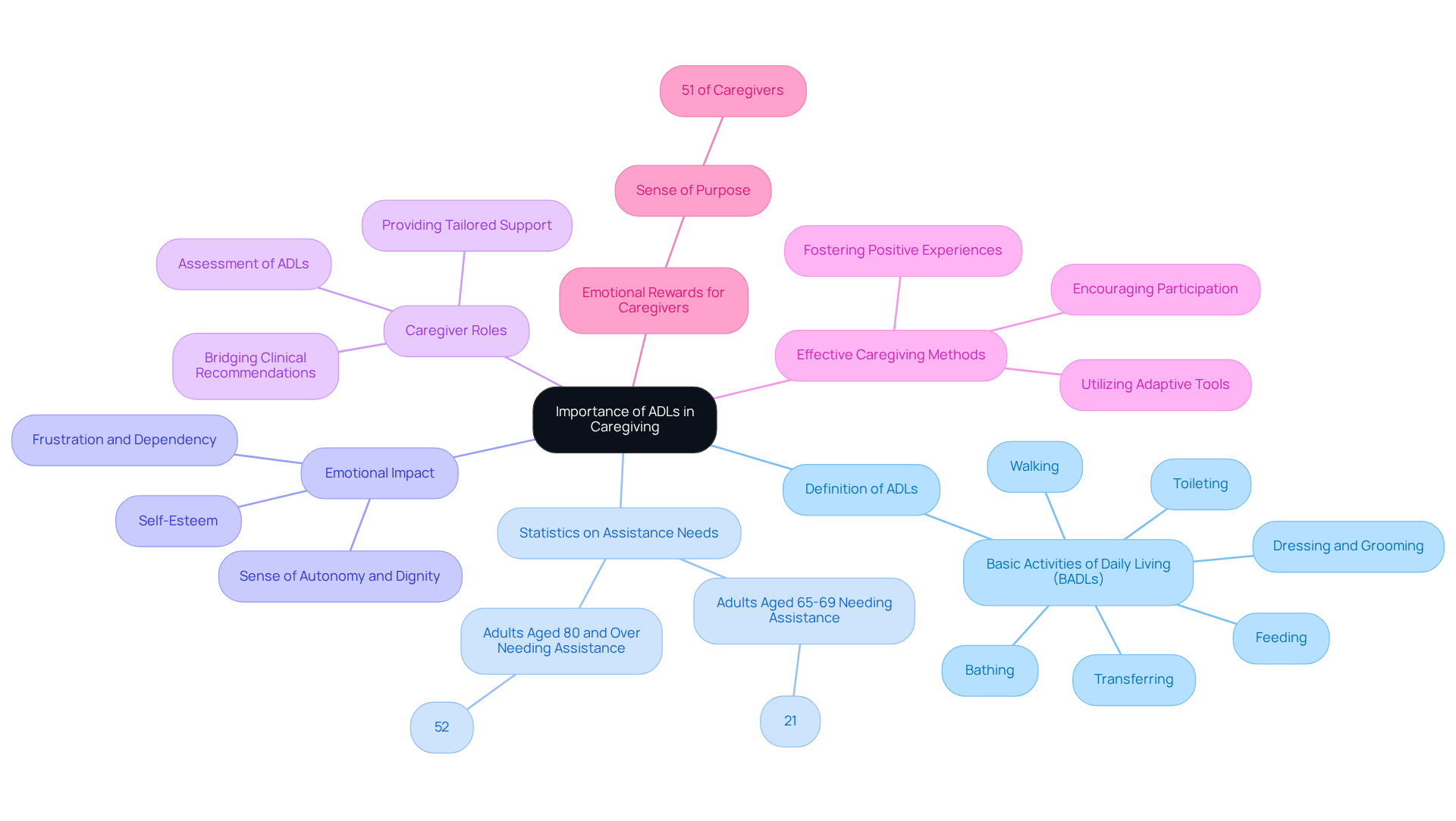
To understand how to maintain independence and enhance quality of life, it's important to know what are the 7 ADLs, which are the seven key Activities of Daily Living. Let’s explore these essential activities together:
-
Bathing and Showering: This involves the ability to wash oneself and maintain personal hygiene. Caregivers often step in to help during bathing, ensuring safety while respecting individual grooming preferences. This support is crucial for self-esteem and social engagement. In 2018, limitations in bathing were reported at a prevalence of 3.4%, highlighting the importance of caregiver assistance in this area.
-
Dressing: This refers to the ability to choose appropriate clothing and dress independently. Caregivers can offer clothing options that reflect a person’s style, promoting dignity and confidence while ensuring safety during the dressing process. Notably, dressing limitations were reported at a prevalence of 9.4% in 2018, underscoring the need for assistance in this activity.
-
Eating: The ability to feed oneself, including preparing food if necessary, is essential for health and wellness. Caregivers may assist by preparing meals that cater to dietary preferences and restrictions, ensuring that eating remains an enjoyable and nutritious experience. As Brian Kelley, PT, DPT, MHA, wisely notes, "Most people will eventually need assistance at some point in their life," which resonates deeply with the challenges faced in this ADL.
-
Continence: This is the ability to control bladder and bowel functions, crucial for personal hygiene and comfort. Caregivers can help by establishing scheduled bathroom visits, maintaining modesty and independence, and enhancing overall comfort.
-
Toileting: The ability to use the toilet independently is a critical aspect of personal care. Caregivers ensure that the environment is safe and accessible, helping individuals feel comfortable and secure during this process.
-
Mobility: This encompasses the ability to move around, including walking and transferring from one position to another. Caregivers encourage mobility by providing assistance as needed while promoting independence, which is vital for physical health and fall prevention.
-
Transferring: The ability to move from a bed to a chair or vice versa is important for maintaining independence. Caregivers serve as supportive observers, enabling individuals to carry out transfers autonomously while being available for assistance if required.
These activities are essential to daily living and are frequently evaluated to determine the level of care a person may need. By understanding what are the 7 ADLs, caregivers can offer focused assistance that enhances the client’s autonomy and dignity. Recent studies reveal that many seniors face challenges with these tasks, emphasizing the significance of personalized care plans that cater to specific needs and preferences.
Discuss Assessment Tools for ADLs
Understanding what are the 7 ADLs is crucial for evaluating a person's ability to handle daily living tasks and determining the level of care they need. Caregivers often face emotional challenges, feeling overwhelmed by the responsibility of ensuring their loved ones receive the right support. It’s important to recognize these feelings and know that help is available.
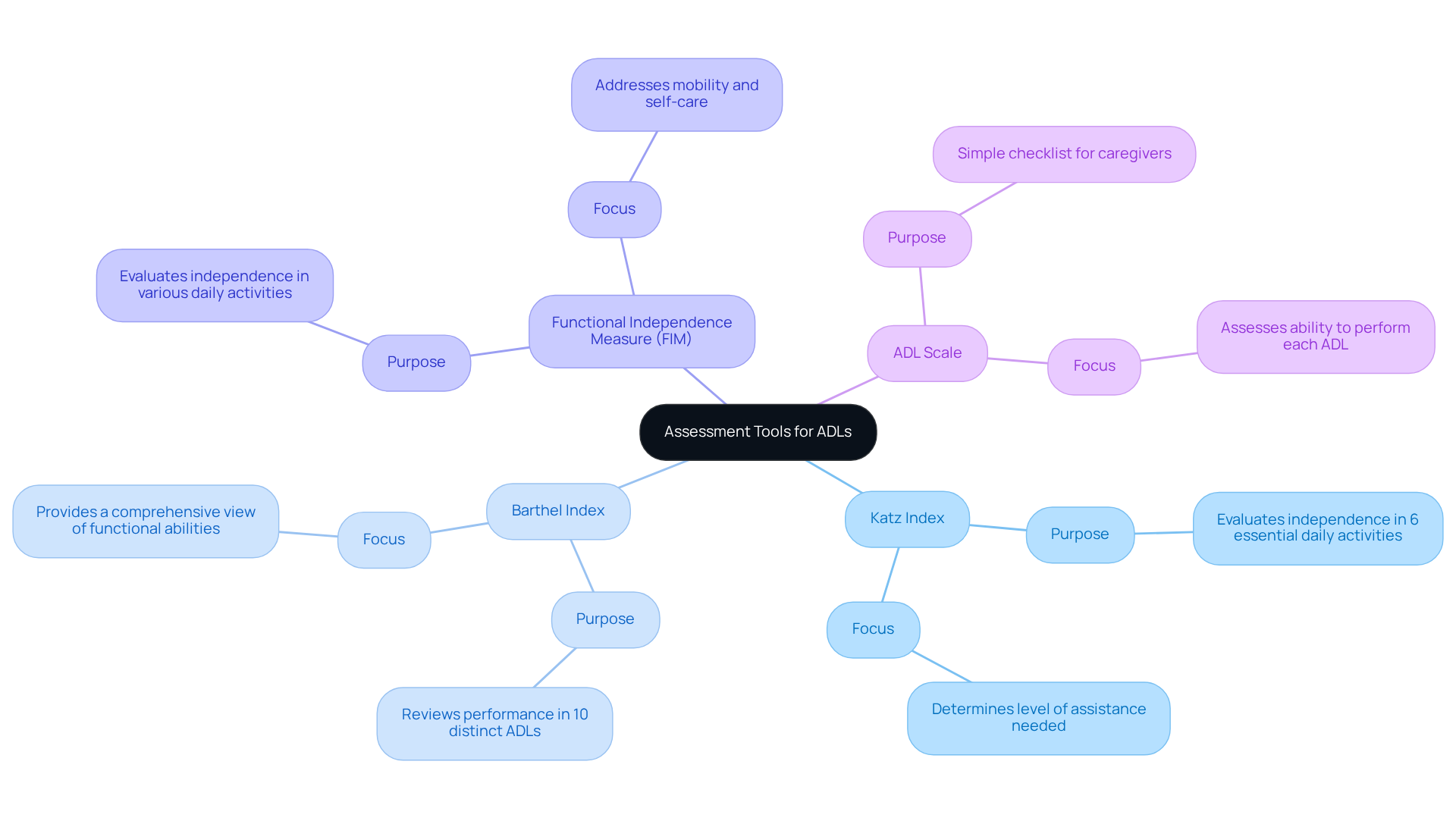
Several standardized assessment tools can make this process easier:
- The Katz Index of Independence in Activities of Daily Living examines six essential daily activities to help understand what are the 7 ADLs and the level of assistance needed.
- The Barthel Index is an assessment that reviews performance in ten distinct activities of daily living (ADLs) and helps to clarify what are the 7 ADLs, providing a comprehensive view of a person's functional abilities.
- The Functional Independence Measure (FIM) evaluates a person's independence in various daily activities, specifically addressing what are the 7 ADLs, including mobility and self-care.
- The ADL Scale is a simple checklist that caregivers can use to assess what are the 7 ADLs and the ability to perform each one.
These instruments not only help providers identify where assistance is needed but also improve communication with healthcare professionals about the individual’s care plan. By utilizing these assessments, caregivers can ensure they offer the most appropriate and effective support, ultimately enhancing the quality of life for their clients.
Remember, you’re not alone in this journey. Many caregivers share similar experiences, and by reaching out for support and utilizing these tools, you can find a path that feels manageable and fulfilling.
Your Path Forward
Understanding the seven Activities of Daily Living (ADLs) is vital for family caregivers who want to enhance the quality of life for their loved ones. These essential tasks - bathing, dressing, eating, toileting, transferring, managing continence, and mobility - form the foundation of personal independence. When caregivers recognize the importance of these activities, they can provide the right support, fostering dignity and autonomy for those they care for.
The significance of ADLs extends beyond physical health; it touches on emotional and psychological well-being too. Many older adults need assistance with these daily tasks, placing caregivers in a crucial position to assess needs and offer tailored support. By using standardized assessment tools, caregivers can refine their approach, ensuring effective communication with healthcare professionals and the implementation of personalized care plans.
Ultimately, understanding and prioritizing the seven ADLs can truly transform caregiving experiences. By promoting independence and enhancing overall quality of life, caregivers can profoundly impact the lives of seniors and individuals with disabilities. Embracing this knowledge is essential for creating a supportive environment where everyone feels valued and empowered to thrive.
https://iframe.tely.ai/cta/eyJhcnRpY2xlX2lkIjogIjY5MWU1YWMwMDAzNjA5ODRkZWZlZjlhZSIsICJjb21wYW55X2lkIjogIjY4ZWU1ZGNhNzMxNzYyNTU3ZjNjOTVjMSIsICJpbmRleCI6IG51bGwsICJ0eXBlIjogImFydGljbGUifQ==Frequently Asked Questions
What are Activities of Daily Living (ADLs)?
Activities of Daily Living (ADLs) are essential tasks that individuals perform daily to care for themselves and maintain their independence. The seven ADLs include bathing, dressing, eating, toileting, transferring (moving from one position to another), managing continence, and maintaining personal hygiene.
Why is understanding ADLs important for caregivers?
Understanding ADLs is vital for caregivers as it helps them assess the level of support needed for seniors and individuals with disabilities. This knowledge allows caregivers to provide appropriate assistance, fostering independence and enhancing the quality of life for those they care for.
How has the prevalence of ADL disability changed over the years?
Research shows that the prevalence of ADL disability decreased from 17.8% in 2006 to 16.5% in 2018, indicating improvements in the ability of individuals to perform these essential activities as the population ages.
What percentage of Americans aged 65 and above want to remain in their homes?
Approximately 75% of Americans aged 65 and above wish to remain in their homes, highlighting the significance of daily living activities in achieving this goal.
How do healthcare settings use ADLs?
In healthcare settings, ADLs are often used to determine the support services needed for individuals. For instance, if a senior struggles with dressing, they may require additional assistance to maintain their dignity and self-esteem.
What impact does assistance with ADLs have on seniors?
When seniors receive help with their daily activities, they tend to stay engaged in their routines, which can lead to improved mental and emotional well-being.
What is the level of training among caregivers regarding ADLs?
Only 11% of caregivers have received medical training for activities of daily living or instrumental activities of daily living, indicating a significant need for education and support for family caregivers.
Why is tracking ADLs important as the senior population rises?
As the number of seniors continues to rise, understanding and tracking activities of daily living will be essential to ensure that individuals can thrive in their own homes and receive the necessary support to maintain their independence.