What Are the Responsibilities of a Caregiver in Home Care?

For families in our service areas
For families in our service areas, this guide explains in-home care and how non-medical in-home caregiving can support care planning in East Idaho, Treasure Valley & Magic Valley, Northern Wasatch, North Central West Virginia, and Northeast Ohio.
Why What Are the Responsibilities of a Matters
The role of a caregiver in home care is often underappreciated, presenting a significant problem that impacts both caregivers and those they assist. Caregivers face a multitude of responsibilities, from providing personal assistance and companionship to managing complex medical tasks. This diverse range of duties can lead to emotional and physical challenges, making it crucial to address these issues for the well-being of both caregivers and clients.
The implications of these challenges are profound. Caregivers not only enhance the lives of those who cannot fully care for themselves, but they also experience stress and burnout, which can affect the quality of care provided. Therefore, it’s essential to recognize the importance of personalized care and the vital emotional support caregivers offer.
So, how can caregivers balance these responsibilities while taking care of their own needs? One effective solution is to prioritize self-care and seek support from peers or professionals. Engaging in regular training can also equip caregivers with the skills needed to manage their duties more effectively. By implementing these strategies, caregivers can improve their own well-being and, in turn, enhance the quality of life for those they assist.
Defining the Role of a Caregiver
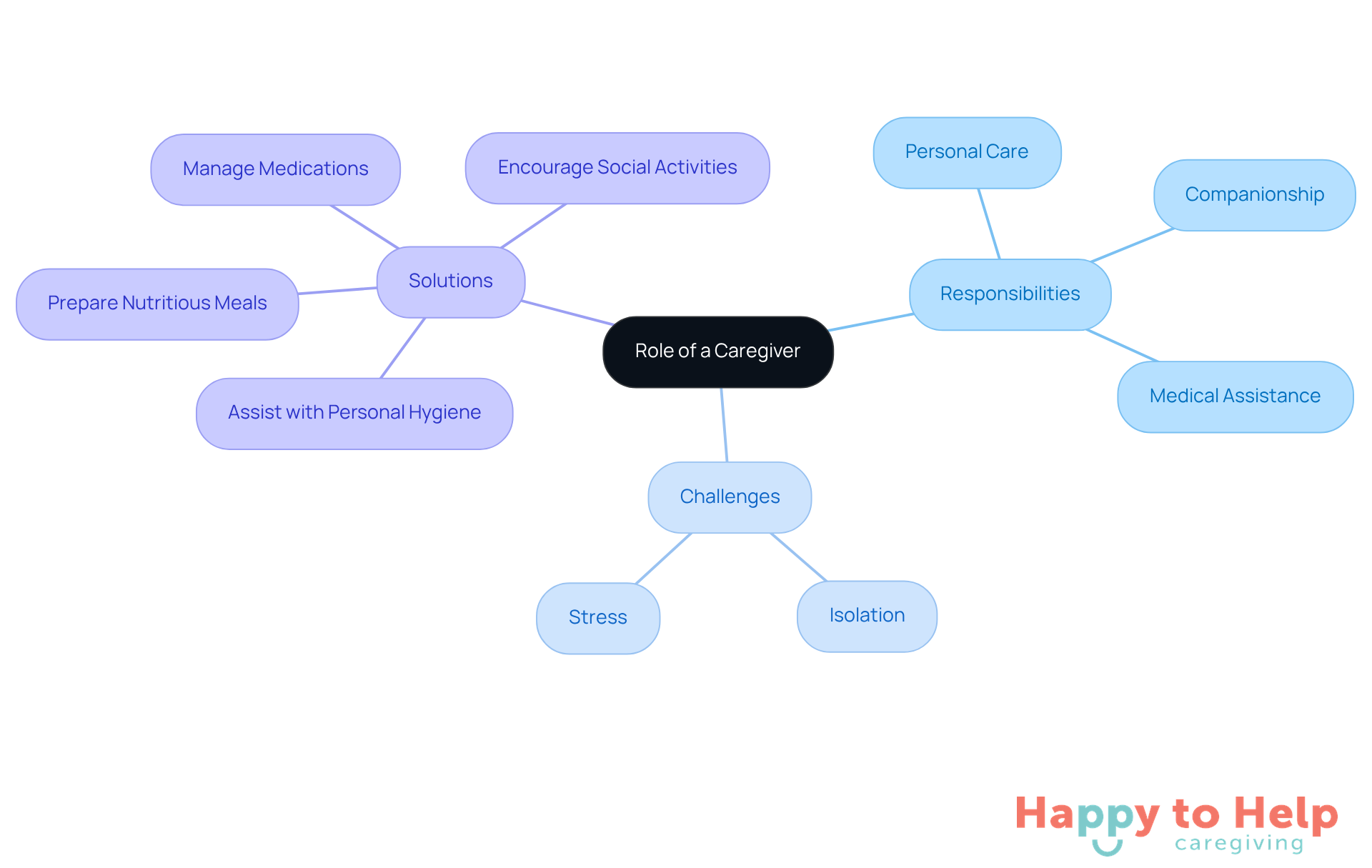
Caregivers face significant challenges when providing support to individuals who cannot fully care for themselves due to age, illness, or disability. This role involves various duties, which raises the question of what are the responsibilities of a caregiver, including personal care, companionship, and even complex medical assistance. The implications of these challenges can lead to feelings of isolation and stress for both caregivers and those they assist.
To address these issues, it’s crucial to recognize the importance of emotional support alongside physical assistance. Caregivers, whether family members, friends, or professional aides, fulfill what are the responsibilities of a caregiver by playing a vital role in enhancing the quality of life for their clients through meeting their physical, emotional, and social needs. In home care environments, promoting autonomy and comfort is essential. Support providers not only help with daily activities but also alleviate feelings of loneliness, which can significantly impact overall well-being.
As Robert F. Kennedy, Jr. stated, "America’s supporters carry our nation’s most vulnerable on their shoulders, and they do it with a strength and devotion that rarely receives the acknowledgment it merits." This highlights the dedication of support providers, who often go unrecognized for their efforts.
To improve the caregiving experience, consider these actionable solutions:
- Assist with personal hygiene to promote dignity and comfort.
- Prepare nutritious meals that cater to dietary needs.
- Manage medications effectively to ensure health and safety.
- Encourage social activities that foster mental stimulation and happiness.
Ultimately, support providers are essential in improving the quality of life for those they assist, ensuring individuals can thrive in the comfort of their own homes. Notably, 1 in 4 Americans act as support providers for older adults and individuals with disabilities, underscoring the critical role they fulfill in our society.
Core Responsibilities of Caregivers
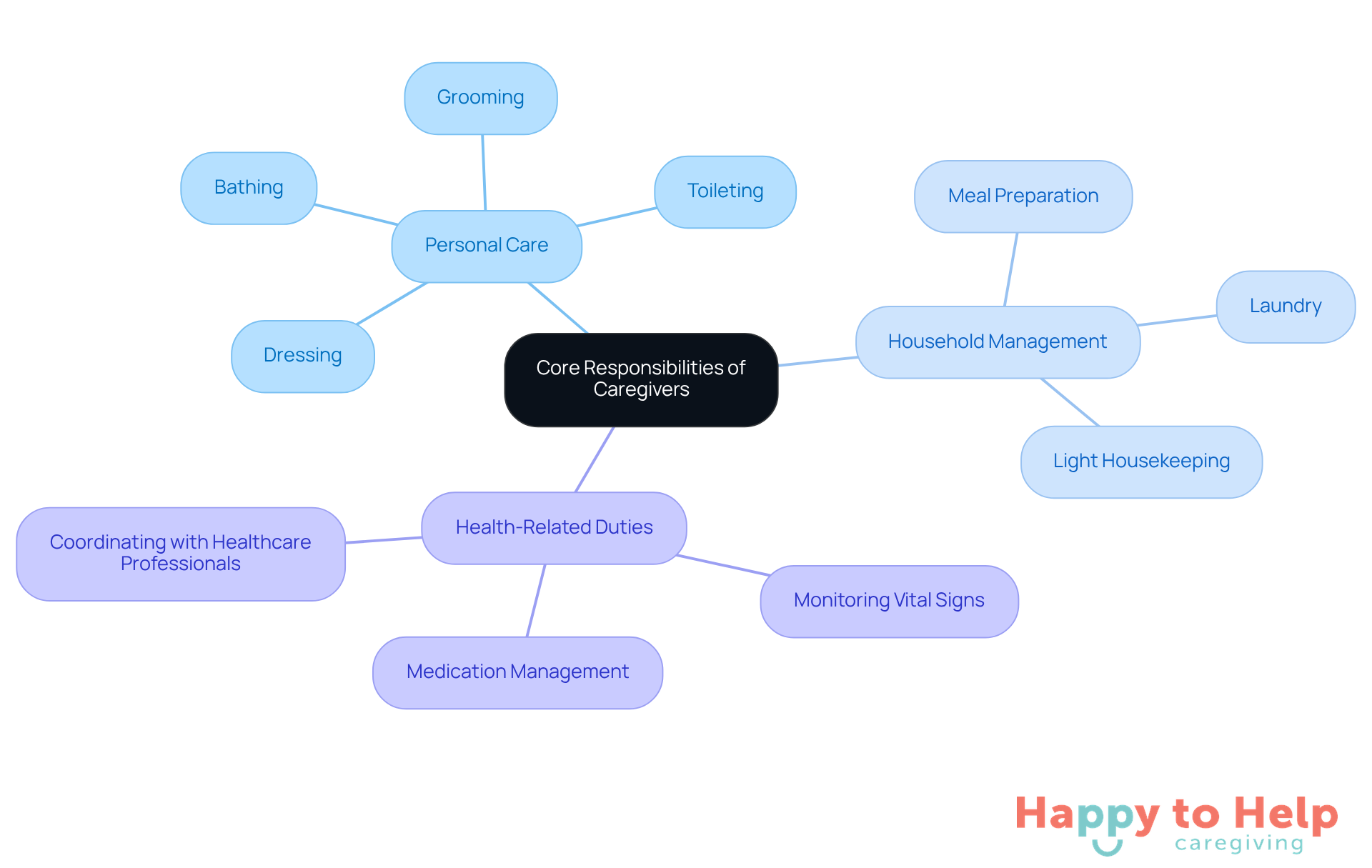
A significant challenge for caregivers is managing a wide range of responsibilities, leading to the question of what are the responsibilities of a caregiver, which can be categorized into personal care, household management, and health-related duties. Personal care tasks include:
- Assisting clients with bathing
- Dressing
- Grooming
- Toileting
Household management may involve:
- Meal preparation
- Laundry
- Light housekeeping
Health-related duties encompass:
- Medication management
- Monitoring vital signs
- Coordinating with healthcare professionals
The implications of these responsibilities are profound. According to the Bureau of Labor Statistics, caregivers not only provide essential physical support but also offer companionship, which is crucial for emotional well-being. Statistics reveal that nearly one in four Americans serves as a household supporter, underscoring their vital role in the healthcare system. Furthermore, an AARP study estimated that the unpaid contributions of relative supporters amount to $600 million each year, highlighting the economic significance of their efforts.
To address these challenges, caregivers can implement practical solutions. Recognizing the importance of companionship can enhance the emotional support they provide. It is essential to recognize what are the responsibilities of a caregiver, as each of these responsibilities plays a crucial role in ensuring that individuals maintain their dignity and quality of life. In fact, over half of family support providers report finding purpose in their roles, which can be a motivating factor in their caregiving journey.
Providing Emotional and Physical Support
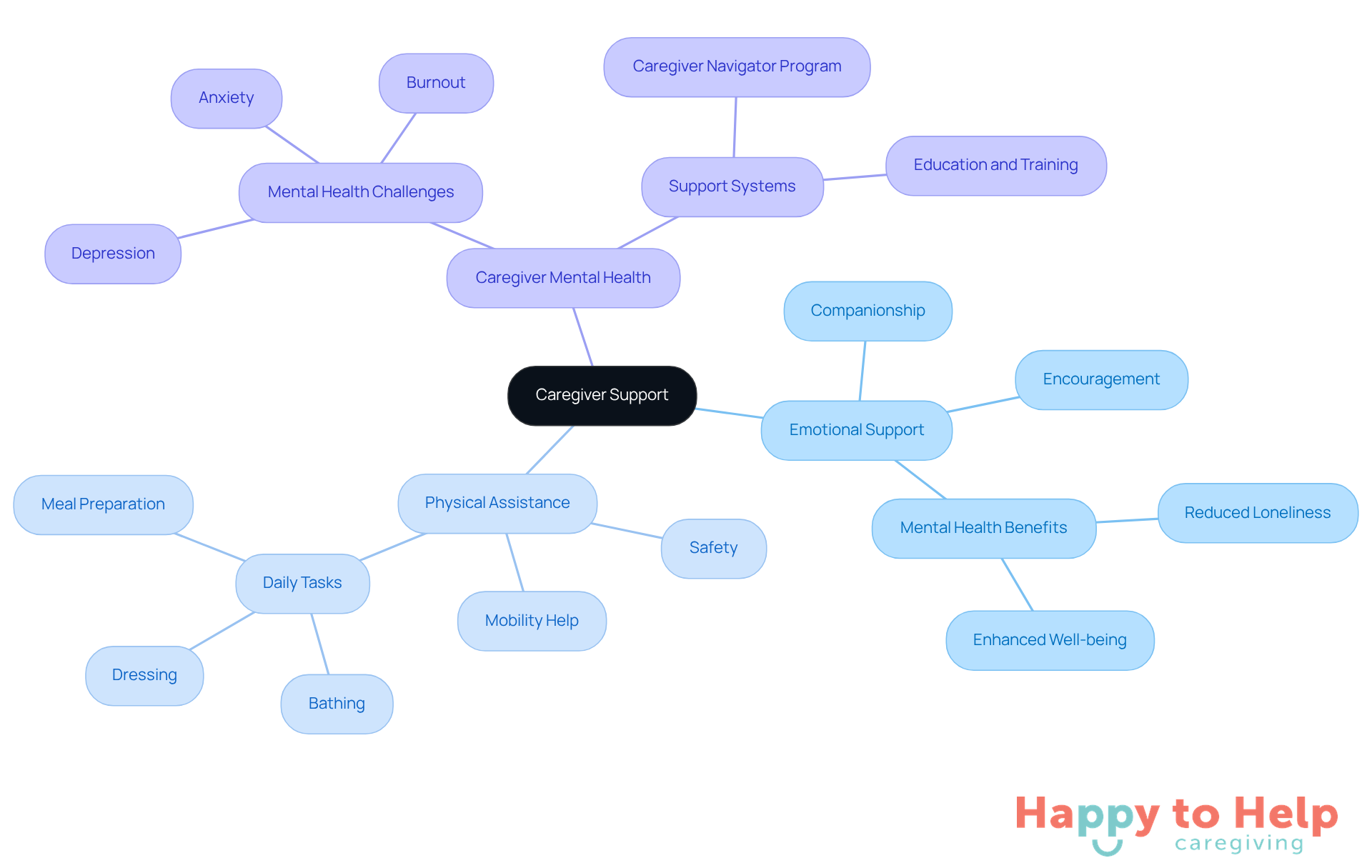
Emotional encouragement is a cornerstone of effective caregiving, illustrating what are the responsibilities of a caregiver, alongside the essential physical assistance they provide. Caregivers often take on the role of companions, offering conversation, encouragement, and a listening ear. This emotional bond can significantly reduce feelings of loneliness and anxiety, which are prevalent among those receiving care. Research indicates that companionship not only enhances emotional well-being but also contributes to better mental health outcomes for seniors, fostering a sense of belonging and security.
However, caregivers face substantial mental health challenges themselves. According to recent reports, 47% of relatives providing care reported mental health difficulties in the past year. This highlights the necessity for systems that prioritize their well-being. As Debra Barrett, Head of Corporate Affairs at Otsuka, states, "Supporting family providers is not a niche issue; it is vital to whole-person attention and to the health of our society." To provide the best support possible, it is crucial to address the emotional and educational needs of caregivers, as this relates to what are the responsibilities of a caregiver.
Physical assistance includes various activities, such as helping individuals with mobility, ensuring their safety, and aiding with daily tasks like bathing, dressing, and meal preparation. This combination of emotional and physical support fosters a nurturing atmosphere that encourages independence and enhances the overall quality of life for individuals. For instance, supporters might involve individuals in pastimes they appreciate, which not only promotes physical activity but also elevates their mood, emphasizing the significance of companionship in support. Psychologists stress that such interactions can result in enhanced mental well-being, underscoring the significant influence support providers have on their clients' lives.
Tailoring Care to Individual Needs
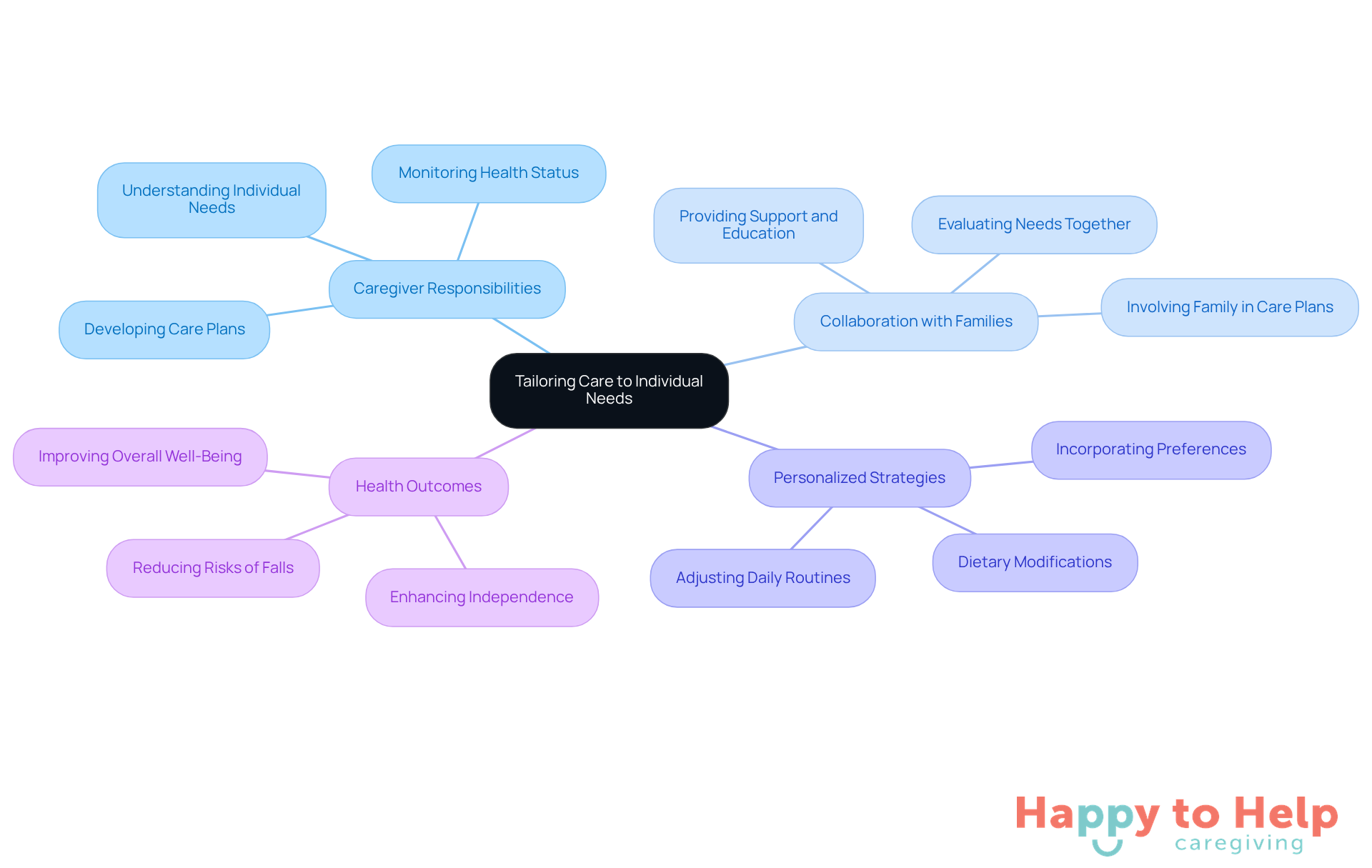
A significant challenge in effective home caregiving is determining what are the responsibilities of a caregiver while tailoring care to individual needs. Each person has unique preferences, health conditions, and lifestyle requirements that must be considered when developing a care plan. Neglecting these individual needs can lead to decreased well-being and a lack of independence for clients.
To address this issue, caregivers must work closely with individuals and their families to evaluate what are the responsibilities of a caregiver in meeting these needs. This collaboration allows for the development of personalized strategies that encourage independence and improve overall well-being. For instance, caregivers can modify meal plans to accommodate specific dietary limitations common among seniors or adjust daily routines to align with a person's energy levels. Such adjustments ensure that care is both effective and considerate of individual preferences.
This personalized approach not only enhances the quality of care but also empowers clients by clearly defining what are the responsibilities of a caregiver, fostering a sense of value and respect throughout their caregiving journey. Recent developments in the home care industry underscore the increasing demand for tailored care, as families seek providers who prioritize individualized attention and compassionate support.
Care managers emphasize that understanding what are the responsibilities of a caregiver is essential for creating a well-structured personalized care plan that leads to better health outcomes and enhances the overall caregiving experience. According to industry statistics, home care significantly reduces the risk of falls and injuries for seniors by assisting with mobility and daily living tasks. This underscores the critical role of personalized care in maintaining safety and independence.
Key Takeaways for Caregivers
The role of a caregiver in home care is crucial, yet often overlooked. Caregivers face significant challenges, including a lack of recognition and support, which can impact their ability to provide quality care. This situation not only affects caregivers but also the individuals they assist, as inadequate support can lead to diminished quality of life for clients.
To address these challenges, it’s essential to advocate for caregivers and ensure they receive the recognition they deserve. This includes providing resources and support systems that empower caregivers to thrive in their roles. By fostering a culture that values caregiving, we can enhance the lives of both caregivers and those they assist.
Key responsibilities of caregivers, such as:
- Personal hygiene assistance
- Meal preparation
- Medication management
- Emotional support
are vital for the well-being of clients. Each duty contributes significantly to maintaining dignity and independence, showcasing the indispensable role caregivers play in the healthcare system.
Recognizing the profound impact caregivers have on their clients’ lives is essential. As the demand for home care continues to grow, it is imperative to ensure that caregivers have the tools and support they need. By implementing actionable solutions and advocating for their needs, we can promote a healthier, more connected community.
https://iframe.tely.ai/cta/eyJhcnRpY2xlX2lkIjogIjY5MjY2NjIyNWYwOGRhZjJjOGIyMWRmMiIsICJjb21wYW55X2lkIjogIjY4ZWU1ZGNhNzMxNzYyNTU3ZjNjOTVjMSIsICJpbmRleCI6IG51bGwsICJ0eXBlIjogImFydGljbGUifQ==Frequently Asked Questions
What is the role of a caregiver?
A caregiver provides support to individuals who cannot fully care for themselves due to age, illness, or disability. This role includes various responsibilities such as personal care, companionship, and complex medical assistance.
What are the main responsibilities of a caregiver?
Caregivers are responsible for assisting with personal hygiene, preparing nutritious meals, managing medications, and encouraging social activities to enhance the physical, emotional, and social well-being of those they care for.
How do caregivers impact the lives of those they assist?
Caregivers enhance the quality of life for their clients by meeting their physical, emotional, and social needs, promoting autonomy, and alleviating feelings of loneliness.
What challenges do caregivers face?
Caregivers may experience feelings of isolation and stress due to the demands of their role, which can affect both their well-being and that of the individuals they assist.
Why is emotional support important in caregiving?
Emotional support is crucial as it complements physical assistance, helping to improve the overall well-being of both caregivers and those they care for.
What solutions can improve the caregiving experience?
Solutions include assisting with personal hygiene, preparing meals that meet dietary needs, managing medications effectively, and encouraging social activities to foster mental stimulation and happiness.
How prevalent is caregiving in the United States?
Approximately 1 in 4 Americans act as support providers for older adults and individuals with disabilities, highlighting the significant role caregivers play in society.
List of Sources
- Defining the Role of a Caregiver
- More People Are Caring for Dying Loved Ones at Home. A New Orleans Nonprofit Is Showing Them How. - KFF Health News (https://kffhealthnews.org/news/article/end-of-life-home-hospice-care-dying-new-orleans-louisiana)
- Opinion | America’s Caregivers Are in Crisis (https://nytimes.com/2025/11/24/opinion/caregiving-crisis.html)
- Honoring America’s Family Caregivers, the Unseen Workforce Behind Our Health System - Medicare Rights Center (https://medicarerights.org/medicare-watch/2025/11/25/honoring-americas-family-caregivers-the-unseen-workforce-behind-our-health-system)
- HHS Backs AI Innovation for America’s Caregivers | HHS.gov (https://hhs.gov/press-room/hhs-backs-ai-innovation-for-americas-caregivers.html)
- A New Labor Rule Could Push Caregivers to the Breaking Point | ACLU (https://aclu.org/news/womens-rights/a-new-labor-rule-could-push-caregivers-to-the-breaking-point)
- Core Responsibilities of Caregivers
- Honoring America’s Family Caregivers, the Unseen Workforce Behind Our Health System - Medicare Rights Center (https://medicarerights.org/medicare-watch/2025/11/25/honoring-americas-family-caregivers-the-unseen-workforce-behind-our-health-system)
- Caregiving Crisis: 45% Increase in Americans Providing Care (https://aarp.org/caregiving/basics/caregiving-in-us-survey-2025)
- National Alliance for Caregiving: Caregiving in the US 2025 Report (https://johnahartford.org/resources/view/national-alliance-for-caregiving-caregiving-in-the-us-2025-report)
- New Report Reveals Crisis Point for America’s 63 million Family Caregivers (https://states.aarp.org/maryland/caregiving-report)
- Understanding Family Caregiver Responsibilities Today (https://eastersealsar.com/understanding-family-caregiver-responsibilities-today)
- Providing Emotional and Physical Support
- Family Caregiver Support, Education Needs Growing (https://hospicenews.com/2025/11/11/family-caregiver-support-education-needs-growing)
- Caregiving’s Mental Health Crisis (https://forbes.com/sites/otsuka/2025/10/02/caregivings-mental-health-crisis)
- Opinion | America’s Caregivers Are in Crisis (https://nytimes.com/2025/11/24/opinion/caregiving-crisis.html)
- Tailoring Care to Individual Needs
- Why Senior Home Care is More Important Than Ever (https://homeinstead.com/home-care/usa/la/carencro/347/news-and-media/senior-home-care-is-more-important-than-ever)
- How Personalized Health Care Is Changing The Role Of Home Care Providers (https://homehealthcarenews.com/2024/03/how-personalized-health-care-is-changing-the-role-of-home-care-providers)
- Customized Care at Home: The Benefits of Personalized Care Plans - VNA Health Group (https://vnahg.org/customized-care-at-home-the-benefits-of-personalized-care-plans)
- Importance of Personalized Senior Home Care in Burlington NC (https://wisdomseniorcare.com/the-importance-of-personalized-care-plans-for-seniors)
- Designing Care That Focuses on Individual Needs (https://eyeonannapolis.net/2025/11/designing-care-that-focuses-on-individual-needs)