What Causes an Elderly Person to Hallucinate? Key Insights
For families in our service areas
For families in our service areas, this guide explains caregiver support and how non-medical in-home caregiving can support care planning in East Idaho, Treasure Valley & Magic Valley, Northern Wasatch, North Central West Virginia, and Northeast Ohio.
What You Need to Know About What Causes an Elderly Person to
Understanding the complexities of hallucinations in the elderly presents a significant challenge for caregivers. Nearly half of individuals with advanced dementia experience these distressing sensory perceptions, which can complicate their care. This situation not only affects the individuals but also places emotional and psychological burdens on caregivers.
What drives these hallucinations? The causes can range from medication side effects to underlying health conditions. Caregivers must navigate these complexities while providing support. To effectively assist their loved ones, caregivers need practical strategies to address the emotional turmoil that often accompanies these experiences.
Exploring coping strategies is essential. Caregivers can foster a compassionate environment by employing techniques such as:
- Validating feelings
- Maintaining a calm demeanor
- Creating a safe space
Additionally, seeking professional guidance can provide further support and resources. By understanding the causes and implementing these strategies, caregivers can significantly improve the quality of life for those they care for.
Defining Hallucinations in the Elderly
Hallucinations present a significant challenge for caregivers of elderly individuals, particularly those suffering from dementia. These sensory perceptions can seem real but occur without any external stimuli, often manifesting as visual, auditory, or tactile sensations. For instance, an elderly person might perceive figures that aren’t there or hear voices that don’t exist. Such experiences can be distressing and may indicate underlying health issues, making it essential for caregivers to understand their nature and implications. Research indicates that up to 50% of individuals with advanced Alzheimer's disease and related dementias experience delusions, underscoring their prevalence among older adults.
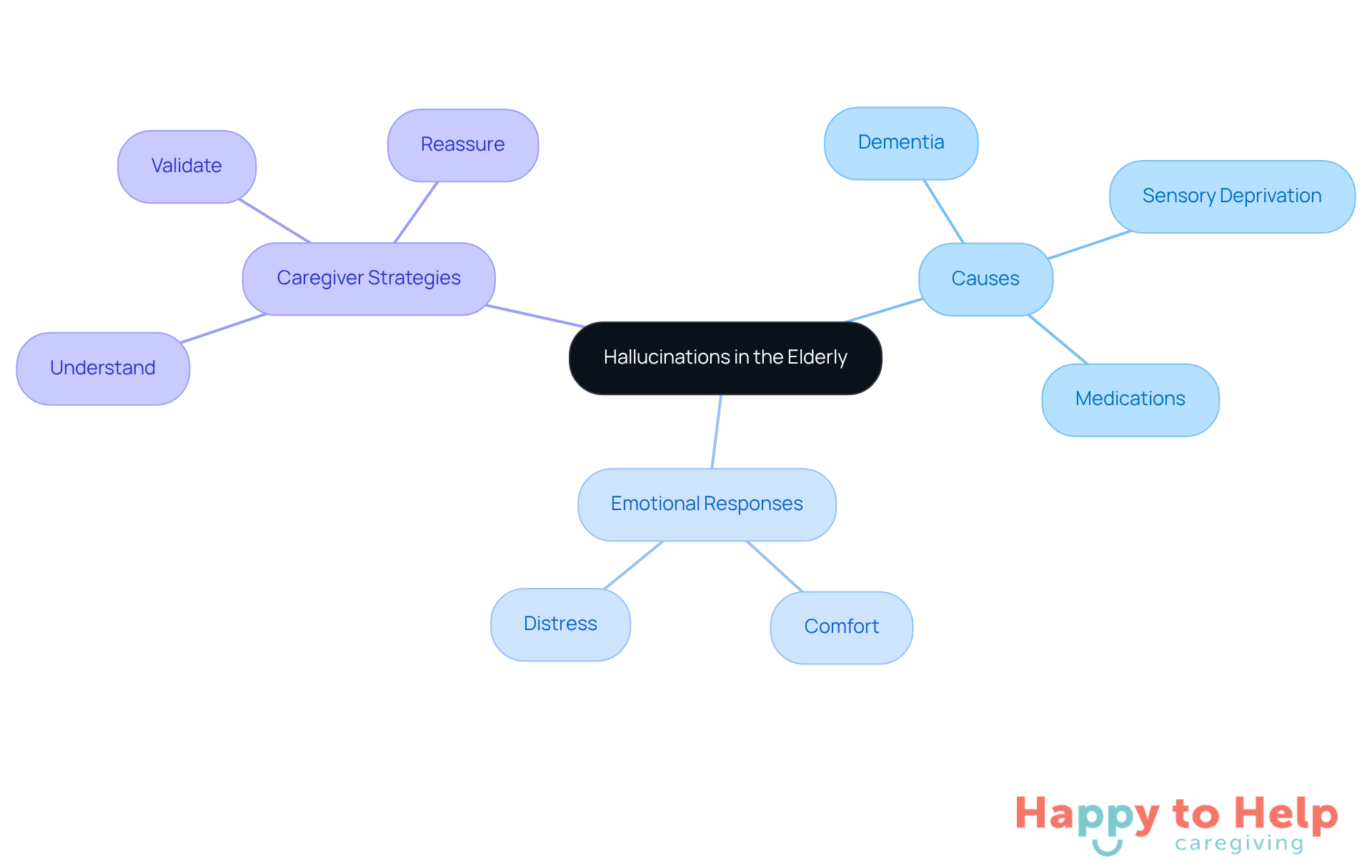
It is crucial to understand what causes an elderly person to hallucinate. Factors like dementia, sensory deprivation, and certain medications contribute to what causes an elderly person to hallucinate. For example, visual impairment may lead individuals to misinterpret their surroundings, intensifying false perceptions. Caregivers should also recognize that emotional reactions to these perceived realities can vary; some patients may find comfort in their experiences. A notable case is that of Norma 'Momom' Hall, who found solace in visions of her late sister during her memory loss.
Geriatric experts emphasize the importance of compassionate communication when addressing these sensory experiences. A three-step approach can be effective:
- Understand the patient’s experience
- Validate their emotions
- Reassure them of their safety
This method not only alleviates distress but also fosters a supportive environment for the patient. By distinguishing between false perceptions and delusions, caregivers can better manage the emotional responses of their loved ones, ensuring they receive the compassionate care they need.
Identifying Key Causes of Hallucinations
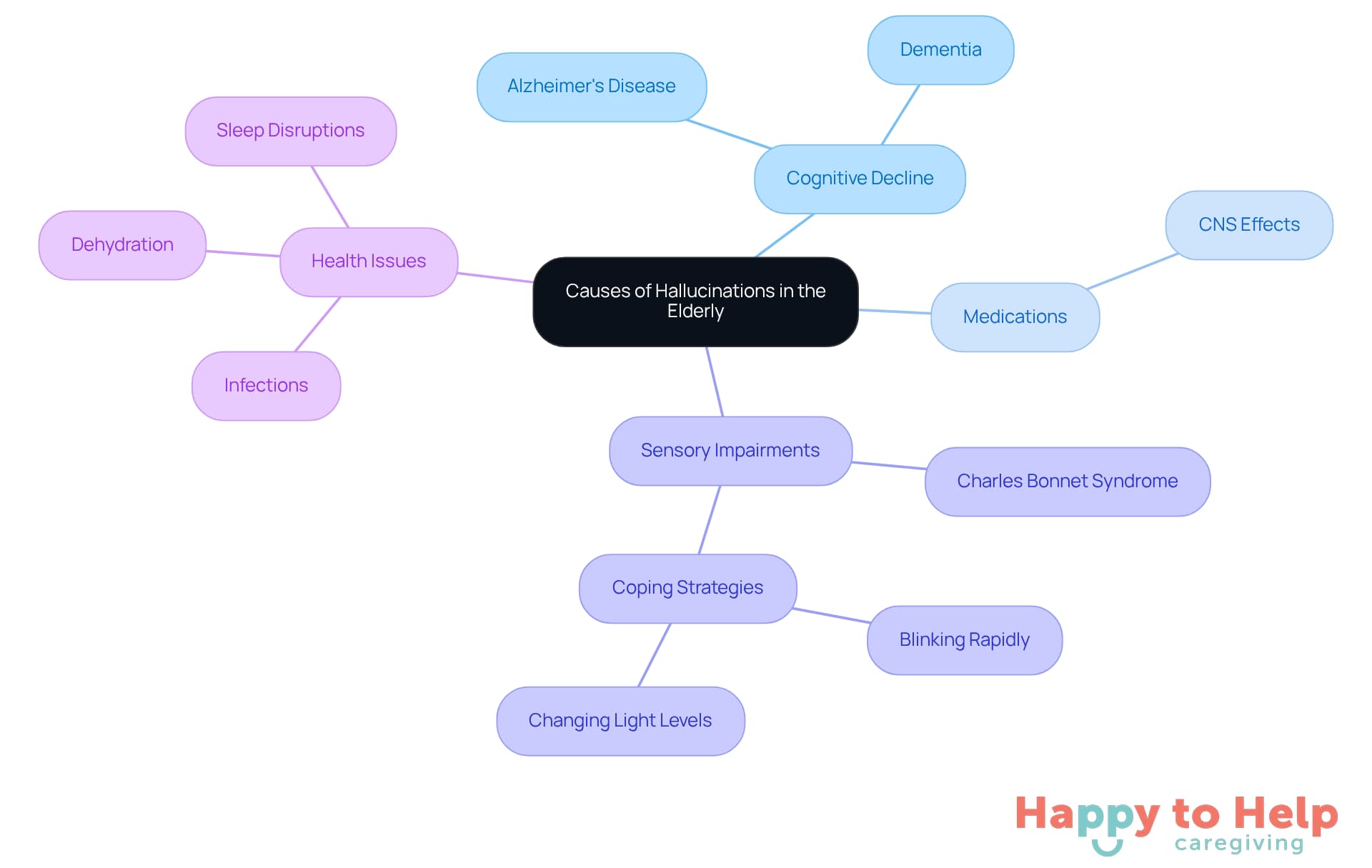
Understanding what causes an elderly person to hallucinate presents a significant challenge, primarily stemming from cognitive decline. Conditions like Alzheimer's disease and other forms of dementia significantly contribute to what causes an elderly person to hallucinate. Research shows that up to 50 percent of patients with late-stage Alzheimer's may encounter these sensory experiences, which can manifest as visual, auditory, or tactile phenomena.
Medications, particularly those affecting the central nervous system, can also lead to altered perceptions as a side effect. Caregivers must be vigilant, as certain prescriptions may worsen these symptoms, making careful monitoring and communication with healthcare providers essential.
Sensory impairments, such as vision and hearing loss, are crucial factors in the emergence of false perceptions. For instance, Charles Bonnet syndrome (CBS) occurs when individuals with significant vision loss experience vivid visual illusions. This condition illustrates the brain's attempt to compensate for the lack of visual input, resulting in the creation of images that do not exist. Coping strategies for CBS include:
- Blinking rapidly
- Changing light levels
- Engaging in relaxation techniques
These methods can help manage these experiences effectively.
In addition to cognitive and sensory factors, other health issues like infections, dehydration, and sleep disruptions can provoke or worsen perceptual disturbances, which leads to investigations into what causes an elderly person to hallucinate. Infections, particularly urinary tract infections (UTIs), are notorious for causing sudden changes in perception, which can be distressing for both the individual and their caregivers. Ensuring proper hydration and addressing sleep quality are vital strategies for managing the risk of distorted perceptions.
Understanding these factors is crucial for caregivers, as it enables them to provide compassionate support and create a safe environment for their loved ones. By grasping the interplay between cognitive decline, medications, sensory impairments, and medical conditions, caregivers can more effectively navigate the challenges of sensory distortions in the elderly. Furthermore, distinguishing between sensory experiences without a basis in reality and delusions-false beliefs-can enhance a caregiver's ability to support their loved ones effectively.
Recognizing Symptoms of Hallucinations
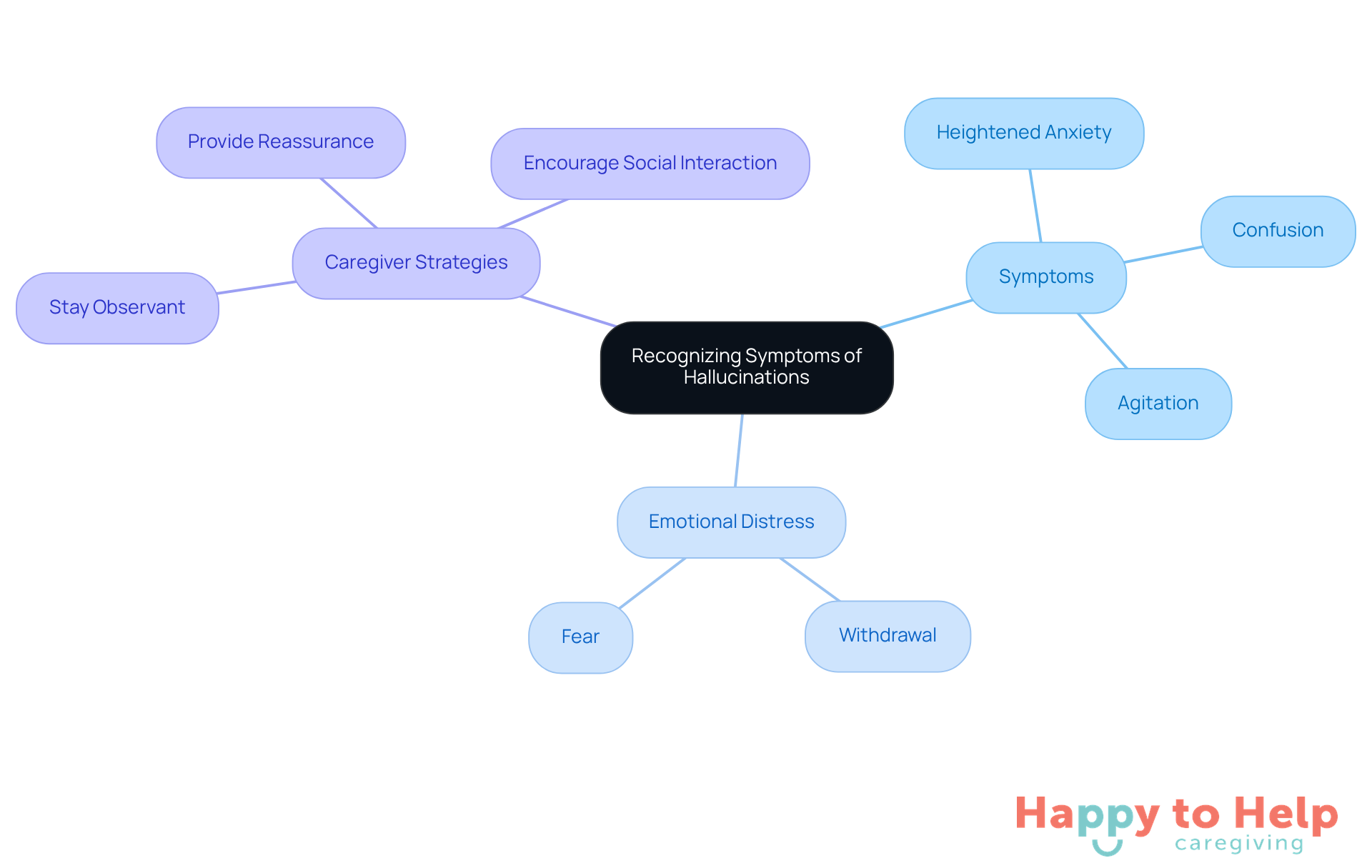
Indicators of what causes an elderly person to hallucinate can pose significant challenges for caregivers. These changes often manifest as marked shifts in behavior or mood, such as heightened anxiety, confusion, or agitation in elderly individuals, which may lead to inquiries about what causes an elderly person to hallucinate. When faced with false perceptions, they may withdraw from social interactions or express fear about what causes an elderly person to hallucinate.
These behavioral changes not only indicate what causes an elderly person to hallucinate, but they also highlight the emotional distress that accompanies them. Caregivers must be vigilant in recognizing these signs early. By doing so, they can offer reassurance and assistance, which is crucial in mitigating the impact of delusions on the individual's quality of life.
To effectively support those experiencing altered perceptions, caregivers can implement the following strategies:
- Stay observant: Regularly monitor changes in behavior or mood.
- Provide reassurance: Offer comfort and understanding to alleviate anxiety.
- Encourage social interaction: Gently promote engagement with family and friends to combat withdrawal.
By addressing these issues proactively, caregivers can significantly enhance the well-being of those they support.
Implications for Caregiving and Support
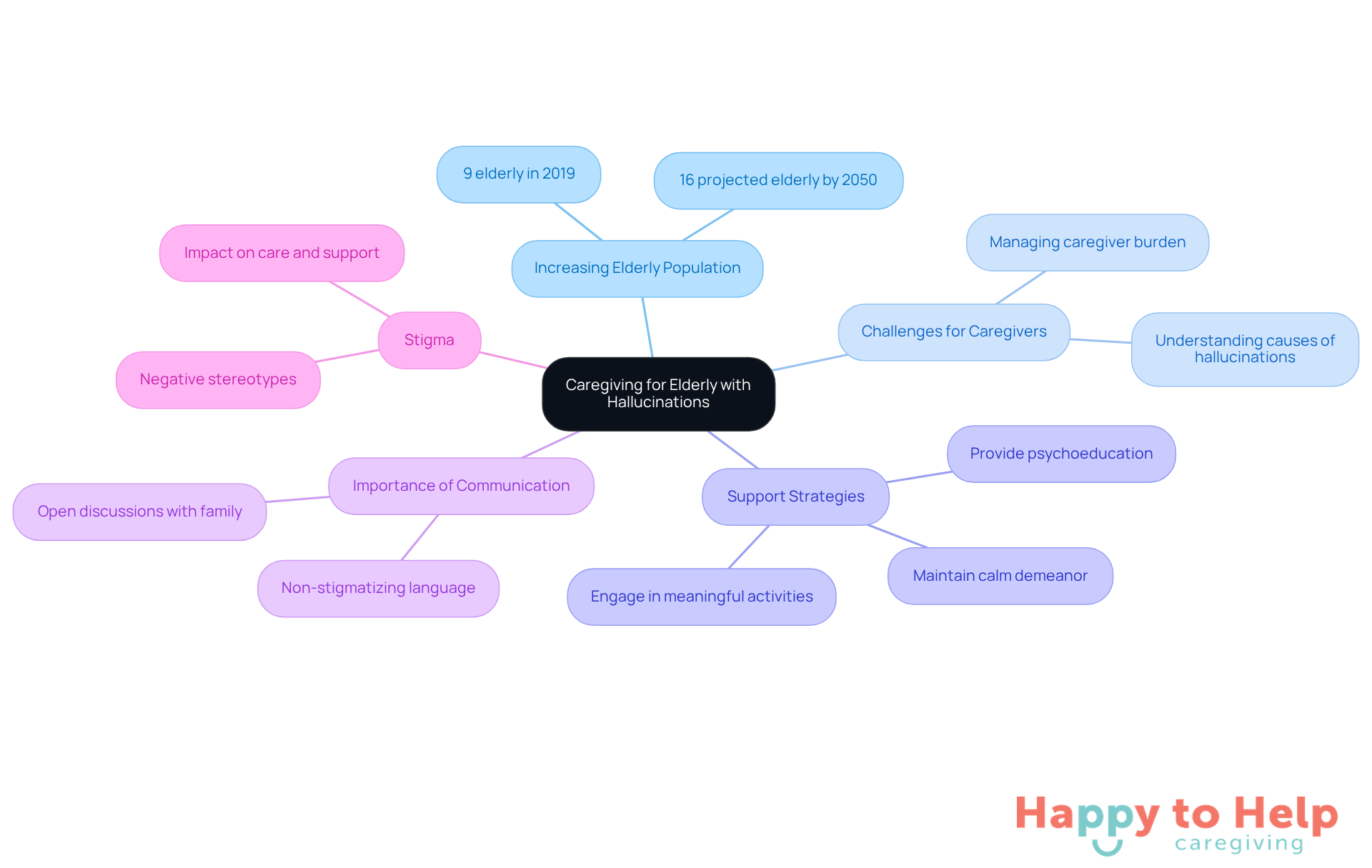
Caregivers face a significant challenge in understanding what causes an elderly person to hallucinate, necessitating an empathetic and informed approach. By 2050, it is projected that 16% of individuals will be over 65 years old, up from 9% in 2019. This shift underscores the urgent need to focus on the health of older adults, particularly in understanding what causes an elderly person to hallucinate.
Caregivers face the challenge of effectively managing what causes an elderly person to hallucinate. It’s essential to foster a supportive atmosphere that reduces distress. Maintaining a calm demeanor and affirming the individual's feelings can significantly alleviate anxiety. Engaging in meaningful activities serves as an effective distraction, helping to redirect focus and reduce discomfort.
Moreover, it’s crucial to acknowledge what causes an elderly person to hallucinate, as well as the emotional complexities linked to these experiences. Seniors may react differently, and open communication with family members is vital. Sharing insights about the individual's experiences ensures that everyone involved can provide consistent and informed support.
Recognizing the stigma associated with perceptual disturbances is also important. This stigma can hinder open conversations and assistance. By fostering a compassionate caregiving approach and emphasizing the need for improved training and resources for health professionals, caregivers can mitigate the effects of hallucinations. Ultimately, this enhances the overall well-being and quality of life for their clients.
Taking the Next Steps
Understanding the causes of hallucinations in elderly individuals is vital for caregivers who aim to provide compassionate and effective support. Hallucinations can stem from various factors, including cognitive decline, sensory impairments, and certain medications. These issues can lead to distressing experiences for both the elderly and their caregivers.
Recognizing these underlying causes allows caregivers to better address the emotional and psychological needs of their loved ones, fostering a more supportive environment. Key insights highlight the importance of recognizing symptoms such as:
- Changes in behavior
- Mood shifts
- Increased anxiety
Implementing strategies like compassionate communication, reassurance, and encouraging social interaction can significantly enhance the well-being of those experiencing hallucinations.
In light of the growing elderly population and the prevalence of hallucinations among this demographic, prioritizing education and awareness is crucial. Caregivers are encouraged to:
- Seek resources
- Share experiences
- Engage in open conversations about hallucinations
This approach helps reduce stigma and enhances support. Embracing compassion not only improves the quality of life for elderly individuals but also empowers caregivers to face these challenges with confidence and understanding.
https://iframe.tely.ai/cta/eyJhcnRpY2xlX2lkIjogIjY5MjNhMGNiZTUyZmU2NjM2Njg4Njc1MiIsICJjb21wYW55X2lkIjogIjY4ZWU1ZGNhNzMxNzYyNTU3ZjNjOTVjMSIsICJpbmRleCI6IG51bGwsICJ0eXBlIjogImFydGljbGUifQ==Frequently Asked Questions
What are hallucinations in the elderly?
Hallucinations in the elderly are sensory perceptions that seem real but occur without any external stimuli. They can manifest as visual, auditory, or tactile sensations, such as seeing figures that aren’t there or hearing voices that don’t exist.
Why are hallucinations a concern for caregivers of elderly individuals?
Hallucinations can be distressing for elderly individuals, particularly those with dementia, and may indicate underlying health issues. Understanding their nature and implications is essential for caregivers to provide appropriate support.
What is the prevalence of hallucinations in elderly individuals with dementia?
Research indicates that up to 50% of individuals with advanced Alzheimer's disease and related dementias experience delusions, highlighting the prevalence of hallucinations among older adults.
What factors can cause hallucinations in the elderly?
Factors contributing to hallucinations in the elderly include dementia, sensory deprivation, and certain medications. For instance, visual impairment may lead individuals to misinterpret their surroundings, intensifying false perceptions.
How can caregivers respond to an elderly person experiencing hallucinations?
Caregivers can use a three-step approach: understand the patient’s experience, validate their emotions, and reassure them of their safety. This method helps alleviate distress and fosters a supportive environment.
Can elderly individuals find comfort in their hallucinations?
Yes, some elderly individuals may find comfort in their hallucinations. For example, a case is noted where an elderly woman found solace in visions of her late sister during her memory loss.
How can caregivers distinguish between false perceptions and delusions?
By recognizing the nature of the sensory experiences and the emotional responses of the elderly individual, caregivers can better manage their loved ones' emotional reactions and provide compassionate care.
List of Sources
- Defining Hallucinations in the Elderly
- Our trial of ondansetron as a treatment for hallucinations in Parkinson's is restarting (https://parkinsons.org.uk/news/our-trial-ondansetron-treatment-hallucinations-parkinsons-restarting)
- Dementia-Related Hallucinations Appear To Be Worsened By Visual Impairment (https://ophthalmologyadvisor.com/news/dementia-related-hallucinations-psychosis-worsened-by-visual-impairment)
- Understanding Hallucinations in Dementia - Penn Memory Center (https://pennmemorycenter.org/understanding-hallucinations-in-dementia)
- What Causes Hallucinations in Seniors? | Juniper Senior Living (https://junipercommunities.com/what-causes-hallucinations-in-seniors)
- hallucinations (https://healthcare.utah.edu/moran/news/tags/hallucinations)
- Identifying Key Causes of Hallucinations
- Understanding Hallucinations in Dementia - Penn Memory Center (https://pennmemorycenter.org/understanding-hallucinations-in-dementia)
- Study Sheds Light on Syndrome Causing Harmless Hallucinations among the Elderly (https://healthcare.utah.edu/moran/news/2018/10/study-sheds-light-syndrome-causing-harmless-hallucinations-among-elderly)
- What Causes Hallucinations in Seniors? | Juniper Senior Living (https://junipercommunities.com/what-causes-hallucinations-in-seniors)
- What Causes Hallucinations in the Elderly? - Griswold (https://griswoldcare.com/blog/what-causes-hallucinations-in-the-elderly)
- Implications for Caregiving and Support
- Managing Dementia Hallucinations: How To Keep Your Loved One Relaxed (https://homeinstead.com/home-care/usa/az/glendale/882/news-and-media/managing-dementia-hallucinations-how-to-keep-your-loved-one-relaxed)
- Top List of Inspirational Dementia Quotes for Caregivers (https://rochesterlawcenter.com/dementia-resources/dementia-quotes)
- 27 Inspirational Quotes for Caregivers (https://ultimatecareny.com/resources/27-quotes-for-caregivers)
- Caregiver Burden among Caregivers of Patients with Mental Illness: A Systematic Review and Meta-Analysis - PMC (https://pmc.ncbi.nlm.nih.gov/articles/PMC9777672)
- Hallucinations in Older Adults: A Practical Review - PMC (https://pmc.ncbi.nlm.nih.gov/articles/PMC7707075)