
What You Need to Know About What Do Home Health Aides Get Paid? Key
Understanding the financial landscape of home health aides is crucial as the demand for compassionate care continues to rise. The problem lies in the varying salaries of these dedicated professionals across different states, which often raises concerns for both caregivers and the families they serve.
These disparities in compensation can significantly impact the quality of care provided. Families may struggle to find affordable support, while caregivers face challenges in making a living wage. This situation not only affects the individuals involved but also highlights the need for systemic changes in the industry.
To address these issues, it’s essential to explore the factors influencing salaries and advocate for fair compensation. Caregivers can benefit from understanding their worth and seeking out resources that support their financial needs. By staying informed and connected, they can navigate the complexities of this vital profession and ensure they receive the compensation they deserve.
Defining Home Health Aides: Roles and Responsibilities
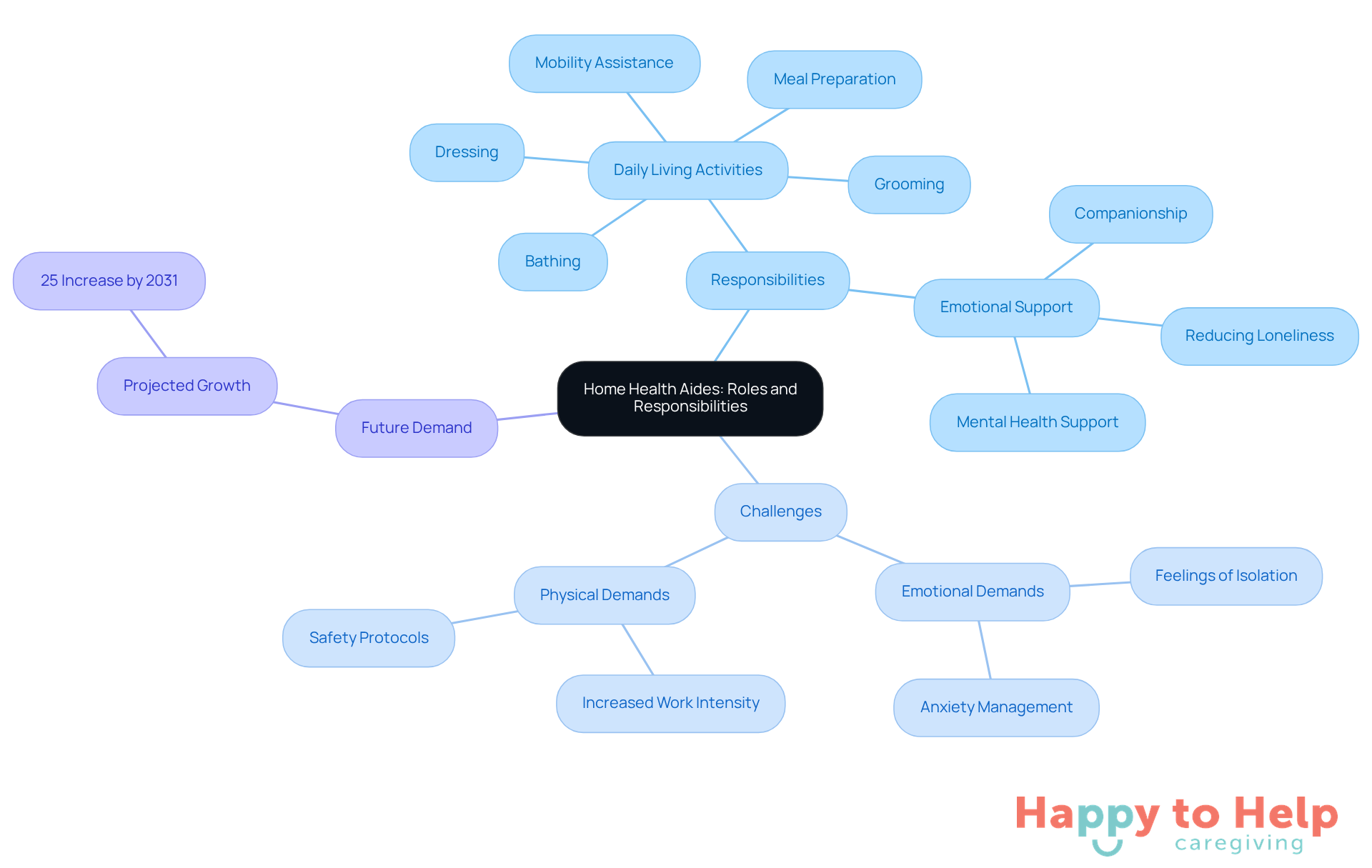
Residential support workers (HHAs) play a crucial role in providing essential assistance to individuals in their homes, particularly the elderly and those with disabilities. They face significant challenges in their caregiving roles, which can impact the well-being of their clients. These challenges include the emotional and physical demands of caregiving, which can lead to feelings of isolation and anxiety for both caregivers and clients.
The implications of these challenges are profound. HHAs not only assist with daily living activities - such as bathing, dressing, grooming, and meal preparation - but also provide vital emotional support. A study highlighted that helpers significantly reduce feelings of loneliness and anxiety among clients, fostering a sense of safety and companionship that is essential for emotional well-being. This multifaceted role enhances the overall quality of life for patients, making HHAs indispensable in the healthcare continuum.
To address these challenges, it is essential to recognize the growing demand for home health assistants. According to the Bureau of Labor Statistics, the need for HHAs is projected to rise by 25 percent by 2031. This statistic underscores the importance of integrating assistants into healthcare teams to improve service coordination and patient outcomes. Industry leaders advocate for this integration, reinforcing the position of HHAs as essential healthcare providers.
As the landscape of senior support evolves, the role of HHAs remains vital. They ensure that clients receive the compassionate and comprehensive assistance they need. By acknowledging the significance of HHAs and supporting their work, we can enhance the well-being of older adults and ensure they maintain a degree of independence and comfort in their own homes.
Factors Influencing Home Health Aide Salaries
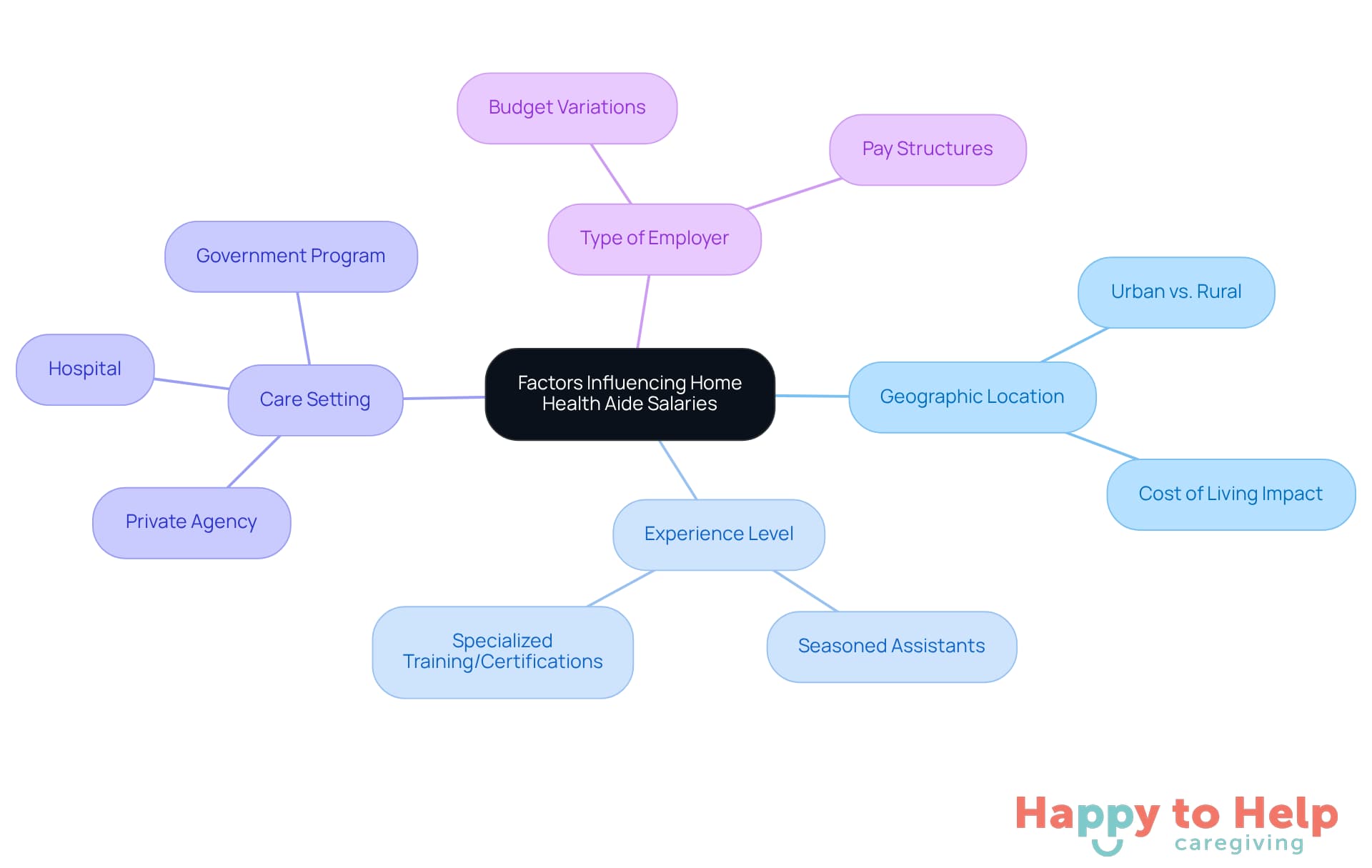
Multiple factors contribute to the challenges faced by home health workers, especially in relation to what do home health aides get paid. Geographic location, experience level, and care setting all play significant roles. For example, workers in urban areas often earn more than those in rural settings, primarily due to the higher cost of living and increased demand for services.
Experience is another critical factor; seasoned assistants with specialized training or certifications typically command higher wages. Additionally, the type of employer-whether a private agency, hospital, or government program-can influence salary levels, as different organizations have varying budgets and pay structures.
According to PHI, residential support salaries remain low, and when combined with unstable, often part-time schedules, this leads to high poverty levels among support workers. Understanding what do home health aides get paid is crucial for both potential assistants and families seeking support.
Bill Dombi emphasizes that focusing on retention is the most effective way to address workforce shortages. This is particularly important in a sector where turnover rates for care workers decreased from 36.31% in 2024 to 34.17% in 2025. This context underscores the need for competitive compensation strategies to attract and retain qualified assistants.
Home Health Aide Salary Averages by State
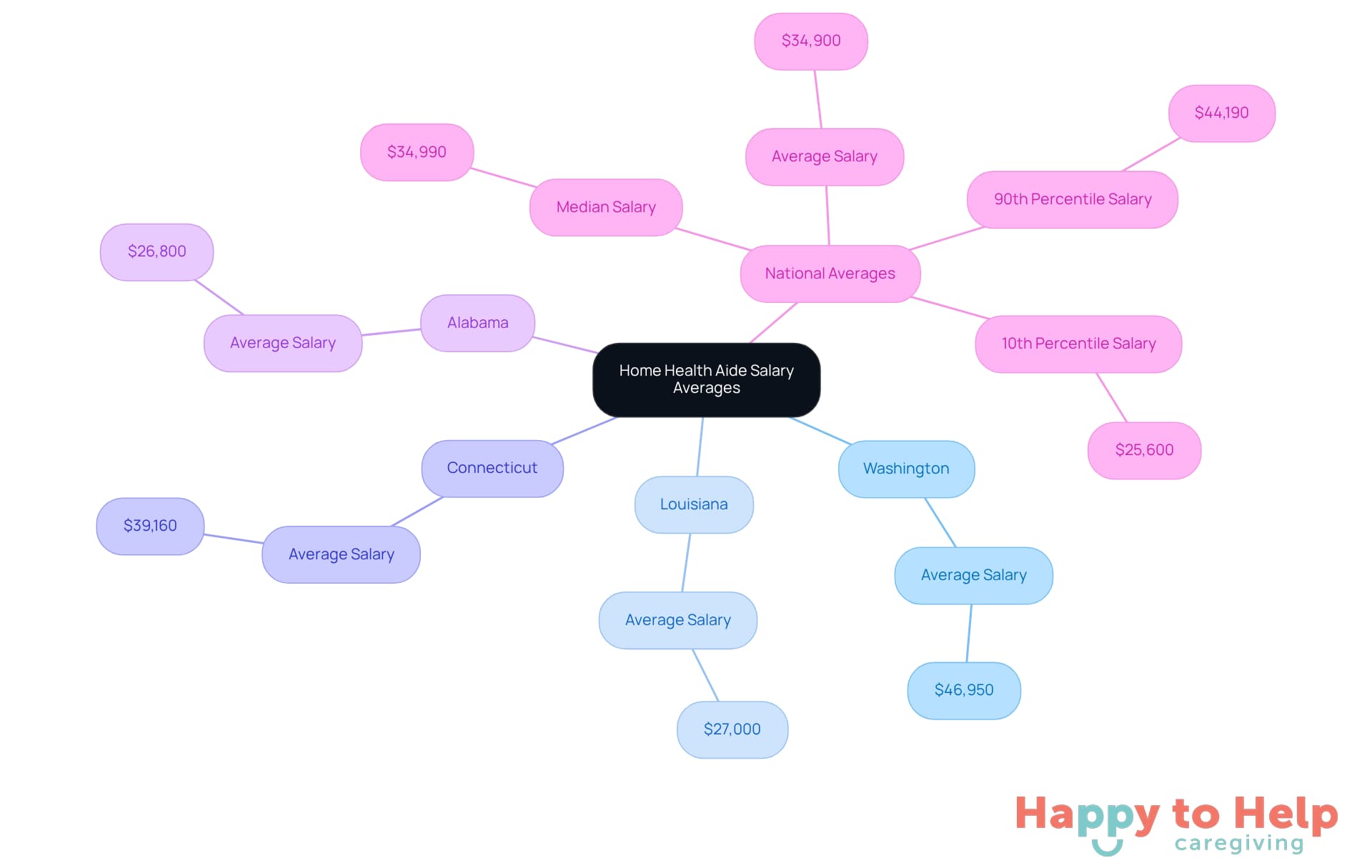
As of 2025, home health workers face a significant problem: salary variation across states. For instance, assistants in Washington earn an average yearly salary of roughly $46,950, making it one of the highest-paying states. In contrast, those in Louisiana report much lower averages, around $27,000 per year. This disparity can create challenges for job seekers and families trying to make informed decisions about employment and support options.
The implications of these salary differences are profound. According to the Bureau of Labor Statistics, the national median yearly wage for domestic health workers stands at about $34,990, while the average annual salary is approximately $34,900. These variations reflect differences in the cost of living, demand for services, and financing for residential support programs across various regions. For example, assistants in Connecticut earn an average of $39,160 each year, indicating a higher cost of living and increased demand for support services in that state. Conversely, in Alabama, the average annual salary is about $26,800, highlighting the economic differences that affect compensation.
To navigate these challenges, it is essential to understand what do home health aides get paid. The 10th percentile yearly salary for personal care assistants is $25,600, while the 90th percentile reaches $44,190, demonstrating the variation in earnings within this sector. Moreover, the need for residential support workers is expected to increase by 21%, suggesting a favorable outlook for job applicants in this field. Additionally, the typical sign-on bonus for domestic care workers rose to $2,304 in 2025, which can be a significant factor for those considering job opportunities.
In summary, being aware of what do home health aides get paid and the growing demand for caregivers can empower job seekers and families to make informed decisions regarding employment opportunities and support options.
Top-Paying States for Home Health Aides
In the caregiving profession, workforce shortages pose a significant challenge. This issue not only affects the quality of care provided but also places immense pressure on existing caregivers. As Bill Dombi, senior counsel for Arnall Golden Gregory law firm, points out, "Devoting time to retention is the most efficient, economical and successful way to deal with the workforce shortages today."
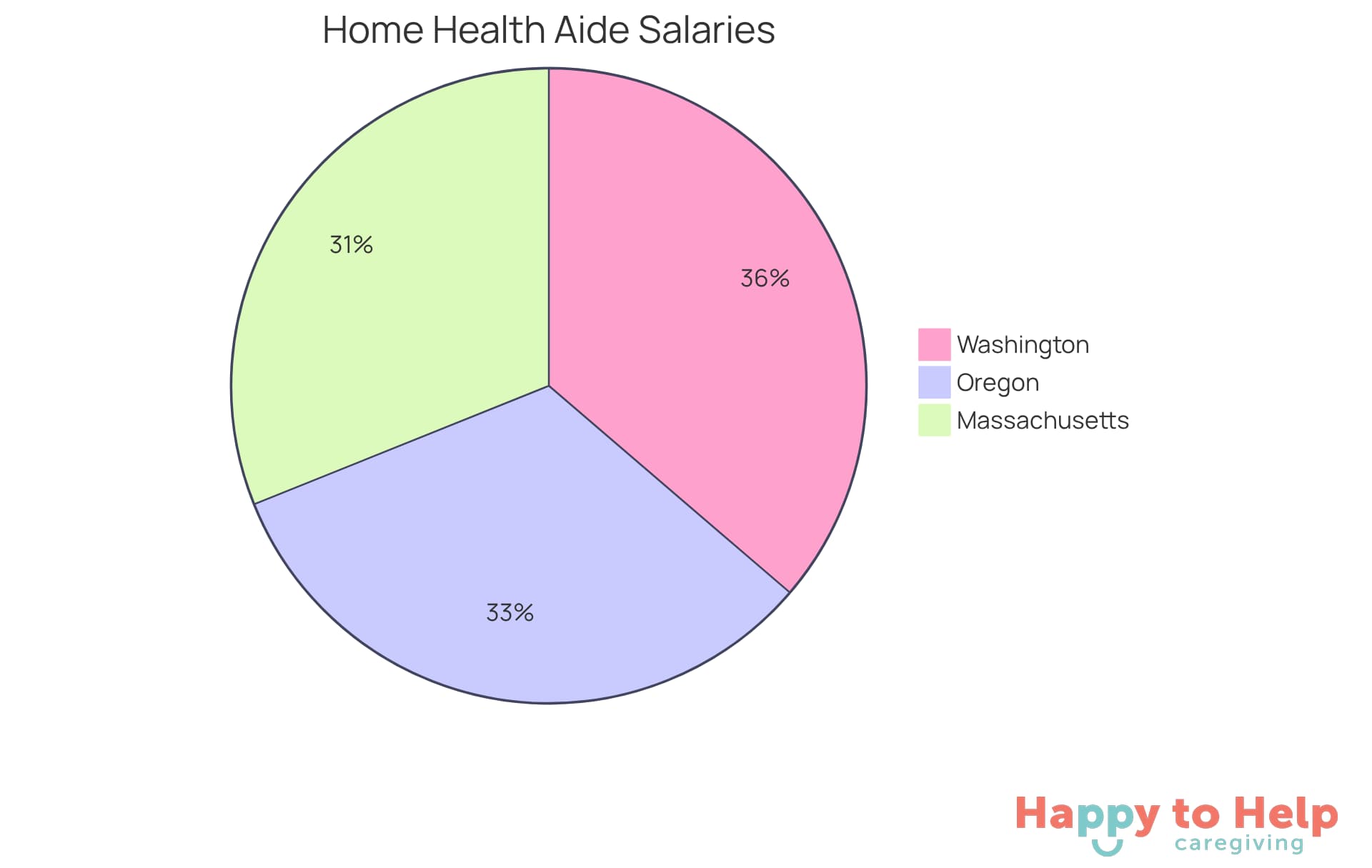
In 2025, certain states stand out as beacons of opportunity for personal care workers. In Washington, which has an impressive average salary of approximately $46,140, many people wonder what do home health aides get paid, as it is the highest-paying state for this profession. Massachusetts follows closely with an average of around $39,520, while Oregon offers competitive compensation at about $41,490, prompting the inquiry of what do home health aides get paid. Beyond these attractive salaries, these states typically feature comprehensive support systems for home health aides, which raises the question of what do home health aides get paid, including enhanced training programs and appealing benefits.
For those considering a career in caregiving, focusing on these states not only promises better financial rewards but also contributes to a more fulfilling work environment. By prioritizing retention strategies and seeking employment in these supportive states, caregivers can significantly improve their quality of life and the care they provide.
Key Takeaways for Caregivers
Understanding the compensation landscape for home health aides presents a significant problem for both caregivers and families seeking support. These professionals play a critical role in enhancing the quality of life for clients, yet they face emotional and physical demands that often go unrecognized. This lack of recognition not only highlights the need for fair compensation but also underscores the necessity of integrating home health aides into the broader healthcare system.
The implications of this issue are stark. Key insights reveal that various factors, including geographic location, experience, and care settings, significantly influence home health aide salaries. For instance, while states like Washington offer competitive salaries, others, such as Louisiana, display stark disparities. Furthermore, the projected increase in demand for these caregivers emphasizes the urgency of addressing workforce shortages through better pay and retention strategies.
To tackle these challenges, advocating for improved compensation and support for home health aides is crucial. This advocacy not only benefits the caregivers themselves but also ensures that clients receive the compassionate care they deserve. By understanding the intricacies of home health aide salaries and the factors that influence them, stakeholders can make informed decisions that enhance the overall healthcare experience for everyone involved.
https://iframe.tely.ai/cta/eyJhcnRpY2xlX2lkIjogIjY5MjRmMWM3ZWM0Y2FiOGU3NGVjMDBhYiIsICJjb21wYW55X2lkIjogIjY4ZWU1ZGNhNzMxNzYyNTU3ZjNjOTVjMSIsICJpbmRleCI6IG51bGwsICJ0eXBlIjogImFydGljbGUifQ==Frequently Asked Questions
What is the primary role of Home Health Aides (HHAs)?
Home Health Aides (HHAs) provide essential assistance to individuals in their homes, particularly the elderly and those with disabilities, by helping with daily living activities and offering emotional support.
What daily living activities do HHAs assist with?
HHAs assist with activities such as bathing, dressing, grooming, and meal preparation.
How do HHAs impact their clients' emotional well-being?
HHAs significantly reduce feelings of loneliness and anxiety among clients, fostering a sense of safety and companionship that is essential for emotional well-being.
What challenges do HHAs face in their caregiving roles?
HHAs face emotional and physical demands that can lead to feelings of isolation and anxiety for both themselves and their clients.
What is the projected demand for HHAs in the coming years?
The Bureau of Labor Statistics projects that the need for HHAs will rise by 25 percent by 2031.
Why is it important to integrate HHAs into healthcare teams?
Integrating HHAs into healthcare teams is important to improve service coordination and patient outcomes, reinforcing their position as essential healthcare providers.
How do HHAs contribute to the quality of life for their clients?
HHAs enhance the overall quality of life for patients by providing compassionate and comprehensive assistance, helping them maintain independence and comfort in their own homes.
List of Sources
- Defining Home Health Aides: Roles and Responsibilities
- Home Health Aide Responsibilities: Essential Duties Explained (https://specialtouchhomecare.com/resources/the-essential-duties-and-responsibilities-of-a-home-health-aide)
- Home (https://homehealthcarenews.com)
- Pay, Job Protections for Home Care Aides at Risk Under Proposed Federal Rule (https://aarp.org/advocacy/job-protections-home-care-workers)
- Home Health Aides’ Increased Role in Supporting Older Veterans and Primary Healthcare Teams During COVID-19: a Qualitative Analysis - PMC (https://pmc.ncbi.nlm.nih.gov/articles/PMC8939490)
- Understanding the Direct Care Workforce (https://phinational.org/policy-research/key-facts-faq)
- Factors Influencing Home Health Aide Salaries
- Home Health Worker Retention Improves As Wages, Bonuses Increase In 2025 (https://homehealthcarenews.com/2025/11/home-health-worker-retention-improves-as-wages-bonuses-increase-in-2025)
- Home Care Industry To Face 6.1M Job Openings By 2034 As Low Wages Fuel Turnover (https://homehealthcarenews.com/2025/09/home-care-industry-to-face-6-1m-job-openings-by-2034-as-low-wages-fuel-turnover)
- Factors Affecting the Home Care Industry in 2025 (https://carearoundtheblock.com/post/factors-affecting-the-home-care-industry-in-2025)
- Home-Based Care Staffing By Geography: Where Workforce Woes Are Worse (https://homehealthcarenews.com/2022/10/home-based-care-staffing-by-geography-where-workforce-woes-are-worse)
- Home Care Aides Receive 4.93% Pay Increase in 2025 (https://leadingage.org/home-care-aides-receive-4-93-pay-increase-in-2025)
- Home Health Aide Salary Averages by State
- Home care aides largest occupation in US as of last May, BLS reports (https://mcknightshomecare.com/news/home-care-aides-largest-occupation-in-us-as-of-last-may-bls-reports)
- How Much Can a Home Health Aide Expect to Get Paid? (https://careers.usnews.com/best-jobs/home-health-aide/salary)
- Home Care Aides Receive 4.93% Pay Increase in 2025 (https://leadingage.org/home-care-aides-receive-4-93-pay-increase-in-2025)
- Home health, personal care aide pay by state, adjusted for cost of living - Becker's Hospital Review | Healthcare News & Analysis (https://beckershospitalreview.com/post-acute/home-health-personal-care-aide-pay-by-state-adjusted-for-cost-of-living)
- Home Health Aide Salary: Figures & Salaries by State | IntelyCare (https://intelycare.com/career-advice/home-health-aide-salary-facts-figures-and-salaries-by-state)
- Top-Paying States for Home Health Aides
- Home Health Worker Retention Improves As Wages, Bonuses Increase In 2025 (https://homehealthcarenews.com/2025/11/home-health-worker-retention-improves-as-wages-bonuses-increase-in-2025)
- Which States Increased Caregiver Hourly Rates in 2025? — Paid.Care (https://paid.care/guides/which-states-increased-caregiver-hourly-rates-in-2025)
- Home Care Aides Receive 4.93% Pay Increase in 2025 (https://leadingage.org/home-care-aides-receive-4-93-pay-increase-in-2025)
- How Much Can a Home Health Aide Expect to Get Paid? (https://careers.usnews.com/best-jobs/home-health-aide/salary)
- The States That Pay Family Caregivers Through Medicaid - GoodRx (https://goodrx.com/health-topic/caregiving/family-caregiver-pay-rate?srsltid=AfmBOoqFvZSxPe220xEHJU4JJFSoZpUyar1C65SyfokYuJ8sG6Y9XD34)