

For families in our service areas
For families in our service areas, this guide explains caregiving and how non-medical in-home caregiving can support care planning in East Idaho, Treasure Valley & Magic Valley, Northern Wasatch, North Central West Virginia, and Northeast Ohio.
Understanding What Does a Caretaker Do? Understanding
Understanding the dynamics of family caregiving reveals a landscape filled with profound responsibilities and significant challenges. Caregivers play a crucial role in supporting those who cannot care for themselves, yet their contributions often go unrecognized or misunderstood.
-
The Problem: Caregivers face emotional and physical demands that can become overwhelming. The weight of these responsibilities can lead to burnout, impacting both the caregiver and the care recipient.
-
The Implications: When caregivers struggle, the quality of care may decline, and the emotional well-being of both parties can suffer. Families must recognize these challenges to foster a supportive environment.
-
The Solution: To navigate these challenges effectively, families can implement practical strategies. Regular check-ins, respite care options, and open communication can help ensure that both caregivers and care recipients thrive amidst these pressures. By acknowledging the vital role of caregivers and providing them with the necessary support, families can create a healthier caregiving dynamic.
Defining the Role of a Caretaker in Family Caregiving
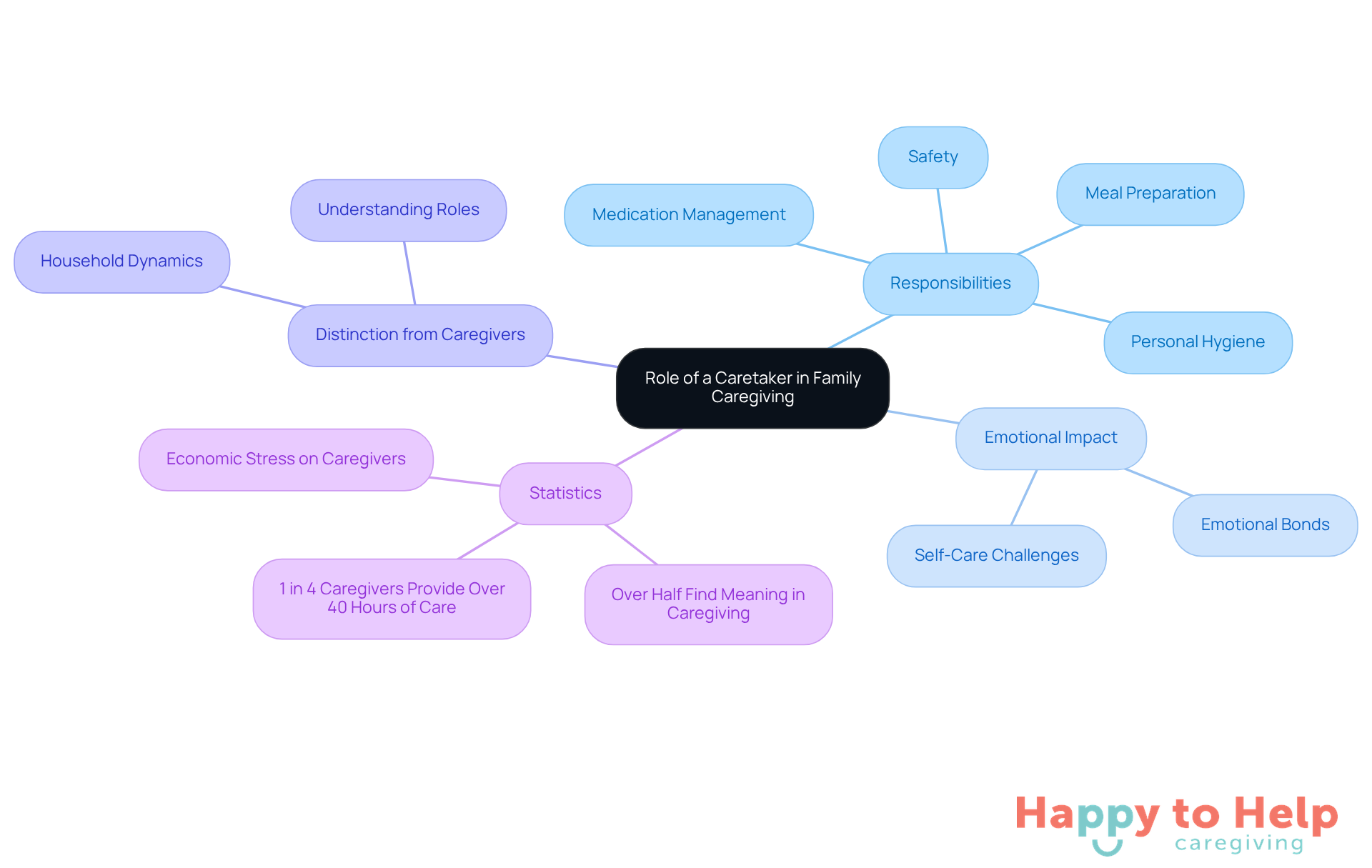
In family support, many people often misunderstand what a caretaker does. Many people wonder what a caretaker does to assist individuals who cannot care for themselves due to age, illness, or disability. This role encompasses a wide range of responsibilities from basic daily tasks like meal preparation and personal hygiene to more complex medical care, such as medication management and treatment coordination. While caregivers focus on providing emotional and physical support, they also manage the living environment and ensure safety.
Understanding the distinction between caretakers and caregivers is crucial. It highlights the multifaceted nature of caregiving within families. Providing support goes beyond just offering help; it involves nurturing emotional bonds and practical aid that significantly impacts the well-being of those receiving care. For instance, nearly one in four individuals who assist others provide over 40 hours of support each week, often while juggling other jobs and obligations, as noted in a 2021 AARP study.
Experts stress the importance of recognizing these roles. Jennifer Levin, author of Generation Care, points out the challenges caregivers face, stating, "Self-care needs to be genuinely taking care of yourself, whether that's seeking therapy, finding a community of others in similar roles who can help reflect your experiences back to you and from whom you can also learn tips." The emotional strain of caregiving can be profound; many caregivers report lower health levels and less time for self-care.
The distinction between caretaker and provider roles is particularly significant in household dynamics, where responsibilities can shift and evolve. As the number of household supporters increases, understanding these roles becomes essential to ensure that both providers and care recipients receive the necessary assistance. In fact, over half of family caregivers find meaning in their caregiving responsibilities, illustrating the profound impact this work has on their lives and relationships.
Key Responsibilities of Caretakers: Daily Activities and Support
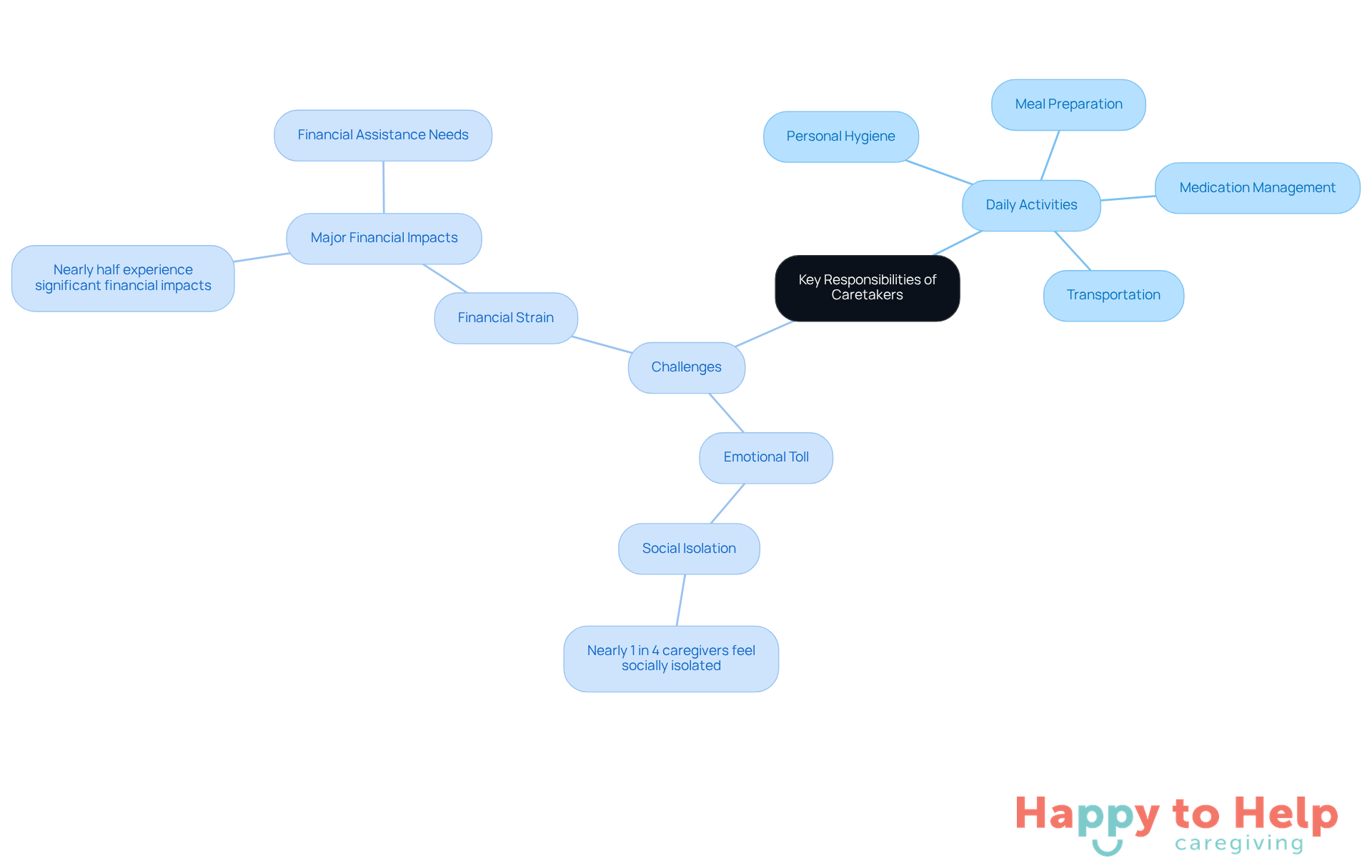
Caregivers face significant challenges in ensuring the well-being of their loved ones. What does a caretaker do? Their daily responsibilities include:
- Assisting with personal hygiene
- Preparing meals
- Managing medications
- Providing transportation to medical appointments
In addition, they often handle household chores like cleaning and laundry to maintain a safe and comfortable living environment.
However, the emotional toll on caregivers is equally concerning. Many caregivers report feelings of social isolation, with nearly 1 in 4 individuals feeling disconnected from others. This loneliness can be exacerbated by the financial strain that caregiving responsibilities often bring, with almost half experiencing major financial impacts. As Dr. Myechia Minter-Jordan, CEO of AARP, emphasizes, "We need systems that recognize those who provide care, value them and support them - because they are not just assisting families, they are sustaining our entire health care system."
To address these issues, it is crucial to implement support systems for caregivers. This can include:
- Community resources that offer emotional support
- Social activities to foster connections
- Financial assistance programs to alleviate the burden
By recognizing and addressing the challenges caregivers face, we can enhance their quality of life and ensure they continue to provide essential care, illustrating what does a caretaker do for their loved ones.
Challenges Faced by Family Caregivers: Balancing Care and Personal Life
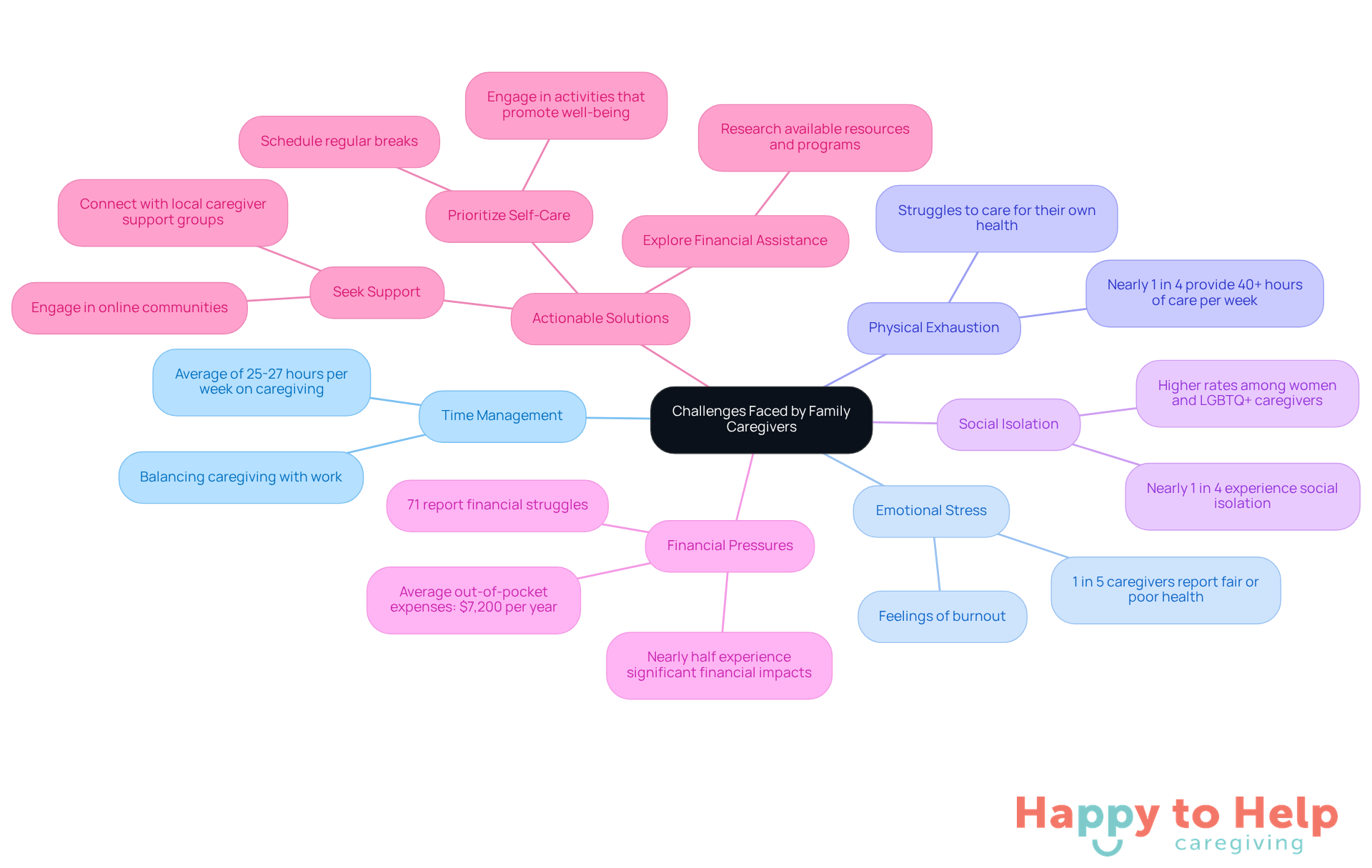
Family supporters often face significant challenges while trying to balance caregiving duties with personal and professional obligations. Key issues include time management, emotional stress, and physical exhaustion. Reports indicate that nearly 1 in 4 individuals providing care experience feelings of social isolation. This situation is exacerbated by the demands of their responsibilities, which often lead them to prioritize the needs of their loved ones over their own well-being. As this number grows, it highlights the increasing challenges caregivers encounter.
For instance, caregivers may struggle to maintain a social life or engage in personal interests, leading to feelings of burnout. Financial pressures are also prevalent; many caregivers find themselves needing to reduce work hours or leave their jobs entirely to provide adequate support. On average, household members spend around $7,200 per year out of pocket on caregiving expenses. Furthermore, 71% of caregivers report financial struggles, with nearly half experiencing significant financial impacts, such as taking on debt or being unable to afford basic necessities.
Tackling these challenges is crucial for creating effective support systems and resources that can help ease the pressures experienced by relatives providing care. Here are some actionable solutions:
- Seek support: Connect with local caregiver support groups or online communities.
- Prioritize self-care: Schedule regular breaks and engage in activities that promote well-being.
- Explore financial assistance: Research available resources and programs that can help alleviate financial burdens.
By implementing these strategies, caregivers can promote a healthier balance between caregiving and personal life.
The Importance of Personalized Care Plans in Family Caregiving
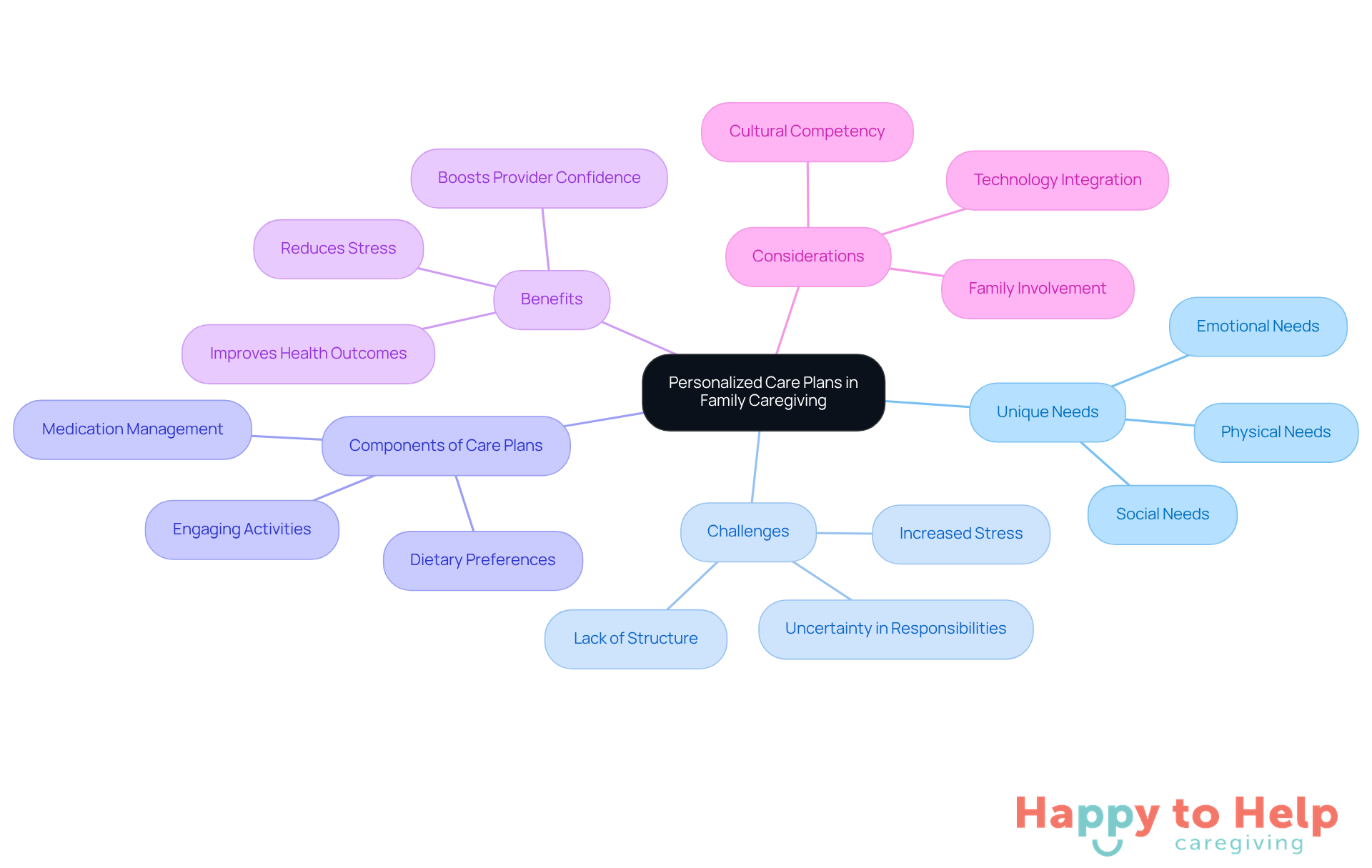
Customized support plans are essential for family assistance, addressing the unique needs of each individual. Caregivers often face challenges in providing effective support without a structured framework. This lack of organization can lead to increased stress and uncertainty in managing responsibilities.
To tackle these issues, a comprehensive evaluation of the recipient's physical, emotional, and social needs is crucial. This allows caregivers to tailor their assistance effectively. For example, a customized support plan may outline specific routines for:
- Medication management
- Dietary preferences
- Engaging activities that promote independence and well-being
Involving family members in the planning process ensures that the plan aligns with the recipient's values and desires, fostering a sense of autonomy and dignity.
Research indicates that individualized support planning significantly boosts provider confidence and reduces stress. Caregivers report feeling more equipped to handle their responsibilities when a clear, tailored plan is in place. Moreover, these plans can lead to improved health outcomes, as they cater to individual preferences and requirements, ultimately enhancing the quality of life for both providers and recipients.
Notably, personalized support planning is associated with a standardized mean difference of -0.36 in alleviating symptoms of depression, highlighting its mental health benefits. By prioritizing personalized approaches, families can create a supportive environment that meets practical needs while nurturing emotional and social well-being.
Additionally, incorporating technology into individualized treatment plans can enhance communication and monitoring, ensuring that assistance remains effective and adaptable to changing needs. Cultural competency in care is also vital, as it enables caregivers to respect and understand the diverse backgrounds of those they support.
Your Path Forward
The role of a caretaker in family caregiving is essential yet complex, involving a variety of responsibilities that ensure the well-being of loved ones who cannot care for themselves. This role goes beyond simple assistance; it includes fostering emotional connections and creating a safe living environment, both crucial for the health and happiness of care recipients.
However, caregivers face significant challenges. Daily tasks like personal hygiene assistance, meal preparation, and medication management can be overwhelming. Many caregivers also experience social isolation and financial strain, highlighting the urgent need for comprehensive support systems to alleviate these burdens. Personalized care plans are vital, as they not only enhance care quality but also empower caregivers by providing a structured approach to their responsibilities.
Recognizing the importance of caretakers in family dynamics is crucial for fostering a supportive environment. By advocating for better resources and support systems, society can help caregivers maintain their well-being while continuing to provide essential care. This understanding encourages individuals to seek help and prioritize their own needs alongside those of their loved ones, paving the way for a more compassionate approach to caregiving.
https://iframe.tely.ai/cta/eyJhcnRpY2xlX2lkIjogIjY5Mjc5NGYzMTRjODUwNzI1NGI4N2M1ZCIsICJjb21wYW55X2lkIjogIjY4ZWU1ZGNhNzMxNzYyNTU3ZjNjOTVjMSIsICJpbmRleCI6IG51bGwsICJ0eXBlIjogImFydGljbGUifQ==Frequently Asked Questions
What is the role of a caretaker in family caregiving?
A caretaker assists individuals who cannot care for themselves due to age, illness, or disability. Their responsibilities range from basic daily tasks like meal preparation and personal hygiene to more complex medical care, such as medication management and treatment coordination.
How do caretakers differ from caregivers?
While both roles involve providing support, caretakers focus on practical aid and managing the living environment, ensuring safety, whereas caregivers also emphasize emotional support and nurturing bonds with those they care for.
What are some common tasks performed by caretakers?
Common tasks include meal preparation, personal hygiene assistance, medication management, and coordinating treatment for the individuals they support.
How much time do many family caregivers spend providing support?
Nearly one in four individuals who assist others provide over 40 hours of support each week, often while managing other jobs and obligations.
What challenges do caregivers face?
Caregivers often experience emotional strain, report lower health levels, and find it difficult to allocate time for self-care.
Why is it important to recognize the roles of caretakers and caregivers?
Understanding these roles is crucial for managing household dynamics, ensuring that both providers and care recipients receive the necessary assistance, especially as the number of household supporters increases.
What impact does caregiving have on family caregivers?
Over half of family caregivers find meaning in their caregiving responsibilities, highlighting the significant impact this work has on their lives and relationships.
List of Sources
- Defining the Role of a Caretaker in Family Caregiving
- For millennials, being a caregiver for family can come with unique challenges (https://npr.org/2025/11/24/nx-s1-5566734/for-millennials-being-a-caregiver-for-family-can-come-with-unique-challenges)
- Opinion | America’s Caregivers Are in Crisis (https://nytimes.com/2025/11/24/opinion/caregiving-crisis.html)
- Honoring America’s Family Caregivers, the Unseen Workforce Behind Our Health System - Medicare Rights Center (https://medicarerights.org/medicare-watch/2025/11/25/honoring-americas-family-caregivers-the-unseen-workforce-behind-our-health-system)
- Caregiving crisis: New data shows rising burden in California (https://kcra.com/article/california-national-family-caregivers-month-aarp/69544348)
- Key Responsibilities of Caretakers: Daily Activities and Support
- New Report Reveals Crisis Point for America’s 63 million Family Caregivers (https://press.aarp.org/2025-07-24-New-Report-Reveals-Crisis-Point-for-Americas-63-million-Family-Caregivers)
- Honoring America’s Family Caregivers, the Unseen Workforce Behind Our Health System - Medicare Rights Center (https://medicarerights.org/medicare-watch/2025/11/25/honoring-americas-family-caregivers-the-unseen-workforce-behind-our-health-system)
- Family Caregiver Support, Education Needs Growing (https://hospicenews.com/2025/11/11/family-caregiver-support-education-needs-growing)
- The number of family caregivers is surging (https://19thnews.org/2025/07/family-caregivers-surging-aarp)
- Opinion | America’s Caregivers Are in Crisis (https://nytimes.com/2025/11/24/opinion/caregiving-crisis.html)
- Challenges Faced by Family Caregivers: Balancing Care and Personal Life
- You’re not alone in caregiving (https://health.ucdavis.edu/news/headlines/youre-not-alone-in-caregiving/2025/11)
- New Report Reveals Crisis Point for America’s 63 million Family Caregivers - Massachusetts Healthy Aging Collaborative (https://mahealthyagingcollaborative.org/new-report-reveals-crisis-point-for-americas-63-million-family-caregivers)
- The Caregiving Landscape: Data & Insights on the Caregiver Experience in the U.S. (https://caregiveraction.org/caregiver-statistics)
- For millennials, being a caregiver for family can come with unique challenges (https://npr.org/2025/11/24/nx-s1-5566734/for-millennials-being-a-caregiver-for-family-can-come-with-unique-challenges)
- Opinion | America’s Caregivers Are in Crisis (https://nytimes.com/2025/11/24/opinion/caregiving-crisis.html)
- The Importance of Personalized Care Plans in Family Caregiving
- The Role of Personalized Care Plans in Home Health Care (https://homehealthcompanions.com/blog/personalized-care-plans-are-essential)
- The Impact of Personalized Home Health Plans on Recovery Outcomes (https://regencyhcs.com/blog/the-impact-of-personalized-home-health-plans-on-recovery-outcomes)
- The Importance of Personalized Care Plans in Home Care (https://anodyne-services.com/2025/01/14/the-importance-of-personalized-care-plans-in-home-care)
- Importance of Personalized Senior Home Care in Burlington NC (https://wisdomseniorcare.com/the-importance-of-personalized-care-plans-for-seniors)