

For families in our service areas
For families in our service areas, this guide explains dementia care and how non-medical in-home caregiving can support care planning in East Idaho, Treasure Valley & Magic Valley, Northern Wasatch, North Central West Virginia, and Northeast Ohio.
Why What Stage of Dementia Causes Matters
Dementia presents a complex challenge that unfolds over time, particularly when it comes to swallowing difficulties. As cognitive decline progresses, caregivers face the pressing problem of identifying when these issues arise. Understanding this phase is crucial, as it directly impacts the safety and well-being of those affected.
The implications of swallowing difficulties can be significant. Caregivers must adapt their strategies to ensure that individuals with dementia can eat and drink safely. This concern grows as the condition advances, making it essential for caregivers to recognize the signs early on.
So, how can caregivers effectively address these challenges? Here are some actionable tips:
- Monitor eating habits: Keep an eye on changes in appetite or difficulty in swallowing.
- Consult professionals: Engage with speech therapists or nutritionists for tailored advice.
- Create a safe environment: Ensure that mealtime is calm and free from distractions.
By implementing these strategies, caregivers can significantly improve the quality of life for those affected by dementia.
Define the Stages of Dementia
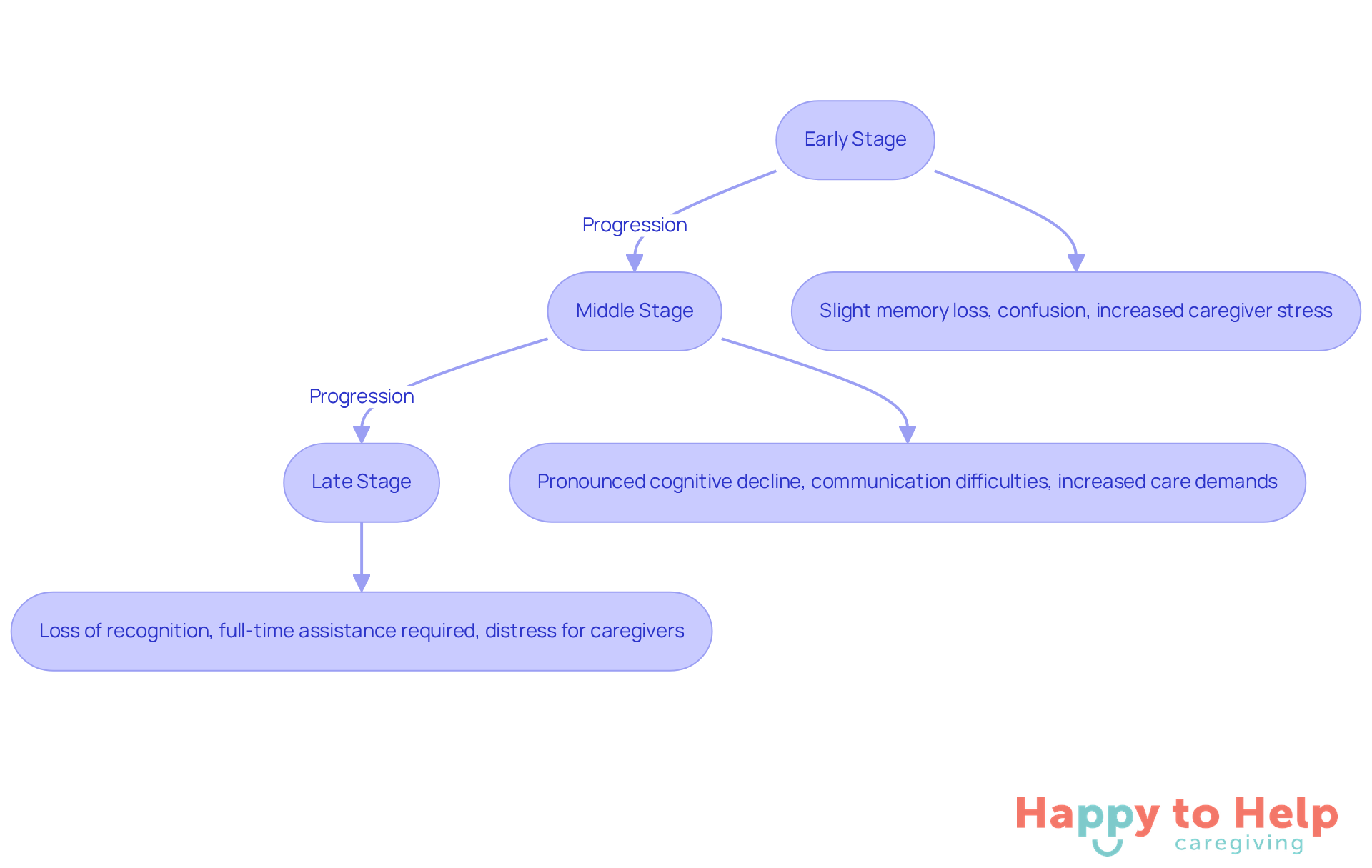
Dementia presents significant challenges for caregivers, particularly as it progresses through various stages: early, middle, and late. In the early stage, individuals may experience slight memory loss and confusion, which can hinder their ability to manage daily tasks. This initial problem can lead to increased stress for caregivers, who must adapt to these changes while providing support.
As dementia advances to the middle stage, cognitive decline becomes more pronounced. Communication difficulties and challenges with daily activities can escalate, making it crucial for caregivers to recognize these signs early. Understanding these implications allows caregivers to prepare for the increased demands of care.
In the late stage, individuals may lose the ability to recognize loved ones and require full-time assistance with personal care. This stage can be particularly distressing for both the person with dementia and their caregivers. To address these challenges, caregivers should consider the following actionable solutions:
- Educate themselves about dementia and its stages to better understand what to expect.
- Establish routines that provide structure and familiarity for the individual.
- Seek support from local resources or support groups to share experiences and strategies.
By comprehending these phases and implementing practical solutions, caregivers can navigate the complexities of dementia care more effectively.
Identify Symptoms Related to Swallowing Difficulties
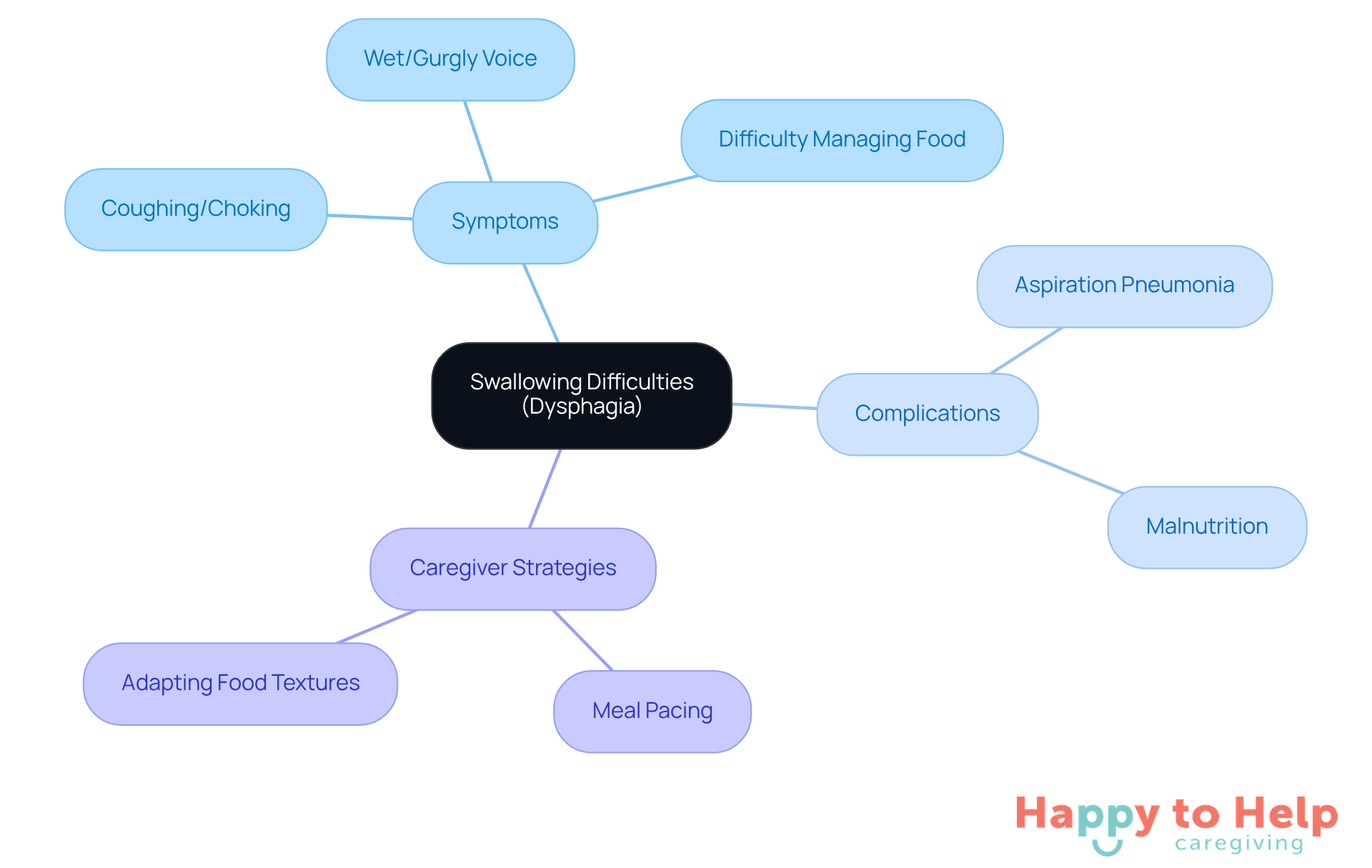
Symptoms of swallowing difficulties, known as dysphagia, can vary widely among individuals with dementia. Common signs include coughing or choking during meals, a wet or gurgly voice after eating, and difficulty managing food in the mouth. Patients may also exhibit signs of distress, such as grimacing or refusing to eat. Caregivers should be vigilant for these symptoms, as they can lead to serious complications, including aspiration pneumonia, which is a leading cause of hospitalization and death for people with dementia, and malnutrition. Recognizing these signs early can significantly improve the quality of care and safety for individuals with dementia. Speech therapists emphasize the importance of creating a supportive eating environment, recommending strategies such as meal pacing and adapting food textures to accommodate the changing needs of patients. Real-life examples illustrate that timely intervention can lead to more effective treatment plans, ultimately improving the overall well-being of those affected by dysphagia.
Explain the Progression of Dementia and Its Impact on Swallowing
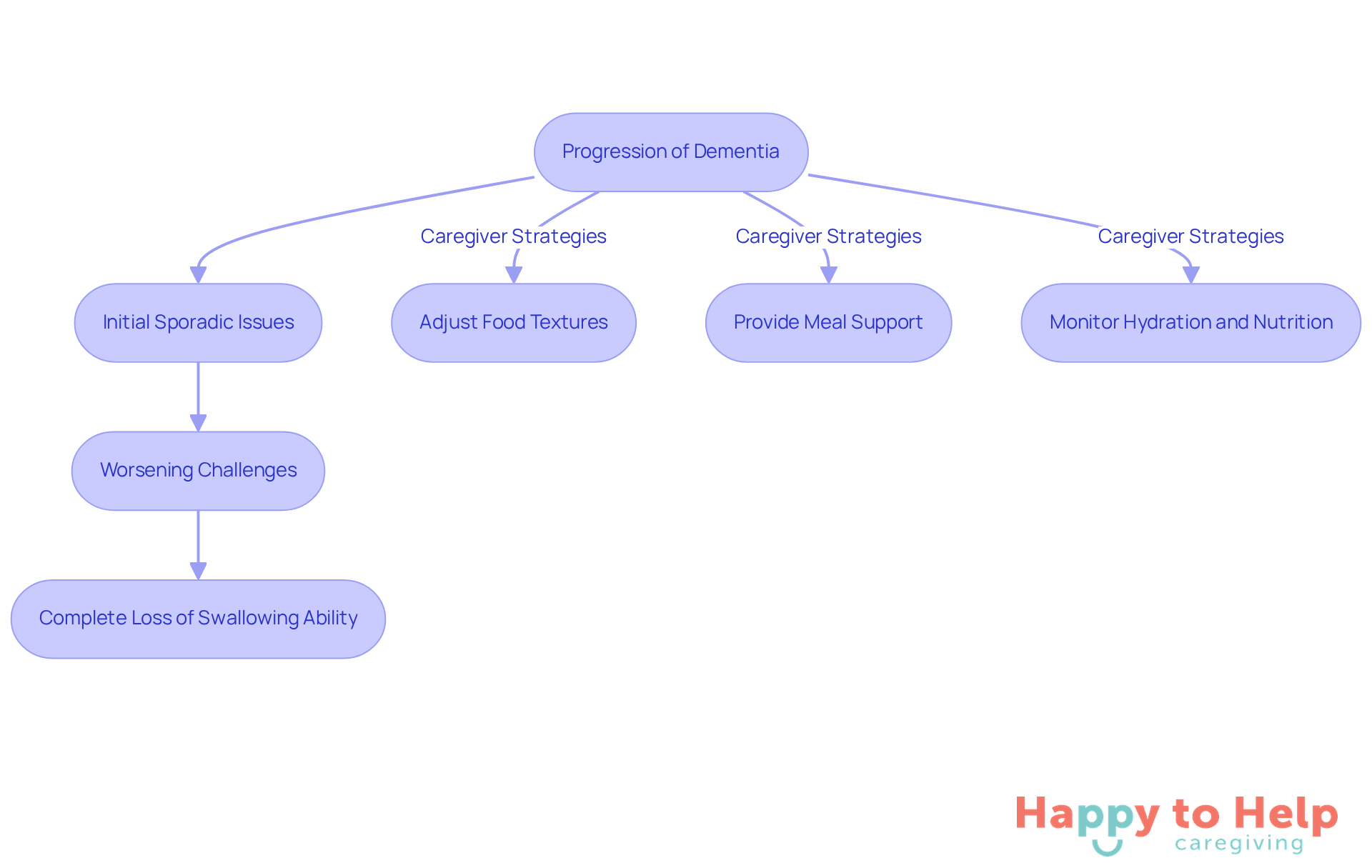
As dementia progresses, it raises the question of what stage of dementia is difficulty swallowing, as this issue becomes increasingly evident due to cognitive decline and motor skill impairment. Initially, individuals may face sporadic issues with ingesting food, but these challenges worsen as the illness advances. In the later stages, many may completely lose the ability to initiate swallowing, leading to severe dysphagia, prompting the question of what stage of dementia is difficulty swallowing. This decline poses serious health risks, including dehydration, malnutrition, and a greater susceptibility to aspiration pneumonia and respiratory infections.
Caregivers face significant challenges in managing these issues. They often adapt their strategies to ensure safe eating and drinking practices. For instance, caregivers might modify food textures, opting for softer or pureed options, and provide assistance during meals to help individuals navigate their eating difficulties. One caregiver noted, "Handling feeding difficulties has been daunting, but understanding the common issues has made it easier to adjust our approach."
Research underscores what stage of dementia is difficulty swallowing and its impact on eating capabilities. A study conducted from 1989 to 2020, involving 7,043 participants, indicates that as cognitive decline progresses, it raises the question of what stage of dementia is difficulty swallowing, as the brain's ability to manage the swallowing process diminishes, increasing the risks of aspiration and related complications. Tools like the Edinburgh Feeding Evaluation in Dementia (EdFED) and Eating Behavior Scale (EBS) are commonly used to assess these challenges.
To address these issues, caregivers are encouraged to remain vigilant and responsive to the evolving needs of those they care for. Here are some practical solutions:
- Adjust food textures: Choose softer or pureed foods to facilitate easier swallowing.
- Provide meal support: Assist individuals during meals to help them manage their eating challenges.
- Monitor hydration and nutrition: Ensure that individuals are receiving adequate fluids and nutrients.
By implementing tailored approaches and fostering a supportive environment, caregivers can significantly enhance the quality of life for those experiencing eating difficulties in the advanced stages of cognitive decline.
Emphasize the Importance of Recognizing Swallowing Difficulties
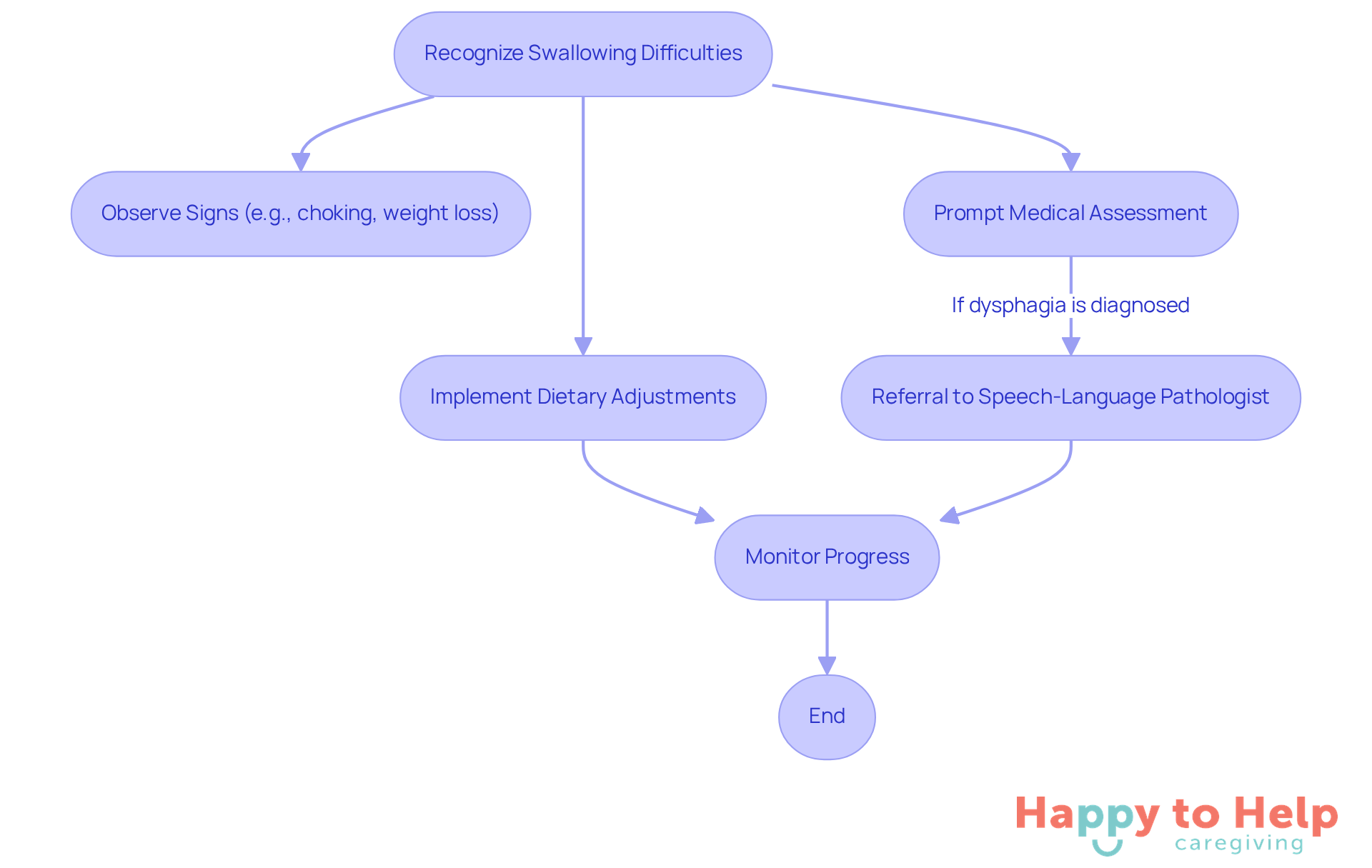
It is crucial to identify what stage of dementia is difficulty swallowing in people with dementia. These challenges can lead to severe health issues like aspiration pneumonia, malnutrition, and dehydration. Caregivers often notice changes in eating habits, particularly what stage of dementia is difficulty swallowing, making their observations invaluable. Prompt recognition of dysphagia can help determine what stage of dementia is difficulty swallowing, leading to timely interventions such as dietary adjustments tailored to individual needs and referrals to speech-language pathologists for specialized therapy.
For instance, caregivers who observe signs like choking, throat clearing, or unexpected weight loss can prompt essential medical assessments. This proactive approach greatly enhances the person's safety and quality of life. Statistics show that untreated dysphagia can result in increased hospital admissions and longer stays, highlighting the urgency of addressing these issues promptly. Dietary modifications, like customizing meal textures and consistencies, can improve mealtime experiences and reduce choking risks.
Case studies reveal that caregivers who implement adaptive strategies - such as pacing and using verbal cues - can create a supportive dining environment that fosters dignity and comfort. It's also important to note that while feeding tubes may sometimes be considered, they do not improve nutrition or quality of life and can lead to complications like pain and infection.
Understanding the consequences of eating challenges allows caregivers to provide empathetic assistance, ensuring individuals with cognitive decline maintain their dignity during meals. This approach not only enhances safety but also contributes to a more positive caregiving experience, emphasizing the importance of vigilance and empathy in managing dementia care complexities. Additionally, caregivers should recognize that seniors with Alzheimer's may exhibit what stage of dementia is difficulty swallowing, as they may have reduced sensitivity to food textures or temperatures, increasing the risk of swallowing issues. Speech-language pathologists can offer ongoing monitoring and guidance, further supporting caregivers in navigating these challenges.
Key Takeaways for Caregivers
Understanding the various stages of dementia is crucial for caregivers, particularly when it comes to recognizing swallowing difficulties. The problem is that as dementia progresses, the ability to swallow can become severely compromised, leading to significant health risks such as aspiration pneumonia and malnutrition. This situation can be alarming for caregivers, as it directly impacts the safety and well-being of their loved ones during mealtimes.
Recognizing the symptoms and challenges associated with each stage of dementia is essential. Early identification of signs like coughing, choking, or changes in eating habits can lead to timely interventions. Caregivers should be proactive in:
- Modifying food textures
- Offering assistance during meals
- Remaining vigilant to the evolving needs of those they care for
These adjustments can greatly enhance the quality of life for individuals facing these difficulties.
Ultimately, addressing swallowing difficulties in dementia patients is not just about health; it’s about preserving dignity and improving the overall caregiving experience. By fostering a supportive environment and being attentive to changes in eating behavior, caregivers can significantly improve safety and comfort for their loved ones. This commitment to understanding and addressing the complexities of swallowing challenges can make a meaningful difference in the lives of those affected.
https://iframe.tely.ai/cta/eyJhcnRpY2xlX2lkIjogIjY5MjRmMWMwZWM0Y2FiOGU3NGVjMDA5ZSIsICJjb21wYW55X2lkIjogIjY4ZWU1ZGNhNzMxNzYyNTU3ZjNjOTVjMSIsICJpbmRleCI6IG51bGwsICJ0eXBlIjogImFydGljbGUifQ==Frequently Asked Questions
What are the main stages of dementia?
The main stages of dementia are early, middle, and late stages, each presenting different challenges and symptoms.
What symptoms are associated with the early stage of dementia?
In the early stage, individuals may experience slight memory loss and confusion, which can hinder their ability to manage daily tasks.
How does the middle stage of dementia differ from the early stage?
In the middle stage, cognitive decline becomes more pronounced, leading to increased communication difficulties and challenges with daily activities.
What are the key challenges faced by caregivers during the late stage of dementia?
In the late stage, individuals may lose the ability to recognize loved ones and require full-time assistance with personal care, which can be distressing for both the person with dementia and their caregivers.
What can caregivers do to better manage the challenges of dementia care?
Caregivers can educate themselves about dementia and its stages, establish routines for the individual, and seek support from local resources or support groups to share experiences and strategies.
List of Sources
- Define the Stages of Dementia
- How long can a person with dementia live without food or drink? (https://medicalnewstoday.com/articles/dementia-how-long-can-a-person-live-without-eating-or-drinking)
- Alzheimer's Stages - Early, Middle, Late Dementia Symptoms | alz.org (https://alz.org/alzheimers-dementia/stages)
- Feinstein Institutes study challenges use of thick liquid diets in hospital patients with dementia and dysphagia (https://feinstein.northwell.edu/feinstein-institutes-study-challenges-use-of-thick-liquid-diets-in-dementia-dysphagia-patients)
- Three Common Medical Issues With Advanced Dementia - Compassion & Choices (https://compassionandchoices.org/news/three-common-medical-issues-with-advanced-dementia)
- Care in the Last Stages of Alzheimer's Disease (https://nia.nih.gov/health/alzheimers-caregiving/care-last-stages-alzheimers-disease)
- Identify Symptoms Related to Swallowing Difficulties
- Patient Information: Eating and Swallowing Problems in People With Advanced Dementia (https://jamanetwork.com/journals/jama/fullarticle/2835480)
- Dysphagia in Dementia: Causes & Symptoms | Stellar Care (https://stellarcaresd.com/about-us/blog/dysphagia-and-dementia)
- Feinstein Institutes study challenges use of thick liquid diets in hospital patients with dementia and dysphagia (https://feinstein.northwell.edu/feinstein-institutes-study-challenges-use-of-thick-liquid-diets-in-dementia-dysphagia-patients)
- How to care for someone with swallowing problems (https://news.uoregon.edu/how-care-someone-swallowing-problems)
- Three Common Medical Issues With Advanced Dementia - Compassion & Choices (https://compassionandchoices.org/news/three-common-medical-issues-with-advanced-dementia)
- Explain the Progression of Dementia and Its Impact on Swallowing
- Feinstein Institutes study challenges use of thick liquid diets in hospital patients with dementia and dysphagia (https://feinstein.northwell.edu/feinstein-institutes-study-challenges-use-of-thick-liquid-diets-in-dementia-dysphagia-patients)
- Three Common Medical Issues With Advanced Dementia - Compassion & Choices (https://compassionandchoices.org/news/three-common-medical-issues-with-advanced-dementia)
- Care in the Last Stages of Alzheimer's Disease (https://nia.nih.gov/health/alzheimers-caregiving/care-last-stages-alzheimers-disease)
- How does dementia cause death? - Alzheimer's Research UK (https://alzheimersresearchuk.org/news/how-does-dementia-cause-death)
- Eating Difficulties among Older Adults with Dementia in Long-Term Care Facilities: A Scoping Review - PMC (https://pmc.ncbi.nlm.nih.gov/articles/PMC8508293)
- Emphasize the Importance of Recognizing Swallowing Difficulties
- Patient Information: Eating and Swallowing Problems in People With Advanced Dementia (https://jamanetwork.com/journals/jama/fullarticle/2835480)
- Alzheimer's Home Care Newport Beach CA - Addressing Swallowing Issues Through Alzheimer’s Care (https://canaanhomecare.com/addressing-swallowing-issues-through-alzheimers-care)
- Feinstein Institutes study challenges use of thick liquid diets in hospital patients with dementia and dysphagia (https://feinstein.northwell.edu/feinstein-institutes-study-challenges-use-of-thick-liquid-diets-in-dementia-dysphagia-patients)
- Identifying Swallowing Difficulties: The Role of the Caregiver (https://adrc.wisc.edu/news/identifying-swallowing-difficulties-role-caregiver)