
What Stage of Dementia Involves Overeating? Understanding

For families in our service areas
For families in our service areas, this guide explains dementia care and how non-medical in-home caregiving can support care planning in East Idaho, Treasure Valley & Magic Valley, Northern Wasatch, North Central West Virginia & Southwestern Pennsylvania, and Northeast Ohio.
Understanding What Stage of Dementia Involves
Understanding dementia is crucial for caregivers, as it encompasses a spectrum of cognitive challenges that can significantly impact daily life. One such challenge is overeating, a perplexing behavior that can arise, particularly in specific stages of dementia like frontotemporal dementia. This behavior not only complicates caregiving but also affects the overall well-being of those affected.
Caregivers often find themselves grappling with the implications of this behavior. Overeating can lead to health issues, increased caregiver stress, and a decline in the quality of life for both the caregiver and the individual with dementia. Recognizing the connection between dementia and overeating is essential for effective management.
So, what can caregivers do to address this issue? Here are some practical strategies:
- Monitor Meal Portions: Serve smaller portions to help control overeating.
- Establish a Routine: Regular meal times can create a sense of stability and predictability.
- Engage in Activities: Keeping individuals occupied with engaging activities can reduce the urge to eat out of boredom.
By implementing these strategies, caregivers can better manage overeating and ensure the well-being of those affected by dementia.
Define Dementia and Its Stages
Dementia presents a significant challenge for caregivers, as it encompasses a range of symptoms that severely affect memory, thinking, and social abilities. This syndrome is not a specific disease but results from various brain disorders, including Alzheimer's disease, vascular dementia, and frontotemporal dementia. Understanding the progression of dementia is crucial for effective caregiving.
In the early phase, individuals may experience slight memory loss and confusion, which can be frustrating for both the person affected and their caregivers. As dementia advances to the intermediate phase, cognitive decline becomes more pronounced, making daily tasks and social interactions increasingly difficult. By the final phase, individuals may struggle to respond to their environment, recognize loved ones, or engage in conversation, leading to significant challenges in care and nutrition management.
To support caregivers, it’s essential to implement practical strategies. Here are some actionable tips:
- Establish routines: Consistent daily schedules can help individuals with dementia feel more secure and reduce confusion.
- Use clear communication: Speak slowly and use simple language to enhance understanding.
- Encourage social interaction: Engage individuals in conversations and activities that promote connection with family and friends.
By recognizing the stages of dementia and employing these strategies, caregivers can better navigate the complexities of caregiving, ensuring that their loved ones receive the support they need.

Examine Overeating in Dementia Stages
Excessive eating can be a significant issue for individuals experiencing cognitive decline, raising questions about what stage of dementia is overeating, particularly in cases of frontotemporal dementia (FTD). This condition often leads to hyperphagia, prompting inquiry into what stage of dementia is overeating, where individuals may consume more food than necessary. The problem arises from a mix of cognitive decline, altered appetite regulation, and emotional factors. For instance, individuals might forget they’ve already eaten, resulting in repeated meals or constant snacking.
The implications of this behavior can be troubling. As cravings for specific foods intensify, binge-like eating episodes may occur. Moreover, in advanced stages of cognitive decline, it is important to consider what stage of dementia is overeating, as individuals may lose their inhibitions, leading to socially inappropriate eating behaviors. This can create additional stress for caregivers, who must navigate these challenges while ensuring their loved ones receive proper nutrition.
To address these issues, caregivers can implement several practical strategies:
- Maintaining a structured meal schedule can help reduce instances of forgotten meals.
- Keeping a food diary may assist in tracking what has been consumed, minimizing the risk of overeating.
- Encouraging smaller, more frequent meals can also help manage appetite and cravings effectively.
Understanding these eating patterns is crucial for caregivers. By recognizing the signs of excessive eating and implementing these strategies, they can better manage nutrition and promote the well-being of their loved ones.

Address Caregiver Strategies for Managing Overeating
Caregivers face a significant challenge when managing overeating, particularly in understanding what stage of dementia is overeating in individuals. It is essential to address effectively what stage of dementia is overeating, as this issue can lead to health complications and discomfort.
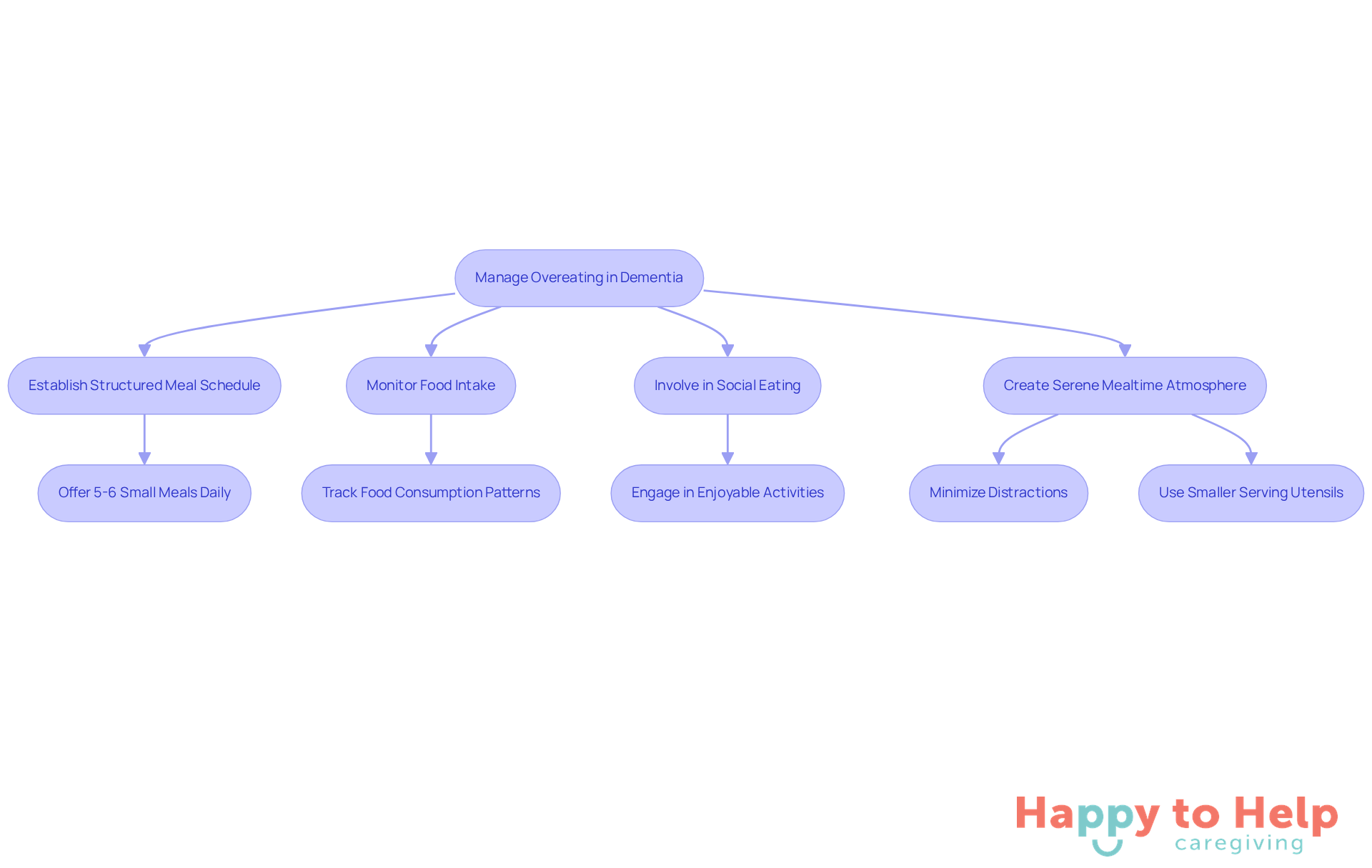
To combat this problem, establishing a structured meal schedule is crucial. A consistent routine helps regulate appetite and minimizes excessive snacking. Research shows that offering smaller, more frequent meals - specifically five to six small meals daily - can significantly reduce the urge to overeat during larger meals.
Monitoring food intake is another vital strategy. Caregivers should track what and how much is consumed to identify patterns and triggers for overeating. Involving individuals in social eating experiences not only enhances their enjoyment of meals but also serves as a distraction from compulsive eating habits.
Creating a serene and encouraging mealtime atmosphere is essential. By minimizing distractions and anxiety, caregivers can help individuals focus on their meals, leading to a more enjoyable experience without feeling overwhelmed. Additionally, using smaller serving utensils can reinforce portion control without making individuals feel deprived.
By implementing these strategies, caregivers can foster healthier eating habits and improve the overall mealtime experience for those living with dementia, especially when considering what stage of dementia is overeating.
Making the Right Choice
Understanding the connection between dementia and overeating presents a significant challenge for caregivers. As cognitive decline progresses, particularly in individuals with frontotemporal dementia, changes in eating behaviors often emerge. This overeating is not just a behavioral issue; it’s a symptom of cognitive impairment that caregivers must recognize to respond effectively.
To address this issue, establishing structured meal schedules and maintaining a food diary can be invaluable strategies. Creating a calm mealtime environment and encouraging social eating experiences can enhance enjoyment and mitigate excessive eating. These approaches not only help manage overeating but also promote overall well-being for those affected by dementia.
Ultimately, tackling overeating in dementia is essential for maintaining health and comfort. By implementing these practical strategies and understanding the stages of dementia, caregivers can significantly enhance the mealtime experience for their loved ones. This proactive approach fosters healthier eating habits and strengthens the emotional connection between caregivers and those they support, underscoring the importance of compassion and understanding in the caregiving journey.
https://iframe.tely.ai/cta/eyJhcnRpY2xlX2lkIjogIjY5MjI2NTFmZmViYTIxODdjZTM2NWMwOSIsICJjb21wYW55X2lkIjogIjY4ZWU1ZGNhNzMxNzYyNTU3ZjNjOTVjMSIsICJpbmRleCI6IG51bGwsICJ0eXBlIjogImFydGljbGUifQ==Frequently Asked Questions
What is dementia?
Dementia is a syndrome that presents a range of symptoms affecting memory, thinking, and social abilities, resulting from various brain disorders such as Alzheimer's disease, vascular dementia, and frontotemporal dementia.
What are the stages of dementia?
Dementia progresses through three main stages: 1. Early phase: Individuals may experience slight memory loss and confusion. 2. Intermediate phase: Cognitive decline becomes more pronounced, making daily tasks and social interactions increasingly difficult. 3. Final phase: Individuals may struggle to respond to their environment, recognize loved ones, or engage in conversation.
Why is understanding the progression of dementia important for caregivers?
Understanding the progression of dementia is crucial for effective caregiving, as it helps caregivers anticipate changes in behavior and needs, allowing them to provide appropriate support.
What strategies can caregivers implement to support individuals with dementia?
Caregivers can implement several strategies, including: - Establishing routines to help individuals feel more secure and reduce confusion. - Using clear communication by speaking slowly and using simple language. - Encouraging social interaction to promote connection with family and friends.
How can caregivers manage daily tasks for individuals with dementia?
By recognizing the stages of dementia and employing practical strategies like establishing routines and enhancing communication, caregivers can better navigate daily tasks and support their loved ones effectively.
List of Sources
- Address Caregiver Strategies for Managing Overeating
- Helping caregivers help people with dementia eat at home (https://news.osu.edu/helping-caregivers-help-people-with-dementia-eat-at-home)
- Dementia And Increased Appetite: How To Manage Sudden Overeating - NCCDP (https://nccdp.org/dementia-and-increased-appetite-how-to-manage-sudden-overeating)
- Supporting someone with dementia to eat and drink (https://alzheimers.org.uk/get-support/living-with-dementia/improving-eating-experience-dementia)
- Optimizing mealtime care and outcomes for people with dementia and their caregivers: A systematic review and meta‐analysis of intervention studies (https://alz-journals.onlinelibrary.wiley.com/doi/full/10.1002/alz.14522)
- Eating and dementia (https://dementia.org.au/living-dementia/home-life/eating-and-dementia)


