
For families in our service areas
For families in our service areas, this guide explains dementia care and how non-medical in-home caregiving can support care planning in East Idaho, Treasure Valley & Magic Valley, Northern Wasatch, North Central West Virginia & Southwestern Pennsylvania, and Northeast Ohio.
Understanding What Stage of Dementia Involves
Understanding the complexities of dementia is crucial, especially as the condition progresses through its various stages. One significant challenge caregivers face is wandering behavior, which often emerges during the middle phase of dementia. This common yet alarming symptom poses serious safety risks for individuals and emotional challenges for caregivers.
As cognitive decline deepens, the question arises: what stage of dementia is most associated with wandering? Caregivers must be aware of this issue to effectively manage it. Implementing practical strategies can ensure the safety and well-being of their loved ones. By recognizing the signs and understanding the implications of wandering, caregivers can take proactive steps to address this behavior.
Define Dementia: Understanding the Condition
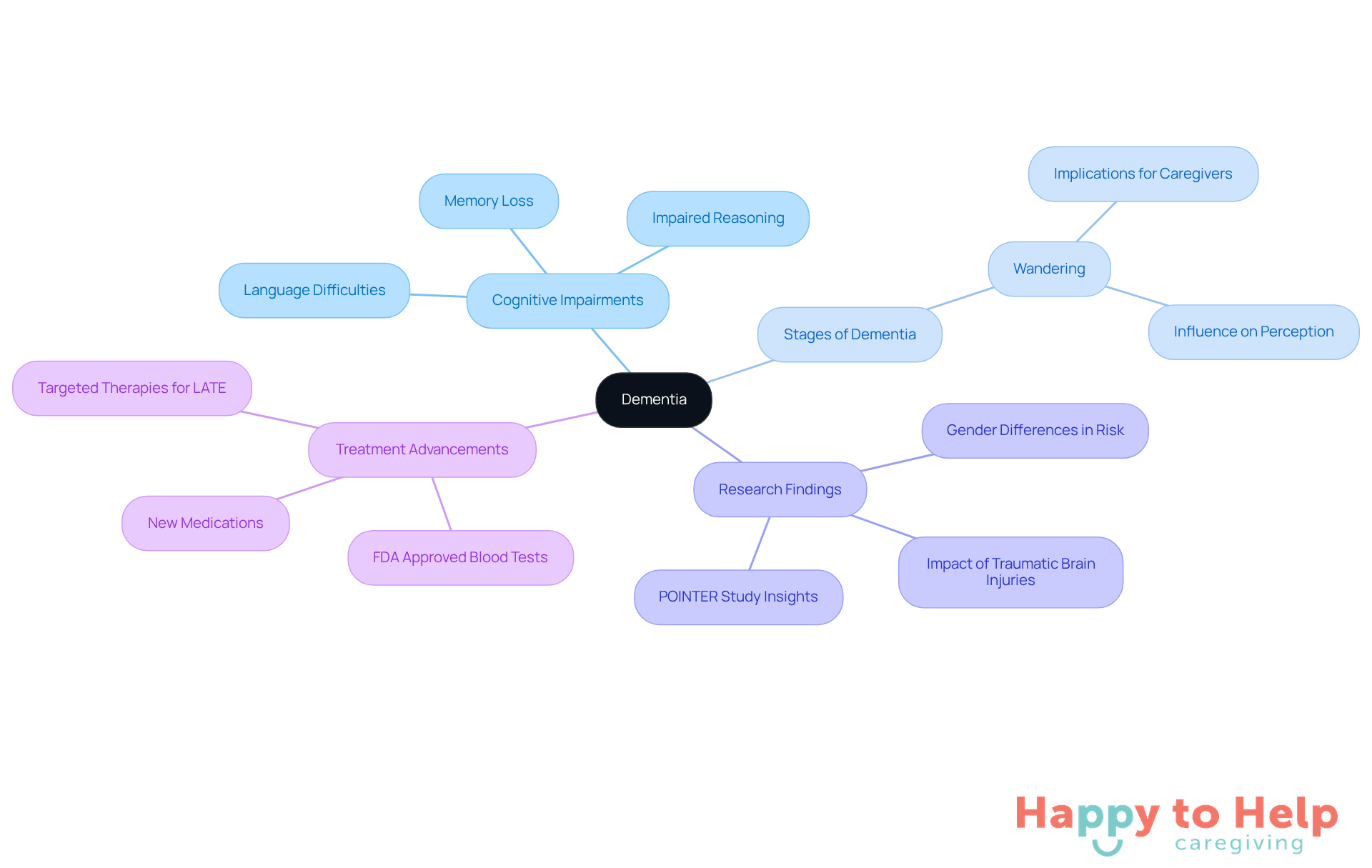
Dementia encompasses a range of cognitive impairments that disrupt daily life, such as memory loss, language difficulties, and impaired reasoning. This syndrome is not a specific illness but arises from various brain disorders, including Alzheimer's disease, vascular cognitive impairment, and Lewy body syndrome. Understanding what stage of dementia is wandering is crucial, as it influences how individuals perceive their surroundings and interact with others.
In understanding dementia, it is important to recognize what stage of dementia is wandering, as the progression typically unfolds in phases, each marked by increasing mental decline and behavioral changes. This can significantly impact both the individual and their caregivers. Recent studies highlight the complexity of Alzheimer's disease, revealing that it is not merely a decline in mental skills but a multifaceted condition influenced by various factors. For example, research indicates that traumatic brain injuries can lead to considerable brain shrinkage, particularly in women, potentially worsening cognitive decline.
Neurologists stress the importance of recognizing cognitive decline as a diverse category, necessitating accurate diagnostics to tailor effective interventions. As Alden Leader noted in 2025, significant findings regarding gender differences in cognitive decline risk underscore the need for targeted strategies. For caregivers, understanding what stage of dementia is wandering is vital, as it enables them to anticipate and manage the evolving needs of their loved ones.
Dr. Pete Nelson emphasizes that acknowledging conditions like LATE (Limbic-predominant Age-related TDP-43 Encephalopathy) alongside Alzheimer's pathology calls for a sophisticated approach to cognitive impairment care. Furthermore, advancements in research have led to promising developments in treatment and early detection. The FDA's approval of blood tests for Alzheimer's, boasting over 90% accuracy, marks a significant leap forward, potentially making diagnosis as routine as cholesterol checks.
These innovations not only enhance understanding but also pave the way for targeted therapies that address the specific pathologies associated with cognitive decline. In summary, dementia is a complex syndrome that demands a comprehensive understanding of its causes, progression, and the latest research findings to effectively support those affected and their caregivers.
Explore the Stages of Dementia: Progression and Symptoms
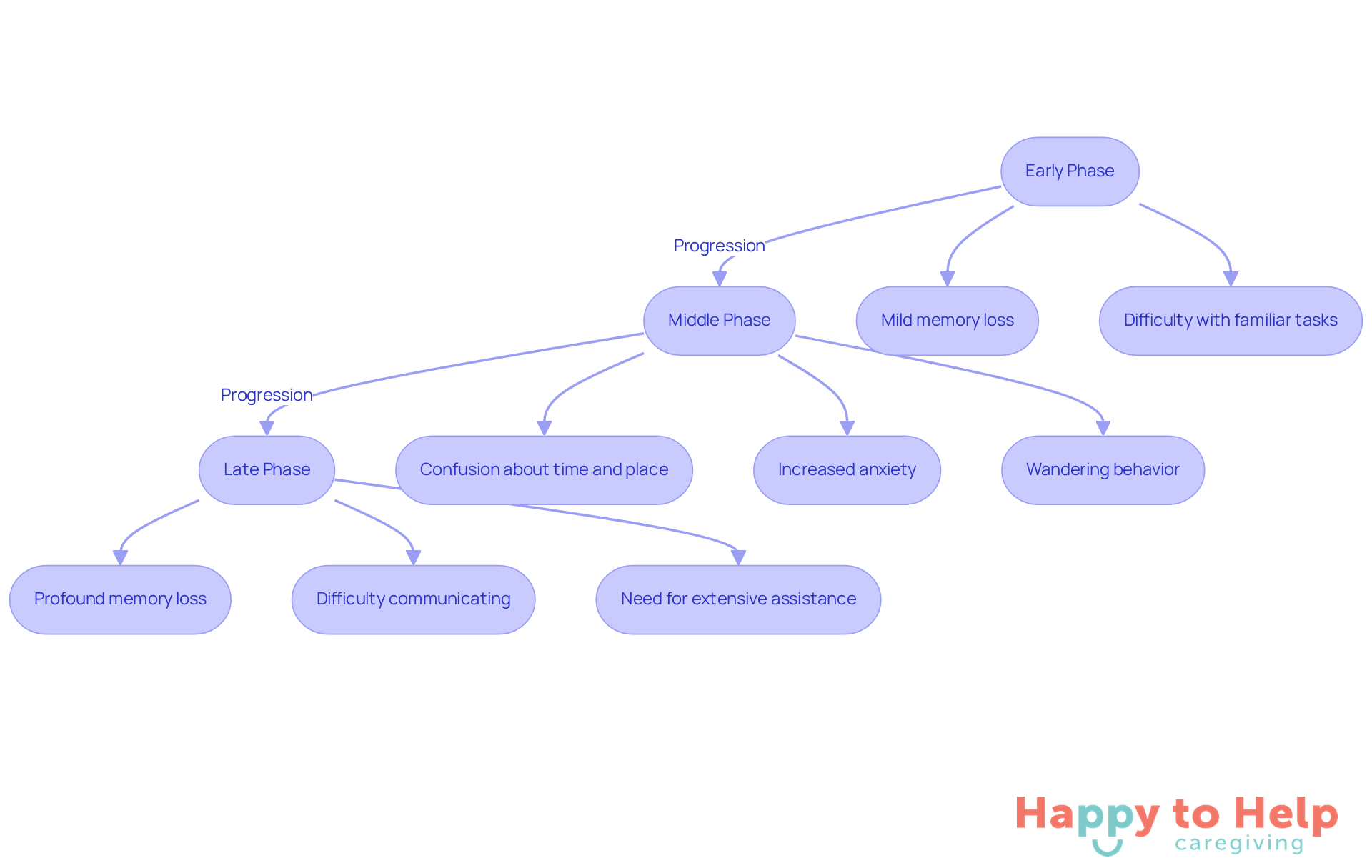
Dementia presents a significant challenge for caregivers, advancing through distinct phases: early, middle, and late. Each phase is characterized by specific symptoms that can complicate care. In the early phase, individuals may experience mild memory loss and difficulty with familiar tasks, such as misplacing items or forgetting names. These early signs are often overlooked, yet they are crucial for caregivers to recognize, as they lay the groundwork for effective care strategies. According to the World Alzheimer Report, over 55 million people worldwide were experiencing cognitive decline in 2020, with projections indicating this number could reach 78 million by 2030. This underscores the urgent need for understanding these phases.
As dementia progresses to the middle phase, symptoms become more pronounced. Individuals may face confusion about time and place, struggle to recognize loved ones, and experience increased anxiety. This phase is particularly critical for understanding what stage of dementia is wandering, as wandering behavior often begins; individuals may feel lost or disoriented, prompting them to seek familiar surroundings. For example, a person might leave their home in search of a place they remember, unaware of their current location. A dementia care specialist emphasizes, "As the disease progresses, the person with Alzheimer's will require a greater level of care."
In the late phase, cognitive abilities decline significantly, resulting in profound memory loss and difficulty communicating. Individuals may lose awareness of their surroundings and recent experiences, necessitating extensive assistance with daily activities. Caregivers must remain vigilant, as wandering can pose serious safety risks during this stage. Understanding what stage of dementia is wandering, along with their associated symptoms, is vital for caregivers, enabling them to anticipate and manage wandering behavior effectively, thereby ensuring the safety and well-being of those they support. The considerable treatment gap in cognitive impairment care, particularly in low and middle-income countries, further emphasizes the importance of early symptom identification for caregivers.
Identify Wandering: Symptoms and Implications in Dementia
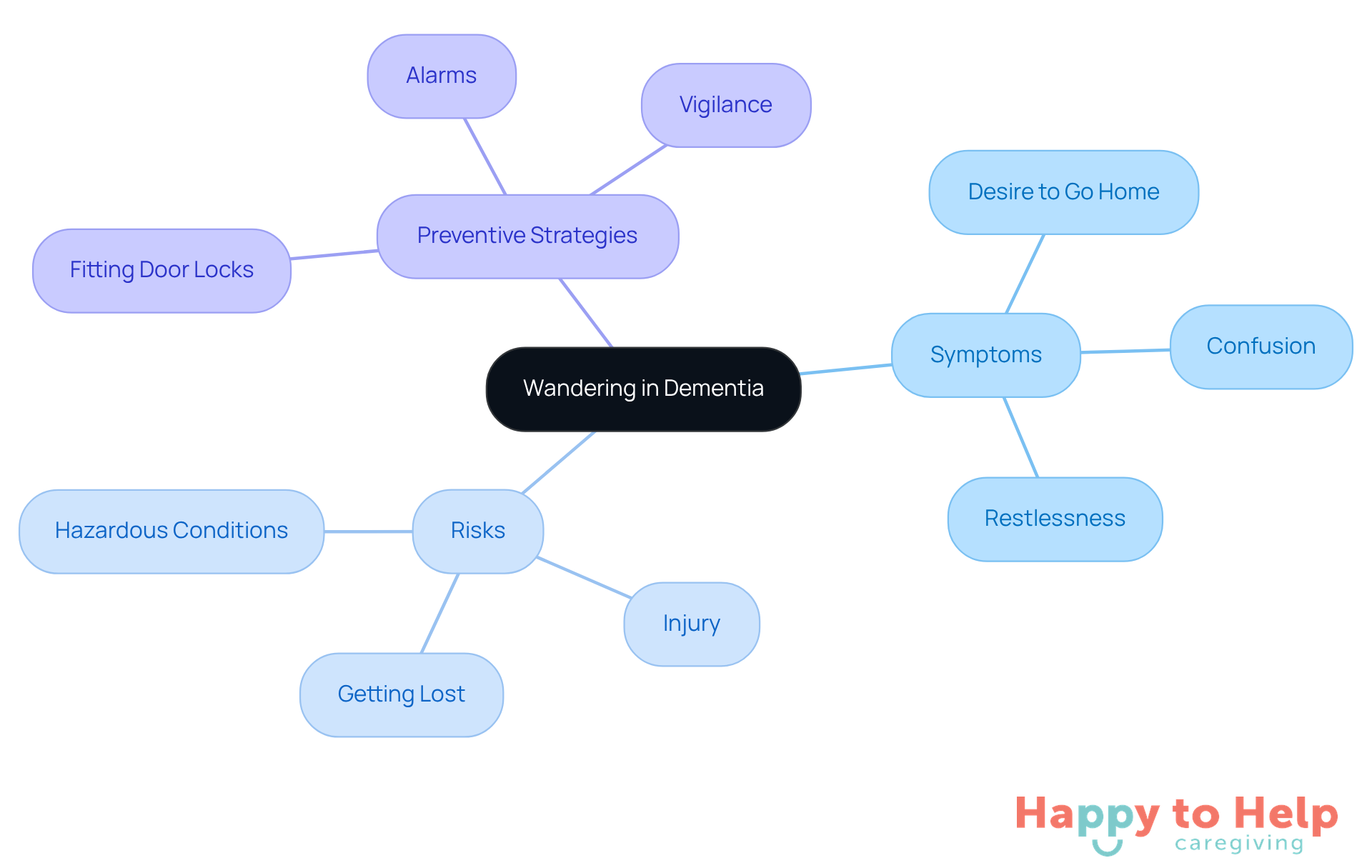
Wandering in individuals with cognitive impairment presents a significant problem, often manifesting as aimless walking, pacing, or attempts to leave familiar environments. This behavior can lead to serious safety risks, including the potential for getting lost, injury, or exposure to hazardous conditions. For instance, a tragic case involved an 80-year-old woman with Alzheimer's who was struck and killed by a vehicle while wandering in Deltona.
Common signs that a person may be at risk for wandering include:
- Expressing a desire to go home
- Confusion about their surroundings
- Restlessness
This behavior can occur at any phase of cognitive decline, but it raises the question of what stage of dementia is wandering, as it is especially prevalent in the middle phase when cognitive disorientation increases. The Alzheimer's Association indicates that 6 out of 10 individuals living with Alzheimer's disease will wander off at some point, prompting the question of what stage of dementia is wandering and highlighting the urgency for caregivers to recognize these signs.
To address this issue, caregivers must be vigilant in recognizing these symptoms and implementing preventive strategies effectively. Specialists like Dr. Cecil Bennett stress the importance of proactive measures, such as fitting door locks and alarms, to enhance the safety of individuals with cognitive impairments. By taking these steps, caregivers can significantly reduce the risks associated with wandering.
Address the Impact of Wandering: Challenges for Caregivers
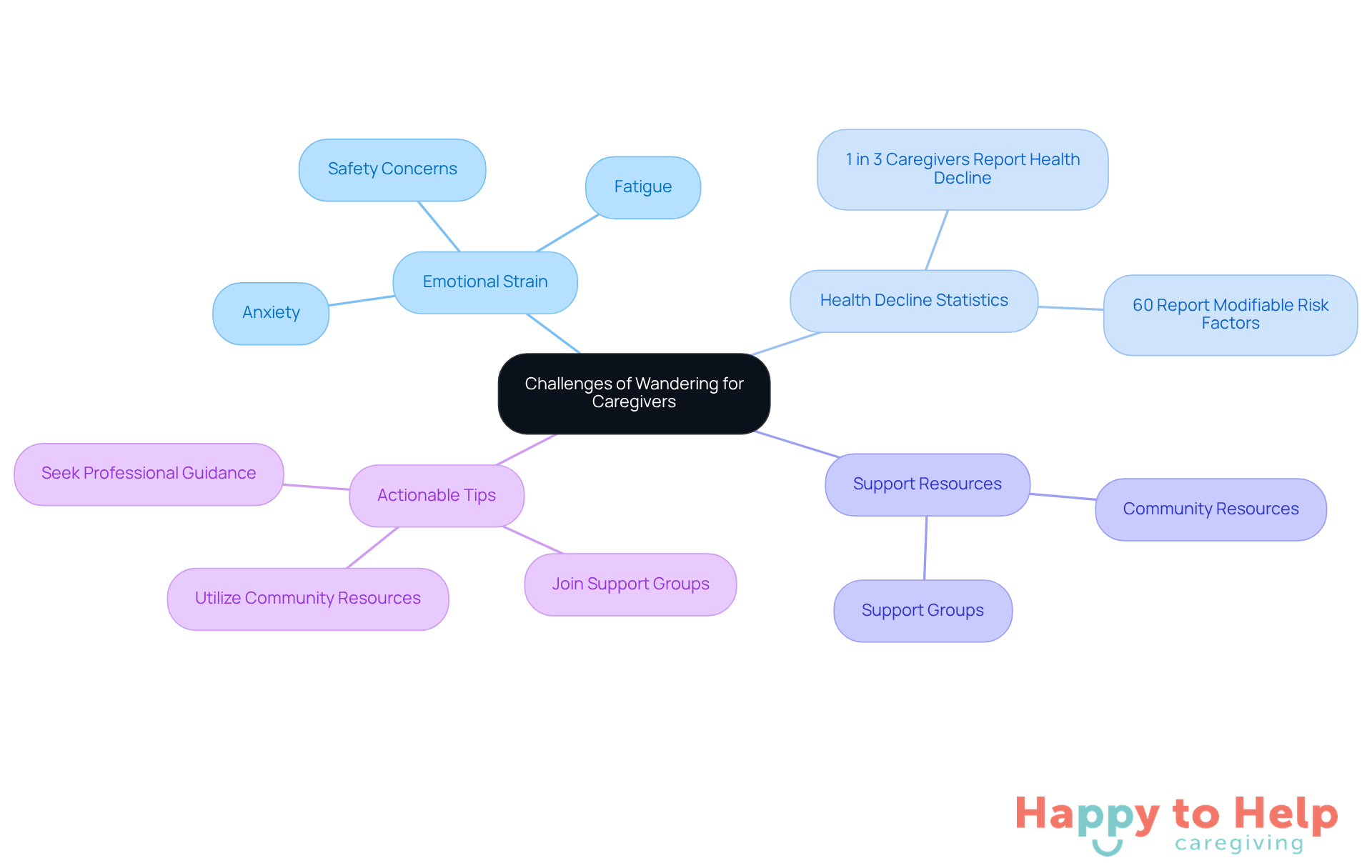
Wandering actions pose significant challenges for caregivers in individuals with cognitive decline, highlighting concerns about what stage of dementia is wandering, which often leads to emotional strain, anxiety, and physical fatigue. Caregivers frequently worry about the safety of their loved ones, particularly regarding what stage of dementia is wandering. This unpredictability disrupts daily routines and demands constant vigilance, leaving caregivers feeling overwhelmed.
Studies indicate that over one in three caregivers for those with cognitive impairment report a decline in their health due to their responsibilities. This statistic underscores the urgent need for support. Mental health experts, including Matthew Baumgart, senior vice president of Health Policy, emphasize that 'this analysis underscores the vulnerability of those supporting individuals with dementia.'
Younger caregivers are particularly susceptible to modifiable risk factors, adding complexity to their caregiving experience. To effectively navigate the challenges associated with wandering, caregivers must understand what stage of dementia is wandering and seek assistance through community resources, support groups, or professional guidance.
By fostering connections and accessing available resources, caregivers can better manage their stress and enhance their well-being while providing care. Here are some actionable tips:
- Join support groups to share experiences and strategies.
- Utilize community resources for additional assistance.
- Seek professional guidance to address specific challenges.
These steps can help caregivers maintain their health and provide better support for their loved ones.
Moving Forward with What Stage of Dementia Involves
Understanding the stages of dementia and their associated behaviors, particularly wandering, is essential for caregivers and families navigating this challenging condition. Wandering is not just a behavioral symptom; it serves as a significant indicator of cognitive decline that often emerges in the middle stages of dementia. Recognizing this behavior is crucial for caregivers to implement strategies that keep their loved ones safe and maintain their quality of life.
The problem is clear: wandering can lead to serious safety risks and emotional strain for both the individual and their support network. Caregivers must be vigilant, as the increasing complexity of symptoms in dementia underscores the critical importance of early identification. This situation can be overwhelming, but proactive measures can help alleviate the burden.
Solutions include securing the environment and utilizing community resources. These strategies not only enhance safety but also support the well-being of those affected, allowing caregivers to focus on providing care without constant worry.
Ultimately, understanding the stage of dementia associated with wandering and its implications is vital for effective care. By fostering awareness and seeking support, caregivers can better manage the challenges posed by wandering behavior. Taking action now can profoundly impact the journey through dementia, reinforcing the need for compassion, education, and community support in this complex landscape.
https://iframe.tely.ai/cta/eyJhcnRpY2xlX2lkIjogIjY5NDBhMjJkOTc5ZjhiMGM0MmQzYjU3YSIsICJjb21wYW55X2lkIjogIjY4ZWU1ZGNhNzMxNzYyNTU3ZjNjOTVjMSIsICJpbmRleCI6IG51bGwsICJ0eXBlIjogImFydGljbGUifQ==Frequently Asked Questions
What is dementia?
Dementia is a range of cognitive impairments that disrupt daily life, including memory loss, language difficulties, and impaired reasoning. It is not a specific illness but arises from various brain disorders.
What are some common causes of dementia?
Common causes of dementia include Alzheimer's disease, vascular cognitive impairment, and Lewy body syndrome.
Why is it important to understand the stages of dementia?
Understanding the stages of dementia, particularly what stage involves wandering, is crucial as it influences how individuals perceive their surroundings and interact with others, impacting both the individual and their caregivers.
How does Alzheimer's disease complicate our understanding of dementia?
Alzheimer's disease is a complex condition that involves not just a decline in mental skills but is influenced by various factors, including traumatic brain injuries that can worsen cognitive decline.
What do neurologists say about cognitive decline?
Neurologists emphasize that cognitive decline is diverse and requires accurate diagnostics to tailor effective interventions for individuals affected by it.
What recent findings are important for understanding dementia risk?
Recent studies highlight gender differences in cognitive decline risk, indicating the need for targeted strategies to address these differences.
What is LATE, and why is it significant?
LATE stands for Limbic-predominant Age-related TDP-43 Encephalopathy. It is significant because acknowledging conditions like LATE alongside Alzheimer's calls for a sophisticated approach to cognitive impairment care.
What advancements have been made in dementia diagnosis and treatment?
Advancements include the FDA's approval of blood tests for Alzheimer's with over 90% accuracy, potentially making diagnosis as routine as cholesterol checks and paving the way for targeted therapies.
Why is a comprehensive understanding of dementia important?
A comprehensive understanding of dementia's causes, progression, and the latest research findings is essential to effectively support those affected and their caregivers.
List of Sources
- Define Dementia: Understanding the Condition
- Five Reasons to Feel Hopeful About Dementia in 2025 - The Alden Network (https://alden.com/five-reasons-to-feel-hopeful-about-dementia-in-2025)
- LATE Dementia: A Newly Defined Disorder Reshapes Understanding of Cognitive Decline - The Boca Raton Tribune (https://bocaratontribune.com/bocaratonnews/2025/12/late-dementia-a-newly-defined-disorder-reshapes-understanding-of-cognitive-decline)
- Everything is changing in dementia diagnosis and treatment (https://statnews.com/2025/12/13/dementia-revolution-diagnosis-treatment-interview)
- New Mayo-led study establishes practical definition for rapidly progressive dementia | Newswise (https://newswise.com/articles/new-mayo-led-study-establishes-practical-definition-for-rapidly-progressive-dementia)
- Explore the Stages of Dementia: Progression and Symptoms
- New diagnostic approach identifies dementia stages based on neurovascular and metabolic changes (https://news-medical.net/news/20251110/New-diagnostic-approach-identifies-dementia-stages-based-on-neurovascular-and-metabolic-changes.aspx)
- ADI - Dementia statistics (https://alzint.org/about/dementia-facts-figures/dementia-statistics)
- Beware these 6 symptoms in midlife that can predict dementia later in life: new study (https://nypost.com/2025/12/15/health/6-symptoms-in-midlife-can-predict-dementia-later-in-life-study)
- Alzheimer's Stages - Early, Middle, Late Dementia Symptoms | alz.org (https://alz.org/alzheimers-dementia/stages)
- New Mayo-led study establishes practical definition for rapidly progressive dementia | Newswise (https://newswise.com/articles/new-mayo-led-study-establishes-practical-definition-for-rapidly-progressive-dementia)
- Identify Wandering: Symptoms and Implications in Dementia
- Dementia-related wandering claims four lives around metro Atlanta | How to combat it (https://fox5atlanta.com/news/dementia-alzheimers-missing-dead-wandering)
- Wandering a common symptom of dementia (https://kitv.com/news/wandering-a-common-symptom-of-dementia/article_32b8f360-67f0-11ee-bce5-e7b0122b6395.html)
- ‘Wandering’ is a danger for those with Alzheimer’s. There are ways to reduce the risk (https://wusf.org/health-news-florida/2024-11-02/wandering-a-danger-those-with-alzheimers-ways-to-reduce-risk)
- Extreme heat poses serious risk for people with dementia who are prone to wander (https://newscentermaine.com/article/news/local/public-safety/wandering-hot-weather-can-be-deadly-for-those-with-dementia/97-7ec6f58e-7c05-474e-8ee7-e35c93cdaffd)
- Address the Impact of Wandering: Challenges for Caregivers
- New Analysis Finds Dementia Caregivers More Likely to Report Modifiable Risk Factors that Increase Their Own Risk for Dementia (https://alz.org/news/2025/dementia-caregivers-modifiable-risk-factor-analysis)