

For families in our service areas
For families in our service areas, this guide explains dementia care and how non-medical in-home caregiving can support care planning in East Idaho, Treasure Valley & Magic Valley, Northern Wasatch, North Central West Virginia, and Northeast Ohio.
The Importance of Do with a Parent with Dementia: Key
Dementia is not just a medical condition; it represents a profound journey that reshapes the lives of individuals and their families. Caregivers, often at the forefront of this experience, face emotional and practical challenges that can feel overwhelming. Millions grapple with the complexities of this syndrome, highlighting the urgent need for support and understanding.
The implications of caregiving for a parent with dementia are significant. Caregivers often struggle to balance their own needs while providing the best support for their loved ones. This dual burden can lead to emotional exhaustion and feelings of isolation. How can caregivers navigate this intricate landscape of cognitive decline while fostering resilience?
To address these challenges, caregivers can implement several actionable strategies:
- It’s essential to prioritize self-care. Taking time for oneself is not selfish; it’s necessary for sustaining the energy needed to care for others.
- Seeking support from local or online caregiver groups can provide valuable resources and a sense of community.
- Establishing a routine can help both caregivers and their loved ones feel more secure. Consistency in daily activities can reduce anxiety and confusion for those with dementia.
- Caregivers should educate themselves about the condition, as knowledge can empower them to make informed decisions and advocate effectively for their loved ones.
In summary, while the journey of caregiving for a parent with dementia is fraught with challenges, there are practical steps that can help. By prioritizing self-care, seeking support, and establishing routines, caregivers can foster resilience and navigate this complex landscape with greater confidence.
Define Dementia: Understanding the Condition
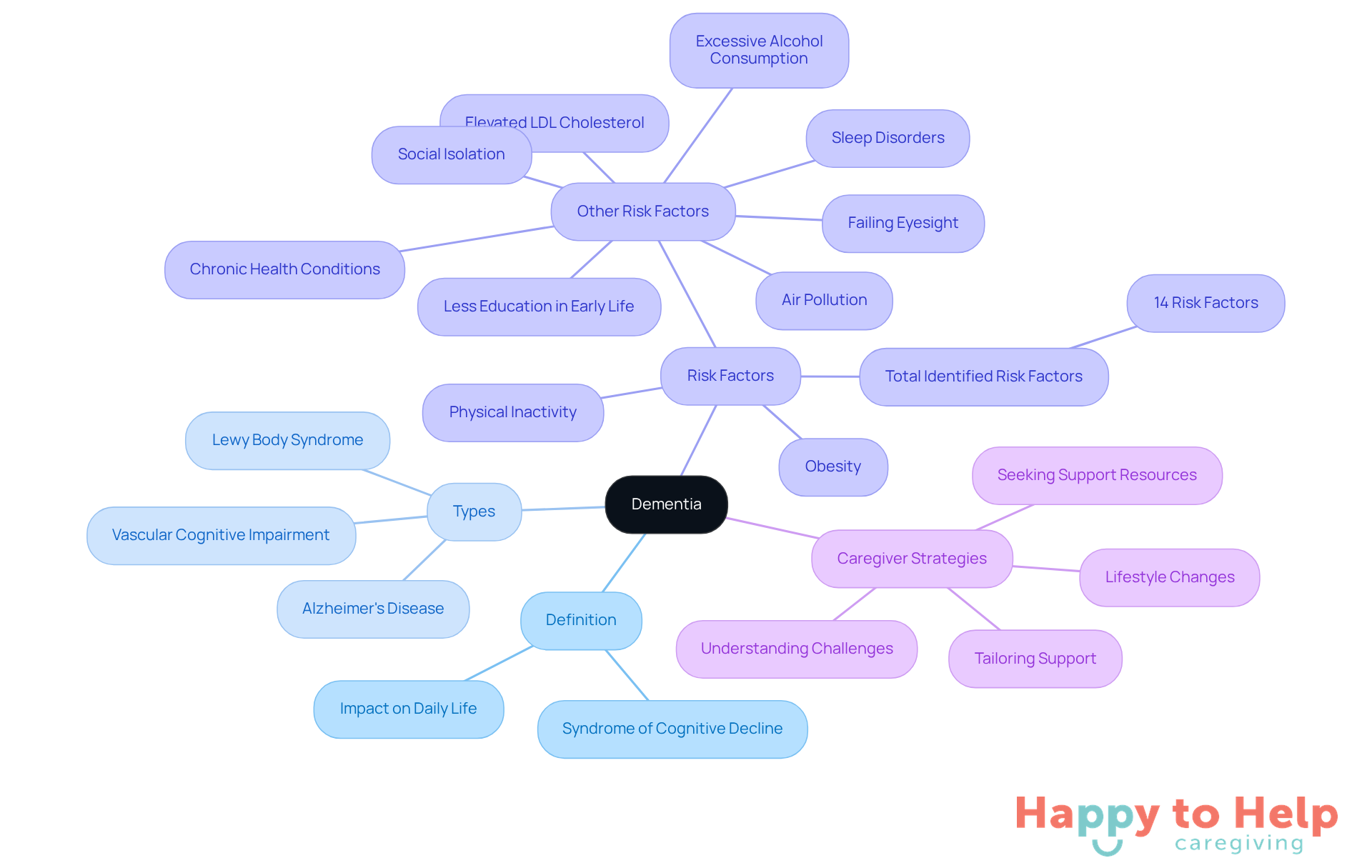
Dementia encompasses a range of neurological disorders that lead to a decline in cognitive function, impacting memory, thinking, and social abilities. This isn't a specific disease but a syndrome marked by a progressive deterioration of mental functions severe enough to disrupt daily life. Common types of cognitive decline include Alzheimer's disease, vascular cognitive impairment, and Lewy body syndrome.
For caregivers, understanding what to do with a parent with dementia is crucial. It helps them recognize the challenges their loved ones face and tailor their support accordingly. Recent research highlights a significant problem: tackling risk factors in mid-life can greatly influence the onset of cognitive decline. In fact, up to 45% of cases could potentially be postponed or minimized through proactive measures - a 5% increase from findings in 2020.
The complexity of cognitive decline is underscored by the identification of 14 risk factors. Elements such as physical inactivity and obesity are linked to a heightened risk of developing cognitive decline. This emphasizes the need for a comprehensive strategy for risk mitigation.
Ongoing research, including insights from the 2023 World Alzheimer Report, reinforces the importance of early identification and intervention. Caregivers can take actionable steps to manage cognitive decline effectively by focusing on lifestyle changes and understanding what to do with a parent with dementia while seeking support resources.
Contextualize Dementia: Impact on Families and Caregivers
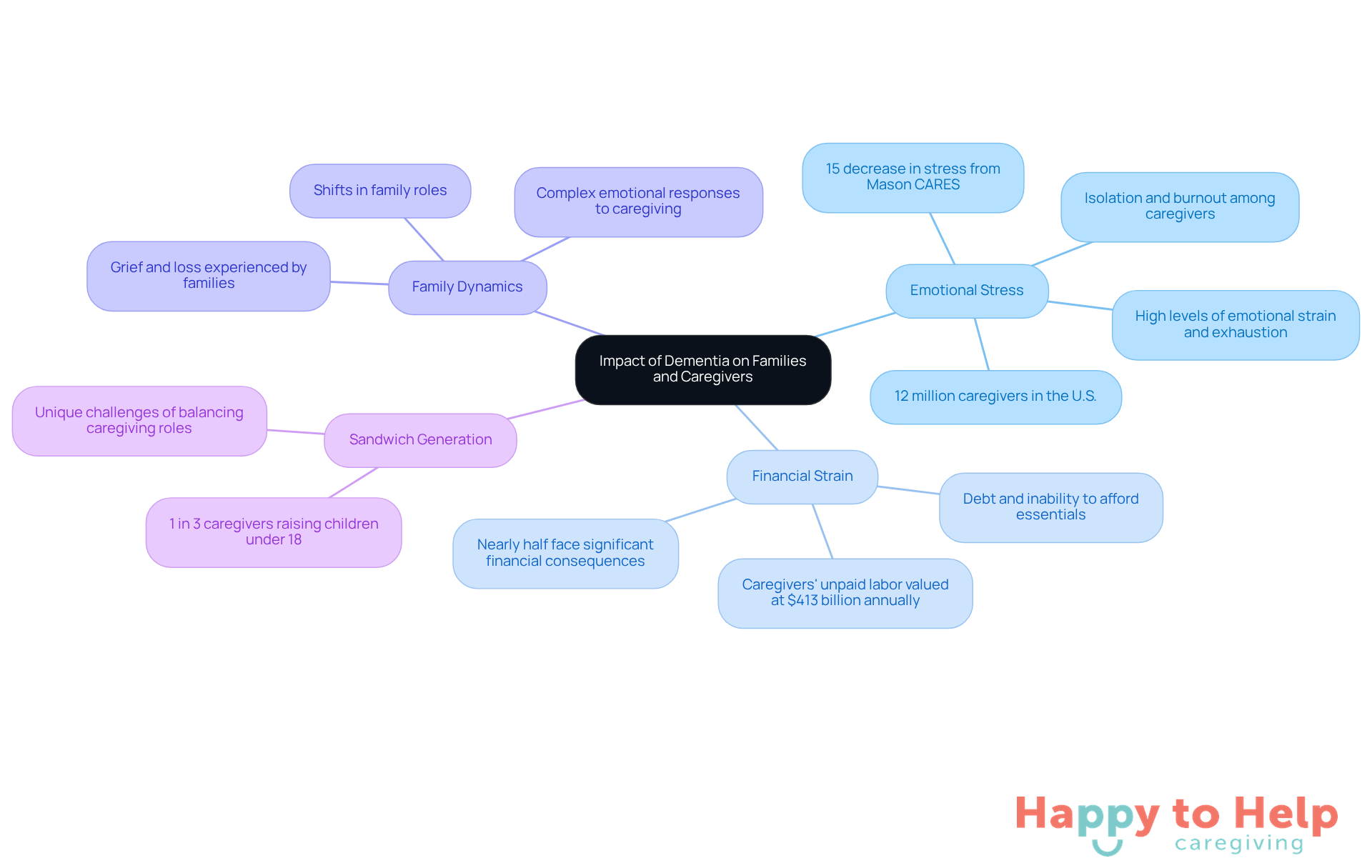
Dementia's influence extends well beyond the individual diagnosed, significantly impacting family dynamics and raising concerns about what to do with a parent with dementia for those who provide care. Caregivers often face emotional stress, financial strain, and shifts in family roles while trying to figure out what to do with a parent with dementia, leading to feelings of isolation and burnout. Nearly 12 million people in the U.S. offer unpaid care for relatives with dementia, with many reporting high levels of emotional strain and exhaustion. In fact, nearly 1 in 4 caregivers provide over 40 hours of assistance each week, underscoring the considerable time commitment and challenges they encounter.
The responsibilities of caregiving can disrupt personal lives, as caregivers juggle their own needs alongside those of their family members. Families may also experience grief and loss as they witness the gradual changes in their loved ones, resulting in complex emotional responses. For instance, participants in the Mason CARES initiative reported a 15% decrease in stress levels among caregivers, highlighting the importance of community support.
Financial strains are prevalent, with nearly half of caregivers facing significant financial consequences, such as incurring debt or being unable to afford essential needs. This situation underscores the urgent need for comprehensive support frameworks that address both the emotional and financial challenges caregivers face, ensuring they receive the necessary assistance to navigate these difficult circumstances.
Additionally, nearly 1 in 3 caregivers are also raising children under 18 while supporting an adult, illustrating the unique challenges faced by the 'Sandwich Generation.' Understanding what to do with a parent with dementia is crucial for developing effective support systems that empower caregivers and foster resilience within families.
Explore Origins: Types and Causes of Dementia
Dementia presents a significant challenge, arising from various causes such as neurodegenerative diseases, vascular issues, and traumatic brain injuries. The most prevalent type, Alzheimer's disease, is marked by the buildup of amyloid plaques and tau tangles in the brain. Other forms include vascular cognitive impairment, stemming from reduced blood flow, and Lewy body syndrome, linked to abnormal protein deposits.
Understanding what to do with a parent with dementia is crucial for caregivers, as it informs care strategies and helps predict disease progression. Alarmingly, over 55 million individuals globally were living with cognitive decline in 2020, with projections suggesting this number could soar to 78 million by 2030 and 139 million by 2050. A new case of cognitive decline arises every 3.2 seconds, highlighting the urgent need for caregivers to stay updated on the latest research and care developments.
The economic impact of dementia is staggering, with an estimated global cost of US$ 818 billion in 2015, projected to escalate to US$ 2.8 trillion by 2030. Furthermore, 60% of individuals with cognitive impairment reside in low and middle-income nations, underscoring the necessity for targeted interventions.
Early diagnosis and intervention are vital. The World Alzheimer Report 2011 emphasizes the importance of closing the treatment gap to improve outcomes for those affected. Caregivers can take actionable steps by staying informed about what to do with a parent with dementia, advocating for early assessments, and utilizing available resources to support individuals with cognitive impairments.

Identify Key Characteristics: Symptoms of Dementia
Dementia symptoms often begin subtly, making them easy to overlook. Caregivers face the challenge of recognizing early indicators such as:
- Memory loss, particularly short-term forgetfulness
- Confusion about time or place
- Difficulty with familiar tasks
For example, individuals may struggle with routine activities like cooking or managing finances, leading to missed appointments and increased reliance on reminders.
As dementia progresses, symptoms can escalate, resulting in:
- Heightened disorientation
- Significant personality changes
- Communication difficulties, such as trouble finding words or following conversations
Recognizing these early signs is crucial for caregivers, as it allows them to seek timely medical advice and adapt their care strategies accordingly.
Current research highlights that early diagnosis can significantly impact treatment options and overall quality of life. Engaging with resources like Alzheimer's Research UK can provide valuable support and information for families navigating these challenges. Alarmingly, approximately one million individuals in the UK are living with cognitive impairment, with a third remaining undiagnosed. This underscores the importance of early recognition.
The lifetime risk of developing Alzheimer's disease is estimated at 41.9% for women and 33.6% for men, further emphasizing the need for awareness. Dr. Tim Rittman notes that recognizing early signs of cognitive decline can make a significant difference in planning and support. Additionally, 61% of participants identified communication issues as a possible indicator of cognitive decline, highlighting the necessity for caregivers to stay vigilant.
Families often encounter difficulties when their loved ones can no longer manage alone. It is imperative for effective caregiving to understand what to do with a parent with dementia and seek appropriate help.

Address Care Needs: Tailoring Support for Dementia
Caring for individuals with dementia presents significant challenges for caregivers, especially regarding what to do with a parent with dementia. These challenges often include managing the unique needs, preferences, and abilities of those they care for, which can lead to feelings of frustration and overwhelm.
To effectively manage these challenges, caregivers need to understand what to do with a parent with dementia by creating personalized care plans that sustain routines and offer emotional support. Engaging individuals in activities that enhance cognitive function is crucial. Strategies such as:
- Simplifying tasks
- Using visual aids
- Fostering social interactions
can help reduce feelings of isolation.
Moreover, caregivers must prioritize their own self-care. Managing stress and maintaining well-being is essential for providing the best possible support to their loved ones. By implementing these strategies, caregivers can create a more supportive environment for both themselves and the individuals they care for.

Taking the Next Steps
Caring for a parent with dementia presents significant challenges for both the affected individual and their caregivers. The complexities of dementia can be overwhelming, making it essential for caregivers to recognize symptoms, understand the various types and causes, and implement effective strategies. Without this knowledge, caregivers may struggle to navigate the intricacies of dementia, which can diminish the quality of life for their loved ones.
Early recognition of symptoms and proactive management of risk factors are crucial. Caregivers must address not only the immediate needs of their loved ones but also prioritize their own well-being to prevent burnout. Here are some actionable strategies:
- Create personalized care plans tailored to individual needs.
- Foster social interactions to combat isolation.
- Seek community support to share the emotional and financial burdens.
As the global prevalence of dementia continues to rise, staying informed and engaged is vital for families and caregivers. By fostering a supportive environment that encourages open communication and collaboration, caregivers can significantly impact the lives of those they care for. Embracing these strategies not only enhances the care provided but also strengthens family bonds, paving the way for a more compassionate approach to the challenges of dementia.
https://iframe.tely.ai/cta/eyJhcnRpY2xlX2lkIjogIjY5M2Y1MGEyYzVjNjk0NTk3NDczMjcwNiIsICJjb21wYW55X2lkIjogIjY4ZWU1ZGNhNzMxNzYyNTU3ZjNjOTVjMSIsICJpbmRleCI6IG51bGwsICJ0eXBlIjogImFydGljbGUifQ==Frequently Asked Questions
What is dementia?
Dementia is a syndrome that encompasses a range of neurological disorders leading to a decline in cognitive function, affecting memory, thinking, and social abilities. It is not a specific disease but is marked by progressive deterioration severe enough to disrupt daily life.
What are some common types of cognitive decline associated with dementia?
Common types of cognitive decline include Alzheimer's disease, vascular cognitive impairment, and Lewy body syndrome.
Why is it important for caregivers to understand dementia?
Understanding dementia helps caregivers recognize the challenges faced by their loved ones, allowing them to tailor their support accordingly and manage the condition effectively.
How can mid-life risk factors influence cognitive decline?
Tackling risk factors in mid-life can significantly influence the onset of cognitive decline, with research suggesting that up to 45% of cases could potentially be postponed or minimized through proactive measures.
What are some identified risk factors for developing cognitive decline?
Fourteen risk factors have been identified, including physical inactivity and obesity, which are linked to a heightened risk of developing cognitive decline.
What role does early identification and intervention play in managing dementia?
Early identification and intervention are crucial in managing cognitive decline effectively, as they allow caregivers to implement lifestyle changes and seek support resources in a timely manner.
How does dementia impact families and caregivers?
Dementia significantly impacts family dynamics, leading to emotional stress, financial strain, and shifts in family roles for caregivers, often resulting in feelings of isolation and burnout.
What are the statistics regarding caregivers of individuals with dementia in the U.S.?
Nearly 12 million people in the U.S. provide unpaid care for relatives with dementia, with many reporting high levels of emotional strain and exhaustion. About 1 in 4 caregivers provide over 40 hours of assistance each week.
What are some emotional and financial challenges faced by caregivers?
Caregivers often face emotional stress and financial strains, with nearly half experiencing significant financial consequences such as incurring debt or being unable to afford essential needs.
What is the "Sandwich Generation" in the context of dementia caregiving?
The "Sandwich Generation" refers to caregivers who are raising children under 18 while also supporting an adult with dementia, illustrating the unique challenges they face in balancing multiple caregiving responsibilities.
List of Sources
- Define Dementia: Understanding the Condition
- dementia Archives (https://statnews.com/topic/dementia)
- Dementia News (https://sciencedaily.com/news/mind\_brain/dementia)
- Dementia - Latest research and news | Nature (https://nature.com/subjects/dementia)
- ADI - Lancet Commission identifies two new risk factors for dementia and suggests 45% of cases could be delayed or reduced (https://alzint.org/news-events/news/lancet-commission-identifies-two-new-risk-factors-for-dementia-and-suggests-45-of-cases-could-be-delayed-or-reduced)
- Contextualize Dementia: Impact on Families and Caregivers
- Caregivers: the invisible backbone of dementia care (https://publichealth.gmu.edu/news/2025-11/caregivers-invisible-backbone-dementia-care)
- New Report Reveals Crisis Point for America’s 63 million Family Caregivers - Massachusetts Healthy Aging Collaborative (https://mahealthyagingcollaborative.org/new-report-reveals-crisis-point-for-americas-63-million-family-caregivers)
- Dementia Care Drives $340B Unpaid Caregiver Crisis (https://homehealthcarenews.com/2025/05/dementia-care-drives-340b-unpaid-caregiver-crisis)
- Explore Origins: Types and Causes of Dementia
- Dementia linked to problems with brain’s waste clearance system (https://cam.ac.uk/research/news/dementia-linked-to-problems-with-brains-waste-clearance-system)
- ADI - Lancet Commission identifies two new risk factors for dementia and suggests 45% of cases could be delayed or reduced (https://alzint.org/news-events/news/lancet-commission-identifies-two-new-risk-factors-for-dementia-and-suggests-45-of-cases-could-be-delayed-or-reduced)
- ADI - Dementia statistics (https://alzint.org/about/dementia-facts-figures/dementia-statistics)
- Dementia Comes in Many Forms. Alzheimer’s Is Just One. (https://nytimes.com/2025/12/01/well/mind/dementia-types-symptoms.html)
- Dementia News (https://sciencedaily.com/news/mind\_brain/dementia)
- Identify Key Characteristics: Symptoms of Dementia
- Recognizing Dementia: A Guide to Early Symptoms + Signs (https://tuftsmedicine.org/about-us/news/recognizing-dementia-guide-early-symptoms-signs)
- Over half of UK adults don’t know one of the most common symptoms of dementia (https://alzheimers.org.uk/news/2025-05-14/half-uk-adults-dont-know-most-common-dementia-symptoms)
- Alzheimer’s Disease: Epidemiology and Clinical Progression - PMC (https://pmc.ncbi.nlm.nih.gov/articles/PMC9095793)
- What are the early signs of dementia and when should you worry? - Alzheimer's Research UK (https://alzheimersresearchuk.org/news/spotting-early-signs-that-could-be-dementia-when-should-you-worry)
- Address Care Needs: Tailoring Support for Dementia
- Creyos Introduces Care Planning to Bridge the Gap Between Dementia Diagnosis and Daily Support (https://finance.yahoo.com/news/creyos-introduces-care-planning-bridge-120000509.html)
- New series from The Lancet offers roadmap for Alzheimer’s treatment in a changing therapeutic landscape (https://health.ucdavis.edu/news/headlines/new-series-from-the-lancet-offers-roadmap-for-alzheimers-treatment-in-a-changing-therapeutic-landscape/2025/09)
- The Alzheimer’s Association and Rippl Partner to Improve Quality Dementia Care and Caregiver Support (https://alz.org/news/2024/the-alzheimer-s-association-and-rippl-partner-to-improve-quality-dementia-care-and-caregiver-support)
- Medicare explores a new way to support caregivers of dementia patients (https://npr.org/sections/shots-health-news/2024/07/04/nx-s1-5026964/caregivers-dementia-alzheimers-medicare-support)
- Telemedicine shows promise in improving dementia care, WHO study finds (https://who.int/europe/news/item/06-11-2025-telemedicine-shows-promise-in-improving-dementia-care--who-study-finds)