

For families in our service areas
For families in our service areas, this guide explains caregiver support and how non-medical in-home caregiving can support care planning in East Idaho, Treasure Valley & Magic Valley, Northern Wasatch, North Central West Virginia, and Northeast Ohio.
Why Find Caregivers: A Step-by-Step Matters
Navigating the caregiving landscape can feel overwhelming for families. With nearly 63 million Americans engaged in caregiving roles, the reliance on professional support is increasing. Families often struggle to understand the various types of caregivers - ranging from home health aides to skilled nursing staff - which can lead to stress and uncertainty in making informed choices.
The implications of this challenge are significant. Families may find it difficult to identify the right support for their loved ones, especially with the projected rise in home health services and the ongoing issues of caregiver turnover. This uncertainty can exacerbate the emotional toll on families, making it crucial to find effective solutions.
This guide offers a step-by-step approach to finding caregivers. By equipping families with the necessary tools and knowledge, we aim to alleviate some of the stress associated with this critical journey. With clear definitions and practical tips, families can navigate the caregiving landscape with confidence.
Understand the Caregiving Landscape
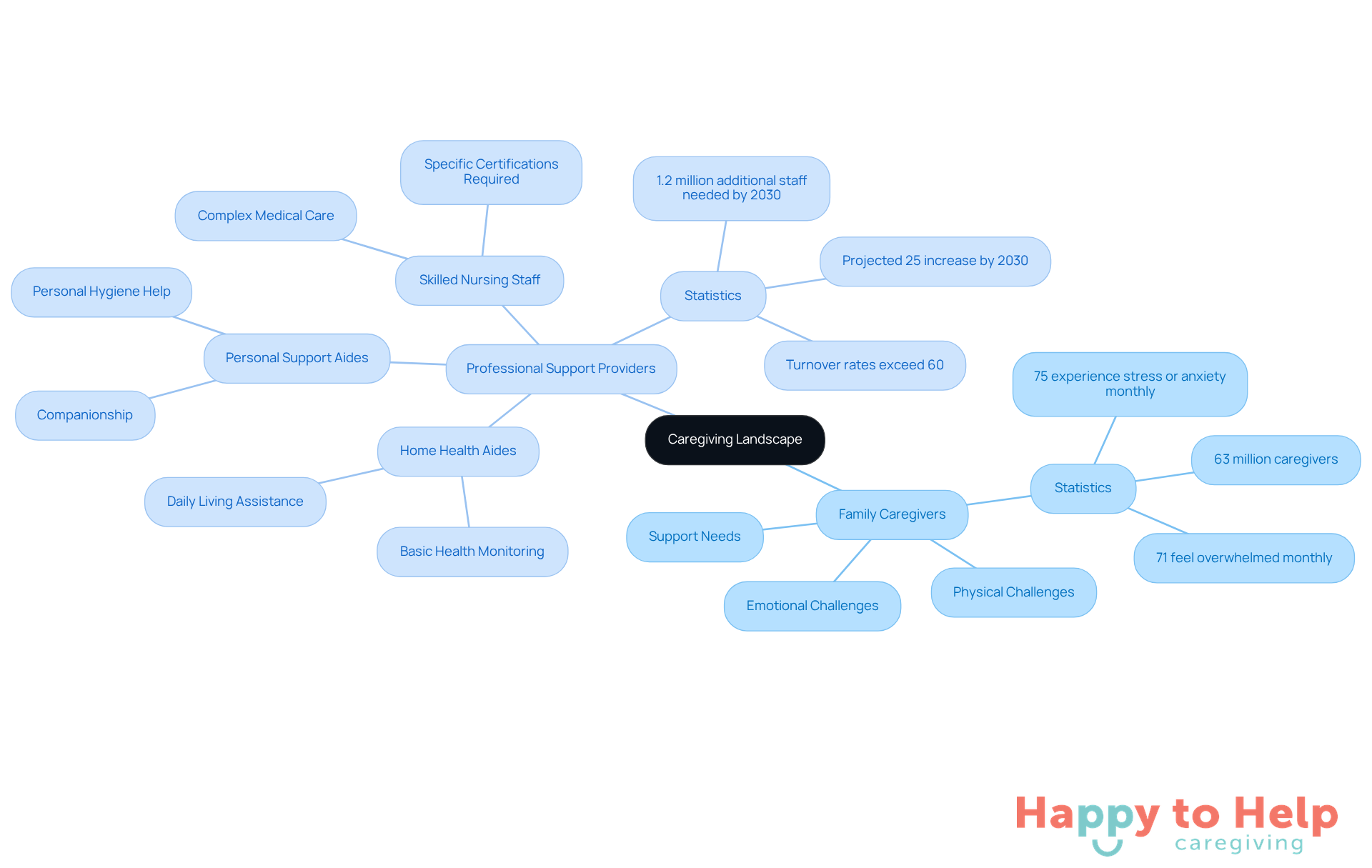
The caregiving environment is diverse, encompassing relatives, professional support providers, and volunteers, each playing a unique role in delivering assistance. Family caregivers often face emotional and physical challenges, while professional providers bring specialized skills and training. These professional helpers can be categorized into three main types:
- Home health aides: Assist with daily living tasks and basic health monitoring.
- Personal support aides: Focus on non-medical assistance, such as companionship and personal hygiene help.
- Skilled nursing staff: Provide complex medical care, requiring specific certifications and training.
Understanding these distinctions is crucial for families evaluating their options. Currently, nearly 63 million Americans are involved in caregiving, with many relying on professional assistance to complement family support. This reliance can alleviate some burdens on family caregivers, allowing them to focus on emotional support and companionship.
It's also vital to be aware of local regulations and standards governing caregiving services, which can differ significantly by state. Families can access resources from organizations like the Family Caregiver Alliance and the National Family Caregiver Support Program, which provide valuable information on where to find caregivers, available services, and best practices for navigating the caregiving landscape.
Looking ahead, home health services are projected to increase by 25% by 2030, with the home support sector needing an additional 1.2 million direct support staff by that same year. This highlights the growing importance of professional providers. Additionally, turnover rates in most home assistance agencies exceed 60%, revealing challenges within the support workforce. Alarmingly, 74% of caregivers feel unprepared for the demands of caregiving, underscoring the need for professional assistance.
Identify Your Caregiving Needs
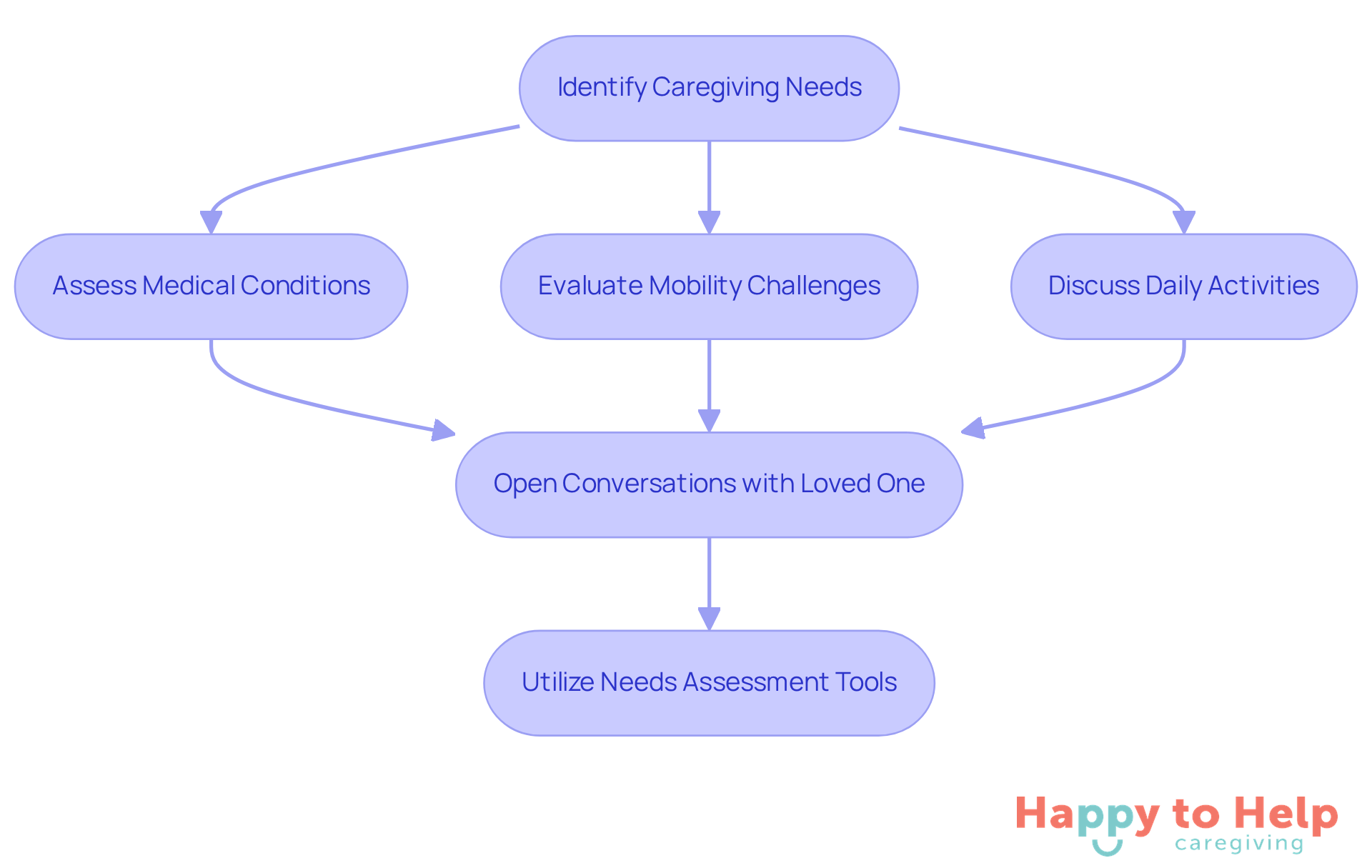
Assessing a loved one's specific needs is crucial for effective caregiving. Caregivers often face the challenge of understanding their loved one's medical conditions, mobility challenges, and daily activities that may require assistance. Without a thorough assessment, caregivers risk overlooking essential aspects of care, which can lead to inadequate support and increased stress for both parties.
Open conversations with your loved one are vital. These discussions can reveal their preferences and concerns regarding care, fostering trust and empowering them to express their wishes. Engaging in this dialogue not only strengthens the caregiver relationship but also ensures that the care provided aligns with the loved one's desires.
To aid in this process, consider utilizing needs assessment tools such as questionnaires from reputable organizations like AARP or the National Institute on Aging. These resources help structure your evaluation, ensuring that no critical aspects are overlooked. Recording these needs promotes clear communication with prospective providers and organizations, ensuring that the assistance given corresponds with your loved one's specific requirements.
As noted by Anna Finger, LCSW-S, "There is a great opportunity for tools like COPE to be more widely utilized so providers know how to best support these individuals." This highlights the importance of structured evaluations in enhancing support for caregivers. By taking these steps, caregivers can significantly improve the quality of care they provide.
Explore Sources for Finding Caregivers
Finding reliable helpers can be a significant challenge for caregivers. The pressure to ensure quality care while managing other responsibilities can be overwhelming.
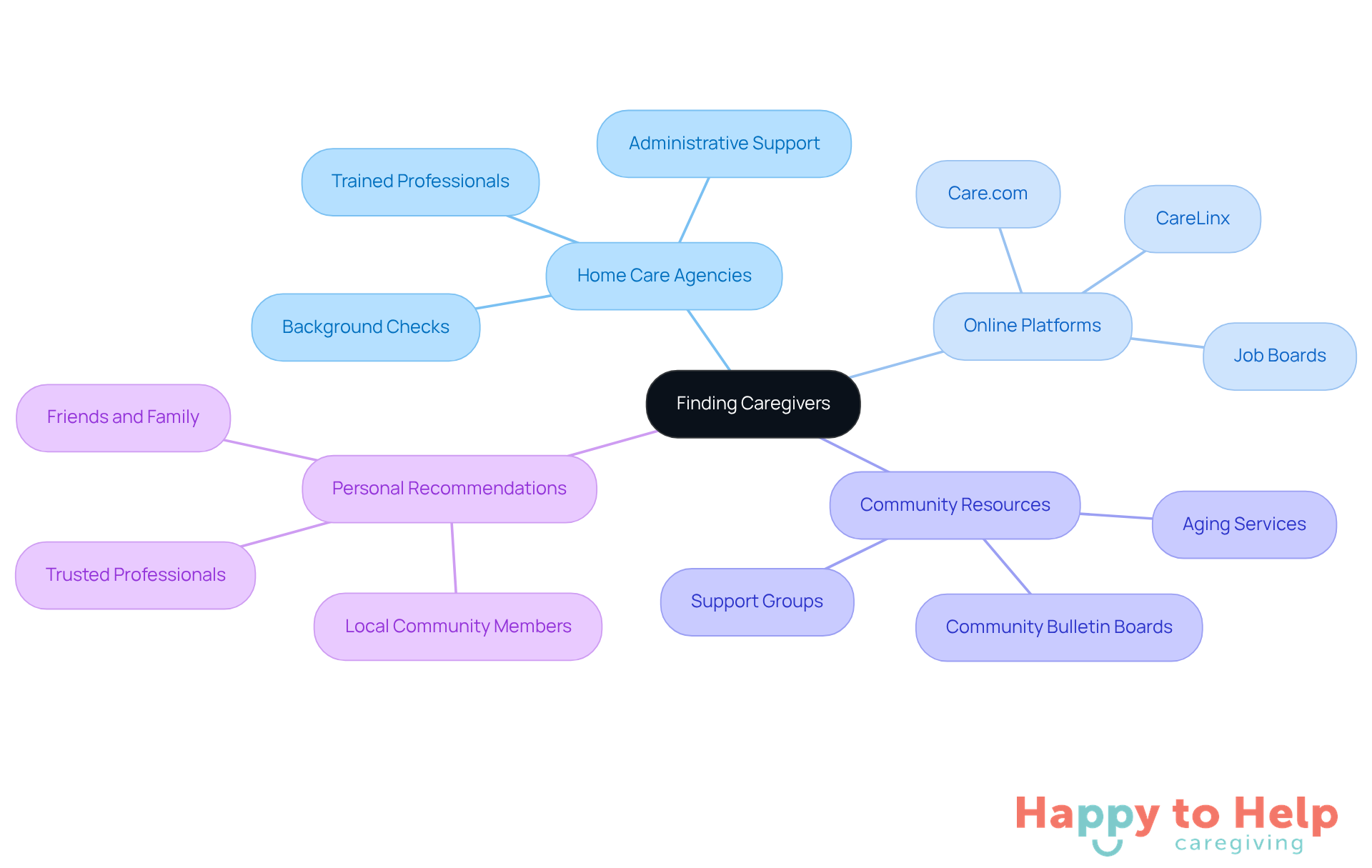
Fortunately, knowing where to find caregivers provides several effective solutions.
-
Home care agencies are a popular choice, as they provide trained professionals who can assist with daily tasks and handle administrative duties. This option alleviates some of the burdens caregivers face.
-
Online platforms like Care.com and CareLinx allow households to search for independent support providers based on specific criteria, giving caregivers the flexibility to find the right match for their needs.
-
Additionally, local community resources can serve as a guide for where to find caregivers, offering valuable referrals and recommendations through support groups and aging services. These connections can lead to trustworthy assistance tailored to individual situations.
-
Don't forget to ask for personal recommendations from friends or family who have navigated similar challenges. Their insights can be invaluable in finding the right support.
Evaluate and Select the Right Caregiver
Selecting the right caregiver for your loved one can be a daunting task. With nearly 1 in 4 Americans caring for someone with a complex medical condition or disability, the stakes are high. It's crucial to assess potential providers thoroughly to ensure they meet your loved one's needs.
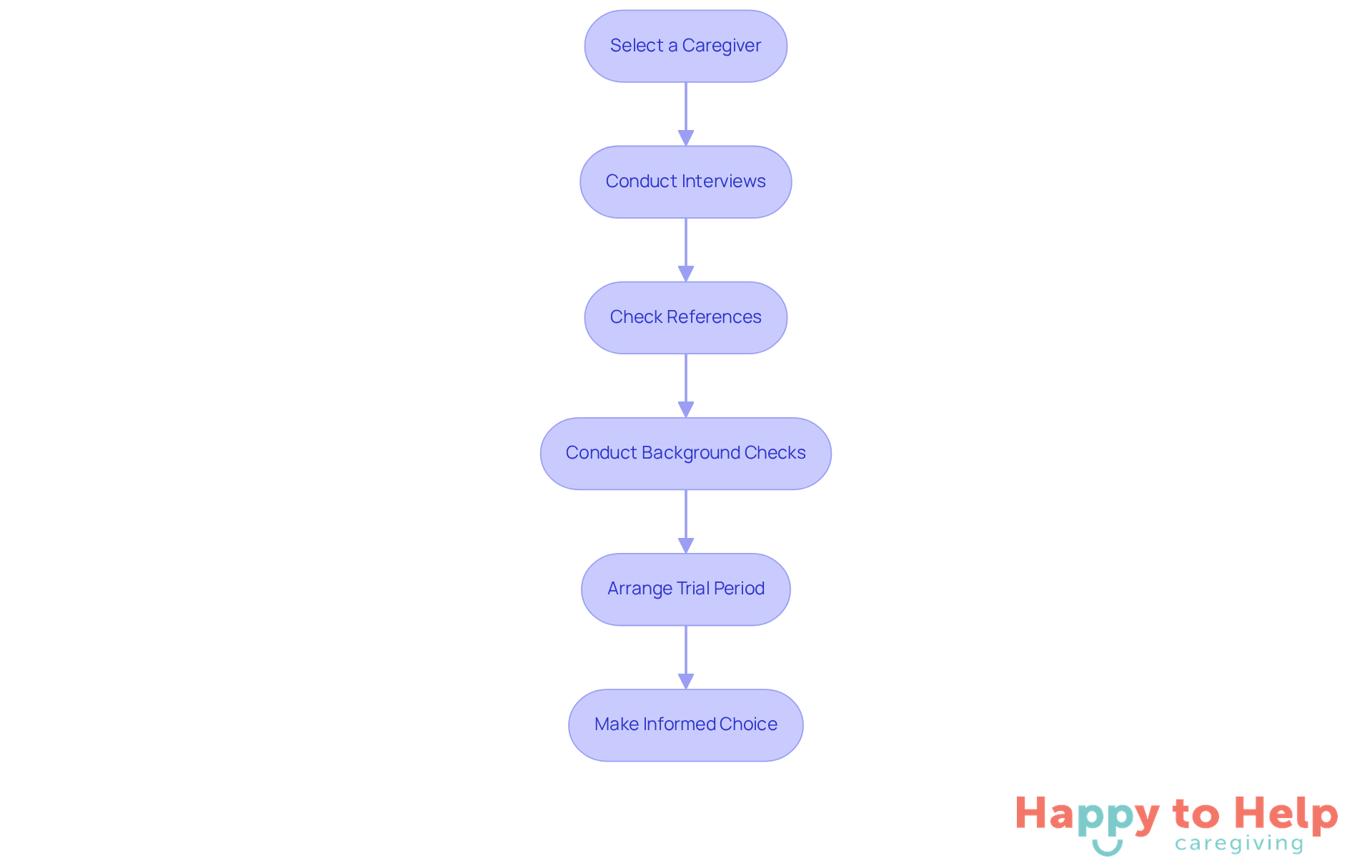
Start by conducting interviews to evaluate their experience, skills, and compatibility. Prepare targeted questions that explore their previous caregiving experiences, approach to care, and availability. Understanding the motivations and commitment of caregivers is essential for making an informed choice.
Checking references and conducting background checks are vital steps in the selection process. These actions not only guarantee the safety and well-being of your loved one but also build confidence in the provider's qualifications. Additionally, consider arranging a trial period. This allows you to observe how the provider interacts with your loved one in a real-world setting, offering valuable insights into their compatibility and care approach.
Research shows that families who engage in a detailed selection process report higher satisfaction levels with their caregivers. In fact, the number of family support providers has surged by 20 million over the past decade, underscoring the growing need for effective caregiver selection. By taking the time to assess potential providers meticulously, you can make a more informed choice that aligns with your loved one's unique needs and preferences.
Establish a Supportive Caregiver Relationship
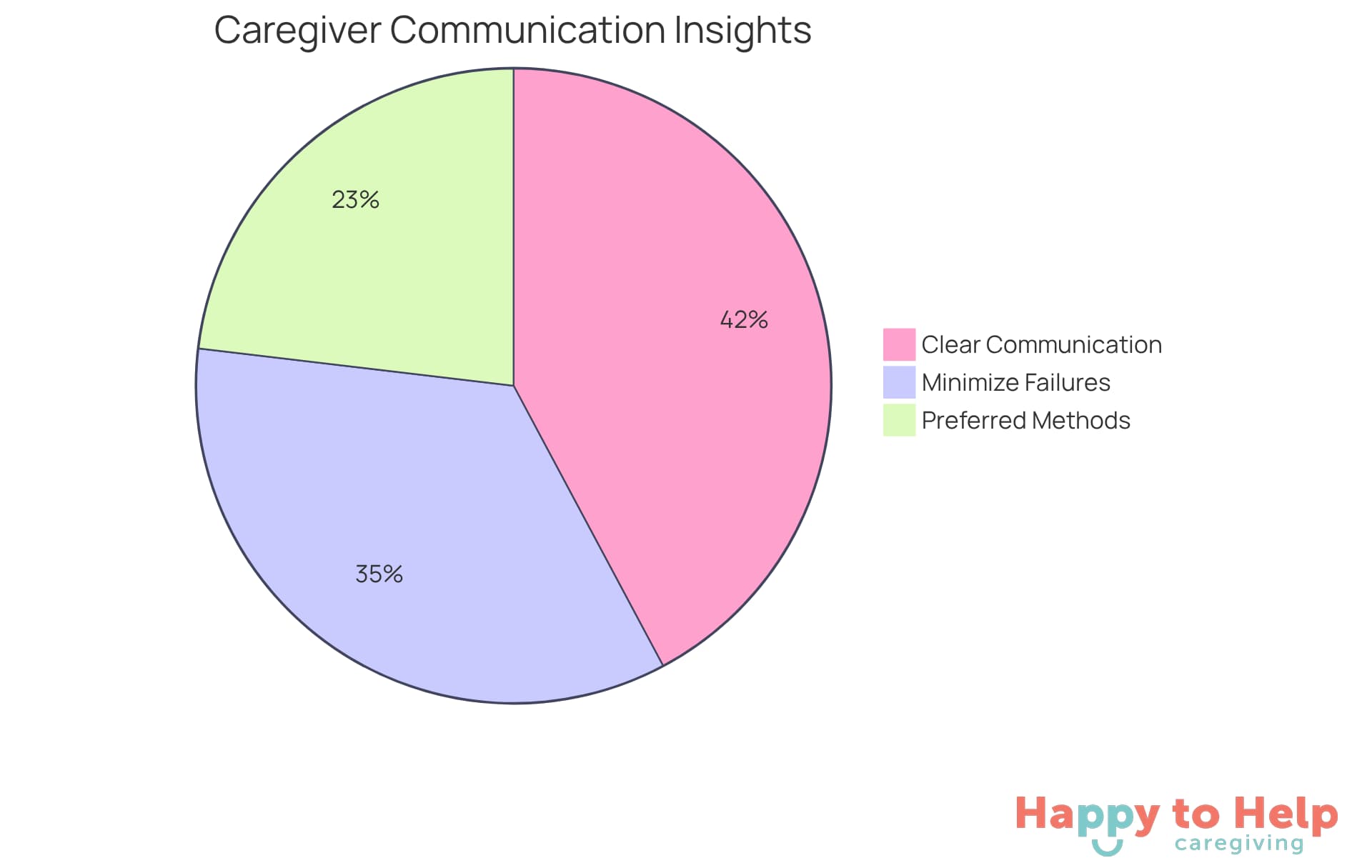
Creating a supportive connection with caregivers hinges on open communication and mutual respect. However, many caregivers face significant challenges in this area. Research shows that while 73% of supporters believe healthcare providers communicate clearly, only 40% report that recipients are asked about their preferred methods of interaction. This gap highlights a critical problem: the lack of effective communication can complicate caregiving responsibilities and increase emotional stress.
To address this issue, regular check-ins are vital for discussing concerns and making necessary modifications to the support plan. Distributing comprehensive details about your loved one's preferences, routines, and interests enables support providers to offer tailored assistance that meets individual needs. Involving family members in the support process fosters a collaborative approach, creating a supportive network for both the caregiver and the individual receiving assistance.
Implementing effective interaction strategies can significantly enhance the caregiving experience. For instance, using 'I' statements can help express concerns without sounding accusatory. Active listening - paying attention to both verbal and nonverbal cues - can bridge gaps in understanding. Caregivers should feel encouraged to share their insights and experiences, fostering a two-way dialogue that strengthens relationships. As Bernadette Mayfield-Clarke, ASHA 2025 President, stated, "Being able to communicate effectively is a human right."
By emphasizing transparent dialogue, families can help reduce the emotional burden often experienced by caregivers. Almost 60% of caregivers believe that minimizing communication failures would simplify their daily lives. This underscores the necessity for proactive communication initiatives. Ultimately, a strong partnership built on trust and understanding not only enhances the quality of care but also enriches the lives of both caregivers and care recipients.
Key Takeaways for Caregivers
Finding the right caregivers can be a daunting challenge for families. The complexities of caregiving often leave families feeling overwhelmed and unsure of where to turn for support. This article aims to address these concerns by providing a clear approach to identifying specific caregiving needs and exploring various sources for caregivers.
Families must first assess their individual caregiving needs through open communication. This step is crucial as it lays the groundwork for understanding what type of support is necessary. Utilizing resources such as home care agencies and online platforms can significantly broaden the search for qualified caregivers. Conducting thorough evaluations of potential caregivers is essential to ensure they meet the family's unique requirements.
Establishing a supportive relationship with caregivers is equally vital. Effective communication fosters trust and enhances the overall caregiving experience for both parties involved. By recognizing the diverse roles caregivers play, families can create a more balanced caregiving environment that benefits everyone.
Ultimately, finding the right caregiver is about building a partnership that promotes well-being for both the caregiver and the care recipient. Families are encouraged to take proactive steps in this process, ensuring they not only find qualified caregivers but also cultivate strong relationships that lead to better care outcomes. Embracing these practices can alleviate the emotional and physical burdens often faced in caregiving, paving the way for a more fulfilling experience for all involved.
https://iframe.tely.ai/cta/eyJhcnRpY2xlX2lkIjogIjY5MjY2NjI1NTlhYjRiNzBiY2E1OTA3YyIsICJjb21wYW55X2lkIjogIjY4ZWU1ZGNhNzMxNzYyNTU3ZjNjOTVjMSIsICJpbmRleCI6IG51bGwsICJ0eXBlIjogImFydGljbGUifQ==Frequently Asked Questions
What is the caregiving landscape?
The caregiving landscape includes a variety of individuals such as family members, professional support providers, and volunteers, each contributing uniquely to the assistance provided to those in need.
What are the different types of professional caregivers?
Professional caregivers can be categorized into three main types: Home health aides, who assist with daily living tasks and basic health monitoring; Personal support aides, who provide non-medical assistance like companionship and personal hygiene help; Skilled nursing staff, who deliver complex medical care and require specific certifications and training.
How many Americans are involved in caregiving?
Nearly 63 million Americans are involved in caregiving, often relying on professional assistance to complement the support provided by family members.
Why is it important to understand local regulations regarding caregiving services?
Local regulations and standards governing caregiving services can differ significantly by state, making it essential for families to be aware of these differences when evaluating their options.
What resources are available for families seeking caregiving support?
Families can access resources from organizations such as the Family Caregiver Alliance and the National Family Caregiver Support Program, which provide information on finding caregivers, available services, and best practices for navigating the caregiving landscape.
What is the projected growth of home health services by 2030?
Home health services are projected to increase by 25% by 2030, with a need for an additional 1.2 million direct support staff in the home support sector.
What challenges do caregivers face in the current caregiving environment?
Turnover rates in most home assistance agencies exceed 60%, and 74% of caregivers feel unprepared for the demands of caregiving, highlighting the challenges within the support workforce.
Why is assessing a loved one's specific needs important for caregivers?
Assessing a loved one's specific needs is crucial for effective caregiving, as it helps caregivers understand medical conditions, mobility challenges, and daily activities requiring assistance, preventing inadequate support and stress.
How can caregivers facilitate open conversations with their loved ones?
Caregivers can foster trust and empower their loved ones by engaging in open discussions about their preferences and concerns regarding care, ensuring that the provided care aligns with their wishes.
What tools can assist caregivers in assessing needs?
Caregivers can utilize needs assessment tools such as questionnaires from organizations like AARP or the National Institute on Aging to structure their evaluations and ensure no critical aspects are overlooked.
List of Sources
- Understand the Caregiving Landscape
- Understanding the Major Trends Influencing Home Care in 2025 (https://learn2care.us/blog/predictions-for-caregiving-trends-in-2025)
- A Place for Mom Releases Dual Reports on the Future of Family Caregiving, Including a New Talkspace Collaboration Highlighting Caregiver Mental Health (https://finance.yahoo.com/news/place-mom-releases-dual-reports-140000433.html)
- As Family Caregiving Grows, So Does the Need for Reform - Medicare Rights Center (https://medicarerights.org/medicare-watch/2025/08/14/as-family-caregiving-grows-so-does-the-need-for-reform)
- Caregiving in the US 2025 (https://aarp.org/pri/topics/ltss/family-caregiving/caregiving-in-the-us-2025)
- Identify Your Caregiving Needs
- New Assessment Tool Promotes a More Personalized Approach to Dementia… (https://uthealthaustin.org/blog/new-assessment-tool-promotes-a-more-personalized-approach-to-dementia-caregiver-support)
- New Report Shows Nearly Half of U.S. States Are on the Threshold of a Caregiving Emergency | Otsuka US (https://otsuka-us.com/news/new-report-shows-nearly-half-us-states-are-threshold-caregiving-emergency)
- The senior population is booming. Caregiving is struggling to keep up (https://cnbc.com/2025/11/21/senior-caregiving-labor.html)
- Caregiving in the US 2025 (https://aarp.org/pri/topics/ltss/family-caregiving/caregiving-in-the-us-2025)
- Families Prefer In-Home Care To Senior Living – Yet Struggle To Identify Needed Support (https://homehealthcarenews.com/2025/11/families-prefer-in-home-care-to-senior-living-yet-struggle-to-identify-needed-support)
- Explore Sources for Finding Caregivers
- 7 Best Places to Find Caregivers for Home Care | Aaniie, formerly Smartcare Software (https://aaniie.com/news/7-best-places-to-find-caregivers-for-home-care)
- Hiring an In-Home Caregiver - Private Home Care (https://aarp.org/caregiving/home-care/hiring-caregiver)
- How To Find Reliable Private Caregivers For Hire - Voyager Home Health Care (https://voyagerhomehealthcare.com/blogs/news/how-to-find-reliable-private-caregivers-for-hire)
- 10 Must-Know U.S. Home Care Industry Stats for 2025 - North American Community Hub (https://nchstats.com/us-home-care-industry-stats)
- Hiring In-Home Help (https://caregiver.org/resource/hiring-home-help)
- Evaluate and Select the Right Caregiver
- 63 million Americans are family caregivers | AHA News (https://aha.org/news/headline/2025-07-25-63-million-americans-are-family-caregivers)
- Opinion | America’s Caregivers Are in Crisis (https://nytimes.com/2025/11/24/opinion/caregiving-crisis.html)
- The number of family caregivers is surging (https://19thnews.org/2025/07/family-caregivers-surging-aarp)
- What Is the Caregiver Crisis? | Johns Hopkins Bloomberg School of Public Health (https://publichealth.jhu.edu/2025/what-is-the-caregiver-crisis)
- New Report Shows Nearly Half of U.S. States Are on the Threshold of a Caregiving Emergency | Otsuka US (https://otsuka-us.com/news/new-report-shows-nearly-half-us-states-are-threshold-caregiving-emergency)
- Establish a Supportive Caregiver Relationship
- Communication Breakdowns Are a Major Hurdle for Caregivers (https://asha.org/news/2025/communication-breakdowns-are-a-major-hurdle-for-caregivers?srsltid=AfmBOorTZ77Jh6JEIXTTf9dAXiiyWRSnphiAN92DNXA7vnBjRXS4MbgR)
- The Importance of Effective Communication in Caregiving (https://familycaregiversonline.net/the-importance-of-effective-communication-in-caregiving)
- Caregiving in the US 2025: Caring Across States (https://aarp.org/pri/topics/ltss/family-caregiving/caregiving-in-the-us-2025-caring-across-states)